Most Important Career Moves that Catapulted My Career as a SaaS Exec: GitLab, Salesloft, Redpoint
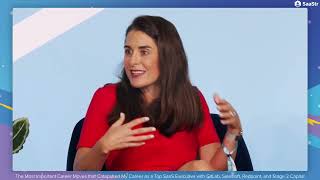
Erica Brescia, Lauren Vaccarello, and Ashley Kramer discuss the career moves that got them to executive roles at GitLab, Salesloft, and Redpoint. They highlight lateral moves, cross-functional projects, early technical exposure, and angel investing as the paths that mattered most.
Chapters
Please welcome redpoint managing director erica brescia.
GitLab cmo and cso ashley kramer, salesloft cmo lauren vaccarello and mark roberge, co founder and managing director at stage 2 capital.
All right. I am humbled to be with such an amazing group of SaaS executives, those that have created companies that help define the space and run those companies. So today we're not going to talk about those companies much. We're going to talk about their careers. We've reflected together on one of those key moves that they've had either personally or professionally that have gotten in those positions today as C level executives of public companies or venture capital partners, et cetera. So we'll actually start with Erica. Erica, why don't you give us like a brief flyover of the career.
Sure.
Nice to see you all. Thanks for coming today. I'm Erica Bresh. I'm managing director at Redpoint now. But I just moved into Venture nine months ago after over 15 years as a founder and operator. Most recently I was the chief operating officer at GitHub, which perhaps many of you have heard of. And you know, in that role, I worked across basically all areas of the business as we scaled from about 1,000 to 3,000 people. Prior to that, I founded two companies in the developer tooling space. I like to say we were doing DevOps before DevOps was a thing. The last company was acquired by VMware. And you know, as a founder, we scaled from zero up to 75 employees at the point that we were acquired. So I've done basically everything other than write code and.
Yeah, great to be here.
Yeah. So let's, we'll get to the VC partner piece in a bit. But the COO path is always, you know, when I speak with emerging leaders, there's a lot of confusion on how you get there. You want to talk a little bit about how should you, like, what happened for you to prepare yourself for that role?
Yeah, I like to say, I mean, I don't know that I took a typical path to coo or that there is really a typical path to a COO role. I think, you know, in different companies you see COOs that have like, widely different areas of responsibility. You know, sometimes they're owning part of the gtm. Org, other times they're really focused on operations. I had at one point everything from like international expansion to HR to IT and business systems, did a lot of work on security. And then, you know, obviously like our workplace experience and more typical maybe COO things. And so you Know when you think about the like, scope of things that you might touch in a role like that, I think the most important thing is to learn as much as you can about various parts of the business. I won't be the first to tell you I'm not spectacularly good at any one thing. I think maybe I'm good at getting things done and I think that's probably important for any CEO. But what I think I got good at over time was going in and like digging in and learning a new thing and then trying to find smart people that could come in and build up that function. And so when you think about building that skill set, I think really what is the most beneficial is to move throughout a business as much as you can. So spend some time in various GTM functions, see if you can do some product or program management. I think program management roles where you're working on cross company projects can get you a lot of exposure. But the key is to really like absorb and kind of get involved in as many parts of a business as you can. And you know, if you're more like junior in your career, sometimes that might mean like stepping up to a cross functional project where you're gonna get to meet with other people across the company and see how, you know, maybe if you're going through bringing a product to market, like, what are all the things that the sales team needs to do to be ready, that the support team needs to do? What does the finance team need to do to get their pricing systems going? What does legal need to sign off on? Like, what does that process look like? And so I think anytime you can be involved in cross functional work or have an opportunity to work in a new part of the business, that's a great way to start setting yourself for an operational leadership role.
So I'm channeling folks in the audience who may be, well, you know, I've been at it in product for five, six years. I've been at it in marketing for five or six years. How do I convince them to let me do something else? And isn't that gonna set me back? Did that, did that kind of go through your head? And how did you, how did you earn the right to.
Maybe it wasn't strategic enough. The other thing that's unusual is I was a founder since I was 23, so I never had like a normal kind of path or job. I just started doing things to build a company. So I said, I don't know if I have. I'm a great example of like the path to coo. But what I will say as a leader in, I was always really impressed by people who were in one part of the business who like, stepped up to try to learn about or get involved in other parts of the business. And again, I think there were a lot of times, and I'm thinking of GitHub. I mean, we probably had a dozen cross functional projects going on at any point in time. And the people who like, stepped up to get involved in those got a lot of leadership exposure. We all knew who they were and they got a lot of learning out of seeing how their peers thought about problems and things like that. And so that also can be a step into moving into another role because you get much broader exposure within a company if you can kind of put yourself out there and say, hey, I'm on product, but I'm going to go work with this team that's thinking through our new pricing change. Right. Like we would have these cross functional teams so we could collect input from different parts of the business. And I really think that's a great way to do it. I think also just spending time like networking with and getting to know your peers and serving as a subject matter expert, like, you use the example of product, so maybe you know the product really well and you can go help the sales engineers, for example. And in that process you can learn a lot about how they're, how they go about their work and what product changes, like how that impacts their job. Right. And it starts to change your brain from thinking about what's my one specific thing that I need to do and work on to like, how does my work fit into the broader team's work? How does it impact the company? And that if you're really trying to go to an operational role, that's one of the most important things for you to understand is how do all these different, like moving pieces in the business impact each other? And how can we make things work hopefully in harmony as well as possible to accomplish whatever the company's goals are. So it's like a mindset that you need to develop.
Yeah. And I actually wonder if Erica's path is that unusual. Personally, I come across a lot of CEOs, founders who, what am I going to do next? What if my company doesn't work out? I'm unemployable. And I think Erica's, you know, a working example that that's not the case. I think what's probably one of the best paths to CEO coo. So have that confidence. Let's go over to you Lauren, give us the career flyover.
Sure. So I'm Lauren Vaccarello. I'm currently the Chief Marketing Officer at Salesloft. I love what Erica was talking about and I'll do a quick aside. So earlier in my career I worked at Salesforce. I got started in digital marketing before digital marketing was a socially acceptable profession. I've been doing it for about 20 years and I remember something the COO at Salesforce said to me that makes me think a lot about what you said. And he loves to pontificate about the future and give you these life lessons. And he said, when I joined Salesforce, I thought a career was a ladder. I was going to come in finance and I was going to go here, here and here. And one day I was going to be cfo. But Mark Benioff at the time decided that wasn't the case. So he moved me to different parts in the company. And one day I'm running sales and one day I'm running marketing and then one day I'm in product. And he moved me all over the place. And now look at me. I'm the COO and the CFO works for me. And he had this. Your career isn't supposed to be a ladder. Think of it as a jungle gym.
And you will be better if you're.
Willing to move laterally and try different things. And it feels like you're slowing down because you see your peers going up. But long term, it's so much better for you. And I've taken that to heart in my own career. I was at Box for a number of years and I remember when I joined, I said, at some point in time, I don't want to be the person who runs marketing. I want to be given an opportunity to do something different. And I was very fortunate to have Aaron Levy as the CEO who remembered that and said, we want someone to start customer engagement, to start a post sales function. How do you build a low touch, no touch service model? I was like, that's a great idea. He's like, no, no, no, you're running it. And I started that from nowhere and had no experience in it. But what I learned was the mindset and the strategy and how I looked at things was so applicable. And now in my role as CMO and several other CMO roles that I've had that experience not sitting in marketing has made me such a better marketer, such a better leader and given me those insights. And in addition to running marketing, I'm on the board of directors for a Couple of different companies. I'm an angel investor, I'm an advisor. And having that breadth of experience, seeing go to market, end to end, toying around in product for a little while makes me a better resource for the founders I work with. Makes me, I want to say, makes me a better investor. But you know, time will tell on that one.
And when we reflected last month and you've been CMO of a couple unicorns now, and a lot of people would love to get there, you went all the way back to the early part of your career, like the number one thing that drove you. Want to elaborate a bit?
Sure. So if I think about what was most impactful for me and how would really sort of set the trajectory. So at the beginning of my career, I was starting in digital marketing. No one is in digital marketing. This was like 20 years ago where the digital marketing team were the weird kids in the corner in the hallway. Literally my desk was in the hallway. But the thing that I always looked at was, what more can I do? What more can we learn? How do we jump in and take on more? And it was, there's this thing called WordPress that's coming out in a blog. Great, let me dig in and try this. Hey, there's something called a webinar. How do we go in? And my team and my org was so much thinking about, what is the future? What's the new thing that's coming out and how do we jump in? And we try it and we experiment and we see what works. And that has served me so well. And going to what Erica said of volunteer for projects, take on new things, think about where the world is going and be willing to jump in and try. The caveat that I will say is what I did, which is different, was never, I will jump in and try that if you give me budget and headcount. That is not. That's a great way to piss everybody off. It is. I'm willing to jump in and try this and see if this works. I'm going to look towards the future and when it works, then I'm going.
To ask for budget and headcount.
Yeah, it's such great abstract advice there. When you're starting your career in entrepreneurship, a lot of people say, bet more on the category than the company. What categories do you think are going to be amazing? And God forbid you pick the wrong company in a hot category. You are super employable at that point. And I feel like in marketing it's even more important is, you know, the last thing you want to do as a marketer is go learn direct mail or trade show booths because there's tons of people that have been doing that for decades. Like pick the next hot thing. What's the next hot thing? If you were to like advise the person coming into marketing now, what would you say? They should get into it completely.
And the things that are really interesting right now, I mean everyone's talking about account based marketing and there is a lot there, especially in the enterprise. I'm really long product led growth right now, partially because when I look at plg, it reminds me of when I started in digital. And it's that mindset of what's the psychology behind the person? How am I super customer centric? And then you apply psychology with the science and the technology and how do you keep revving and optimizing? It has real legs. And more and more your buyers don't want to talk to salespeople. They want to do as much as they can on their own. Try to dig in there. I think it's a great place to go. And again, I was really fortunate in the beginning. And I remember thinking when I was in college and this is weird impression of I want to go into marketing, but I don't think the thing that I'm good at exists yet. And I remember having that thought and then eventually I did SEO when there were like four people in the world who did it. So it was kind of cool that I was right. But there's so much of that that's out there right now. Be the expert at the thing that's only been around for two years because someone like me is not going to get there.
We've heard so much diverse experiences. I think, Ashley, you probably have the most eclectic background. You want to give us your flyover?
I have the jungle gym. So I'm Ashley Kramer. I'm chief marketing officer and chief strategy officer at GitLab. Not to be confused with GitHub. However, Eric and I can be friends since she's not there. But I did take probably what you would consider the most unconventional path to become cmo. I was a computer science major in college and I was a software engineer for my first two jobs, which was at NASA in Oracle. And there was a moment when I was getting ready to go to Amazon. I was interviewing for a senior software engineer manager or something like that. And it was the interviewer that said to me, you know, you're not really an engineer. And it was kind of this moment like that I just flunked this interview with what's happening? What's he saying to me? He said every answer you gave was about product, was about business. And he said, I want to go get you in front of that team. And that's exactly what happened. So I went into more of the program, product management at Amazon in early Kindle days, which was really cool experience. And, and from that point on it was all about what am I gaining from this experience. So at Amazon, operational excellence. No company does it better. I say that to this day. Two years in, this tiny company at the time called Tableau Software came and said we really need somebody to bring us to the cloud and we feel like you have that experience. And so I got this amazing opportunity to jump on the Tableau rocket ship. And I built their SaaS product from the ground up, Tableau Online. And they made me a gm which ran everything. It was like a mini CEO. So engineering, product sales, overlays, marketing. And it gave me this really good cross functional experience and I started to really identify what do I love to do and what am I good at. Four years in, it got easy. It's their fastest growing product. It's a great product. I had an opportunity to go to their closest partner, Alteryx, and Alteryx was at that same point, they had just IPO'd. They were a prep and blend company and they knew that that was not the future. There needed to be more. And so myself and the other executives, I went over there to run product and marketing as well. We decided the strategy should be a little different than the Tableau approach. We should go buy a bunch of companies, buy a bunch of technology, stitch it together into this beautiful platform story, and then also obviously integrate the tech. And so again, now I'm gaining M and A experience, which I never thought I would get as a product and a marketing executive is a pretty cool time. And then fast forward to where I am now. GitLab came and approached me about running marketing and I said, I don't know, I don't know if marketing's my thing. And then I really looked into what the company does, which turns out delivers software that helps software companies build and deploy their software. What could be a better fit for the experience that I've had? And so that's where I find myself now. And I really do think it is the perfect role for me, but it is by no means what you would consider a traditional chief marketing officer.
So we connected over the fact that we both started our careers writing code, but didn't like it.
Terrible at it.
I was terrible that great at it. Right. I felt myself like feeling like I have to learn a new language every six months, which is so stressful. Maybe there's some people out there that feel the same way. Was that a waste of a couple years or has that helped you in these roles that are like not as technical?
If I could do it all over again, I would do the exact same thing. Because what I think really gains me credibility is I'm not just the business person or the go to market person trying to market the thing you're building. I do still deeply understand mechanics of engineering, of how hard their life is. And as a product, as a marketing executive, I think that gains me that credibility. So I would not change a thing. And I am not a good coder at all. Like really bad.
So you all have kind of second lives too professionally, as a venture capitalist, an angel investor, a board member. Let's dive into those starting with the VC world. You want to go through that? Erica, if people want to say I'm an operator now, I would love to be a venture capital partner in five years, 10 years, 15 years, like how did you get there and what should they do?
So hopefully you picked up on this trend. In my career this is not entirely by design. Like I did not set out when I was founding my first company and when I want to be an MD at redpoint one day. But what I will say is as I continued to work and build relationships and speak at conferences and things like that, I began to see a lot of opportunities to invest. And then certainly following the exit of my company and then as CEO of GitHub, you know, I've been an open source and infrastructure software for over 15 years. I've left, I've been on the board of Linux foundation for the past six years. You know, I've always been like very deeply tied into that ecosystem even though I'm not an engineer and by the way I wish I was and I was telling Ashley like how amazing I think it is that she has this CS background. I promise not to talk about this for too long, but I think it's important. Like a lot of folks today are studying computer science and that's amazing. Obviously I love developers. Everything I've ever done in my entire career has been to hopefully make developers lives better, even though I'm not one. But I've always felt this little bit of a gap in that I wasn't a developer myself and I've had to learn all this stuff along the way and there's just so much Value. If you look at the ways that businesses operate today, understanding how to build software is so fundamental to everything we do. Whether you're like a cmo, whether you're an operations person. Now operations people are like stitching together and automating different parts of the business, right? And marketing has become so much about how do you instrument your software to get the right data and how do you build all this automated processes and funnels. You talked about plg, which I'm also very excited about. Almost every company I invest in today is a PLG company. And like CS and software development is such a fundamental part of that that I think it's a really powerful platform. So, like, it's great if you study CS and software and it's great if you're an engineer, but realize that it makes you more valuable to this whole world of possibilities over time. And going back to the venture thing.
I mean, it's almost hard to think about careers where that's not a huge advantage. From finance to healthcare, the FBI, everything the FBI is trying to find, I mean, it just makes sense. So well said.
Everything you do is related to software. And if you know how to use it well, you can make yourself so much more productive and your team and your company so much more productive. But yeah, back to the venture thing. And I will talk a little bit about how I got there, but most of our team, or maybe not most, but like half of our team actually were engineers and were developers and then went into operational roles before moving into vc. In fact, at redpoint, on our early stage team, we pride ourselves on every single one of our MDs, has founded companies and operated at scale. Every single person on our team has been an operator. You know, our more junior team members still were, you know, in product or engineering roles or other operations roles before moving in. And we feel like that makes us really understand, like the founder journey. And certainly I did it. I started at zero. And so I think in terms of building your way into a career and venture, I will say I was pulled into this over time. I first started doing some angel investing. I started seeing more deals. I joined a small group called X Factor that was all operating female founders that were investing out of a small seed fund. They're on their third fund now. I'm not actively investing, but it's super cool. It's like an $8 million fund, writes 125k checks into companies with at least one female founder, which I think is amazing. And I learned a little bit more about the investment process and what I really found, and this has been with all parts of my career, is I was just really drawn to helping founders navigate everything that I've navigated. I made a gazillion mistakes, so many mistakes. And if I can take all the learnings that I have from my companies and then from scaling at GitHub and all the learnings I've had from like angel investing and bring that to founders to help them navigate the early days of growth, to help them hire somebody who looks like me. If they need an operating person in that company to help them find a spectacular cmo, you bet your butts I'm coming after both of these women at some point and trying to get them into portfolio companies. But I really found so much joy in that and that's what brought me to vc. And when I think about like what has prepared me well for VC and what a lot of firms are looking for today, they're looking for operational experience, right? Like we intentionally go out and recruit people who understand the spaces that we invest in and that have, have been there and done some of that. And so if you're looking into getting into venture, I would tell you to do, do a few specific things. I think a lot of my advice about trying like holding up your hand and getting involved in different parts of the business holds, no matter what, because you get more exposure and you understand more about how companies work. And I think that's critically important if you want to get into venture. I think another thing, and we were talking about this before, like investors are always looking for subject matter experts to get their opinions when we're doing diligence on a company or a space. Like last week I was looking to talk to people who manage like workload identity at different companies, right? And other times we're looking at a product led growth company and we want to understand like different parts of the marketing stack that they might want to use and make recommendations or we've been looking at like PLG CRMs, right? And so almost regardless of where you are in a company, you probably know one thing really, really well, like one system, one part of engineering, one part of the sales process. And investors are investing in companies that are trying to solve problems that you run into. So I think trying to identify companies that invest in spaces that you know and reaching out especially to maybe some of the newer investors on the team and offering yourself as a resource, say, look, I think I want to go into investing one day. I'd like to learn like what your job is like. But also I know like these three things really well and I can help you out with those. Is a great way to start, like building your network, because we talked about this earlier is with all jobs and I think venture is one of them, you get pulled into it a lot of the time. You're not always out applying. And the more you get out, you network, you build these relationships, you deliver value, you ask questions, the better setup you're actually going to be to be brought into a firm in the future.
Yeah. And to highlight two points and what we were talking about earlier, a lot of people underestimate how valuable a venture capital firm is to make a career transition. And you don't have to be the COO of GitHub to take advantage of that. You can call an analyst who's 24 years old at a top VC firm and they'll want to network with you. And the advantage there is, unlike networking with an operator who works at one company, they have a portfolio of dozens and dozens of companies. Companies who have a lot of different roles and can match you with what you want to do. So don't feel like you have to be the C level executive to reach out to a VC firm. The other point you made is I personally believe the non operator investor is a dinosaur. That won't happen anymore. I don't understand why people who have never run a company sit on boards and advise companies. And so when I think about people who've made the transition like you from GitHub, Jay Simon from Atlassian, Danny Hertzberg from Slack over to Sequoia, they've all made angel investments along the way to show that they have a tracker and experience with investing. You've been doing a lot of that, Lauren. And I think people think like, oh, I'm not a billionaire, I can't invest. But like you can, you can start earlier and like want to tell us how you balance angel investing with a really important full time job and how that works.
Yep. Yeah. So I, I love startup ecosystem, I love founders, I love new companies, I get really excited about technology. And one thing that was even an advantage earlier in my career was the fact that it was more technical than most marketers. So I physically did our Salesforce Google AdWords implementation like 18 years ago, which by the way, no one trusts me coding anything now. So the irony that I did this back then is funny, but it was this. I took that extra step. I started to learn more about different venture capital firms and I did exactly what you said was availed myself as a resource to tons of VCs. Can I talk to your founders? And the things that I think about now as you're starting to think about angel investing, you don't need a million dollars with every, with everyone. And sometimes one of my first investments, they honestly just liked my title and my name and it gave them more credibility to have me as an investor. And I put in five figures, not eight figures. So things I think are really important. So just like with your first board roll or the first time you invest, the first time someone asked me to invest in their company, I got so excited. Now I have something called an investment.
Thesis, which is what am I willing.
To invest in and why? And I try really, really hard to stick with that. And it becomes the what is important to me. I, I believe a lot in what can we do and in positions of power and positions of privilege, what are we doing to sort of help those that are coming after us and help sort of the next generation. Mark, correct me on this because you know the number better than I do. It's something like 7% of dollars in venture funds actually come from women.
So it's 7% of partners, 7% of women. And yeah, you probably in the the money too.
And it's not just that there's not a lot of women in leadership, not a lot of women in C levels, not a lot of women on boards. The higher up the food chain you go, these fewer and fewer women are there.
So I thought that's why female founders suffer too. So we're trying to get better, but it's still terrible.
And for me it was like I have to put my money where my mouth is. If I believe I we need more diversity in business. I have to put my cash there. So now when I think about what is important to me to invest in has to be a space that I know like I love biotech. I love all this research. I know nothing about it. I can't invest in this. It all sounds cool. I'm not an expert. So I Lead Heavy B2B heavy SaaS, sales and marketing tech. I know inside and out. I want a diverse founding team. There's less diverse founding teams have plenty of money being thrown at them. Women led founders, diverse founders have unfortunately less access to capital. Can I use the money that I have to actually put there? And I don't just want to give you my money. I mean it's nice, but what value can I add to your company? So can I be a resource? Can I do CEO advising? Can I help your marketing team? So I Focus a lot on that. So as you're starting, honestly, if you have a spare ten grand, you never know, a company may be excited to take that and you can say, hey, I'd love to help advise your company. I am an expert in product development. By the way. Can I also give you a little bit of money to do this so that my interests are aligned with yours? So I think it's a great way to start and just go out there. Network careers are long. The valley is small. That 24 year old analyst today, 10 years from now, you have no idea who she'll be, what she'll know. So start building that network now.
You can dip your toe earlier than you think and it's a huge learning opportunity. So let's finish up that kind of second career with board work. You've been doing a lot of that. Ashley, tell us, how do you go get a board? A director position?
Yeah, I mean it starts with the networking. We were talking earlier. You get to a point in your career if you've done enough successful projects that you don't apply for jobs anymore and you don't try to find a board, you have people that come to you. What I was doing wrong a few years ago, and I totally know this now, is I was waiting for the perfect board opportunity. So, you know, I had my thesis and I knew that, you know, I needed to find this great perfect company to be on the board. And somebody finally sat me down, a really good mentor and said, you need to just get on a board. I said, what do you mean I want the perfect opportunity. And he said, you're going to come to a point where these great companies are going to be coming after you. But the fact that you haven't been on a board is going to be the reason that they don't choose you. And it actually happened twice. It happened twice to me after that. And so I am on a board now and it's a great board. I did not settle by any means, but it was really, really good advice. And it's really interesting being an operational leader on the other side of the boardroom. And I have a board meeting tomorrow for GitLab and of course I'll be presenting. I'm the operational leader, but I know how they think more because I have to do it as a board member. So it's actually, I think made me a stronger operational leader as well. And the second thing that I think is good, we talked about different career moves and trying different things. That's actually really attractive when people are looking for board members as well. I've had about three situations where they thought they wanted a product executive or they thought they wanted a go to market executive. They find me and we start talking and they realize I'm kind of two in one. And so if they bring me onto the board, they're going to get that wide variety of experience and not have to overpower the board with a person that knows sales and a person that knows product and a person that knows marketing. So it's been really great experience. But I would pass that advice on. Don't be super particular on the first one. Get that experience and then the rest will fall in your lap.
If it doesn't become a unicorn, you'll still be invited. In fact, you're more likely to be invited if you're doing your photos of memories. Here's a couple of the points that we highlighted. I don't know if they have to run right after, but we can meet over there if you have questions. Thank you so much for being open about your career. Congratulations. Please join me in thanking this group of executives.
Thank you. I didn't drink my water.










