Moving Upmarket & Nailing Enterprise Sales in Today’s Macro Environment with Salesforce Ventures
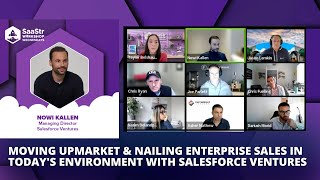
Recorded Workshop Wednesday (Nov 30, 2023) featuring Noe Callan (Managing Director, Salesforce Ventures) presenting on how startups should move upmarket into enterprise sales amid current macro conditions. Noe covers reasons to go upmarket, enterprise-readiness (security, compliance, multi-stakeholder engagement), go-to-market transitions (PLG → AE-led), org alignment (sales, marketing, product, legal/finance), and practical hiring/qualification benchmarks; the session concludes with audience Q&A on segmentation, hiring AEs/heads of sales, building business-value assessments, and how VCs can help.
Chapters
Hello.
Hello, everyone. Welcome to this week's edition of Workshop Wednesday. Thank you. Thank you so much for being here. Great to see some familiar faces and such a great crowd already. We're going to just give everyone another minute or two to get settled here in the room. Thank you. Thank you. Already seeing some folks in the chat tuning in from California. Welcome. Thank you everyone for joining us for another edition of Workshop Wednesday. We are so thrilled today to be joined by Noe Callan, managing director at Salesforce Ventures. I know a group that everyone's pretty familiar with, but Noe's going to do some introduction of himself here in just a little bit. We're really thrilled to hear from Noe. He's covering a really important topic and one that comes up a lot in other sessions and other Q and A, even as recently as last week with Jason. He's gonna be talking about moving up market in today's current climate. We're gonna get kicked off with Noah here just with our typical warmup questions. But before we do that, just a few reminders. As always, this session is live on YouTube and the full recording will be available immediately following the session. Noiseful Slides will also be available on SlideShare afterward. So if you have any questions, we really encourage you to join and be a part of the chat and join the conversation. You can drop those in to the chat bot at the bottom of the screen and I will be coordinating to get you lined up with Noe and Noi. Without further ado, welcome. Thanks so much for being with us and joining us again from Saster Europa. You can everyone can see. No, he's even decked out in his Saster gear this morning and this evening for him.
Yeah, I thought why not? And thanks for, for having me. Great to be on.
Yeah. Noy was a speaker at our most recent Europa and we're really excited for him to be able to present this amazing content to our audience here. So Noe, just to get us kicked off, would love to hear what has been one of your favorite, your favorite investments that you made in the past year.
Yeah. So in the past 12 months, we co invested in a series, a business called Avalor, which is in the cybersecurity space. And that was one that I was like really happy with one because we had a theme in mind, a data lake for security and we were trying to find a team. Basically we can build a business around it, found the right team, got into the deal and I've been super impressed with their progress to date and we're Getting amazing feedback from CISOs and their security team.
Love it.
Thanks so much for sharing. Next up, what surprised you the most about venture capital this year?
Generally I call it like tale of two cities. You have the huge buzz and momentum around AI deals and then at the same time you have a lot of companies that are struggling, facing tough times with additional layoffs and trying to manage their cash Runway. So you really have to like, you know, figure out the two playbooks between, between AI deals and almost everything else. Not all of it, but like, yeah, generally the, the average I'd say is, is not that easy in the market.
Great. Yeah. Super understandable today with everything going on with AI, that makes a lot of sense. We've had a lot of sessions about that too. And then what next up, what are you most excited about for 2024?
2024 is like I want to see AI move into production. You see a lot from, from tech buyers that, you know, they want to adopt AI but struggling to an extent with getting it into production related to security requirements or actually figuring out use cases. And I think it's super important because it's. If we don't move AI into production, you will struggle to continue that momentum in AI. And I think, you know, it's a watershed moment right now. We need to continue building on AI. So that's what I'm most looking forward to.
Amazing. We'll be following along too. Well, we want to make sure we have plenty of time for all your content and your questions in the audience. So noe, take it away and excited to hear more.
Amazing. Thanks Taylor and welcome to each and every one. I can't see you all on my screen, but I see 116 participants. So welcome. Excited to kick it off here. So my role as managing director at Socials Ventures is invest primarily in the EMEA region, but also parts of the US and we think that any SaaS business will eventually go to the US. It's a global perspective. For the past 12 plus months we've been talking to a lot of our portfolio companies as well as other relationships about the need to go up market as they're facing a slowdown in product led growth essentially. And we've been trying to basically bring together certain themes and topics that we found really can help some of the startups that we're working with and so wanted to share that knowledge with you just to kick it off in terms of framing, like why and when and like the warning for going up market is the wise. If you think about it, it makes Sense, right? You want to expand your tam. Also if you go up market, you're able to land bigger deals. It will help your financial profile generally in terms of like lower churn, more opportunity to upsell. And then also that will drive your, your valuation secondly or thirdly it, it drives category leadership. So you want to establish yourself as that company that the Fortune 500 logos are using and that becomes important. Now if you think about the. When a lot of people struggle a little bit with like the push wanting to go up market versus getting pulled up market and I think it's very important to like basically create the conditions to get pulled up market and we'll touch on that in the next slide. You have to think about your sales motion. Like you start out finding led, but eventually you'll have to transition to AE led and that will be super important to be able to scale it. And then your enterprise readiness. The warning here, you have to be patient. It will not be an overnight success and you will find some, will experience some failures. You also don't want to end up in the, what they call the, the valley of death in software is like enterprise sales not really coming through. You land some certain small deals, but you're not actually able to like get the big dollar contracts. We talked and interviewed several sales leaders in the space, sales and marketing leaders. So Colin Jones at Wizards, head of global sales at Miro, Adam and Monday and Okta and Gong as well. So really like an informed perspective on this and they're great people to be working with. Most of them are in our portfolio. One challenge I alluded to is like, you know, you start out with product LED growth and you want to move your customer base as well as your prospects to enterprise deals. Um, but they often ask like why should I, why should I even go for it? Why should I consider it? And you know, the pricing, the features work fine for me. What one thing that that's really come up is like as you approach these things is you have to expand your focus in terms of how you sell and make it strategic to the C suite. Meaning that you'll have to go up higher in the organization to get buy in there and, and cultivate those relationships. With that often comes business value assessments, which means that you put some numbers to like the pitch your proposition in terms of like the roi, the value it can bring for, for your prospect and you start with that early. Even like pre and rfp pre, pre poc so that you can shape what they're essentially looking for and you can shape the rfp. You know, one thing that's so important is and what, what a lot of early startup founders don't do enough is like actually scoping, engaging and nurturing all stakeholders, holders involved. And it will include not just the economic buyer or the tech champion. You have to go much broader and you have to scope out the organization. When you get to the phase of like hey I want to start selling to enterprise and sometimes you get inbounds, et cetera. Often where it breaks down is like the enterprise needs around security. SOC 2 compliance is kind of like table stakes. But you know, it is a challenge as you're you know, only starting to build your business. Things like other features like role based access control, actual visibility of like hey, this is how I can manage my full organization on, on the platform are other things that people need to think through. And again you need to start that early if you are committing to that journey. You have to really start building this into your platform at an early stage. The other one is as you again drive product like growth and want to move to enterprise sales. How do you get your enterprise sales organization or in general your sales organization focused and make sure that they're focusing on the right prospect, the right deals and sell the right way. Miro as an anecdote was trying to make this shift right or more like a hybrid go to market initially and what they said is like look, the growth is amazing but eventually we're going to have to be able to sell into the enterprises. And how do we do that if you know, we're, we're already busy enough just driving product like growth right? And it's going well and what, what, what the sales organization said is like without the buy in and commitment and the clarity provided by C Suite. Actually the CEO Andre of like hey, we're going to do this and everyone has to commit to it and spend time on it to make it a success was the only way to get people moving and get that playbook in, in motion. And so that's a good starting point. The other one, and I touched on this before is like you actually need to engage a lot more stakeholders and it's kind of like it's never enough. You always have to keep building more relationships within your customers, organizations as well as with those prospects. And Gong as an example started out as like an SMB platform, went to enterprise and has done some research. So what you're seeing here is like the more buyers you involve in a deal, meaning you know, all through the, throughout the organization of a prospect, the Actual deal value is really increasing and that's kind of like the playbook that you need to, need to need to follow. Number three is like how do you actually in, in addition to your sales organization get your entire organization aligned such that they can support your, your enterprise customers. Right? And in a conversation we had with, with Wiz is like it doesn't just work if you have, you know, someone or a sub team within your sales organization to focus on that. No, you actually need an integrated holistic approach. And I mentioned like it starts with essentially the CEO at the start, but then you also need dedicated resources across your organization like marketing, customer success, product and legal and finance. Legal and finance. Actually you know, people don't often think about it but if you are starting to deal with enterprise license agreements, red lines, et cetera, you will need dedicated support in order to get those enterprise deals across the line. And similarly like you know, in product like specific features that will be needed for enterprises need to be top of mind and need to be prioritized by the product organization. So you go through like this evolution over time, right as you go up market and you probably start out with like what you could call like an island where you have one AE that is starting to like close some deals working you know, intensively with, with the founder CEO on landing these initial deals as you grow bigger. And there's no set like metric in terms of like ARR. Like hey this is when you start to like bring in SDR's land, expand customer success. But generally it is like you know, as you hit a couple million of ARR, that's when you really start building out that organization when you then truly cross and this is probably more relevant when you hit series B plus then you start to specialize around like commercial, mid market enterprise. Some, some companies have four different segments and slightly more in depth or detailed structuring of your sales organization based on for example regions or verticals then marketing to enterprise. A lot of times startups, you know, are the disruptors in a space, right? And it's very playful, cheerful messaging to just like generate attention and awareness for their solution. And that works great. At one point when you are starting to talk to CIOs, CTOs and other people in like larger businesses you have to think about what is the right messaging here, what do they want to hear and you know, you'll, you'll go through that development over time. But I think a really good example of that is like gong. When we initially invested their, their brand marketing was essentially what you See on the, on the left side and they used the actual gong a lot, right, as they should because it makes sense for their product. Then as the business grew and they started, you know, landing more of the enterprise customers, they often got the question of like, how is it strategic, right? To my bigger, like the larger organization that we're running and it's no longer just your vp, sales head of sales, sales operations etc. No, it's much more around like the broader audience. So on the right hand side you see their, their current messaging which is turning more customer interactions into deal insights and no longer just focused on sales conversations and sales coaching. They even call out like engage the cfo. So like there's some, some coaching there around like driving and converting deals. So it's a really good example of like how the branding shifts and like, you know, when that needs to happen. Depends a little. But you, you, you'll, you'll probably notice it. The other one is as you work with your marketing team and you want to make sure that they're very much integrated into the sales process. So here's a, an example of like how marketing works together with, with sales and it is really about, you know, the key metrics they should be tracking is how much of our activity and marketing qualified leads lead to actual bookings and you know, here's a way to like essentially track it. This is what your CMO needs to be focused on and needs to like, you know, keep, keep working on in order to like, you know, as a measure of success and their effectiveness. Then I guess the, the, the last challenge to cover is like today's macro environment, which continues to be tough. It feels like H2 this year slightly better. But if I'm talking to the various sales leaders within our portfolio, a lot of people don't have full clarity on like what's going to, what's what 2024 is going to look like. And a lot of people are thinking like hey, it will be potentially somewhat better. But we're not expecting, you know, any return to like, you know, the growth we saw in recent years. And how do you make sure that you continue to like sell successfully and help? Because you're hearing a lot about like, you know, we're looking to rationalize the tools, right? Like SaaS. Brawl is like a topic that comes up in a lot of these sales conversations. It's also around budgets, looking at cheaper solutions like is sort of best in class still enough or is it really what we need or is it like is good enough? Um, pretty much the if it gets the job done, it will be fine. Right? That all is combined into like longer sales cycles and that is, you know, just reality. One thing that we have noticed in, in our portfolio is that besides like your typical technical champion economic buyer again scoping out all these stakeholders, the CFO has become so central to any purchasing decision that in addition to all the teams that you are already talking to about certain solutions or about your solution, you have to think about what is that the value assessment by the CFO and how do you really shape your, your proposition to, to, to get the right message across to the cfo. And that also helps. You should also think about helping your technical champion to, you know, get enough comfort on like, hey, I can take this to my finance organization and they will sign off on it. So it's really about like playing the long game and, and thinking about how you can get a deal across the line without where you need to focus on like the full organization and the role of the CFO. So with that I think I've covered about 20 minutes. I'll turn it over for Q and A. But yeah, just for, you know, to end on a positive note. It's like yes, it will take longer than you'd like, this shift in going up market and it will likely cost more but the outcome at the end of that journey is really good. And so it is generally general advice to the founders we're working with is like get going, ask for advice, keep iterating and the rewards will be there at the end. Thanks for listening in and yeah, happy to take any questions.
Thanks so much. Noe, we, yeah, you can stop sharing your screen if you want to see some faces in the room with you. And yeah, we'll use this time. I think some people would love to hear your advice on some of the specifics around this. So our first question up is from Mike. Mike, you want to come off mute and ask your question to Noe.
Hey everybody, I do have a question I wanted to ask about, I guess.
I would call it.
Well, I, I certainly have a bias towards selling towards enterprise. I've been burned so many times. I, I want to know what insights do you guys have as it relates to return on segments? So enterprise is obviously sexy. It's big dollars, it's sea level conversations. But the other side of it is, you know, 12 year sales cycle dealing with procurement. I mean it's just how do you, how do you get that level of confidence and clarity about whether it's worth it as opposed to just sticking to SMB where to me it just moves faster.
Yeah, definitely. Good insights and some recent examples where you're seeing that you know, SMB segments, yes, they convert, you know, faster but they'll also leave more quickly and the upsell opportunity is often more minimal. What, what we're then seeing is you won't necessarily you know, go from SMB to like true enterprise overnight. Right. So you have this like mid market segment and what we typically advise our companies is try to push the envelope on like your deal sizes and what qualifies what is kind of like the minimum deal size for it to qualify as either like a mid market or enterprise deal. And that will help to focus your, your, your sales reps and also will get them more comfortable as you then start closing these deals. And hopefully like you know the sales cycle is less than a year. I'd say six months is be a good benchmark. Then you can like keep iterating and pushing, pushing even harder on the deal sizes. You mentioned one to two year sales cycle and I wonder if, if something needs to change because it feels like the lead qualification might need to improve such that you can focus on fewer deals but more high quality deals that will convert within six to nine months. Hope that helps.
That's great. And just, just one quick follow up. Did I, I think you said you do you then see better churn metrics coming from enterprise than SMB. I think you said they don't churn as often or you said the SMB churns more. Is that, is that right? Did you say that?
Yeah. Based on, you know, we have several hundred portfolio companies. There are a lot of differences between companies and also their customers. Right. Generally what we are seeing is that yes, you'll convert an SMB client much, much faster. Right. But the, the churn definitely is, is higher and so you have to really think about like okay, you know, where am I putting my, my sales and marketing dollars and am I seeing a good enough conversion on the enterprise? Because yes, once they commit and they adopt your solution, generally they'd like to stay with you at least for you know, one to three or well more than a year, up to three years. Great.
Thank you.
Thanks no. Next up, we have some questions from Ash as just in the sake of timeline, just focusing on one for now and then we'll circle back if we have time.
Sure.
Hey, this is Ash. Thanks. Noe, quick question. It's funny to ask this to, to somebody from Salesforce Ventures since you are kind of the big big dog, but how do you guys position. How would you talk to startups and say, how do you position yourself against incumbents when you're trying to pitch these deals to go upmarket, especially when something is entrenched is sort of working. But obviously we'd say working nominally well and we could maybe improve that. How would you craft a business value assessment when you know, incumbents seem to have everything locked up from, you know, from CISO, SOC2 and you know, up and down the stack.
Yeah, definitely. Great question, thanks for asking. What I often see is within business value assessment you have to basically scope out like the key pain points right. When you're talking to a prospect early on and pick up on certain threads around those key pain points that their current solution might not be solving or the competitor like the incumbent might not be solving. Right. Build your proposition around that. Your, your pitch essentially and specifically on business value. What we've seen work really well is right now because budgets are tough or more challenging is can you show that your solution will require less maintenance and less headcount from like the prospect so you know, more automation, easier setup, better support. Right. Because you're just starting out and you're like super eager to like get that customer and make them continue to make them happy. That's what we've seen seen work really well and that is also relatively straightforward in terms of like to put a dollar amount next to that. Right. Like if you need fewer, less headcount you can make an estimate of like what the savings would be for, for a customer.
Thanks so much Ash. We'll circle back if we end up with some time. I just want to make sure we can get to. You're getting a lot of great questions knowing people looking for your opinion and take on some things. Next up we have Rajesh. Rajesh has a question about finding the right AES and kind of this right team structure. Rajesh, do you want to come off mute?
Sure. Yeah. Thanks Novi for taking the question. So we have a 100% native Salesforce product in customer experience market. We have got fairly good traction I would say out of our traction we have 15, 20% enterprise customers also whereas we are not focusing on the enterprise sales or we are focusing mainly on the inbound leads. I think that we are ready to move up market and question is how and where to find a good AESC type of person who can help us jumpstart the process. And related question is shall we consider director or VP level sales guy who is a hands on, who can help with this process?
Yeah. So it Sounds like you, you don't yet have a sales leader in place or is that's correct? Okay, yeah, yeah. It's really a super hard decision in terms of like that first sales leader that you're planning to hire. Right. I've often seen that fail like you, you might get it right the second or third time but that first sales leader hire is really tough to get. Right. I, I've seen two things. One is bring in the VP sales. I generally advise not to give out that titles, you know, at an early stage. And so like head of sales should generally do who can then build a team around it and one, they will have their network so they'll bring in their people. Right. Which is great. That makes it fast. But it also comes with some risk of like hey, if the sales leader doesn't work out, then what is left of my sales organization within like you know, three, six months. The other approach I've seen is that you bring in a relatively experienced AE who's been on that journey before. Right. So I think it's super important to hire someone who's built the machine or has been part of that machine that wasn't even there at a previous employer and built it, scaled it. Right. Going from like say one to like at least 10 million dollar in AR and where you have the idea of like hey, this could be someone who might be able to, to become that sales leader and sales manager. I, it depends a little bit on the situation in terms of like where you are. Right. But I think the two approaches do work. I lean heavily on like when I talk to sales candidates, whether they're leaders or individual contributors on like one obviously their passion. But also have they in their previous experiences have they actually been a part of like that growth machine and that trajectory? Because there are a lot of enterprise sales reps who have been part of like large businesses where all the processes are already like you know, set out. They know they're just part of like the machine. Right. And it was there at the start and I've seen them struggle often when there's nothing, there's no process yet.
Okay, thanks.
Yeah, yeah, no, just a follow up question to that. What do you, so what, what do you recommend of hiring someone that has your first sales leaders making sure they have enterprise experience or are there opportunities for someone that's been really embedded in your product, excelling in SMB, kind of moving into this upmarket journey with you?
It's funny, Colin Jones at Wiz, before Wiz he was at Duo and he actually they were very much an SMB play. He then said hey, I want to do something new and I want to like start building the enterprise machine. And that worked very well for them. So I'd say like if you have someone who's truly passionate about it and who also has sort of the, the strategic mindset of like okay, what, what are the core components needed in order to like go up market then great. Otherwise I'd say bring in someone from externally who's done at least upper mid market before, who is familiar with all those requirements that come up around like say security specific features and build it. Then like with that you should be able to most likely move faster.
Awesome, thanks. So it sounds like it depends but for the right person it can, it can work out.
Yeah. Yeah.
Next up we have a question from Danny. I think he's still with us. If not I can ask his question but Danny, you want to come on off mute. There you are.
Yeah, I'm here.
Thanks Taylor. Appreciate you squeezing me in. No great content. Really appreciate it. Have found that in the enterprise space there's a little bit more of an influence on reliability and relationships that versus like you know, just chasing costs, products, roadmap, etc. How have you seen venture capitalists and investors positively leverage these deals and influence them kind of like through the side.
Door or back door.
Your questions around like how vcs have been able to, to help out, how to best leverage your investors. Yeah, for these type of market opportunities. That's a great question and I've noticed you know, friction at times when you know everyone's trying to help but actually what's the right playbook? Right. One thing that the, the way I generally like to work with our new portfolio companies and what, what I consider to be best practice is you have to have your VCs not just talk to the founders but also to the actual sales leaders as well as the AES and build a relationship there Sometimes there will be a tendency to like share like laundry lists of like here are potential opportunities and do you, do you know anyone? Can you make some, some intros? I think you have to be a bit more programmatic about it where it's like it's on incumbent on the, the sales team to first sort of pre qualify opportunities and do some work around like you know, you know you have access to LinkedIn of like hey do I see any connections right? So do my VCs actually have a network within certain logos, certain verticals, things like that. With that take it to the, to the investors and say like, okay, here's what we want to do and here's how you can, here's how you can help by making that introduction or potentially setting up an event, get, get several people in a room for dinner, something like that. Right. So it's really about, I think, providing clarity by the founder and the sales team about like what the expectations are and what the ask is and doing some pre work. On the investor side, I'd say it's like very much about building relationships, figuring out like what could move the needle for them, what's most relevant for, for the sales team and spending enough time with them. Hope that helps. Thank you.
Thanks, Noe. Next up, we have a question from David Grant.
Yeah, hi Noe. Great information. Thank you for this. So I just started working with a robotics company called Picnic. We provide software to actually to robotics companies to build their robotics applications. Patients, we're early stage. On the software side we have very successful consulting business. But on the software side we're early stage. So you can roughly think my question is, should we start top down or go bottom up? And to give you a little more context, we have traction and enterprise, mid market and low end. But you might think of it like five customers on the low end, three in the mid market and one in enterprise. And we're not big enough to, you know, place our bets across all three of those segments. We, we need either decide at the, to start at the bottom end and go up or the focus on enterprise and come down. Do you have any guidance in terms of a company that's early stage of, you know, what kind of factors you use to make that, to make that bet?
Yeah, definitely. So one thing is it depends on the product. If it is a, you know, low barrier, high ceiling product, like a collaboration tool, I'd say always start like at the bottom product like growth. Right. And then move up. If the product is more technical and it sounds like, you know, just based on your description it is more technical, then I think top down is where you, you want to be. The second thing you mentioned is like, oh, we have inbound, right. And I guess you run the consulting business. It's like, have several customers. The higher end, like upper end of the market is like, you know, have interviews, have conversations with those customers around, like, do you see a software play here and would like what we have in mind and what we're building, would that address your needs and would that work for you? I think like, you know, the prize, you know, to like land customers, you know, enterprise logos, right. From the get go is like so valuable and you get, you learn so much that yeah, I, I, I, I'd say try to focus on that and have those, those interviews if you haven't already had them. Right, great.
Do you think that investors value one end of the market over the other or is it just purely about how much ARR do you have and how much growth?
Think of that definitely shifted right in the last couple of years where you know, product led growth had an, had amazing momentum and it's like I think you know, for certain verticals like it makes total sense and, and, and that nothing's changed there. But it does feel like right now with you know, several companies know for example like you know, corporate cards, they won't allow software purchases on it. Right. Things like that just makes it harder to like build the product like growth engine. So I'd say generally right now it feels like yes, if you go, if you're able to go at least like mid market to like upper mid market. You know, generally investors at an early stage will, will like that. Noting that you know, there are a lot of different businesses and so it might you know, not be like for your vertical might not actually be the best. And also like one thing I'll mention and what I mentioned in the, the presentation as well is like it's not just like your ARR as an absolute number. Right. It's also the metrics that feed into it so around like gross retention, net retention pipeline AR added. All of that combined leads to like a premium valuation or a less premium valuation.
Okay, thank you very much.
Welcome.
No, we've had a few comments for people talking about multi threading deals so would love your suggestions. If values achieved for multiple stakeholders within the organization. What is your best advice around multi threading these deals for the value prop?
Yeah, so I guess I'll approach it from like the business value assessment side where I what I've seen and I what I guess consider as best practices like you focus on max four key messages that will address a different audience or might address a different audience within the buyer's organization. Right. So for the product team or say a security team. Right. It is very important like what features does it have? Does it specifically address my technical and product needs and, and lead with that there. And secondly it's around like okay, you also have to justify the spend on the solution and that's where it's more like where you target the finance organization more where it's really important to be able to show a good ROI versus whatever they have in place. Now, if they don't have anything in place like just the ROI on deploying your solution and time to value. What I then say is like often you might not be directly talking to the finance organization. So with that you kind of have to try and collaborate with the technical buyer on do my assumptions make sense around the roi, the dollar amounts that you put into that assessment and from there craft the message that will enable your technical champion to go to the finance team and say like okay, this is it and like I've worked with, you know, the AE or whoever is involved in the sales process on like trying to really come up with a good answer of how to justify the spend. And then there are different like other audiences within, within the organization. But you know, just as examples, I, I'd really try to think of like four key components of your proposition that address this. The different focus areas of the various organizations within your prospect.
Awesome.
I'm sure the answer was helpful for a few people that have asked about that kind of stuff in the chat. I know we're almost at time and Noe, thank you so much for joining us from London and your evening time. We just have one question. Chris Fueling had to jump but has a question about do you think that a full cycle AE can run enterprise sales?
Yeah, and I think I saw a couple of responses or one response, you know. Yes, it depends on their experience. It is, I think, you know, you'll, in the conversations you'll have with the various AES, you'll see someone who has the capacity to actually think about selling strategically right to enterprises and therefore, you know, we'll get there, understands how to craft a message, how to address the various buyers within prospect. So yeah, no, no doubt it ends on experience. Awesome.
Well Noe, thank you so much for joining. Again your evening time. So we appreciate you taking the time in London and as always, thanks everyone for joining. This session will be live on YouTube and slides will be available on SlideShare as well. And next week we're back same time and same place. Wednesday, 10:00am Pacific Time. We have a Jamin Ball partner at Altimeter Capital. Um, Jamin is a great commentator on Twitter and on all of the different channels and blogs. So he is going to be bringing some great insights that he tweets about and kind of expanding deeper into those. So make sure to join next week so we can hear about his take on state of SaaS. But thanks so much and again, Noe, have a great evening and we'll see you next week, everyone.
Thanks for having me. Thanks, Mike.










