Phil Fernandez of Marketo: Winning, IPO'ing, and Going Upmarket
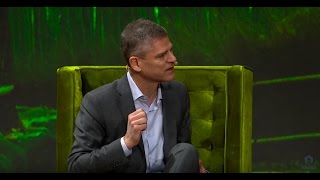
Transcript of a 1:1 interview where Phil Fernandez (founder/CEO of Marketo) and Jason M. Lemkin discuss Marketo’s path from SMB roots to an up‑market enterprise focus. Fernandez explains why the company moved up‑market (price/value coupling and product complexity), how Marketo differentiated against many competitors, lessons on competition and focus, scale challenges (hiring, organization design, when to bring in big‑company executives), key pivots (early product pivot and broader repositioning from lead management to ‘future of marketing’), and operational priorities (measuring renewals, focus on install base). The transcript includes explicit business facts and metrics (see answers).
Questions this video answers
About $250 million run‑rate.
$60 million quarter.
Roughly $50k average deal (a 'barbell' between enterprise and SMB).
Around $30 million ARR.
Approximately 25–30% of his time (would be ~60% if possible).
Chapters
I come to you all as a stranger in a strange land. You know, the Milky Way and Andromeda Marketo, one of the fastest growing tech companies in the country. What we do simply as a company is we make it easier for marketers to market effect.
All right, let's welcome Phil. Thanks for coming, man back.
Glad to be here.
I know you couldn't see the video, but we almost aren't going to be able to recognize the new Phil.
Right?
You're lean and mean now this year.
Right, Marketo has one third fewer, 1/3 less CEO than it did last year. I don't know, probably good.
Maybe there's a few folks that are happy about that. You never know. All good. Yeah, exactly. Thanks for coming.
They haven't cut my pay by a third though, so, you know, at least yet. We'll find out next week.
It's good. There's about a million things I want to chat about, but I want to start with one thing because through all the great sessions we've had this week that I've been a part of, we haven't dug into, which is I want to talk a little bit about going up market and I think I was one of the first like 10 or 15 Marketo customers. I don't know. Bill Bench came by our office.
Yeah, you were certainly top early.
And my VP of marketing comes to me, she's like, we got to buy this thing, this marketo thing. It's $20,000 a year and I'm a startup. I'm like, man, that's a lot of money.
Right?
That's probably, that's a small, that's an SMB account today. Right. That's a trained train account that you let the new kids start. But clearly you made a decision and you're a second time founder to target more, you know, the mid market and up. Right. And so why'd you do that and what are the learnings here for other founders?
Well, you know, it's situational, right. In some sense. But a couple of things we saw, number one, you just made your $20,000 a month mention and that's, you know, that's life at low end. SaaS, I think, right. Is that there's a very hard to match value to product price, I think. And we saw in a very competitive market where five and six and seven companies had entered our space at about the same time we did, there was this huge race to the bottom that embedded in the market a price expectation at the low end that it was like a thousand dollar a month. Product, even if it was producing outsized growth, it was powering new relic to an IPO or was powering you to your outcomes. There was no coupling with value. And it's very hard to have a value coupling at that low end. And so you either have to have something that just has incredible ability to move itself or you have to have some other ability to get out of that price war. And I couldn't figure out how to do it down at the low end. I come up to the high end and it's just vast money sitting out in the enterprise to go after. I think the second thing that's completely separate from that is I'm an innovator, I'm a product guy. We're a product company, we're innovators. And so the product keeps getting richer, the product keeps getting more sophisticated. And the match of that kind of a culture to simplicity, to a low end product wasn't good because how do you keep making the product simpler and at the same time adding global enterprise capabilities and things. And it was clear that our innovation trajectory had to go to a pallet where it could actually deliver value rather than unnecessary complexity.
I got it. So let's dig in on that a little bit more. So we'll fast forward a little bit to the future. But you're launching. The space seems crowded, right? We think it's crowded today. We define marketing automation broadly. How many vendors are there today? I can't even count. A thousand. I mean, you don't even know, Right. Something new pops up every day. You've never heard of. Right. But even back then you felt like. I'm trying to remember. But six or seven real competitors.
Manicore Market to lead. Genius. Yeah, there's a whole.
All of them. Well, a bunch of.
All gone.
But I think, and correct me if I'm wrong, I think you still tried to carve out Eloqua site. The space that's maybe just sub Eloqua, but still upmarket even from the beginning. Right. Am I wrong on that part or were you trying to do peer sort of market position?
No, we were trying to do pure market. You know, we saw Eloqua as sort of this interesting company caught at the juncture between Tom Siebel and Marc Benioff. In some sense, they were neither fish nor foul as an old school company or as a modern SaaS company. And so we sort of saw that as the target to take down. So from that perspective, they were the company we love to hate, but they weren't the primary competitor or the market fit that we were going after first.
Got it. Okay. So in the beginning, there's six or seven competitors that are sort of in the same price point, sort of with similar marketing messages. How did you focus? Like, what let you break out? What was the secret sauce to scaling there?
The secret, the secret sauce was we kind of, we came to market and it's like, you know, from the day one, I do that at Marketo Follow the North Star. It was, we are doing our thing, we're thinking our thoughts, we're going to be immersed in the market. I mean, my co founder would like bring in focus groups of our target buyers and stuff and we'd talk to them, but we just refused to engage in what are they saying, what are they doing. And what happened is we came in, we just didn't play the same game everybody else was playing. Everybody turned their guns on us in the first year and we just kept doing our thing. And what happened was they started to make themselves look small. We just kind of tried to ride above it and it worked. It was a strategy that I could just see that that was a marketplace in time where you could just kind of, just kind of get above it. And it worked.
So were you able, because this is tough for all us founders back then, did you just decide strategically to worry less about competition then and worry more about yourself? Would you give that advice to other founders?
Absolutely. You know, it's so easy. Somebody says something that gets under your skin, it's so visceral.
I see a press, you know. Right.
I mean, we find the same thing in management. People that are defensive or you give feedback to it and you have to figure out those same things happen as companies relate to each other and the ability for one company to hijack another company. I mean, I remember this is the day that I talked to the lead person at Gartner Group at the time and she said, your friends from ELLOC were in here yesterday and they showed me the thing they called their marketo killer. And it was like, I'm high fiving around the organization because they literally walked into Gartner and said they showed me the marketo killer. I had hijacked their brains at that point. Right. And that's exactly what we were able to do in the market is hijack everybody else by not engaging with them, doing our thing.
Yeah. So I wake up in the morning and I get my crunch base or my strictly VC. My competitor raised $30 million and I'm feeling good. What's your advice to founders in that experience, I mean we just feel it so viscerally, don't we? We like to. I mean competition is just so, it's so palatable.
That's right.
So what do you say to folks when they have that experience?
You say to folks, focus on the Competition comes through invention, competition comes through innovation. Competition comes from creating something in the world that isn't there, not responding to somebody else. So it's getting it out of competition is good. You want to foster that. You just don't want it to be responding. You don't want it to be. You got to keep. I think the biggest thing my head of sales when you started was probably our first day. Bill Bench, when he started with me eight years ago, I said let's keep the offense on the field. Right? That was the metaphor that we keep the offense on the field, right. And that was the metaphor for how do you continue to hold the agenda? How do you own the message? How do you drive your own? And that became the early metaphor was as long as we had the offense on the field, nobody was.
Let me ask you a related question I hadn't thought about until now, but since we're on Zenday, right. And Marketo had. Marketo was one of the first companies, I think of it as SaaS of second generation where the growth was faster than the prior generation. Right. It was faster than I had. It was faster than Box. And then the marketos and the yammers start growing faster. And then we have these new kids like Slack that grow, that grow even faster. More power to them. Right. If I'm doing well, pick a number. 5 million revenue, 10 million. And I have a competitor that is growing faster, faster. Should I worry about that? Do I need to worry about relative velocity? Because SaaS compounds, right. And how big is Marketo? Rough and tough. I should know from ARR did announce the stuff.
$60 million quarter.
Okay. So we're almost 250. We're $250 million run rate company, right. So when my competitor's growing, if I'm tiny, but I'm exploding, it's like last year, Stuart Butterfield and Slack. I don't care about competition, right? But when they're outgrowing me, how do I deal with that as a founder, right. And because you're on the opposite side of that in some sense. But how do I, how should I think about that?
I think it all has to do with whether you have a real strategic thesis about what you're doing. You know, I mean, if there's a sense that you're going after a bigger TAM or you're going after and creating an opportunity down the road, then it could very well be rational. If what you're doing is locked in a two way competitive battle for a relatively small town and your competitors going faster than you, that's a, that's a losing game because SaaS does compound and there's just, you know, there's no way those economics ever, ever work.
Yeah.
And I think ultimately, you know, there's just ample rules that the fastest growing or the, I mean, you know, the first mover takes the largest share of, you know, created value remains, you know, every bit is true in that scenarios or anything else.
Yeah. And one related question. Everything, all the. You can obviously segment your market much better than I can, but at a lay level, I'm going to say for a certain enterprise y web centric segment of the market, you have the dominant market share.
Absolutely.
Can I oversimplify that?
No, no, I would say absolutely.
We could define some enormous market and then it's a little bit different. Right. So how do we think about. And then we read all this stuff about power law and the winner captures 99.99% of the value. You've both done that and not done that. You've done it in that you won a huge segment. Right. And you have to continue to struggle. But then there's a broader market where there's multiple players doing. So how do I think about market dominance versus not what are your learnings in one of the most competitive dynamic spaces there is?
Well, so one of my learnings is if I define success as winning the market, you know, I mean, you know, there's sort of a little bit of this culture of, you know, Larry Ellison, you know, I have to win and I'll also lose and that kind of stuff. And I think we're playing in just a massive, massive tam. And so I look.
A massive tam.
I look at a market out there that says that looks to me a lot like the ERP market we have intact here all the way up to SAP. And I mean it's a massive market with many, many players. And I believe that the market I'm in is going to play out that way. So in some sense the success becomes internal. Am I growing? Am I producing value? Am I taking share? Am I able to look out over the horizon and understand how I'm going to get the next hundred million or the, the next 500 million? Is there a plan for that? And at that point then as Long as I can continue growing in a very large tam, you know, the number gets to a billion, the number gets to 1.5 billion. And to me, Dennis, my role is always, what is that next play that's going to enable us to continue to scale the business? And I feel like as long as I can feel like articulate a strategy that at least holds water with the board, with my management team, with the market, then I know that I can define success in terms of just continued growth. In some sense, that's a little hard to inspire. Hey, everybody, rah, rah, grow, right? But it is sort of the recipe now of what we're trying to do. I don't need to find a new tam. I don't need to pivot. I just need to grow. And that's what I'm.
And how has that evolved over time? Right. So today, what's the average deal size today? If it's not disclosed, I don't mean to ask.
No, it's a barbell between our enterprise and our SMB. But the average falls about 50.50k.
50K. And then you've got seven figure folks at the high end. And probably you're putting more and more energy into continuing to close those big deals because of law of large numbers, right? So what, if anything, has changed at like 10 to 20 to 50 and then 100 IPO, and now you're thinking about a billion. You have to think about that. I mean, you're at 250. You're thinking, so what has changed in terms of that focus and strategy at a high level?
Well, it's the numbers get big. And it's just like numbers get big. It's quite shocking when all of a sudden, you know, next year sales, hiring is, you know, you got to figure out how to hire 100 salespeople or something like that. And that's just a completely different problem than kind of pushing through, you know, get six or get one or get your first head of sales or something like that. And so, you know, the, you know, I mean, the scale challenges that come up are just incredible and trying to be ahead of them. And they're insidious, right? Because they're not things that any given day, it's the frog and water. Any given day you can power through some scale challenge, but someday, all of a sudden, the frog's been cooked, and it's exactly that and spotting those things and trying to get enough ahead of them. So that's a lot of what's going on in business now. And what are the couple of things. What are the couple of priorities? Because of course, as you get 1,000 people and you get all this going on, it's just the tendency to want to do more and more and more is so strong. So how do you bring it back to stick to the knitting, get a few things done, still establish priorities is the critical folks.
And what are your. I think you announced yesterday in the earnings call that Bill Bench had retired to become emeritus. Right. He'd run all or part of sales since the beginning. Right.
Zero to an IPO, zero to $200 million. Not bad at all.
So how do I know when I need to change out my team, top my team? How do I know when to stick with my team? Right. I mean, there's no perfect answers. But you've learned, but you've been on a journey, right. What's your advice? How do I know when to stay change or especially if I'm passionate about my team, I'm connected to them, right?
I think. Well, number one, you know, the degree of change that happens from, you know, a million to 10, I mean, it's just incredible, right? So you need. Incredible. You need continuous learners, right. So if you have, you know, and as you talked about, you know, Josh talked about Aaron and the like is exactly right. If you have people that are continuous learners, then they are not guaranteed, but they're likely to run the race. But you can spot somebody that's blocked really fast, right. And that's somebody that is going to get blocked. So I look a lot for curiosity, that drive to, you know, what can I teach, what can I learn? Says a lot for people that are going to scale. You know, I think, I mean, like around heads of sales especially, you know, there's a culture that you get shot, you know, that you are a head of sales that gets boxed into a certain.
I'm a 1 to 20 guy, 1.
To 20 guy or whatever. And you know, we spent a lot of time on that where it's like, what do I need to do to do next? And I just kept seeing somebody saying I want to learn not to be in that box. And so we found a phenomenal collaboration around sort of that common mission of we're not going to let this happen and we're going to analyze it. And it really is that sense of continuous learning and that sense of that, you know, I haven't mastered my job, I have to keep going. Ultimately that's a case though, where I then saw the business model had really diverged. I mean, that guy is like the world's number one specialist in these high velocity models. And I'm probably the only CEO in the world that's busy now trying to tear down a high velocity model to build a little more slow one. And it was also clear that I then just did not have the right skill match. And then it was time to start to put a much bigger thing in place. And loyalty had to lose out to just a raw skill analysis.
Yeah. And how. And related to that. So you want folks that can continually learn, that helps them scale another stage. So you're at 250 now, rough and tough. Let's just call it 250 for discussion. Folks hiring now, do they have to have experience at a billion? Right. And when you hired folks at 10 or 20, like how are you looking for a stage more experience? How much risk should I take? I think the classic mistake we make at a million is we hire someone that's at a billion. Yeah, way too many stages. So what's the answer to how much? How much is necessary?
I would say I felt like when we got over 100 million kind of number, all of a sudden the executive leadership, I mean my need to be outside became higher. And you know, the opportunity to do that, the need to really be working on strategy in a much more explicit way and thinking much more systematically about kind of what's next, et cetera, produces a phase change in the kind of executive leadership that's needed. People who are, whose first reaction is not how am I going to do that, but how am I going to find a place in the organization that can do that thing, that their immediate reaction is how to put it into a scalable organization rather than oh, I can just take care of that. And that becomes really critical kind of at that $100 million mark. And that's where all of a sudden I found that I had to start to be looking at an SAP or looking at a salesforce or looking at big company people that could come in.
Folks you used to take shots at.
Now you're hiring those executives and they're the ones that have the experience and the intuition to think about organization design, think about other things that become much more important to continue to scale. And that stuff's very hard to learn on the job. You know, that's the kind of stuff you need to have a mentor, you need to have role modeled for you inside a larger organization. Startups don't know anything about strategic planning processes, but it is a quarter of a billion dollar company. We have to have one that's A deficit in my own skill set. So I knew I had to go get somebody that had seen that at a bigger company. And that starts to become real critical at scale.
And so let's flip that around. So you have to hire the SAP, Oracle salesforce people. You have no choice. No one else operates at that scale. Now that you've been through this, what's the. And I mean, usually there's always exceptions. What's the earliest I could bring in that person, assume I'm well capitalized, I can take a little, I can hire a few extra people. What's the earliest that those people can be successful?
You know, I mean, any one case, you know, you could say that individual has the ability to kind of, you know, go down. But I think, you know, I think those kinds of people, if you want to do that stereotype, are too big below a few hundred employees, because they, they, they, you know, there's in some sense a sense of creating what in a small company feels like bureaucracy. It feels like molasses sand in the. I mean, things that, you know, slow you down. But at the next phase, when you're like thinking about Sarbanes, Oxley or doing whatever, you have something else. And if you get, you, if you get somebody who's so immersed in those bigger things, they will start to introduce systems and processes that slow an organization down. And it's very insidious because then other people start boxing them out, sort of seeing them as an odd person out, I think. And in fact, I got to do that. I did that to myself. At Marketo, we don't need to do names in history, but I had somebody who was just too big and they didn't make it.
So you made the mistake that many.
Of us make yourself.
Right. And how early was that hire?
That was at about 30 million.
30 million. So that's interesting. So you found that was too early to hire Ms. SAP?
It was, it was too early. And what we ended up with was just a whole bunch of what felt like big company stuff all of a sudden appearing where we were still very entrepreneurial and could move on a dime. And it just, the whole organism, rejected, you know, the organization.
Did you reject it or did the organization rejected it, but you were okay with it?
I watched the organization reject. I mean, for me, it was like liberating because I could all of a sudden stop. You know, I could see myself being able to start to do a new set of things and stop doing a new set of things. And I was probably still kind of grooving on it when other people were like, hey, this is getting, you know, this is. This is really getting weird over here where he seems to be talking about something that's different from everybody else in the class.
Too much process. Yeah, Too much process.
Layers and you know. Yeah.
And it just was even a 30 million. And this was obviously. We don't have to talk too much about this particular. But this was obviously a great executive. Right? You're a great CEO. You did your diligence, did your homework, you did the dinners with the spouses. This was a great person. It's just even 30 million air was too early.
That's right.
Because he or she had not experienced this phase before, just couldn't operate in.
That's right.
I was.
I was tremendously seduced by what it was going to do for me, but it just was not, you know, it's just. It was just too big and too early.
And 30 million I still think of as is pretty mid stage or late. So If I'm at 30 million or 20 or even 10, and I'm hearing the siren song of this executive and also between us founders, I'm getting tired. Like, I'm a little. And I like. This feels like relief. Right. If I just hire the person that scaled it all before. Is your advice to just sort of suck it up and keep pushing through to the next level or what would you have done differently at that time to do it again? What would help you get to that next level?
I needed change, right. So what I knew I needed to do was change things up because I wasn't tired. But I was getting a little bit in a rut myself, a continuous learner, and I felt like I was being stuck from exploring the next new things. So I knew I needed a change that turned out not to be the right one. Not very long after that, I brought in my first cfo, much more operational. He took a bunch of money.
You brought in your cfo.
I brought in something millionaires and then a CFO at that. And that was right. Because that let me offload a set of things that I wasn't myself continuously learning into. And it offloaded a different part of me. And he was a start while experienced, public company cfo, a startup kind of guy. And so it didn't produce that kind of same impedance match. And so I do think that that sense of changing up your executive team of dynamism, of intentional change is important, but that sort of get the seduction of the big SAP person.
Everyone falls for it in their own way, the 30 million one's a pretty interesting one. So one thing on the journey you described, it's interesting. A lot of folks that I've talked to that have gotten to your scale talk about reinventing the company. Right. We had Jay Simons from Atlassian on Tuesday. You talked about there have been five Atlassians, and Atlassian is 13, 14 years old. Marketo is nine or something like that.
Just celebrated 10. Yeah.
Congratulations. Let's have a little. That's quite an accomplishment, it sounds like, and I might have heard you wrong, you don't feel like you've reinvented yourself four times. You feel like you've just continued to refine the focus from the beginning. Has the company. Have you had to reinvent the company, or is it the same. Is it pretty much the same company just on 250 times bigger?
No, I think there's been two real reinventions. We did an early pivot. We had a product out four months after we raised.
It wasn't even on Marketo today. Right. It was an SEO product.
It was an SEO product. That's right. And, you know, killed it, you know, early and aggressively. And it was, you know, pretty painful because we were pretty proud of it and all those kinds of things. So that was a real, you know, that was like a real classic pivot at, you know, you had.
You had already raised your Series A or Series A. So you had to go to tell them, we're killing the product you invested.
In the product you invested in. You know, it was nice, but sorry, it didn't, you know, and it was actually working, but it was just churning too fast. And it just was. I could, like, I played the tape forward. It didn't end well. And so I made that decision. And then we've had a much more strategic one, which is Marketo started in this sort of sense of we help people build more leads for their sales team was what we were all about is, how do you do that? And there was a moment always in the back of my brain that this was a much bigger idea. And I had actually, it was an event where I was out selling to an East Bay at Clorox. And the woman who runs at the time ran Hidden Valley Ranch Salad Dressing Globally, it's Clorox product. If you use Hilden dad on the ranch, it's a little weird. And she said, I figured out, Phil, that if I use a B2B lead nurturing product the right way, I can get homemakers to pick up my bottle of salad dressing in Safeway rather than Newman's. And it was like she had done this whole mapping that took our product and our whole capability and mapped it to a whole different use case.
I've seen that before.
I knew it was back there, but it was not anything in the mix. And we started to see. And so that was like a. This thing that we seized on strategically, that, hey, this is not a lead management product. This is the future of marketing, right? And so we went very big, and it's what has now produced kind of a, you know, a leadership spot on Gartner Group and other things that if we hadn't done that, we would have defined ourselves too small. And I think was sort of the seminal third act, if you will, from our campaign.
And what did that change? Did it change the roadmap? Did it change the team? How did that inspiration. What did you do the next 12 months to execute those changes?
What I realized was how deeply ingrained a set of motions can get in a company, right? Everybody says the same thing, right? Like, I'm out with the sales rep, and he's, you know, we're selling to, I don't know, you know, a healthcare network in Texas or something. And he's talking about, you know, leads and leads in your pipeline and your salespeople close. And I'm like, you just don't even speak any language that's even remotely related to these people that are talking about patient readmission statistics and stuff, you know? And I realized that he was oblivious to the fact that. That he had learned a set of languages that weren't relevant to the situation. And what I saw was a company that had just learned a set of motions, and it had gone, you know, had gone from learning to, like, deeply ingrained. And so it became a creative. How do you unlearn a set of things before you can start relearning a set of things? And so raising the awareness of, you know, I mean, it's exactly like unconscious bias. As you think about diversity or other things in an organization, you realize how deeply those things get ingrained. And so it was an unlearning exercise for a year.
And did that. And I probably should know this, I don't. Did that change to get back to nuts and bolts? Did that allow you to drive ASPs and pricing up because it was a bigger solution, or did just enable you to expand your customer footprint or both?
Number one, it allowed us as a brand to position ourselves as a company that you could. You still got to execute. It's still competitive. But you could see it as a billion dollar company or whatever. Right. I mean, the tam, the ambition, the footprint that we were able to describe, we were far enough along it was plausible and it was ambitious enough and big enough that it gave us a target to shoot for. And I think it's sort of that bhag in some sense more than anything else that it did for us, which was it gave us the ability to again, kind of take our game up and present a new face to the market, a new kind of confident face. So it changed the whole culture of how we thought of ourselves and our relation to what was next.
So let me, I want to tease one thing on the, on the Clorox example, because she's talking about meeting with customers. A lot of founders, I think we don't know what to do or we get it wrong. How much time now and has it changed do you spend with existing customers and prospects? Like what? How do you budget? And has that changed over the years?
No, it's, you know, my career started, you know, way back when coming out of Stanford and in 82 in a Kleiner startup that went public in 83. So I got it like back in the early years, you had at least.
Three or four iterations.
Yeah, I was just a few kid, but the sales guy found me and started bringing me to the field even when I was writing code as one year out of school. And I found this incredible resonance between talking to customers, telling them the story, taking the pitch up, and realizing that I was always learning and asking questions implicitly along the way. So that sort of was what it started, my whole career of being half one foot in product and one foot in customer land. And I can't exist in any other way because that's the primary data. And so I spend, oh, I don't know, 25% of my time with customers, 30% of my time with customers. It would be 60 if I didn't have investors and other things to spend time with. And to me it is.
That's not prospects, that's existing customers.
It's both. It's both. I mean, you know, and it's. But I mean, every existing customer, especially in the enterprise, is just another prospect, right? Because you kind of, you land and expand or how do you figure out what the next.
But you have two different groups pulling you, right? You've got the sales team pulling you into the big deals and you've got success and how you define it.
That's right.
Pulling you. So how do you, how do you juggle that so it's 25 to 30% of your time, everyone write that down.
And 60 if I could, you know.
60 if you could. You have these earnings calls and a few other things to deal with.60 if you could, because that's where you see the ROI.
That's right.
You'd like to spend more than half your time. Maybe that's the lesson to folks that don't have investor calls in public companies. You'd like to spend more than half your time with existing new customers. Right.
Because I learned from it, the customer. You know, I succeed at selling what I take back. But it's also a way you teach the organization, right. If you're a founder, if you know the product better than anyone else, you know the story better than anyone else, the ability to be out kind of doing that so that people can see it, you know, that will, you know, one sales call in an enterprise in that way is like worth 10, you know, 10 hours of book learning or something like that. So it also becomes a way to transmit the specialness of a founder, CEO, I think, or any founder out to the market in ways that is always going to be special compared to phenomenal people that fill in behind.
Yeah. The customers. Even if you have, even if you're at a half million revenue, they love to meet the CEO. Right. That's the thing that's hard to get from the outside. You go in the early days and I'm a CEO, but I got nine people. The customers still love to meet the CEO, don't they?
They do. And as you're looking for like what pain is behind the smile or whatever else, I think also, you know, the very nature of the people that are the entrepreneurs that are able to see an idea and start a company are also able to see kind of behind the curtain there. And so it becomes just an incredible source of information for, you know, for a team to be able to be.
Out and do that and related on that. So half your time, if you could, 60%. And then another thing that founders struggle a little bit with is I got to spend all my time closing the new deals, right. Because I got. And they. And I think for a while, most of us don't spend enough time with existing customers until they understand the magic of upsell renewal multi years. Right. What's your learning there? What's the right ratio of prospects to existing customers for your time?
You know, I can speak for a company that grew up with this just amazing acquisition engine, you know, very fast. You know, we talked about, you know, bench Building the model. And even though we knew all the book learning about, you know, the customers and retention and everything else, it was amazing how that, you know, the cocaine of the new customer acquisition can be very addictive. And so it's fun.
Go out, close the deal.
And that's the, you know, on the surface that feels like the growth driver. You know, it's what, you know. And you know, we got laid. I mean, you know, it's still even to this year at ten years and a quarter of a billion dollars. Our P1 in the business is called rotate into the install base because we're still fighting to build the same degree of just even like sales ops discipline for that as we have grew up organically for new. And it's a constant journey.
Yeah, that's interesting. Any Zen learnings in terms of how to manage that, in terms of putting quotas on the customer success team or anything? What's the best way to have the best outcome in terms of growing the existing base?
I think, you know, the things you measure, the things that get attention, I don't know, Luke Gerstner said that years ago or something like that and some mangled thing and I think, you know, whatever the first set of metrics package and, you know, anybody that's building a SaaS business without sort of a sense that there's a set of metrics that need to be the guideposts are probably a mistake. You know, making sure that, you know, renewal metrics are in from day one and success and satisfaction metrics and realizing what are the maybe one metric up from renewal because that's kind of a lagging indicator. How do you measure are you being successful in the install base? And to ensure that that's from day one part of the package, not, oh my gosh, we're at the one month or one year renewal zone now. We better think about that.
So no squishy goals for anything at Marketo. Everything's measured.
Everything's measured. Or the thing, you know, or, you know, the things we want to either excel at or change or measured. That's right.
It's awesome. All right. I wish we had another half an hour, but let's thank Phil. This was an epic session.
Thank you.
Thanks.
Awesome, man. Thanks.
Really good.
Yeah.
Thank you.
Take care. Take care. Take care. Take care. Take care.










