Q+A and AMA with Point Nine Capital Managing Partner Christoph Janz and SaaStr CEO Jason Lemkin
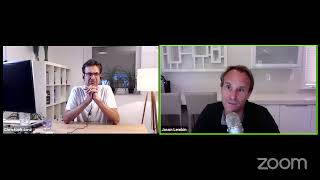
Christoph Janz and Jason Lemkin discuss SaaS investing during COVID-19. Investor sentiment is cautiously optimistic (Janz rates it 8/10), about 15% of SaaS startups see direct boosts like Loom, and Point Nine completed two deals since mid-March without in-person meetings. Pre-revenue companies need an MVP and product-market fit signals; solo founders can get funded but face a higher bar.
Questions this video answers
About an 8 (fluctuates; cautiously optimistic).
About 15% (direct boost).
Two investments made and a third about to close; in two of these cases founders had not been met in person.
Chapters
It was good to do it the second time, learn the technology, but I thought this was pretty awesome. I learned a lot. I had a lot of good conversations, so I think it's great. And we're officially done for the day and ending early is good. And thank you to Christoph Jantz for doing the kickoff session. Especially from Europe, it's easier for you to get up early. Although I was up and I thought we could do two things, folks. We didn't get to Christophe's Q and A, so I'm going to ask him some of his questions and some general ones and then any questions. And we had a few on SAS University. I'll pull up too. Anyone that anybody that attends wants to ask either of us to just click on the QA in zoom Q and A and we'll try to answer. Answer more of them. But I know we lost you 30 minutes, but Christophe, before we do it, just out of, like on. On a scale of 1 to 10, as an investor with all this drama, how do you feel? Like, how do you feel as an investor when attend.
That's a really good question. It really depends on like the. The last board meeting or the last, like, it's. It's a bit of a roller coaster. Right. Like, some. Some companies are obviously affected negatively. A lot of companies are, like, not that affected or just, you know, like, maybe mildly affected. And then we have a couple of companies in the portfolio that are benefiting from. From this because it's like around Telemedicine or Loom, for example, is skyrocketing. Yeah. So I would say it's really hard to. I know you want just one number. It fluctuates. It's kind of like a quantum in precision. Like the cat is alive and dead at the same time. So I don't know. I mean, I'm. I'm. I mean, I'm. I'm. I'm an internal optimist. So I feel.
Let's.
Let's say it's an eight. Obviously, I think the world is in big trouble and that is a big. That worries me. But like, just personally, I think, like, I mean, I'm every. Everybody is healthy in the family. Hope. Hopefully on your end too. And like, like, no like tragedies like this. Like really like close to. To any. To. To anyone in the family or the company. So all good from that perspective. And I think. And we're probably in the best industry that you can be in.
We are. That's unexpected, right?
Yeah. So I think. Nothing to complain about. If you Compare it to pretty much any other industry you could be in at this, at this time.
And what do you think? Let me ask you one other macro question. Let's answer some of these detailed ones. But I talked with a few folks, I talked with Keith, Keith, Keith Raboy, I talked with Aileen Lee and no one actually knew the answer to this question. But you've actually partially answered it. Like, what percent of SaaS startups do you think are benefiting today? Like you talked about Loom and a few others. If you had to spitball the 0.9 portfolio, what percent are getting a boost? I think it's 15. About 15% are getting a boost in the type of SaaS companies we talk to. But what do you see in your portfolio? Does that sound about right?
I would say that sounds about right. Like I think it's a relatively small percentage that gets this direct boost. Like we are literally in the second or third week of March, traffic like doubled or tripled in some cases.
Yeah, March was really outliers in March. Right.
So we have like maybe a couple of companies in that category. But it's also quite nuanced because there are also a few that were originally it looked like they would be highly negatively impacted, but then they changed something and boom, they became a beneficiary. So just as an example, maybe we are an investor in a company called Dogplanner, which is an online marketplace that connects doctors and patients and also provides like back end functionality for doctors. And initially it looked like this would be very bad for them because obviously physical visits to doctors are down for anything that's not an emergency or that's not essential. But then they very quickly developed and launched a video consultation functionality which then took off completely. So I think it's also a time where we've seen a number of founders adapt and seize opportunities at a record speed, which is really awesome to see. So I think there might be more companies that benefit from this or at least turn this thread into an opportunity. It just maybe it takes a couple of weeks or a couple of months and, and then like midterm, I guess the percentage of SaaS companies that will ultimately benefit from this will increase, but that's probably like overshadowed temporarily because of just uncertainty and longer sales cycles and all of these things.
Yeah, and how you sort of, you touched on this, your strategy in this morning, but like since March 15, like have you guys done brand new deals with founders you never met in person? You've certainly invested in founders you haven't met in person? Before, so unlike almost everyone else, say this isn't a completely new world for you, but have you. How many net new deals have you done and have you slowed down? Do you think you're slowing down? What's your sense of cadence and everything since March 15th?
Yeah. So if I got the numbers right, I think we have made two investments since then and are about to do a third one. And in one of these cases, I already knew the founder. Like, we had met in person before, but in the other two cases we have not. And it's not that unusual for us. Like, we actually started that way. Like when Pavel and I started investing together, I was on Barbados, of all places, supposed to do a.
Now I remember that.
Yeah, Sabbatical. You remember that? Yeah. And Pavel was in Berlin. And so that's how we started point nine and how we did the first investments together. So we're quite used to interacting with founders over the distance and don't see it as a big issue. Meanwhile, or until like three months ago, we did in most cases take advantage of the opportunity that we can meet people. I mean, there's obviously a lot of advantages if you can spend some time together. But we've always, when, like when it was about an investment that just really, really far away and was very urgent, then we, and we've always, occasionally over, I think in any given year, did a few investments where we hadn't met the founders in person, pre investment.
Let me ask you one other question and then let's definitely take some from this list, but you and I were chatting by email a week or two ago, maybe not too long ago, about a startup in Europe, and you asked me, do you think this company can hire a VP in the US Like a traditional Bay Area, you know, would only work for a Bay Area startup vp. And I, and I said to you, yeah, I think now I think things have flattened, right? And that was just my opinion. What do you think? Do you think things will stay distributed and flattened? Or do you think, you know, they just announced today we can go back to Disneyland. Do you think the second we can live in the old sort of, you know, SAS still is the center, you know, the Bay Area is still the dominant center. Do you think it will rubber band back or do you think we'll be flattened forever?
Hmm, I don't know. That's a big, big question. I'd love to know the answer. I think may also depend on how long there will be periods of shelter in place and work from home. I think if, like, if things were going back to normal within in a couple of weeks or a couple of months. My guess would be that some things have changed. Like I think like the attitude towards things distributed teams and work from home. I think people have learned like how to make this work and they will not forget about this. But at the same time, this unique concentration of talent in the Bay Area, I think doesn't go away overnight or not even within a couple of months. I mean if.
No, of course not. Yeah, it's a good answer.
If there is a shelter in place like for two years and a lot of people change jobs and during this time, like the preference to work for a local company is probably smaller because there is no office and the social thing is not really happening anyway. I think then it could change, but I would say it'll take some more time. So I think when we go back then it's not exactly like to where we came from, but it's also not completely different or I think there will be some changes, hopefully the most positive ones. But I still think that the Bay Area is unique for lots of historic reasons and I don't think this will completely go away suddenly.
Yep. Let me ask you one. This is a classic question that you could have answered or we could have discussed for the last six years, but it's always good to get a May 2020 perspective. Here's the question and I'll slow it down, but what valuation range is reasonable for a 1 million ARR startup with 50k ACV deals B2B and that can get to 10 million in two years. It's going to go from 1 to 10 in two years today. And I, I'm sure that you could add a lot of qualifiers to it and asterisks and daggers, but 1 million to 10 in 2 years. You're at 1 million today though, 50k ACV. And let's assume to make the scenario better, high NPS and high revenue retention. Right. Not. Not a churn and burn company. Good cut, 50k. They probably have to be a good customer at this price point. But. But it's possible, right? What's your guess? This one to 10 in two years today. What's the startup worth? Christophe?
Yeah, good.
I mean, napkin question right here, isn't it?
Yeah, yeah, yeah, it is. I mean if there are really, if there are strong reasons to be like extraordinarily confident in this 10 million two years later, like if you can convince enough investors that this is actually going to happen and that they can kind of look at what is the company going to be worth in two years when the company has gone from 1 to 10 and then discount from there, then I think that company has a good chance to raise at I don't know, 30, 40, 50. Because then I think people do the math that if, if that plan becomes true then the company is worth maybe 150 or 200 in two years. But lots of caveats, like tons of caveats. One being that we're probably not the ones who would invest at that stage it would be too late for us. So the question is if this was an existing portfolio company of ours and we would try to get a great deal for them from a great series A investor. So it's more from that perspective and I would say in these like 20x or more times ARR, this does not factor in a COVID 19 discount and I think it's still unclear what that discount looks like. I mean there is no discount in the public markets right now. SaaS companies are at an all time high. Maybe because it's a bit skewed by slack and zoom and because there are so many beneficiaries or the ones that benefit are so big and benefit so much. But on the other hand, maybe to try to answer that question, if you really expect to grow from 1 to 10, well then you can't be hit that hard, right? So whatever the COVID 19 discount might be probably doesn't apply to that company.
Yeah, it's a good question. Okay, it's a good answer. Let me answer one that both we just got in the Q and A and you sort of got. Today you invest. I want to ask a second question after. But you invest both pre revenue and post revenue. Historically you've invested early. I don't know if you've invested pre product, you can tell me. But you've certainly invested pre revenue, right? Even loom was probably pre revenue, let alone others, right? So the question is when you do invest pre revenue, how much of how much do you have to have? If it's pre revenue, how much of an mvp, how much traction? What, what is when is enough and what, what are those, what are those KPIs if it's before revenue for you.
So we usually want to see a product like whether it's a beta version or an MVP or a 0.9 version, however you call it. So usually you want to see a product and some signals of product market fit or at least of customer development that founders have done a lot of interview because we usually don't pretend to know what the market wants or needs. We want to see some, maybe not evidence, but at least some suggestions or signals of there being a need problem and a product that can address that and founders who can create that product. We've done a few investments that are even earlier, but this is relatively rare. And usually when we just happen to know the founders and it's the kind of founder who we know so well, trust so well that we would just invest whatever he or she does as the next thing. But that's not the typical 0.9 capital deal. More typical is that the company is somewhere on this trajectory to product market fit. And, and that there is some signs that users want this, but it definitely doesn't have to come from revenue.
Yep. All right. Just a very narrow one, but it always. The answer might be interesting is would you invest in a solo founder?
Yes, for sure. We have, we have done this at least a couple of times. It has, it has additional risk. I think the bar is even higher for that founder because initially, at least in the beginning, he or she carries just even more load. He or she also has to hire better people earlier than if you start with two or three people and you can own the key functions for in the first years. So. Yes. But I would say the bars is very high for that individual.
Yeah. Let me ask you, what's that? Go ahead.
How about you?
Here's what I've learned. So if you'd asked me when we first met and when we started to invest together, I would have said no. I would have said I could barely pull it off myself with great co founders and the last thing. And I only want to invest in founders that are better than me. So I don't want to take that risk. It was just a simple rule. It's just too hard. Right. And then obviously you would have missed the zooms. Right. And you would have even missed Twilio, if we're clear about it. Right. And you would have missed Mulesoft. Right. We can point to a lot of examples and then there's others since then. And then what I really, when I reflected on it, I realized that this is both from an investing standpoint and from a founder and life standpoint is you can find a co founder later. This is true. I believe for most of us as human beings, we need someone else to carry that founder burden. It's too much to do it on your own. You need Pavel. Right. Maybe you guys are out there doing your own investments and just catching up at the end of the day. But I think you guys need each other. It's my guess, right? You could tell me I'm wrong, right?
No, no, absolutely. Yeah.
I think you need each other, and I think that. Look, it's perfect if you have that person with you on day zero and the first year and the first month, but I think you can find people later that care as much. It's not easy, but nothing's easy as a founder. And I think Eric at Zoom has attracted, over the years a number of folks that were almost at that level. Right. That worked and carried as hard. And so even though he often talks about being a solo founder there, he hasn't had to be the only person to carry that level burden. So that's what I tried to learn is, you know, who's almost at that level, and can you find someone. Can you find a COO or a CMO or a chief product or whatever? The title doesn't matter, right? But that other person, that later, in three or six months, someone else is carrying the burden. And I think the best ones find that way, but sometimes they rotate them over the years.
Yeah, right. And I'm also wondering if there are times during the journey where it's hard to add that person. Right. I mean, at some point, maybe your VPs become. Or your executive team, like, become these people who can share such a big part of the load, but they don't join in the first years. So if it's a. If it's a true co founder, then it's. They are just hard to. Very, very hard to hire. Right? They.
Very hard.
They tend to start their own companies.
It is hard.
So are you still looking for that person for Saster?
You find. You find that helps? Certainly Amelia, who may be or may or may not be on this, has stepped up and owns a huge amount of Saster and has carried a lot of that load, and we couldn't exist. So that's an example of it happening. It does happen. It happened in the old days at EchoSign. I lost my co founder. He left after eight months and went on a year of paternity leave without telling anybody. I really didn't recover in many ways. But ultimately my. My VP of sales, Brendan, who still works with us in many ways, he took over that role. Not completely, but enough. Right. To be a leader, to care as much about the customers and the product as you do. At least a portion of it. Then you have someone else. When you shut down the lights and go home and turn off the computer, someone else is carrying that load. But, yeah, it's hard to find it like month three. That's a good point. So the solo founder has options, but it's all on your own in the very beginning. Even the. What's the mobile app? The clubhouse. There's two of them, right? There's two of them, yeah.
And if it's only one, like he or she needs to be technical and good at business, right? Like we. At least, that's at least we. I mean we wouldn't invest, I mean, never said ever, but we probably wouldn't invest in a business founder without the technical expertise in SaaS. It's just too important. So it's more likely that it would be somebody who is strong on the tech side and like good enough on the business side or can, can learn. Can learn that part.
Yeah. The other flip side, I think so. I think it is for the, for whoever is asking. I think obviously, you know, a team of one is hard to invest in whether it is a co founder technically. Sometimes folks are co founders on the slides, but they're not co founders in the real world. They're not co founders in control or decision. Right. Or other areas or equity.
Right? Yeah.
Many levels. So there can be an elite. You can have a slide in your deck with six co founders and really only have one carrying the load. But it's hard to do it all on your own. It's hard and for no other reason that it's hard to be good at technology and business and sales. Like in the day one, right? You see the great ones like Jeff Lawson who always talks about how he learned sales and how you have to be great at it, right? But day one, it's just, it's hard. It's hard. It's hard to do it all. Let's see what else we have that might be good or interesting here. See this one is not that interesting to question on its own, but the answer might be interesting, right? Just how people think based on your experience. What does it take for a first time founder to hire a superstar developer? A superstar from a brand company? Should you try to hire folks from a brand company? Should you try and lure the best folks from the hottest, from the Twilios, from the Zendesk, from the Algolias, from the whatever. Should you try to hire those superstars as a first time founder or where do you find the 10x ers?
Is a question specifically around developers. Did you say that or is it across?
Beauty to us is you can take the question anywhere you want. You don't actually have to answer the Exact question. But yes, the question is around developers. So whatever version you want.
Yeah. So on developers, I'm not so sure if like the, like the, like the brand is as important as it might be in other areas. Happy to hear your thoughts on that. I think when it comes to the VP of Sales, I have a pretty strong view that if you are at a stage where you want somebody who has done it before or who has been close to the, to the person who has done it, then that needs to be in a company that has scaled very, very, very fast, like the 1 to 10 or 10 to 30 in like two or three years. Because that is the big like the big task ahead. And it's just very different from any company that grow like classic, like traditional company that might grow 10 or 20% year over year. And then using that logic, you basically end up with a great brand. Right. And so then you want somebody who has worked at Salesforce, Slack, Zendesk, you name it. But when it comes to developers, I'm not sure if it's as clear that you can only learn the skills and the craft at one of these brand names companies. You can probably find great developers who worked on maybe some obscure open source projects or maybe consumer apps. I mean it depends on the stack and specifically what you want. But yeah, I think that would be my initial reaction to that.
Okay, this next one, it's a very tactical question for pitching an investor, but I don't know the answer. Today with zooms, when there's multiple co founders or a whole exec team, do you want all of them pitching you on the zoom, all these windows or just the CEO? And does this change when you sort of bring the team to the pitch? Because you talked about really getting it good this morning, right? Nailing the pitch, nailing the data room, nailing the diligence, like just getting it better. And what's the answer in terms of who should be doing the pitching and talking when you could be overwhelmed with everyone on the zoom.
Right. I think both options can work. I think it can work that it only, I mean like this, I mean maybe the default option is that only the CEO does all of that and the technical co founder or the other co founders, usually they have also other stuff to do. Right. So that's also a time investment question. I think if the team works together really well doing this pitch collaboratively, I think it can be even better than if a good point, only the CEO because then you see how, how they interact and if they kind of know, maybe I should Let her answer this question. I'll take this one. I'll let him take this question. I think you can maybe get a bit of the vibes between the team. And if that's a very positive one, I think that can make the pitch even more convincing. I would also say you don't lose that much if you have two or three people and only the CEO talks, because we're totally used to that. It's so frequent that there is a CEO, he does all the talking and pitching. And for a cto, it's perfectly fine to say nothing until you're asked a technical question. I mean, even better if you can get some kind of positive vibe and special insight from each one. But I mean we have a lot of tolerance for super geeky people, like totally unpolished founding teams. You're probably, I mean you've done a lot of international investments too, but investors who only invest in US Companies are kind of spoiled by the pitching skills of people in the US we don't grow up like this or we're not trained like this in Europe. And I think it's even worse from an education perspective in Eastern Europe. So that's. And maybe I'm like digressing, but it's actually quite important for us to try to apply these discount factors. Like if we cannot use the same pattern recognition that you maybe train yourself to when you only work with Bay Area founders with people from other regions and also that's language issues and all of that. So we actually, we try to not pay too much attention to the pitching itself, but more like to the depth of the thoughts and the insights.
It's a good reflection. This one sounds niche, but it definitely ties into your advice this morning of getting more polished right over these times. The question is, and maybe a lot of nuances, questions, would advisors make good references for first time founders? And if you don't have great references, if you don't really have a ton of past employers, is that a gating item? Can you not get funded? What do you do when the ref. When the references are there or they're not great, how do you handle that situation?
So maybe to clarify, when I said polished, it's what I was mainly thinking about is like the quality of everything that you produce. So yes, it's like the deck, the data, it should be consistent. It should be like the KPIs that you choose should makes sense if you should be self explanatory and all of that. And about like references when we've invested in like first Time entrepreneurs who didn't have many jobs before, if any, so you can't really reference them. In that case, there's nobody you could ask. And if there are mutual connections, that's, that's very useful. I think it's a shortcut. If I can hear from a trusted mutual connection, if I get a thumbs up, that makes things easier. But it's definitely not a deal breaker. It's not like we wouldn't invest in founders if we cannot reference them.
That's a good answer. It's not in the top five most important things to have great references, right?
Yeah.
Yeah. For what it's worth. Yeah. I think your point was just to be as polished as you can in these times. Right. So people can learn more remotely. The only. If you look, if you look at my LinkedIn, you know, almost all my LinkedIn recommendations are around times I was fundraising. They're a little dated. It's a hack. But if you get 20 or 30 folks giving you positive LinkedIn recommendations, you know, it's a great passive way to address this.
Right.
It has a. It's just an easy hack to implement. And boy. Okay, let's just do a couple others because it's warm. So we'll, we'll give it five more minutes and then Chris off. If there's anything you want to talk about, we'll talk about it. I know this one sounds really basic, but it might spur an interesting response. Bootstrap or take a seed investment. Or both are. Both are an option. How do, how do you answer that generic question in May of 2020?
I mean, if, Let me see if I can see the question. Or you mean like from the perspective of a. Like which path is.
If I have a choice, if I can bootstrap or I can take a seed investment, what should I do right now in May of 2020, should I take a seed investment or should I keep bootstrapping?
I think the first question, and I think that's irrespective of Corona or COVID 19, is like that when you go down this path of taking somebody else's money, you set yourself up for a certain type of journey. And if it's $200,000 from an angel investor, it's maybe not. Maybe you have not completely gone through this point of no return, which you will go through when you raise a couple of millions from a vc. Basically you set yourself up for a long journey and a big outcome. But I think even when you take the first 200 or $300,000 from angel investors, I Think as a founding team, you need to talk to these investors and reflect whether there is alignment on the type of company that you want to build. I think that's the most important decision criteria then whether maybe this additional capital can help you develop your product faster or do some more experiments in terms of sales and marketing. Obviously that's important. But if you're not sure, if you want want to go after a really big opportunity and have other shareholders on your cap table, then I think you shouldn't do it. Even if it would be nice to have some additional cash. I think in that case it's just better to grow a bit more slowly.
Yep. Yep. I'll give you. I've thought about this more recently. I'll give you my more. I agree with all of that. Of course. I'll give you my more nuanced view though. The stakes go up not just how much you raise, right? Not just valuation, but the stakes go up. The number of times you raise, which is less obvious, right? The number of the expect, the number of folks that expect things from you, the number of protective provisions, the number of folks that are checking up and the number of folks that get worried, right. The number of worriers goes up with each round and each name. And I think, I think if the real truth is bootstrapping or a small amount of money, and small can vary in geography, right? Maybe in the Bay Area it's under a million, right. Maybe in Berlin it's under 700,000. Maybe in Lisbon it's 300,000. I don't know. But whatever the number is, I should know, but I don't. I think if you raise less than that, the real issue is dilution because true angels can lose their money. Like if you take money from an angel, you have no one asked the question, but I don't know whether you talked about this with nickel when you invested in Zendesk, but should have the discussion, is it okay if I lose your money? And a pre seed investor should be able to lose a lot of first checks, right? Not all of them, but it's okay. Like if a couple of your investments don't make it in this current 0.9 funds, like one check investments, one check investments, it doesn't matter, right? Economically if just one or two of them and it should be true. So that's why I think if it's just one round of like if you can raise a couple hundred thousand dollars, 200, 300, 400, $500,000, if you're just doing it to raise it and you have to sell 40% of your company, you'll cry later, right? You'll cry from the dilution. But if you need it and you're not sure you can build a unicorn, I wouldn't beat yourself up. To answer the question, I would take that money because all one round is dilution to me, right? You typically don't. And like safes are the ultimate expression of that. When founders raise in safes, especially at yc, they give up nothing but dilution. They give up no rights, no control, no information rights, no board seat. Sometimes they never talk to an investor ever again, right? Literally the founder perfect version of a safe, the perfect YC version is literally, I've given up nothing but an unknown amount of dilution in the future, right?
And ideally it's uncapped. So it's basically free even if it is free.
But even if it's capped, if you give up nothing but some future shares, it's still your show, it's your company, right? And I think for better or worse, I think many founders that only raise on safes run it only as their own company. And that has pros and cons, right? You lose governance, you lose someone to kick you in the rear, you lose a backup plan, you lose a second check, you lose a lot. But also no one tells you what to do when you just have a pocket full of safes, by the same token. And then later, if you get really big and you raise it 100 million at 10 billion, pre dilution isn't the issue. It's how the hell are you going to make them 5x their money at a billion or 3 billion or anyhow. Just my view is like, I think don't sweat the first round because if they're good investors, they should be able to lose it. But ask them, don't be scared, right? And the worst angel, the worst angel and the worst seed investor is someone that gets nervous when you ask them if they can lose the money.
Yeah, totally. And I think the ecosystem has matured, as far as I can tell. I think if you had asked that question to European angel investors 10 or 15 years ago, I think maybe you could have ended up with investors who were not prepared to lose the money and who would therefore also try to have highly protective downside protecting terms. But my sense is that by now most people have understood that it's not about the downside protection, it basically doesn't matter, it's about the upside. Actually, our G.C. tillman, he. You're reminding me of that. He Just wrote a blog post. It's about the upsides. Stupid. That's really. And it's great that we have a lawyer who understands that now.
That is a gift. That is a gift.
It's really only about that.
Yeah. All right, final question. Just because this is a good one to wrap it up in, because it's another meta question or a Zen question, obviously some at early stage, it's, you know, what are we in week 10 of Shelter COVID 19? I know it's different in Germany than here, but it's crazy times. Would you start a SaaS company today or would you stay gainfully employed until things get a little better?
If I had the right idea and that I am confident in, I would definitely do it. Obviously it depends on the circumstances of that founder. Maybe it's easier said than done if you have a young family and. And you don't know how to pay your bills. But I don't know. That's probably always true. I don't know if that is specific to the Corona situation. I guess you could even make the point that your job, which looked secure, is not that secure anymore. So there is maybe less. Maybe there's less to lose in terms of certainty, which maybe lowers the threshold a bit for going all in on the entrepreneurial risk.
Yeah, it's a good insight. I think when I think back the two times I was a founder with risk, the economy did suck and there wasn't much debt, so there wasn't much downside. If your big company job's going to get laid off or hacked, sometimes the startup is safer.
And if you start now, you're not going to sell any product for the next 12 months anyway or longer. We have a couple of companies that are very early stage. We invested in the last six to 12 months. They are in product development and talking to customers, so it doesn't matter to them at all. Right, so they are too early to be affected by this from a commercialization perspective.
Yeah. In some ways, if you have enough Runway, which is hard, but if you have enough Runway, it can be like being in college. Like you don't have to worry until you graduate about getting that next job or that next round. Right. You might have. You can be somewhat insulated from. From macro issues. All right. It's a good answer. I'll give you. For what it's worth, we can break unless there's anything else you want to say, but I'll give you my answer to whoever answered it. This is another one where, like the solo founder, my view has evolved. It hasn't evolved, but it's gotten more fine, I would say. And this is just one person's feedback, right? Just literally one person's. But I think if you're not sure you want to do a startup today, don't do it. Don't get too lured in by your friends, by TechCrunch, by Whatever, by the 0.9 website. Because these are the best of times in SaaS and Cloud. I think we can agree, right? Even with the crazy multiples, these are the best of times. But there are so many startups today. It is brutally competitive, either directly or indirectly or adjacent. And if you don't want to do this at least for two years, you'll fail, right? Someone else in Berlin or London or San Jose will start the same company. So make sure you want to do it. It's okay to be worried. We all should be nervous, right? It's a lot of risk. But if you're not sure, wait. You can always start a company in three months, right? Wait. If you don't have a great co founder, wait till you find that great co founder, right? If you don't have a great idea, wait. Because once you're on that train, you can't get off it, right?
Right. And I'm also sometimes wondering if founders sometimes do like, maybe not enough like idea validation before they start a company and commit to it. They never do. Like they should do much more due diligence on an idea than we as investors do, because for us it's just one investment in a portfolio. On the other hand, I also know that sometimes they just know it for. And I don't know, maybe it's hard to understand why, but where they got this insight from, maybe it's because of what they did in the last 10 years and what they saw and only I guess a lot of them, a lot of founders are irrationally optimistic, but that's also necessary and only after 10 or 15 years. Maybe you know which ones were actually right.
Yeah, I think it's a good. Let's break on that. I think it's a good reminder just to highlight, which is if for folks that are early here, before you're starting something, do more diligence, talk to more potential customers. I wrote years ago the 20 interview rule. If you haven't talked to 20 potential customers, you don't have any right to think about doing a startup. Right. And I'll share one story since it's new New Venture Day. And then we can break the, I think defining worst Investment is hard to do, right? It's a new. It's actually. It's much easier to define best investment, isn't it? Because it's just a number, right? But when I think my worst investment, which is in terms of effort versus return, which I think is the most important thing, not money or even its effort. The founder and there are a lot of attractive things about this company, but the founder came in and explained to everybody, a very young founder, exactly how Salesforce ran its business. Like, exactly how they ran their business. And I actually had worked with this group at Salesforce Adobe Sinonica site, and he was completely wrong. Okay? Everything he said was wrong. It might be what you would read on a blog post, but it was not true. And I kindly challenged him. I'm like, well, you know, I have done that, and I'm pretty sure they're too big to really do. And he just kept challenging me. And he was very charismatic. But clearly that was not doing enough diligence, right? That was shooting way too much from the hip. And I don't think it works in SaaS. I think you have to meet those customers. You have to get out of the office, at least into the zoom, and you have to do your diligence. And if you're not sure, do that extra customer review. Do that extra meeting before you start something, before you pitch Christoph, whatever it is. That little bit of extra work always pays off, right? To know your customer and market. And I remember sitting in that room, I'm like, this guy is so full of crap, but I'm gonna try it. Like, there's attractive things. And then when I look back at the best ones, to me, the best CEOs I've worked with were never full of crap.
None of them.
They might have been, like, totally aggressive. They might be less aggressive, but they always spoke from truth. They always spoke from data. They always had done their homework, and they didn't cut shortcuts there. But anyhow, thanks for staying up late. I always get my time differences wrong. I got to get better. Anything you want to hit touch on last before we break?
No. Thanks for organizing this to you and your team. Thanks for inviting me and looking forward to the next time. Let's see if next time we'll be virtual again and eventually in San Jose. Hopefully it will be.
It won't be in San Jose until next year, but it will be. All right. Well, thanks for being our bookends at the beginning of the end. You're a good friend of ours and mine, and we'll chat soon. Thanks, man.
Thank you, Jason.










