SaaStr AI Day Live: How to Build AI SDRs to Convert More Inbound with Qualified
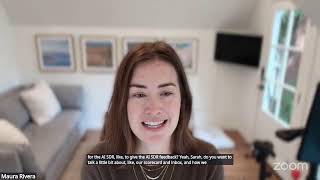
Mara Rivera and Sarah McConnell from Qualified show how to deploy inbound AI SDRs to handle more leads. They cover five practices: start with one use case, train the AI like a human SDR, set clear SLAs, define handoffs to sales, and coach continuously. Qualified's AI SDR now drives about 30% of their inbound pipeline.
Questions this video answers
April 2024.
Q2 FY2026.
Increased event pipeline by 35% and then 70% quarter-over-quarter (reported).
Greenhouse: booked over 2,000 meetings and influenced $27 million in pipeline (as stated in demo).
About 30% of inbound pipeline.
Chapters
Into our next session.
Okay.
All right, well, let's get started, everyone. I would like to introduce the CMO of Qualified, Mara Rivera, to talk us through our next session, how to use AI SDRs to convert more inbound pipeline with Qualified. So with that, I think everyone's going to be really excited to hear your topic, Mara. So let's dive in.
Awesome. Thank you, Wendy. Well, and thank you for having us. We're super excited to be here. My name is Maura Rivera. I'm the CMO at Qualified. We're an agentic marketing platform. And I'm joined by my better half, Sarah McConnell. She's our VP of Demand gen. The reason I love talking with Sarah about this is she has her hands on our product every single day. So our hope today is that you guys can really start to understand how can I think about bringing an AISDR agent onto my team? What are the different use cases that I can deploy them on and what are kind of the results that I should expect? So we're going to have a lot of fun today. We're going to do some slides. We're going to get into the demo, which is hopefully the fun part, and then we're going to do live Q and A at the end. So I think something that's really important for us as we talk about AI SDRs are there's kind of two different types of AI SDRs. We have inbound AI SDRs. These essentially work for marketing. These are folks that are engaging with buyers who are at the top of the funnel who are starting to show interest, buyers who are at the bottom of the funnel who are showing high intent. And you can deploy an AISDR agent to do everything they can to engage those buyers and book meetings with those buy. Then there's the other type of AISDRs. It's outbound AISDRs. These are folks who are building out contact lists. They're doing everything they can to prospect into new accounts. They're going off and they're doing research and they're trying to break into new accounts. What we're going to focus on today is how you can use an AISDR from an inbound perspective and what those inbound use cases are. So, Sarah, we have an AISDR agent, her name's Piper Saster, actually uses an AI SDR agent from Qualified as well, who's called Amelia AI push. But a lot of the questions we get from our customers is like, how do I know I'm ready for an AISDR agent? How should I Think about it. And you kind of brought our agent Piper onto our team. So can you talk us through what you should consider when you're thinking about bringing an AISDR agent onto your team?
Yeah, absolutely. So these are the sort of the five things. Like Maurice said, I was the first person that onboarded Piper, our aisdr, way back in the day and going through those steps and kind of learning along the way, a lot has evolved since then. But these are like my five tips and tricks as you are considering it or bringing an AI SDR on. The first and most important is what's your use case? Like, where do you need coverage right now? For us, we did a crawl, walk, jog, run phase, which I kind of have some metrics that I'll show you in future slides of how that rollout went. But do you need after hours coverage? Like do you have SDRs that are, you know, you don't, you're not international, you don't have them covering on off hours, which is pretty typical. Do you want them covering low priority traffic? I think understanding that use case first or do you want them covering all of your traffic? I think that is the first step. I will say for us, it started with after hour coverage and then once we were like, okay, this is actually working really well. We're going to expand this out to our lower priority traffic. Once we felt good about that, then we ramped it up to full website coverage. So get your use case first, the second, and I think this one is the most important, is you want to onboard and train an AI SDR just like you would a human sdr. The nice thing about an AI SDR is once you go through that onboarding process and they're on the team and you don't have to keep doing that over and over and over again. So if you think about a human sdr, you hire them. Their tenure is typically pretty short. The good ones get promoted, the bad ones tend to leave the company. But you're constantly doing onboarding and training with an asdr. You do it the one time and they understand your business. If you do new things, you can give them that little bit of training. But it's not a constant cycle of training someone and leaving. But you want to onboard them like you would that human sdr. You want to give them the same assets, you would expect them to answer the same questions and understand your business in the same way that you would one of your human SDR. So look at your current onboarding process for your SDRs and expect to be bringing that material and that same mentality over to your SDR when you're bringing them onto your team and then from there kind of mention, you know, human SDRs, what are your SLAs for them, what do you expect from your human SDRs and then determine is that something that you want to bring over to your SDRs and set your targets appropriately. So I kind of mentioned in the first step, we started with after hour traffic on our website and working sort of low priority traffic. Now if I was to set the same expectation I would have for our human SDRS at that point, I would have set our AI SDR up to fail because they're not working the exact same traffic. It's not apples to apples. So setting the same targets and expecting the same amount of pipeline is not going to work. However, if you do have them working the same traffic and the same inbound leads that you would expect a human SDR to work, then you can have the same goals like we used to have. We do a Friday pipeline council every Friday where we look at our pipeline and we would have a leaderboard and we would look at how our AI SDR is performing against our human SDRs and we would rank her accordingly and we'd have her set to the same standards. But one thing to caution here is depending on your use case, you determine in step one, that should determine those goals that you're going to set for them in step three.
And then.
Oh yeah, go ahead Sarah, keep going.
I was going to say that the SLA is here is like what are your handoffs? Like, do you want the SDR working everything up to booking meetings, do you want them to do handing off to humans during a conversation? I think that is something that we went through different iterations of. And then evaluating your knowledge, constantly do coaching with them and see how they are doing.
Okay, great. I was just going to point out, Sarah, I think the way to think about it, which you pointed out is think about an AISDR just like a human. How do you onboard them? What are their targets, what are you setting them after? If you just bring an agent on and you think of them as something totally different than their teammates, you're setting them up for failure. So I think that's a, that's a really key point. Yep. So Sarah, let's talk through use cases because I think this is what a lot of our customers say is they're like, okay, this sounds great. I like the idea of bringing in an AI SDR onto my team. I get that you can skill them and they can work around the clock. But like, where do I get started? And we've seen a ton of different use cases. So talk us through some of the most popular ones.
Yep.
So a few of them. Form follow ups is the easiest one. You get demo form fills that are coming in all the time. It takes SDRs, you know, we call it speed delete. How long has it taken your SDR team to get back to those demo form fills? So a lot of customers are going to put an AI SDR in those demo form fields first so they can have scalable and immediate responses. So that is a really easy like turnkey use case. We see a lot of customers start to use high intent buyers. So people come into the website, they're browsing around, they're on really high intent pages, think your pricing pages, things like that. Having an AI SDR jump into those conversations and try to push those people towards a meeting will get you a lot more conversions than if you just waited reactively and hope that they're going to come to a form page and fill those out. So really engaging those high intent buyers when they're showing those signals that they're ready to buy. The third one is high volume traffic. If you've got a bunch of traffic on your website, you can't expect human SDRs to have conversations with all of those people. There's also language barriers. If you have again international traffic coming in from different areas, can they have conversations with all those people in different languages? So high volume traffic and letting an AI SDR handle portions of that traffic is a really great use case. Content nurture. This one is so near and dear to my heart because I've built so many content nurture tracks in a marketing automation system. I know how cumbersome they are. I know they're hard to keep track of and keep up to date date. So letting an AISDR work those content downloads and give them relevant topical content, keep them warm and then push a meeting and booking when the time is right. It's just so much easier than having your digital person have to do all those content nurtures and then event outreach. So pre and post event, having to invite people to your demo booth or your booth at an event, inviting them to have a demo, that post event Follow up. Our SDRs hated doing post event follow up. It's massive lists. They don't know if they're any good. It's a waste of their time, they think so there's this constant tension between marketing and sales. So Event follow up and pre event outreach is a big use case and that's actually one that I want more to dig into a little bit more because this I think is one of our, our best use cases.
Yeah, I love using an AI SDR to do event follow up. I think we've all seen the pain of when you have an event, you're knocking at your SDR's door and saying, please try and book meetings for this event, please try and drive registration for this event. And it's really, really hard. But really the magic is in the post event follow up. When an event ends, you usually for a human sdr you have to go do enablement, you have to build templates, you have to make sure that they're dropping everything they're doing and they're trying to do the post event follow up. Now you can use an agent to do that and it's much, much simpler. And that's what we're going to show you guys today. And what they can do is they can drive folks to their site and they can book the demo. So I think now we're going to go into the fun part, which is the product demonstration. This is going to be a quick and dirty product demo because we don't have a ton of time. But what we want to kind of communicate here is if you're bringing in a SDR onto your team and you're deploying them for these different use cases and it's pretty easy and just think about the time you're saving using an agent for this use case versus trying to have a human do all of this. So when we're going to go over into the qualified application right now and the first thing you're going to do is configure your asdr. So here's where you can give them their personality, you can give them kind of their elevator pitch, you can define their tone, you can name them, you can give them a face. We call her as Piper because she generates pipeline. I said saster names. There's Amelia AI because of the great Amelia, we have tons of customers with a ton of different Personas. So once you kind of have your agent kind of defined in their personality, created a really important step when you're onboarding an asdr, as Sarah said, is how do you make sure they have all of your content, have all of your messaging? So what you can do is we go over into this content tab and you can basically say, hey, sdr, I want you to scrape my website. I want to make sure you have all of my, my messaging but I also want to give you all of my offers so I can make sure when you're interacting with folks, you're surfacing up the offers that are most top of mind for them. Now this is a dream as a marketer because it's always like pulling teeth to get them to know what events are in market, what are the offers in market. You can give your AISDR all of these offers and kind of send them off to the races. When you're configuring your AISDR agent, you can also define goals. So maybe an example will be, hey, if somebody's top of funnel, let's make sure to nurture them. If somebody's bottom of funnel, let's try and book a meeting. You can define rules of engagement, you can give them feedback and coaching on what they're doing. So this is where you make sure that you're really putting in the time to make sure your SDR is behaving just like you would want your human SDRs to behave. One thing I will note is you should never under discount the importance of this piece. You need to make sure that you're paying attention to what your SDR is doing and giving them that coaching and making sure you're giving them that feedback and that will, that will pay off in spades. So what we're going to dove into now is that events use case. How can I use an ASDR to follow up with all of the people who joined this event today? We're going to use the Saster AI day as an example. What's so cool about this is this is so easy that I can do it. I'm the CMO at Qualified. I have a guy on my team, Ryan, and he manages this day to day. But it's really, really easy to configure. What you're looking at right now is we're in this email campaign setup for AI SDR and this is where I can configure when I want this email campaign to send. So I'm going to say, hey, let's send this email as soon as the campaign member status is attended. After Saster AI day I can decide on the sender for this email. Maybe I want it to come from the aisdr. Maybe I want it to come from a specific person on my team. I really like when we send these emails from a Salesforce owner. So I can say I want this email to dynamically send from anybody who owns that account like an account executive or a csm and Then I can set goals for this campaign. So I'm saying, hey Piper, your goal, your desired outcome from this email campaign is to try and book a demo with these folks so I can kind of get that all set up. And the next thing I'm going to do once I kind of have the foundation of my email set up is I'm going to go over to the simulator so I can save those changes. And the next thing I'm going to do is I'm going to give this AISDR instructions for how I want them to follow up. Now what's so cool about this, there's no kind of pre written templates, there's no rules based journeys here. What you see on the right is I've given her some context. I'm going to say, hey Piper, I want you to create this sequence for everybody who attended our AI day where I and Sarah, Sarah myself spoke. I want you to explain how Piper can help their company. I want to make sure that you kind of follow these rules. Don't do these things, do do these things. I want to make sure your tone of voice matches what I tell you. I want to make sure your email body structure is short, it's to the point and it's compelling. And then here are the key messages for us. I want to talk about how Piper can help B2B marketers accelerate inbound pipeline. I've given her some context of hey, we're going to send a five email sequence and email one, try and talk about this stuff, email to try and talk about this stuff, et cetera, et cetera. What's so cool about this is this does not take long and it's all plain text. I'm telling her just like I would tell an SDR on my team, hey, send an email sequence and try and make it sound like this. But one really important thing to note about an AISDR email is no two emails are the same. So Piper's going to take all of her kind of go to market knowledge that she has about every lead and every account and she's going to simulate a bespoke email for every single buyer. And a really important thing with AISDRS is building confidence. So like my brand is on the line. I don't want to just send an AISDR that's sending bad emails that are going to damage my brand. That's paramount to me as a marketer. So what I can do here is I can start to simulate, okay, what type of email is she going to send to different folks who are in this list. So I can see, okay, if we have Drew and he's from DocuSign, she's going to send an email that looks like this. And look at this email. It's pretty good. I think one thing that's cool about these emails is oftentimes they're better than what a human would send. You can see that it's perfectly on message. And I can go through this simulation and I can start to see, okay, what would it look like for Drew or Paula or Jordan? And one really cool thing about AISDRS is they're always watching for interaction. So I can start to simulate. Okay, if, if Drew doesn't respond, what's this email gonna look like if Drew's account starts to surge? Maybe they're starting to show intent for AI SDRs. What's, what's Piper's follow up gonna look like? So here's where you can really build that confidence. And see, Piper's gonna take Drew down a bespoke journey. She's gonna take that training that we give her, and she's gonna make sure to do everything she can to work towards booking a meeting. So now I'm going to go over into my inbox. I sent this to myself last night because I wanted to see what these look like. And you're going to see that really personalized email. It's referencing that onboarding, it's referencing her messaging, it's referencing all the direction we gave her about this event. Now, any good sdr, what they're going to do is they're going to try and book a meeting. And an AI SDR should make it really easy to book a meeting. They take out all of that friction we used to see with forms and with follow up, and they can quickly service this meeting booker and they can route the meeting to the right account executive. So I could quickly choose a date, choose a time, get a meeting on the books. It's never been easier. And this is what AISDRs do. They remove that friction. But a lot of kind of people aren't quite ready to book that meeting, right? They're going to go over to the website. And so one thing that's really important when you have an AISDR is that they're sending email, but they're also working the website. You have to have one AISDR with one brain who can work both these channels. So when you arrive on the site here, you see at the bottom, there's that aisdr. Thanks for clicking through my email. Would you like to Learn more. And one thing that's cool is as you start to kind of go down the page and see what else is happening, the AISDR is going to continue to watch that behavior. So they're always looking for signals of intent. So I can go in and I can kind of have a conversation. I can have this text conversation. Really cool. Of course, of course this AISDR agent can text back and forth with me. But the future of AI SDRs, it's multimodal. So this is where everything's going, where I can have a face to face conversation with an AI sdr just like I would with any human sdr. So this is what's really imperative for me so I can start to have this conversation.
Hi, what can I help you with?
I can allow my permissions. Hey, Piper, I just attended AI demo day. What do you do exactly?
I help automate your inbound pipeline by engaging website visitors, qualifying leads and booking meetings for your sales team 24 7. I'm curious, do you currently use Salesforce in your tech stack?
Okay, so one cool thing about Piper is we've onboarded her with all of that messaging. She's working towards goals of trying to book a meeting. She's trying to qualify me right now because that's an imperative for our customers. But I'm not quite ready. I have a few questions. Hey, Piper. That's cool. Hey, can you tell me some customer stories?
Sure.
I've got a great customer story to share. How about I show you one from Greenhouse where they booked over 2000 meetings and generated millions in pipeline. Wanna see it?
Yep. Let's do it.
Here it is. Greenhouse used piper to influence 27 million in pipeline and book over 2000 meetings. They leveraged Piper across their website and email. You can see how it's driven real results for them.
Okay, very cool. So you can see that this AISDR is doing everything she can to pull me down the funnel. I'm going to do two quick things, then we're going to go back to Sarah to talk about the results we've seen from this use case. Hey, Piper, that's cool. Quick question. We service global customers. Do you speak any languages?
Absolutely. I can speak many languages. If you have customers from around the world, I can engage with them in their preferred language. Which languages are most important for your audience?
Cool.
Can you say something to me in Japanese? Okay, arigato. Piper, let's go back to English. So a normal customer, they would have more back and forth. They would do some qualification, they would.
Pass over Switching back to English now, what else would you like to explore?
Thank you, Piper. So a normal customer would have more back and forth, but I'm going to go ahead and book a meeting and show how easily this AISDR agent can get the meeting booked. Cool. Thanks Piper. I think I'm ready to book a meeting.
Great. I'll just need your business email and to confirm. Do you use Salesforce?
Yep, I use Salesforce.
Perfect. Thanks for confirming. What's your business email?
Okay, so what Piper's doing right now is she's looking for that lead in the system and she's getting ready to service the meeting booker.
You should see the meeting booker. Now go ahead and pick a time that works best for you.
Okay, cool. So I can choose a date, choose a time and get that meeting on the books. Okay, I'm going to go ahead and close Piper right now. But that's really the power of an AI sdr. You can have an AI SDR where you can easily configure an email follow up campaign and you can make sure that AISDR is right there on the website when somebody clicks through and they're ready to have a conversation and they're ready to book a meeting. So Sarah, now I'd like to talk about results because we've kind of deployed this on our own site. We've seen a lot of success pre and post and then just overall across inbound pipelines. So let's talk about it.
Yep, I will go through these fast. If anyone ever wants to dig into these, feel free to add me on LinkedIn. I'm always happy to chat about these because I know we are short on time. But pre and post event, the thing I want to call it here is that Q2 FY 2026 is when we deployed Piper's pre and post event event use case. So we increased our event pipeline by 35% and then 70% quarter over quarter. It's that purple bar there. And what's so cool about this is prior to this I used to just hound our SDR team and we have a VP of events that used to do the same thing. We're like, please follow up with these leads, please go back. There are good quality leads in there and they just wouldn't do it because it wasn't a good use of their time. And then we had Piper start doing these post event follow up and these re engagement campaigns. So she'll go back to these event leads from a quarter ago or two quarters ago and she'll re engage them with contextual messaging and relevant messaging, and we're able to grow that event pipeline. And it is so much easier for me now to go to our CFO and say, hey, we need to do more events. Like, we can do more events because we have a much bigger ROI from those lists that we're getting. So this has been a really impactful use case for us and makes it a lot easier for me to have conversations with my cfo. So one of the things here, just generally speaking from an ASDR standpoint, this is straight outta Salesforce. This is a dashboard that I look at every single day when I'm trying to look at how our AI SDR is performing. So a few different key points over the timeline here that I want to point out. In April 2024, that's when we launched what we call Project Night Owl. So that was when we put Piper on our website after hours to work our after hours traffic. So the yellow bar that you're seeing, that's Conversations with a human, that's rep conversations. So that was a pretty good chunk of the pipeline that we were seeing. And then you can see over time there, the pink, which is Conversations with Piper, kind of starts to pick up a little bit. It was after hours, so it's not a ton of. Then you can see in August 2024, we were like, okay, this is working. She's saying the right things. Now we're going to put it on low priority traffic. So maybe people that aren't showing high intent, they're not named accounts. And then you can see that pink bar keeps growing a little bit more and a little bit more. We saw it go from 5% of our pipeline contribution to now our ASDR is doing 15% of our contribution, but our humans were still doing 20 to 25% of our pipeline. Then in our jog phase, we're like, okay, you can talk to anyone that's not a named account because our reps still really want to talk to those. We want to give them the opportunity to have those convers. Now all of a sudden, our AI SDR pipeline went up to 20% contribution and human went down to 10%. So we're relying on them less to drive that pipeline. And then finally in April of this year is when we really started to release her across everything. Plus we added the email functionality that you saw more show and that's that purple bar. So now that pink and purple are taking up a much bigger chunk of our pipeline contribution that's coming from inbound and it does about 30% of our pipeline on any given month. And I rely on our humans about 5% of the time. The human conversations are really like if reps are outbounding to an account and they come to the website and they want to have a conversation, we want to make sure that they can. So we've seen these incremental values over time. It's been incredible now to have automated about 30% of our pipeline coming from this AI SDR.
Yeah, it's awesome. And I think one thing to note, Sarah, is we used to have 10 inbound SDRs, human SDRs. Now we just have our AI SDR agent. She's doing all of the work for all of our inbound. And we've redeployed those humans to do outbound. And if they get promoted to ae, we don't backfill them. So we're kind of redeploying them for other parts of the business. And this is what I think just proves the ROI is like, inbound pipeline's never been higher and we're using an AI SDR agent to do all of it. I wanted to invite our friend Amelia just to talk about kind of their use case for their AI sdr, what's working, what's not. And then I think, Wendy, we can kind of bring some questions in, if there are any.
Yeah, I would love to. You guys getting a ton of questions. And you also got some during Jason's intro.
Oh, nice.
Well, I'll send those over to you later, but I know Piper can answer them too. And automated follow up, which is quite nice. So. No, super cool. We've been using qualified for a few months now, maybe even a quarter. We started it because famously Jason has shared the story. We had, you know, an agent that was helping us with support, and when it came to actually booking meetings and doing more of wearing more of a sales hat as an AI, it just wasn't as good as it could have been. And so since our Delphi agent that we use for again, more so for support advice, it's still live. You guys can try it on Saskra AI. It's great. But it's a very different use case from coming to the site for either London, that's in December, or the next.
Sastra annual, or if you're on any.
Of our sponsorship and prospectus pages, it's a lot different. And it couldn't answer the questions as well, even with all of our training. And so we implemented qualified for this use case again purely for inbound to start. And we've seen a lot of really great already high volume coverage and inbound meetings books. So back in the, you know, back in the day, pre Sastra annual, this year in May. And this is a great slide, Sarah. This is some of our results. We don't mind sharing them. We would say, you know, okay, if you want to learn more about our sponsorships, you've kind of got to talk to a human. Right? Like that was our fill out a form, talk to a human. Our humans will try and book the meetings. It's a little convoluted and so of course in that process we would lose some meetings booked because it's too many steps. Right now we have what we call our Piper Amelia AI and soon it will have like the video and voice too. But even just as text for now, which it's super cool, it just books the meeting. So in the same way you've seen Maura's Piper book a meeting for her, our Amelia AI will book a meeting with our sales team. They don't have to fill out the form. I can't even tell you how many more meetings we get now via inbound because we don't have to do this four step process of they've reached out or they filled out a form, then our AE has to follow up, then we have to pick a time. They just book the time instantaneously. And so that's been really great for us to see that. It's a huge win and lift both from a time savings and from a meetings booked perspective. And then the other thing we've done is we've started to deploy Piper for more use cases. Right. So our Amelia AI now will do other things. So yes, it's doing inbound. You can talk to it right now. You can talk to it on Sastor London, you can talk to it on Sastor Annual, you can talk to it on specific pages of saster.com, so you can talk to it. It's really great. I, I talk to it all the time because I try and use it more so in like a copilot mode. But also what we use it for is this high volume coverage of Warm Inbound. So you know, the nice, the really nice thing about qualified is it knows the folks on the site, it knows what they did. Right. So to what more showed you, it can see what they're doing on the website, what pages they're visiting. Are there other people from the same company visiting the website? And so now we have it doing what I call warm inbound in its emails. That is following up to folks so if they didn't book a meeting, it tries to get them to book a meeting. If they didn't buy a ticket for Saster London, now it's emailing them. Hey, I gave you this discount code. I've seen you on the site a lot. Are you sure you don't want this discounted rate to come to Saster London? Here's who's speaking. It's going to be a sellout event. Can we get you there? And so that's also been a really nice again, hyper personalized follow up and that's a new use case for us that like we wouldn't have done as well without something like this. That is using AI at scale because it just would take too much time. Right. Like certainly we've always done marketing emails to people on the website but not at the same level of personalization that we're able to now using these emails since it has all of that data and certainly not at the same scale because you know, inevitably it ends up being somewhat generic if you're doing it through like a marketo or it ends up taking too much time if you do it too personalized. And I gave it to a human being to do it itself. So I know I sped through that. But hopefully that's helpful.
You nailed it. I think that's super helpful. And I think that's the thing. It's like think about all the inbound leads you're bringing. How can you deploy an agent to work them 247 around the clock, top of funnel, bottom of funnel and it's hugely impactful. So thanks Amelia for sharing your story. I know we only have a few more minutes but Wendy, let us know if there are any questions that have come in that we should kind of address.
Yeah, there's a couple of good ones in here. One from David is asking about how you train qualified, how you trained qualified on product for product solves for common pinpoints or just product training in general. What's that process look like? And then I think that ties into another question in chat about the length of time from you know, onboarding to launch. Like is there a typical metric or benchmark there?
Yeah. Sarah, you want to take that one?
Yeah. So the first one about how long does it take? It can take anywhere from a couple days to a couple weeks depending on I kind of mentioned like your human SDR onboarding but really it's, I would give yourself at least a couple weeks to do the proper onboarding and get that AI SDR like really up to speed and where you want it to be. As far as training it on common pain points. The first thing is Piper's gonna or the ASDR will crawl your entire website. So every page is on your website. You can go through and deselect pages. It really helped me notice a bunch of content that was old and outdated. I was like, oh, don't say that. And then if there are things like competitive information or things that you don't have on your website, we have these things called snippets that you can give to the ISDR that say like hey, if you get asked this question, here's how you should answer it. So I always tell people, pick your top 10 most asked questions during sales meetings. Make sure Piper is really, really good at those questions and then upload snippets kind of as needed. But. But most of the time she's going to be just fine using your website content.
Awesome. Wendy, should we do one more?
Yes, we will. And I'm going to put a link here in chat as well. A couple of folks are asking about if a recording is going to be available and it will be on the Saster YouTube. Here's a question from BH. I know this session is focused on inbound but on the opening slide you mentioned engagement, outbound engagement via phone. How do you deploy call? How do you deploy calls? So there is no lag and let's.
See if I can remember this.
And you can currently facilitate. And how can you currently facilitate a less than 5 minute response rate for inbound leads through calling?
Yeah, I think that's a great question. So our product specifically just does inbound. So we don't do prospecting, we don't do outbound voice calls. So I actually don't have a great answer to that. I would love. We're not using any agent for voice calls. We are using using another agent for outbound specifically for prospecting. So I think if anybody has used a great voice dialer from an agent perspective, pop it in the chat. Or if anybody has a has a good response, let me know.
And maybe one more that Marianne just asked. What kind of surveys are you using for feedback? Do you have an escalation mechanism for.
The aisdr like to give the AISDR feedback? Yeah. Sarah, do you want to talk a little bit about like our scorecard and inbox and how we spot anything that's coming through that's not good?
Yep.
So there's no really like surveys. It's more going in and checking and we call that like our the training and making sure you're going in and make sure that training is working. So we have a scorecard in there. Again, going, I mentioned have your top 10 questions, 20 questions, whatever it is you get all the time. And you can go in and ask that question to your AISDR and see how they respond. And it's as simple as a thumbs up, thumbs down. If it's a thumbs down, you can give the hey, you should have said it this way. So that kind of like Surveyor, that feedback loop, it all lives within the product. And you can go in and test it at any time and kind of give her feedback on that. So, yeah.
And I would just add.










