SaaStr AI Live: Whats Working in Marketing as AI runs GTM
This is a November 2025 SaaStr AI Live webinar where Amelia and Jason M. Lemkin walk through what’s working in marketing now that AI agents run much of their GTM. They compare adoption across sales/support/marketing, demonstrate a specialized marketing stack (Gamma, Reeve, Opus, Recall, Claude, Qualified, Artisan, Agent Force, etc.), and show practical workflows for asset generation, content repurposing, and personalized email/drip campaigns. The hosts emphasize that AI augments but does not replace human orchestration, recommend simple starting experiments, and discuss convergence between sales/marketing/support as agents improve.
Chapters
All right, we are live. Hello, everyone.
Hello.
Hello. What's our replay countdown say? We're 10 days or something from London.
10 days? Yeah. It gets a little confusing with the time difference, but yes, it's a little confusing.
It's a little confusing. So thanks all for joining us here. We thought we would do a part two to. To what we started last week. If you didn't see it last week, that's okay. We'll cover some of it here and do a refresher. We primarily focused on sales and specifically outbound all of our AI SDR agents. So what I thought we would do today is start with marketing and then we'll kind of circle back to a few things we didn't get to in broader go to market, just in what's working now for us at least, as our AI is running our go to market teams and we have more agents than people here at Saster, so thought we would go through that. Start there. And then if you guys do have any sales questions, we did not get to last week because I know we went beyond our hour and you want to get to them now, feel free to drop them in the chat as we go and we'll do Q A at the end like we did last time. So with that, let me go ahead and skip ahead to the marketing section. One thing I'll preface for everyone, if you haven't seen this yet or you missed this last time, if you do go on Saster AI slash agents. This will reference a lot of the things we talked about last week and this week in the two parts for go to market. So this is our agent arsenal. As it says, a lot of these tools are, you know, third party tools. Some of them have a little bit of proprietary stuff in them. There's the proprietary apps we've vibe coded, but this has the whole guide there. So if you're looking for like certain tools we message or drop in or show screenshots of and you want to refer back to them, they're all there just to make it easy for you. So with that, let's dive in to marketing a bit just because we didn't get to it. And I feel like it's a. It's an important topic. And before we get more tactical with it, since we have a little bit of time. Jason, want to get your thoughts on what you're saying here as well? Um, I think this is a. This is a study I referenced last week as well. This is from Rory at Skill Venture Partners. Is state of AI go to market. Study that just came out, it's a pretty good one. I wanted to call out a few things in marketing I think that are interesting to me, slash us. Because I feel like for marketing in particular, folks seem to be more behind than they are in sales or support. I actually anecdotally don't know why that is. I don't think it's because there's a lack of tools which a lot of folks kind of like will point to. I don't think it's that. As you'll see in our next few slides, there's plenty of tools we're using in marketing and that are working well. So I think it's, it's just a little bit interesting here to see in the data that, you know, most folks are just using AI in marketing for things like messaging. Okay, fine, but that's like everyone's done that now, right? Chat, gbt, doing research. I feel like, yeah, that's, that's a little bit more in the weeds, maybe a little bit more specialized. But most people have not done these phase, what they're calling phase two use cases, which is actually analyzing, you know, marketing campaign data and spend, whether it's in house or with third party agencies actually using it to be creative. I think I don't know where this stigma has come from but that the AI is not that creative or that all the AI content comes out the same. I feel like those are also too familiar schools of thoughts that we've kind of myth busted on and then for things like enriching and scoring. So as we talked about a lot last week and just how we're running some of, some of our go to market through these agents with sales in particular, a lot of that is still relevant to marketing. So I think that's, that's maybe a conversation we can have at the end of, you know, what does this all mean for the two separately and then together. But I think it's something where so many of these platforms and AI, maybe they were built for sales, but you can actually use for marketing, which I'll show. And so that's why I don't think there's a lack of tools. But I do think it's interesting, Jason, just to see that people haven't really adopted this more than the other two areas.
I agree.
Anything you're saying on your side or any anecdotes.
Well, why don't, why don't you keep going? I do think, yeah, I have a lot of thoughts, but why don't you keep it going?
Yeah, north all right, so let me, let me show you guys a few things of what we mean and then, yeah, we can, we can dive into it a bit more on what this might mean for you all. So I would say right now in marketing, we have the most specialized stack. And what I mean by that is like we have the most amount of tools in marketing maybe than we have for sales. A lot of our agents that we've deployed in sales, I'm able to deploy multiple agents on single platforms. And so that's helped a lot in terms of like how we train and tune. All the agents has been different in each of those platforms and in each of those single instances. But I'd say for marketing, we probably have the most specialized stack right now. We have hyper focused tools that do one thing really well. So in this, it's been a little bit of trial and error of us trying to find, you know, what are the very best ones out there. And then not only which ones are the very best ones out there, but which ones will we actually stick with using and also like use for our actual go to market. Right? Like which ones are just okay, we kind of had fun, played around for the weekend on and then never used again. And which ones do we actually use now in our day to day? So there's two, there's two, I think that have become core for us. It's. It's both from a. This one's both a sales and marketing perspective. But I've used it for both use cases. This is a really great one at making collateral. So just go to market collateral. Whether that's sales collateral, marketing collateral. The two apps we use the most right now are going to be Gamma and Reeve. I think the next slide is Higsfield. We use those a lot, heavily. I put these, this slide here, this is an actual slide I sent Replit. But this, this is a custom. You'll see that I picked this slide because it has a few custom photos on it. The photos were made by Reeve. So where you see these guys like Vibe coding outside? I told Reeve, you know, hey, I'm thinking about doing like a Vibe coding camp or summit or something. Vibe Coding Lab. It also came up with that name for me. A Vibe Coding lab at SAS Re annual next year. This is basically a pitch I wanted to do with our marketing team. I gave it actual photos of Sastrano. I was like, here's what our setup looks like. Here's what the tents look like outside. Here's what people, you know, kind of look like a disaster. So just so you have the a grounding, I would say, for the agent to know what to output on. Right. That also will help it not be as generic. I feel like where reef kind of kicks butt over Nano banana or some of the other. Or like, you know, ChatGPT or Sora is you can. You can upload an image to those. And I feel like most people just g themselves or maybe like a Pixar version of themselves. Reva is really good at, like, doing mockups. Like it. I. I didn't think it was intended to be a superpower. It's really good at doing stuff like this where, like, I used to have to ask our designer, like, hey, can you do a quick mock up of, you know, the replit logo in a tent? Kind of make it look real, like people are sitting in it. One that takes really long when a manual designer does it too, because I gave it reference images. Reeve was like, this was a first shot image. I was like, that one's pretty good. I was like, I like that one. It looks like our tent that we have outside. There's people, they're vibe coding on the screens. I told it, make sure they're vibe building on the screens. And so that's pretty cool. And so I had to do a couple more. I was like, okay, what are other things I want to conceptualize for this potential space that replit's going to do at Saster? My second, I want to be an exclusive footprint. So it came up with this. You know, here's the rest of the outdoor tent with the replit logo. It's an orange umbrellas because it picked that from their brand colors that's prevalent in the logo. And I said, okay, now the last one I want is I want to include some sort of, like, outdoor stage and space. I gave it photos of past outdoor stages we had with speakers on it. And it came up with this. And I was like, cool. Looking at it fresh. I'm like, there's maybe one too many dudes on this. Like, I should have said, like, make it more balanced in the audience. But other than that, I actually think it kind of crushed it on these mocks that I wouldn't have been able to do otherwise. And it's just such a way in which, like, when I started presenting this to the replit team, they were like, that's cool. Like, they can visualize it. They can see it.
Yeah, yeah. Just to add the inside tip for guys that might not, you know, for Reeve art, it is a team that built their own Image LLMs. It's not the same stuff everyone, everyone else uses. You know, there's a variety that they might use, some Chinese LLMs or others, most use just OpenAI. But when you know, when you're built, when you build a lot of images and they all look like cartoons or they look silly or they look goofy, it's not your only asset. For B2B, try Reeve. Upload something that's similar to what you want and in plain English, tell it what you want. I think for B2B use cases for real business stuff, the 95 chance is going to be much better than what you get out of chat. GBT I started using this, I told Emily to use it, she didn't. And then it's just, it's just this is the kind of real stuff that you want, not goofy cartoon looking stuff or I mean that has its place if you want to be Fun. But for B2B, use this and it's going to crush. Like this looks real, it looks great. There's no excuse for those, for that goofy cartoon stuff unless that's what you want. And I don't think, you know, the world has moved past that. For B2B, you don't have to settle for crappy text, which we'll talk to you and you don't have to settle for cartoony images. You in fact should create great pitches for your prospects.
Yep. Yeah. So how this, how this one came about in this use case was I, yeah, we, we, we've obviously had this journey with relet but then I started to get to know their marketing team. They wanted more marketing and so they're a sponsor for a learning event already. But we wanted to, they were like we want to do something bigger, probably something custom at Saster annual. And so we started thinking through like this vibe coding lab thing. I would say Reeve also is best at. You could like this logo. I gave it that logo. Right. Like sometimes when you put it in the other generators or LLMs it will come up with a logo or it will change their logo. Like Reeve I think kind of quietly crushes it at the text being good. And if you upload logos, it keeps the logos. So that's one where I, to Jason's point, I really like the professionalism of it. It looks polished. Right. So this is something that I think is sendable to folks. So I like it for that use case. Another one is just related to marketing. You know, we're doing all these assets for saster London in 10 days or whatever it is. And I put into Reeve like my original concepts of. Okay, here's what I'm kind of thinking for all the stages. You know, we need like some backdrops, we need a bunch of sign. And I had Reef giving, you know, all these different outputs. I was like, no, that one looks too dry, that one is too overdone, that one's too boring. It's really good for storyboarding, which I feel like is a good superpower of it too because it's got to generate all these realistic images, right? I give it images of past London events. Like I gave it the venue, I gave photos of the venue. Like it can actually help you picture and visualize and storyboard what you want. And so when I started going through that process that made this really cool like portal looking thing, I was like, oh, I like that, I like that. Plus the Sastra AI would look pretty sick. And so then we actually, we ended up, I upscaled it in Adobe Photoshop as like a little bit of AI. So you can take it out of Reeve if it's, you know, it's fine enough digital quality. But if you're doing anything print, you do need to have usually higher quality, higher dpi. And so I put it into Photoshop Upscale. That gave it to our Designer as a 4K asset. All generated in Reef. And I was like, this is the portal. You know, clean it up, add Saster AI and we got a pretty sick looking brand. So that is also another great use case more specifically for marketing, kind of related to events. But you guys might, even if you have a small event, this is a good way to kind of quietly, you know, up level it as well and make it look more polished and better. You can use it. I've used it in emails, right, obviously image generation for emails that we're sending out. But just in go to market if you want it to be more, you know, tactical. We're using it here for both sales and marketing collateral that we're using to drive revenue. So it is something that works really well. I then plugged these Reef images into Gamma Gamma, if you don't know, it is a. It's a, I want to say newer ish tool that does content creation, specifically presentations. So like you might say, oh, I could do a presentation Canva. Yeah, you can. And like I've done both and I've run tests on both side by side. Usually the Gammas are just a bit better, especially for B to B2C. Yeah, sorry for B2B rather than B2C. Like Canva is the Decks come out a little bit better. You can give it things like again, like I gave it replace orange. I gave it there I was like, check their, check their website for fonts that you should use. Also look up how they talk about themselves. Like, because you can give it the content you want, but you can also prompt it, usually the output is pretty good. And so I like Gamma a lot because we use it now to send all of our like sales collateral, sales deck support decks we've Gamma'd. It's easy. They're also easily shareable. So between the two tools together, you know, you'll have to still customize the two. Like I don't use all the image creations out of Gamma. Like I prefer like Gamma has built in image creation and I obviously still prefer like the rev images or ones that we have that are actual like real images. Like so like we still pick and choose like which ones work better. So that's what I mean. Like our marketing stack is probably the most specialized, but it does help eliminate a lot of bottleneck and deal cycles. Right? You're getting them something polished. You're not waiting, you know, a week for your designer to come in and do this. Personalized decks, I feel like just elicit a much better conversation or response from folks like this. Also, not only can this kind of uplevel your decks, you can also send them to more people is what I found. Like we've started sending these to pretty much everyone. We're like, we used to not do that. We used to be like, here's one set deck we have for Saster you're interested in sponsoring. Here's the one deck. Sometimes you know, that's not the best thing for teams to pass around when they're like, okay, we're considering opting into this or if you're trying to go to market with something more. So on the marketing side, it's again, it's not clean, it's not as polished to share like one asset that's more generalized obviously versus something that's hyper personalized to them. Like you've obviously sat, you've listened to their needs. But using the AI, you can kind of scale that up a bit more so that you can have this sent across. It looks a lot better. You don't need an agency to do this and then they can share it internally. Like I'll I, if you use it directly in Gamma versus like exporting it to like a PDF or Google Slides, it'll tell you whenever people view it. So like I'll get Pings all the time of like, you know, random XYZ person at XYZ company do this deck. I'm like, yeah, I didn't send it to them, but they're at the company and they're always like sharing this around, right? So I think that's what you want, is you want to use this to not only improve your current processes of how you're doing these things, but also just to unlock new ones so that you can do it a more hyper personalized scale.
And for folks that, I mean, Gamma got a lot of. We've been using it for a long time. It got a lot of press recently. They just, they just said they crossed 100 million this year and raised around at 2 billion. So a lot of press. But I've actually found we've been promoting Gamma for a long time because we use it. A lot of folks, they might even talk about it, they've never used it, right? Literally I was, I was, I was at the other day at an event with the CEO of a public SaaS company saying, Gamma, it's just PowerPoint and no one will ever use that. I'm like, well, you know they're going to, they already got 200 million, my friend. There's something there. But here's the, here's the tip. Okay? Most of you haven't used Reeve art for images. It's all on Sasserdi agents. Go upload something that you use and just ask it to make it better. I bet you're going to find this as your best tool for Gamma if you haven't used it. Don't overcomplicate this. Literally go into a Google Doc, write five bullets of what you want a deck to be. Okay? Take those five bullets, put it in the free version of Gamma and watch it build a deck for you. I bet it's the best thing you've seen. Okay, you can use it. You can make a template you use again and again, which Amelia does, and then upload it dynamically with data. Like become an AI agent expert. But that could be intimidating for folks if you haven't used it. Don't over complicate it. Take five bullets on anything, anything that you're doing, give it to Gamma and watch the agent build a deck for you. It's pretty awesome. And then if you get excited about that, go deeper like we have. And then you can make dynamic decks for everybody for real, not the same crappy static decks everyone else is getting. But you can start really simple with these tools. They don't have to be intimidating. And I think your jaw will drop for both if you invest like five minutes in each. Keep it simple. Invest five minutes.
Yep. Okay, let me go to the next one. In terms of content ad automation. So we have a lot of specialized tools in this bucket. You saw one of the previous slides. This is where most folks are using AI in their marketing stack. I would say, I don't, I don't think it's necessarily a bad thing that these are all specialized. Again, like the way that I use Gamma and Reeve together, it's like it only takes, I would say 60 extra seconds to generate an image and reef versus doing it natively in Gamma comes out a lot better in my opinion. It comes out a bit more customized and then I port it over. So I don't, I don't think you should be scared by the amount of tools on this one slide. We do pick and choose like the very best things and outputs. And also a lot of these are off the shelf. So I would say for particularly in marketing and how we're using the sex so far, I think the next one is one of our more like enterprise tools and solutions is, you know, these are all off the shelf. So like Claude Replit, Reeve Higgs, Field recall, which we use a lot for content opus, we're adding Mosaic for video. Like these are all ones where they're like, you know, user subscriptions. Like anybody on your team slash yourself could just go set up, you know, whatever, 20 to 30 bucks a month or 10 to 30 bucks a and try these tools and see which ones work for you. So I think what's working well for us now is yes, obviously we do use it for some of our content. We have a lot of content at Saster. And so prior to this, that was a lot of Jason and my day was writing content. It's still a lot of Jason's day. It's still a lot of our time. But now the agents. I, I don't mean to speak for you, Jason, but I do feel like with this agent mix you have specifically in content creation, you get there a lot faster. So you're able to post like more advice to folks.
Yeah, I would say what we've been able to do is triple our content output with AI. I think that, and I think the mistake a lot of folks make is they, they use a lot of crappy social media tools that regurgitate content again, so they want thought leadership. So they spool up a tool, it examines someone else's feed. It often examines my feed. I see folks rewriting my content, and it sort of works because LLMs are good at copying and regurgitating. So if you, if you, if you just want views, I guess if you think that's going to move the needle for your business, then generic AI tools are fine. Okay. But what we do, which is the real powerful thing, is you architect the content, you create the content. Our videos, our sessions, our posts, our ideas. And you use AI to turbocharge it to do more research for you to go deep dive. You know, we used to. That's what you really want to do, is to. Is for AI to be your steroids for content creation, not to create the core nucleus that becomes trite and boring. But that's how we've tripled it. I write all the. If you've read Saster for a long time, I've written most of the content for more than a decade. Okay. But if you compare an article today, this year versus two years ago, you'll see that it's pretty similar. But there's a lot more data. I can do a lot more research. I can. And it's not just asking Claude to do the research. I can take multiple articles, three or four articles off the Internet. For example. Today, just before this, I wrote an article on how venture capital has changed for funds. I took two different data sources, one from Crunch Brace and one from an LP, an investor in top funds called Venrock that analyzed 1900 funds. And I added that data to my post. Okay. I added that data with AI and it makes it so much better. You've got to check the work. It does take a few minutes, but AI can let you take great ideas and make them 10 times better. That's where you get. Get the leverage.
Yep. I would say too, just on this. Yeah, we do use a few different tools here. They all work fairly well. But yeah, to. To that point. Right. We are using it to amplify existing content that we have or. Or even build up all that content. Like one thing I did for this webinar, actually for last week's and this week is I gave it the last like three or four sessions that we had done on this topic of like AI, our agents I put into cloud because I like better. I was like, hey, given what we've already covered, I don't want to like, keep regurgitating things. Like, I want to show data. And like, Claude did not have my data. Like, these are screenshots I took. I put these slides together, but it gave me a pretty outline. It's like okay, based on like the last few talks you guys have done, based on what you have coming up, based on where you're at the six month mark, here's what I think you should cover. That is like Sasser style actionable content. So it gave me a really good outline. It like gave me this out like this format of like okay, you should go into like each of the different segments of go to market. You should talk about what's, what's working and what's not on each slide. You should call out the tools. It gave me ideas on like okay, here maybe some like answer like it would ask me like hey, is this what's working? Is this not what's working? Okay, like then maybe show this is like the next slide. And so it gave me a really good, it was like a really good co pilot for me on like just putting my thoughts together because obviously now that we're doing a part two I was like I have a lot we could cover and go off on about AI and go to market but I want to try and like make it super tactical for folks so that it's helpful and useful and it was really good for honing that. And it was like oh yeah, I was like what about this topic? It was like no, like that could be its own topic. Like don't go too much off the engine. And so yeah, it's gotten, I would say really good at that. So this outline and then I obviously did I, you know, I still wrote all the slides and, and did all the, I could use gamble a bit and then I pulled all of our screenshots in of our data and but now I'm also using it for like the, some of the stuff we're going to do in London just again I'm going to give it this one after today I gave it last week. So I'm like okay, now build on it again knowing that you know, some people in the audience would have seen these two Sastra AI lives and some people wouldn't have. But also make it shorter because now we're together this will be like the two hour mark and I think the opener at London's only 45 minutes. So like what are the most relevant points I should hit on? And it's gotten pretty good at that. So I, I, I think it's great for that too because that saved me a lot of time. Like it still took me a while to obviously make the stack and put all the points together for you guys and put all the screenshots and the data like that. That still takes work, but it did help me organize my thoughts a lot more.
Yep. On the content repurposing. Not. I know you hit it. Let me. A lot of folks, especially founders and marketers that are. That are watching or will watch later, I find we're all generating so much more content these days, especially video. There's so much more pods, there's so much more everything going on and people are not using AI to extend the life of that content. There's a lot discussed on it, but I see a lot of lazy approaches. And let me tell you what, what we do, it's pretty simple. Emelia has it on this, on this bullet point, Opus Pro, get recall and descript. I don't think we touched on on the first two, did we Amelia? But, but okay, so you just did. You just did a great interview with. And then you stick it on your YouTube and it disappears. Okay, great. I hope, I hope it performs just a few. The first one's a little. You probably know or you might not. The second one's a little more subtle. But let me tell you, we can do with this content. The first one is stick your. If you haven't used Opus Pro, it's on our list on Saster Agents. There's a lot of tools, but it's the leading tool for turning your video into clips. And listen, it can't take boring content and make it great. But what Opus Pro is really good is take the YouTube URL stick, give it to Opus Clip and it will force rank the most compelling content out of that and find you some clips. And then it will just actually automatically schedule it for you on your social media accounts, on LinkedIn, on X, on Facebook, whatever you want. It's pretty good. It will take the. If you just did a 40 minute webinar, it will take the best 60 seconds, 120 seconds, clip it and let you put it right on LinkedIn where your customers are. You should be doing this and you can queue up 5, 6, 8, 10 of those over the course of the month. You should be doing that with your best content or you're kind of wasting it. How does it grade it? It uses AI. It's, it's, it's pretty amazing. And there's a free version like try. This is another one you can literally try in five minutes. Take your, take your. You take your YouTube URL and stick it in Opus Pro and see it. It extracts the text, which is actually very easy to do actually. YouTube gives you the text through the API. It's not that complicated. And then it just runs that text through some LLM, I don't even know what it is, and says, find me the best parts. When Opus first launched like pre, I don't know, we were, we were using it in Sass or London a year and a half ago. It was like magical. I'm like, how does it do this? How does it find the best clips? Like this seemed like the most magical. And I actually invested in the company. It was so magical. It still is magical. But it's now that I understand how AI works better today with our agents, it's less magical than I thought. Extract text. It's not much like these videos. The even if it's two hours, it's not a lot of text. It's not much for the LMS to process. Give it to the LLM and say, break it up into the best two minute chunks. It works really, really well. And then just then it just says hook in your LinkedIn account. Hooked in your Twitter account and it just does it all for you. It's magical. So you're wasting your content if you don't. Don't do this. You can also ask it to make like three minute clips, which we do too. If you have a little more energy, you can put those 3 minute clips on X and LinkedIn like the best ones for deeper dives. You'll see Saster do that all the time. You'll see these three or four minute clips. I don't have time to make it. Opus makes it for us. Like it's really, really good. Okay, so what's the next. So that's how you turn your video into clips and short thing. Just do it. Opus is like there's a free version or it's 20 bucks a month or 5 bucks a month for the paid, but you can try it free. Then we use an app very few people use called Get Recall. There's actually two apps called Recall. One does like Transcription, I don't know. One is an API. Tons of folks use the founders at Saster and you'll got a ton of customers out of. It's an API. Get Recall actually just transcribes your whole Internet world with AI. Like everyone should be using this. It's just a niche app. It'll do everything. I use it for one thing. I give it that URL for the YouTube and it instantly gives me great, great summarized text. And then instead of Opus doing its own thing, I take that text and I put it into Claude and I tell it the type of Article I want to write out of the content. This is really powerful. Okay, so literally we're doing this hour long webinar right now. Okay. When it's done, I will grab the YouTube URL and I'll go to Get Recall and give it to it and I'll get the text and I'll put it in Claude and let's say I only want to write a Saster post on content repurposing. I will take the transcript of this session and say, Claude, write me a Saster post just on what Amelia and I said on content repurposing. And then it can write an article just on that. Now of course you've got to edit it a little bit, but it's going to be pretty good. This is an. Literally, if we wanted to, we could take this session and turn it into five or six articles by getting the text from it from get recall and YouTube and then just asking Claude to write five or six great articles out of it. This will be better than the crummy agency you asked. Write a bunch of crappy articles, Take your own content. We watch that. If you have something great from your own events, digital events, world events like find the three or four great themes from it and write articles just about those three or four things with the extracted text and Claude, it'll be great. Like it will be great. And this will turn. You can get 10 great clips out of your content, but actually you can get five or six great articles if it's a really good piece of content. Don't waste that great interview. Don't waste that. The best keynote you had. Don't waste the best session from, from an event you just had. It's. It's just a waste, right? I mean, no light criticism. No criticism. I just did this great digital day with G2. We did it. Goddard and I did it with the CEO of Zendesk. Okay. It was so good. Now they've decided to hide it behind some, some wisps. And we do love Whisti at Saster. We use it ourselves, but to hide it behind a link wall to capture email addresses. I guess maybe that's the right thing to do. But because I know so much about AI, for support, I asked the CEO of Zendesk so many great things. I could write five articles out of that piece of content, right? We talked about pricing for AI for support. We talked about how difficult it is to train AI agents and so how to simplify that. That could be like four different articles that G2 and I, if anyone from G2 wants to help. We'll do the work. We could create five great pieces out of that interview instead of it like just disappearing into the ether.
Yep.
So.
The other thing I was going to say as you were chatting through all this was the. A few folks were asking questions related to if there's a way to do this more programmatically in the chat. I think what you guys mean, like, if, if we're using, you know, all like Jason for this, like, let's just use this content example you just gave. Is there a way you can do that automatically or are you doing that manually now?
Do which part, man?
Yeah, like, are you like, is there like, there's no way right now to automate like Opus grabbing or recall grabbing YouTube automatically?
It's a great question. All these agents are getting better. We have 20 in production. Here's the thing. This, this includes Replit, this includes Opus, this includes Agent Force and Artisan and Qualified. All the tools we love to death. They automate a lot of stuff. Like they might. Might even automate 95% of what you used to need a team to do. They don't automate everything. Here's the problem. As great as these tools are, they do not enable lazy marketing. What they enable is better marketing and much more of it. Everyone wants an autopilot. Everyone wants to buy a tool and disappear. It does not work that way. You. You notice it. You can, you can have crappy output, you can have crappy LinkedIn posts. Again, where I started, none of this is full automation. You can automate 95. But even me, listen, I'm not like, you know, I'm. No, I didn't found a lovable or. Or cursor. But I'm a somewhat successful founder. I'm still doing this myself at this point in my career. I'm not right. But I'm getting lots of help. So I'm much more productive. But I still, you know, this term maybe is overused. I'm still orchestrating these agents and Amelia is still orchestrating her agents. So if you can't put in 20 or 30 minutes a day to do this, don't start the project, okay? If you want to do nothing, we can't help you. If you want to invest 20 or 30 minutes of actually kind of fun stuff. I mean, this stuff is fun. These tools are magical. If you want to invest 20, 30 minutes a day so that you could have massive output, use this playbook. But there's nothing you can just click and forget. There is, but it's not going to be good enough if you're not going to read the text, if you're not going to decide how to take that interview with the CEO of Zendesk and turn it into five posts, it's not going to be great. It's going to be generic.
Yeah. There's a few questions in the audience on, on how we're using it, maybe more so for things like marketing automation style emails. So I'll go to the next slide. So when it comes to email marketing, I am full disclosure using sales tools to do email marketing at our GTM now in November of 2025 or whenever you're listening to this once there is a truly great all in one AI marketing platform, I will try it, I will use it, but it doesn't exist yet. So I have hacked some of the existing sales tools to use them for marketing but with fairly good results. Now what we're what we're not able to automate yet but we actually are starting to get there and starting to kind of like lightly prototype things in replit is I haven't solved for automating our newsletters like we do these four to five newsletters a week on you know, it's, it aggregates all the Saster content. It's all this really great original content that you're seeing us outputting here. We put in the newsletters, all of Jason's articles, everything we're writing up on AI, you know our to our agents page. Everything in there goes into those newsletters. We are still doing that manually for all intents purposes. So even in today, six months down our AI journey, I haven't found something truly great to automate that process. I don't think it exists yet but if you know one we should try drop it.
There's still a gap. There's still a gap. Fully automating, making those emails the, the our newsletters. Great isn't yet aiable. Completely. Right, right. We can come back to that. It's not. We can, we can go back to this the next time we do this.
Yeah.
So we, it's, it's like early we on Saster AI our new platform, you can actually sign up for a different newsletter, an automated newsletter that shows you stock quotes and news all across AI and the web and everything. That one is fully automated in custom. So I can see a hint of the future. Like it can do things our tools can't. For example, it extracts the latest Saster video. Like the minute we're off this one it will go into that Automated newsletter with no work like that's so cool. And it will figure out what the best articles are on Saster today, which AI is good at, and customize it to the newsletter. But the, the full voice that Amelia does in the newsletter where we exerted and we talk about those learnings and we make it personal. AI is not there yet today, but I wouldn't be surprised. We, I think we'll find a tool sometime in the next three or four months that is somewhere in the middle that it can extract enough stuff that if you're not doing good newsletters, it's much better than, Than nothing. Right. Because we do have these automated ones on the side, but. But it's not there yet. It is. What is interesting on marketing, as you dig in, is you'll find, you know, so much of the energy in AI is that we see is in coding tools, obviously sales tools and like social media tools. But a lot of marketing, it's still early. You'd think there would be replacements for a lot of things. I think there will be next year and there's a lot of startups, but as soon as we find something great, we'll do the next. We'll do the next one with even more tools. But right now we're using. In any case, these are point tools. Right. And, and they don't, they don't do as much as we'd love them to do. And we'll. We'll check in in 90 days.
Yep. Specifically when it comes to email, what I'm doing right now is kind of hacking existing sales tools. So while we haven't found a way yet to automate the newsletters, which is core to how we operate, and it's probably core to how some of you operate as well. Where I have found the sales tools and then I don't know how deep we want to go on this thread, Jason, but where I have found, you know, some success is actually just hacking the existing AI, I'll call them go to market tools, even though they're labeled the sales tools to send marketing emails. And so that's what I started, you know, the, the, the webinar with the practice of, you know, I think some of this is starting to converge and maybe we'll see more of that. But also I think we may start to see change in how people interact with emails altogether. So it may not matter in the end that it's all kind of siloed under go to market versus sales emails and then marketing emails. I don't, I'm already Starting to see that like I don't, I don't actually care anymore that some of these emails that I'm sending for marketing are in sales tools. I don't care. I just think of them as go to market tools now. Like it doesn't really matter anymore because what I'm doing now specifically for emails on a more marketing side versus something like the sales side is sending folks emails with, you know, either calls to action or what you would might, what you might call back in the day, like a drip campaign of, you know, okay, I saw somebody came to the site, I want to follow up with them but maybe they're not actually opening your email blasts or doing anything else or like coming to your website and this is where actually this, these go to market tools have, are pretty good at this. Like because they were built for sales and because they're built to re engage people. Like because sequences is basically a marketing drip campaign. So just think about that for a second. If you're doing sequences on an AI tool, you can probably do a marketing drip campaign. Those are the same fundamentals in like how the AI is set up and how you want to set up. But instead of you giving it just, you know, sales prospects that you want it to keep sequencing, you give it a subset of your marketing contacts and say, hey, okay, these are specific folks. Maybe I've narrowed them down to, you know, you can't do everybody in your database now. It doesn't really work well and it can't output that quickly depending on how big your database is. So like ours is really big. I can't email in the data, everybody in the database, even with our 20 agents today. But what I can do is I can whittle down some of the folks. So what I'll do now is like this one that's here, this is a screenshot I think from Qualified, which again qualified as purposes of sales school. But I've been using it for marketing. So I'll, I'll see in Marketo because it's also hooked up, it's hooked up to our marketo and it's hooked up to our salesforce. It will see when people are opening emails and if they reach a certain threshold right now for they've opened a bunch of London emails but haven't bought a ticket, it will send them this one to one email. Now I'm also still sending them like you know, the email blast of hey Sasser, London's about to sell out. I'm still doing that, but I'm using the agent to actually do one to one personalized marketing email for this person. Like I don't know where Matthew works I think it says here actually. But this was, you know this kind of called some of that up of like okay, I notice you've been exploring content. It actually pulled up content that they were reading on saster.com I didn't tell it to do that, it just did that like it contextualized it based on his heart interactions, saw what he was reading on sasser.com related it back to his company, knew that he was in this campaign where he was opening our London emails but hadn't taken an action and offered him a discount code to Saster. Like this is where I feel like there is a somewhat of a evolution in marketing and a convergence and go to market that. Why can't you have more specialized emails in marketing like this? Not to replace newsletters, not to replace email blast necessarily but to be an added layer because you can get leverage out of AI to have a more customized email to this person once they meet a certain criteria. And basically I treat these marketing emails again as trip campaigns and so far they've been working really well. Like this is fairly early days. I put a screenshot here. This was like 3000 emails I've sent in this one campaign just on qualified. That's not counting any of the like you know, that's not counting on the inbound conversations that had or inbound people. It's following up with this is just for this specific campaign of people who met this criteria. You'll see here open rates fairly high. Right. This is on, on par with what we've seen in like our agent force. Some of these people also go into agent force. I'm doing like an AB test right. I'm split testing them just to see which one works better. Right now about the same. Which is great. Like it's high so they're about the same but we're getting fairly good open rates and then the click through rates will be you know obviously a little bit lower. That's fine. It's like I don't expect that many replies also on this email, right? It's giving them a link. They're, they don't really need to reply. Like if they buy a ticket they exit the campaign. Cool. Like I don't, if they don't talk to me in this interaction they've only talked to my agent. That is a. Okay, so you know, bounce rate fairly low. So early days on this one because we've just started to add this into the mix. But this is just such an interesting thing just for like all the background things of, you know, it being. This is technically a sales tool. But you know, sales tools can do really good, really good sequences. So why I was like, why couldn't it do a really good drip campaign if it has all the right inputs? And so this is where I found kind of a way to fill that gap that Jason was talking about. In the meantime, in the interim, this is what I'm doing right now to still get good output and marketing and kind of fill that gap for now.
Yeah, I want to keep getting through the content before we're on time. But the, you're, you're, you. We hear a lot of folks when we, when we talk about our ASTRs saying, oh no, that's. Those are marketing tools. Right. Their AI is leading to convergence between sales and marketing. And in fact it is even leading at some level to convergence between sales, marketing and support. As the agents can do more. They. The, the lines get blurry. So today that means Amelia is hacking what is nominally a sales tool, I guess, right? To do marketing emails, to do personalized marketing emails instead of a marketing tool that we. Instead of Marketo or HubSpot. Right. That's a hack. Today it feels like a hack, but it won't be a hack next year. These will converge. And like I do know, I've done a lot of investments in the SaaS side of E commerce where there's high volume and already tons of AI and already there, there is no difference between sales, marketing and support. For, for a variety of reasons, we're going to see the same thing. Because imagine you want to go buy a necklace and you go to a website you don't want to talk to support versus sales. And, and you and marketing might need to market to you instantly so you get a discount so you don't leave. And so these are all blending. Your skills are going to need to blend and your tools are going to blend. So that's a, for right now hack. The tools that you buy. Right. Don't. And, and if it's a sales tool and you think it's marketing or it's marketing, you think it's sales, that's a new world. These lines are kind of get blurry.
They do get blurred. I'll say. The interesting thing thing is too is because it's blurry, it's almost better. Like take all the, take all the politics and sales and marketing aside and maybe you have two leaders who hate each other or maybe you have one that's clearly better than the other. Like put all the people drama aside for a second and for like the output of it. It's actually better for me that some of this is in a quote unquote sales tool. Now I just call it a go to market tool because it already knows all these things, right? I'm like okay, are qualified. If they're on the website, it already knows that. Like I don't have to be like okay, I have to, you know, back in the day you put marketo munchkins on everything to see if they went to your website. I'm like qualified already does that. Artisan does that too. Like the salesforce knows, you know, and agent force knows everything your salesforce knows. Like you already have all this really great data and you're kind of using these go to market tools that already have. Again, they were built for sales but really can be easily hacked and applied to go to market. I actually think it's better. Like I don't mind that it's merging and converging. I think it's leading us to send better marketing emails. Again because we're sending so many hyper personalized ones. We all have like higher quality conversations with folks too. Like even when they do reply, like this one's low, obviously artists like artisans higher. Asian voice is higher on replies. But this one also has a link, right? So I'm not comparing apples to apples directly because those two are more where we've programmed them where we want them to reply. This one gives them a link so they don't necessarily need to reply. But the replies I do get just across the board are just so more hyper personalized, hyper custom. The thing I run into actually is an issue is I sometimes can't reply to everyone like directly. Like sometimes they'll be like, hey, I already bought my ticket. But hey, what do you think about XYZ tool you guys mentioned on the webinar? Or this or that? And then like I'll answer once and then they ask a bunch of follow up questions. I'm like, oh no, real Amelia cannot keep up with all of Emelia's agents. And so that's where actually my biggest pitfall is, is not being able to keep up with all of our agents. It's not, you know, again, finding the right tools aside and maybe hacking tools for now, not the biggest problem we have. So that's an interesting nuance too. But I, I don't, I actually don't mind that these are converging. I think it's for the best. I think we'll see it lead to maybe good changes within marketing. Where like, you know, you mentioned newsletters. I would love a really great tool for that. But I also see where like, you know, I'd love a tool actually that in a, you know, in a six month state I could see this happening of it's a, it's a newsletter but it's hyper customized. Right. Like why can't a newsletter be one to one in the same way that this email is one to one like it should be. It should. Like Jason was. Yeah, it should be. Right. Like the way Jason was mentioned.
We send millions of emails but we should. They should be customized.
They should be. Yeah. Right. Like okay, if you're reading Sastra.com and I see you already read that article, I'm not going to put it in your next newsletter like you already saw it. I'm going to put something else related to it that's like a follow up one. Like that's where I see this all kind of converging and going. It doesn't quite exist there yet but I'm actually excited for it to get there because I feel like actually it will be better too if you're truly adding value. I feel like this is a, this is a good thing.
Yeah. I mean when we have AI for both newsletters and drip marketing, that's what we need is for drip marketing. So if we know whatever types of content you've interacted with, it's not very difficult for AI to customize the further content or the further campaigns you get. Right. What they. There may be tools out there that do it or claim it, but the capabilities are limited. But it's not hard. Like this should be there soon is your every journey should be customized by AI. There's no reason for it not to be in every newsletter should be. I mean we forget about your drip. No one should be sending the same drips. Even a segment of drip. No one should be sending like two or three segments of drips. There should be a million drips that draw from all of your content like dynamically. And our newsletters, we should be sending a million different newsletters. Not a, not, not three different newsletters. Right. We know what you like. If you're a sales professional, maybe you don't want to read about Jason's vibe coding anymore. Maybe it's driving you nuts. If you're really into our AI content, maybe you don't want to hear about all the headaches hiring a VP of sales. You just don't care. But everyone's getting this mix of content of go to market AI, VC funding, and we should be smart enough to change all that. And then we're all going to see our response rates go way up.
Up.
We're all going to see it go way up.
It's.
We're looking for that one. We're look. We're in the hunt. We're in the hunt for that. We're in the hunt for that.
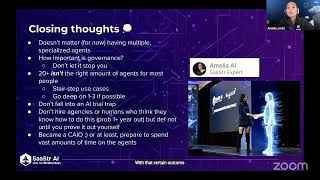
I didn't realize we are running out of time, actually, somehow, again. So I'm like, let me see what else I have here that I maybe want to go back to. And then we can do questions. I'm like, oh, somehow I only have 10 minutes left. I'll do a quick, I'll do a quick closing thought. And then, Jason, let's, let's hit anything you miss. And then we can do some Q and A for a few minutes over. But this is interesting. I was at like a Salesforce event yesterday out in Oakland, and the number one question I would say that the audience had a lot. And then just with folks that I was talking to is, you know, one, because folks know we have multiple agents now. And I kind of talked about the story. They're like, are you. Are you ever worried that, like, your agents don't talk to each other? And I was like, no. Because even though our stack is hyper personalized and specialized, right. Like you just saw, like, I use qualified for some things, artisan for others. Our marketing stack we just showed is so disparate of like, you know, 10 different tools across the stack. We have adjacent AI that's Delphi. We have an Amelia AI that's qualified. I'm literally doing a voice and video test with them later. I have a London agent. I'm rolling out on Agent Force, where you can call it and ask it with sessions to go to. Like, that's freaking cool. And someone was like, aren't you worried that these agents won't talk to each other? I'm like, okay, let me give you an example of a human example where I had a worse interaction than talking to maybe one to three agents. Like, I had to call Verizon the other day because the WI fi at the office was down. And the experience was so horrible. One, I had a call this number. There was no chat. There was no AI troubleshooting of, hey, I saw your Internet's down and I'm logged into my account. You should know my Internet is already down by the time I get there. And so I Got routed to five different people because we had a Verizon for business account, and it was specialized, and it was. I don't know, they call fios or whatever. And it was, you know, whatever. It was specialized. And so I kept getting bounced to all these different departments. And finally, I think the screenshot on my phone was like, 45 minutes later, the. The guy who eventually came on said, oh, yeah, there's just an outage in your area, so your Internet's down. I go, great. You could have used AI to tell me this. When I logged in, you could have maybe emailed me that there was an outage in my area. I would have wasted 45 minutes on the phone. But my point in all this is I talked to five different humans, and it was a much worse experience than somebody who has bounced between maybe one or two of our agents or at the max, maybe three or four of our agents. And I will. I will say I know that because in our agents, they do point to each other. So, like, if you ask our Amelia AI right now for, like, SaaS advice or, like, how to hire a VP of sales, it will kick you back over to the Jason agent. Then if you come back and you're like, hey, I actually had a question about London. She'll remember. Like, Amelia AI will remember that she kicked you out to the Jason agent and, like, just pick up on that conversation. So, you know, I equated to. At least I wasn't transferred to a new customer service rep. Like, if you go back to. If you're kicked back to any of our agents, they remember everything. Like, they remember your whole conversation context. They can see what you were doing and actually get you to the right answer versus, you know, being bounced around by humans. That's still worse, right? So it's just an interesting nuance there. Something I hadn't really thought of until somebody asked me. I was like, but this experience is so better than the crappy experience I just had with a bunch of random human beings who actually could not solve my problem. Tell me the Internet's down. Any closing thoughts you want to touch on Jason before I go to Q and A?
I don't. The one thing I would, you know, just. The Verizon story is a great one. Let me just tie it. Tie it together. You know, the. If we're talking about gtm, right? We don't talk a lot about support, but if support is pretty good, it can be a great lead capture an opportunity capture tool. Qualified, you said, for example. I mean, it does a limited Amount of support. When you're, when you're using that agent, it captures leads. When it does the same thing, right, it does the whole thing. And so these agents, you know, I had two bumps myself. I had one with Mercury, which I love, which is a banking product, and I did it the other day and it said it would take them a day to respond to my issue. Now you could, you could criticize that. You could say, why the hell can't you just have an AI agent do the support? But when you have that experience, you're missing a chance to, to capture that lead and get someone into your journey. So if Mercury or Brax, which we both use and appreciate and love, if they all take, don't really have AI support or can't get back to you, add a basic agent like we started with, with Delphi. Add something that adds value to your customers today. Put it on your site today. Like some of these tools take a long time to deploy. Delphi, you can do in a day. You'll instantly start at least improving experience and capturing some leads and some potential prospects. Support. As these things converge, marketers and sales folks don't think about support. It will become a lead generation tool for you. And it already is with our agents. It already is. They're blurring. So make your, if you don't, make your support great too and your marketing sales will be better.
Yep. Okay, closing questions.
Questions.
Yeah, now I'll do questions. We do have a few, so I'll try and hit a couple or I gotta go to my next meeting, but there's a question. This is probably a whole other topic, but do you have any quick thoughts on G Geo, AEO and AI search?
Listen, we've. We have a lot of SEO at Saster. Okay. We have 50 million views of our content a year through SEO and that our actual views overall this year are up 50, which is pretty cool and accelerating. But our, our SEO is tracked in Google Analytics and jetpack's down about 8%. So SEO is down. Other stuff is up. It's not because of Geo. We can track our chat GBD traffic. Everyone, that's a scale will tell you it's still tiny. It's there, it's nice, it's high intent, but it's tiny. So. But SEO is important to us. Even though it's not, we don't have enough time to work on it. So I've tried all the tools, okay. All the ones. The, the free stuff from Amplitude, the vendors. I. The problem is, and I know maybe the vendors will get mad at me for saying this. I, I'd love to learn more. I'd love to get. If someone wants to train us and make it actionable, we'll use it. Like we'll be your spokesman like we are for the other one. Right now I'm not seeing a lot actionable. I'm not seeing a lot that is actionable. And the advice that I'm getting that is not self serving is be a source of high authority and write a lot of content which seems to be working for us. I don't think that's changed. Saster is a source of high authority. We've been around and we write more content and our views are up 50%. Like I just don't I. The problem with the GEO stuff and I'm not saying it's not important. I'm not saying it won't get better and I'm not saying you shouldn't do something. People want a click in a click and forget solution to a problem. There isn't a click and forget solution to the problem. You got to do the work. So I wish there was a magical tool you could buy for 3.99amonth and it would triple your high intent traffic to your website. I haven't found one but working harder and being a source of authority seems to. But again if any of these vendors are watching this or listening to this and you and you want to set us up on your own and not play games and not pretend and show results for us and it works, we will promote you to millions of people just so far. There's a lot of snake oil out there. But, but, but, but again going to the beginning of this conversation, maybe we can do one more break. They're just you, you need help. But there's no. There are very few set and forget solutions in AI agents today.
I agree. There's so many good ones it's hard to pick a last one. Hold on. I'm gonna use this one because I feel like it's a good wrap up one. The question was. Well that was good too. Okay, I'll use this one as the last one and if we didn't get to it, come to Saster London. We're gonna do the opener. I've got, we've got some like deep dive sessions both Jason and I are doing. We'll do. Jason's doing open AMA on Monday that we're adding to London so you guys can ask your agent questions there too. And if. And we'll also be back doing live on Wednesdays Post London. So maybe a good one to wrap on, Jason, is how do we think about orchestrating all of these different tools? Do we visualize and think through them and map through the entire workflows?
I don't know you often. I mean, you do think about it a lot.
I do, yeah. Yeah. I don't know your take on it, but I would say in terms, I feel like a lot of people get hung up on orchestration, to be honest. Like all the CROs and CMOs I talked to, some of the technical founders are like, oh, I don't want to use the many tools as you guys, or I don't want 20 agents because I want to orchestrate them all. I'm like, do you even know what you're saying right now about orchestration? There are, I mentioned it last week, but I think also I'll answer it more specifically for marketing because I think I answered it more so for sales last week. When it comes to orchestration, as it were, or as you, I think as most people kind of refer to it of, you know, how do you push data from, I would say one system to another through all your AIs and then maybe train and junior agents? Maybe that's a good, loose, broad definition of orchestration. It takes time. There is no substitute for time. I said elastic from a sales perspective. I'll say it again this week from a marketing perspective. All the agents we use and we have are only as good as the time and the people behind them. Like, Jason spends his time on our tools. I spend a lot of time with our agents. Like, they are only as good. The outputs of your AI, no matter how you orchestrate them, will only be as good as the inputs that the humans put in. Like, it will not magically solve processes that were broken. It will not magically fix things. Your marketing is not suddenly going to go from a 20% open rate to like a 70%. Maybe it will, but that might not last. That might be a flash in the pan and I don't really think about it more so as orchestration. Like there are certain things I have to do in like four different platforms right now and I said it last week, I don't mind that trade off right now because the output for all the specialized tools is just so good that it's worth taking the time to sometimes tell, you know, give the same update or prompt, like four different models or a bunch of different agents. I don't mind doing that right now. I think that's just the cost of doing business. With the tools as specialized as they are that we have. So I don't really think about orchestration that way. I more so map out what is my goal. Right. Okay. Like if it's a outbound email right now my default would be okay I'm going to put into Artisan but what am I going to do with that? Right. So I guess I would do more mapping than orchestration. And what I do more so is I make sure I don't duplicate efforts across our agents. That that is maybe a better way to think about orchestration is because we have all these separate tools. I am very careful of that. If you know, qualified is sending something to somebody that Artisan is not sending something to somebody or agent force is not sending something to the same person. What I don't want is like those three agents all emailing Jason, once you know, three somewhat different CTAs for faster I want you know, at max one of my agents to reach out to you that if you come to the website then you may interact with one or two different agents. And that's where more so I think about mapping out that journey of you know, what is my outcome? Is it inbound customer support? Is it selling more tickets, selling more sponsorships? Is it getting people more Saster advice and reading saster.com and then I will think of more use cases and then create sub agents within those tools that is tuned specifically to that goal with that certain outcome in mind. So like some of our agents are able to respond autonomously, some are not. And that's because they have different goals in mind. And so I would say the mapping has been more so important. But I didn't know that when I started all this. Right. I just started with one use cases and like some simple use cases and then started layering on. So it's not like I had our whole go to market in AI mapped out six months ago. Right. We stairstepped a lot of this and as I started getting to the weeds and seeing what worked then I added more use cases on top and more deep dives. And then now yes it does take some time sometimes to put things into different platforms but at the end of day not only is it worth works a lot better, you've seen, you know, our results are in this deck. So I would say it's been, it's been working. Not only has it been working pretty good for us as, as, as some of the data shows, but I also wouldn't want to go back to how we were doing go to market six Months ago. Like, this is just so fundamentally different. And I would say better that again, my, my biggest takeaway from all these last two weeks of doing this with you guys is it's only as good as, you know, the people behind it for now. And also, I'm at a point now where I have to keep up with our agents. They're, they're getting, they're, they're already kind of getting better than me.
Maybe just to wrap up on this point, a lot, if you read what a lot of. If you do, if you listen to deep dives from a lot of folks that are deep on AI anywhere, GTM sales, bringing in coding agents, programming tools to their organization that, that aren't at the cutting edge necessarily, you'll hear some variant of this story. Bob or Linda on my team was just really passionate about it and she got everybody going, okay, so you need a hacker on your team. It doesn't mean they need to code. It means they, they get out of this and they're like, oh, I haven't tried reavercam. I want to go do it, or I want to get on the phone with Artisans are qualified, or I want to raise my head and try agent force. You got to find that DNA on your team or hire it or, or at least for now, you're not going to get any results. Like, someone's got to raise their hand and be an AI nerd and say, I want to play with these tools. I want it to be my job. Or you're just going to hire a bunch of agencies and get mediocre results and, and maybe that's okay, but, you know, these tools are so powerful, but not so established, I don't think. I don't know anyone that's getting great results. Hiring agencies, that's the classic marketing stack. I'm, I'm ahead of marketing. I'm going to bring my 11 agencies with me that I've worked with since the 70s, and they're going to deploy the same marketing automation and the same events and the same banners. It's just not going to work. In AI, the agencies don't exist. If you talk to agencies, they're in tumult here because they don't have the resources to support their customers that want this. If you look at the HubSpot ecosystem, what Yamini and team said this year at Ebound is inbound, is they're remaking their entire, you know, 40 of Hubspots. HubSpot. HubSpot's revenue comes from agencies that help deploy HubSpot right? They're rebooting their entire agency ecosystem because most of their agencies can't deploy AI. So so long way of saying is if you really want to see what we've done or do better, like if there's someone on your team that wants to do it, give them the budget and resources and get out of their way. You need that, you need that hacker, that someone that's passionate about it, and. And they will be able to do magical things that weren't even possible a year ago. So thanks everybody. We'll see everybody in London. We'll do the this live. We'll do this Q A live. You can come up with all your questions and talk to you guys soon.
See you there.










