SaaStr AI on Wednesdays: Live with the CMO of Wiz
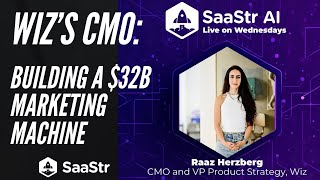
Roz Hesberg, CMO of Wiz, moved from product to marketing as an early employee and tackled the company's biggest problem: nobody knew who they were. She built a growth team that shipped creative tactics like a meditation app for security practitioners, brought design in-house, and built an internal AI tool to keep technical accuracy and brand voice consistent across the company.
Chapters
Live.
I'm going to pin myself and some of our panelists. Hold on real quick. Okay, sweet. Welcome back. We took a short break from these actually to do Sastra annual I was going to say last month but now it's July. So back in May, super fun. We're doing London in December. We're doing a lot of AI stuff in between now and then we're going to talk about AI a bit with Roz. A lot of topics to get into, so we're just gonna jump right in. But we will start with a quick background and introduction.
So for those who don't know today's.
Guest with us today we've got Roz Hesberg. She is the CMO of Wiz. Roz, thanks for joining us today.
Thank you for having me.
Yeah, great to have you. I know you've been a long time reader of the Saster content and a consumer of it. So this will be great. Great to see yourself. Coming up on Zastor.com now there's a lot we want to get into but just for introductions, right as because folks are still joining and, and just to help warm, warm, warm up the room, the room a bit. For those who don't know Roz's background formally, maybe you read it a little bit with the announcement of the Google intent to buy Wiz. But for those who don't know, Roz was actually appointed CMO of Wizard with a product background. So no prior experience in marketing. Just by way of introduction. How did that go? Look, how did that actually work? Just as like I feel like that's a good place to start off for the day.
Yeah, it's still going so I mean, yes, just for context, like being the CMO at Wiz was my first marketing role at the time I joined Wiz as one of like the first five employees and I joined as a first product product role. And for the first two and a half years of Wiz I led the product organization. And I still remember the day that our CEO Asaf asked me to kind of take over the marketing function and my answer was like no, like what are you talking about? I mean just to put it into context, I have never been on a go to market Org before, right. Like I was always on the engineering side. I did not know the first thing about marketing. I mean when I took the role I have never heard of the term MQL or I mean I knew what pipeline was but like very high level, right? I've never heard of like PM or PR agency. Like nothing. What they did Know is I. I knew our business inside out. So like building the product for the first two, two and a half years. What I did was, you know, work with customers from the beginning. I sold to a lot of customers in some ways, like I helped shape them selling process in Wiz. Like I helped, you know, what is the first deck? What does a successful POV look like? I knew the customers and the product and in our business inside out, but I knew nothing about marketing. Yeah.
What did you.
But I mean, whiz blew up, right? I mean, but in general, I think it did like 1 to 118 months or 20 months or something like that. How did you as an engineer turned marketing, what like data set did you focus on initially? Like, what did you try to. I'm sure your brain initially is what can I optimize? Right? What can I hack? And so because I'm actually seeing this more and more often, more and more folks are approaching marketing from an engineering perspective. So what were the first couple things you attacked?
Yeah, it's it. I think not knowing marketing really shaped the way I came to think about it because I knew exactly what I was trying to solve. Our problem at that time was nobody heard of Wiz at all. Nobody heard of Wiz. We had great product market fit, right? But what would happen to us is we would meet a customer, right? It's a big enterprise. We would meet a customer and we would, you know, have a great first meeting and they would be like, oh my God, this looks so good. I wish I heard about it like three months ago when I just signed with one of your competitors. They did not know this existed even. And that's like, you know, it's like a knife to your heart. Because we know that had he heard of us, had we been part of that process, we believe that he would have bought Wiz, right? So our pain point was nobody heard of Wizard. So I did not know anything about marketing. But I came into was like, okay, what are all the things I can do to solve that problem? I just want the right person. Like I want security buyers with a security product. I want security buyers. I want cybersecurity buyers to hear about Wiz and ideally know that with does cloud security so that if they need something for cloud security, they think of with that was the problem I set to solve. I was not focused on building pipeline because I did not even know I was supposed to be focused on that. I was just like thinking in terms of how do I solve this problem as fast as I can, Whatever it Takes.
Cool, That's a good one. It's one of the points you brought up and something we talk a lot on. Saster, I know Jason has some takes on this as well, is how, how technical do you need to be?
Right.
So Wiz is a fairly technical product. Obviously you had, you had more of the technical background than maybe a more traditional CMO would have had. Like, how do you feel? Like that also helped make it work, right? Because it is. And also like, sorry, as a maybe second tail part of that question is sometimes security is like a little bit boring, you know, based on, I guess just two part question there. One, how much being technical and knowing the product helped.
Right.
You talked about it a bit. Maybe you could share a bit more. And then how did you maybe evolve that to say, okay, now that I know I have to own this marketing function, how can I actually make that exciting? Because security is a little bit, you know, traditionally a bit more boring than selling like a marketing or now an AI piece of software.
Yeah, it's a really good question. So again, I go back to like the core problem. Nobody heard of us. And so my solution to that was making it exciting. Like I wanted to stand out because I was just trying to make people hear about me, right? So like, whatever it needs, I want to stand out. I want to look different so that if you see with somewhere, you remember it and you can come back to it because it stands out so much. And being in the security domain for being technical, but specifically being in the security domain and being a security practitioner, I knew how everything else sounded and looked like. Security products typically were like black and red type of things that really most of the marketing was done on like scaring people. Like, hey, I will help you prevent this bad thing from happening. And as an actual technical practitioner, first of all, it's never what I want to hear. It's just not. I like to hear like positive things. I don't like people stressing me out. My job is hard enough. And also because I understand the reality of, of how complex it is to protect an organization that also never resonated well for me. So what I was able to do was kind of like take those two things and be okay. I want to sound different, I want to look different and I want to make it fun. Like, I know it's funny for my audience, right? I know the jokes, I know the inside jokes. I know like where they read, I know what they like to read. So how do I kind of combine those things to make it fun and stand out and, and specifically talk to them. Like for example. Right. Like you know, in April's day we. April school day, we did like we released a meditation app for cyber practitioners. It has like guided meditation sessions because cybersecurity is stressful. Was like really deep cyber jokes. Right. That's funny thing that can get shared within my audience and it's just like weird. It's like out there and it's funny. It's like deep and good. So those are the types of things they did to stand out fast but also catch exactly my right audience. And the second thing was like I knew I was really focused on grabbing attention because that was my problem. So I always felt like what is interesting for my audience, you know, I don't believe it's ever hearing about a product that is because you're caught up in your own doing. I mean even as, you know like even I like Instagram. Right. I'm never going to read a blog about the new Instagram feature. Right. So why would somebody who does not use my product read the blog about my features? Right. So it was more about. I know it's interesting for my audience because I am my audience and how do I like release things fast that speak to them.
Yep.
I know we're jumping around. I don't know what the exact agenda is. Can I ask another question? I'm curious about Raz from a marketing perspective. It seemed to me as an outsider, again not an expert, that Wiz had a either direct or close competitor called Lacework. And Lacework ultimately was not successful. Right? It ultimately was not. You guys almost bought them. Right. But the marketing really seems strong like, like from a lay perspective it seemed like they were everywhere. Right. They were directly competing. Lessons learned when you have a competitor that obviously is inferior, objectively speaking. But man, is marketing strong like because that does happen. Right. You could is not. I mean you can, you can out market others. Right. And you can market beyond your products capability, your competitive. I thought they did a good job positioning themselves in the market beyond their competitive positioning.
Interesting. First of all, I have a lot of respect for Lace Work. I. I mean we have to remember Lace Work started many years before Wiz and many years before with. So I think of them like as pioneers in the cloud security domain. I have a lot of respect for Lace Work. Being successful is hard and there's so many different things that have to go right to your point. And marketing is one of those things for sure. But it's not the only thing at all. I mean I think you Know, being on the product team, I think, I think you naturally underplay how important marketing is. Being on the marketing team, you might underplay how important the product is to. But the reality is like building a successful company is so insanely hard because everything has to be good. So you can't have like only one outshine the other. But you really need, you know, like you need, you know, we talk about those things but like the reality of companies is to build a very successful company you need a very strong HR function.
Right.
Like you need a very strong corp dev function. You need, I mean you need everything to be top notch. And so I think just looking at it from an out marketing perspective.
Yes.
Can you build an insanely successful company without having a really good marketing function? No, but, but it's not enough on its own. So I think that's where those things came into play.
Yeah. A question I want to incorporate here from the audience, which I think is a good one. Just on finding early traction and marketing and a little bit about maybe you can share what's working now a bit is one, how did you find the right buyers initially?
Right.
I think really the question from the audience here is a lot of channels seems to have degraded. We've talked about that a bit on Saster, so maybe let's tackle that first and then we'll do a follow up on maybe what's working now.
Yeah, it's a really good question. I do think that obviously a lot is changing and a lot is also changing fast and a lot is still changing. So definitely I don't have all the answers, but I think it's important to always be attached to today and tomorrow and I don't think like two days ahead. I still think that a lot of the core principles we incorporated is at least for our audience, which is a very deeply technical audience. Right. I'm selling like a very technical product for security people, for engineers. You have to go very deep. So shallow content was never enough. But really deep content still requires a lot of work and it's not something that can be easily automated around. But you really need that core expertise. For example, one of the things that works really well for us right now is really releasing, they're called CTFs in the cybersecurity world, but releasing really complex challenges that teach people how to do security hands on. Um, like you can think of them almost like websites that are like security riddles. Teaching you cybersecurity, but making it fun and engaging and gamifying it. There's a lot of work that goes into it. It's like very deep content. Those things always work for me because I think the reality is you are truly just giving somebody really good value and you're speaking in their language and you're being very specific in what you do. And that I feel still works for me really well. And it does. It is able to, you know, it is able to shine in a sea of SEO type generated content, which I agree is now overflowing.
Yeah, yeah. Especially because AI has made content creation both easier and harder. As you were just related to, as you were building out the marketing function at Wiz, because we talked about a little bit in the, in the backstage before folks joined, um, how did you build out that team? Right? Like, who were the first 10 hires that you made? I don't. And maybe you can share how big your marketing team is now. Currently it was. But like, who are the first 10 people? What did you have them do to build out this function?
Yeah, so I built what I still to this day call like the growth marketing team. Those were like my first personal hires and those were just like kind of. I mean, I had a lot of thoughts on projects that could resonate to my community. For example, what I just mentioned, right? Like doing this, like ctf, I needed somebody that was able to take a complex project end to end. Like you need to engineering, you need design, you need. So I hired that team of like brilliant people. Tom Orbach, some of the best marketers out there that are just like doers. They do a ton of crazy, crazy things. Like people who made things go viral in whatever domain. I was not looking for cyber experts. I know cyber. I needed people that know how to make things like go viral and deliver them end to end. So that was like my first hires. It was like those kind of like doers on the growth marketing team. It's not a traditional function, I think, but to this day it's very, very impactful. I also brought design completely in house, so there was like a lot of contractors. I just, I really love design and I think it's. It's a core part of a company and an identity. So I brought the design team in house. Today in Wiz, the marketing team is actually structured untraditionally. So like about a year ago I actually split the marketing org so that the field marketing Org is under the sales org because to me it's so attached to regional and to sales and it's not that domain specific and everything is like domain specific reports to me. So it's a very Untraditional structure, which again, marketing is so diverse. I mean, I have to say, somebody who has not come from marketing, it was always so confusing to me that everything has to live, you know, like nothing is that similar to anything else within the marketing or. So I think there's a lot of ways to structure marketing teams.
Yeah, I've got kind of. Jason, you might have a follow up. There's one follow up I want to quickly ask is you mentioned doers. I know a lot of marketing teams sometimes will say, okay, I need a strategist. I feel like that is going away. That's like a very antiquated way now of thinking about who to hire in marketing. But just because there's so much AI now. Like, I don't know how you did this in the early days or maybe how you think about it now, but when you're hiring, how do you separate? Especially with marketers. Like, marketers like to market themselves. It's like salespeople, they like to sell themselves when they're, you know, going out for a job. Like, how do you separate a marketer who's a doer versus a marketer who's a strategist?
It's a very good question. I am in general obsessed with hiring. I am like, I think I, I think, I think the most important thing is like to have the right people on my team. And having. And having like five excellent people on my team is better than having like 50. Okay. People on my team. I think the thing that helps me is like when I ask people about problems they solved or projects or things they've built, it's like I can, you can kind of sense how much they go into details. People who like design the project or a process, they will kind of stop at some level of details. But people who really solved something completely can talk to you about every small detail in it. Like every tiny detail. So, so that, that I think works really well for me.
Yeah. How much? Because you just said you're obsessed with hiring. How much time do you spend hiring and recruiting right now?
Well, depends on the like. Well, it really varies, but, but it's a, it's an important task. Like at least, at least a couple of hours a week. And I take it very seriously. Again, put bringing somebody to a team where I really look at my team as like an A team. I think it's critical to have the right people on board. And I'd rather spend. I will never hire out of urgency ever. Like, I would rather spend four months looking for the right person Just me personally.
Can I ask a somewhat related question? If we're on the constructing the function of marketing. What I've seen Roz just relatively recently with hypergrowth companies, right like wiz and I've seen this a lot is I am seeing more and more CROs and revenue leaders build what I call parallel marketing organizations. Like they're tired that either marketing is getting me the wrong type of leads, right Or I need more enterprise and marketing is giving mid market or I just need and they are not. I haven't seen any CRO say hey I want to take over brand collateral and building booths. Okay, I've yet to see that but I am seeing more and more CROs build a parallel marketing org mostly around demand and I don't just mean hiring SDRs, I mean building a parallel org. Have you seen that? Have you thought about whether those lines should blur or change when there's hypergrowth?
Very interesting. I think blurry lines are a good thing. I mean I have to say in Wiz I think we've always had a lot of blurry lines. I think, I mean it, I mean I think really being involved in sales processes which I am still to this day involved in deals, I think it's meaningful. It's really meaningful. It keeps you in touch with the sales org in a very meaningful way. I can understand why if you don't, you don't have a tight connection then I mean let's put it this way. If our CRO started building a shadow marketing org then I think it's, it's a great learning opportunity for me. I believe people should do whatever they need to succeed. So it's a good chance to understand like what are they doing that the marketing team did not do. But it doesn't matter. I think there's many ways of having structures in orgs and I think orgs are very different. So not necessarily seeing it as a problem. I think it could be a good opportunity. At the end of the day I work for the sales team. That's how I it and me to be, right? I do, I work for the sales team. Either I'm helping them close deals and get customers or I'm not helping them close deals and get customers. So I mean if I was a CRO and I was unhappy I might have done just that.
I'm not so much what is I. I mean you have so much great experience. It's not so much that I. Some of it's probably unhappiness, right? What I'm seeing as, as the Best just grow faster. Right. Is a recognition look. The reality is some CMOs are more passionate about certain functions than others. Right. Some maybe for from an engineering background. You may love the quantitative side. You may love campaigns and demand gen and staring at spreadsheets. There are CMOs who are great at brand and wiz is so big today you could probably just do brand, right? Because. Because that's your goal is to reinforce deals. Like you get into deals, right. There are CMOs who love field as crazy is they love, they know that they, they're really good at events and their competition isn't. So they know that 40% of pipe in the enterprise. So they just hustle field but they ignore smaller customers. Like I've never seen a CMO that's great at field and great at like the low end. So what I'm seeing is CROs say listen, let's keep everybody in their lane and I'm going to backfill my org and if you're good at content or event or fields or brand or demand gen, I'm going to do the other stuff. Like you're a cmo, you don't like getting out to events. I'm going to do it myself. Like I'm going to get on the road. It's just a new theme because I mean I just think most CMOs have like two or three things they like to do and the rest they sort of hand off to their team or are mediocre at.
I mean, I think it makes like, I think it makes a lot of sense. I also said like our structure is not traditional. I don't do field anymore. I mean, and I think it's part of it. Like it is a very, very, very diverse role. Like there's so many things in marketing and marketing is not even just in the marketing or like I would argue that as a B2B enterprise product, our salespeople own a lot of the brand. Like at the end they meet the team and it's about how they interact and how they behave and you know, the culture that they put out there. If I'm like a very fun and approachable brand, but then you know, you meet my salesperson and you have a really bad experience. It does not matter. So the whole thing to me is like one task for the company. I just, I personally to. I mean, I know being outside of the marketing or. Right. I know how almost like scary it was to hear CMOs talk because they would use all those things like the demand gen and the top of funnel and brand Versus this, versus that. And I mean, now I know all those terms, but I still try not to think about them too much. I mean, at the end of the day, if you don't split it into those categories, then the problem CMOs have to solve for is I want to make sure the right buyers hear about me and feel positively about me, and that should help the sales process.
Yeah.
So that's like, that is what we do. So in my mind, that's the focus and it's not broken up into those, like, categories. So bluntly, in a sense, I hear it.
This is when you said you don't do field anymore. What is that? I. When I was at re invent, it had to have been 40% security. Right. Multimillion dollar boost. I haven't been to RSA since pre Covid. Right. But what do you. What do you mean by that?
Sorry to cut you off. I meant exactly that. It's an unstructured, like, it's an untraditional structure. Like, a year ago, I broke off the field marketing, which reported to me as a cmo and it now reports to our sales leaders. Exactly.
Well, that's interesting right there. You broke it off. Right? It reports.
Right, exactly, exactly. Because I really felt that, like, first of all, personally, I think being a very successful field marketer has more to do with having very tight alignment with your regional sales director. I mean, that's the KPI for me is, are they happy with them? And the way I like higher field marketers was to ask, ask the. The regional sales director, have you worked with somebody you liked before? Because that will make it successful. So, like, in some ways, I did not have a lot to give there. Right. Like, it's not something I felt like it's so important for them. I want the sales org to choose them and like them and work with them. I will still give the content. I will still tell them how the event should look. Like, what should you. But I don't need. But. But it's more important that they work closely together. Things are very regional. So in my mind, that belongs with sales. It also works that way. When you hire, like you hire X salesperson in Y region, you get the field marketer. So, like, put it there.
Yeah. Well, that is interesting. And so you raised your hand and said, listen, this is better off living in sales. You still own the same number overall. I assume your KPIs didn't materially change though. Yeah, yeah, yeah, yeah, yeah. It makes sense if the CRO is up for it. Right. You have to make sure you have a great VP there. Because there's no way a Sierra wants to go into the minutia of. Of ordering the pop card for. They just want. They just want to influence pipeline and maybe generate leads. Right. That's all they care about.
Yeah.
But also of course like you know, it's not like we're. It's not like I went anywhere. We were there to build a good VP there and like to. To make that work.
But yes, just one nerdy question on it because we could spend. But I do think that's a really interesting story. Just from a budget perspective, when you move it over from marketing to sales, does that become part of the sales get more heads and more budget. Does it stay in your budget? Like how did you guys just figure out how to allocate? Because even at wizards scale budgets fixed. Right. It's going to be some, some percent of revenue that you get to spend now.
Moved it over with the heads in the budget. Of course.
Well the budget too. Right. So. So yeah, not everyone wants to really. Not every CMO wants to release any budget. There are fiefdoms out there in the world. There are a few folks who run fiefdoms and the last thing they wanted to do is release any budget.
You know, I do think that one thing that can be under played in. In the fact that you know, I didn't start it with as a CMO is that I exactly have always had a bit of the privilege right to not live and die on metrics and have a lot of trust. So. So I'm. I was never afraid to let go of budgets or numbers or be or saying, you know what this measurement of pipeline, I know it looks good for my team, but I actually think it's like completely meaningless and I'm going to focus my energy on what I actually think closes deals and helps and helps sell with because that's what I'm here for. It enables you to do things very differently. I think it's very hard as marketers to work because you have to like gain that trust and you have to show the numbers. But in a lot of ways they can also lead you in the right direction sometimes. So that's another core advantage I had by not starting as a CMO but by starting from a place where I had all the trust in the world by the exact and founding team because I was almost like part of that before I took over the marketing role.
Got it. Let me take you a different way. Curious what you're thinking today because this is probably the number one question everyone has, right. As you know what, how do you think AI is going to change the roles of specific marketing functions over the next 6, 12, 18 months? I mean, we're already seeing it's aster. I mean, we already, every time, like, look, we're tiny, okay? But every time someone's left, broadly speaking, we've replaced them with AI.
Interesting.
And marketing and what we call marketing, how dynamic do you think it is? What jobs you think are at risk? Right. How are you thinking about how it will change the human side of marketing?
Yeah, it's a good question. And really, I have to say, I don't feel anywhere near a marketing expert. Right. So truly, I am still very marketing.
We're all still learning.
Still, still learning, Right. I really think that. I mean, if I look at my own team, right. Which is the only thing I really understand and know about. If I look at my own team, every single person on my team has dramatically transformed the way they work. And that was also something that I would not compromise on. Like when we do team meetings, right. When we do, like quarterly summaries where people present what they work, every person has to say, like, what am I doing with AI? And show cool things to the team. And we've been that for at least over a year. So it upscaled the capability of people to be effective, like 100x. I mean, I've definitely, honestly, I slowed hiring, but I think amazing people are just now 100 times more amazing and 100 times more effective. But I. But, but I still need the amazing people. I never had or believed in, like big teams and hiring a lot of people for. I was always about, like, I think a superstar can, can do so many things, and now a superstar can do really endless amount of things. Yeah. So that's how I see it.
Do you think you can? So superstars for sure. Right. But in my limited experience, sometimes the folks that were superstars in 2021 are not always superstars in the age of AI, right. Do you think you can reskill people? Like a lot of folks are talking about reskilling, go to market people in the age of AI. Of AI, Right. Do you think you can reskill people? Like, a lot of folks are talking about reskilling. Go to market people in the age of AI, but honestly, just between us and the 221 people here and whoever's watching on streaming, I think reskilling is tough. I don't just showing up with it, with it, with a recipe that you got on ChatGPT to your marketing team doesn't count as being an AI native, I don't think. Right. I think more folks are struggling with this than. We had a CMO summit at SA annual this year. I mean, come next year, we had hundreds. And this. Amelia led it. It was the quiet theme backstage. I don't know if I'm reskilling myself enough. I don't know if I may, I can go deploy clay and buy some tools and that's great, but I don't. I'm not sure I understand this stuff.
Yeah.
And I mean, first, again, I have to say, like, it's. It's such an evolving landscape as well. And so I want to be humble here and say, like, I don't think I know anything, but if I had to share my perspective, I slightly disagree there. Right. Like, I think when I say superstar, I never thought about it from being, you know, a super hyper domain expert, but rather being a person that is extremely, extremely curious and just gets the job done. And I think that type of personality thrives right now in the AI landscape. And, you know, I'll give you an example from one of the teams that. One of the people on my team that uses AI in the most innovative way is my head of design, my head of brand and design, Roy. He is a designer. You would kind of think, like, you know, this is like as remote from him as it gets, right? Like, he's like a designer. Like, he draws things. But if you have the hunger to learn in that curiosity, the amount of work you can do is endless. So I do think at the end, like you said, tooling, retooling, the. I agree. Like, I think it's hard to push people, tell them to use things. You need to have somebody just curious to want to do the best he can, and then he kind of finds his way around things better than I could ever teach. So it's an average. Right. There are tools that I have built for the entire org and for the entire company to make it easy for them to adopt. Like, I'll give you an example. One of the things the cmo I did a lot because again, the product is so, like, the domain is so technical. And one of the things that was so important for me is that every security person that reads something or hears something that comes out of wizk is like, oh, yeah, they know what you're talking about. Right. I know from being on the other side that oftentimes I would read something and it would not be the right tone of voice. Right. Like you can see that the person writing it was not using the right jargon, like the inside jargon. So I would spend so much of my time like reviewing things, making sure that everything's like accurately technical. Now I built like a super easy GPT that we call like the Wiz spell checker that is used not by marketing, it's used by every single person in the organization. What it does is it makes sure that it's like according to our brand and tone of voice. Like you write the customer email, you put it there. Technically accurate uses the right to your going.
So it checks every customer communication. Well, I think it's great if it does. I'm a super fan.
It can help. Yes, it helps you like write everything right. And it also makes sure for example, like one of the key things is one of our brand core principles is being humble. Like I will never tell somebody. Let's say I lost, let's say we lost a deal. I never want an AE to write and be like, I want them to write back and say like we'd love to learn more. Like we want to learn from you. Right. So this also helps me with those types of things. So you can build the tool and give it to everybody and you can do that with AI tools today like you could have never done before. But I still believe that at the end of the day, the people who are most successful are hungry and curious people. Because to your point, I really don't know anything. Like the tools I used six months ago are not the tools I use today. And the tools that we'll use two months from now will be new tools. And in every subdomain there's so much to discover that they just need curious people who are not afraid to like figure it out and that, that I think those people thrive.
What percent of folks do you really think are that curious?
A lot. A ton.
And with, I don't.
Well, I, I, I believe you.
You're much more successful than me. I want to believe like a lot of people are this curious today, but I feel like it might only be like 10 or 15%.
Well, well, oh, that's very possible. But when you hire, you are that.
Curious.
A, a lot a ton and whiz.
I, I don't, well, I, I, I believe you. You're much more successful than me. I want to believe like a lot of people are this curious today, but I feel like it might only be like 10 or 15%.
Well, well, oh, that's very possible. But when you hire, hire for that 10, 15%. I mean look, I hiring. I said. I said it at the beginning. I am obsessed with it because I do think there's no nothing around it. Like I want to hire for that 15% and I'm willing to do whatever it takes to hire for that 15%. And honestly, I want to say that in Wiz we've always been focused from day one on hiring are for that 10 to 15%. I mean look, I hiring. I. I said people that are humble have a growth mindset and are obsessed with growing. And you know, we have of course like the privilege of being able to hire for that. But that has always been a key priority.
Yeah. Let me. Okay. Just. Just because I have you for. So let me ask you related to this because I just think the world is changing. Right. Expectations for marketing and sales. I was.
I said it at the beginning. I am obsessed with it because I do think there's no nothing around it. Like I want to hire for that 15% and I'm willing to do whatever it takes to hire for that 15%. And honestly, I want to say that in Wiz we've always been focused from day one on hiring.
On a sales call this week for an AI tool where I'm a power user. I've been a user since day one. This is a company that's two years old. I've been a customer for like 20 months. Okay. So I know this product pretty good. Okay. But I don't actually know the new enterprise edition that that's coming out.
And people that are humble have a growth mindset and are obsessed with growing. And you know, we have of course like the privilege of being able to hire for that.
But that I got on a, on a. On a call zoom with the head of sales and I just inst.
Has always been the key priority.
Yeah. Let me. Okay. Just. Just because I have you for. So let me ask you related to this because I just think the world is changing. Right. Expectations for marketing and sales. I was at Lee knew the product better than he did everything. It was 80 minutes of torture. And my point of the story is we could. I mean it's pretty funny is I think before AI you might tolerate this. You'd roll your eyes. Oh my God. The sales guy that, that, that. That barely knows how to spell whiz. Right. The marketer that just makes infographics. I was on a sales call this week for an AI tool where I'm a power user. I've been a user since day one. This is a company that's two years old. I've been a customer for like 20 months. Okay. So I know this product pretty good. Okay. But I don't actually know the new enterprise edition that that's coming out. And I got on a, on a, on a call zoom with the head of sales and I just. Instant day. I don't. I think the customers are too smart in the GPT era. We won't. I just can't tolerate that. I can't tolerate a marketer, a gtm, a salesperson that's not smarter than me. I just can't stand it anymore.
I agree.
So how do we enable our GTM teams to. I think they have to be smarter than their customers. Certainly knew the product better than he did everything. It was 80 minutes of torture. And my point of the story is we could. I mean it's pretty funny is I think before AI, you might tolerate this. You'd roll your eyes. Oh my God. The sales guy that, that, that, that. That barely knows how to spell whiz. Right? The marketer that just makes infographics all in 2026.
I think they always have to be smarter. I think from day one, like I never.
They. I don't. I think the customers are too smart in the GPT area. We won't, I guess can't tolerate that. I can't tolerate a marketer, a gtm.
A salesperson that's not aim for mediocrity, honestly. So you're right. Like it's. I think there is. I think the bar is getting higher. Right. But I also think that you should never aim that low. So like in my opinion, like that salesperson who joined the call with you. Right.
That was never smarter than me. I just can't stand it anymore.
I agree.
But to be fair, so how do.
We enable our GTM teams to. I think they have to be smarter than their customers. CRO. That's even not a brand new.
Okay.
It was not okay before AI. And I agree with you. That's the thing. I think like mediocre. See now is not hard to automate. That's why you need people who have.
That mediocrity is easy to automate today. That's the AI world. Right? That's the thing. You might as well automate mediocrity in 2026.
I think they always had to be smarter. I think from day one. Like I never aim for mediocrity, honestly. So you're right. Like if I think there is. I think the bar is getting higher. Right. But I also think that you should never aim that low. So like in my opinion, like that salesperson who joined the call with you. Right. That was never exactly.
Did you work on enablement at all as cmo? And if so like how. How did you set a bar? Like how smart the sales team had to be about the going back to this point and I think AI can help. How do you know? I think everyone thinks they do a good job of this. But I'm not saying you didn't do. I mean wiz crushed it. I'm not sure we do as good a job with enablement as we think we do. That's even not a brand new kid.
It was not okay before AI and I agree with you. That's the thing. I think like mediocre. See now is not hard to automate. That's why you need people who have.
That mediocrity is easy to automate today. That's the AI world. Right? That's the thing. You might as well automate mediocrity or training. I don't, I don't. I'm not sure that our. These. All the sales reps I talked to the last 12 months are experts.
You know it's so interesting because I'm, you know I mentioned the original challenge I came into was like nobody heard of us. But the company has changed obviously so much. And one of the challenges is really like how do you grow your team successfully? Like how do you exactly.
Did you work on enablement at all as cmo? And if so like how did you set a bar? Like how smart the sales team had to be about the going back to the table teams?
I think I tried to. I think it's a very hard problem.
And very at this point and I think AI can help. How do you know? I think everyone thinks they do a good job of this. But I'm not saying you didn't do. I mean whiz crushed it. I'm not sure we do as good a job with enablement as we think.
We do problem because again those are the people that you will end up talking to. Just like you said, like at the end of the day you joined the call. That's the most important thing that happened to your interaction with that brand. Now I tried to. I do think that there's a lot of similarities. Like the simplification of what I try to do with marketing is like simplify.
It, make it very training. I don't, I don't. I'm not sure that our. These, all the sales reps I talked to the last 12 months are experts.
You know, it's so interesting because I'm, you know I mentioned the original challenge I came into was like nobody heard of us. But the company has changed obviously so much. And one of the challenges is really like, how do you grow your team successfully? Like how do you hear what was does? Why, why is it helpful? That simplification is also really important now internally like to onboard people, make it fun, make it simple, make it easy to consume. I also think there's a lot of, you know, things we are kind of stuck on. I mean I can't expect people now to watch an hour long training stable teams. I think I try to. I think it's a very hard problem and a very strategic problem because again, those are the people that you will end up talking to. Just like you said, like at the end of the day you joined the call. That's the most important thing that happened to your interaction with that brand. Now I just don't think it's realistic. I think people are not used to it. I'd rather have like short five minute explanations that you can pull on demand. Like I'm, I can't learn everything but I want it to be. I tried to, I do think.










