SaaStr AMA: Getting Acquired by the Big Guys with David Ulevitch, Founder/CEO of OpenDNS
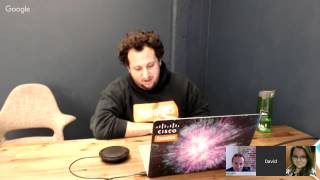
David Ulevitch, founder of OpenDNS, discusses Cisco's $635M acquisition of his company and what happened next. After closing, he spent months meeting CISOs to drive enterprise sales. Ulevitch raised prices 80 to 90 percent over 18 months and explains why timing the exit and staying ready for due diligence matter.
Chapters
Hey Saastr fans, I am Gretchen Coo here at Saastr. Excited to welcome you to our fourth installment of our Ask Me Anything series called Lunch with. It works very easy. You send your questions off into the Twitter sphere using the hashtag sasterana. Tune in here live on the Google and then we'll put it on YouTube shortly thereafter if you happen to miss it.
But you shouldn't.
We've had a lot of success with these so far, really great ones. Funding with lighter capital we did building outside the Bay Area with Christopher Jans of 0.9, VP of Sales, famed on Saster. Building. Your first SDR team we did with Brendan Cassidy and Salesloft. And then the most recent one, which was really great, was aligning sales and marketing. We did that with Pardot founder David Cummings and the Funnelholic himself, Craig Rosenberg. And if that wasn't exciting enough, the one coming up next month is with Jason Green of Emergence. So he and our very own Jason Lemkin will be talking all things investing in 2016 and what the changing landscape may or may not look like. So two top investors in SaaS in the world here to answer your question. You don't want to miss that 1, 2. So today we're going to start off and dive into all things ma. We've got a great guest whose company was acquired by Cisco in August for 635 million and then we will. So we'll start there and then we'll go with any questions that you send in. So sastorama, send them in early because we can't get to all of them if you guys send them in at the last minute. So if you have a question, send it now. And without further ado, I'm super excited to welcome our guest today. First is Jason Lemkin Zester himself. Thanks for joining us Jason.
Thank you. It was tough getting here in the Uber, but I'm glad to be in the studio now.
It's a grave sacrifice and everyone appreciates it. And then very excited to welcome our special guest, David Ulovich of OpenBNS, which I mentioned was acquired by Cisco earlier this year. David had one of my very favorite sessions at Sasser Annual. You guys need to check it out on learning to love enterprise sales. David, in his 10 year journey since 2005 was solo founder, was replaced as CEO for a year and then was reinstated. Went from B2C to B2B enterprise sales, getting on a plane, loving soaps, big dinners and spending a whole bunch of time closing six figure deals. So his Journey is amazing, and we're really, really excited to have him. Welcome, David.
Thanks. It's great to be here.
Yeah. And we love the founder look today. You don't look sicko at all.
I do have the suit. The suit's about 10ft to my right, and it'll be on shortly.
Perfect. All right, Jason, do you want to kick us off?
Yes. There are a lot of things that I'd love to chat about, but a fun statistic that you brought up, Dave, before we got on the call. Let's chat a little bit about the acquisition you said was 110 days ago. That's right. And since then, you've met with 50 different CSOs and you've been on the road three weeks to the last four or only home three weeks to the last 12? Something like that. Were those the stats you threw out?
That's right. I think that since the acquisition closed in the Last hundred, about 110 days, I've met with 50 chief information security officers, or CIOs, or CSOs, of major enterprises, and I have been only home three weeks in the last 12. Which is the same as what you said on the road three over the last four weeks.
Yeah. So let's dig into that a little bit because that in and of itself is interesting. We'll talk more about the acquisition. And obviously a con of an acquisition is there's a new boss and a lot of extra meetings, but it also, if you're lucky, frees you up to really focus on what moves the needle. So my guess is 50 CSOs in 110 days is the number one thing that moves the needle. So are those prospects or existing customers or what's the ratio? Because you're trying to hit a big number now, right?
That's right. So a lot of them are prospective customers. A lot of them are big Cisco accounts that want to learn about our security. They're accounts that maybe we had met with some people in their organization. So, like, let's take a large financial. A large financial bank. They might have 100 people in their security organization. Maybe I know one or two of those people, but I'm not sitting down with the ciso. When I was back as a small independent company, and now having the Cisco brand behind you certainly gets you into big conversations. That gives me a platform to try to sell our security. My highest and best use of my time is to make sure that the integration is successful and driving. I'm a believer that revenue growth solves all Problems, no matter what stage you're in. So whether you're an independent company that wants to go raise your next round, or whether you're a part of a large public company and you're just a business unit inside of that company, revenue growth solves every problem.
It does. Let's just spend another minute on that. Just because using our time efficiently at different stages is something we all get so wrong. So I'm assuming today 110 days in the salesforce integration is starting, but it's pretty light. Is that accurate?
That's totally right. I mean, Cisco has one of the largest sales channels in the world, but yet I'm not seeing the fruits of that organization. I'm not seeing them bear fruit. That's going to take another six to nine months to get all the channel pricing and get on the Cisco price list. I mean, right now our sales team believes that basically our number is in our own hands and we're responsible for hitting it. So we get a lot of benefits right away from Cisco, but we don't get the sales leverage that you would hope to get when you get 17,000 sales reps who are able to sell your product.
Yeah, it takes time. Let's come back to that for a second. But just to help everyone. So these 50 CSOs, who's setting up these meetings? Is it your VP of Sales or who's managing you? Right. Even though you're the boss, someone's setting these meetings up. How do you guys manage this?
That's a good question. It's a good question. And it's a question that I wonder myself sometimes.
Is your calendar just magically filled for you when you walk in the morning?
It does sort of happen a little bit magically. So I would say about half of the meetings are meetings that our sales organization has been able to set up. But usually it's because they our sales reps on our side would get an inbound request from a Cisco account manager. So let's say this is a hypothetical. Let's say there's a Cisco account manager for a major New York bank, and that account manager says, hey, we want to talk about security. There's this new guy, David Ulovich from OpenDNS. He knows a lot about security. He can talk about opendns, he can talk about the whole industry. Let's have David go and do the dog and funny show. And I'm more than happy to do it because I can try to create an opportunity to sell opendns.
Got it? Got it. Okay, so you're spanning. And so some of that's through Cisco, some of it's more market development, some of it's prospects. You're just sort of told what, do you have any sort of quota around that?
I don't have a quota, but obviously my team has quotas. So I'm like the sales guy that doesn't get paid. I think I joked to you beforehand, I'm working harder now than I was prior to the acquisition, largely because I wanted to be, I want it to be seen as a huge success. You have to keep in mind with enterprise sales cycles, sales cycles might take six or nine months. Some of these meetings that I go to are meetings that have been in the development for the last six months prior to the acquisition. In fact, right after the acquisition there were a whole bunch of meetings with customers who were getting ready to buy from OpenDNS and they wanted to know what does this mean? Am I now buying from Cisco? Are you going to kill the product? Am I going to get Cisco's support and backing behind it? For most everybody it was a really good thing. Most of them already have enterprise agreements with Cisco.
Yeah, it's a small question, but an interesting one there. Net net, my guess is for 90% of the prospects, it's a positive, right?
Totally a positive. I mean when you're a small company and you have your own master services agreement, you have your own terms of service, you have all these, you have your own paper that you do sales contracts on or you're working with small channel providers, all those things add friction to selling cycle. So when you can go to a customer and say, you know what, you're still going to be buying on our paper. But your master Cisco MSA is now just the umbrella of paper that we use. That just reduces the procurement process, it reduces the selling cycle and it makes life easier. And they know, I mean Cisco is a customer friendly company the way, the way startups generally are. And the customer just knows if they have a problem they're going to complain and they're going to get it escalated. And you know, if you're a company that spends $100 million with Cisco, your problems are going to get hurt. Yeah. So it's interesting.
So even the last beginning of this year, say whenever, the last 12 months, I mean Open DNS is clearly a company. I don't know what your exact revenues were. Maybe I know, but they're not disclosed. But it doesn't matter. It's pretty big. But from your perspective, a learning is customers still saw it As a startup. Right. And even had nervousness at the scale you were at earlier this year. Right. Approaching nine figures in revenue, the customers still have anxiety. Even you're 10 years old, you're approaching nine figures in revenue. But the customers still have anxiety. They're dealing with a startup.
Well, actually it's a little bit counterintuitive because they don't have anxiety about the product, they have anxiety about the company. And in fact, the fact that you haven't been acquired and you're not yet public makes them, I think, very curious as to what your plans are. Because if you're about to get into bed with a major credit card processor or a major oil and gas company, or financial services, and if they're worried that you might get acquired by a company that they don't want to do business with, that can be a problem. It adds friction to the selling cycle. Not to the extent that it stops deals, but it does create ambiguity. And until you commit to going public or commit to selling the company, it does come up in conversations.
Yeah, that's an interesting topic that I don't think I've ever spent any time writing about. But vendor viability is pretty interesting from a revenue perspective, isn't it?
Absolutely.
Especially if you're in security. Security seems to me an interesting space because on the one hand, the customers know if they don't make bets, they're always going to be behind the eight ball. So they're startups. And yet vendor viability is an even bigger issue. So what are your uber learnings to founders dealing with these issues?
Well, I mean, first of all, at the end of the day, and you know this and you write about this, you have to have the right product. And that can get you having the right product. And the right product market fit is without that, no other problems matter.
Right.
Like when I talk about revenue growth solves all problems. Those are all second order to having the right product at the right time. And so having that stuff work out is key. But then from there figuring out what do you do? All we would ever focus on is how do we increase our ASP and how do we shorten our sales cycle. So like increasing velocity and increasing the average deal size.
Yes. And as you've been through different stages before we were on, we were talking about the early days when you had 3 million in consumer revenue. We're going enterprise. Right. Whether you're at zero in enterprise revenue. A couple million, 10 million, 20 million. A lot of founders try to kind of hide the ball on vendor viability Right. They're asked for a balance sheet, they're asked for all this stuff. And you know, when you look at the balance sheet, if the burn goes up, I might have nine months of cash. Right. So I tell them that big companies, when they buy from startups, they know what they're doing. They're not.
That's true. Those things, I mean, they would ask and it would come up, but those were never blockers. And I think that you mentioned earlier, I mean, especially in security. I mean, think of it this way. Cisco is one of the largest enterprise security companies in the world. And yet I think globally the analysts will say we have 7% market share. So it's a highly fragmented, it's a highly fragmented market. And, and so that means that the customers are used to buying from a diversity and a high number of vendors.
Yeah, it's true. So one question. I know it's the tritest topic in the world, but I want to have some fun chatting about it and then we'll stay tactical. Right, but we have to have a little fun about unicorns. So you had an amazing exit and you were running a very hot B2B enterprise security company approached by all of these mutual funds and all these folks writing crazy checks. Right? You're kind of in a Zen place about it now. And you could have raised even more money at a bajillion valuation and had to achieve a 10x markup. I don't want to spend all the time on the trike stuff. But you're in an interesting position where unlike 95% of people out there, you can actually be honest. Right? You're not full of shit. So what's going on in this aging unicorns, especially as the market wobbled a.
Little bit, I mean, that's true. So I mean, ever since we went to the Goldman Sachs conference last year, we had the option to raise probably a billion or better valuation. But for me the question is like, okay, so then what's next? What is the end game? And for me, if you look at the security space, and first of all, like you said, I've been running this company for 10 years. That's a long time. When you sell your company, you get immediate liquidity and all of your employees get immediate liquidity. When you go public as a founder in particular, you get almost no liquidity because it looks very poor and very bad and the optics of selling your look very bad. You get no liquidity. And the idea of being a public company CEO of a billion or two billion dollar company to Me personally, was very unappealing. And I love security. I'm passionate about security. And I just believe that the things that I want to accomplish in security and also address the liquidity issues of me and my employees and my shareholders was just so much easier to achieve with an exit Cisco than it was by trying to.
There's no question. Yeah. And as someone. And that's an interesting. There's no question. As someone who was a highly sought after. Sought after unicorn prospect.
Right.
Unicorn. Right.
I will say that I do think that the Cisco. And we'll probably talk a little bit about this. I don't know how much I'll be able to, but the Cisco acquisition was about a year early than I expected. I mean, I always, I thought it was a great outcome. It was always the absolute. It was about a year or. A year.
Yeah. So to the extent that you can talk about it, you can probably talk about it a little bit. Why was it a year early? What was the catalyst? Was it a new svp? Was it a structural change? At Cisco, there's always an initiative that drives this sort of thing.
Yeah. So they became an investor in our Series C. So that gave them. We had them, they had some visibility into the business. And at one point at the beginning of this year, a competitive process got started with another participant, another party, and that other party started something that ultimately they couldn't finish. And Cisco, I think, felt like this was then the catalyst to have a much more serious strategic conversation. We knew that the timing was. This was the outcome we wanted. And the question was about timing. And sometimes you can't pick the timing. But we got to a place where they felt that it was the right price. We felt like it was the right price and that all the incentives were aligned. And so we ultimately, in May, signed a term sheet with them. But just, I just say sort of from a high level. I mean, we had such good visibility, not just the end of 2015, but even into 2016 in terms of our numbers. We would initiate the process next year.
I got you. And were they, it's interesting. So they were an investor. Were they reasonably active? Did they have a board observer? Was your champion paying attention to this stuff? Because sometimes you always wonder, what's the impact of a corporate investment?
I think it's up to the portfolio company themselves. We did have a board observer, and I think even with a board observer, it's still up to the company to decide how much interaction they want to have with their strategic investor, with their observer. We kept a pretty Close touch. Because Cisco is one of the largest companies in the world. They have one of the largest alarm sheets in the world. From a sales and go to market standpoint. We always thought that maybe there was a way to do a partnership on the go to market. What we ended up doing was partnering with lots of other security companies and not with Cisco, which I think turned out to be pretty smart because they were able to see as observers the success of a bunch of our other partnerships with other security vendors and see how we were able to tie our cloud offering with other more traditional hardware based on premise security vendors. And so they had all that visibility and they saw the growth of our revenue numbers. We grew, I think publicly, I said we were growing about 20% a quarter for the last eight quarters right before the acquisition. And so they saw that, they saw the. And it made the acquisition conversations, I think, much easier. I think in fact, some of the conversations we had with other, other parties right before we sign the term sheet, it was too difficult because they weren't familiar with the company and because we were such an old company and we'd gone through pivots and transitions, it takes too long for a corp dev team that's not expert to get up to speed. And so it's really almost impossible to have a cold conversation with an acquirer, a potential acquirer, if they're not familiar with your business.
Yeah, let's chat about that. As a founder, my two acquisitions, they are both acquirers that I've known at least a bit for years, and they track one way or another. Corporate VC is one way to do it, but the timing was different. But getting other folks involved to do a deal in 30 or 60, 90 days, it's almost impossible, isn't it?
Yeah, I think it is, yeah. Let me just check. You don't hear feedback, do you?
You sound pretty good. I'd give you an 18 and a half.
Okay, good.
I hear a little content's a 10. Audio is an eight and a half.
Good. Okay. So, yeah, I think it is impossible, actually. I mean, because the amount of. First of all, you want to do real diligence in these kind of numbers. I mean, you know, there's very few deals that actually happen. We talked to some bankers throughout the process and when we did, they showed us a chart of deals that happen between 500 million and a billion dollars. And there's actually almost no deals. There are lots of deals that happen in 100 and 200 million and there's deals that happen over a billion. But actually for founders to understand between 500 and a billion, they're going to wait for your business to mature, usually. Because if you're at 500 million, that means you have to have real revenue because these companies have earnings that they need to report on. And so they're going to wait for you to actually mature your business to like, you know, north of 50 million ARR and usually, or 100 million ARR or whatever it is. And then you'll get that billion dollar price tag. So it's very unusual to see a check size of that. There's usually a trough between 500 and a billion. So when it comes to engaging with potential acquirers, they really do take time at that kind of a deal size to do real diligence, to understand the business, to understand how it fits into their strategy, to talk to their own internal people. I mean, it's impossible in 30 days to get an answer.
Yeah. So roll that back in time. If you're a founder and you start getting these random impounds from corporate development and these other people, some of which aren't always at the SVP or GM level. Right. What's your learning advice on these meetings?
So I think you either have to have someone on your team that takes them, depending on the size of your company, or you take them. I mean, if you look at the security analytics, we had relationships with check point, with FireEye, with Akamai, with F5 in varying, varying degrees. Even at Google, we had David Lawy at Google, knew who I was, all these different people. We spent the time over many years, even if it was just to send them an update once a year saying, hey, we're doing this stuff. If you think there's a fit, let's talk. If not, I'll talk to you next year. Then there's other companies like Check Point, where we did a partnership. We did a meet in the channel product integration, where Navarro would integrate our products together for us. We did the same thing with FireEye. So they knew how well that integration worked. I mean, those were much tighter, closer relationships. We met with Akamai every few months. We did a small technical integration with them. And so these people became familiar with some of the various parts of my exec team, our engineering team. And at least at some level there was some familiarity.
Yeah, Yeah. I think people, you know, it's like, it is like. And it can be overwhelming as a founder. Right. I really don't want to meet with 20 VCs and FireEye isn't going to be our partner until 2021. And who is this 24 year old reaching out to? Me. I think my learning is similar to yours, is you got to find a way to take these meetings one way or another, even if you don't do them later. Because these relationships, they have to build trust on the other side. Everyone's taking risk.
I met Mike Gogan at Sequoia two years before he became an investor. I met Stefan Dieckerhoff at Sutter Hill when he was an EVP at Juniper and I was becoming close with him as an EVP at Junip. And then he left and joined Sutter Hill and then he did our round and became an investor. I mean, all these relationships really do take time and they are important. You've got to be judicious with your time. But spending a couple days a month doing investor and corporate development relations is not that big a deal.
Yeah. So one question from the Internet, I just want to. I'll tweak it a little bit. It's a very saster question. Right. But now you're more successful than me, but you're like me now you've sold, so you have a chance to look back and reflect. It's only been 110 days. Right. But gut tells you even though you had an amazing success, any top couple things you'd do better this time. Right. You're not going to do it again, but if you did, now you think about anything, come to your top of your mind now that you can reflect.
Yeah, I mean, definitely feel like this is the right decision we made. No second guessing, no questioning it. We actually, when you go through this process, sometimes there's fits and starts and I actually, I don't know what the term is, but there was a point very early on, before I signed the term sheet where I thought maybe I wasn't going to sign it. And then I started to have not seller's remorse. Sometimes people have seller's remorse. I was having not seller's remorse. So no regrets on that. In terms of things I would do differently, there were certainly some things that I was totally focused on that I thought were really important, but turned out not to be really important. We did focus a ton of energy on the compensation and people and retention packages and that turned out to be really important. It really does matter because once you're inside the company, then you have to follow their standard processes for promotions, titles and compensation. But you have a lot of leeway with the Corp dev team when you're actually doing the integration for the first time. One chance to Set everybody at the right level. And so we did spend a lot of time on that. And I think we got it mostly right. But in the few cases where we got it wrong, it really was an uphill battle to get it resolved. And we did. But those things matter. I think that trying to think about things we would do differently.
Keep going. Sorry.
Here's one thing that was different that we would do differently. So it turned out that Cisco and OpenDNS had the same council and not just the same law firm, but actually our lawyer turned out to be somebody who had done a bunch of Cisco M and A and we never even really knew that. And so Cisco and Opens agreed that he would repeat himself, but it actually. And maybe it would be impossible to do it differently. But I would say in hindsight he would have been able to help the people faster and with less stress because he knows the things that Cisco will sort of generally agree to and never agree to. If I'm arguing about something that he could have just told me, there's no way Cisco will ever agree to that, like give it up. He could have saved me hours of arguing over nothing. Or he could have told me, hey, this is a thing you can keep pushing because they'll probably end up agreeing to it. So not having him in the process slow things down.
Yeah. Let me ask a detailed question, but an interesting one. Let me come back to the lessons learned at a higher level. But Cisco, I haven't done the math. Cisco's a pretty good acquirer. And what I mean by that is not only are they fair and cheap people, I think the deals have a pretty high chance of closing.
That's right. In fact, they spend a ton of time before the term sheet to make sure that that's the case.
Yeah. And I worked. That's been my limited experience too, as a founder and a little bit on the other side. But I've worked a little bit with companies over the last year where good deals fell apart internally. They fell apart post term sheet ma. Big nine figure deals fell apart before closing. If that were all that happened, it's not the end of the world. But the real problem is they turned out another offer. And that's a tough. So any learnings, Any Zen learnings?
I mean, I don't know. I don't know the details of deals that fell apart, but I know just over the course of my last five plus years in the Valley, when I learned the details of deals that fell apart, it's usually because the company that's being acquired didn't have their house in order. And it wasn't because there was a strategic mismatch. It was because things had been pitched in the early parts of the corporate conversation. This then turned out to not be a totally accurate reflection of reality. And that is a big problem. And I think that sometimes you can get away with projecting a little bit of distorted reality to an investor because they're used to hearing it and they understand you can never misstate your numbers, but you can sort of posture things in certain ways and you can talk about things that you think will happen. But when it comes to corporate development, due diligence, just the fact that especially when it comes to sending over models and spreadsheets. And so if you send over models and spreadsheets and then the underlying diligence starts to surface questions, it's one of those things where I think especially experienced acquirers will see smoke and assume that that's. And those things can start to unwind very quickly, I think. So I think you need to make sure that there's full support from the. From the acquirer, that the board is signed off, they're able to write the check size. But then I think that the company being acquired, you got to have your house in order. You got to have all your documents in a data room. I mean, you should have. You got to get in this process. You got to start way earlier. So a lot of companies that don't have a corporate controller or their own in house counsel, that's sort of organizing the data room and all those proprietary invention agreements and all of those things matter. All your sales contracts and those things matter. I don't think deals fall apart because somebody gave somebody unlimited indemnity on a sales deal. They fall apart because nobody has paperwork.
Yeah, you don't want flags to come up in the process. Right?
That's right.
Let me jump up a little bit higher out of the MA stuff just to some other questions that we've gotten that are fun to talk through, that are tactical, but this is a fun one that we got. What are the best hacks for reducing post verbal order close times for big deals? Right.
I saw that one on Twitter.
Yeah, It's a good one. Right.
So a couple things. I actually know a little bit more about that question because I saw who asked it and I know him.
There you go.
So the question is when a customer tells you that they're going to buy, but they haven't actually signed the DocuSign or the Echo sign or whatever Adobe calls it now, they haven't actually signed the PO or the order. I would say first of all, it happens frequently as you move up market, it happens even less frequently because I think especially when you sell a technical buyer or an IT buyer or maybe just any buyer that's not somebody who buys a lot of products, they don't want to let you down. They don't want to let the vendor down and be like, oh, we actually don't have budget or we don't actually. It turns out that I thought we could do it, but I don't have the juice to get it done with my boss. Those things happen less and less as you move up market. But I think that especially in the SaaS business, if you can get the customer using your product prior to buying it, it starts to get harder to unwind that. I mean, if you can make your product sticky just like a renewal, you can start to get the product sticky. But you got to make sure you have more than one champion. So we learned early on if we're only talking to one person inside the company, that's generally a bad sign. That means that they might be off on their own. There's often gatekeepers, but once you get past the gatekeeper, then they open it up to other people, the networking people, the security people. You know, their boss will sit in on a call and you start. Or they'll introduce you to procurement. Right. I mean like if you're not getting introduced to procurement, there's something, there's something wrong.
Yes, that is a classic learning, right.
It doesn't happen that a customer gives a verbal commit and then walks away. But as your pipeline gets bigger and you have more deal velocity, you know, it's pretty clear in my experience.
Yeah. Here's a question, and this may be more of a meta question and you may or may not have insights, but it is interesting, which is I'm going to twist it around a little bit. But you've gone from B2C all the way to Enterprise, right? The Atlassian IPO. Can we all use that model?
I don't think we can all use that model. They're selling primarily to developers who come in early and are happy to pull out a credit card. And they do a lot of really, I think traditional like land and expand where people, first of all they do a lot of cross selling. So once they get entrenched with one Atlassian product, they cross sell to other products that are tightly integrated. So if you have jira, you might go on to one of their source code management software or their bug Tracking, not bug tracking their source code review software or their wiki software like Confluence. So they have a cross sell model that's very self serve. They claim to not have salespeople, they do have sales people. They just don't negotiate on price. So I do think that there's something to be said about negotiating on price. I would love to have tried to. We tried to maintain a model where we don't negotiate on price. The problem is we would get to a size where in security customers are used to buying hardware and they're used to buying it through the channel. And when you go that model, we just decided that rather than we're already trying to convince them to not buy hardware to go with a SaaS service. And so that's a major philosophical fundamental shift for them that we didn't want to also change the way they buy so we decided to keep the way they buy the same, which is to go through channel partners to recognize that there's procurement people, that procurement people get paid on how much discount they get. So if they want to get a 50% discount, you got to double your price.
You've got to double your price.
So we realized early on that we weren't going to try to change the way our customers purchase purchased because we wanted to make it easy for our customers to give us money. By the way, that's a generally good business piece of advice is make it easy for your customers to give you money. Would you agree?
I think so. And the idea that big deals as procurement gets involved, the multiple stake, the idea that people don't want a discount and are comfortable with any sort of everyone buys the model S for the same price is not going to work outside of a narrow section of Silicon Valley.
That's right. Hardware might get discounted 70% and maybe software gets discounted at 30% but you have to just assume discounted 30% the channel is going to want to have a 20% margin or whatever they're going to get. And you have to bake your price point accordingly. I don't think the Atlassian Alice has worked for everybody. I do think it's possible for people that are selling primarily to developers.
Yeah. On a related note on pricing, because it's such a. As you grew your pricing over time and developed all these learnings, did you price based on comps? How did you figure? Because all software is bits, right? And Dropbox costs as much to build as anything else and it's five bucks a month and workday is $22 million a year. And it's all a bunch of bits in a box in the cloud. Right. So comps or how did you think through that as you're going up market or getting bigger deals?
I think what we ended up doing was we priced. When we look at the market, you have to be aware and cognizant of what people are paying for general security like services. But then we price and actually what happened was and on the market we were targeting, we were initially going after the SMB and mid market and they were frankly more price sensitive. And so we had a lower price per se. And as we moved up market we recognized a the value we were delivering was much higher than we thought. We lacked how good our product was. And then a better way to put it is other security products must be better than they were. And then it turned out that other security products just sucked so much.
So you got the confidence of your value to drive. You had to get the confidence up.
That's right. Once we did, we really drove product pricing up. So a couple things happen. You have multiple knobs, you can make more dollars per seat and that's by raising pricing. You can get more seats per deal by moving up market and then you can just do more deals. And so we would always try to turn up every single dial every quarter. And we raised our prices three times or four times in the last 18 months leading up to the acquisition. All in all it was probably an 80 or 90% price increase from start to finish. And now some of that probably had to be discounting in the end. But in general, our net to US price per seat doubled over the course of 18 or 24 months which had a huge impact on our arrangement and grandfather people in for renewals. So people in renewals new pricing, especially if they moved up to a new product. So we started to introduce product segmentation in multiple SKUs. And so I think one thing companies don't always think about is are you selling $10 to $1000 people or $1000 to 10 people? Right. And like you used the workday example, workday said look, we're going to sell a million bucks to 10 people, not 10 bucks to a million people. And that means that the product needs to have professional services and integration. It needs to work with all their enterprise HR tools and their Oracle backends and all these other systems that they might have like their ERP system and whatever.
Yes. Let's just spend a minute. I don't want to spend. I want to make sure we get a few other questions in because we'll quickly lose time. But grandfathering is such an interesting topic. Right. And my views are consistent with yours, but I'm not sure I've seen the data to support it. Which is for your core initial module pricing, you like to grandfather customers as long as you can. Right.
We would do 10% pricing systems.
Yes. Okay.
And our effective was about 7%. Meaning that we sometimes got pushback from customers and we would give them back their old pricing or something somewhere between zero and seven.
Yes. But if you've been doing it for 10 years and five or six enterprises, it does lead to diverted pricing. Did the customer success team or sales team push back? Did they want to mine those accounts? Because it seems like low hanging fruit. Right. To some of these grandfathered accounts, that's for sure.
And we have done that. We separated. And this is like a really. It's a topic unto itself. We separated renewals from sales and our renewals team reports up to customer success and they do the bulk of the upsells. Unless they're major upsells. The sales team is focused on prosecuting net new ARR. And the reason that we did that was that like last quarter we had a deal that went from about $87,000 a year to $870,000 a year. And that was done by a field sales rep. That was a real upsell. That was a 10x upsell. And they took an account that was in a small part of a big company to a much bigger part of a big company. But in general, we always wanted to have those renewals teams to have more control over the customer experience and not feel the first thing most important is to get the renewal then the upsell. Right. And if you have sales do it, you don't always have that perspective.
I agree. I like that too. But you do leave some money on the table.
You leave some money on the table for sure. But I think that if you view it as a customer for life relationship, you're eventually going to catch up to it.
Yes, eventually you'll catch up to it. Yeah. Okay.
And look, we have 10,000 paying customers and we still feel like it's green fields in front of us.
Yes. Yeah, yeah, yeah. It's just how you organize that upsell. And the post sales relationship is each company, there's no perfect answers.
The best lead you get is from a customer referral. And so if customers feel like you're treating them right on all their renewals and you've treated them right on their service, then those referrals more than make up for the lack of extracting the last few pennies out of them.
That's what I think. Whenever I meet an account manager, a farmer, that makes me uncomfortable. I know the customers are going to be uncomfortable. Right. But when you're trying to hit the number for the quarter and you're a little behind, the easiest thing in the world is to look at the Google sheet and see who's underpaying and just go put some pressure on them, just twist their arm.
But we don't let our sales reps do that. They don't get to mine that vein. They have to go out and hunt new fields.
Yes.
As an executive I know that my renewals team can go and do that, but the sales team and the VP of sales can't go do that.
And so interestingly so you may all the way through the acquisition you maintain that structure where sales KPI was just net new bookings. That's it.
That's right. Now they get a little bit of a freebie because if they do go find an account that's going to turn from 87 a year to 870k a year. That's the delta of that. The age 70 minus 87 is considered net new. So it goes to their number gaap. But there's a well defined handoff for those kinds of upsell opportunities. And that's, you know, so related to.
That because you did that longer than most people. But it's what I would do too. Did your head of sales, did your head of sales then have an ARR quota target or a bookings target? Because if you don't give them control of some of the other stuff, then they really only want to own the bookings. Right.
Well, so for us, bookings is ARR. We do annual contracts and we don't, we don't count tcv. We pay commissions on tcv, but we quote on ARR.
Yes, but if I'm not getting commission on the, a lot of the upsells and the upgrades in sales, I tend not to care about that or I don't. I only, I don't care about the era. I care about the bookings goal for the year, whether you, whether you hit the arrow. That's.
That's right. You mean they don't care about the company ARR. That's right.
They don't really care.
Right.
It's a secondary API.
I like that. Because they care about the net new ARR number, which is their number. And then we have an entire customer success organization that's Only focus is to make sure that every dollar we have right now we keep and then we can grow it.
Yes, I see that. It's just interesting because as you get big, if your sales team is, your revenue team is only in charge of net new revenue and you have a lot of upsells and you're. They might be bad deals, well, what ends up happening is someone has to own, someone has to be the chief MRR officer because there is a bit of a gap in the middle. So you were the chief mrr, you still remain the chief MRR officer, right?
Totally.
So that's okay. But founders need to realize there's a gap there. If and I like the idea, I prefer a VP of sales that just wants to be a closer because they cannot wear multiple hats.
I mean, I think that the only risk you have when the VP of sales is focused only on net new is that they can go out and close deals that are not real deals. And then the customer isn't happy and then they churn out or they want their money back or they're not going to renew. And so you have to make sure that you still have that product that's being used before they buy it, that there's customer engagement, that there's customer onboarding. I mean, you just have to make sure you're selling real deals.
Yes. All right, now we're going to run out of time and we got one high level question that you're going to have to go back in time to answer, but it's a good one, which is being a single founder, how did you handle technology and sales at the same time?
I don't know. Not very well. I had a very strong executive team and it wasn't always the same executive team, but it was always very strong. In the early days of our go to market on the enterprise, when we made the transition to enterprise, I had a COO who ran the inside sales team, who ran the go to market, who did all the modeling of those different knobs of pricing and packaging. And my COO did all those things. This is before we really had a VP of sales and before we had a cmo. And I was focused on the product and engineering side. And then as we started to mature, we reached about 10 million in ARR. We hired a VP of Sales and reported to me. We hired a CMO who reported to me. And our coo, she wrapped up her tour of duty and took a big job somewhere else. And then we hired and eventually I focused on the go to market piece. My CMO was like a coo. He actually owned everything from product to marketing to customer success and support. The only thing that was carved out was sales. So he had basically the full customer life cycle that came up to him. And so he really also was like an owner of the mrr. And then we hired an EVP of engineering and we hired a CTO that were all very strong technically and on the security side. And so I started, you know, I had a great leadership. It took me a while, but I had a great leadership team and they helped me focus on being. That allowed me to be on the road. You know, once. Once we hit about 100 people, we had a great executive team and I was on the road.
Yup. And that's the COO title you had early. Right. Found that work for you. And even in the early days here, she was able to manage the revenue side of the business.
Yeah. So she ended up taking a CRO job somewhere else. So COO is just, you know, can mean a thousand things to a thousand people. She owned the go to market. She was the CRO.
Okay, I thought you said coo.
No, she was our coo.
Yes, but she was a cool.
Yeah, I could have called her the Chief Revenue Officer.
I see. I got it.
Okay.
Yeah. Because usually that idea of the COO too early is that it's rare that it works. Although sometimes it does. Right. But it'd be an interesting learning.
She started out as our head of business development. She had went to hbs. She had spent seven years at Greylock. I mean, she was a very savvy business operator and she understood the SaaS metrics and the SaaS economics and helped us really drive that initial go to market.
All right, well, listen, we are going to be one minute over and as usual, we get about 11% into the interesting stuff. And we have a great guest. David, this was a plus. You're one of the all time community favorites. So thanks for giving us the time.
Thank you.
And just a quick few reminders as we wrap up. We hope to see you at the second SASTER annual this February.
I thought I was speaking.
Well, let's talk about it. We're going to get you involved one way or the other. We do. But we need to have you part of the event and a couple new additions on it. We're going to have 5,000 people from all over the world. We're adding on Wednesday the 10th, we're adding one on one with the top SAS VCs. They'll almost all be there. We're adding an entire second stage for founders, teaching founders how to do this stuff. So we're going to add about 40amazing speakers. We're going to have breakout dinners on Tuesday night, which is all new. And there is a 30% off code if you type in Dec. Dec. 30. So this will be epic. It'll be a huge party and you can pretend you're working and learn a lot. And then after the holidays, we'll have Jason Green from Emergence Capital that a lot of you have followed on January 14th. And this was great. David, enjoy the holidays. Have you seen Star wars yet?
Not yet. I think I might go tomorrow.
What are you thinking? Is it going to be great?
I think it's going to be awesome. I think that everyone's looking forward to finally a new Star wars that delivers.
All right. I'm just hoping Ahsoka's in it. Anyhow, have a great holiday and we'll talk to you soon.
Thanks.
Bye.










