SaaStr CSS Speaker Series 003: Byron Deeter/BVP + Nick Mehta/Gainsight
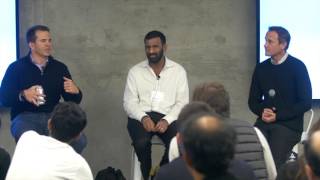
Byron Deeter from BVP and Nick Mehta from Gainsight discuss capital efficiency, the Rule of 40, and customer success fundamentals. Mehta shares when to hire your first CS person (around $3-4M ARR) and why net retention matters more than growth alone.
Questions this video answers
January 20, 2017
About $100 million
3,200 people
May 9–11 (year implied 2017)
$450 million (discussed as Trello sale price)
Chapters
We ready to go?
Yeah.
All right, thank you everybody for coming. Now, just so you know, both Byron and Nick. Can you hear me? Our speakers at the Saster annual and we're going to grade them right after this and the higher they score, we're going to slot their speaking slots. And we're a little stressed for prime slots, so feel free to like grade low.
The 7am is going to be awesome. I'm going to love it.
We're going to do, we're actually going to do in real, we're actually going to do an anonymous NPS score for our speakers and hardcore. Either of them score seven right back at you, they're going to get slotted lower and as soon as we get to a 20 or 30, they're going to have the parking lot speaking slots. So be honest, we'll do it with nps. But thanks everyone for coming. This will be fun. The three of us have known each other for a while. Byron's been investing in the cloud since before it was called the cloud and has been a cloud founder since before there was a cloud. He had a little IPO a couple months ago called Twilio where he was the first and largest real investor, which is pretty cool. Nick, I think all of you guys know for Gainsight, Nick is sort of a founder hero for many of us. Did it the first time, sold his first company for nine figures and then for some crazy reason decided to do it again and has gone really big with Gainstime.
What's that exactly? Yeah, you get free cores like though that's a pretty good deal. I think it's worth it.
Perks of the co selling space.
I'll tell you the one again. There's a couple things I want to chat about before we talk about customers and success. But almost, maybe the second time we met Nick, which is probably four years ago, you know, talking about this, she said, you know, it's like, because I think you sold maybe 18 months ago. I don't remember the chronology. You said, you know, it's like four to five years to get back to where I was.
Yeah, that comment.
And it's kind of resonated in my mind and it really takes four to five years to get. How long have you been running Gainsight?
This is actually four year anniversary in like two weeks.
Four years. And it's just getting good, isn't it?
Yeah. You know, it's interesting because it is. I mean, do what you have to do for your companies, but if you enjoy it, don't stop unless you have to you know, it's pretty awesome. So feel fortunate.
So on stopping there's two meta things I want to talk about from this week. Stopping. So Trello got sold for a couple nickels this week and want to just talk about that for fun because it's, I mean, I mean everyone's used Trello. I think I've used Trellos for at least for four years. So couple like. So Bayer, what's the learning from Trello for 450 million? What's your thoughts?
Well, hopefully it means that enterprise mobile is finally becoming increasingly relevant. We continue to beat our head against this notion that consumer apps are all over your phone and we're struggling to find what's the enterprise mobile catalyst. And you know many of our companies have mobile as an accelerant Gainsight, Procore, Box, Docusign, companies like that, excuse me, but very few have mobile first, Trello has sort of a hybrid, Slack has a hybrid, et cetera. But I think from Atlassian standpoint they were buying a lot of things. One of them was the mobile footprint, the other is that great product still matters a lot. Trello is drop dead simple. It works, we use it, you use it, product matters.
Yeah. And is that a crazy price? Is it a fair price? I mean you're not an investor. Unless I'm wrong. Right.
We're not just to give folks.
This number got manufactured as some sort of multiple last round or percent of Atlassian's market cap. We don't know where the number came from, but it probably wasn't a traditional ARR multiple. Right.
Financially they overpaid but for companies of this size, you're not buying it for short term financials. So they bought a team and they bought a product. If Atlassian can leverage that through their channel, it will prove to be a bargain. I think there's a decent chance they do.
Yeah. What do you think Nick? Any thoughts on.
Yeah, I mean one thing I think is like that in that these acquisitions, there's always that if you end up in that situation I've gone through once, it's not some scientific thing on value. It's like the scientific analysis of value is a retrospective analysis and maybe over time you can plot it and there's some correlation in reality. It's like there's one buyer, what can they do with your product? And it's like Atlassian is such a perfect channel for Trello. So I gotta figure they're thinking about this and they can turn this into a multi billion dollar business. It's a perfect Cultural fit. But there's probably not a lot of other great buyers for Trello either. And there's not a lot of great targets for Atlassian to buy. So to me it's actually much more about buy and demand and scarcity. So I mean one thing to think about is if you go down the path of acquisition, it's like, are there like a hundred other people they could buy or are you the only one and really thinking about that if you're negotiating.
So, so one other thing about Trello I thought was interesting and let's talk about 2017 Trello, maybe the math's wrong and Crunchbase, Mr. Round, but they raised 10 and spent less than 10. Right. That's fairly capital efficient. I think, Nick, you've seen both sides of this, right? I think in your first company you were modestly capital efficient and gainsight, you've gone all in. Right. You had a very dominant, dominant strategy.
Historically, we're long term capital efficient.
Long term capital efficient.
We're going to return a lot of shareholder over time. Lots of dumb money backed up there. So.
And I'm curious what both you think. I feel like we started talking about capital efficiency about a year ago when the markets crashed, but I actually don't think we really thought about it until recently because it takes a while to think. I mean you talk about capital efficiency but we all want to win.
Yeah, right.
So what's the, what's the current state and for both. But Byron, when you look at companies today, Trilio was relatively capital efficient, right? I mean not a lot of rounds.
Yeah, I'd argue very capital efficient, but I think what you want to look at is the correlation between growth rate and burn. And so folks that know Rule of 40 is an old concept to preview something that we're going to highlight at Saster with our State of the cloud report for 2017. This notion of an efficiency curve, but it's the interplay between the two and raising the money, the gainsight makes a ton of sense when you're growing at the rate that they are. And if you can grow at 3x and spend 1x, that's a great trade. People looked at us at Box and said you're burning a ton of cash. It's a multi billion dollar business. You can argue if it's worth a billion or 10 billion, or you can look at Dropbox and argue if they're worth 10 billion or 1 billion, but at the end of the day they're building valuable businesses and there are many ways to do it. It's when you get on the other side of that curve, when you're burning way too much money and you don't have the growth to show for it, or you can't get out from under this acquisition model. And that's where we've seen a lot of companies dodge and weave and shift over the last year and try to be scrappy to adjust for it.
But if today, just in January of 2017, all things being one, a good company comes to the door at Bessemer. Do you care more about capital efficiency than 12 months ago?
We do early stage. It's low on the list of things we're looking for later stage. It is the single most correlated variable for public market investors. So the R squared on the efficiency score is like 0.69 right now. Nothing else is close. And so public investors care a lot about it. Seed stage investors, it matters. But I mean, the end of the day, if it's a great team and a great product, they're going to win big, you're going to be okay as long as there's a rational path to market and you tune that over the arc of the go to market.
Can I just say how lucky I am that my board member can quote R squared by memory? That's pretty good. Board member.
Just. We're looking at the numbers.
Do you think you could.
And how much has Gainsight raised?
Raised about 100 million. 100 million.
Do you think you could follow the exact same fundraising path today? Do you think it would be harder? I mean, you've passed that limit, right? You've, you hit that. You're in the, you know, the prene. Corn. You know, the IPO may. I don't know how long it'll take, but you're in the pre. Ipo, the broad. Could you use the same strategy today?
Pre Nicorn, something like that.
Do you think that strategy would work today for Gainsight?
I think so. It's definitely harder now than it was four years. And there's no, there's no question about that. I mean, the market's very different.
It is harder.
Yeah, for sure. I mean, yeah. I mean, it's very different. It's just, it's cyclical about when you can make different types of bets in different parts of the economic cycle. And obviously when there's times when people are really investing a lot, it's easier to make longer term bets. And then when people are a little bit more conscious of short term economics, it's harder to make long term bets. But I also think that There's a situational thing about your business which is it's capital efficiency, it's market size, it's also market dynamics. Like in other words, are you building something with that capital that you think you'll actually have a long term asset around? So obviously we think so with our business. Right, but are you building something where it's like you get those customers and that's the only value or are you building something where there's a long term effect? In our world, we're trying to really take that money and build a new functioning company which is customer success. And we think that function is going to last decades and those people that work in that job are going to make that their career. And so that's like a long term investment. If all the money is going towards buying ads to get customers that leave you after a few months, that's tougher. So it depends on what you're buying with that money.
Yeah, I just. Do you think. I think to me watching Gainsight from the outside, I think Gainsight did a very like pro customer positive version of dominant, dominant strategy. Like you, when I met you, there were a lot of vendors in the space that probably in the grand scheme of things had the same amount of revenue. Like maybe you had more, but we're talking about nickels and dimes.
Right.
And so I think you employed a little bit of dominant, dominant strategy. You did it on the community side with Pulse and went deep on community. But I think you did it on a lot of levels which is deploying the capital to win a space where maybe at the time the differentiation was, was slimmer than maybe it is today. You're more enterprise, you're closing huge deals. I think the diff, at least at the high end you have separation. But maybe in the beginning you didn't totally. Right. So when people. And so we get so confused in the press. Does this work?
Dominant?
I mean, it worked for you.
Yeah, for us. I think we, I wouldn't say that we were articulate enough to call it a dominant dominant strategy, but it was much simpler than that, which is we really believed that there was going to be this new way people do business and there's going to be a new job and those, you know, anytime there's a new job, there's usually new software. It's not very complex strategy. But what we realized was if there's nobody in the job, there's nobody to sell software too. So fundamentally, step one, get people on the job, get people to believe in customer success. You know, it's funny. We were throwing our first conference. We do this event called Pulse, which is like a customer success industry event. So not about gainsight, but next one.
April.
What, it's in May? Yeah, May 9 through 11.
May 9 through 11. It's mandatory attendance market calendars.
So when we do that event, we basically. It's a big event. Now we had 3,200 people last year, but we were planning the first event four years ago and we had six customers. And we didn't realize, we didn't think about it as this big industry event or whatever, but we said we should do an event. But if we made it a customer event, it would just be depressing because we had six customers. So what if like a third of them showed up? That's like two customers, right? So it's really depressing. So like we can't make it a customer event. And honestly, Anthony, my head of marketing, gets all the credit. He had this vision to say let's make it an industry event. And we had 300 people show up the first year and kind of the rest is history. But the reality is like a lot of it is about what your strategy is in that early day. And for us we just said we want the strategy to be build the job function, build the career, build the new kind of way of doing business and then I think the opportunity for all the vendors will follow. We've been fortunate to be the one that got a lot of the benefit, I think from that. But there's other good vendors as well. Jason.
I think Nick's being a little humble on one point. I want to draw out two things that they did that I think are probably applicable to the rest of the group. And one thing that's really hard to replicate, the two things that are applicable, one is early on it was a bet on team and to make that very tangible. Gabe was called something else, based in St. Louis with a totally different team before Nick came involved. And it was jbarra.
Was that jbara?
Yep, jaybarra. And the fundamental bet early on they weren't equal with the others in the market. They were behind the market. You know, there was a few in the market, they were all duking it out. But when we did diligence head to head product, you could not tell the difference. The bet was team envision. That's something that the folks can replicate in the room and that any day in technology where unless you're some patented life sciences drug at the end of the day team, first and foremost, they had that in spades. The other thing they did was they built out an ecosystem to this point around Pulse. But it was this idea of like people can make us stronger, can bring us together and let's be a friend to important companies and customers around us and let's help the group succeed. Let's carry a flag for something that became customer success management. But it was essentially build the ecosystem. The part that was the high risk strategy which you opened with was this, let's define a new category, let's do this big industry event, let's do those things which that was a Bet and frankly, 19 times out of 20, that's going to fail if you try to do that. The team, the product, that point in time they saw something that was uniquely possible to pull off there, but that I bet you could write, you know, 19 saster blogs about how that failed for companies attempting it. It's a very high risk strategy and doesn't fit for most markets. They sought, they took advantage out of it and advantage of it and literally sucked the oxygen out of the room from their competitors while building a superior product and pulling ahead. Over the last several years they pulled the ecosystem support around them and they became synonymous with this new category of customer success. And so it was sort of this air war while coming at it, bottoms up. And it was uniquely successful. And I will be totally on record saying they're the single most successful company in our portfolio doing that. Out of 106 SaaS investments, very few have attempted it. I'm not sure, I don't know of another one that succeeded to that level. And so just realize how hard that is to replicate.
Thanks for saying that, Brian. One other thing I would add in is I think in the early days this part might apply to everyone here. I feel like for us and I think a lot of successful companies, it's also about the customers you work with in the early days. Because I actually really agree with what you said that the differentiation in almost every category in the early days is non existent. The reality is like what you have three engineers and they have three engineers and I don't know if your engineers are twice as good as they are and you've both been working out for four months. How different can you be realistically? And by the way, you're gonna both redo your products in the next year. Whatever you have, you're gonna rewrite it for sure. Right. And so one difference I think is who are your early customers? And there's lots of good customers. But what's interesting is getting customers that Represent who you want to be as a company. So I wouldn't say it was all proactive, but a lot of it was fortunate for us that, you know, early on we had Marketo, was one of our early customers, some Marketo people in the room. Then we got Box as a customer, obviously helped shape the company a lot. We got Cisco as a customer, got Adobe. These people made us better. They kicked our butt. They hadn't made the product. You gotta go do this, go do that. And then obviously, I think the part of the team is we were very responsive to their needs and tried to do what they wanted. But choose your customers wisely because they kind of define your destiny. So don't, ideally don't just pick like a smorgasbord of customers because you end up not being able to build a product that's great for anyone. It's sort of okay for everyone.
The funny thing is all no back end. I mean, what Jason's done for vc, you've built the community better than anyone else has done in cloud in this world. And that's something where you took a different approach to the model that was on its head. And as a result, if you walk around, we get to get good food and little unicorn tchotchkes. I encourage you to pilfer his goodies in the back. But it's this idea of build up a community and the market wants you to succeed, the market wants to help you, the market wants to rally around you. Whether it's software or venture services. In our model, it's the same notion of helping people will help you over time.
Yeah, I guess the one I want to talk about, I want to talk about two other things so we don't run out of time. But the one thing I, you know, it's interesting, you say gainside of 100 and some odd portfolio companies, many of whom are iconic, has done this the best. I think this may be trite to say, but I think watching you and Anthony early, I think you have to be authentic. This was something that you had personal passion around Anthony, for whatever reason, had you guys had passion around it. And trying to do these things in the industry where you don't have passion, like wait for 10 million, do the things you're not passionate about at 10 million, but because someone says do content marketing, do events, chase, if you don't have passion around it, it's not going to work. And I'm not saying the other 100 companies didn't have, but they might not have viewed it with the same Sort of missionary.
Watch their carpool karaoke videos and you will know it's authentic to its.
Okay, so I want to talk about one last thing and then I want to talk about customers and customer success. But one thing I let's talk about the bar in SAS today. So yeah, yeah, that bar too. But you know, I wrote this thing a couple years ago that people hated. It was right when Workday IPO'd. Workday is doing 250 million in revenue, growing 90%. You have to do a lot better. And people just like this was my least popular post.
That was a depressing post.
It was depressing. And then I wrote this thing, this small thing that just now is getting percolated was like, let's look at Twilio, let's look at Koopa, let's look at app Dynamics. They're all at nine figures growing like 70% a year.
Right.
And we were talking about a company you may or may want to name that's at nine figures and revenue going 150% a year out there. I don't know if you want to name that one. Now that I added the triple digits.
What's the.
I want to get two different perspectives from the ground and from the, from the corner. But what's the bar today, Byron? Isn't it higher than when you started investing in the cloud?
So it's interesting.
Bar is defined top quartile public company success. Yes. We keep. Our mind keeps getting bent around what people are able to do and it's awesome. You see these businesses, nine figures that are still growing at triple digits. And it's fantastic. And it's possible. We see the data you look at of the 43 public cloud companies right now, the top quartile, I think it was 90% year over year growth north of 100 million. 90% when they, you know, in their one year post IPO at that 100 to 150 million sales. And then it goes basically in chunks, 90, 70, 50. But Shopify, Twilio, these companies are fantastic businesses growing roughly 60% this year. Call it at hundreds of millions of revenue, et cetera. That's the hurdle. And so I think the fallacy and what people, the harsh reality people didn't like is when they come in and they're all fired up and say, jason, fund me. I'm at a million ARR and I'm going to double next year. And it's like that's great, but you really need to triple or 4x because you got to catch that target. And they were doubling when they were at 100 million. It's going to take you an eternity to get there. And that's the harsh reality, which is gravity sucks. It kicks in as you're bigger and you're never going to get it back. With very few exceptions, like the company I'm not going to name that we were talking about earlier that accelerated it at scale. But what you see through these S1 filings, and we've had now 14 Cloud IPOs, is that it's all about slowing the deceleration. It's all about trying to hold on as long as you can and ride that curve. Because the beauty of this model is it compounds. And every dollar you get in the door, you're going to get next year and the year after and the year after. And if you're good, more than that, if you have gainsight and do good customer success management, well done. But the reality is it's not crazy to think you should still be growing 100% at 100 million in sales. And that's a terrifying hurdle to think about.
Terrifying, isn't it? How does that make you feel, Nick?
Terrified?
No, but the reality is the percentage math is terrifying. And anyone that tells you it's not is just lying. Because obviously the arithmetic growth is one thing, but then to keep it going at a higher base is a real thing. I kind of think that you always have to approach things in sort of bottoms up and top down, right? There's your reality and then there's the bar. And then what you have to do is stretch yourself as far as you can and challenge the team to say how do we do better? And other people are doing better. How do we do better? But you have to not lose sight of it. I think where you can make a mistake is not thinking about your business and just putting into a spreadsheet, you multiply times 100%, plan it out. Maybe a VC would approve that. Although I think in this day and age most VCs are smart enough to look through that. Right? But the reality is that's the bar. How are you going to get there? And what that comes down to is very basic stuff like if you have a sales driven model, what's your sales rep quota attainment? What's your ramp time? How many reps can you hire? How many territories are there? And if I gave one very tactical piece of advice, Sales ops is a very important part of this equation. So if you're at 3, 4, 5 million of ARR, be thinking about sales ops because it really Is the key to planning out your growth.
One thing on that 100%.
One quick thought I want to add, Jason, is that we're setting the high bar intentionally and to push the thinking. The beauty of I suspect a lot of you are founders, early employees like the three of us were, and we sold our businesses for nine figures, not 10 figures. We weren't in that top quartile of cloud IPOs in our first wave. But you can fall short and still do pretty well. Like the, you know, selling. Being trello and selling for 450 is still a very good outcome if you did it on 10 million bucks.
And they only raised 10 million.
Right, exactly.
So they owned a lot of that.
And it's a great story where customer money is the best way to finance your business. And so keep that in perspective in the sense of everyone sits out there saying, I want to be the next Salesforce LinkedIn workday. And that's certainly what's fun about being an entrepreneur, what's fun about being an investor. But it gives you a lot of room to fall a bit short and still have a fantastic outcome for early employees, founders, et cetera. And that's as long as you're efficient with capital. Going full circle back to some of your opening questions and you don't raise 200 million to have the $200 million outcome. As long as you're efficient with capital and you finance the business appropriately at each stage, you give yourself a bailout and the bailout can be a great outcome for those early employees still at every step.
So one thing I wanted. Let me dig into one thing because I want to tie it to customer success and customer happiness. Growing 100% at 100 million in ARR is daunting to almost anyone in this room. But I would argue, I would argue. I'm a certain. I would strongly state there's two factors that actually make it look easier than it sounds, which is one, you have a brand. And two, I think almost all these companies have huge net negative churn, huge growth from the base. And whether it's direct net negative churn, like these numbers that get called out, the 100%, 25% of your base grows each year, which is probably true of most of the companies we're talking about. They're all in that like 120. Maybe Twilio, because different is probably more. What's Twilio? Like 200% or something.
150 plus, whatever it is.
But it's a weird calculation, right? But it always understates it because the brand is driving these leads. Your csat, your nps. And so that a hundred million sounds crazy, but maybe 60 of that comes from doing all the right things for your customers. Not just customer success, but innovation, leadership. Because once you have a brand, people want to buy from that brand if you deliver on every single count that they have. Right. So anyways, this is what I think rescues you from these crazy numbers. And so one tactical question I want to ask both you guys, I'm thinking about this a lot. If you don't have happy enough customers and I'm going to define it by nps, not csat, do you get the help? Is this a disaster? If Your NPS is 20, are you dead?
Well, it's funny, I don't know if you wrote about this or told me in our carpal karaoke or both, but I thought it was a great idea, which is that you know, mediocre nps, which you know, by the way, everyone know NPS is net promoter score. You know, it can go up to 100. That's almost impossible. But you know, the best B2C brands are 80, 90. A lot of B2B companies are zero or negative as probably, you know, a lot are right. A lot are zero, negative. 20 is good, it's fine. And you know, 40 is very, very good.
And 60 if you're a speaker, 20 is great.
And then. Yeah, exactly. 60 is awesome. Right. I think that like that what shows up when you go from 20 to 40 to 60 and this is not scientifically, but more just experiencing it myself and seeing in our customers is that natural growth you were just talking about and the advocacy One phenomenon that's amazing is repeat buyers. I think most people be sold before. Repeat buyers are everything. Like you know, we see that a ton in our business and it's like the person goes to a new job and they buy you again. And if I were you, I would be analyzing if one of your customers goes to a new job and they don't buy you again, what happened? Right. And so kind of look at that and then obviously the ones that do buy you again, how do you really reinforce that as much as possible? So I think going from 20 to 40 to 60 is the difference between your customers selling for you and you selling on your own. So yeah, supports what you said. Yeah.
Byron, do you take this metric as morbidly seriously as I do or am I crazy here or what have you seen as you look at your companies?
Yeah, so it's interesting. I full disclosure was not as focused on NPS as cltv. But you've pushed my thinking in some more discussion lately on this. NPS is a leading indicator and I think they are highly correlated in that the reason to invest in acquiring customers is because you believe they're going to be profitable over time. That's the basis of a long term healthy business. The renewals are the biggest cash flow driver of the business and so small changes in that create massive value downstream in the business. And by definition, if you're growing less than 100%, the majority of your revenue next year comes from your existing customers, even without it. And so at the end of the day, the health of your current customers in a subscription economy is the crown jewel. The luxury of waking up tomorrow with that business coming in is great. It's the biggest risk and it's like the leverage imperative. And the what people loved about the Twilio S1 and Storey was that built in upsell dynamic and AWS has it, Stripe has it, a number of these API businesses have it where they've along with the SaaS businesses where if they like you, they buy more, they grow with you and pull it through. And that's just a fantastic streamlining of the business. You don't need these expensive salespeople on these golf trips to the same degree you can focus on love your customers through customer success and build great product and the halo of support and that can deliver a large portion of the value.
Yeah. And related to that, Nick, what do you. I thought a lot of it, if any. What advice do you give to your customers and others? What should the core KPIs of your CS team be then? Like, what are the top metrics that these guys should be graded on?
Yeah, totally. I mean I think most people can converge on understanding that retention is a really important metric. And so obviously you have, I think most people know either lots of ways to calculate it where that's where the complexity comes in. So you've got kind of a gross measure of retention where you don't get the benefit of upsell and then you've got the net measurement where you get the benefit of upsell. We definitely think you should look at both of those because the gross shows you your kind of product market fit. How much spillage you have where people buy and doesn't work for them doesn't drive value. The net shows you the economic engine that Byron was just talking about. And you know how much you're growing. You want that net to be Ideally more than 100% and then NPS we think is really important because it really does drive new growth. So what we were just talking about and then we would argue having a leading indicator that gives you insight into future customer renewal and expansion. And that could be something like an adoption metric, a health score, something that takes all those leading indicators about your customers, usage of your product, their support, interaction, things like that, and kind of rolls it up. And that's sort of the customer health score. One of the ways we look at that also is, is that customer changing over time and getting better. So for our own business, we score our customers in a color coding scheme. So red, orange, yellow, lime and green and everyone basically. I like lime, by the way. It's kind of right. Yeah, exactly.
7% of us that are colorblind, me and Zuck.
So we look at all these things of like how many people move from red to orange last week, from orange to yellow. It becomes very, very actionable. Who has been stuck in yellow for a long time? How long does it take a new customer to get to lime or green? What percentage of those customers get to lime or green? Within six months. So when you put things into more of a cohort based analysis like that, you can do a lot of analytics, which I'd highly encourage.
So yeah.
All right. I want to open up for questions because we've gone long, but I wanted. There's a million like classic CS questions I want to ask you. Let me just ask one one because I think whatever you answer will be helpful. When should I hire ahead of customer success? Like just walk me through like the. Your best practices. I've done it a lot on sales. People hack CS in a lot of ways in the beginning, in some ways there's a lot more rigor, but it's hackable. What's the right sequence regimen against ARR or other things? What should I do?
I was thinking about either copying your blog post or writing another one or telling you to write one that is basically the same one as your VP of sales. Because I think you will hire multiple is the reality now. Hopefully you don't. Hopefully. Just like with the sales leader, you find the perfect sales leader on day one and that person scales through billions of dollars of revenue. And that happens once in a. You know, every thousand is you win.
A category with a debt market. Exactly.
That's pretty rare.
Right.
And so, but you know, I kind of think that you have different profiles, just like in sales. Right. So you have an early customer success leader, but just like an early sales leader, they're a player Coach. They have to be in front of the customers, they have to be in the data, in the spreadsheets. They're really like a totally a player coach. And they might be managing three or four people. So you might have two or three CSMs and they're managing that team. Maybe they're managing a couple support people as well. They probably are pretty product oriented because a lot of the early days of customer success is like working with the product team, making the product better. Right. And then you've got kind of what do you.
So what, what's your. And I don't mean to interrupt, but ARR. Give me a rough number that's probably.
Like you know, 3, 4 million of ARR in that range.
You know, probably one hire two ICs.
Yeah, definitely hire a few ICs. I mean it's just like, I think just like sales, if you're a CEO.
I think you want to manage, learn.
What you, you know, kind of figure out yourself before and then hire somebody that fits that profile of what you need. Right. And then that person can manage customer success in terms of proactively managing customers, but also support services, et cetera. Right. I think then there's another phase and maybe that person grows into that phase where you've got a more meaningful team. Maybe it's, you know, 7, 8, 10 CSMs, maybe it's 20 or 30 people in post sales overall that's kind of a professional manager. Maybe they're a director at their last job, they want to have a VP title, et cetera. This is their chance to go step up. Then there's another break point where your managers of managers, so you have multiple teams, maybe have 50 or 100 people in the post sales team. And now you need somebody really experienced. Hopefully again that person grew into that role. So I think very similar to the sales leader in sales, you might hire a director of sales early on, then you get your first vp, maybe that person grows into an svp, then there's a CRO, kind of same type of thing.
All right, so one last follow up and then let's definitely open up to questions. But just because it's such an important point, you, so you, so you hire the two ICs. And then you said something to me which is so important, I think. And then at 4 to 5 million, maybe a little earlier, if you have raised a good round, hire this director plus or maybe of CS and has to be product focused. Yeah, I see this again and again where you hire a veteran, you hire or approach someone from A great company that's gone from that late stage. And CS is no longer about product, is it?
Yeah, it's all process, process and scale.
So they need to be a hacker at 4 to 5 million, a product hacker.
I think it's just like sales, like the early sales leader. We were fortunate to hire an amazing sales leader early on, Mike, and he was about sales process, but he was actually just about customers and deals and figuring things out and making the PowerPoint and figuring out the pricing. And if you have somebody who thinks that it's been figured out and their job is to execute and scale, you have the wrong person. You need somebody who's going to figure it out. Like I said, a lot of it in a lot of companies is product because a lot of the impediments to customer success are making the product better. Some of it is customer selection. Who are you selling to? Who should you not be selling to? Right. Some of it is CS process, but I wouldn't say that's the biggest thing in the early days. So, yeah, veteran can be great if they can scale back down because there's some veterans who can go back to the beginning, which is awesome. But some of them go through the.
Step function where it becomes completely about process.
Totally right.
Nothing but. And I learned a CS leader that the first time I was to it, the CS leader, she said, my team is no longer allowed to do any demos. They're not. I don't want them touching the. Because they're just going to get lost in the details. That's for other. I just want process. I want red, lime green, beige, fuchsia, whatever it is. And it's dilutive to have anyone trying to debug the product or even understand it.
Totally right. Well said.
Anyhow. Okay, guys, let's open it up for questions. We could do this forever. So what have we got on CS and the markets?
Yeah.
Okay. So it's Obama's farewell speech. We just don't missed it.
Oh, sorry about that.
No, no political questions here.
Yeah.
Counter programming. Yeah. I will not be answering. Yeah.
Thank you everyone for coming for that.
We can talk football.
Keeping in line with that. What's your. What's your like? Big takeaway. What have you learned in these four years in your role at Gamesite that you. You would say, hey, here's what I would have done.
Did Byron tell you something? It's my farewell. Your key card's not going to work when you go back. I was like, we're going to talk later. But the Obama tie We thought would be complimentary. I love you. Love that you're saying like one lesson.
Yeah.
Like, what's your big takeaway in these four years you wish you would have done differently or that.
That you really learned about customer success or just in general about startup?
Okay. All right.
I mean, I would say. I know. I will answer one real one. Like one that you're gonna say that was a dodge and then one real one. So the dodge is actually that there's not really like one takeaway that distills down four years just like any of your jobs. Right. It's oversimplifying things. Things are very situational. But I will say that one mistake I made, which I, like, am trying to fix now, is. And it's sort of like I. It's just every. You have to almost think about what mistakes you're naturally gonna make and fix those because you have a blind spot. My blind spot, very specifically was all the GNA and overhead kind of roles. I know it's very tactical, but like HR finance. I just hired a CFO. We're like almost 400 people and we just hired a CFO like a few months ago. And we didn't really have hr. We call it employee success, but didn't really have an employee success leader. And looking for one now. And sales ops in the same category. Just hired a head of sales ops just a couple months ago. And getting these people in, you just see this tremendous benefit as you're scaling now. You can't hire those at 10 people. Right. But you know, you can hire some of that at 100 people. And I wish I'd had one or two strong GNA people early on to help the company scale, to learn with me, you know, that's. That's a mistake I made that I wish I'd done different.
Just a variant of specialization. But yeah, we all have learned now to specialize as early as we can.
Totally.
Relative to the cash we have in the bank. Because it always. It's always accretive longer term. Right. Sales, we figure out how to like hyper specialized. We figured it out in marketing. And you should do it in every function. You shouldn't be hacking revenue, you shouldn't be hacking hr. It's a waste.
Totally. And one other thing I would say is it's funny, it's almost like the blind spot. The reason I should have hired them earlier is the reason I didn't hire them earlier. Okay. So I love customers and I love product and I love, like our thought leadership. So obviously we had Amazing product people and amazing, like customer success and salespeople and marketing. Right. So I had all the people that I love too. And so we all worked on this great stuff and it's like, is there a budget? Like, where's the budget? Did anyone do like compensation reviews? That's kind of boring to me, honestly. Like, I mean, it's important and it's not exciting to me. And so therefore I didn't hire somebody. But it's the exact wrong thing because if it's boring to you, you need somebody to do it. Right. So you need to like counterbalance your own things that you're passionate about. So if we have a small team of six and we have one person who's focused on customer support or success, one of the challenges that we have is finding space to be proactive about customer success versus being reactive and doing support. Do you have any tactics or hints in helping us find the headspace as a team or as an individual contributor to having, you know, doing proactive things that are, as you mentioned, leading indicators.
Of churn or success? Wait, first of all, he's stand up.
And yeah, your shirt is. Come on, show off the shirt.
There you go.
See, it says success. Team should have that. It says this guy does onboarding.
So yeah, ringer alert.
Yeah, you're all in. So if you asked and there's some customer success professionals here in the audience, if you interviewed customer success professionals at every stage of all companies and you said, what's your biggest challenge at all stages, from the biggest companies to the smallest, they'll all say, I want to be less reactive, more proactive. So the downside is that you'll always have that challenge to some extent. But the question is, how do you keep moving up the curve? And I actually one thing I've learned for my business and our sort of like situation is sometimes you have to have forcing functions where you kind of have like event like a time blocked where you actually have to do something proactive. Now what? In different phases of a company, that thing can be different. I think in the early days it's actually getting customers to use more of your functionality. And really getting proactive means getting them to actually experience more of the product because they just use one part of it. They don't use everything just by nature. Right. And so the question is, can you manufacture an event in your calendar that forces that to happen? So like, you know, you could do a hackathon that's non engineering where you say, okay, we're going to take a half a day and we're going to actually look at all our customers and look at the things. We're going to just do an email campaign that same day to them. We're going to measure the results. We're going to use something like Intercom to communicate with them. But I actually think blocking time on the calendar, it sounds very, very blunt instrument, but it's totally like the right answer. You block time, you don't schedule meetings and you go do this productive thing. And for me, early stage, it's getting people to consume more of what you've created.
What about also the tiering though of customers? I mean, seeing what you've done and what you advise a lot of people do is just by segmenting the customer customers, you can't do proactive things with everyone. But at least a box, at least a handful that are high value and or high potential value to you and saying, okay, at least we're going to.
Do a good job with them. I'm glad you said that because I think another cognitive bias we all have, it's heavily studied, is loss aversion. The idea that we would rather focus on not losing anything than winning something really big. And it's just like a natural human tendency. So what ends up happening in customer success? The version that is, I want to really make sure no customer is unhappy or having problems, even though there's some really big ones that could be doing so much with us. So by tiering your customers and saying these are the either big revenue or big potential, you define what that is and you allocate more time and fight your own loss aversion.
The one hack. Let's do some more. The one hack I like as you're getting to that seven figures in revenue or past it is. I've written about it, but it's the five visits a month.
Yeah, I love that one.
It's a really simplistic version of calendar.
Out of the office.
Yeah, the two badges too. But not everyone get the badges that you can. But they can all do the five they never get. They like, okay, how many did you do? 5 is just enough to put you in your discomfort zone because you have. And then who is it this month, who did you go visit?
5 customers a month.
They will become proactive if you make everyone do five and it will also make them focus on the bigger customers. Like, it'll change their loss aversion. Because I know if I only got to do five, I better go make Adobe or Google happy because that's how I'm going To use my time.
One other thing, you have to force.
Five physical visits, no matter what it takes. If you're based in the Bay Area and selling tech, you can do it on an Uber. If you have to get on a jet, just force force five on everyone, no matter. Unless they're like, let's truly support, make everyone do five.
One other thing I do like, because I obviously want to drive that culture in our company is lead by example. So you have to decide as a CEO, if you're one of the CEO founder, what's your value add. But for me, I love customers and obviously makes sense given what I do. And so basically I publish every week to our whole company, everyone that I'm seeing, all the customers and so they get to see. And I literally see between prospects and clients, 15 and 20 customers a week now, not all in person, but probably half half in person on the phone. And obviously that sets a really high bar and everyone else is like, okay, I've got to go see customers too. So you kind of like reinforce that by showing what you're doing.
In this new landscape that is constantly evolving where.
The bar is higher now you're seeing companies in triple digit growth. How do you see the role of.
Venture funding changing in the space?
If the best way for a company to finance itself is through customer acquisition.
I mean, the beautiful thing is it usually self solves, which is if you've got a business case that says I can efficiently invest net new capital to grow even faster, the payback is good. Then the valuation discussion, all that sort of stuff is fairly straightforward in that there's a large union of those circles where it's good for you and me and we'll make it work and go. So I mean, frankly the answer is great if you can spend even more money, grow even faster and there's more investment opportunity. But on the overall arc of companies, we tend to invest fairly early. We're not sometimes Jason's doing raw seed investments, but we'll do seed, A Bs, whatever. So our interests tend to be fairly aligned pretty quickly. Which is to say if you can be viva and go public on 4 million bucks, that's great. If you are Twilio and you end up raising 100, but you only spend a fraction of it and a lot of it was cushioned, that's great too. Pick your flavor of how you want to build a multibillion dollar business. But I think for the larger funding to some of the comments you've heard, people will be more quantitatively oriented towards the later stages for these companies. And it's all about understanding that payback curve and where you can push the bounds. And we were in a meeting yesterday with a company where the discussion was very much, what could we do faster? What are the bottlenecks in your sales and marketing process and could you scale faster? And in their case, they actually couldn't. They were lead constrained from their sources and so more dollars weren't actually the answer. And in surprising number of cases, that actually is the answer. And that's where it's like, hey, that's a great founder business. That's a great, you know, it's great for your early investors. It just, you don't need 20 million bucks. You shouldn't raise it because you can't efficiently spend it. You mentioned Marketo as your early pivotal customer.
How do you get them and how do you make them successful? Yeah, well, actually it's funny because I think the first part is actually 10% of the story and the second part is the 90%. So in the case of Marketo, they actually, I think you picked this up. I'm not the founder of Gates. I joined very early and we already had Marketo as a customer, so that was. But they were just rolling out. And so for getting an early customer, honestly it's like a little bit of luck because you gotta. What I would do is figure out the best customer you can get early based on your network, et cetera, versus just getting any customer that you can get, right? And so really think about like, what's the best possible customer you could get through your network through people that you know, through a. Just a strange alignment of value prop. One thing I will say, early customers for startups are often the same across companies, right? You probably see this, right? Baird and like it's an early adopter set. The logos are the same. And I actually think there's a lot of personal pride that some people take at companies where they're like, I'm the person who brought that technology in and I like brought them in when they're a little startup and now look at this big company. So I think one thing you can do is look at who the early customers were of companies that are further along that you want to be like.
Okay, so now see what company she left and went to and then go.
To the company that she's now at, that CIO has moved on again to.
A more innovative company.
It's the people that speak at conferences, all that stuff. Okay, so the second part, 90% is making them Successful. That's where the real hard work is and that's where you got to like not have a huge number. You actually have to really stratify and send me to go after these few customers and really put a lot of energy into them. You got to put a lot of R and D time into it. I'm speaking by the way, for a business where it's a higher end business where the needs might be different. If you sell something that literally every user is the exact same, you don't have to do any of this. But assuming that the needs are a little bit nuanced, you got to really put a lot of time in. If I were the CEO, I'd be at that customer. I mean honestly, Marketo, some of our early customers, you could just go to their. What's the software that people use for sign in Envoy. Envoy, right. You could go to Envoy and just look me up at like Box or Marketo and you'll see like a hundred scans. Like, like, like literally Aaron Levy, we were trying to sell the box and Aaron saw me in the lobby after like 50 times. He's like, we really just need to eventually buy your software so you stop coming over here. I think they just bought it out of pity or whatever, but you actually have to be there.
Hardly.
They bought it out of like a.
Three vendor crazy evaluation.
Kidding. Nothing's easy with that. They really, they really. You need to be there in person with that early customer and really understand their needs and then bring your team along as well.
I guess startups face a lot of early constraints going towards Nick, I guess what are some signals that you I guess saw when you were early on that said that an entire salesperson versus engineer, product versus sales, et cetera.
Yeah. It's funny that actually that very specific thing of investing in engineering versus sales is where I think like science breaks down. It's like it's either art or it's quantum mechanics, one of the two. But it's like something very complicated because you're making a bet on whether there's more problems to be solved and therefore you're increasing your R and D. Right. Sales is a little bit easier because you could say like to Byron's point, you know, are there customers to go sell to? I mean one of the basic things is like gotta have conversations, right? So you have to have some indicator metric that says you're ready to hire sales reps. If it's an inbound business, obviously it becomes some kind of lead metric. Right. If it's an outbound oriented business, it's a little more complicated. You know, you want to think about how many addressable customers are there, you know, where are they in their cycle of adoption, how many? Basically, if you create these territories for sales reps, right, how many accounts should be in a territory? I think in early businesses, like reps need hundreds of accounts in a territory to make money, right? And so if you're like, yeah, this rep has 20 accounts in their territory and you're like a early stage company with no product market proof, that rep is going to really struggle. So you need a big enough territory per rep. So you end up being like, well, we've got a thousand addressable customers in the US maybe we can hire 10 reps. Right? So that math I think is a little bit more mathematical. The engineering side, I think it's a lot of. Are you making a bet on a product oriented company that has a. Maybe it's more of an enterprise business where you're going to have a very broad product, you need a big team, or is this something where you actually really just need to go sell it and it's more about scaling sales? And I think that's a little bit more judgment call.
Let's just do. Could you go forever? Let's take two more questions and then we'll break up.
You mentioned a few times that.
We'Re.
Also looking at turns. So like say that new year comes along, you're not saying who this is relevant to, but say you have like a bunch of little customers turn. Is that time to focus on what went wrong there? And how do you determine whether that's what I should be focusing on versus.
Are they the right customer?
So how do you draw the line?
It's a great question, I think, you know, just to maybe generalize it a little bit. You know, when you have churn, you can either say, oh yeah, that was actually like what we wanted because we didn't really want those customers. Or you could say you gotta learn something from it. Or you could say there's a crisis and get all that churn. And I actually think that there is like somewhere in the middle is really important. So if you go with the view that all the churn is stuff you didn't want anyways, and it was, you know, we never wanted to, we would never want that customer in the first place. I think you end up losing all the learning. One thing you get is learning even in churn that you don't want. Right. So I think there's some learning there. But if you over, rotate. And you spend all your time obsessing over that small churn that's not your target market. You can definitely lose sight of kind of where you're going. So I would say it's almost like a focused effort where you say, okay, we're going to get a bunch of data, we're going to do some analysis, we're going to learn from it and then put in the rear view mirror and move on to whatever we're doing next. But I wouldn't just totally forget about it.
All right, sorry. One last question.
Question for Nick. How do you characterize adoption of customer success outside of SaaS into a broader B2B market? Particular industries that are adopting early adopters? Yeah. The main question is, as you move into the broader market, how do you actually do customer segmentation for account coverage and expertise, best practices building within the customer success as you will broad in the. You mean for us, how do we segment our customers? Yeah. So the first one was basically, does customer success translate outside of SaaS? For sure. Like that's actually. Honestly, our whole business bet is, you know, there's SaaS companies which obviously are great, but there's a finite number of them, although Jason's creating more every day, which is great. And then there's, then there's all these big tech companies which are actually trying to become more SaaS, like, and we work with a lot of them. But actually there's a ton of businesses out there that have naturally recurring revenue where their clients buy more from them every day. Like, McKesson is a big gainsight customer customer success team. And they distribute pharmaceuticals, they make devices to do radiology scanning. They help you manage kind of the hospital supply chain. Right. We have Thompson Reuter, a big customer doing all this information services stuff for like legal departments and things like that. So fundamentally, anyone that has customers that they want to get more revenue from them, we think the customer success model applies to everyone. So one thing that's kind of cool is if you're in the profession, I believe that the job market isn't just like San Francisco tech companies, but it's every business that wants to get more proactive with their customers. So definitely on that one, the second one, I mean, it's obviously a much longer discussion, but we have to practice what we preach and we've segmented our customers, as you were alluding to. And we basically think of, I use science analogies in our company just because that's me. So we have Jupiter's, Venus and Mars. So Jupiter's like really big companies. And Venus is Mars mid size and Mars is SMB. And then we have a floor below which we don't sell to. So we've kind of done our own analysis of like who we sell to and how we measure the metrics and all that. We actually did some blog posts on it on our website.
All right, we're done. I just want to have one last tiny question because we've got two amazing cloud veterans here. Byron, you first. Since 2005, scale of 1 to 10, how good are times in SaaS today?
10 plus 10 plus.
Is it as good as it's ever been?
Valuations are down slightly. It's a fantastic time.
Fantastic time.
Yeah. I mean the tailwinds we've got are awesome.
Are awesome. What do you say, Nick? From 1 to 10, I'm just focused.
On getting through the day. Usually I don't answer the question. I don't have this historical perspective that everyone else has, but I would say that, I mean, look, it's like 10 going to 100, right? Like, I mean, in other words, there will be bumps along the way, but who doesn't believe that every business is going to like, people always ask me, how big is SaaS over the next 10 years? I'm like, well, the whole economy. Not like, because every single business here is going to become gigantic. But if you define SaaS as like companies that have recurring Internet based relationships with their customers, it's like every business is going to be like that. So if you're in this for the long run, which I think is what you have to be if you're an entrepreneur, like super bullish long term, you just have to get through all the ups and downs. Announce.
All right, you got 2:10. All right, everybody, thanks for coming.
Let's. Thank you.










