SaaStr LA Summer Social | Scaling in the Enterprise & A Monster $30M Venture Round
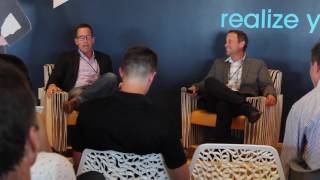
Panel discussion (SaaStr LA Summer Social) featuring Jason M. Lemkin and Brett Cleaner (president & CEO of SmartRecruiters) about scaling a SaaS company, fundraising, leadership transition from large incumbents to startups, and go-to-market segmentation. Key points in this chunk: SmartRecruiters announced a $30M raise; Brett joined SmartRecruiters when it had ~50 employees (44 developers in Poland) and no revenue; investors for the Series C looked for traction, differentiated product, market size, and experienced management; Brett emphasized personality fit when hiring executives from large companies and gave guidance on segmentation (enterprise: 2,500+ FTE, mid-market: 500–2,500, SMB: below 500).
Questions this video answers
$30 million (announced a couple weeks prior to the event).
About 50 employees; 44 were developers (development team in Poland).
Zero revenue (no revenue).
$400 billion (total recruiting spend market).
About $5 billion (replacement recruiting-software market).
Chapters
I'm gonna let. I'm gonna let Jason introduce Brett. We're super fortunate to have him here. I'm gonna say a few words about Jason. I'll make it quick. This event wouldn't have happened without. Without Jason and Saskar. It was him saying, hey, I'm gonna be in la, we should do something, and me saying, yeah, cool, that. And, you know, I think that with his sort of straight shooting, expert tactical guidance, if you sort of added up the number of people that he has, the number of SaaS founders that he has helped, times the amount by which he has helped them is probably more aggregate help to SaaS founders than anyone else in the world. So we're really fortunate that we've all gained from that benefit. So I'm going to hand this over to you guys. Jason, you can introduce.
Well, good. Again, thanks everyone for coming out. This is pretty awesome. We have a treat here with Brett Cleaner. Brett is now president and CEO of Smart Recruiters. We're going to talk a lot about scaling a SaaS company that's just raised 30 million fresh capital this particular stage.
We're going to talk a lot about.
That, but we have a special treat because I got to know Brett at least a tiny bit when he was a evp, svp. All the things you put in front of a VP at Salesforce, and why that's interesting is all the folks met at Salesforce. Brett was different. He would take an opinion, he would make an opinion, and he always had a holistic view, thinking out of what would happen at, you know, the most successful SaaS company on the planet by a large margin, but also one that was somewhat monolithic. So it was always interesting to hear different shades of opinions. And so I want to talk about a lot of things today, but one of the things that we'll touch on.
Is can we talk about that beauty for a second?
Sure. Wish meeting. Yes.
So at some point, Mark Benioff decided we should get into electronic signature. And I said, well, we don't even have a quote in Salesforce. It's a little bit of a stretch. And I remember that echoesign had come in and I had been warned. This CEO is. You're not going to let the CEO, he's wacky, he's crazy, et cetera. And we went in to meet and I walked out of the meeting and I was like, that guy's crazy, but crazy in an awesome way, right? And I was like, if we're going to do a deal in this place, it's that guy. I want to bet him. So it's hard to talk about founders because I've worked for three now. Two were Jewish billionaires that used to work for Larry Ellison. So that's my historical comparable. And there's a sort of magic in his soul and sort of a zany, often non rational, but emotional truth that you get out of founder and in just an hour meeting. I figured that was something where we haven't spent a lot of time since there. But it was a meaningful reading.
It's a good.
Yeah.
Be the good kind of crazy question though. Yeah. Well, good.
Let's.
I want to talk about that second. And I didn't plan on talking about money a lot, but Adam's talk about the struggle to raise money I thought was fascinating. That was a great discussion. So just to help folks here, especially in LA, so you just raised 30 million announced a couple weeks ago. So probably happened two years ago now. What's the gap from close to announcement these days?
We don't do that. We do like the next day.
The next day.
Wow, we got some cash. All right, so now it's next day.
So a couple things to. Because I mean cornerstone. What did we just learn? Adam raised 20. $20 million before he IPO'd. And you've raised your first 30 of the 300 before your IPO, whatever the number is, but it is different. It's a great case study of what Adam said. So what's the environment like today? How hard was it to raise 30 million post February? What does it take? What were the investors looking for? What did they care about? What did they not care about? To write a check of that size.
Yeah. Smart Cruise was an interesting non traditional route to raising money. Most people, they go into the enterprise category, they'll start with sort of one area, one widget, monetize it, sell it some more and raise. Jerome, my partner and founder had taken his first two rounds and said, I'm not monetizing and we're going to build out this platform and when it's ready, we're going to go sell this to enterprise continuously. So audacious. And so to raise capital. What was interesting was we had tried to raise capital about 18 months ago and since we raised it at 8, the reality is I don't care if people, when you meet a VC and they say, hey, we're flexible, et cetera, it's a very simple model. If you raise it to A and a B, they want to see 10 million recurring revenue. You know, basically what they're going to Say is I don't invest in business model risk. I only want to invest in execution risk. So ironically was we had kind of given up on fundraising program while and we got a lot of sort of inbound demand. It's sort of a weird game, right? If you go out to raise money, it's not as crazy as Silicon Valley and show Silicon Valley. But if you go out to raise money, it seems harder than if people actually come to you. So we'd actually cultivate a relationship over a year with a number of traditional SEA investors. So in my mind we had heard at the end of last year we had the dip in the NASDAQ and the Beacon GDP went down. But for those that have been in tech for 20 to 25 years, these things come and go. And in my mind, if you have, I think there are four things that investors are looking at now. This is a C. I think when you're raising money, I think it's also important to think about what is a C investor, what's an A investor, what's a B investor and not think about what you want. But I think you need to understand and put yourself in the mind of the investor and the return that they need and to the fund they're in, what their investors are and what their return is. So if you're going to raise a C, a traditional C, not the silly C of the last two or three years where there's a lot of silly growth bite, these are investors that are looking for more moderate returns. And so I think if you've got a large market opportunity, our market in whole is a $400 billion market. There's $400 billion worth spending recruiting. We are first focused on the enterprise replacement market recruiting software, which is a $5 million replacement market. Second, are you differentiated? You mentioned we're in a competitive space. You know, when I was at siebel, there was 50 SFA systems. At Salesforce, they'd all fail. You got to remember in 2003, when I joined Salesforce, it was on demand and I would walk into deals and CFOs would say I'm not going to buy you because you're more expensive because I got to pay for you every year. Right.
They figured that out in the back end that SaaS was more expensive, right?
Yeah.
Well, it wasn't bad.
But now they figure out that it is. You have to buy 11 solutions on top of Salesforce. So that's another story for another day. So if you have and you have traction. So for us, they want to basically see traction and we had closed, we launched our product beginning with 15, close to 800 clients and we've got to sort of imaginable revenue run rate and management. Have you sort of figured out some level, have you been able to recruit some level of management experience? So at a C, I think if you got those items and I think if you're rational about what your valuation expectations are, there's a deal to be done. We had viewers surprised. We had five term sheets. We didn't take the highest. We took the one that we thought had the most experience and insight in working with civil size companies in our stage. Yeah.
Now be objective. Let's transition to the next question I have. How helpful was it having you as president and CEO of the company to fundraise? You're a well known, you're a well known entity, right?
Well, I mean, you know, it depends, right. You know one of the reasons I went to go to a startup was, you know, eight years, six years at Salesforce, at Seaborn, 11 at Salesforce. You ask yourself as an executive and pit for this, can you hire a big company guy? You ask yourself like are you really that good? Are you really, are you just amazing at failing upwards and executive? You picked well from a company perspective. So I don't think it hurt.
Right?
I mean I think if you think about the fundraising proposition is we have a founder who knows the space, is passionate about the space and we have somebody who scales companies that can recruit and who knows SaaS and has seen this move before. So I don't think it hurt. But I would say that I had Jerome play a more active role in the fundraising because to some extent he's a founder and there's something special about a founder. You want to make sure this is a founder. If you're a traditional investor, is this somebody you can count on for the long term?
So let's go back. When you join smart recruiters, how many employees? How big was the company? Employees is always a good number.
50 employees. 50, 44 were developers. Our development team is in Poland.
44 developers?
Yeah, go Krakow.
You can hire and they're full time employees. That's our place.
We have the Google crack out. You go there, it's amazing. You can get a senior, you can get an SMTS for $40,000 and they stay and amazing. A little story about the difference in Poland versus here is in the US when you have like a beer bash, et cetera, you know, people walk around with their glass, maybe their name on it. Poland, they Walk around with like a fit of alcohol with their name on it. So a little different. You know, I was in the office.
Does that make the coating better?
After I was walking around the office the other day and I was going into our fridge. In our fridge here, we've got coconut water and all the things that San Francisco people want. We even have a keg of kombucha. But God forbid, I don't really know, snack of palooza. And the fridge there is giant bottles of non alcoholic beer. And I walk up and I sit, well, why is this all known to have beer? He said, well, Brett, you realize very strict drunk driving laws. So I think about it, it's very ra. I said, okay. But then I said, wait a second. There's like juice, soda and water. But they didn't really compute. They like the taste of puree.
So, all right, so 45 engineers, that's a lot. And five folks keeping the lights on. And no one in sales. It was smart, produce, enterprise focused.
No revenue, no revenue. Zero revenue, zero revenue. So it's very interesting.
How the heck does a Salesforce executive with a corner office and like, how many people reported to you at the peak? How many people reported to you? Hundreds and hundreds of people.
Yeah. North of 500.
How could you go from 500 people to zero? What were you thinking? Like, what was this thought process?
It all makes sense now. It demands people like me. Yes.
Yeah. I mean, there must have been, I can guarantee you there were a dozen VCs that wanted to bring you into their company.
Right.
I think my viewpoint at the time was that if I was going to leave Salesforce, which is tough both financially and emotionally, it's a family employee, 100 there then I always had. You know, it's what generally happens with people that cite at some point, startup sort of like a midlife crisis. I've been caring for my ill father and I sort of don't ever do this. Don't ever go like that, safari to Africa and look out on the plains and look at the smallness of man and figure out like, can I do this? The last couple years, as you know, I've done a lot of the mma and I have the interesting job at Salesforce with the bot acquisitions where you cashed out the founder. And my job is to assimilate them into the board but keep their founder childish joy, which wasn't easy art. And I just found it a lot more fun and interesting trying to work with founders at the earlier stages. So I decided that I didn't Want it when I was done because it wasn't about the money, then I'd have tried. And in theory, when I got out of Harvard business school in 1997, I was going to go be an entrepreneur. The challenge at the time in 1997 was all eyeballs. So I had friends that did pets.com, socks.com, all advantage and I looked at those business models and I was like, I don't really understand. Maybe I don't know anything I learned at business school. But like there's no you're paying, your cost of acquisition is like $2 revenue. There's no long term differentiation. So you know, I lucked into enterprise software and I had just gotten fortunate to see one Salesforce. So for me it was about going to a startup and then at that stage, which was I wanted to go early. And the biggest thing for me was I'd always thought that the teams that I had at Salesforce and Siebel had the best kick ass culture. You know there are corporate cultures. If anybody knows Siebel. There's a culture that it's brilliant, it's a little mind numbing. And then Salesforce has a culture. And I'd always tried to create a team of just sort of kick ass, work hard, play hard, but also realize that we're not curing cancer and not taking ourselves too seriously. So I wanted the opportunity to go early enough where I could shape and create a culture.
So I get that. So talk about a lot of folks in this room that are. I mean you join SmartCruise at zero in revenue. Folks here at a million in revenue, 2 million in revenue, they're doing great. They know nothing about this is their first time they've done it. They love to recruit someone like you to come into their companies. So how can you make this work? How can you take someone from. Salesforce was probably 3 or 4 billion in revenue when you left, right? Siebel was not. How do you make this work? What are the learnings and what did you screw up that you'd do better the next time?
That was a lot there. So look, I think if you're going to go try to think about hire a big company person, one I generally advise I wouldn't do it until you kind of raise your beat. Because I don't think you know what you don't know at that point because I think if you're going to go hire somebody and these are and you're going to give them a significant stake at your company and to some extent, they're going to be your partner. You're going to rely on them as your partner. You kind of need to understand as a founder what, you know, what you don't know and what you're really looking for someone that. I think the other thing is.
It.
Really comes down to a personality thing to some extent. I think the biggest challenge I was interviewing, now that we've raised the money, I get the opportunity to actually hire next level leadership. You know, you get to hire like the next level of leadership. You know the biggest shock, if you're a big company and you work at a big company and work at Salesforce Receivable, you have unlimited money. You can hire the best of the best, the best in any role at any price. Even get to meet people that are great and say, I don't know what the job is, I'm going to hire you. Nobody in the room, for the most part gets to do that. Right. And if you find four great people, you get to hire one. And you sit there and you're like, I'm really sucking in this area. I need to hire somebody. This is the best I can get. I'm not real world. No. In my view, it really comes down to personality fit and how ready they are. I think if you go to a startup, what I learned and I tell people to leave it at Salesforce or others, I'm going to a startup, I say, zero revenue. 10 million or 50, right? Zero. 10 or 50. And I said, the big difference with zero is you have no idea until you get there, until you're beat up five times a day, until you chart your course. And what I tell them immediately, no one told me until nine months after I joined, go read the hard things by hard things. Go read it out of the gate. And the second I read that, I was like, oh, okay, this is fine. I'll stop grinding my teeth. Which is you need somebody that is okay with failure. Because if you're a seed, an A and a B, you basically have to know that five times a day you're going to get punched in the teeth. And you get one win at the end of the day and you celebrate that win and you forget the five failures. And I think that's the hardest thing you ever, hiring somebody from a big company that is tied to success. And then I think the other thing is how ready they are at a personal level. A startup is very personal. When you work in a large company, increasingly, the sleepless nights is always the man. Oh, the man. In this meeting didn't allow me to do. The man was rude. Well, if you're the CEO or if you bought in the market, you are the man or the woman and all the failures are all your own. If your employees are struggling, it's your own struggles and it's highly versatile. So for me I think that's the key thing to answer it, you know. Now people call me the original honey badger. Somehow I survived 11 years at Salesforce. Who knew? I remember early meeting with Bart when he invited me to an offsite, told me to pack light because he might send me home. So you know, it's about ruddiness and I think of the things to look for when you're looking to bring people on is you will go to high large company executives and you'll like their confidence. It's appealing, they seem to know what they're doing but you need to make sure that they're a we person and they're not an I person because there's no I in startup. You are going to win and fail together and that's a hard thing to figure out. So that's, you know, I do advising to a lot of startups that are young people then and they say what about this person? I say run as far away as you can. So anyway that's sort of my advice we figured out along the way. But it's as much an emotional journey as it is a rational journey.
Let me just, I want to move on to at least one other meaty topic but let me boil it down to a number. What's your gut based on Salesforce and Siebel, what percent of director VP level folks you've worked with could join something as early as smart recruiters and be successful. What percent?
5.
5%. So if you don't do your homework and you're seduced by the big smile.
In the center, like if I was hiring like somebody to do product, okay.
VP product, like come in and own a bug filled feature gap ridden company and go beat smart recruiters with cleaner there you think that, you think what I think 5%.
It depends at the level. I mean I think I would say that. Look, I think but fair point product.
Higher chance of success maybe at a draft level.
Good. Because look, if you think about Salesforce, what did we hire for? And I think it's what Adam spoke to. You know the great irony, I remember getting out of college and wanted to get into tech. I had my first job, my last honest job. I ran a factory at a nuclear medical imaging company in lovely Millipetous California and I wanted to give them software. And they were like, well, you don't have any software experience. And the brand irony about software, it has nothing to do with experience. You don't discuss with software. It's all about intellect. What you hire for is iq, eq. And if somebody has three or four data points, are they flexible and can they quickly come up with a framework to say, I think I'm going to go do this and you look at it and then they go do it and can they get data points and say does it work? And then you do more of it and if it didn't work, you go, oh, that sucks. And then don't do it again. That's salesforce.com that's what we hired for. So I think there are some levels. Yeah. But I think it's.
These guys don't want to hire director. They want a VP to solve their problems. I want to solve my problems in sales, marketing, product engineering.
Yeah.
And I would. Salesforce is a big. It's attractive.
So Cornerstone. We're not poaching from cornerstone here.
So that's.
I would say the area where I think you could probably hire. A higher view of success would be in sales. Yeah. I think on the inside sales team. The inside sales team and leadership. And Salesforce is part of it.
But 5%'s a good. I'm going to write that this blog post up 5% is the answer's going to love that. No, just in general. What are your odds of an average big company exec making it at a very early stage startups. 5%. And if you don't do your homework and if you don't get the odds up, you have a 95%. You do your work, the odds go up.
I think they could succeed, but I think after the first year, I think half of them said hell with this.
That's true.
They get.
They get boomerang too.
Right. This is really hard. Yeah. This is soul question work. You just got to persevere through.
And this y. You're the most expensive person in my company. Like I took such a pancreas to come to your crafty little company.
You know, you convinced your spouse this was going to be a better thing.
Yeah.
And they're trying to put the fan. You know, the family's still living on a Salesforce budget.
Yeah. There's a lot of benefits of hard too. And you're working.
You're working twice as hard.
Yeah.
So. All right.
There's one big topic I want to make sure of nothing else we get into which is market segmentation, going up market. And so let's step back. Smart recruiters, average deal size is all, they're all in the six figures.
Is that 100,000 average?
Okay. And I know you do more than ATS, but talk a little bit about the space and how it segments by like deal size and then because I want to dig in on what the choices you made here.
So it's a really weird company in that I have got to go enterprise five years faster than I did at Salesforce. So I got a call this morning at 350,000 Employee Company and I wanted to say guys, we're not ready but we really like you guys. Alright? In our market it's an interesting market. In recruiting the interesting thing, look, why did I join this space quickly? In my mind, my entire career, my entire success was tied to who I hired. I think of the good years was who I hired. The bad years was like, oh, that was a bad hire. Yeah. And at the end when I'm running a meeting and I'm looking at what's my pipeline. I could kind of get it out of Marketo, Elo, HubSpot, they all kind of melt together. I kind of get my forecast on Salesforce, I could kind of get retention. I didn't need gainsight to figure it out. And then Oracle could kind of tell me and then I go how are we doing on recruiting? Like there was some spreadsheet that would pop up and no one knew anything pointing fingers. So my space, it's about a $5 billion market. In my market there is a large existing install base of legacy software that was originally designed metaphor. Fifteen years ago there was a company called Taleo. It was started with guys who sold the company to Bonn and their design principles was they had sold a parts movement product across the factory floor. So the entire legacy recruiting software is if you can move a part through a factory floor, you can move a human through a hiring process. Turns out it's not that way. So when I looked at this market and I'm not a genius, I would go out and talk to a bunch of clients. I go to a small business client, there's 15 meetings and they had $4,000 and there was 15 vendors and I was talking to like the front desk and I would go meet with large enterprise clients and there was like three calls and they were halfway through the dental, they had me stop and they say does this work? Does this work? I might want to do it, but this buyer's Lost all hope because they're a second, third version of this software that's failed. So I'm not a genius. I looked at that and I said okay, here's the opportunity. And in my market I originally had thought I'm going to do the Salesforce model. You know, it's a Salesforce model. I'll go to Pebble Store and I'll talk to Aaron and I'll hire a bunch of SDRs and they'll call. But we forget that Salesforce, you don't follow the Salesforce SDR model because. Exactly. Because you had 23 year old salespeople using a sales product. Selling salespeople. You can't do a 23 year old salesperson who knows nothing about HR trying to tell an HR executive why you're going to change their life. So for me it was very clear that I have a four year replacement market opportunity and I need to get to them before Adam gets to them and sells them talent management suite or workday or success factor sells them their gobble of bids. So that was my focus. The interesting thing, intellectually it's the most simple go to market model. It's the most expensive go to market model, but it's the go to market model I did at Siebel. I know this model. It's see a bear, shoot a bear. It doesn't require a lot of iq, it requires a lot of patience, it requires a lot of funding, requires a lot of money. Now how I segment, which is different and a lot I do, I've an investor about 15 companies. We look at segmentation. I have this conversation with every day. So for me, my segmentation in my market is 2,500 employees and above. Like Adam, I sell an FTE based product is enterprise for me. That's the company that will spend $100,000 and then I have mid market which is sort of 500 to 2,500 and SMBs below that is how I look from a segmentation perspective.
Got it.
So to wrap this point up, and.
Then.
The answer was you went up market because it was a space that you knew.
Right. Went up market because I was most differentiated at the product that I had built. So so I went up market because based on the product that I had, my win rate and my sales cycle time and the ASP all basically said ding, ding, ding, ding. And very little competition.
Less competition, less competition. Usually when you go out market there's less competition, right?
Could be, could be in my market that's the case because it's Hard and.
Last question on this, then we'll wrap it up because we could go forever. When you go up market like that from the beginning and then the small guys come in at a 10th your price or 50th your price, do you just have to let it go? Do you just let it roll over you? Or how do you approach the ankle biters?
Well, I think one upmarket, if you've done a very good job of explaining what are the upmarket requirements?
Yeah, they segment out before they list of can'ts.
Right. You go sell. You know, when you did your first enterprise deal, you got to go talk to procurement. There's six cans that if you don't check the box, that borrow a bunch of infrastructure, there's no deal. And in my market, unlike sales and marketing, the buyer has no influence or ability to tell procurement illegal if they're being ridiculous. And then I think the other thing is there's your own internal cans. You know, do you have the ability to support this? Look, I think from a price perspective, I think of a story that I tell people on price. We were competing in Salesforce for a deal and Microsoft was giving Microsoft on demand away for free. There's a meeting with Bark and we were proposing a three million dollar price tag and the customer said Microsoft is free. Why wouldn't I go with Microsoft? And Mark said, you should pay Microsoft $3 million for that piece of shit is what you pay for what you get. And so there's some HR appropriate version of that language that we use with that buyer. But I don't, you know, I let it go. I don't. Sam.










