SaaStr LA Summer Social | The Cavalry is Coming, Right? The Journey to $10m ARR and Beyond
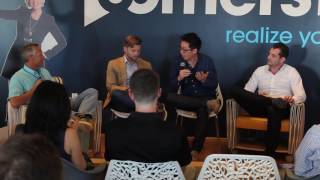
Ara from ServiceTitan, Reid from Workpop, and Jerry from Retention Science discuss scaling to $10M ARR. They cover hiring your first 50 people, building a repeatable sales playbook, and which metrics actually drive retention and expansion revenue.
Questions this video answers
About $40 million.
Ara (first name used) — founder and CEO of ServiceTitan.
"Processing a billion transactions each day" and "2,000 customer interactions per second."
Over 120% net revenue retention (annualized).
About 33% (one out of three qualified opportunities closed).
Chapters
Sam.
Partner John is going to. So these are.
Oh awesome.
These are startup founders here in LA that are scaling and their knowledge and information and learnings are going to be absolutely current today as they are going from 2 to 5 to 10 million in ARR and beyond. Moderating is my esteemed partner Raycon John.
Greathouse, also furniture looper.
John's been a VC now for eight years, but still sort of wears the title very uncomfortably. Before that he had a long career as a VC backed operator. Two IPOs, two sales above 150 million bucks, all in Southern California. Probably most notably which people don't know or think about is the GoToMeeting franchise which is now Citrix Online. John joined a bunch of engineers that didn't have a product in market led sales, marketing, media and finance all the way through the sale to Citrix for 240 million bucks. All right guys, come on up.
No, no, no, no, no, no.
You gotta introduce me again. I'm not taking the golf clap.
I'm not taking a golf club. Ladies and gentlemen, John, right now. All right, you guys been sitting for a while. I want everybody to stand up. Stand up. I know you guys have been standing up over here. Everybody stand up. I want you to high five the person on your left.
Watch people get high five.
High five them. All right, now high five the person on your right. Somebody get a picture of me high fiving her.
All right.
See I gave you guys a chance to sit down on that word, right?
All right, you guys can sit down. I'm going to start the timer and.
We are going to keep this wrist.
All right?
So I do. I am a partner right now. Venture Partners. As Jim mentioned, I also am a professor at UCSB and I demand silence in my classroom. I'm just kidding.
No.
But I've been accused of having the world's longest introduction.
So the way I'm going to get around that today is I'm going to let these gentlemen introduce themselves. Right.
This is the Jar Panel. Jerry, Ara and Reed and I will.
Let you guys go down the line 23 seconds or less. Who you are, what your company does.
I'll make it easy. My name is ara. I'm the one founders and CEO of ServiceTitan. We make software for home services companies such as plumbing, heating and air conditioning companies that you might call to your house to fix the cloth toilet or your air conditioning is.
I'm Jerry. I'm the CEO of Retention Science. We're marketing software for B2C marketers. So we work with brands like DollarShape, Target Beats by Dre BCBG.
I'm Reid. I'm one of the founders and CEOs of Workpop. We're a company that provides hiring and HR services, small businesses, and tools to help the people looking for jobs in those businesses.
All right, guys, so we, we're not going to talk about it on this.
This is not part of our panel, but this collective group of gentlemen here has raised about $40 million for venture capital. We've got Bessemer, Trinity and Upfront Ventures. I saw Kobe in the house. We have some top tier venture capitalists that have backed these guys. These guys are past the beginning stages. They're in that acceleration growth stage. But if you can buttonhole one of these folks and talk to them about their fundraising, you're probably going to learn something. So what I want to talk to you guys about first off is those first 10, 15, 20, I'm not sure the right number, but those first hires, because that's, I think a lot of folks in this audience are dealing with, they're different from the next 15, 20, and then those are different from the next 40 or 50. Give me one or two characteristics that you look for. I call them the bank robber versus the ATM operators. You know, they're the ones that are in, they're in the scheme with you and they want to take down the bank. Can you give me a couple of characteristics that these folks should look for when they're trying to figure out, are you a bank robber, Are you an ATM operator? Go for it.
I'll give you two. So I think for everyone that we bring in, particularly on the developer side, we look for people that have done work outside of their core jobs. And so if you're a developer and you can just point to, hey, I worked at Microsoft or I worked at Google, and the only thing I built was when I was there then do you really love it? It's your passion. So when we're hiring technical talent, we want people. We can go to GitHub, we can look at their repos, we can see work that they've done on their own that are their passion projects. Because those are the people that when they leave the office, they're going to keep working on the stuff that we want them to work on. And then the other one, we learned this hard. Ways we look for happy people, as cliche as it is. Like if you get someone in the interview in the first two minutes, like, last boss is an asshole.
And I swear a lot, because you.
Guys are Getting tired. Then you don't want to hire that person because you might think, oh, that last boss was an asshole. He's going to say the same things about your company when they leave and cheat. It's going to be a hard culture fit. So I think those are two.
I couldn't agree more. I used to tell people they'd want to hire somebody and I would say you can't make that person happy. I know that they've had three disasters in a row. I don't want to be there for it. So I completely agree with you.
One of the qualities I always look for is self improvement. So I think that how do you measure that?
Like what specifically do you look for?
I think just people who, when you ask them like what are some of the things you're looking for in your next career? They really want to broaden their horizon, they want to better themselves. Maybe they were, they were managing people and now because they're joining a startup they feel like they can move up the ladder a little faster. Want to find people that are self doers and they don't need to be told what to do and just really problem solvers because I think so how.
Would you, when somebody says to you hey Jerry, I don't need to be told what to do, what would you look for to demonstrate that as opposed to me telling you that?
So one of the things that I do in the interview process, I never ask them about what they did in a previous job because I feel like resume is really a collection of it's teamwork and it's really a matter of how much you claim how much you did. So I really asked about what's their upbringing, how do they grow up? Because I think that it really shows character. And then I asked them what's one of the things that something that you failed that you were able to overcome. And so I think those things really tell, those stories will really tell you a little bit about their personalities and how they perseverance about the characters. I think Brett earlier talked about startups. There's no I in startups. And it's really about finding people who are flexible. And I think building startups, you guys all know it's really hard, it's emotional. You go through roller coasters. So you gotta find people that are at the end of the day understand that you don't want to find people.
That don't know what they're getting.
Well and I think it's important to break down in the early stages when you're hiring these bank robbers, not the other folks. It's important to break down that artificial barrier. That's natural in an interview, right? You ask a question, I give you a bullshit answer, you ask another question. So I would try to ask maybe not off the wall, not inappropriate questions, but things like, hey, come on, what was your nickname when you were growing up? And you get two reactions. You get the F you like, what do you mean? What was my nickname? Or you get somebody that laughs and goes, you're not going to believe it, but it was stinky or whatever. And then you get a whole different conversation.
So ideally, I mean, you would find somebody who's built and executed the playbook before, but those are unicorns and they're hard to find. It's very hard to convince them to join a brand new startup. Short of that, if you gotta pick from what's available. Two things I always look for in the initial set were raw horsepower. Ultimately, you're looking for somebody who can figure out the playbook. Oftentimes that's a process of elimination. For example, on the sales side or on the marketing side, there's a handful of programs that typically work and you don't want somebody to execute without a very methodical and systematic approach because then you result in a lot of false negatives and then you cross off everything off the list and now you're stuck. So I generally find if you have people with really high raw horsepower and intelligence, they can figure the playbook out. And the second part is, because it's just a tough grind, it's such a long road ahead. You need people who are extremely committed, extremely curious and passionate and dedicated. That's the other category. If I have those two things, it's always been a success.
Well, I love the way you use the word playbook because that's the way I would define it. Can this person write the playbook because we haven't written it yet, or are they really someone that I need to hand the playbook to? And there's nothing wrong with either, but you have to understand which person you're sitting across from.
And it's a completely different skill set. In my example, the guy that I would ask to figure out the playbook, I almost by default know that's not the guy to scale and execute the playbook. Of course I'll give him a chance. I'll give him now the coaching and if he can do it or she can do it, amazing, but very, very rare.
It is rare. I have a question for you, Jerry. So, like, your business was not unique in the sense that it took a little longer to get that revenue. It always does. But that's why we're optimistic entrepreneurs. We always expect it's going to happen faster. But I'm curious, in your case, was it a matter of market readiness? Was it a matter of different market wasn't quite ready or was there something that you did differently or you sort of modified your approach and all of a sudden saw that traction?
Yeah, for us, I think 2015 personally, it was a year of growth as a CEO and both from hiring the right folks to really take the business to the next level. For us in particular, I think it was a combination of business model and the market really readiness. We were very, very fortunate that one of our first 10 customers, one of them was Target. And being a product guy who's never sold a thing, I got very, very lucky. I closed a close to million dollar deal with Target.
And so I wouldn't call that luck, by the way.
A lot of hustling, a lot of happiness, a lot of, you know, notes.
Right.
And then so I think we made a mistake of really going down path and thinking that we can duplicate that 10 times if I just duplicate by hiring a lot more salespeople. And I definitely went out and looked for what I think by venture investor standards, what a great looking sales exec look like. They look great on paper, they look way better than I do in front of an audience and they have better suit jackets. But I think that we went after sort of the biggest enterprise and then we really forgot that in the middle there's a suite load of customers that you can get on and actually acquire within a short, much shorter sales cycle. So I think it's a combination of identifying the right business model. And also we were just really chasing the biggest logos. And then so we're saying that literally we cannot onboard any clients that are below $100,000 in ARR. And that's a very, very hard thing to do for a business that's literally a year and a half old. And just because we did it once doesn't mean we can do it 10 times and within a very short period of time. So those are some of the things that I experienced in the early stage of building retention science. And then later on we kind of tweaked the business model and then things just started clicking. We literally double our client counts within the last six months and you just start seeing things happen differently.
Well, it's always hard to say no to money anytime how well you're doing Especially in the beginning. And sometimes that's obviously the right decision.
Another thing that I think is really hard for our SaaS business, I don't know if you see the same way. So say no to big, great logos. So we recently signed Microsoft, and that's the client that we actually walked away twice because they wanted additional customization that we actually didn't want to take on. And then, so I actually reached out to. I asked my board, I said, hey, guys, it's gonna be a 200k deal. It's Microsoft. We can put their logo on our website. Take it or leave it. Right.
And then.
So I think a lot of times depends on the stage of your company, whether or not you can really support a kind of customization. Do you have a very sophisticated client success team? Right. And then being able to support those so they don't churn. I think those are the most important thing in terms of figuring out how to take the traction to the next level.
Yeah. Well, even like Brett said, there's times when you want the deal, but you're not ready for the deal. You need to have resolved and say no. So I think you sort of answered this question a little bit, Jerry. I'll ratify you guys. You have raised venture capital.
What was the.
If you could boil down to one thing, if it's more than one thing, that's fine. But what was sort of the least efficient spend that you did? You got all that money. You got super stoked. Jerry hired a salesperson that looked like they were for central casting. What did you guys do that just did not work?
Swag. Swag.
You can never buy enough swag. Come on.
Well, it wasn't rent, because to give another plug, the Cornerstone Accelerator gave us free rent for two years. And free food is fantastic.
You did that wrong.
Adam spent more time plugging the corner than he did the accelerator. So I gotta tell everyone how great it was.
No, we.
Let's see. So I'm trying to think back to our early expenses. I think two that come to mind. One, we did a lot of, like, not a lot. We did before we figured out. We did two trade shows. We didn't spend a lot, but we trade shows. And we were like, wow. That was the only thing we got out of that was emails from the people that, like, snuck scan our badge for the next two years. And then the other one, I think, was we went out and. And hired a big, expensive marketing firm. And that one was like, a $250,000 cash outlay. It was a firm that had done branding for a lot of big startups, a lot of big campaigns, and I think we did that too soon. And ultimately it wasn't something that I think we should have outsourced that early on. It was something we should have built. It was a story we should have told. And so unfortunately, that was money that in hindsight, we could have just thrown a pile and lit on fire or spent on swag, either one would have been a better return. But we lost that.
Could have at least bought beer for your clothes.
Yeah, absolutely.
Exactly.
That'd been a lot of gear.
I was actually gonna say, I don't think there's any particular program that consistently doesn't work. And I think your example combined with my example will illustrate this. So a very large portion of our customer acquisition comes from trade shows. We freaking kill it at trade shows. And if I could do a million trade shows, I'd raise a bunch of money. It's all about finding a repeatable and scalable pattern within whatever program you want to scale before you invest the money behind it. Outbound sales works in a lot of great business models, ours included. But if you're going to raise 5 million bucks and hire 20 SDRs before you figure out what messaging works, what cadence works, how you get, that's the gatekeeper, etcetera, you're going to blow through a whole ton of money before you figure it out.
Exactly, yeah. If you don't have the right kind of leads. And just to caveat, my trade shows suck. They suck because most of the time startups just don't have the mass to really get it done. They end up in the little 10 by 10 ghetto in the back and they spend all this money and wonder why they leave. And also, all trade shows aren't traded equal. I mean, there are some trade shows that are spot on right for your company and it's a lot smarter. So again, you guys have raised cycle money from First Tier Venture. Love to hear your thoughts on getting the most out of that board. Now you got all these smart people around the table, other than them telling you to go to more trade shows. How do you manage those people and get the most out of them?
So I guess I can give who's on our board. So we. So Dan Skolnick from Trinity, who's also on the board of Docker and New Relic, There are two companies that are smaller than us. That's not true. He was the founding CEO of Flurry. So Dan comes from an engineering background and for us, we wanted someone as Our first investor from a firm who was a founder CEO, because we wanted someone who had been through the pain that was really important to us, and Dan gave us that. Our other board member, aside from Chris, my co founder myself, is Biz Stone Biz. And Dan could not be more diametrically opposed. Biz is a creative designer type, and Dan is very much a developer tech focus. And I think we looked for people who brought expertise into the picture that we didn't have. And I think the other thing we've learned is this is my rule, is I think you fall into one of three categories for your VCs, and you can tell me I'm wrong, but you're either, like, at the very bottom, so you're on the verge of, like, going under, and so you desperately need money, or they're trying to get their money. They care a lot about that. You're at the top, so you're about to return the fund. So you're a public company, you're killing it. And you're like, oh, yeah, I'm going to get my carry on this. And then you're somewhere in the middle, which is you're doing well. You haven't made it to that level yet. And when you're at that point, I think a lot of the impetus falls on you as the founder to really seek out your investors and ask for what you want. Because when you're in that middle bucket, like, you're just plodding along and they're trying to help you, but you're a board meeting. And so I think what we found is we have to be very smart. Smart about whether it's going to Biz to ask for exposure or introductions or going to Dan to ask for operational things. We at this stage have to be very proactive in getting things out of our board.
Yeah, I think we have good intentions, and that's about all we have. So you have to give us to do. And something else I've seen CEOs do well is sort of get a little competitive element going between the various board members. Hey, John, got me a couple leads. What's going on? You know, do it in a nice way, but that we are competitive people.
Right.
We want to deliver for our companies, and a CEO that can manage that can get more out of the board. Otherwise. Do you have something to add, Art, Gary?
Sure. I've had. So I have. I've been. Let's see. We created a board about two years ago. So my board consists of Kirsten Green, who's also on the board of Dollar Shave Club Bonobos Warby Parker. Very, very well respected lady in the B.C. industry and also great Ben Natalie for from Upfront who was a CMO at Nordstrom Holtlook and he was also a GM at eBay which was responsible for ebay acquiring stuff hub. So he's a very, very sort of just biz. Dev has this really strong kind of strategic partnership mindset kind of person. So when I was raising series A I purposely went out to look for people that really compliment my skill set and just because I'm not a natural networker and I actually don't like it. So over the course of year I have to learn and then I think one of the things that my board actually tells me, the two things that they constantly tell me is go spend more and go out and network more because I'm a product guy. This is my third company. So they know what I'm good at and they know what. When I get into the business I have the tendency of getting really hands on with my business because I love Prada and I'm deepening weeds and so my board will be like hey guys, hey Jerry. I need you to go talk to these big companies and then go build out these partnerships and no one can sell the way you can right as a founder. So I think that's really important. Another thing that I find at board really, really useful is not so much the board meeting itself but when you have a three to on average they last about three hours board meeting, sometimes five hours if you haven't met board meeting while. So to me the most useful part of a board meeting is actually the preparation that leads to the board meeting because I think it's the time that leading to it and you're preparing for your board deck and you're really trying to figure out what's that story you're trying to tell. What have you accomplished from the last board meeting to this board meeting and what are some of the things that you're looking to accomplish past this board meeting? And then so when you I think Adam said it really well because most people, most of us are just way too busy. And so when you have having a board actually really forces you to slow down and kind of think about that on a high level. So I think that I try to be very genuine, honest about the things that we're not doing well and also most important things that I'm not doing well and then also ask for help. So I think I try to have a really genuine real relationship with my Board and I try to figure out what's the best way to ask certain questions. There are certain questions you ask over a phone call, certain questions you ask over an email. There's certain things that, you know, quite frankly, certain decisions are not made in the boardroom. You talk about those and you actually try to help people understand, help your board member understand where you're coming from. And then by the time you go to the boardroom and then everyone together come to a decision, I think we're still at a stage where it's early enough that we haven't have super conflicted opinions. But there are definitely times that people, my board members will say, hey, there's two different routes, and then they can stand behind both. But at the end of the day, the board can only fire you. They can't make a decision for you. And then. So if you have a good board and then. So I think part of it, it's all like how you leverage them, communicate to them, and then manage them.
Yeah, no, I think you're right. It's a time to be reflective and. And I certainly don't want to sit down at a board meeting and be told a pivotal, important decision needs to be made. And I've never heard anything. I have no background, no context. That's absolutely not the right way to manage that.
There's probably a lot of great advice around how to operate a board, and I know there's some good books. I think it was Brad Felt, Fred Wilson, one of those guys that wrote one. But I think similar to how the best way to have employees that are very, very helpful and valuable, it's. It's not so much about how you manage them, but first of all, make sure you pick the right people. Same thing applies to your board. I feel I'm incredibly blessed to have what I would call the two best investors in the world. Byron Dieter from Bessemer and William Su from Market Capital here. Those guys not only are incredibly helpful and understand my market, they understand our product, they understand our business model. They're incredibly dedicated, committed. But most importantly, beyond being investors, they're just sincerely authentic and genuine people. And I think maybe the only person in this room that might understand what I'm saying is Adam, or because he works. Byron was his investor. But if there was another entrepreneur in the middle of Africa that was hesitating about taking a round from either of them might personally fly out and give them the confidence to close the deal, you really do need to evaluate that particular board member, just as you would a wife, a co founder, anybody else who's going to play a very meaningful role in your life because they can either be insanely helpful or just completely mediocre and upright to deal with. I'm very fortunate to have the fund.
And I didn't mean to shortscript any of the local investors attacked you guys as well. I know Double End Mucker and others. I just don't want anyone's feelings hurt. I just named the series A Guy. Sorry. So I'm interested to hear if I know some of you have kind of broken through the 10 million ARR. Some of you are on your way. What is either was or is the where you are on that scale the single biggest bottleneck that you either foresee or that you had to deal with. Again, I think this audience hopefully will all see that same bottleneck or similar one and bust through it.
So there's a handful of key drivers when you think about the entire kind of workflow in the business. There's you generate pipeline, you close the pipeline, you onboard or you activate the revenue, then you retain it, then you expand it and upsell it and so on and so forth. And then you need to hire the talent, have the back office operations to support it all. I don't think there's any one particular one of those levers that is always the same bottleneck. It's always, you know it's one until you fix it and then you know it's pipeline until you create tremendous pipeline. Now your AES have too much pipeline to work with and you have to solve that problem. Then you fix the closing problem. Now you're onboarding team has way too much revenue to activate and that becomes a problem. You solve it and then you know your salespeople made all these grand promises to your customers. Now you need to figure out how to patch the product and retain them. And then now you have a sizable customer base and there's huge opportunity to drive customer success and expand revenue. And once you do that, now you're like gotta get more pipeline. And so pipeline becomes the next problem. And I think what's important is to try and as much as possible solve this simultaneously. But given you can only have so many priorities, it's never possible. It's all about shortening the cycle. If I can do all of those in six months as opposed to do all those in 24 months, that makes a big difference.
Well, I think the key is knowing which of those to solve when all the constituents are going to tell you their problem is the biggest. The analogy I like is like a lighthouse. That light shines on something, something specifically, but it keeps shining on something different specifically. And everyone in the company has a chance to be the hero, but not at the same time.
Right.
So you almost have to figure out, okay, now it's customer success's turn because we have all these sales that we now need to be successful down the line. Completely agree.
And the way to monitor that is you gotta be on top of your metrics.
Right? Right.
I would say there are two things for us, probably market fit. And I think a lot of us in the early days and I think Jason actually writes about it in his blog. If you're doing about one to two or three, mrr, I think he says don't give up, you've got something, keep going. But obviously once you get to 5 to 10, that's really the scaling phase. I think product market fit just, it's really important because if you don't have the right product market fit, meaning you're solving a problem, either it's only in your head or your product is not built the way your customers want it, then doesn't matter how good your sales teams are, it doesn't matter how good your client success managers are, churn will happen. And obviously all of us understand the importance of managing churn. So I think product fit for us is number one. I think we failed to do a really good job in the first two years of the company because we had all this really ginormous clients that were trying to really accommodate to their needs. We wanted to keep those clients happy and that definitely slowed us down to the building a much more scalable product that enable us to get to $10 million quicker. The second piece is around team. I think as a CEO and I don't know if Ara and Reid spend the same amount of time, but I probably spend over 50% of my time trying to hire the best talent I can. I am incredibly lucky and humbled to be surrounded by a lot of amazing entrepreneurs themselves that have decided to join me. A lot of phenomenal engineers that love Palantir and Google to join us. We do machine learning and predictive technology. So it's the kind of people that Google, Netflix, Amazon want to hire. So it's really, really hard for me to actually keep those talents and then build out world class technology. So I think it's really, really important and that supports scaling because if we can't. Right now we're processing a billion transactions each day. We're processing 2,000 customer interactions per second. So we don't have the right team to actually support that kind of scalability. We'll fail. And then so I think to me, those two things are most important. To get into 10 million.
I would agree 100% with product market fit. And then the second one too. I mean, I think a lot of startups kit themselves, like, they're like, oh, we're here. So then you go spin up marketing. Like, oh, it's the wrong marketing channel. If I just spend more, then people will see it. They're still not buying it. And I think that's the first one. If people want to use your product, if they see a value in it, then they will pay for it and they'll pull those people through. I think first, and that is the biggest one. If you can nail that, then there's execution around the rest. And I think the second is really around being able to identify the people in scalable ways that do have a fit for that product. So you find product market fit for a bunch of people, you then go spend a bunch of money advertising for folks that weren't in that initial cohort. And so I think you're right. You can beat around it, but at the end of the day, you can fake it for a while. You can go out there, you can generate sales and be stronger than through. But if people don't see value in your product, then you're not going to keep scaling.
Yeah, and that's a critical point that we come in typically pretty early stage. It's one thing for the CEO, these folks up here with passion and intelligence and high IQ and all that, to be able to sell something. Can you then hand it off to a less passionate, not dispassionate person? See that transition happen and there's a business risk there. We all know that there's a difference between somebody that's making 80k and getting a commission versus somebody who's harder sold in it. So I'm holding people up on the bar. We're going to stop. We have one more question. If you guys, Ara had mentioned metrics, if you can give us two or three metrics that you drive your business off of that are less obvious. We all know ARR and MRR and all that good stuff. Are there other things that you look at that just maybe aren't as obvious? You could give Jason a blog idea? Basically, yeah, absolutely.
I came from Zynga, where we looked at every number under the sun almost to the point of failure. So our team does the same. I think there are two that we hold. So at YouTube, for example, their metric that they care about a lot is a minute watch, right? Because if you watch a lot of videos, then everything else will follow you there. You're engaging, entertaining. Our equivalent in our world as a marketplace for employment is hires, which when you hear, you're like, oh, of course you're a jobs marketplace. Of course you care if people get hired. That's not usually the case.
Right.
If you think about job boards, you churn, you go to an ats, you leave, they don't know if you get hired. So we think about that as our number one indicator. If businesses aren't hiring and if people aren't finding jobs, then our platform is unhealthy. Why are people paying us if that's not true? But I think people steer away from it because they find ways to say it's not right for me is nps. So we actually look very closely at net promoter score, which is really hard in our world because if you think about it, a lot of the people that come to our site won't find jobs, particularly in a market where unemployment is just below 5%. You don't necessarily have the most talented people in the labor market. And so I think NPS can be a good barometer of like, are we really doing, do customers really like our product? Or are they really saying, well, I.
Think NPS went up the hyper curve, right? There was bulbs. Everybody was like, hey, solve all your problems.
It's a diagnostic, right? But I think it does. And there's lots of ways to measure that, but I think ultimately those are two that we look at that I think matter to us a lot.
I would say one of them is from your conversion rate from qualified opportunity to an actual close up. So the reason why I think that's really important is that when you look at your entire sales funnel, for us as an enterprise sales company, it's pretty long. Sometimes a deal that's 300,000, it could take as long as six to nine months or 12 months, sometimes 15.
I hate those, but they happen.
So if you think about it, it's really important. If you look at your top of funnel, from whether it's inbound, outbound, and then when they get to qualifying stage where your SDR BDR are qualifying, then to when you hand that off to an ae, that particular time is really, really important because that basically indicates how efficient your sales team is. And I think that's really important because one, you want your sales team, you don't want your sales team to waste their time closing deals that are not well qualified.
So what is your optimal? If you're willing to share it?
Yeah.
So right now we're at about 33%. So about one out of three, three qualified ops, we can close them. And that's including with basically when there are competitors involved.
Sales qualified lead or marketing qualified lead.
Sales qualified lead. So even if it's a qualified marketing lead basically means inbound. And then someone talks to them. We still make sure that the BDR gets on a call and asks, making sure that one, you can afford us because we're probably the most expensive product in the marketplace, and then two, you are looking to buy within the next two months. Otherwise we don't hand off to a salesperson just because we don't want this AE to waste time. And then. So I think that's really important just because we're a small team and I think our team's a lot bigger. But for us it's really important. We really cannot spend time on deals that's not going to close this quarter because we're under a lot of pressure. We gotta deliver to our board.
Right.
So the second thing is user engagement within a product. I think to my point earlier around product market fit, I love what Reese said about marketing because I think one thing I always tell my team is that marketing can make your customers like your product potentially, but it's only your product that will make your customers fall in love with your product. And so I really look at how much our customers actually use our product and then which translates to whether or not they get a return on investment. If they do, they're going to stay with you forever. If they don't, they're going to churn sooner than you realize. And so Jason has a really good blog about Churn, even though I think one of his blogs he actually said he wouldn't spend too much time on Churn in the early days. But I think once you get past, let's say 50 customers, you should probably pay pretty close attention to that.
So we too tracked the whole universe of metrics and it's like death by a thousand metrics if there's something that maybe might be a little bit different. We believe fundamentally that customer success is the most important thing in our business to this day. Nearly all of our growth has been fueled by word of mouth, referrals, buzz, etc. And maybe one of the metrics that might be a little unique is we pay attention to do our customers grow their business month over month, year over year? Luckily, because we are an entire operations management platform like a mini ERP plus mini CRM. We are the system through which they track revenue so we have visibility into that. But what we find is, if our company is focused on how do you help simple contractors pointing companies, leading air conditioning companies want to get a business, advertise themselves better, convert leads into sales better, and then deliver that service better to drive their revenue increases. Well, naturally they hire more people and then they have to buy more licenses. And I wish I could say Ryan and I had like the business acumen and the foresight to see that this was actually a great business investment. We didn't. We just thought it's the right thing to do. But because of that, we don't see churn. We see very high levels of organic portfolios. And I think most interesting, as a result, our net revenue retention is the past few months on annualized business has been over 120%. And it's not from upsells. We don't have an upsell. It's literally, we help you run a better business, you grow your business, you cannot do anything but buy more licenses from us.
Right. I think it's a great point to end on. We often forget the definition of customer success. We think it's our success by taking money from our customers. I think a great way to look at it is are our customers succeeding when they use our product? Everyone here can benefit from that wisdom. Thanks, guys.










