SaaStr LA Summer Social | The Top Ten Things They Don't Tell You About Building a Unicorn
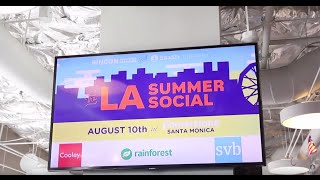
Live Q&A at SaaStr LA (Aug 25, 2016) featuring Adam Miller, CEO of Cornerstone OnDemand. Miller describes Cornerstone’s product scope (learning and unified talent management), company origins (founded Nov 1999 as CyberU/Cyber Youth), and growth into a public SaaS company. He emphasizes financial discipline from early bootstrap years, details a long fundraising grind (multiple small rounds, major rounds in May 2007 and 2009), and gives tactical advice to founders (e.g., wait for ~$300k ARR/CMR before institutional raises, hire for potential, don’t rely on partners to sell what you can’t sell yourself). He also discusses Cornerstone’s role in promoting the LA tech ecosystem (LA Tech Summit, accelerator, corporate innovation fund) and offers practical CEO time-management guidance (Evernote to track todos, spend ~70% time with people/clients, maintain life balance).
Questions this video answers
26 million people
3,000 clients; users in 191 countries and in 42 languages
500 million training registrations in the last 12 months
Less than $20 million in equity when they went public
About $300,000 in CMR (ARR) before seeking institutional capital
Chapters
Savvy.
He huge thanks to Cornerstone for reaching out and offering a co host and providing the space and the people and the organizing energy. I think without it we'd probably be doing like bring your own hot dogs with a Weber grill at a vacant lot in Venice somewhere. So this is great. We're very thankful for them. We have to do a quick thanks to the sponsors, otherwise there would be no alcohol and no food. So first is Coolie. Cooley is a great firm nationwide. They made a big and conscious decision to invest in the Southern California Los Angeles market a few years ago. They built an exceptional team here led by Dave Young, Tom Hopkins and their crew. They have an uncanny ability to be super attentive to almost every startup in Southern California as a client and I honestly don't know how they do it, but I'm very glad that they do. Next, similar specialist Silicon Valley bank, we've got Mark Turk and Rob Freeland and their team focused on leading the charge for tech companies in Southern California. You know, they focus just on tech, just on startups and their expertise shows they do a great job serving venture backed and tech startups here. And finally a portfolio company of ours, Rainforest qa. Farlan and Fred are here somewhere. They are sponsoring. Raise your hand, Farlan, Fred, Chow yell. There he is in the back there. One of their claim to fames is they are the only poor folding company that has given me socks as swag. And they provide QA testing as a service. Sort of the new standard for how modern QA gets done. And I encourage you to meet them and talk to them and see if it's a fit for your business. So our first set, we've got three sessions here. We'll try to make them go along pretty quickly because this is more importantly a community event for you all to interact with one another and to foster that sort of connective tissue here in Southern California. First is our host, Adam Miller, CEO of Floristone on Demand. Going to do a quick little Q and A with him so Adam can come on up.
All right. Oh, that's loud. Fancy digs right here.
It's very nice. Seems like there's like new perks and things going on at Cornerstone Demand. What's new?
The newest perks. So we have lots of perks in this room. There's a movie theater right there.
They look like Thunderdome.
We have an arcade on the fifth floor. We have a candy store on the fourth floor. We have lots of food and drinks and all that jazz. But we started running out of things to do. So we actually bought or took over the restaurant that's at the corner of the Water Garden right here. Used to be Cafe Bisou. And on September 1st we're opening up the corner, which will be literally a public bar and restaurant, but one that we will certainly use for happy hour.
Fascinating product line extension. We'll talk about when to add products and what kind later. That's an interesting one. And understand we're thankful you're here. You somehow got out of jury duty today. Is there like a special public company.
CEO hack for that or the guy realized he was going to prison so he did a plea bargain and that was a trial ended. That's great.
So we're glad you're here. Cornerstone on demand on the BVP Cloud Index. By my count, 10th largest public SaaS company. Estimates are they'll do 430 million in revenue this year for 2016. Tell us exactly what Cornerstone does and for whom.
So Cornerstone helps companies recruit, retain and develop their employees. We essentially help companies manage the entire employee life cycle from sourcing and recruiting somebody into the organization, onboarding them, managing all their training and development requirements, connecting them with other people in the company, especially for a big global company, dealing with setting goals, doing performance reviews, managing compensation, and then using all that data to manage mobility or succession in the organization. We have a product for small businesses called Cornerstone Growth Edition. We have Cornerstone Enterprise for the biggest companies in the world. And today we have 26 million people using Cornerstone. So 26 million subscribers. I think that makes us number one on the list in terms of subscriber count. And that's across 3,000 clients. And those users are in 191 countries using the system today in 42 languages.
Edge. When you started the business, I got it right. It started with a different name called Cyber Youth.
That's right.
So did it start doing something differently and was there a pivot? And how do you think about again with the lens of sort of helping startup founders get useful advice here, how do you think about sort of sticking with your vision versus chasing the rabbit where it runs?
So the company started in November of 1999 in my one bedroom apartment in New York City. And about three months into it I realized the weather was terrible, it was hard to hire people in New York, and you could start a company anywhere, so why not do it by the beach and picked up and moved. But the idea was basically the same idea that we have today, which is we were going to leverage technology, specifically the Internet, to help improve access to Education by delivering educational content to adults wherever they were turned out. Adults tend to be in three places. They could be at home as individuals, inside of a small business, or as part of a large corporation. And when the company started, we aggregated all the online training that we could find and we were delivering it to adults. And we started with the consumer side. We started building a website and then we took the basic model of the website and went to people we knew who were predominantly at large financial service institute institutions in the Northeast. I was from New York, or one of my first people, Steven Seymour, who started the company with me, was a banker in New York at the time. And so he helped get introductions. And we were talking to people we knew in order to build a product that we could then sell also to small businesses or mid sized companies. As we got into it though, the big companies said they wanted what we had. And so our first clients were actually all very large businesses. Smith Barney, AON and Washington Mutual were our first three clients. So we were dealing with very large enterprises from the very beginning. That creates a whole host of issues we'll talk about later. But the business fundamentally when about delivering training to adults. And we still do that today. Along the way, people said, hey, if you're managing training, can you help us train people based on how they're performing? Well, we need to know how they perform. So we need performance management tools. We want to train people who are new in the company. Some people call that onboarding. They want them to train people who are going to be future leaders in the organization. Some people call that succession management. And so we started building all these tools around training and development. Today we still have learning at the center of what we do. We have 24 different products. Some of them are learning, some of them are related to learning. Some of them, like compensation, really have nothing to do with it. But they're all around talent management. And so the company evolved from one doing enterprise learning management to one doing what today is considered unified talent management. And that's the entire employee life cycle. But to. To put a fine point on, are we still doing what we started out to do? Over the last 12 months, we processed 500 million training registrations. So we absolutely are still doing what we set out to do in the beginning.
And as you mentioned, you founded the business in 1999, so before Salesforce, before AWS, before Zora, before even SEM, probably.
One.
First of all, what the hell are you thinking?
The second off, it was the first Internet.
Yeah, yeah, the. And you bootstrapped for, you know, your first funding was nine years in, eight years in.
Okay. I remember every day of this.
Yeah, One could argue that that must have been so much harder than it is today. So was that a conscious decision? Was that out of necessity? Was that, you know, what would you tell us about that?
Which story you want me to tell?
The one you think the audience will find most interesting.
You know, the truth is I basically was out raising money for seven years in a row every single day. And some of you know what I mean by that? So literally trying to raise money continuously. Now, the good news is, after you've raised money from your friends and family, you're sort of required to do well, and it becomes incumbent on you. The stakes are raised, it's harder, It's a little bit more stressful. We then raise money from everybody that those people knew. So it wasn't bad enough we took money from all our friends and family. We then took money from their friends and family, and we sort of continued these concentric circles, trying to raise a little bit of money at a time. And it seemed like we always needed 1 million more to be successful, to get us over the hump, we just needed 1 million more. The first round was 700,000. That was actually a very easy round to raise. The very first round I raised were all the people I worked at. When I worked on Wall Street, I worked four. Literally, it was the entire chain of command. And I was relatively junior, so there were a lot of people above me. They all put in the seed money for the company when I told them I was retiring. Not retiring, resigning to start a company. And then I raised some money from friends and family. After that, we raised another 500,000. Then we were able to raise money from people that they knew. And so we had about 2 million total that had been raised. And then it became impossible for us to raise money. First problem was the Internet bubble burst in 2000. Second problem, September 11, 2001. Third problem, there was a big recession around 2005, late 2004, early 2005, so constantly it was difficult to raise money. We were fortunate because we were SaaS and we had a lot of recurring revenue and we were selling two very large companies. We were able to get debt financed even though we didn't have venture backing. So we were venture financed without having venture capital. And anybody who did that with us would always say, we've never done this before without a VC being involved. Then we had sort of used up that financing and desperately needed more money. At this point, we Needed literally about a million more to stay in business. We were growing the business essentially based on money coming in would be used to hire people, but that was it. So we're hiring very linearly. If we wanted to hire a couple more people, we would have to close another deal. Now at the time, our retention rate was about 100%. So we were very confident that if we get the deal done, we sort of had that money forever. And one thing that we were very disciplined about in the early days, that was incredibly, incredibly important. And something you guys should all be thinking about is we never build the client multi years up front because we always said if we do that, we're going to believe that we have money in the future that we don't actually have and we're going to dig ourselves into a hole that we can't get out of. And so we raised whatever we could, but really the way we grew the business was by closing more deals and keeping those clients. And by initially people were paying us per user per month. As we got bigger, we were able to switch to per enterprise per year, which is still what we do. And even to this day, even though we have the ability now to force multi year agreements and force multi year prepayment, we never do it because we don't want to dilute ourselves into thinking we have multi year cash that we don't really have. So it's a very disciplined approach.
I've seen startup founders make the mistake of getting annual pay and assuming that that money is coming in month over month and they don't realize that once they spent that, it doesn't come again for another year.
So cmr, as annoying as that concept might be to you right now, is a really good concept because that really is the money that you have it, that's what you can spend on a monthly basis. And if you go beyond that, you have to raise the difference. So to answer the question honestly, we had a hard time raising money. In hindsight though, those early years were incredibly important to the success of the business because we became very disciplined financially. And that discipline helped us tremendously over the years. So this year we'll generate close to 30 million in free cash flow. Right? We have $400 million in the bank. We're adding capital every single year just by operations. And so we're building a very sustainable business, a business that's built to last. So my recommendation to all the startups that I work with is don't even try to raise institutional capital until you have about 300,000 thousand in CMR, because at that point you started to work out the kinks. You know, you have a repeatable sales model, you know what you're spending money on and you know what to spend money on next. You probably hired the most important people, but you know what you need to really fuel growth. And so when we ultimately raised money seven years in, we had the big advantage of knowing exactly what we needed the money for. And so we raised money in 2007, May of 2007. We grew at 60% a year for the next seven years in a row after we raised that money. And the reason was we knew exactly what we needed to spend the money on and we knew how much we should be spending and how not to overspend. We ended up doing a second round in 2009. The first round was done by Bessemer. Byron Dieter led the round. The second round was done by Meritech, including Bessemer and Bay re upping. And the only reason we did the round in 2009 was because there was obviously the massive recession at the end of 2008 and the back board was completely convinced that we would sell nothing. So we literally did projections based on zero sales. I'm not kidding. We did projections for the board based on zero sales. And they said, you know what, A year from now with zero sales, you're going to run out of money. You got to go out and raise money. So we went out and we were, I think there were only two deals done in the second whatever it was the beginning of 2009 and we were one of the two and it was a flat round. Everybody else was way down. We never spent $1 of the money of that round. Never $1. And when we ended up going public, and this really puts a fine point on that financial discipline, when we went public, we had only raised in the same. Sounds insane in today's environment. We had raised less than $20 million in equity when we went public. So we were able to keep a decent chunk of the company. We were able to build a really healthy return for our early investors. Our angels, who weren't really angels, they were friends and family, were up 150 times on their money. So we were allowed back to all the parties. I'm allowed home for dinner anywhere I went. And it was because, I believe, of that financial discipline early on.
Do you think now? So two questions around that sort of seven year struggle to raise money. One, there's an opportunity cost of your time, right? And I talk to founders all oftentimes there's People on stage saying, when's the right time to raise money? And I feel like to the founders that haven't yet sort of got that repeatable, like, well, whatever, someone will give me some money. One, how do you think about the opportunity cost of your time that you spent doing that fundraise? Two, do you think it had anything to do with the fact that you were in la and do you think that's the same or different now?
So it is completely different now. It is 100% based on the fact that I was in LA and that there were very few successful companies in Los Angeles. You would never be able to have an event back in 2005 like this with this many companies showing up doing enterprise software. And we were definitively an anomaly at the time. And the problem back then was because there weren't a whole lot of success stories outside of so Silicon Valley. The bar was much higher for a company to get funded outside of the Valley than inside the Valley. As Jim knows, VCs might have to go to multiple board meetings per month. And if they have to get on a plane, the bar is just that much higher. So if you have two companies that are relatively similar, one is three blocks away and the other is a two hour flight, you're going to do the one that's a couple blocks away or an hour flight, right? You're not going to make that trade off until around the time we went public. So you had a lot of companies not just in la, but also in Salt Lake City and Seattle, in Austin and Boulder, who were extremely successful. And the calculus changed for a lot of those companies. Simultaneous to that, you've had a massive buildup in both the amount of capital and the quality of capital that's now resident in Los Angeles. And so not only you have outside investors willing to come here and put down some money, but you have VCs here in LA that are willing to do it. So the question of when to do it again, for me it's a very specific number. It's 300,000 in CMR. You could do it sooner if you know you have that growth trajectory and you have a repeatable business, you could do it later if you got lucky and got that money. Or if that money was mostly services, I wouldn't count that. I would focus on the software piece. And in hindsight, I would have raised more money sooner if I could have because it does take a lot of time. And once we had the money, we were able to start investing ahead of sales, which is obviously beneficial if you can do it.
I think it's a good point about sort of The Bay Area VCs, which is the majority of the VC dollars in the country. One of the things refrains I hear from that group is that for SaaS businesses, LA is tougher because the talent pool does something. It's like, yeah, that found in team what happens when they need to level up at the VP level. So how did you handle that as you grew from a zero revenue business to a $400 million revenue business, attracting talent, building your own talent pool, et cetera?
Yeah, so not true at all. And the 400 million is GAAP revenue, so our sales were actually much higher than that. So if you think about how do you build a business in la, as I was building it, it was much more about hiring for potential than for prior performance. So it was very difficult, for example, to find somebody who was an enterprise marketing executive for SaaS. For SaaS companies, but. Or for software. Forget for SaaS companies or technology. Right. SAS didn't even exist. But what we found was it was about hiring people who had the potential to be really good people. And we sort of taught ourselves about SaaS. It didn't really exist at the time we figured it out and so we became a learning organization, both in what we sold, but also in how we operated, which allowed us to keep training the people that came in. And so by hiring for potential, we were able to train people to become experts at the domain that they were working in. That is no longer a barrier, I would say. You still want to do that. I always recommend that you hire for potential. But there are now a lot of people that have these skills already in la. So whether it's finding software engineers or product managers or QA people, that's relatively straightforward at this point in la, it was a lot harder to do back then with regard to enterprise sales people or implementation services people or support reps. All of that now can be found in Los Angeles as well. So there are a lot of companies, as you can see here, there's a lot of startups, but there's some big companies as well. Well, and so there are now people in the ecosystem and we've done a much better job also retaining talent. There was a period of time, as Jim knows, where people, once they hit a certain stage, would move to the Valley and take all their people with them. That was not at all helpful in building up the ecosystem. Today you have people staying in la. As their companies get bigger, you just have a bigger pool of people. People Able to do these jobs, we move people in. Now. LA is a great place to live, as we all know, so it's not that hard to convince somebody to pick up and move here. I always try to look for the boyfriend or girlfriend rule.
College grads, right? No matter where they live, if they went to UCLA or USC or UCI or ucsb, like they enjoyed their four years here or six years here, depending on.
Or if you find somebody that's got a girlfriend. Yeah, yeah, totally, they will come back. So all those things are really big advantages. The other thing we've done is really worked on how do we promote the ecosystem? Because this is both good for us and good for the whole community. Getting more people back here, making LA Tech a permanent thing, a real thing. So one thing we do is every year we've done for the last three years the LA Tech Summit. It's this year, October 25th at the Fairmont Santa Monica and we bring about a thousand people. It sells out every year and all we do is talk about LA technologies. So it's the top companies in LA present what they've done, how they've been successful. We have tracks on every single vertical technology. We talk about everything from E commerce to working with the media to SaaS. And we're this year going to have tracks specifically for CEOs to talk about functional areas as well. How do you build a sales team, how do you prepare for the next round of financing, how do you service clients effectively? And so, so something we've done every year, it's been really successful and that's gotten a lot of press thinking about la. We've had everyone from Fortune and Forbes to CNBC and LA Times and everybody else come to that event. So that's helped. The other thing we've done is we built an accelerator on the fourth floor. I think we're doing tours of it at the end of this event for any startup that has some traction. We don't want to do really seed stage, we like to do post seed round and really help a business grow. We have experts in sales, in marketing, in finance and legal. And we use that talent both as a perk to our own employees to get to work with these startups and to get ideas infused in the organization so we don't get big and bureaucratic. But also it's very helpful to the startups that are here. So you're going to hear from work pop later who's one of our accelerator companies. And then the third thing we did is in conjunction with the local VCs, we have an innovation fund, so we set aside a few bucks to be able to do investments off our balance sheet. Like I said, $400 million in the bank. So we're able to make investments to companies, particularly in the area of managing people. Anything related to the assessment or management of people.
Yeah, I think the accelerator has been a really powerful sort of lightning rod for SaaS startups, B2B startups here, because nothing else like that really this year. And we've got one shared portfolio company comparably, Jason Bazaar. And then I've sort of, you know, provided counsel to a few others who sponsored the program. It's sort of like, you know, if you're, if you're an aspiring SaaS company with a, with a logical tie, strategic fit with Cornerstone 5, you should do that program because it does give, you know, sort of great skills transfer and access to the mindshare of again, the Tiffany 10 largest public sectors on free rent, food. Yeah, but, so that's, you know, now that you're a big company, a lot of startups might see sort of collaboration with a company like Horse on Demand or other big companies as sort of like a golden ticket to accelerating scale. So two questions. One, as you were coming up, did you ever have any, you know, did any of those partnerships with big companies ever work or was it just a lot of wasted time? And now that you are the big company, other than through the accelerator, are you engaging with smaller companies in a way that benefits both sides?
So the rule, I learned the hard way, is nobody can sell something you can't sell yourself. So don't assume that partner X, who's an exactly perfect fit for what you do, is going to sell your stuff if you can't sell it yourself. And that's a mistake that I see startups make over and over, over and over again. You have to be able to do it yourself, make it repeatable, and then you can get a partner to do it for you as well. We did have a lot of missteps, a lot of false starts, but we did have one incredibly successful partnership. Adp. Adp, as you know, is the world's largest payroll company. Obviously ties perfectly with managing people and became an incredible referral partner and alliance partner for us over the years.
And last question, role of the CEO. Just about every CEO we work with has more things to do in a day than they have time to do it. And oftentimes the urgent, the fighting fire sort of overwhelms the important to the more strategic, longer term what does your day look like as a public company CEO? I imagine that never gets easier. So, you know, what's your advice to the startup founders who are feeling all these sort of different demands on their time? How do you prioritize? How do you maximize your sort of effectiveness?
So last week I was in Park City and asked Jeff Immel the same question. He's the CEO of ge. So it's something I'm obsessed with. You know, all you have is your time at the end of the day, and you can't make more time. There's a great book called Crazy Busy which talks about how do you manage your time when you're so incredibly busy. There is essentially an infinite number of things you can do as a CEO. An infinite number of things. You could work 27 hours a day, every day of the week, and never get done with everything on your list. So. So I try to do a few different things. Number one, every night I use Evernote to keep one list of all my TO dos and I update it every single night. So if I ever have downtime, I look at that list and do something on that list. So it's constantly up to date. Number two, I try to spend as much of my time as possible at this stage of the company with people. So I find that if I could spend 70% of my time with either our people or our clients, that's a really good use of time. So with our people, it's coaching, it's mentoring, it's helping, it's advising. It could be recruiting, it could be training, onboarding, but doing something with our people. And externally, it's visiting clients, going to the big sales meetings, talking to partners, trying to cement some of the relationships at a senior level, all of which is helpful. And as startup CEOs, you will always be the best salesperson in the company. It's just the reality. You're the most passionate, you know the product the best. You're gonna be the most compelling add to a buyer, you're the one that can make the decisions. So you're a compelling person to speak to just positionally. So remember, that is always part of the job. I will admit that sometimes my schedule gets completely blocked up and I hate those days. I'm most effective when my schedule is clear. The only times my schedule is clear are days like 10 today when I was supposed to be on jury duty, so I wasn't supposed to be here. So there were only like five meetings that were pre scheduled today. And on days where there's a trip that gets canceled or something like that. But to the extent you can block time to just think or block time to work on whatever that urgent thing is, and that thing might change all the time, it's really important to do. Don't let other people schedule all of your time because it will happen if you don't pay attention to it. You have to be a steward of your own time. The other reality is there's a lot to do. So you have to constantly reprioritize. You have to always decide, you know what, this meeting is really important. And so I'm going to stay in this meeting, I'm going to in this meeting, even though I have another meeting in 10 minutes. And that meeting either has to wait or will be rescheduled. And one thing that happens as the company gets bigger is your days will get more and more diverse. So I would say no two days are the same at this point. No two weeks are the same. Different country, different city, different purpose of whatever the event or the activity is. And the priorities are, the priorities should change, but the outcomes, the facts on the ground might be different every time. So you have to be willing to be flexible. And so to the extent you can save time to do whatever the most important thing is, that's really important. The last thing I'll say about this is balance does matter. I find that people who work truly 20 hours a day and I talk to guys, right, we get bitched all the time. I'm sure you do as well who say, Yeah, I sleep four hours a day, I work 20 hours a day. Those people are never going to be successful. It's not sustainable. You're not delegating enough. And you need to have some balance in your life, whether it's family or friends or non profit activities. I sit on four non profit boards, I'm the chair of two of them. So I'm very involved with these nonprofits. I coach my kids soccer teams. You know, there's a lot of other things in life you can do which make you a more holistic person and make you a better boss and a better manager. So it's important that you don't overly obsess on what you're doing. Because the bottom line is you have an infinite amount of work. You will never be able to do all the work you have. So you have to prioritize and do what matters the most.
Thank you so much for joining us today.










