Sales in the AI Era From the Top CROs with Sam Blond + Jason Lemkin
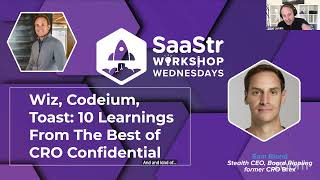
This is a transcript of a March 2025 YouTube conversation (Jason M. Lemkin / Sam Blond + guest) about how AI is changing go-to-market (sales, marketing, customer success). Key themes: recent AI tools (Cursor, Codium, Windsurf) show large productivity bumps for engineers, but equivalent step-changes in SDR/AE productivity are not yet broadly realized; the hosts introduce a "Mech-A" (AI copilot) thesis — an AI that equips AEs in real time with memory, research, and meeting orchestration; ecommerce chat convergence is accelerating the blending of sales/support/marketing; in-person meetings still drive materially higher outcomes (hosts cite ~3x conversion and ~30% larger deal sizes in some datasets); other topics include AI cold-call/voicemail tools, territory/pipeline management, the role of technical sellers for complex products, and hybrid vs. co-located sales team dynamics.
Chapters
On Zoom, on Twitter, X, LinkedIn, YouTube, Blue sky, wherever you're watching. We're of course here with OG Sam Blonde. Sam, thank you for joining us today.
Thank you for having me. Great to see you. No place I'd rather be.
So I thought we'd have fun today. I know everyone and we will save time for questions. I wanted, I wanted to combine two things I wanted to talk about. The topic that we're all talking about today is what's the role of AI and go to market. Sam, as you know, has worked on this. He is now a stealth CEO unannounced, working on AI and go to market. Right. He's on the board of Rippling, built their whole team. Former CEO of Brex, works with many of the best startups. Not only that, but I thought we would do something kind of fun. I thought we would go to our new Saster AI, take a look at the CRO Confidential interview. Sam's done with Wiz, acquired for 32 billion yesterday, Codium Toast, talk about what they're doing in the age of AI and go to market and, and, and kind of press on 10 learnings from the best and seeing if AI is changing that or not. So literally, if you haven't, I launched this Saster AI on this company called Deli. Brian Halligan and others use it. It's really awesome. It's right on our nav on Saster and it has 18,000 pieces of Saster content in every YouTube, every interview, including all the ones Sam has done and zero confidential. They're all there and you can talk to it. And I would say 85% of the time it's pretty awesome. And I would say the one learning. And then I want to get into, then I'll, then we'll go into questions. The one learning is. So we put it up on our Saster annual website yesterday too. And here was a, a couple epiphanies from it. One is this morning for, for Sastra annual sponsorships. It handled it pretty damn well as a bdr. Someone came in and said, listen, I mainly want to buy Jason as an influencer. It said, sorry, here's why Jason doesn't do that. And then it said, okay, could I, could I, could I sponsor Sastra? Here's my goal. I want to get my CEO in front of folks that asked about the budget, what the goals were for it. And it frankly gave a better answer than many of the folks that have ever worked on our little sales team as a bdr. Right? So I have a lot of Skepticism about outbound from the AI, which we can talk about. But when I saw this this morning, I was like, pretty good. And you didn't have to wait. Like the AI never sleeps. And so I. That was my first moment there. And then one other thing on the. And then I think this is the meta question. Like what? Sam just did an interview with the VP of sales at Code, which we'll chat about. Rocketship, you know, Cursor, its competitor, you know, rocketed to 100 million in a couple of months. Bolt, Lovable. Like why? Why for. For folks that aren't close to it. On the upper right here I got from one of my favorite investments, RevenueCat. It powers 40% of all mobile subscriptions. Here's a chart of their merged pull request. But really their productivity since they've added these products. Right. Cursor, slash, Codium, et al. You look at the. Right look at the growth and productivity. This is not from a one kid batch. This batch of YC where he's got no team. So obviously it's all AI. This is from kind of an elite team, you know, mix of A tier and S tier. And this is what happened to the productivity like this. Pretty profound, isn't it? So I think the meta question is this boost on the right. Can marketing and sales and customer success get this? Is it an illusion? I think that's the question. Do you agree, Sam? I think it's kind of the question of the year. Right. It's.
It's a, it's a good question. I'll give maybe my, my contrarian overarching opinion and then, and then we can jump in. But I think sort of dovetails on, on what you just mentioned. Look, I think we're now two and a half years in ChatGPT launched to consumers November of 22nd, I think. And my contrarian take is something like AI has not yet. That's an important word. Yet really disrupted SDR or sales much at all. So I'll sort of like, you know, give that as an initial take and then we can sort of see how it applies to the rest of the conversation. It is a bit contrarian, but. And I'm sure you have opinions, Jason as well.
I do, I'm just. I've. I'll tell you once. Since I launched this Saster AI, my eyes have opened because I've. We've already done 2,000 chats on it in one week. 2,000 in one week. Okay, we're not. This isn't rippling. This is. Saster did 2000 and I'm learning. And I'll tell you what, meta thing, not only did it handle that BDR conversation this morning really well, right? I've started to do this weird thing, Sam, and I don't know that any AI tools do this, but it's kind of great. Okay, Now I do conversations with my AI together with another person. Me, Amelia and Jason Digital. And it is amazing because Jason Digital doesn't forget Jason Digital can. I forgot what Colin said the CEO of Meredith at Wiz. But you know who didn't forget Jason AI. So I don't. Do I want every. Do I want the AI having every con. But this, this is like an weird copilot where it's a true copilot, like literally forgets nothing. Right? And I don't see why some version of that can't make anyone in sales give them a superpower. Right? If nothing else, it remembers every conversation. Sam, you ever had at Brex with a customer and your AI, Sam jumps in. Excuse me, Sam, great point. Do you remember when we had the conversation with a similar customer? Right. You might have forgotten that that prospect you're talking to is that Codium and Cursor are competitors because you got so many deals you forgot. You know who didn't forget?
Jason.
Yeah, the two of us. This is so weird. The two of us. So this and like my. I'm with you that. It's. That it's slow. And I think there's reasons and I don't know, but. But that productivity bump with Cursor and Codeium, it's not like it happened a year ago. It happened in the last 90 days. The last 90 days. And there's reasons because, Claude, it's all, you know, it's. And, and, and open A are not new. But, but the set of circumstances came together and I'm less skeptical now. Now I'm wondering what the magic moments are going to be in this year. It's not going to be crappy chats. It's not going to be people firing their customer success and support teams and getting better results. That's. We have data from Gorgeous and others, but man, some of this stuff, the three of us is pretty cool. The three of us.
I like the framing and I like the use case and application that you just described. To reiterate. I think it's coming. I do think it's coming. I think though, you touched on Codeium and Windsurf and their product, Windsurf, and it's really taking off in same category as Cursor. You know, these are companies that have, have really taken off in like the last six to nine months to your point. And they are AI first, they are extremely valuable and they are you know, whatever exiting the productivity, the efficiency of engineers. What is the equivalent on the sales side? And the answer is, or my answer is there isn't one. There isn't a Codium equivalent in sales for salespeople. And so I think, think where I has added value for SDRs and sales is what I would describe as like on the edges. So it's like, you know, what is, what is AI good at today for salespeople? Well, it can record calls and it can summarize them quite well. And then it can, or you can take that information and you can add it to your CRM. Now this is still the CRM that existed pre AI. So it's not a new CRM that you're interfacing with. Yeah. So you know, it makes you know like note taking and deal tracking or something like that. Better account research. Like you can get better insights about a company. You can learn that you know they have a job opening for this hr, you know, coordinator on their website and you know Jason Lemkin is attorney attending sastry annual this year. So it can give you information about the companies and people that you're talking to. And, and again I sort of qualify that as like it helps around the edges but are SDRs or A is today more efficient than they were in 2021 like similar macro environment. Of course there's been ups and downs that, that are sort of macro influenced. Not really. Like I haven't seen the, the company equivalent of Codium or Cursor or Harvey and Legal we or like a bunch of these AI first companies into different categories. So one the companies don't exist and two the use case doesn't exist where like the concept of AISDR received a lot of attention like that that would be the dream like replace headcount with an sdr that works 247 and is more effective at generating demand, scheduling meetings than your human sales reps, SDRs and like we aren't there yet. It, it hasn't played out like that.
I think for sure. Right. But I, you know I wrote this post maybe a month or two ago that I, I, I observed but I did not understand until we had 2,000 folks use our AI in one week. Right. I wrote this post that what's coming is the mech A the Mac A where the AE walks into a meeting and she or he is Perfectly prepared. Everything in the armor. It's not a note taker. It's not research. It's not even a digital se. Right. Or solution architect. I personally think this is me. I think the killer product will be everything. It will be everything. And so I don't know if we lost a little bit of Emilia. We still get here. You cut out and froze for a while. Am I? Am I. Can you guys still see me? Yes. Okay. We might have lost Sam and Amelia for a minute, but they will come back in. I'll wait for a minute, but I. What? I'm waiting for a second. Apologies, folks, we don't actually have Internet issues here. We'll wait one minute. Yeah, I'm back. Sorry, I don't know. You're back. Okay. Do we miss him?
Yeah, probably just needs to rejoin.
Okay, we'll give it just one second and then we'll talk a little bit about Wiz.
I. I apologize. I think my Internet.
We'll blame you. It's easier that way. Anyhow, we can go. I'm waiting. What I'm. For what it's worth, I'm waiting for this mechae. Now my thesis. Listen, just. My eyes have been opened, right? And my thesis just. Is that the reason? Listen, we can talk about how the all the AI SDRs generated spam, right? And we can talk about why, like the AI BDRs haven't totally exploded, which they should. Why didn't they? Why aren't they qualifying everybody's leads automatically? And maybe there's great reasons, but maybe like Cursor and Codium, they're just not enough of a solution yet. They're just. You could use these tools to do some code completion before Cursor and code. I mean, Codium, before it was Windsurf had a plugin, but maybe these tools just don't do enough and in another six months they'll do everything. I think for 20, 50 bucks a month, you can afford to arm an AE with everything. With everything. Not marketing using this clay thing and someone else using this tool and a little bit. But you walk in and you walk into every meeting and your AI, like digital Jason is there with you in the meeting on every zoom. Because these apps already, like, even on our AI, it doesn't quite work perfectly with the vendor we use who I love called Deli, but it already can loop into your zoom and listen to your zoom and answer questions. Now it needs another. It needs another rev. But imagine every sales call you do, there's digital AE who act. Who like you, you, you, you, you make the no look, pass Sam. My ae. Look, actually I'm not sure if that integration works. What do you think, Sam? A good question actually. We have 22 customers in production that are using that integration and all of a sudden the AES got armor. The A's got armor. Right. Do, do you. All the 100 features, the corner cases, the mistakes. Do we have any customer like that in our database? And the A. The mech knows it. And the mech summarizes the meeting and the mech sets up the next followup. Right. And the mech does the research. I just think we don't need 28 mediocre point solutions that a bunch of VCs have funded because they think they understand outbound. That's my thesis. This mech product's coming and it's going to do 100 million in two quarters when it comes.
Well, look, hopefully you're pitching the product that we're building in my company.
That's my kibbutz, the Mac. The Mac. Right.
I think here, here the things that I think are we're like right on the precipice. There is just a lot of the sort of administrative decisioning and actioning around demand gen. Yeah. That I do think, you know, this is, this is like not one to one interaction like you and I are having right now that I do think models today are probably better at. It's just there isn't yet a product that has effectively applied today's models and like they're only getting better. And so I do think that like you know, real disruption is coming to generating demand and like making decisions and taking action around how companies do that. Let's see, I think at the lower end, the more transactional side of sales, I'm purchasing something for working with a vendor right now I'm not going to name the vendor or even the category. And it's like it's a, it's a commodity. It's effectively a commodity that I'm purchasing and I would much rather buy like in quotes from an AI sales assistant than the human that I'm buying from. And I think you know, like it's like close to a support, like experience where you know, I would rather have certain consumer support experiences with a really effective real time AI than the sort of subjectivity of a human waiting on hold. All that comes along with traditional human based support. And I think like, you know, if we're not there already and I think you gave an example like the inbound chat is a Support like sales use case where you have somebody that comes in and your AI responds to it in real time and maybe better than depending on who receives the the inbound A salesperson could but the thing that what you just described is the sort of like where people actually want to talk to a person and there I think it is the like copilot the I always have this all knowing buddy with me that makes me more effective at the thing that the buddy isn't doing for me which is developing relationships with a buyer.
Yep. Yeah. I don't know whether the AI will develop the relationships one point and then then we can dig into these learnings from the best CROs you've talked to but on this the AI sales for the low end to talk with chat support. Right One really one thing that folks might not know if you're in parts large parts of B2B is what's happening in E commerce. B2B E commerce at Gorgeous has 20,000 SMBs Klaviyo which IPO'd in marketing. What is what will completely happen by the end of this year. This year is there will be no line between sales and support anymore and soon there will be no line between sales and support and marketing. Because that chat experience you said I'd rather chat with that thing. But is that a support call or is it a sales call? Now the reason E commerce is at the bleeding edge is because much more often in E commerce a support call as chat is to buy something. When you go, when you go to a typical vendor and you hit chat man, it's because you know they shut my app off because they thought we didn't pay the bill or whatever of drama. Right. You've got a trouble ticket. But when I go to to an E commerce site more more often than not it's because I'm interested in buying. I got four questions right. So that's accelerating this trend. But it's crazy fast. It is crazy fast. The convergence here and there will not AI means there will not be four links. There will not be sales support, enterprise support, low end support and wiki. Those will all be dead in E commerce this year. There will be one thing and I will know the difference. It's and it will converge. All the vendors, the vendors are being mixed up. They will all accelerate the fact they'll be hard to tell the difference between these vendors because they'll all be doing all of them. Right. So sometimes in SMBs are much faster than enterprise. Right. And this E commerce is even the fastest because support has been sales like they are merging one so for just for folks in general. This is why I write about it because I see it study that if you want to know the future in Some Ways of B2B for AI Study E Commerce because it's at the bleeding edge of what customers want. Right. Because it's all verging. It's a different world that's faster.
It's a smart insight that like historically this what has been reactive customer support and transactional sales will in a lot of ways converge and into the the same product will fulfill both needs.
Yeah it's you know I bought we for the. For. For the. For. For my son's birthday I bought him a secret gaming chair and it went to the wrong address so I had to figure out how to return it. There were four links. There was sales support. There was their own thing they'd rolled on chat GBT and a fourth one. None of them could work, none of them could talk to each other. And they finally gave up and said we can't change the address. Do you want a refund? And the chair had already been delivered to the correct address. Right. So none of these things but with AI that's all gonna. It's gonna happen fast. Right. So so anyhow let's talk through some of this stuff in AI so whiz 32 billion all cash offer from Google. A lot of learnings you talked it seems like the early days but it was like 18 months ago with the founding CRO Colin Jones. I pulled out AI. Jason pulled out one thing this is and you already hit it when you started it. But it's worth one interesting thing he said was 5x revenue and 5x headcount. We chatted about this at Saster Miami. We chatted about I think some of your lessons learned from the go go days of Brex which is a much more like this is a linear approach to headcount and revenue. Are there any other efficiencies any other learnings you have here today on this. On this one to one ratio. We grew up in a world where you always got less efficient when you scaled in sales. Right. That's how we grew up, didn't we? Yes.
And even with the like pre AI tools that that you know in theory 5 or 10x your your productivity the the outreach of the world like you know I I remember and I remember vividly when I was sitting in Echo sign clicking one at a time on emails and copy pasting copy into the the message that I was going to send to somebody. I mean look, you could like it was early days marketo, you could do this in marketing automation but as an SDR I couldn't yet do it. And so then outreach like in theory was going to whatever X my my productivity. And in practice, you know it seems like SDRs are generally sourcing about the same amount of revenue that they have for the last. Gosh, it's been almost 20 years since I was doing that at Echo Sign. And here's, here's what I think has changed and it's a bit of like a meme on Twitter right now or X And here's what I think has not changed and we sort of alluded to at least the latter previously. What has changed is like companies are scaling revenue much faster largely through product led sales. And you see a lot of data points around, you know, this company has X employees and Y dollars of revenue. And so from that perspective like companies are able to grow revenue more efficiently than they have been historically. And you know, I think some of that is innovation around AI in what they are selling, like what the company does. And some of that is innovation around you know like closing and onboarding new customers in sort of an automated or product led way. I think what hasn't yet changed is you know, enterprise A E revenue contribution. How much can you get out of a sales rep in ARR that is selling to, you know, medium to large size companies with you know, several month long sales cycles. And I think this slide highlights that. To your point, this was you know, maybe 18 months ago. I don't think it's really changed. And I think that like you know, there are aspects of selling that are easier today. Taking notes in CRM like easier today than it used to be. Does that really, does that make me twice as effective as a salesperson? It doesn't, Yeah.
I mean I think when you interviewed Graham just last week or two weeks, couple weeks back from Cody on Wind surf, it was 3 to 75. Was it employees or, or go to market? Employees that was go to market and, and 3 to 75. Right. So that's not more efficient, is it?
I think this is a perfect example. I think the company is like 130 to 150. I can't remember the exact number. And so yeah, 75 out of 130 or 150. That's a large percentage of the business.
Yeah.
And so maybe they are getting more efficient on the co writing side. Like maybe they would need to be far more engineers historically speaking, at least on a Percentage basis. And look, I think you see this in like some of what Salesforce is doing too. We're hiring like 2000 AES to sell the new AI product. You know, you would think that AI would help sell the AI product in sort of like a dream world.
Yeah. It's interesting when you do the code of math quickly. If you look at classic SaaS, companies that go public that are sales led, they've traditionally about 40% of their headcount and cost in sales and marketing. 40%. It could be pushed a little higher, but it's usually about 40%. If, if, if it is more efficient to build software like codeium, that's now 60%, 70%. Right. Startups you'd often see half, half the team would be in sales, half team and engineering. But in that case it's more. Right, it's more go to market professionals. And at Salesforce, Mark said he wants to increase the number of sales team 20% this year if they can hire them. He raised it again in the last analyst call. He's like 0%. Not one single net new engineer in 20%. Now that may be a slightly different beast, but the real question is have the, have the rules changed? Codium and Salesforce kind of suggest the opposite. That actually even if the, I don't think Graham said that their quotas are any higher than traditional. Right. They had some folks that were, he said a number of folks were closing well over a million. Right. But that doesn't necessarily mean the quota attainment is magically different because of AI.
I, the, the folks that I talk to.
Yeah.
That are in sales leadership roles at all kinds of companies.
Yeah.
Those are kind of the same as they have been historically. And, and you know, more mature companies. You alluded to rippling and, and there are a bunch of others, more mature companies that, that are adding tools that, that have AI incorporated in the tool quotas are staying the same. They aren't increasing effectiveness efficiency. You know, they aren't getting 2x out of the sales rep and they are adding the tools.
Yeah, yeah, it is, it is. Maybe that's the meta one to learn. I, I am excited about this mechae, but we haven't in our history in SaaS we've seen the dramatic evolution of tools. Right. Even just gong alone was, was, was, was, was jaw dropping when it came out. Right. The whole salesloft outreach. But we haven't really seen any net productivity gains despite that Gen 1 stuff. And we'll see. Right. But I like this idea. Let's Move on to the next one because that's interesting. But I like this idea at least of whiz. If you can keep this ratio flat, you're it. It's a. I see too many folks talking about nutty versions of efficiency numbers. Nutty versions of, of what's. I mean I love the metric. What's David Sachs's metric for efficiency? What's it called again?
I know what you're.
The burn ratio or whatever it is.
Burn multiple.
Burn multiple. And it's great. And Dave and David and I at SAS dream two years ago, we dove deep on what you can learn from that. It's very thoughtful, but too many folks are hiding in this. But still their sales efficiency is going down whiz at least through 100. 100 and something million was linearly efficient. Right. 5x growth. 5x. It is interesting. So maybe no efficiencies yet, right?
I. I do. I mean maybe this is like optimistic view. History would suggest otherwise. I do think it's coming. I, I do. I don't think we have realized it and I do think it's coming and I hope I'm right.
Yeah. Do you think the, do you think this is, this is a. Maybe a slightly. A tougher or, or, or people won't like this question. But do you think as we've changed culturally last few years, do you think if sales reps, sales executives can be more efficient through AI they want to be. Do they want to do another five calls a week? Do they want to do another. If you literally can do eight calls a day instead of four because of AI, do. Are we as humans willing to do that? I see everyone willing to work less.
Here, here is my sort of illustration of, of the question that you're asking. There's a company that I'm, I'm actually an investor in and it effectively, at least historically made it much easier for sales reps to take notes in Salesforce, it's called Scratchpad.
Yeah.
And they were a beneficiary of that wave.
1.5 of efficiency. Right. Big beneficiary, that 1.5 wave. Yeah.
Well. And sales reps loved it because one of the, one of the top complaints you hear from salespeople is like updating Salesforce is such a pain in the ass. Or updating CRM broadly. Yeah.
We pay people to do it.
And then this, this company came along and they made it super easy to take notes in Salesforce. And what did it do? It saved salespeople time.
Yeah.
And the, the like logic was if we can save a salesperson 30 minutes a day. The the right metric is that gives them 30 minutes a day to do revenue generating activities. They can do more outback one more deal. They can take another call. Here's what I think people do with that 30 minutes extra of the day. They're they're talking to their neighbor if they're in the office or they are you know doing something different if they're working remotely at home. It's just. It's 30 minutes of like free time. I don't. I don't think that it actually goes back into what what I'm doing that day. Which I think is the like example version of question that you're asking.
Yeah we should ask this who's the CEO Puya? Is that his name? We should ask him if they have the data of people love it. Right. But. But what do they have IRL maybe that's our tied our next slide in irl. Do they have IRL efficiency data on the realization of it Right. And I mean I obviously he's going to be. He'll have the most positive spin on the numbers but he'd probably be honest. That is the tough answer. Right. Do any of the did this that that's why no one's buying these tools today because they didn't they're burnt. They're all about still about consolidation. It's still about consolidation. Right.
My perspective as as a once sales leader is like it it has to improve that you have to be able to tie dollars to the the product itself like time savings. I just like I and it goes back to the original question that you asked like time savings. I don't think think it equates to additional dollars of revenue or faster growth. Like I need. I need to see hard data around what is my how much in sales do I have at the end of this month with product without product and you know the time saving stuff. I just don't see it.
It's a good insight. The. The learning from from from from scratchpad is that you may have the AI may just may have to make you a better seller because making you a more efficient seller may not be even the AI Ve scratch pad stuff. It's not going to make you close another deal a day. Right. It there are we are human beings and so it's got to be. It's got to make you a better seller not a more efficient seller potentially. Right. That might be the the. The learning right.
I think that is that that's a articulate you articulated that insight.
Well, yeah. Okay, so this next one, it's just interesting for AI. I asked Saster AI to summarize that the most interesting AI related learnings from your deep dive with Sierra of Toast. Toast. A tough sell. A tough sell. Small ACV 10k, 20%, 30% gross margins, lot of competition. And he said something. And then when you interviewed the crow spunk, they both said something. It was really interesting that they summarize this. We know this, but I actually hadn't realized this number in person sales generate three times higher conversion rates. Can I improve this? And also as human beings, where do you find these people that are willing to go in person? Where do you are people back to it? Are sales reps willing to for enterprise, get on a plane and for SMBs, are they willing to go to the, to the restaurants? Are they willing. Do you know folks that are willing to spend 20 or 40 hours a week on the road?
Well, first I think traditional tech salespeople are willing to do so for the juicy deals. You know, you've got $1 million deal with Adobe, it's expected. You're in the CIO's office meeting with them and taking it into dinner. I think non traditional tech salespeople are willing to do it for the transactional deals. They're like, you know, I work at toast, I live in Cleveland and my background is, you know, I was at adp, the payroll company for years before and I'm being hired to, to go knock door knocking effectively where people, I think where there's like an allergic reaction to it is tech salespeople that aren't selling the juicy deals. And I think it's probably a missed opportunity where you know, especially if you are in San Francisco, you're an inside sales team and we, we have the data we had or, and probably have the data around this at Rex, you know we were selling to startups when we went in person to meet the startup. It's exactly. I don't know if this quote was from the Toast CRO or was from me because the data is the same. We, we closed when there was an in person meeting and we like tracked it in CRM 3x conversion rates. And you know, here's, here's.
Oh, you saw 3x2. Not, not a little bit. You saw three exit brackets.
3X. Yeah, it was like you know, if our, if our average conversion rate was 15 or 20%, it was like 45 or 60% if we, if we met the buyer in person.
I mean that is honestly not that I Matter. It would be true of me too. If I was trying to decide between Brex and Ramp, right? And someone intelligent showed up at the office, I'd buy that one. I'm not smart enough to know the other differences. That's why it's nothing. I'm just not smart enough to know the differences, right? So if a human being walked me through it and they were intelligent, I'd buy that one.
I'll give one other story and then I'll give a takeaway that I have on all of this stuff. The story is when I was early at Rex, this has only happened one time in my career. And I remember the sales rep and it was an sdr and I remember the company and the office manager from Rex came over to my desk and he said, you know, this woman is here to see you. And I said, who's that? And he said, she's from Talk Desk. She said she has something for you. And this SDR from Talk Desk came to our office and brought me. I can't like use some like Talk Desk swag or something. And you know, we could debate on whether that was the right thing to bring, but the only person ever who has showed up at my office trying to get a meeting and like I still remember it to this day, I'm sure we took the meeting and so there's some learning in there. And then here's the. The maybe takeaway is I think a lot of this AI stuff is enabling salespeople and go to market teams to mid curve it. And it's like the. Ryan Peterson posted this thing on Twitter that, that I reposted. I think it's brilliant. And you know, you have like the low IQ side of the meme and it's like, send the prospect donuts. And then the mid curve is like send them and send the prospect an AI generated deck on the volatility of shipping lanes over the course of COVID and like how your product can help alleviate with the fluctuation, whatever the. Like, you know, the other end of.
The curve was donuts from the donuts.
So it goes back to like, you know, gosh, what are the things that work? You got power dialers now that you can you can you pick up the. Effectively pick up the phone, you cold call people and you know, you show up. This is, this is exactly the slide. You show up and try and generate a meeting with somebody in person and sell to them in person. Like, you know, I think with all this AI stuff, don't lose sight of just getting back to basics. A perfect slide. Like I didn't realize this is what was next. And like, perfect segue.
Yeah, it's funny just on the last one. So Brexit 3x2, the most extreme one. We did a workshop Wednesday like this with Lauren Paddleford, who now is the CRO of Slice for pizzerias. Before that, was head of Shopify plus for years at Shopify, where I got to know him. And not only is Slice a tough sale, right? 10K ACV, full stack. Everything from pizza boxes to software, right. It's in person and it takes them up a year to do the close. So you've got to be there. You don't even just show up with donuts, you know, you have to do with Slice. You have to build a relationship with the pizzeria and help them and figure out how to evolve their business. And up to a year goes on until they, they switch over and you got to get to know them old school, right? Maybe, maybe I will kill this, but all the data says it works, right. And so I don't know how I will, will, will enhance it. We'll see, right? It may, it may, it may make it worse. Right? Yeah.
Look, there's probably insights around preparing. You can more efficiently prepare when, if you're out trying to meet with somebody in person, person. You're, you know, you're the toast sales rep in Cleveland. You're going door to door to all the restaurants. You know, you can maybe listen, do like, you know, an update about the restaurant that you're about to visit and the owner and like, you know, that that could then give you an easier in and improve conversion rates. But, but like, you know, there's not going to be. What's Tesla's robot's name? Optimus. I think, you know, there aren't going to be Optimuses walking around talking to pizza owners. Pizza, pizza shop owners.
I don't think so. You know, I'll give you one last data. I actually wrote up the actual data as we do at Saster, but it was probably about a year and a half ago, but we closed a little bit more than 100 million of sponsorships at Saster. When I wrote it, we crossed 100 million and we looked at it and there's some correlation versus causation issues here. But we tagged every deal where we met them in person, the sponsor. And actually for us, the close rates weren't that different for a variety of reasons. But the deal size was 30% larger the deal size. So 3x a close rate is a no brainer. It's a no brainer. Another way to think but this goes to a sales execs time. Is it worth it for you to increase the deal 30% now for that, for, for the half million dollar deal? It, it, it is right? Is it worth it to, to drive a 60k deal to 90k deal? I think if you're hustling it is right because you're gonna. But, but it's 30. It was interesting and I hadn't really thought about it whether it's worth their time but we proved it across 100 million it's worth 30% more on average if you show up. 30% more. J J whoops. Hold on, give us a minute. Jason, can you hear me? Can you hear me?
I can hear you now I'm in my office and I've never had an Internet issue. The time I've been in here I'm clearly having.
Okay, it's probably us, we haven't had one either. But anyhow, let's talk about this one. But yeah, 30% more revenue by going in person, right. And there's a trade off. Time, energy, effort versus IT but that was across over 100 million. It's not the same but I think it's statistically significant also.
Interesting insight. Like my intuition on this is there's, there's two things at play here. One is like you're probably selling higher tiers of sponsorship. The other thing is like there's a psychology aspect around. You know, I imagine like somebody that you've never met. It's a transactional sale, they'll ask for a bigger discount, something like that. Then if you've met somebody in person, it'd be interesting to see the data around is that like if you meet somebody in person, what is this sort of like discount rate versus not meeting?
You know, it's a good question. I don't think it's a for. And I want to, I want to talk about this AI Cold Call and Ripley next. But for what it's, I don't think it's the discount, although that's a fair point. You know what it is? I, I think it's really just this simple which is that there, there when you have a discretionary budget, a discretionary. So the way a marketer works is I've got 10 million a year for field, 100 million, 2 million. That's what I'm gonna do into field and events. Okay, I have a budget but where I place those chips is just, it's, it's it's up to me to some point, right? There's when I meet with someone and I can trust them and realize on a relative basis this is where to deploy my dollars. I'll just get more because I, I know I trust Sam, I trust Amelia, I trust Jason. Look, I've. I could do a hundred k here, right? But if I'm not sure, I'm going to do 50. But if I know and I. And, and, and so it gives you a chance not just to. What. Where I think AI is harming sales is everyone thinks it's about relationships. You don't build a relationship by having to sit a four minute zoom call, right? And you may not even not build a be a relationship by building donuts, but at least it gets you in the door to add. To add value in person. It's just easier to add value if you, if you do it right is. I think the reason is this discretionary thing. And it's, you know, it's like if Brexit, if Brex showed up to the office and Ramp didn't, I'd buy Brax because, I don't know, you're adding value and I'd probably move everything to Braxton instead of some of it. Right?
You know, it's. So we want to move on. It's interesting because, like, this isn't new. We, you and I, and presumably everyone else has been saying this for like years. What you just said, like, if Rex shows up and Ramp doesn't, I'm going with Rex. Why is there. Is it. Is it just purely efficiency? Is it just like, like, I guess the question is like, okay, so why aren't there more Brexit showing up at your office? Like, we all know this is true. And I mean, I suppose the answer is somewhat obviously, like, you, you can just talk to. You can get more meetings done.
I don't think that's the reason. I'll tell you why you talked to Jonathan from Toast and I didn't. But I read everything on Toast. I think the reason is it is a ruthless sales culture. It is ruthless. You are judged ruthlessly on daily metrics. I've never seen a public company that talks more about sales efficiency than Toast. They share. Public companies don't usually share the number of meetings per app that they talk. In their last call, Toast talked about territory reorg. Right. And territory compression. And they said we shrunk our. The tighter we shrink our territories, the more money we make. Okay. And we could talk about why that is. Right? But my Point is, they're relentless with this thing. And I don't think 90 of the folks that we've worked with over the years are willing to be relentless that way. The sales execs, right? I, they, they want, you know, they want a six figure job that is work from home and mainly inbound driven. And I don't think you can yell at them or give them a KPI or tell them to go to the restaurant and it's going to work. I just, I just don't think it's going to work.
You're right. Especially, you know, as we sit here in the Bay Area, there are options.
You know, like none of these people will. And it just, if it is, it is a. It may be the most. I don't know whether you guys got into it. And let's talk about Ripley. I think it's the most relentless sales culture I've studied from a distance just to build that. When you have low ACV and low gross margins and it's sales driven, this is the worst combination of the three. Low acv, low margin and, and, and almost no self serve to bet. At least if, if you have low ACV and you're getting half your revenue from self serve, you can blend it together, right? You can blend the PLG and sld. But Toast has it. It's a hard. Was it hard eight? Hard seven. Was. I'm not a gambler. You're a gambler. Hard eight.
Oh, if it's craps, it's a hard eight.
Yes. This is like a hard 16 that toast has. Like it's got a roll two or maybe it's a hard 64. It's got to roll two hard eights in a row. And so they're just, they're just relentless. So get out there. Okay. This one, you did this great one last year at Saster Annual with Matt Plank, who obviously you've worked with since inception. Right. But it was one of the insights was how well cold calling working, do you think? AI Robocall. A lot of folks are excited about AI Robocalls. They're actually excited about. In fact, you know, I, I don't even know how this works. Voicemail before ring. This is a vibe today. Voicemail before ring. They want to leave a voicemail for the prospect where they don't even get the call, they just get a notification that it's a voicemail. So they'll hear it from the rep. What, what, what'd you learn? What are you learning from rippling from Matt on the board? And AI cold calls. Any thoughts here?
Well, I think two things come to mind. One is, and the reason that my, my mind went here first is you talked about like the, the leaving the voicemail. You want to leave a voicemail without even talking to the person. I think touch points matter. And so if you, if you have email, touch point, LinkedIn, touch point, call message, touchpoint, like, like you're just, you've got different forms of communication and I think different people respond, you know, like consistency matters. So, you know, if you see the, the name or hear, hear the voice or whatever, like multiple times a day or multiple times a week, you' likely to interact with, with that. And then the second thing that comes to mind is I get exponentially more cold emails than I do cold calls. And I just, I think like, you know, being different, even though cold calling isn't like, you know, totally unique or innovative, it is it, it is like less common than the cold email. You can get some.
That was one of Matt's points too, of being surprised how effective it was. Right. Was you can stand out. That's right.
And I think Matt's point was I don't, I either don't answer cold calls or when I get them, you know, like I, I maybe listen for a moment, but I'm generally in the middle of something and I'm like, you know, call back and leave a message. And so, you know, for maybe, for maybe us. I don't know that hold calls. And maybe part of why Plank was saying is like, they don't really work on him, but they, they, they do.
Work, they do work for. But his point was they do work for rippling. He. This point was they were surprised. Right. He was personally surprised how effective it was. Right.
That, that is exactly right. And I think, you know, if, I think the takeaway is use cold calls.
Yeah.
To supplement other types of outreach. And when you, if you catch somebody at the right time and they've maybe been thinking about you or they read your email or they've been meaning to reach out if you catch them at the right time, you're, that's, that's what you want. You, you, you're, you're going to progress to an opportunity.
Yeah. Yeah. It's a good one. Yeah. I don't know whether AI is going to make this better. We'll see. I am worried about this whole straight to voicemail vibe. I guess, I guess it must work, right?
It's a good question. I think first of all, I think there's like some regulatory Issues around this, I, I'm not well versed in them.
So yeah, I'm not sure most startups care about the regulatory compliance.
You know, I, I do think, I, I do think there's an aspect of like inbound responses. So if somebody like fills out a form on your website and you can in real time have like a good AI, you know, like agent call that person back where they're expecting the call. I can see that working. You know, like, I don't know that you would call that a cold call or not, but I think it's a, it's a version of a sales call and you know, I haven't spent enough time thinking about like agents doing true cold calls. Voice, voicemails. Clearly it makes sense. Like you're not going to know if it's a live person or an agent. They're pretty good these days. But you know, real time conversation, you'll know.
All right, I want to hit one more before we tie time. Number four. We can't. You, you actually hit this. This was the AI thought that AI powered code's territory and pipeline management. But I actually think you kind of hit this which was interesting with that we're not all this stuff. AI should do territory and pipeline management better. Right. Just like, just like the v1 tools like outreach and Gong and sells off did. But this may not increase net productivity. Right. I think was your point. But this next one then if you want to hit anything on it, this one I think is super interesting for AI. So you interviewed recently the sierra of databricks. Okay. And if, if you guys haven't watched this, I think Ron's done a few things, but I think Sam had one of the best interviews I've ever seen with him also in part because I think it challenged some of your assumptions. Right. I think it was maybe a little different than you thought going into this interview and. But he was there from 1 billion to 3 billion. Okay, that's pretty good. That's pretty. It happens, but not every day. And one of my favorite interchanges you guys had in the eye pulled it up is technical. Founders need technical sellers. And you kind of challenged them a little bit. Maybe not challenges the wrong term, but you pushed a little bit. Is this real? But he was pretty, pretty strong on this, wasn't he? That as an engineer that went to Stanford Business school. Can an AI do this? Can an AI, Here's a medical. I think, can an AI make a generalist that can't sell the developer or can't sell in regulated industries or vertical SaaS or to defense or to sell missiles or bombs or a data lake. Do you think I can take the average B2B sales rep and have them sell a technical product?
Well, look, I, I defer to Ron and I think probably fair. You can count on, you can count on probably one hand the, the number of people, revenue leaders who have scaled 11 million to 3 billion.
Yeah.
And he's in a hand or two.
Yeah.
I presume based off of this slide. You know, Ron's intuition around this is like, is like no, at least historically speaking he, he has biased towards technical salespeople with technical experience. Yeah, I think like, you know, I think Jason, why you said I like pushing him here. A mistake that I see commonly made and I think you do as well is over indexing on domain. And like there are examples of this where imagine if at Echo Sign we had only interviewed and hired salespeople who came from a contracting background. Like they either worked at an electronic signature company or like a document creation company. Really limits the population of people that you can hire from. And sure. Does it accelerate the like ramp time? Probably, but it's not worth the trade off. And so if you apply that methodology or if you apply that mindset to just broadly, then databricks shouldn't index on sales reps and technical experience. I think like there are clearly examples and this is one of them where that breaks down. And you gave an example and I think it probably loosely correlates with like complexity of sale. You know, you gave the example of let's say you are at Anduro and you're selling weapons to the government there. There's like a type of salesperson that is probably going to be more effective at that than you know, somebody with electronic signature sales experience. And like, you know, you get data bricks and it's like probably closer to that end of the spectrum than it is the Brexit of the world. And so like maybe back to your. Here's my intuition which is, is like, you know, trying to project what I think Ron would say it is like, you know, AI might supplement or support these technical sellers. But like, you know, the, the, the algorithm doesn't change. Like I'm still hiring the same people I was hiring pre AI to to fit these roles.
Yeah, yeah. I don't know. I'll, I'll give you two just learnings. I've had one at the startup level. There's a, I, I believe in this person. This is my life experience. Technical. You need technical sellers to sell A technical product. We've seen other, We've seen other environments where you can be successful. You've done it right. But I, it's. It's my life experience. But on the AI side there is a developer focused startup I invested in that's doing really well. Coming up on a hundred million and they got an early AI SE tool to do a solution and sales engineer and they had their sales reps put in all the tough questions in it. And after that they fired more than half the sales team.
Okay.
Because the questions were so stupid. They couldn't believe they like they would not buy from their own Rails. The questions were so terrible. Like how do you. What is an API? What's a date? What is a data brick? Like the first one actually was a question that reps that had been there that were scaled were asking what is an API? And you know they're asking their own internal SE, digital SE to ask this and it tracks all of it. And the CEO just could not believe that the quest not asking brand new because training and enable and is different that scaled folks were asking literally questions that were fall out of your seat questions. So maybe the. The V2 of that product or the V3 can somehow make these folks better. That's the extreme. The other one. Interesting. I did an interview a little while ago. It was really good with Tui Cordemonch who's the founder and CEO of Procore, which is construction tech. Right. And I got this wrong. I said because I misunderstood something he'd said. I'm like do you still that he said to in an analyst call and said you still need reps that have like construction experience because this is like real domain expertise. He's like not anymore. He's like we have such a strong brand, but we have a great enablement team and we make them experts by the time they come out of our enablement program. Right. And we have ses. I wonder if at a procore an AI can do that. Right. Can it can accelerate the qu. Not just that because we're still going to do enablement. Maybe AI can make it better. Maybe we can flip around that example I said where they fired half the sales team and you come out of enablement not having checked the boxes right. In onboarding. But actually the AI makes you more of an expert. I hope so. Maybe it's possible. Right. It's your.
The next slide is a different version of this. But. But I think it's you know like the way that I would try and form an answer to that Question is I would ask the buyers. You know, it's like I use the. And Earl example. You know, I suspect if you go to government officials that are, that are doing the weapons contracts, do you want to, do you want to do a weapons contract with an AI agent or do you need to speak with a, a live person? I, I like sort of assume, although it could be wrong, that they would say like, no, we need to like talk to a person about no.
But I think the question is can I turn a salesperson that isn't a subject matter expert into one? That's the meta question, right?
Though I think like the, and maybe it was on the last slide something about like, can it replace se?
Yeah.
And let's see. Can I substitute for an SE or essay? You know, this is one like, you know, I gave the example earlier. There's a transactional sale that I'm involved in right now as a buyer. I'd rather buy from an AI. Like, I'd rather buy from an AI salesperson. Does the CIO at Adobe or like any of, you know, whoever. We're thinking of the databricks buyers right here, do they envision a world or want a world where, you know, the questions that they have about the product that they're, that they are looking into the databricks of the world are answered by a computer. Or, or, or do they actually want a, a conversation with a person around this stuff?
All right, we're almost out of time. I just wanted to hit a fun one and then we'll break on this one. I think we hit most of the rest. Contrasting your conversations with VIZ and data bricks, the whiz one one you had with Colin was, I, you know, I can't have, I can't do one more pandemic story. It's been five years, but the pandemic hits Wiz in the beginning. And so that the, the sales team goes hybrid and they, it was great and made it work. And Wiz is worth 32 billion, right? Databricks is going to be worth a hundred billion. Ron saying, in this age, sales teams work much better together than remote, right? Can AI make this better? This is a debate. And I would say 80% of the CROs I talk to want folks settling together for different reasons. Is there anything that AI can make this better, make this hybrid sales environment more efficient, better for all parties? Or is AI not a solution to some of these, to this, to this trend?
My opinion is the answer to your question is yes. Can, can AI or even just like whether It's AI or sales tools, whether they're AI native or not, make being remote better than without the tool. You know, there, there are products. One is a company called Nooks that I think is sort of oriented around looks.
Has got a lot of traction. Right. I'm not actually sure why, but it has a lot of traction. Yeah.
And I think, I think a big part of it is like getting the team together where like, you know, sort of mimics the, the information, the knowledge transfer that may happen in an office. And maybe it's a virtual office type product. So like, you know, is that better than not having that product? Yes, I think like, you know, based off of the actions that companies are taking.
Yep.
There seems to be consensus around that that you can't yet replicate the in person environment. And I think it's a combination of things and we've touched on both of them. One is the knowledge transfer. Like it's just, you know, when you are. When I was early days at Echo Sign and I was like two feet away from Scott and Scott told me like everything I needed to know all the time about Echo Sign and I wouldn't have slacked him and, and I, Scott who, who ran support, if you remember, like I, I wouldn't have slacked him. I, I, I wouldn't have called him at the time. It was just like, because he was there, I was able to get the information. And the other thing which I think like, you know, maybe people underappreciate. Gosh, like if you're working from home, most people aren't working as hard. And so especially in sales. And so I think like just getting people in an office, you're going to get more hours of work out of them, especially salespeople, than if they're sitting around the house. No matter like what tools you give them access to.
Yeah, we can wrap on that. I mean I, I should learn more about NEXT because it's super popular. Maybe it helps bridge that gap. Right. Like that. And at Rome and others, those are great tools. But can AI magically turn a hybrid or distributed sales team and give it all the benefits of. Folks want these IRLs maybe not yet. Right? We'll wait for that tool. We'll see if that tool comes. All right, Sam, I know we're over. Thank you everybody. We will. If we've got more questions, I'll try to answer them out of out of bound and we'll post all these slides on Saster and kind of remix this and I'll have some fun. I'LL take, I'll take all these clips from Sam's interviews and we'll do a best of CRO Confidential. It'll come out pretty soon. You deserve a clip show. So we'll, we'll do it for you, Sam. And we'll check in in a little bit. We'll see and see everybody at Saster Annual in May. Sam will be, we'll have some great folks. And if, if you watch this or hear we're also doing CEO CRO Poker night again. We had a couple hundred folks last year. It'll be bigger this year. And if you, even if you just want to meet a CRO, this is a place to do it, right? It's, I think, I think whether you work distributed remote for your sales team, find meeting CROs is harder than ever. Right? And you got to do that in person, man. I think hiring someone without meeting them or it's just, it's just, it's a weird recruiting environment. So meet them in person is amazing.
I'll reinforce no better place for customer acquisition in, you know, sponsoring the event and also recruiting faster is, is for Brex, it was the, the, you know, for dollars in dollars out on the sponsorship stuff. Exceptional. So thank you for having me and, and great to see you as always. Thank you everybody for attending and excited for zestranial.
All right, man. We'll see you at the next CRO Confidential, too. Thanks.










