Seed Investing: What's Changed, What Hasn't with Cowboy Ventures Founder Aileen Lee and Jason Lemkin
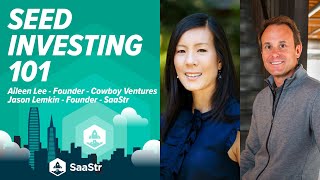
Aileen Lee and Jason Lemkin discuss seed investing during COVID-19. Cowboy Ventures writes checks of $500K to $1.5M from a $95M fund, with 75% focused on enterprise. They cover how founders should pitch, the role of cold email, and why geography matters less now.
Questions this video answers
$95 million.
Approximately $500k to $1.5M.
Roughly 75% enterprise, 25% consumer.
About 6 to 12 deals per year as a team (roughly 3–6 per partner).
Chapters
Founders what, how things really work, what it's really like. And not only is Aileen one of the investors that most of us, many of us all look up to, but she also. What's that?
Oh, God.
Well, we admire. But also she's very early in the micro VC trend. And we won't talk about it too much today, but when. But we will talk about a little bit. When Aileen founded Cowboy Ventures in 2020, 2012. Now, you open up TechCrunch or strictly VC or anything, you'll see a dozen firms a week, literally sometimes.
Right.
Five or six hundred since then. But back then you could probably count the seed firms on one hand or two hands.
Yeah. And I was not the earliest. We can talk about that.
But you were in the. Let's call you Gen1, even though, I mean at this new wave. And so I think it gives us a perspective that maybe we don't get in some other places in addition to many great investments over the years. So I thought we could talk about Willie, what's changed, what hasn't? And it's funny just to kind of kick it off, I'll tell you, we've heard two, and I want to. First of all, two things. We'll have some time. So I know I'm not always great at it, but put your questions in the Q and A and we'll answer as many as we can right in the zoom. Put them in. But what I want to do. Oh, I had forgot about this slide.
Hold on.
Just one. Take, pause. Sorry. I'll come back to this. I don't want to go out of order, but I did want to highlight one thank you. And whatnot. We've been doing these Saster events since 2015. The Saster annual Just a Funny Story. And you can learn a lot from people on how they act and treat people backstage. You can learn a lot from the CEOs that bail the last two weeks and how they quit. They say that they have other issues. Then you see them heliskiing on. There's one like that. Those ones, those are the unicorns that always fail. You can learn what founders think of VCs. I will tell you how many CEOs I've talked to that say I'll come to Sastra, but I don't want my series B or series C VC interviewing me, which is sort of interesting. And then you can learn about the people that are there for you. And this is maybe too nuanced for some of the folks here. And I want Aileen to do most of the talking. But we had to reschedule Saster annual this year, right. During COVID 19. It was terrible. And the last speaker I was talking to was Aileen and she was like, I'm coming, I'm here. We were going through these slides and not that many people are troopers and supportive. And so it sounds minor or technical, but if you want to do diligence on a human being, I get to do it a few hundred times a year. And to see someone that is supportive, even if it's something that seems minor, most people don't do it. Most people don't go the extra yard. So that meant a lot to me. And so it's another reason just to take their money as an aside.
Both of our money, actually, not just mine.
Jason's too, but it meant a lot to me. So I want to talk about this slide. I used it in my kind of like my breakfast pre warm up, like the crazy times we're in. But before we even get there, we had two talks today. I sat on all of them and I heard different opinions from Satya, from Homebrew. We just heard that seeds at an all time high, like people have to deploy money. Deals are getting done left and right. They've done like four or five deals since March and valuations are down a bit and the bar has gone up. But seed investors know they only get one bite of the apple. They can't do the A or the B if they miss the seat. So we heard in a way like an 11. Right. And then I asked Keith Raboy this morning how it's doing. He said seed is at 10% of what it was. So we hear 110 and 10. What's the. Just if you had to summarize and then I want to talk about the slide, just where are we on either a scale of 1 to 10 or a percentage basis, where is seed?
So I would say I don't know if I can put a number on it, but also, thank you for having me, Jason. Thank you for being and hi everyone. Thanks so much for coming to hang out with us. What I've been When Shelter In Place started, the conversation we've had internally on our team is like, we have to think of ourselves as like Navy Seals, right? Where we're like at basecamp right now and we're going to train and we're going to like work on our playbooks and do our research. And obviously our first priority was working with our portfolio companies. But if you've got like your investing Engine on and you're like rearing to go. It didn't feel like in February or March or April, April or May was really the time to deploy. Like, I have a feeling we will get super deployed, probably maybe end of summer, this fall and the winter. Because I think the, like, a lot of the people who are raising right now are still raising on ideas and plans that were pre Covid. And I think we need to give people time to adjust their plans and their mentalities. And also we also need to give folks time. Like folks have been laid off who have a little time to decompress and then they think about an idea and they spend the summer working on it and they're like kind of planning it out. And so maybe they'll come out and raise the fall. But I think if you look at historical recessions, at least in tech, those are some of the best times to be an investor and the best times to start a company that people are scrappier. They're really on a mission. They're clearly not going to get rich quick, and they attract really great hardworking people who are on the mission with them. And I think that's going to be an awesome time to invest. But I don't think we're quite there yet. So I've been like, personally, our team has been kind of holding back a little bit. We're taking a ton of meetings. But I think in terms of quality and the best time will probably be. It hasn't really started yet.
So let's just.
I don't know. What do you think about that?
Well, I don't know the answer. I think my view. I want to deepack your term deploy because it's an insider term. And I want to explain it to founders and folks what deploy means because it's not obvious. I want to hear more views. My views. I mean, first of all, March 15 today has been utterly exhausting on many levels. The rate of change, right? And I think whether it's doing portfolio triage or learning to take pitches over zoom or whatever people are doing, it's hard as human beings. We can only process so much change. And I feel like we've been through three worlds since like early March. And I think everyone needs some stability, whether it's good, bad, or ugly, or in the middle to survive. So I'm just trying to learn what I personally have seen in my little portfolio. And the founders I work with is what I call the COVID beneficiaries, the ones that have accelerated since March. I mean, it's what you see on the BVP cloud on the left, they're on fire. They are on fire. The ones that have grown faster. And I've seen, and I want to get your views on this, I've seen the folks that are the ones that are even growing a little bit less fast. Where you would think a VC should take a bet. Look, okay, let's say half your business sells to e commerce, but 20% sells to live events. Okay. We'll do the math in your head. You should still be growing, but growing more slowly. I see those folks struggling, which maybe isn't totally logical, but if you're a Covid beneficiary, it's like the money is there. At least from someone you've met. Yeah, at least from someone you've met, the money's there.
But these are also super. I mean, you were talking about growth stage companies where they've got strong product market, post revenue. Yeah. And they've got referenceable customers, they've got pipeline, they've got funnels. Like seed is just a totally different game. Right. So, but I think. Yeah, for. I mean, the cloud index is not even, you know, post revenue. Right. That's way post revenue. And so they're just way easier due diligence, I think.
So from. So let's just. I want to get your thoughts on this slide on the best of times and the worst of times. But when you say deploying capital, let's just for a minute, how big is your. I was going to tease on this in a later slide, but how big's your current fund?
95 million.
Okay, 95 million. And you have two GPS, right? You and Ted. So you have two partners and some one or two other investing.
Yeah, we've got two awesome. Other people on our team, Amanda and Jamira. Okay.
But roughly that means you and ted each have 50 million. It could vary, but it doesn't really matter. 50 million. How long before COVID were you planning to take to deploy that 50 million? Because that's what this deploy means. It means over a timeframe. Right?
Yeah. I mean, my version of deploy is kind of deploy capital, but kind of deploy yourself as an investor. Right. When you think about like there are sometimes on work, it's like super intense. Right. And then you have like a little beef to take advantage of the lulls. Because sometimes it gets super intense, whether you're an operator or you're an investor. Sometimes like when it rains, it pours. Right. Like there's just. You've got five really interesting companies and diligence in parallel. And you think they're all potentially things that you could invest in and founders that you really want to work with. And there's times that you're not really seeing things that you think are going to get there with like on either side. And I think probably it will be really intense this fall and in the winter in terms of great ideas, new waves. Now the one thing we don't have that's new is like, you know, some of the waves have been because there have been new platform shifts because of mobile or because of cloud or because of security or because of a bunch of other stuff. Like we don't, that's not clear what the next big tech platform shift opportunity is. So I think that will dampen kind of the intensity a little bit. But I think in terms of some investors feel anxious like I need to be writing checks all the time or I need to be making investments all the time. And I don't think that's true. You got to, sometimes it's slow and let it be slow and then sometimes it's like really fast and really intense and you've got a lot going on and that's when you make your investments and sign up to work with new.
Folks and you traditionally in normal and good times, there is a sort of very slow paced pressure as a vc, which is to do X deals a year. There's many types of pressure as time goes on. It's how many unicorns, what's your multiple, what's your dpi? But in the early days it's just if you don't do enough investments, you just can't make money. Right. If you do no investments. So, so and if you're, see, how many investments do you and Ted each do a year roughly? What's the target?
It's a wide range. Like we might do 6 to 12.
A year together as a team. Right. So each of you will do three to six. That's a classic seed portfolio. And then as you get, it's probably.
Actually a slower pace than I think. Like we're probably on a three, three and a half year fund cycle where we'll make our initial investments, whereas other funds are maybe on two years.
Got it. So that's why we have a few or less. Right?
Yeah, yeah.
And then later it's one to two.
Hopefully a quality not quantity kind of a.
And so usually what happens, let's say I'm, let's say I'm working at cowboy and I got, I'm supposed to do three or four a year and we're coming up on June and I've done none. I start to feel pressure, don't I? Even if no one says it totally, do you think that pressure is going to come back at the end of the year? And therefore when you talk about deployment, do you think folks want to do a lot of deals in the back half of the year because they'll feel the pressure to hit their quota?
It's very possible.
Okay, so let's talk about this slide for a minute. And you have a broad exposure. You have exposure to segments that are, I call Covid beneficiaries. You have exposure to segments that probably are heavily impacted. Right. How you get your arms around the fact that cloud stocks on the left are at an all time high and we're, we almost. And California is one of the worst economies in the western world. How do I, how are you thinking about this?
I mean the multiples that folks are trading at right now, like on the left hand, I don't totally understand it. I think it'll be interesting to see because also the numbers, like we don't have Q2 numbers yet. Right. Like when Q2 numbers come out for some folks they may be softer. Right. Because budgets were not really locked up for most of Q1. And so I mean I think if you are zoom, obviously or maybe an infrastructure, you probably won't see a lot of the budget freezes and the layoffs and your sponsor being laid off. But I think for a lot of vertical SaaS they'll see impacts when the Q2 numbers come out. And so that may change what this chart looks like. Maybe in July, August.
Yep. When you look at like Main street versus the cloud index, like what are you excited about today? More excited about E Commerce. I mean what especially non obvious things are you more excited?
Yeah, so I mean I think in a bunch of categories like health care, right. In distance learning and infrastructure. This recession, which super sucks for a lot of people, it is going to be an accelerator for tech, right. Because businesses are going to rely on technology and are also going to adopt technology faster. So it's like in health care, one of my friends who's a doctor says she feel like she, she fell asleep in 2020 and woke up in 2030 in terms of like the industry's willingness to adopt technology because it's been a fight and it needs to be adopting technology across the board. And so but now like they have to. And so I think for a lot of states and like regulatory agencies and businesses that have Been pushing back. Like they're to enable remote work, they're gonna have to change a lot of stuff and that's gonna take, that's gonna, A lot of investment's gonna happen in software. So it's not gonna be like if the question would be like, do you feel like we have too many unicorns? Like we are going to have more unicorns. There's no question in my mind. There's going to be more in the US and more in China and an increasing number in Latin America and in India and other markets that are really huge. Because this is like we're in a good sector. Tech is only going to get more important and more valuable.
So even if you feel the multiples on the left are a little aggressive, if you're bullish on unicorns, having coined the term, if you're bullish on unicorns, what does that mean overall for seed investing and venture investing? If folks feel good about unicorns, does that mean it should still be easier? There should be, there's room for many, many more startups. What does that mean for a founder?
Wait, hold on a second. I have kids in the background.
Bring them on.
Thanks.
Lunchtime.
Yeah, exactly. It's like lunch break at school. Wait, what was the question?
What does it mean? So we're in these weird times. The cloud shares are at all time high, NASDAQ's close, this crazy recession we're ever in. But you're bullish about unicorns, right? Unicorn generation, how does that inform your thinking in terms of types of investments, pace, valuations, anything? Does it inform you? Does it change your thing?
Yeah, no, I mean, I think, look, I was an AAB investor for 12 years and did some growth too. And I switched to seed partially, I think for personal reasons. I think it's a better fit for me and it's more fun. I'm really passionate about seed investing and, and there are lots of really good folks that we partner with at A and B and C and D who, they're really good at that. And this is the one thing that we want to focus on. We think it's also a great category for like, you know, you are getting in at the riskiest time where the valuations are lower, but there's way more upside. It's also more collaborative as, you know, like it's, you know, I had lots of friends in seed who were co investing with each other and helping each other build companies. Whereas at A and B and C, you generally, like, you can be friends with everyone in bc, but you have to beat all of them to win the A or the to be. And then you're carrying the, you know, you're carrying the water with the founders for the next decade as a lead board member and you don't get a ton of help from other people. So I really, I love SEED and I'm super excited about it.
So I want to dig into that next on the next point. But before you leave this slide, do you have any portfolio companies that have benefited from this time that you didn't expect? Like not that, not, you know, maybe even zoom. We didn't fully expect to be this big. Right. But are there any that folks could learn from? They're like, wow, I'm kind of surprised that one is a Covid beneficiary.
Not really a surprise. I guess probably one of the more notable companies that we work with is Guild Education. And I think because a lot of the folks that they work, they basically help hourly workers who work for big companies like Disney and Walmart get high school diplomas or college educations or get vocational training. And I think because there have been a lot of life layoffs in hourly workers, I think there could be a question about whether that was going to hurt a company like Guild. But it's turned out that a lot of enterprises who have furloughed work workers are suggesting that people who are furloughed use the time to actually get an education. It's also being used as an off boarding benefit. So we're really sorry we have to let you go, but we're going to help you get on a career path so you can get this benefit of trying to figure out where you're going to get your next job. So there's been a bunch of things that actually have helped accelerate Guild that I think could have been a question. And obviously just the fact that they built this incredible infrastructure for remote learning is great.
Yeah, it's an interesting one because on the one hand it's remote learning. Right. And very powerful. On the other hand it's a benefit. Right. At least you know the company much better than I do. But it's a benefit. That's where the budget comes from. That's why it's done well. But it's a benefit. And as soon as folks cut at traditional companies and cut people, you would think the benefits we've seen many folks in the benefits space be signi be exactly. Linearly impacted. Linearly impacted with layoffs. And it's just, it's natural.
Right.
It's like cutting back on rent Will cut back on benefits.
Totally, totally. So that was the one that was like, oh, it's like. But it's. So far it's going great.
That is interesting. What's your gut? What percent of startups you think are Covid beneficiaries? What's your, have you looked at it? Do you have a sense? What, what do you think?
I think unfortunately it's a pretty small. It's a small percentage benefiting. I'd say 10 to 15. I don't think it's 10.
15.
Yeah. What do you think?
I made up a number just based on a very limited data set. I think it's in SaaS, in cloud, if you define it that way, I think it's about 15 to 20%.
Yeah.
And it's more of the folks on the left than we would have thought. Right. Which maybe there's some learning from that. We knew Slack would benefit, but actually Atlassian's benefited much more than Slack. Right. There's, there's some. Did we know bill.com would benefit as much as Zoom? I don't know. If you didn't analyze its business model, you would, you would think that intuitively, right? Yeah, but I feel the question. And let's maybe transition to that. Let's assume it's 10 or 15 or 15 or 20. It's a big delta. But it's. But you're not saying it's single digits, right? There's. So no for the rest of the year or at least for the next quarter or two, would you only invest in Covid beneficiaries or would you invest in folks in heavily impacted industries? Like how are you thinking about that?
It's a spectrum. I don't think I'm going to be going to try and find a lot of travel startups right now, but I do think we're investors in a company called Homebase that basically sells SaaS for small medium sized businesses to do hourly work. Management, scheduling shifts, paying folks, giving them cash advances, communicating with the manager. Obviously the majority of the people who they were managing the shifts and the payments for who were working in February, they were not working in March or in April. But when businesses reopen, I think they are going to rely on technology more than ever before. Right. Some of the older businesses that were a little hesitant about technology, they may not reopen. And the people who start businesses in the next generation are going to be like, I need a full stack of modern software to run my business. So it's flexible and it's nimble and I Have good transparency, and I can do it from anywhere. And so they will adopt things like Homebase at a faster rate than businesses that have been around for 30 years. And so I think if you time it right, there's. I mean, you can basically ride the wave of all these businesses reopening.
And for your existing portfolio and new investments, can you model that? Do you think it. I mean, you have to have at least a position. Right? Is it 6 months? 12 months? They just announced today Disney World's gonna start to reopen. When will home base get back?
When is it gonna reopen? Is it gonna be, like six feet apart? And every other. Like, on the roller coaster. Every other.
Yeah, they're gonna stop the Shanghai processes. Attendance will be half. They won't. You can't. You can't hug a prince or a princess. And you have to get reservations.
Is the price gonna be double?
Well, that's a question for a lot of things down the road. If the price doesn't double, I mean, that's a restaurant question too, right? If the prices double, it all works. And, you know, obviously, Disney can carry a business for a little while. There's. Those are some of the scarier questions. Right. For our economy is, can we adapt to things. Can we adapt to Coachella when we're 20ft apart? I mean, I don't know. I don't know if Coachella, $4,000 a ticket works. Does it?
I know. No. But also, it was funny. I was in San Mateo County. I think they have a rule that camp. Some camps can open, but they have to. You have to sign up for four weeks at a time because they don't want kids in and out. But it's like that really disadvantages people who cannot afford four weeks of camp.
Oh, yeah, there's not good.
Yeah. There's a lot of challenges.
A lot of challenges. A lot of. And I think a lot of probably beyond the scope of what we get into today, but a lot of these. A lot of these flattening things, you might. And we can. We can talk about it in Deal Flow. Like, you might think some flattening helps less advantaged, but I don't know. Do you think pitching over zoom helps outsiders more? Do you think it helps the founder that didn't go to Stanford and didn't go to yc, or is it maybe not help as much as you think pitching?
I'm hopeful that. I mean, I think there's two things. There's the pitching, but there's also, where's the company going to Be based. Right? Like, that's all up in the air now. So before, I mean, look, when I was at Kleiner, I spent a year going, spending a lot of time in New York. There was a lot of stuff going on in New York. And when I came back and I was like, hey, I found all these cool companies like Mongo and Warby and Stack Overflow. And they were like, some partners are like, why are you wasting your time? No big companies are ever going to be built outside the Bay Area. Like, we clearly didn't teach you well. And same thing with HomeAway actually. Like, you know, it is the same thing. It's like, why are you wasting your time? And so things have changed a lot in the past 10 years. But I am hopeful that I was just on the phone with one of the CEOs we work with today who is in New York and they're moving to Denver. Just people are going to. I think over the summer people are going to be moving all over the place and trying to figure out how to run remote or partially distributed or clustered companies. I think that will advantage founders who are in different places and are not on the coasts.
I think it started like last week.
You think so?
I think that folks that live in San Francisco live founders and executives that live a crummy lifestyle in San Francisco in gross parts of the city that have sacrificed that maybe even have families. Right?
Yeah.
That have sacrificed a lot. Are looking around. I have several conversations I've had are looking around, like, what is the point of being in San Francisco today? I cannot visit Salesforce. I cannot visit Twilio. I cannot visit a customer. And I have a baby and a husband or a wife or significant other living in not just a small apartment, but a gross part of. I've traded off so much and I. Three people I know got in them, got packed up the minivan and left.
Totally. I agree. Like, we had another CEO that we worked with. They packed up their car and they rented an apartment or a house on a lake in South Carolina. They had never been there before. They'd never been to the town and they just drove there and they lived there for the past month and a half. And he's been so much more productive and so much happier. Like, there's a whole other thing we won't get into around mental health and all the. Like, you know, it's. Especially if you're by yourself in a small apartment. It's not. Not happy making.
Yep. And how do you think? Like, let's just. Maybe this is A not a good example. But when you invested in Guild, they were based in Denver, right?
No, they're based in Palo Alto.
I thought it was based in Denver.
They moved to Denver. It was funny because Rachel came to us and said like, hey, I know we just had a meeting and we discussed we need to hire a VP of engineering and a VP of product and a VP of marketing, but we also want to move the company to Denver. And we were like, what? We're like, how are we going to find those people in Denver? And she was like, trust me, there's some really good companies there and some tech like, you know, Facebook and Gusto are opening offices. It's a great place to live. I think I can get people from the east coast and the west coast to move to Denver because if you want a family or if you want to buy a house, it's a great. You want to send your kids to public school. It's a great place. And I want to build a company where people can have a family and have a good home life and have a great job. And I'm so glad that we're like, okay, do it because it's been, it was a really smart move and probably three or four years ahead of her time.
Yeah, it was. So she's built a unicorn now. Did you have. So let's, and let's compare today. Did you have any. I mean you had no choice, but did you have reservations? Did you try to talk her out of it?
I didn't try to talk, but I was like, are you sure? But I mean I think it gets a lot of the stuff on the slide, right? Which is we are seed. I would say half the time that we invest they haven't built a product yet. Like there's no technology. They need money to actually build software. And then half the time they built like some MVP. We do about. We're probably 75% enterprise, 25% consumer or generalists. We usually invest between 500k to one and a half million. We like to co lead or co anchor seed rounds with and we almost always co invest with other folks, angels and institutional seed folks like yourself. And so like at Guild they had basically had an idea for kind of reboot your career boot camps and they came up with a three hour boot camp and they posted it on Craigslist and they rented strip mall like vacant space and they were holding these free three hour boot camps and then they were like texting the people afterwards asking for. And then they charged 40 bucks and then 80 bucks but that's basically what they had when we invested. And so we definitely, you know, it doesn't have to be perfect at seed.
And so I want to make sure we hit the bullets on this slide. But so today, let's fast forward today. So four years ago when Rachel said, I'm moving to Denver to build my management team, and now that I understand kind of how raw the vision was in the beginning, I get it. Right. Because it wasn't technology heavy in the beginning, that's for sure. Right?
Yeah.
So I get it. But today, if I, if you do you. How you feeling? How are you feeling about not just New York or Denver, how are you feeling about Baton Rouge or Sioux Falls or Tampa or how does that strike you today? And what would. And for new deals and what would you advise founders that are thinking about leaving the Bay Area now?
Yeah, I mean, it's a better time than ever to both, you know, to start a company in a different part of the United States. People are going to have to be way more purposeful around culture building and about communication because it's still been a rarity to build a really successful scaled company without having like formative team members live and work in the same place and be next to each other. Like a lot of times we recommend like, for portfolio companies that are opening a second or third office, it's like, you know, you have people all in the headquarters and then you send out people who really understand the culture and have a lot of internal credibility and they start the new offices. In some cases, like I'm really curious is like, founders may start companies and they've never, they've never been in the same office when they start the company. Like when we hear pitches this fall, we're probably going to hear people who have like not seen each other.
Yes.
But like SVT Robotics is a company that is based in Virginia, Virginia beach, actually. And it's kind of like Mulesoft for warehouse robotics, for integrating. Like, you know, if you've got a third party robotic arm and you want to integrate it with your conveyor belt or your wms, you'll use SVT instead of writing custom code. The founders know warehouses and they know warehouse automation really well. And they've lived in Ohio and Pennsylvania and Virginia and like all the places where warehouses are. And so. And we're super psyched to be investors in that company and we'd love to find more like them.
So just. That's a good. Those are all really interesting examples today. If you met with a startup and Again, you're doing seed, so it's early, but it's the kind of company that clearly could benefit in a year or two from some Salesforce alums or box alums or Twilio alums. They're doing a classic playbook and they want to move to Arkansas or Ohio or Bismarck. Would you, is that, is that a no? In this flattened world, in this distributed world, do you think you can get VPs to join a company, Bay Area style VPs to join non Bay Area companies in 2020? Do you think that'll change?
I think we can do it. I mean, we. You know, it's funny, at Textio, another company that I work with which is based in Seattle, we tried hard to make the whole team Seattle based. And we're doing our head of revenue search. We just, we said like, you know, maybe we should open it up and look at people who are not based in Seattle. And we found a great person who's based in the Bay Area. And we, I mean at the time we had a deal where he was going to spend a week or two in Seattle a month and then a week or two at home or on the road. And so we're fortunate that we had that time together before we wound up going to shelter in place. But like it works and he's a huge part of the team and they're making it work. So I think we're all learning, fortunately or we have been learning over the past couple years how to make kind of commuter style jobs work and distributed team work, which is a good warmup for the next three years we're about to live through.
Yeah, yeah. I think this, the thing for, I think for, especially for B2B in the next couple months to watch is can we flatten management teams?
Yeah.
Cannot just the Gitlabs and the Zapiers, but can ordinary company can barrier type executives, whether they're based in the Bay Area, literally or in New York. But folks that come out of the traditional folks where we poach, I mean once you scale, you want to hire someone that's done it before. You really do. I mean, everyone that runs Salesforce today came from Oracle and everyone that runs Twilio came from Salesforce. There's a reason. And if folks in Virginia beach or wherever it is can hire these folks now as easily, it changes everything, doesn't it?
Well, I mean we have like internally at Cowboy, we have like every other week we have scenario planning time where we just kind of think about like, okay, what if this is 24 months. What if this is 36 months? What if, like, what if nobody can get on a plane until summer of 2021 and earliest from a sales perspective, like, how is that going to change sales? How's that going to change marketing? Like the fact that a lot of our portfolio comes in enterprise. They got a lot of sales done or relationship building done around conferences. Right.
Whether it's cube, often 40% it turns out.
Yeah, like 40% HR tech, Cubecon, whatever it is. Like, you know, you may not have been spending a lot of money getting a booth, but like you were hosting dinners, you were meeting up with people and like when that doesn't happen, how is that going to change sales? I think it's going to be for. And maybe that's going to be better for startups because having a lot of money to buy people expensive dinners is not going to be as important. That and like maybe. And it sounds like Covid has for at least in the folks that we've been talking to the past couple of weeks, like it's a now a common bond. Like you make small talk over Zoom for five or 10 minutes about like what's been hard or how the family ties been good or whatever. Then you get right into the sale process and the customer on the other end is like, this sounds really good. I need this, let's do it. So in some ways it's more efficient, but we're staying really close to it.
Yeah. For what it's worth. And I want to talk about how you're sourcing deals now, but my personal view, just for the conversation, is I actually think this selling over Zoom, at least for now, is substantially benefiting folks with brands. Because if I don't know you yet and I can actually meet the CEO and a meeting counts over Zoom, don't get me wrong, but we're all taking more vendor risk. We're taking more investment risk. More risk just has to be taken in the shelter world. And it's comforting to know it's box. It's comforting to know Unicorn now. Like I'll trust maybe Guild is as great as Schmild or whatever. I don't know. But I don't want to do. I don't want to really like if there's risk during discovery. Maybe I don't want to take risk today. Now if you're the only vendor in a space, it's different. Right. If you're the notion or tandem. But I wonder if one of the reasons these cloud stocks are going to keep growing is because people don't want to take. They'll just. I'll just stick with Jira.
I kind of worry a little bit about whether we'll move into this. Like nobody ever got fired for buying IBM for buying certain brands. And I do think like if you are a seed stage founder who is listening to this right now or you're pre seed or your like, you know, if you're not a brand, it's going to be hard to make new sales I think in the next two or three quarters at a minimum. And so, but so being willing to give your product away for free or like changing the packaging so that it's like virtually free for the next six months and then people pay for it, but getting people to use it and showing that it's super valuable and so that when people have budgets again, they'll buy, they'll pay for it and that's referenceable. I think for a lot of seed stage companies that's the thing to do because it's really hard to get new budget even if you're an existing brand. But as a new brand it's even harder.
It is harder. Yeah. It is a fun topic we could dig into, but we can if you want. But tell me on this, like, yeah, first I want to talk about how you find deals and how founders can pitch you.
Yep.
But just the micro topics. Say in today's world, I know you're slowing down a little bit to learn. Right. But how are you feeling about being pitched on zoom? What's your personal view of not meeting in real Life? What's your 1 to 10?
It is, I think it's a bummer on both sides. Right. I mean the benefit is things have been so hot that the velocity of decision making and relationship building was, I think, untenable. You know, we're like, you know, founders were like optimizing for getting it done fast. And I think in many cases they weren't really getting to know the people that they were getting married to. And like, because once you get people on your cap table, you cannot get them off.
Never.
And so I was really bummed about how fast the process was happening where we weren't really having a chance to get to know people and they weren't really getting to know who they were taking onto their cap table. So I think this will actually be better in terms of giving people. And then I guess we have this. We were thinking about when we moved into children place, like, okay, how are we going to get to know people? And we already had a diligence Process, but kind of in marketing, in old fashioned marketing. I don't know if you remember like the four P's of like, you know, there was price, place, promotion and product. Right. And so I was thinking about, okay, we have our own like four P's that we generally try and figure out. And so our four Ps are people, product potential and plan.
Okay.
So when we're like, we'll say to someone, you know, if we kind of have a first meeting and we think it's interesting and they like us, we'll be like, okay, we have this thing like we're not gonna probably get to meet face to face. So we want to get to know you over a course of meetings and maybe some of the dinners or something like that where we're like, we want to get to know the people, like where you came from, what you've done before, what you've learned, what you think of, your strengths and weaknesses, your self awareness, like where you want to be complimented, what kind of a team you want to build. And then on the product, obviously like, you know, really understanding both what's there or the vision for the product, competitive landscape, differentiation, how much better it is, the potential, like what could this become? Right, Both. How big is the market and like if we're really successful, what are we building? And then the plan, like how much do you want to raise, Valuation range, what are we going to get done during the seed period, who do you need to hire, all that stuff. And so basically just going through those four things is our way of getting to know each other. And I think that's probably going to be the way we do it for the rest of the year.
So more time, like more time can balance out the lack of the ability to schmooze in person.
Yeah, I think it might in a way be better. I mean obviously in person's better, but I think a slowing and I also think, you know, the velocity and optimizing for speed and just like low overhead check. I don't. I think there are plenty of founders who will tell other founders that that was a mistake. And I think this downturn is hopefully going to give people pause around. There's going to be a lot of shitty ups and downs and I want to be careful about who's going to be helpful to me in a time of a lot of uncertainty.
Yeah. And this morning the first speaker, I don't know if you know, Christophe Jantz from Point Nine Capital.
Hold on one second. Sorry, I can't tell the kids we're.
At the lunch session. I don't know if you know kusoft jans from 0.9.
I don't.
He's great. His first angel investment, he was the first angel into Zendesk after he was a CEO and then he started doing SaaS really in the beginning and we kind of became SaaS content buddies before we co invested. And he's done half his investments remote since then because he's in Berlin so he couldn't always get on a plane and for an angel or seed deal. And his advice, he had a great because he is a veteran although you know, never, never none of us foresaw shelter. But his point was it's like anything in sales but make it easier. So his point was have the best diligence together, have the references built, do a video, have the best email pitch, have a. If you weren't going to build the deal room, build a deal room. If folks need more time, bake it in and just turbocharged the amount of disclosure and transparency you would have to make up for the kind of informal type decisions people were making in those high velocity device.
Yep, good. I like it.
Okay on this just for so just so folks understand. So how do, how do you find just some insider stuff to help folks learn. How do you find deals and how do founders pitch you? Like maybe a few case studies from some last deals. How did they find you? How did you discover?
Yeah, we get a ton of referrals from angels, from co investors who we want to work with, from founders, from folks that we know. Like I think Ted and I, you know, I've been doing this for 20 years. Ted's been in tech for 20 years too. And so we do have like we like to say hopefully when you work with us you're going to get like really experienced, thoughtful, patient, supportive advice with a huge Rolodex.
Yep.
And so we get a lot. But also you know, you and I are both super passionate about using our privilege to try and make tech more equitable and less bro tastic. So you know I've been told that, you know, the need for the warm intro really disadvantages a lot of people and so we don't we read all of our inbound so you can email helloowoy vc. Someone will read it and we will if it's potentially a fit we will get back to you. You don't have to get referred to pitch us.
So let's break that down for just a second. So if you had a pie chart, number one source of deals you do Is referrals. Warm referrals. Right. For better. Mostly for better. But for better or worse. Right. They do have some bias and issues associated with them, but the inbound. So the inbound is. Sorry, it's HelloBoyventures.com.
Hello@Cowboy VC.
Yeah, I got to get this one right, folks.
Layer it on top of you.
Hello. Well, it's probably on the website too, right?
It is helloowoy vc.
If that email is good. If it's good. If it's. Dear Cowboy, we're the team that built the top product at Square. We're pre revenue, but we have 10 beta customers, all of whom said we're changing the way finance works. Here's where we come from. Here's who we know. Here's our friends. Is that email? What are the odds that email gets read and how. Seriously, I'm just 100% gonna get read. 100. So let's stop.
100% gonna get read. Yes.
Right. I can't find you. I can't track you down. I met you at a conference. But that email's gonna. This is things founders don't get. That great email is gonna get read, isn't it?
Even a crappy email is gonna get read.
Even a crappy email is gonna get read.
Like, even Dear sir gets ready.
Okay, but the good one, if you liked what I just wrote. Right?
Yeah.
What are the odds someone's gonna read a deck that's attached? And what are the odds I'm gonna get at least a zoom?
I mean, that email you described is probably 100% gonna get read.
100%.
95% gonna get a, hey, let's have a meeting. Or, like, let's set up a call.
What percent of emails that come to Hoy VC are great like that? What percent of these emails are great?
Not that many. I mean, we also, I would say we only invest in the US and we get some from different countries, and that's a. You know, like that. Unfortunately, we just don't invest outside the U.S. but, you know, it's. When I was at Kleiner, this is before email was really how we got most pitches. Like, people would mail business plans and pitch decks, and the EAs would put them in folders and put them into giant LL Bean bags and just, like, drop them off of my office. And I would go home every night and, like, basically order Chinese food and read business plans every night.
You're like a script reader.
Oh, I was. You know, I was single. My girlfriends were making fun. They're like, should we Buy you cats now or later? Like basically this is my life is just like reading business plans and. But the business plan for Bloom Energy was a cold inbound from professor of space technologies at University of Arizona. And at the time, like we had heard about fuel cells and we knew that there was different kinds of fuel cells and we were kind of getting interested in alternative energy and green and it seemed, he seemed interesting and so I wrote him and I was like, hey, I got your business plan. Like do you want to do a call? And so like, you know, Bloom is a public company now and it was a cold inbound.
Cold inbound. And so let's just finish because I think this is, it's not perfect, but it does flatten a bit. These emails are going to get read.
Are you really surprised by this? You sound surprised.
No, no, no, I'm not surprised. I think founders are surprised and I want to talk about how to hack it because so much of the advice you get on the Internet, the fact that warm referrals are your number one source and that a great cold email would get read just seems inconsistent to people. Right. I'll actually, I'm happy to share some personal stories. I even published two cold emails that I funded, one of which crossed 100x. It's the best made. It's 100x on a double digit ownership cold email. And it was an outsider. It was like there are advantages to being an outsider, right? You don't know, you don't do as much diligence. You don't have to have gone to Stanford and have done the perfect thing. But I think founders are surprised that, that investors are so busy. They'll see you on social media, they'll see you traveling, they'll see that you have 20 portfolio companies. Right. And they'll be like, how could I get cowboys attention? But the reality is there's only so many great deals a year, right? And it's sales for founders and it's sales for VCs. And if the pitch is amazing, the cold email works. Email is profound and yet people don't spend enough time on it. They ask you for coffee. I saw you talk on stage. Can we get together sometime and talk? What are the odds you're going to get coffee, right?
Yeah. Too much coffee.
Too much coffee, right?
Yeah. Or can I pick your brain? That's one of my.
Can I pick your brain? I have an idea. Can I pick your brain?
Right.
I think the best founders figure that out, but the earlier stage it is, the less they figure it out. The less they know. And I think if you write the world's best email and it has to be real, it be, has to, it can't be imaginary. But if you even have some hints of excellence, it's going to get read, isn't it?
Yeah, yeah, yeah. But I mean I do think like for years I was kind of fighting the we'll read everything just because I felt like it was the mark of a good founder that knows how to hustle and is a relationship builder and is like a talent magnet that a good founder knows how to somehow get it started like, you know, cold email someone you and be like, hey Jason, I really admire you. I like this thing that you wrote. I'd love to talk to you about this thing. And then you don't. They didn't know you but all of a sudden now you know them and then you introduce them to someone and they introduce you and then like before you know it, the person's kind of kick started a network of relationships that can be helpful to her or him. And I do think that's a really valuable skill. So, you know, so for years I was like, well, if a founder can't figure out how to get some credible person with some venture capital universe, some founder cred, someone who's the VP of engineering at a decent company or someone who's a product manager, decent company, who knows, a venture capitalist, maybe it's going to be harder for them to recruit people or sell customers. But I've kind of let go of that because I think Seed is a really raw stage and I've seen founders change over the course of 10 years from where they start to hopefully being a unicorn founder that's managing thousands of people and people change.
Yeah, I used to think that. I used to think I came up with a simple bar which is a founder that was better than me with more going for them can build a unicorn. And so I felt like if you couldn't penetrate, if you couldn't be that aggressive founder that found their way through the door literally by email, physically showing up the cowboy, whatever it is, if you weren't that person, you weren't aggressive enough to build something big and what I've still done, anyone that wants to talk to me, if they want to talk to me about community or Saster in general, there's a million ways to reach you. If they want to reach me about investing, I used to always say, well, find my email. You can't find my email somewhere. What's your email, Jason? No, like, I mean how are you going to sell Procter and Gamble or Google if you can't figure out a prospect's email?
Yeah. And it's also in a way like if you're in the consumer space you can be an introvert and just an awesome product person. Especially if your product has network effects. You can not be able to talk and you can build a huge company in the enterprise space. I think it's a little more important that you can talk.
I think it is. I will say for what it's worth, I don't like you said you read more of the emails today I realized that while that is it's too tight a noose, it's too much of a forcing function, there are other ways to build traction. You can build an incredibly developer centric product and build a community.
Exactly. Yeah. Like yes.
Even if you're not good at things. And so if you require that almost alpha esque put your boot through the door. There's a lot of privilege and other issues but you're also going to miss people. I think totally.
I think that's totally true. And I mean some of my. I have so many lessons learned about companies that I've passed on that I shouldn't have. But like I've learned that early on in the process. I have to figure out or just ask the person if they are more of an extrovert or an introvert. If they're an introvert. We just, we have a different conversation. Yep.
All right. We're going to run out of time.
I know we have like so many questions and we can talk about.
No, I know we can do them later if you have the energy. But let me just pick a couple because some are tactical. Interesting. This one's super tactical. But I think it is actually helpful. One attendee asks who would you look for for references? Talk just a minute about references. What if you don't have great references? Is that a gating item for folks that come out of. Come out of nowhere? How important are. Especially if yours are funky.
I think it's important especially now like you said that it's people that you've worked with or worked for, people who've worked for you. People have been your boss. Like we recently did diligence on a company and the founder gave us references and gave us their friends. That was not helpful.
I used to think that was a no.
I think it was close to a no.
Like such a fail.
But I don't know. Today we're very, you know, I think as a, as a person like an immigrant person who has in many ways been underestimated in many different ways in different situations. I have a lot of empathy for being underestimated and for giving people chances. And you know, at series B, you got to know this shit. But like at seed, if you don't, if you never raised money before, sometimes there's stuff that someone tells you and then you're like, oh, duh, yeah, I get it. And then they move on. So it's not a no for me. But yeah, I was like, hey, don't give me your friends. I don't really want to know what your friends think of you. I want to know what you're like to work with.
Yeah, this one's interesting because it's not necessarily obvious. This says, when you invest seed or pre seed, what do you expect MRR will be in three to six months? It's actually not a silly question because you're not the only VC. You're betting that someone in the next 12 to 24 months is going to write a check at two to five times the price you did. So what does that have to mean in terms of the window in which you can invest?
In terms of growth, especially right now, that is a really tricky one. Right. Because let's say if you're going to like, we're basically recommending to. In March, we recommend to all of our portfolio companies to basically plan, like come up with a bunch of plans so that ideally you have money to get you into 22. 2022.
Yes.
So either raise money right away or you're going to do some cuts. Because assume that Q2, Q3, Q4 are going to be really hard for new sales and that maybe things will pick up in Q1, but maybe not. Maybe they won't pick up until Q3 next year. And so you're going to be going out to raise your A if you're seed on potentially not a lot of revenue growth, especially if you have to go out in the first half of 2021. And so I think depending on what the product is that you're selling and what business you're in, are there other metrics that you can show around customer engagement and customer use or value? Because otherwise you're going to be competing against people who are starting from scratch in March or in June who are like, I have no traction, but I just started this thing.
That's a tough thing. Right. It's like folks graduating from college this year.
Yep.
It may be a lost generation compared to next year. What I hope not I know, but, but this may be a year where they don't get to go through traditional recruiting processes and are impacted. And you're like, well, there's next year. But by next year there's another. Yeah, they're going to be 50,000 seniors graduating from great colleges and you're in this weird phase.
And the other thing we didn't get to. I know it was one of your questions was just like, you know, there's so many funds and this is. And that there are multi stage funds. Right. Like when you look at venture capital, there's a whole, there's a whole thing going on about how many funds there are and how many seed funds there are. But the other thing that we, I feel like we don't talk about enough is how many gigantic funds there are and how much of the money is in multi stage funds. That each fund is bigger than $500 million.
Yes.
And so how that changes the ecosystem in terms of when you put someone on your cap table. We co invest with multi stage funds all the time and we partner with them all the time, but you have to be really savvy about when you do take one of those folks on or multiples of them onto your cap table and onto your board. It's a different ballgame in terms of their incentives and their portfolios and the size checks they want to write and versus like us, you know, simple seed people.
Yeah. I think for each big fund on the cap table you need to create one to two billion dollars in exit value. So once you have like four or five of those big names, you're kind of committing to a deck of corn.
Yeah, exactly. And that reality is like, I mean, Thomas Duncan published a thing recently about like, I think you're 26 times more likely to be acquired than to go public. You know, and so the reality is it's, I mean people can joke about how many unicorns there are, but it's still extremely hard to build a million dollar company.
It is. Have you. You know, I keep waiting for your TechCrunch article number three, the third one. Did you?
I haven't, no. Actually it's funny because I have. Now that we have a little bit more time at home, I've gotten back to it actually to kind of like get up to speed on the new set and to try and learn where they came from and all that stuff and how it's different than the original set.
I think it's time.
I mean, I think I'm working on it. I'm a really Slow writer.
Those were. The first one was like, this is probably the last thing we'll have to chat about, so maybe it's a little off topic, but I think it's helpful. I think the first one was one of the best pieces of venture content marketing ever. Right. Which was probably part of the goal, right?
No, it was completely an accident.
It was an accident.
Totally. Like, I did not think anyone was gonna read it at all. Oh, my God. I worked on it for months just for myself, just because I had this funds.
No one had ever assembled that type of data. Now there's analysts and everyone firms does it, but no one had ever seen that. Whenever. The first one was 2014 or something like that.
2013. Yeah, I just. I did it for myself just because I had this new fund and I was like, what should I invest? Like, if I had to do an analysis of, like, the most successful companies of the past decade, what would they have in common? So I could try and look for those for the next set? And then there was all this stuff that came out of it. I was like, oh, I actually think this would be useful for founders and for investors for a bunch of different reasons. And so I published it, but I gave it to some friends to read it. I actually was on the way back from the lobby conference and I gave it to a couple people on the plane to read it. I was like, hey, I'm thinking about publishing this blog post. What do you think? And they were like, it's okay. Nobody even said, like, wow, this is really great. Or like, this is going to become a thing. And so it was a big surprise.
Yeah.
The second day to bring it full circle. When I published it, I was at Disney World. I was at Disneyland with my family. The day that it went up, the Saturday morning it went up. And like, so I'm like, online for rides. And I was like, jason, my husband's invitation. I was like, oh, my God. People are like, liking this and sharing this. It's so crazy. And he's like, hey, we're at Disneyland. Like, focus. And I'm like, you don't understand. Like, people are actually reading this thing.
It's funny. Speak from. I mean, it's the great lesson of all writing. Speak for what you're passionate about. You're passionate because you had to learn how to deploy the fund. So this was your homework and you forced yourself to distill all that work into an article because it was your investment thesis. This was your investment thesis. A piece of it.
So, I mean, our industry is huge. Right. It manages almost like $500 billion. And there was so little data or analysis on our industry. Like, no transparency of, like. I mean, there's not even in universities. There's no professor on the history of technology who, like, studies the history of the technology business and all the forks in the road of companies. If you did A instead of B, what happened to the company? I just think it's fascinating.
It is. All right, we're out of time. I'd like to do all these questions. Maybe if you're bored. If you're bored someday, let me know. We'll do them again on Zoom and answer them together. I have time.
Yeah. Okay.
The third article on TechCrunch. It's okay if it takes a while. I've been waiting for a few years, so that's.
Oh, you're so nice. Thank you.
All right. Thank you for doing this. This was great, and we'll talk to you soon.
Thanks, everybody.










