Smooth Scaling: 3 Female Tech CEOs. Lessons on How to Scale Faster, Better & Farther
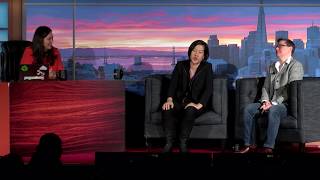
Panel discussion (SaaStr, Mar 2018) hosted by Jennifer Tejada (PagerDuty) with Michelle Feaster (UserMind) and Amy Chang. The conversation covers leadership changes during rapid scale, delegation vs. ownership, hiring and culture, fundraising and capital management, board and advisory relationships, and candid operational mistakes and lessons learned (incident leadership, hiring missteps). The tone is practical, experience-driven, and peer-advisory.
Chapters
Please welcome jennifer tejada, CEO of pagerduty.
Michelle feaster, CEO of usermind and amy chang, founder of a company.
All right, good morning. Wow, are you guys alive? Good morning. Oh, much better. What a good looking crowd here at saaster. Well, welcome. Thank you for joining us. It's the first time I've had a sitting room only audience. This is awesome. I hope you guys are comfortable. As mentioned, I'm Jennifer Tejada. I am very fortunate to be the CEO of PagerDuty. PagerDuty is a late stage startup backed by Entries and Horowitz, Bessemer and Excel partners. We're about 400 people based here in San Francisco as well as in Toronto, London, Sydney and a few other various places around the world. And we basically are a digital operations management platform. We started about eight, nine years ago as an alerting and notification solution for the DevOps community and are fast becoming the platform for action for digital enterprises as as consumers drag us into a truly real time world. So I am really excited today to be joined by two wonderful guests. We were talking on the way in and we think we have 30% of all female enterprise SaaS CEOs in the world right here. And I'm hoping that there's more in the audience. Yeah, right. So I'm going to let Amy and Michelle both introduce themselves. Welcome ladies.
Thanks. Amy Chang, CEO and founder of a company. We are basically enterprise grade LinkedIn. So think of the data platform that they shut off with their API a few years back. We've got that for the enterprise use case. So prospecting, relationship management, all that and about six months ago it became self automated and self learning. So that was the exciting part. I my formative years were spent at Google running and growing Google Analytics. So we grew up from about 1% to about 70% of the web which was a really fun scale up. And before that eBay and McKinsey and an electrical engineer by trading. So I also serve on the boards of Procter Gamble and Cisco. So if we have questions on board.
So not very slow.
So you talk about that.
Yeah.
Wow, Michelle, how do I get to be on that board?
Well, we could talk about that one of these days.
So. Hi guys, I'm Michelle Pfister, founder and CEO of UserMind. We're a modern integration platform to transform customer experience. Our investors are Andreessen, that's how Jed and I know each other and we've raised almost $50 million, about 50 people and we're getting ready for our growth scale. So my Life story. I'm a product nerd. That's what I've been doing enterprise software for 20 years. My passion is interviewing customers and building software to help them. So really passionate about that. And I spent my time in all enterprise software companies. So I was at a company called Mercury Interactive for almost a decade. I led the Opsware acquisition, which is how I know all the Andreessen guys. And then my last startup was a company called Aptio and I was really blessed to be there from employee 16 to about 600. And then I left to found my own company. So, so super excited to be here with you guys today.
So between the three of us, I think we've seen every asset class. We've screwed up just about every function that you can and learn from it. And one of the things I love about Sasser and the reason I've been super supportive of this platform is I think it's a great opportunity for all of us to not have to learn everything the hard way. We hope that today we can spend a little time talking about some of the lessons that we've learned as leaderships at different levels of scale in a business from zero to public, and in my case, from public to private. And it was sort of seen every investment cycle as well. And we basically decided this was just be a fun way to get together and have a good time and hopefully you'll enjoy it too. So first I'd like to talk a little bit about how leadership has to change as you scale. So in my case, this is the second time I've been a CEO and before that I was a COO. When I joined PagerDuty, we were about 150, 60 people 18 months ago. We're close to 400 now. It's a very different company almost every six months as you're scaling. I used to sort of know everybody's name and know what their job was, and now I'm doing like security badge checks at the front door of offices to see if people are coming in to steal the laptops. And what you also learn is your leadership style even sometimes has to change to accommodate the size of the organization. So big decisions, important communication can get done in a room, in a huddle one day and the next day you're trying to figure out what time to host town hall so that everybody's awake when it happens right as you go through global expansion. So one of the things that I think is challenging as you're building out a leadership team is figuring out what decisions you have to Be really involved in and which decisions you delegate, how much guidance do you need to provide? What are you doing versus what are you leading? So if each of you would talk a little bit about your journey there, that'd be awesome.
Sure, yeah. So I mean, I agree. I tell all my team growth is like rings of a tree and you have to be really conscious when you're passing through to a new ring of the tree. And one of the big things I've had to focus on is when I founded the company, I mean even up to 20 people, I made every decision in the company. I mean every product feature, every customer meeting, every. And I had all the context. And so one of the questions I ask myself now is like who has the most information to make the decision? And that's really how I look at if my CRO is in all the deals and knows all the deals, then he needs to be empowered to make all of the decisions about those deals. And that's changing dramatically. We're actually at the point now where even my leadership team is now needing to delegate a significant set of our decisions to the next level managers and directors, which is kind of an interesting thing to see us go through. The other thing I would say is I always have one or two things I don't know about you. Both that I'm microing in the company. So I always, and I'm explicit with my team that these are things that I'm either concerned about or very focused on. You know, right now in the company, we're starting a SWAT team to attack a vertical. And I've been very explicit with everybody. I'm leading that SWAT team. I'm personally going to drive that topic. So when I do decide to go deep, I try to be really clear with the company so no one's confused that these are things I feel we have to solve and own and drive personally.
Yeah. And to that end, there's a concept that has been insanely helpful for me and it's the concept of commander's intent. Right. So once you move from the number of people in the room, being able to kind of talk to each other to 40, 100, et cetera. Right. Everybody has to be crystal clear on what's the intent for this next two week period, this next four week period. What hill are we taking together? Because once you get out onto the battlefield, everything kind of conditions change minute by minute or day by day. Right. So you want people to know, okay, that's the hill we're taking now. The decisions I'm making How do they get us there or not get us there. But they're able to have the autonomy and the agency to make those decisions on a daily basis when you can't be there to answer questions and you shouldn't be there to answer kind of every question for every meeting. Right. So that concept I find has been extremely helpful. The other thing that's been interesting to me, being a product person myself, I think the person who is running the function in your company that you know best, whether you're an engineer or a product person or a salesperson, when somebody else has to step in and start making those macro decisions because you as CEO, like I have to go close seven figure deals now. That's my job for the company for the next two months. Right. Is to close enterprise sales. So I got to step back and I have to let her step forward. And that's been a huge challenge for me from an identity standpoint, from a, oh, I don't want to step on her toes or certain things are opinion, they're not, they're not fact. And it's unclear how they're going to turn out if you make a decision one way versus the other. So letting her have that space to make her decisions and to do it her way has been a challenge for me, but has been fantastic for both of us.
The good news is, as a CEO or a founder, there are no shortage of things that you can't delegate. And there's no shortage of stuff to do because everything, every time you think you have everything under control, something blows up in your face. I mean, that's just the nature of the beast. One of the things that I don't believe I can delegate as a leader is culture. Culture is not the job of HR or people. Talent and vibe culture starts at the top. Just like the fish stinks from the head. Right? And I think that if you just remember that genderhadism, get promoted or fired, that's the exit for the CEO, nowhere to get promoted. So I guess it's fired. I think it's really important that you demand from the top what kind of culture you expect. And I've said this many times in public before, culture is defined by the lowest level of behavior you are willing to accept, not the highest standard that you set by the organization. So if you delegate culture to your team, as opposed to delegate the expectation and managing those expectations, you aren't going to get where you need to go as quickly and the cracks will start to show. Are there other areas where you really feel like at Your stage in a startup, you just absolutely can't delegate.
I think the hiring decisions and the culture are interrelated. So you may not be able to interview every hire, but being very clear on what you will hire and fire for and the culture being clear enough to where there's some grit to it, it's not all rainbows and unicorns, right. But there's. It should repel the wrong people and attract the right people. And I think Reed Hastings whole hundred page pack that he published like 8 years ago still holds, holds very, very true there. Where it's got to be defined and crisp enough to where. So our number one value and apologies for the cursing is no assholes.
Right?
Because even if you're really, really smart, we don't want to work with assholes. We just don't. And so we have to hire.
You want to work with assholes, Nobody.
There's compromises, right? Someone's crazy smart. You're tempted because you're like, ah, maybe, you know, maybe it'll work out. Yeah.
So what about fundraising? You just raised around, can you delegate the fundraising?
No, you can't delegate to fundraising. Actually this is the first round. I even included other people from my team. I've historically done all my rounds solo because I wanted to control the relationship and control the information and kind of own the narrative for the company. So that was kind of an interesting thing for me. A thing I'm really passionate about is the financial plan of the company. So we have a lot of discussions in my leadership team about do we want to approve incremental heads in engineering or to product or we just opened Europe, so how many people are we putting there? And I feel really, really passionately that I don't delegate the trade offs and the plan because when you look at burn and top line revenue, it's basically the life of your company. And the number one thing we have to manage, or at least I feel strongly that I have to manage, is how long do we have before we raise the next round. And I think it's a thing I didn't do passionately enough when I raised my first round. I feel like I didn't know how important being just rigorous and clear about that was. And so I learning the hard way, we debate it and I take input, but no one can approve a change to the plan without me being involved. So I feel really strongly about that.
And as you grow, you start thinking about capital management a little differently. You think about how long do we have before we have control of our own destiny. And we don't need cash from others. We can run on our own fuel, run on our own steam. And I think that's really important discussion for leadership teams to have. Like, what's your philosophy on how much capital you think you need, what the balance is between growth and path to profitability. Some of you may be bootstrapped and thinking about, you know, what do we need to drive expansion? How fast could we grow? These are really important questions. And one of the things that I've experienced as a repeat CEO is as soon as you think you know everything you need to know, you screwed up. Like, you have to constantly be open to learning and apply this kind of learn it all mindset, as opposed to a know it all mindset. In our case, most of our employees, I think almost all of our employees are a lot younger than I am. They're teaching me new things every day. I have not done the job of my target customer. So I'm learning a lot about that Persona and what that means. We're inventing a new SaaS revenue motion. We have a kind of a unique business in the.
In that regard.
It doesn't look like any other enterprise software company. So in some cases, I've had to help my leadership team unlearn things that they know, wisdom that they bring to the table. What have you had to help your leadership team learn as you've grown, as.
You scaled every Monday? Okay, so my co founder and CTO has this great saying. He's like, the whole point is when you wake up on Monday morning, you have no idea what the frick you will have had to learn by Friday. And that is the most exciting thing, because every single week, there is something you will not have known how to do. Right? And that's kind of the point. And we. So there's all kinds of stuff. A lot of us are Google people, right? So we're more consumer side. So all of the enterprise pieces, we are learning as we go. And we're lucky because the Cisco folks have been very helpful and your folks have been very helpful. But yeah, and every single Monday, we wake up and we kind of go, okay, this week, this is what we need to know. This is how we're gonna go get that knowledge, whether we're gonna read it, we're gonna experiment into it, or we're gonna talk to people who've already done it two, three times before, and we're gonna grab time with them and we're gonna get it done.
Talk about exemplifying a growth mindset. I Met amy and like 11 minutes later she said, can I bring my.
Team to your office and spy on.
Your sales people all day long? Market research. Who's gonna say no to that? Like, oh, okay. Some of the salespeople that help helped Amy out her here today. And I recently called Michelle for some advice on something very product specific because she is a bonafide product. She calls herself a nerd expert. Right. And yeah, I've run product before, but I don't know everything there is to know. And so a big, big help for me as a leader has been seeing other people not be afraid to ask me for help. Enables me to feel confident about asking other people for help. And when you get asked for help, like, who said. Who really says no to that? Like, you want to be helpful generally. Right.
Well, one of the most interesting dynamics on my team and founders in the room will probably have this is I have some members of my direct team who've done their roles before. So, you know, my CRO took a company to 80 million. My CFO has had multiple exits and been a serial CFO in the Seattle area. And then I have. The majority of my team is in their role for the first time. I call them ascenders. So my head of engineering has run engineering teams, but never been at the executive table before. And so I find that I have to help them really differently. So I have to help a lot of the people who are in their seats for the first time really make sure they get that they're empowered at that table. We need them to lean in and bring their voice and engage in constructive conflict. And then when I look at my kind of serial people, one of the challenges I give to them is, this isn't the business you built before. So, you know, my cfo, for example, you know, hasn't really done SAS before. And so I've gotten, you know, the mentors to help them. But, you know, for me, the most important thing is that the team is stronger than any one individual. And so my most important outcome at that table is like, how do I create a perfect team? You know, that whole, remember the Titans thing of like, we have to be perfect as a team, including you. Yeah, well, right.
They all just picked me up because the hero complex.
I've made every mistake in the world. I feel like literally the history of our company is like, every mistake that I made, I just like pick up a rock and there's a Michelle turd underneath there.
We often say, you gotta burn the first few pancakes before you get them perfectly golden brown, right?
Yeah. No, but that dynamic was a real learning experience for me in being a first time CEO. Is managing them differently, really getting them different kinds of coaches. They need different help, they think about the company differently. Some of them have done organizational planning and development before, some haven't. Some have done talent calibration, some haven't. So, you know, even just norming in my own team, our expectation of ourselves as executives has been a journey and really eye opening since I, you know, I was part of an executive team, but, you know, I was kind of participating versus leading and driving that key, key development.
How do you strike the balance between driving your team hard, really stretching them, pushing them, making sure that they're not constrained by their ability to imagine a future, and keeping them encouraged and engaged in celebrating enough success. There are witnesses here. I could be accused of moving on very quickly. Success celebration is 40 seconds and then we're onto what we need to fix and do better the next time. Right. How do you strike that balance, Amy?
Oh, I got that feedback probably eight years ago. I got my first coat while I was at Google. They got one for me because I needed one. Right. I was driving the team too hard. I was kind of, you know, we were not celebrating those moments enough and it was too much. And so there was strong feedback. You need to acknowledge when someone does something right, be specific about the praise that you give and remember to give it and give it literally an order of magnitude more than you think it's necessary. And I have worked on that for the last 10 years, years. And I think I've gotten better. I mean, my team will have to.
Anybody here to the proof in the.
Pudding for that, but any healthy people? No, they're all working.
We'll check that later.
But we do do that. So now we try to give specific praise and we actually have programs inside of the company. There's peer bonuses that people can give so they can give each other Amazon gift certificates on the company for something someone did. That's great because we want the team to be acknowledging each other and the team to be thanking each other. And we're trying to create a culture where people appreciate one another and say thank you for whenever somebody goes the extra mile. So we're trying to do that and I'm trying to just make it a thing for me on every Sunday to think about who do I need to appreciate for this week and what emails do I need to send. And I want to be specific when I send them and thank them really for the thing that was above and beyond that week, and I'm trying to. To remember to do it.
That's a great idea. Instead of, like, cleaning out your inbox on Sunday thinking about who you need to appreciate. I'm gonna try this. Get ready, guys. Monday. Good news from Jenna. Monday, Michelle, how about you? How do you manage Strike that point.
Oh, my God, I suck at that. I suck at that.
Honesty. That's the answer to that question.
I suck at that. So, like, in the company, we have. So I often think of weight classes in the company, meaning, like, you know, my directs are different than, you know, an IC in the company who's, like, an engineer who just worked over the weekend. And so I probably spend a lot more time trying to publicly praise the rest of the company. Right. More than my directs, because I feel like they, you know, and people. When people really go above and beyond for the company, that's what you want to model. And I think so. That's an area I make an effort, I think, far more than, you know, to the people who work in report to me. You know, we created a boom channel in Slack, so I'm kind of famous for walking around saying boom. So the team is called boomies. And, you know, a great deal is a sonic boom. You guys can all steal this. And, you know, in a team of 50 people, we get five to seven of those a day, and we use those to make awards. So you boom someone and you refer to a company value, and then we give awards every couple months, and we actually do that by boom. So we count them as opposed to, like, the execs deciding, you know, with my team, you know, one thing that's worked for me is I do dinners maybe quarterly or, like, every six months if I want to. If I want to work on something with them. And that's when I really try to let them know, you know, this is something I really appreciate about you or that's great about you. But look, for the most part, I think my expectation is that my directs are, you know, it's a different discussion. Right. I need them to be motivated, but, like, I want to spend 99% of my time talking to them about the business. And so I would say, like, you know, I definitely do want to acknowledge they have my team. Everyone's different. You know, I call my leadership team the land of the misfit toys. Like, one conscious decision you need to make is, are you hiring all the same people to speed decision making, or are you hiring really different people to create conflict? And it's actually Harder to create a high performing team when people are different. I'm in that category. That's a really strong part of my leadership philosophy.
Do you have a good mix of stables and volatiles?
I do. I have a pretty interesting mix of people.
You're the volatile.
I'm volatile. Can I say that I'm volatile as fuck.
Yeah.
I'm definitely a labile personality.
It's late night TV, right? We can swear, right?
Top 10.
Listen, @PagerDuty we have these jars in the offices where you have to put money in. If you use an acronym, you can swear as much as you want, but you cannot use an acronym because it slows down learning.
I love that.
Right.
I want to steal.
Everybody should have an acronym jar. Swear like sailors. No problem. Like I said, the fish stinks from the head. So let's talk a little bit about boards. You know, we're all at different stages in our business. We're building boards, I'm adding independence. We've got investors on our board. How do you think about an approach building and managing a board? What's the role of the board in your company? What have you learned from your board? What are you trying to teach your board?
So on the board front, one of the things that I like to use the board for is to see around corners. I don't have time to go to every industry conference to go be meeting with everyone kind of who's doing something interesting in that industry. But they more likely do because they're interested in the industry or in kind of adjacencies to it, right? So I sometimes I will ask them, hey, will you go to this or will you meet with this person and will you try and see what's going on there? Because it's better leverage for me and they have the context to go do it. So them seeing around corners for me is a fantastic kind of service they provide to me. The other thing, the service I provide to them then is no surprises, right? So if there is something controversial that's going to come up at the next point meeting, I don't like to blindside them with it. So Chuck Robbins, this is CEO of Cisco, for example, does this beautifully. He will do pre calls. If there's anything that's going to be surprising with. And he will take the time and he's freaking busy, right? But he will take the time to call every single one of us and let us know that something is up and get our thoughts on it so that when we walk into that room we are not blindsided. And we've already had time to kind of process and come up with a point of view. And I think that's important, right. If you're going to have that level of trust with your board because you're.
Going to be with these people for.
7, 8, 9, 10. And given how long companies are standing, choose them wisely.
It's a lot of choose them very wisely.
But invest in that relationship too, because it's a relationship. I mean we were talking about stuff to delegate. That's one not to delegate your board relationships. You may want other executives on your team to have a relationship with that board member. Right. Because they need exposure to board members as well the other portions of of your leadership team. But you don't want to delegate the core relationship because you want that trust to be there. And if you need them, shit, it's the fan and you need them. You want them to be there with you and to understand the context and how you got there together. So I'm a big fan of no surprises at the board level. And making sure you is a silly word. But pre syndicate give them time to respond and formulate a response.
Yeah, I love my board. I love my board. So my first board member was Ben Horowitz and I've known him for 10 years. I got a lot of advice. People told me, get your biggest shareholder to be someone where you have a lot of loyalty and trust. That's been vital. I would do it over again if I could. But then if you have a guy like Ben on your board, actually I've been really thoughtful about follow on board members from other VCs because you need someone really self assured, really experienced in order for them to voice their opinion at that table and be a really effective board member. So a big factor for me in adding a board member is the chemistry. Like do I think that person's going to add another point of view and actually be willing to throw down in a meeting with Ben or Matt? I will say I actually get more value from my board outside the board meetings than inside the board meetings, which I don't know if it's just me or if it's every CEO, but I use them for a lot of things. And I feel like my informal conversations with my board about everything management challenges I'm having. I'm thinking about hiring a role, I'm thinking about the org structure of the company over the next year. What should I be thinking about, when to open a region, go to market problems, partnerships. To me, a lot of these conversations where I get so much value. Don't happen in the board context. They're much more one on ones. And so I actually regularly, maybe not in the of state scheduled fashion, but I spent a lot of time leveraging them to help me think through thorny problems in the company. And then the other thing is, I don't know about you guys, but I'm constantly bumping into a problem that I've never thought about before. You know, a year from now I'm gonna have to hire my first cmo and I don't even know what a CMO is and I don't really know what they do. And how do you know what a good CMO is? Or you know, and by the way, like how is it different from enterprise to. And I'm exaggerating because I work with great CMOs but. But I've never had to really think through that problem. So another way I use my board members is for intros. So I will have them intro me to the two best CMOs they know. Each of them have a coffee or something. And I'm doing that a year ahead of knowing I need to make that decision so that I can kind of. I'm very intuitive. Everyone's. We're all different. But like I need to put the data in my brain and let it sit for six months and I'll. And then something will digest and synthesize. So gosh, I mean I use my board a ton.
Yeah, go ahead.
Add one thing too.
Yes.
In compliment to the board. I don't know if you do this to do this too, but an advisory board, super helpful to also have an advisory board.
Don't get them mixed up.
Yeah. They are not the same thing. Right. So we have an advisory member here. Armando's right over there.
So.
And he's been extremely helpful to me on a number of character on a number of aspects of the business. But you don't have to go to your board for everything. If you have an advisory board, for example, you have let's say three CMOs and two CROs and somebody else. So when you have domain specific questions, you can also hit those people and get their point of view too. So I actually, I think, I think.
You guys like people more than me. I thought about having an advisory board and I'm like, I'm like another group of people I have to deal with.
On an ongoing basis.
We're eased.
Well, Madden. No.
So power to the people. Extroverts at the table. Introvert CEOs less people.
Yeah. Automation. I Don't like people. Yes. Get rid of the torture relationships. Yeah. You know, one of the things I inherited my board at Pagerduty and I'm currently building out the board and to your point, looking for compliments amongst the investor and the founder, skill sets like how we really build a board that will help take us into the future. One of the things I've seen in a lot of early stage boards, and I've been a director on over 10 boards in my career, is an accidental habit of sort of delegating a decision to the board. As a board member, the last thing you want to see is a CEO that kind of delegates a hard decision up. Share the big decisions. Sure. Get them engaged, no surprises. Make sure they understand the challenges you're facing, warts and all, but a good habit to get into. And someone else gave me this tip to give to another young CEO that I was working with. Start your sentences at the board meeting with we've decided or I've decided not. What do you think of like that? Welcome to Rat Holing. What do you think of this or what do you think of that? That conversation. That sounding board conversation is better one on one outside of the board meeting. The board meeting is about talking through big strategic issues, making sure everybody's aligned around the fundamental business drivers in the business that you're focused on. You're aligned around outcomes. Right. And making sure you keep those things separate will make your board members happier and enable them to be more effective and help you more. We're gonna run out of time here. So one of my pet peeves about panels is when people get up and talk about how shiny and awesome they are and perfect at everything and make you feel like a complete imposter. So I thought we would talk about some of the stupidest, biggest screw ups and mistakes that we've made. One of the things that I learned at Pagerduty from our engineering community, in addition to really what DevOps culture brings to an organization, but also how decisions have to get distributed to the edge, like the command and control hierarchy. The way companies were built historically, the way I learned to be a leader at Procter & Gamble 100 years ago, ET cetera, are totally outdated. Dinosaur convention doesn't work anymore. And when you are letting anybody in the front line of an engineering organization, making a decision in real time while something's breaking, for instance, you have to treat those people with a high level of empathy and respect. And one of the dumbest things I did early in my days at PagerDuty was we were in a SEV1. I don't know if you remember in 2016, when one of the biggest DNS providers was attacked in a distributed DDoS attack and half of the cloud went down. Like Netflix was down, like big companies were down, Gmail was down for a while, et cetera. And we had a disruption and it was going on for a period of time. And I was worried we were going to get press coverage. So I went into the incident war room. I was like, hey, guys, pick up the pace. Like, how long? How long is this going to take? That is now infamously referred to as the executive poop and swoop. Right. I mean, imagine these folks in the room are killing themselves to try and fix this under time pressure. They are not at all confused about the impact that this could have on our business and our customers. And I come in and make them feel like shit, right? Like, good job. So empathy and really understand, like empowering people to make those decisions on the edge and do them in real time and really understanding the boundaries of what my role is. When we are undergoing a major incident, I am not command. There is an incident commander whose power usurps mine. Right. And the last thing I should be doing is making people feel that. Yeah. So executive swoop and poop. God, step away from the swoop and poop.
What about you, Amy?
Okay, I got one like that. So we had. So Google Analytics, when I was running it, there's this little message that would appear at the bottom of the screen that basically says, oh, site delayed. Waiting to load the Google Analytics JavaScript. And we were good citizens. And we put that line in so that anytime the page was delayed and we were the last ones to put that line in, we would show up. So Sergey emails me one morning at like 3am and says, you are slowing down the entire web. Right? So that is heart attack time. That is like. So the next morning, we are frantically trying to figure this out. And my cto, yes, we should have. We should have. But long story short, I did roughly the same thing, but it was because somebody's stress response was so different than mine. So a lot of times people, when they're under crazy duress, respond differently. So this guy cracks jokes. That's his coping mechanism, is to crack jokes. Because otherwise he said he would cry if he wasn't cracking jokes, which I did not realize, but I was like, why are you joking? Right? And I kind of got in his face, like, are you not taking this seriously?
Did you cry?
He did not cry. But he kind of shrunk into himself and I, I was like, ooh, that probably wasn't good. So after the whole thing happened, I went to him and I said, I think I screwed up. I think I made it worse for you. Can you help me understand what you were thinking while this was happening? And I will try and I'll do better next time, so can you help me understand? And that led to a whole thing on our team now of going through and talking through stress responses by team. So the whole Eng team sat down and everybody explained, this is my response to stress. This is what I look like when I'm under massive stress. And here's how you can help me. And so now, and we recorded that down and we actually have it on a list. So when people see other people go into that mode of clench, they know, okay, this person cracks jokes, this person cries, this person gets super quiet or this person has to go on a walk by themselves because they need to process it. But now we know how to support each other better as a result of that screw up.
Michelle, what about you? Any good lessons learned? You don't screw anything up either.
My mistakes are like existential. So I found my company, my co founder and I put in a little bit of money. We hired one developer, had a prototype, got lucky and ended up raising a series A. So we raised $7.6 million and now we have to go build a team. And I basically made every mistake you could make in the next nine months, but I'll point to two. So I felt a lot of pressure to, to hire fast. I was super convinced we found a gigantic market, really convinced that nobody else saw the thing we saw. And I don't know who else is founding here, but some ideas are really, really defensible and there's such unique IP that no one can steal it. But a lot of our software ideas are just obvious and we win by being first. And then somebody rips our idea off and is like 80%. So literally biggest mistake in the company. And it's taken me years to unwind it. We hired our first kind of five devs or first couple devs and our dev team wasn't working. You know the one pizza rule? Yeah, yeah. We kept scaling engineering. I'm like, I'm not getting enough features. I must need more people. And so like a central thing I focus on now is never scale anything until the first thing is working. So we're going to do a SWAT team on verticals, we're going to get a couple deals and we're not going to scale anything until we get three or four of those working. I didn't scale sales until. And we're still not scaling that fast because we have to find the repeatable motions. And literally it probably took me two years to recover to actually figure out. We had teaming issues, we had process issues, we had architecture issues, we had code issues. And I read all the same books all of you as founders all read. And I'm still making all those mistakes. But I mean, literally like almost killed my own company by being so aggressive to grow because I didn't diagnose the problem accurately.
Well, I think a great saying is hire slow, fire fast. You are going to make a bad hire. I have made bad hires and I've been at this a long time. And the most important thing you can do is the minute you realize it, move quickly. Because by the time you can see what a bad hire is doing to your organization, people underneath that person have been suffering for three times the amount of time. And so hire some.
Make the function work, right? Make the function work before you start. Make the function work, make the team work. Make the with the smallest number of individuals that you can make it work with. Because then you can onboard everybody into a functional organization. You don't screw up your culture, you don't screw up your code base.
So I don't want you guys to miss whatever exciting thing is happening next. And there's no timer here, but I think we are. Is that right? Am I out of time or do we have more time? How much more time do I have? I'm over five. Well, on that note, thank you to whoever the useful counter is. Thank you very much.










