The 3 Stages of Denial When Building a Senior Management Team with Mixmax
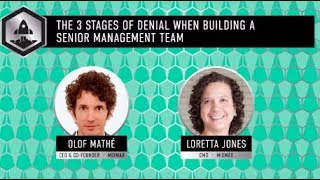
This content was created by Jason M. Lemkin. This content was uploaded by Jason M. Lemkin. This is a YouTube video titled "The 3 Stages of Denial When Building a Senior Management Team with Mixmax" created on December 17, 2018. It features a discussion between Olaf and Loretta about the challenges founders face when hiring senior management, including stages of denial and hiring strategies. Loretta shares her experiences from working with Jason at Echosign and her role as CMO at Mixmax.
Chapters
Sam.
Here to share a hopefully not too self deprecating journey, at least for me, not so much for Loretta. I think about the three stages of denial that we go through as founders when we try to hire really really senior people for our teams. And so one thing that's kind of crazy about being a founder, right is you have this completely irrational optimism and belief in your own abilities and what you can do and that's awesome when you're pre product market fit, whereas this kind of like hubris can actually bite you a little bit as you try to scale your company and grow your team. And so we thought this would be a fun thing to a topic to broach because there have been entire libraries written about when you have product market fit, how to measure it if you really when you think you have it but you actually don't, etc. And so little written about how to stop doing work as a founder and help other people or have other people kind of help you build your company. And so, so excited to share this with Loretta who's our CMO as of a couple of months. Loretta, do you want to share a little bit about yourself too and your background?
Sure, yeah. So I worked with Jason at Echosign and then was a VP of marketing at Insightly for about four years and then left there at the end of 2016 and consulted for a lot of startups. So I've worked with a lot of founders and have a lot of information to give from the candidate side. So I consulted between 2017 and the first part of this year and then joined Mixmax about three or four months ago.
Nice. So Loretta knows the good, the bad and the ugly, so it'll be a fun chat. Sweet. So the three stages of denial, what are they? What do you go through as a founder as you start start to realize that you need more senior talent on your team? So the three stages of denial that we have, and I'm sure all of you have experienced this, the very first thing you tell yourself as a founder when someone goes, perhaps you should hire a VP Sales or VP Marketing. You say, not sure we need that role right now. Who said that to themselves in the audience here? Oh my God, everyone has said that to themselves. I knew you would have. So once you're past that stage, when someone finally convinces you you need someone senior for this particular funct, the second stage of denial comes, you know, you need to find someone. And then you think to yourself, I can find this role in my own network or with our own in house recruiter super typical. You've done that. Anyone else has done that? Tried the in house path? Yep, we've all tried that and generally it doesn't work. Okay, so you finally realize that, you know, you need to do something better. The third stage is you find a bunch of candidates. They're not exactly the level of seniority you were originally looking for, and you tell yourself they will grow into the role. And this happens with first hires and functions as senior hires. Who has told themselves this with hires? Some folks. Yep. Yep. Same folks keep making all the same mistakes. Whereas, like, whereas other people don't. Anyhow, so we'll chat about each of these and I'll go through like my own very painful journey. And actually talking about a role today, our in house recruiter was like, olaf, you're on your second stage of denial right now. So it's really hard to get out of this mindset anyhow. First stage of denial. Oops. First stage of denial. We don't need that role right now. So when we tell ourselves this as founders, what are we actually telling ourselves? Whoa, little bit of a delay there. Let's get back. No reveals. Sweet. So the common perception we have as founders, what we always tell ourselves to rationalize this, it's a version of it's too expensive or it's too early. And by too expensive, we think, hey, we can't afford the extra $5,000 a month or whatever it is, or if we play do the wrong higher, they're going to lead us down this wrong path and everything's going to be a huge disaster and it's going to be super expensive. We've all told ourselves this story before and it's interesting. This thing we tell ourselves too, it's too early because if we try to disaggregate a little bit, what do we actually mean when we say to ourselves, oh, it's too early to bring on this senior leader? I think we're telling ourselves some version of, oh, we're not sure we actually have product market fit, or you can't hire a marketing leader until you know exactly what your CAC is, or you can't hire a sales leader until you know exactly what your sales funnel is like, or we haven't figured out our go to market strategy yet. And that's why it's too early. And all of these are complete misconceptions. Here is kind of what the reality is behind all of this. So on the. On what we tell ourselves it's too expensive, the reality is that not hiring these roles soon enough will slow down growth and on it's too early. A lot of these questions, right? Hey, what exactly is your cac? Well, the entire point of hiring a senior leader is that they answer those questions for you. You don't need to have the answer to all of these questions yourself. So, yeah, Loretta, what has your experience been with these two kind of objections?
So mine is a little bit different. I think typically as founders, you started the company, the company is your baby. So I think a little bit when you say we don't need somebody is there's a little voice in you that you might not be listening to that says, I don't want to give up control. Right. Because when you hire someone who is senior, it means that to make them successful, you kind of have to give up control. And so I think you need to be a little bit honest about yourself in that regard. From a psychological perspective, have you ever.
Been at a company or tell us a little bit about what it means when you come in like too late versus potentially too early and have. Do you feel you've actually ever been in too early at a company or has it mostly been too late?
A couple cases too early, but primarily it's been too late. And I can't speak for other departments, but from a marketing perspective, when you're in too late and the company's never had marketing, it's a little bit like drinking from a fire hose because they already have a sales team there. It's not like the sales team has grown up with marketing. So it's not like marketing has told said to the sales team, you know, these are the best practices. This is what you do. So you have a sales team that's there that has a variety of bad habits. Right. And so it's harder from a marketing perspective to kind of corral those bad habits and push them in the right direction. The other thing that you're doing because you already have a sales team and you have mouths to feed, is that you are doing demand gen while you're also trying to build your foundation. Right? So, you know, while I'm trying to feed these six salespeople, excuse me, 12 salespeople, I'm also trying to make sure that our website goes from being hard coded to WordPress so that we can make changes whenever we want to, as opposed to once every three weeks type of thing. So there's a lot of marketing foundation that you kind of do while you're trying to do demand gen. And so we joke that it's essentially laying the track while the train is running. But we still like it. It's still fun, but it is a little bit more pressure than if you come in a little bit earlier. Because if you come in earlier, you have the ability to kind of create your foundation and then grow up with the sales team and give them direction as they grow.
Nice. So, Loretta, what bad habits did you uncover on the Mixmax sales team?
Well, the one that we're working with right now is that every salesperson likes to kind of tweak their sequences as they should, because they want to personalize them, but they aren't really starting from a standardized place. So, for example, some sequences are only three emails, some long, some sequences are 10. 10 emails long, some sequences are seven. You know, some sequences have video, so they're kind of all over the map, and they don't. They don't have a lot of the messaging that we want in them. So essentially what we're doing is we're rewriting the sequences for them to make sure that they get the right messaging out. And then once we give them to them, then we feel like they're okay to tweak them. But right now, they're a little bit all over the place. So that's just kind of one of the examples I was giving about how you kind of have to change people's behavior as opposed to, if we want were in there earlier when that salesperson came in, we would have said, okay, here's the sequences that you need and you can tweak them from here.
So it's not too expensive nor too early. So once I finally got back that got through that first stage of denial of thinking we don't actually need this role. What was the second stage of denial? Well, actually, let's talk about this first. Getting past the first stage of denial, when are just like some rules of thumb for getting past that stage. So when do you know you need to hire someone senior? Well, a couple of quick rules of thumb. The second you have more than eight direct reports as founder, CEO, even co founder, you need someone else to come in and help you. If you have two hires or more and you know that that function is going to grow, find a leader to run the function. Something that's particularly pernicious is as a founder, if you have just a little bit of domain expertise in a function, you think you really know it. And so it's really easy since you started doing sales or something, to think, oh, I totally know how to do sales. And it's just a matter of finding time so you postpone that hire. So thinking you have domain expertise is probably a great indicator that you should actually find someone to run the function. And lastly, as founders, we often carve out a particular function for ourselves. Ideally, don't own that for more than six months because your time will be better spent elsewhere. That's it on the prescriptive section for tonight. Sweet. Number two. So you know you need to hire someone. And now in kind of standard finder hubris, you're just. As founders, we're so used to doing all the work by ourselves because we're resource scrapped. So that's just our M.O. something needs to get done, we go do it by ourselves. So we know to need to hire a senior leader. And now we think, I can fill this and find this right person by myself. And there are kind of two flavors that this comes in. One is I can do this on my own through my own network and our in house recruiter. And then the other flavor is, oh, I know the right external recruiter to fill this role. So let's talk about the first one here. As founders, we started companies, you know, we have investors, we think we're really well connected, you know, we've worked at hot startups in the past, etc. There's got to be amazing people. We can start source from internetworks, et cetera. And so what typically happens here is you end up contacting everyone you know and you end up wasting two months on filling a list with great people who were all employee 723 at Coinbase and Airbnb and were absolutely not the people who ended up building those companies. And so you just lost two months time when what you actually needed was someone who was like employee 19. You might get past that and then think, you know, hey, actually we, I worked with this one recruiter before who helped me fill a great IC in sales or someone in marketing. And now, you know, I just need to find a senior director in marketing or a senior director in sales or something like that. And so as founders, again, since we're so used to doing things on our own, we tend to underestimate the like incredible complexity and richness of domains that we're not that familiar with, including recruiting. And so a mistake I've made like probably a couple of times has been to put a recruiter who did a great job on a much simpler role into, I'm going to put them in a stretch role to find this senior hire. And that of course never works out. And so what's happened here? Eventually you Realize that you need to find a real professional recruiter to find the role you're trying to fill. And still you kind of underestimate the complexity of recruiting as a field and like what the type of service is you're buying. So you talk to this recruiter and you know, halfway through the call you're like, I'm supposed to be evaluating this recruiter. It sounds like they're actually evaluating me. And then you realize halfway through the call that, oh, shoot, they are actually evaluating me. And the call ends with, you know, actually we have so many other people we're working with right now that we probably can't help you fill the role. And so you kind of realize that top end recruiters are like membership clubs and that they obviously have like a very tailored roster of contacts and only want to present the best opportunities. Whereas you as a founder, you just consider recruiting to be this completely transactional experience, which of course it isn't.
Yeah. So I was going to say from a, from a candidate perspective, I've had talked to a lot of recruiters and I think as a founder, what you should do is make sure you really have a solid partnership with that recruiter. Because I can't tell you how many times what the recruiter does is they parrot the founder's vision, which is great. But then when you kind of scratch the surface and you ask, well, you know, how many salespeople do they have? How do they go to market, what's their, you know, what's their business mission, that type of thing, the recruiter can't tell you. Right. So because the recruiter is just being very optimistic. Oh, is this great? They're going to disrupt this industry, you know, blah, blah, blah, blah, blah. Once you get to kind of asking for some more practical information about the company to see if it's a good fit and see if you should go the next step, they can't give it to you because they don't haven't had that type of relationship with the founder. So if you are going to go with recruiter, really treat them as if they are one of your staff and arm them with the appropriate information so that they think they can get you the best candidates. Right. Because oftentimes you'll have founders that be mad at recruiters because why are you giving me these bad candidates? Well, they're probably giving you candidates that don't match because they don't have the right information or they don't have enough of the business information.
So you get the candidates you deserve, basically.
Yeah. You could say that.
Sweet. So third and last stage of denial here. When hiring for a senior role, they will grow into the role. So this is a very, kind of, somewhat related to the first stage of denial here of, you know, I don't need this role. It's too expensive, too early. And this often happens because you're actually trying to play it a little bit on the cheap. And it can happen in a couple of different ways. One is, you know, you, you, you kind of know you need a VP level candidate. However, you worked with a recruiter and somehow you know the roles that are most interested in you are all senior directors. And so you say to yourself, oh, they'll, it's fine, they'll grow into the role. It's going to work out great. Or you actually think, wow, your first experience with VP or C level comp and you're like, oof, I should totally never have become a founder and just try to be a C level executive instead. And then you compromise and you say, hey, perhaps I don't need someone at this level of expertise and I can find someone else who will grow into the role. And if you think about it, that's natural because that's often what we do with ICs on the team, right? They start out in one role, they grow, they're amazing, they're super talented and they grow into roles. And so it's easy to think that it'll work out this way too. And so I thought I'd just share an example here from us of how this played itself out for a first hire for us in sales. Actually, first I see hire where I totally suffered from the they will grow into the role mindset. So the way sales started out at mixmax, we have a really strong inbound engine. We get a lot of people saying that, hey, you know, we love this product, using it for ourselves and a couple of people on the team, we'd like to get a corporate license. I would jump on calls with these folks, close the deal, then think, oh, this is great. I've never done sales before, but it looks. Feels like sales is really easy actually. You know, keep it, can't be too hard. And so you go, okay, so probably a lot of people can do this, but you think, oh, we need to design a sales team, so I'm going to get a pro. And so you go through the first and second stage of denial. You find someone and you find someone who's been an amazing rep at some unicorn. They were employee 503, which is what we did at the SAS unicorn kind of knew that they mainly that the product they sold was mainly an up market enterprise product. However, they will grow into the role of selling mixmax, which is primarily an SMB product. And so this person joins and three weeks later you realize it's absolutely not a fit because this person joined again as 503 at a unicorn startup and added a lot of value there, but slotted into an org that had all this process and was probably more a harvester than a creator of, of the value in that company. And so the other classic thing that happens then as a founder is you go, oh my God, we had this super talented. I see. But you know, there was just this one thing wrong and it was that they were at this bigger company, it was too structured. So you go from that extreme to completely different extreme, which is, okay, we need a startup generalist, someone who's just super scrappy and is just going to roll with the punches and do it, you know, figure it out. And so we hired that person. It worked out great. They added a ton of value, however, totally the wrong person to build out an org because they had never done it. And of course we had been fooling ourselves thinking this person is going to grow into the role and achieve this thing that they had never done before or had any experience of doing before. So that's a little bit how it played itself out for us, at least in terms of first hires.
Yeah. So from the candidate perspective, I think you need again to kind of be honest about what you want this candidate to do. Right. So if you don't have, let's say, for example, you don't have product market fit, then maybe what you want is you want someone who's a little bit more junior so that they can help you tactically figure out if you have product market fit. If you already at the stage of where you have product market fit and you want to scale, then maybe think about someone who's a little bit more senior. But I think instead of kind of doing this whiplash behavior, what it, what it helps is if you kind of sit down and literally think about what you want this person to do in like six months and 12 months, in 18 months. And I think once you work through that, you'll determine kind of what is the person that's going to help you now and probably for the next year, year and a half, or maybe two years, kind of get the business where you want the business to be. Because I've worked with a bunch of founders who, you know, in one Ways, in many ways, from a marketing perspective, they think, oh, I'm going to add marketing and everything's going to explode. It's going to be great. Like it's a silver bullet. Right. But it's not because it requires a dedication and just like anything else. Right. Marketing is just like engineering. You start and you just kind of build, build, build and you take baby steps. And so that's kind of what you have to think about when you are hiring sales and marketing. Like what are the steps that you actually need to get there and then hire the right person for that role.
Can you share a little bit about some conversations you might have had with founders where they kind of explained their vision for the company and the marketing team and you just thought to yourself, actually you need a director level hire or perhaps like a young VP and you might not need me.
Yeah, so a couple ways. There was a company that was, that I had consulted with that was probably about. We have 10 minutes, so I'll just keep this short. That I think had was just trying to figure out if they had market fit and they were actually going up against. It was a small player, a small industry, but they was a big player in the industry already. And so they were trying to figure out how they could kind of at least become par with that person. And so they didn't. You know, they had one very, very junior person in marketing and they wanted to bring in a higher person like a senior VP in marketing. And I had told them that probably what they needed was more like a director, right. To kind of do some of the more tactical things to figure out, you know, what their, what they thought their messaging was, test some of their messaging, what they thought some of their demand gen program should be and kind of just lay some of that foundation which you can probably get from a director level candidate. And then once they felt comfortable that they could actually take on this big behemoth in their industry, then they could start thinking about scaling.
And of course there's kind of a third path here too in terms of hiring and that is actually not to hire but to hire someone who you really trust as a consultant. Which is actually how we started out, right?
Yeah, yeah. So I started at mixmax as a full time consultant and then transitioned and I personally like the consulting to transitioning to full time because I think it's like a good try before you buy for both parties. I have worked with and talked to a number of founders that don't like that because they believe that it is a lack of commitment of the consultant. But I don't, you know, I don't find that. That's not my perspective. So I think if indeed you have someone that you think is going to work, but you want to make you, you know, you want to see if that's, that actually is going to come true, think about doing a consultant to hire. And if, you know, the little voice says, you know, they're really not committed, that's not necessarily, that's not necessarily the case.
Yeah, it's a great point because I think it's actually especially for functions you know nothing about which is most functions. As a founder, you don't necessarily have the like granular level of insight to know if you need a director or a VP or kind of a C level person to help you. So having someone come in and consult can really help with that. Sweet. I think those were the three levels of denial from, you know, oh, that we don't need that role right now to, oh, I can totally find this person on my own down through kind of misunderstanding or screwing up, leveling with, oh, this person will totally just go into this role. So with that, let's open up and see if folks have any questions, because we do have a little bit of time for questions. Do we? Loretta, did Olaf ask you to do any things for this role that you thought were wrong or didn't want to do that he was sure you should do, coming in as the first head of marketing?
Well, he told me the story, which I kind of kind of went over my head. So everybody that comes to to mixmax has to do like a presentation and exercise. And so he gave me the spreadsheet that said if we go after these type of titles, what type of webinar and stuff should we do and what would be the ROI of the webinars? And I looked at it and I was like, there's a lot of information missing here, so I'm actually just not going to do it and I'll talk to it. So later he told me after that he was like, I can't believe you didn't do that because that spreadsheet can't believe you didn't do that work. But from my perspective, there was a lot of information missing for me to actually make good conclusions. So I think that's also a difference when you are thinking about hiring people, right? All the different perspectives. I didn't think that I was kind of, you know, being belligerent or like, I'm too good for this. It's just there's, to my from my perspective, there's a lot of information missing. So I was like, yeah, I won't do this. I'll just kind of talk to it. And from his perspective, he was like, why didn't she do that exercise?
It was actually funny because it was one of the ways we knew you'd be a great fit because you saw the spreadsheet with like these suggested titles of webinars and it's just like an analytical exercise on. Which gets great just to see that, you know, a C level candidate can do like basic arithmetic kind of thing. And Loretta was like, these titles don't make any sense and why would we do these webinars on our own and we should partner with these organizations and whatnot? And I was like, this is perfect. She's like, up leveling this exercise and like educating us on how we might approach this. So it was. It was good fun. Do you want to take that and repeat the question?
Well, from. It depends on kind of what you. In many cases, smaller companies that want to do billboards, you know, there's a joke in marketing that basically it's just. It's a founder's ego play. That's all it is, really. So I would probably. Billboards are super expensive, right? I mean, the last time I looked at billboard pricing, it was, I don't know, something literally like 50 grand a month. And it's. And that was a couple years ago, so it's even more so you. I think you have to be at a place where you're ready to complement your demand gen with your branding. Right. And so if you have a good demand gen engine, the branding is just going to help it and complement it. If you're not really there with your demand gen engine, the branding is great, but you're kind of losing out because you can't really capture that branding. So I don't know that there's a specific time, but that's kind of how I. That's the logic that I would kind of go through in terms of deciding when to spend that sort of of money on a billboard. Now, there are obviously other less expensive offline campaigns that you can also start with, but yeah, that's my general thought on billboards.
Awesome. Anything else? Are we good for the next session? Let's do it. Thanks, y'.
All. Thank you. It.










