The Evolving Role of the CEO: As a Company Scales, How Your Job Changes
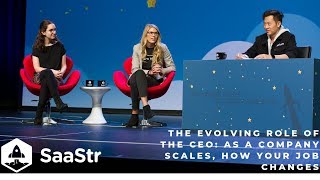
Justin Khan, Alison Friedenstone, and Sarah Moskoff discuss how the CEO job changes as startups grow. They cover hiring for emotional intelligence, learning to delegate, managing cofounder relationships, and keeping yourself sane through therapy and boundaries.
Chapters
Please welcome atrium CEO justin khan, modern health CEO and co founder alison friedenson and winnie co founder and CEO sarah mouskopf.
Hello. Hello, hello, Hello. All right, so I feel like a talk show host.
I know this is going on, like I need to move this chair over so we can all see each other.
Thank you guys for joining us. I know it's near the end of the day. I'm super lucky to be joined by Alison and Sarah, two amazing CEOs for this panel. And we're pretty excited to talk to you. Thank you. All right, so why don't we just start off with some intros. You guys are both running amazing mission driven companies. How did you get here? Introduce yourself.
Yeah, cool. I'll start. I'll kick off. So I'm Alison Friedenstone, one of the co founders and CEO of Modern Health. We are a mental health benefits platform for employers. We actually work with Atrium and have had really great engagement with them. So it's been a really great relationship. But I guess a little bit about Modern Health, how I got started, my background, so I went to Johns Hopkins. My original goal was I wanted to be a doctor. And I quickly realized I wanted to find a way to make a more macro impact. So ultimately I always knew I wanted to start a company. And my sister, who actually had finished Harvard Business School at the time, super snooty, told me I had to move to this place called Silicon Valley, which, which I knew nothing about. That was over five years ago. So I was like, all right, I booked a one way ticket here, showed up, realized I had no idea what the hell I was doing. So I figured I should work at a startup before starting my own thing. So worked at a couple different digital health companies. The most recent one was Collective Health. And at Collective Health, I saw this unmet need in the mental health space. So I ended up leaving to start Modern Health to make it more accessible for for people to get access to mental health care. And one of the biggest things that we think about at Modern Health is approaching mental health the same way we do physical health. So everyone here in this room has physical health, right? And everyone's physical health ebbs and flows from green, yellow to red. We get sick at some point or injured, but it impacts everyone. Well, the exact same thing is true with mental health. So we focus on making it easy for people to get proactive about their mental well being.
All right. Hi everyone, I'm Sarah Moskoff. I'm the CEO and co founder of Winnie. Winnie is a Platform that helps parents find daycare, preschool, and all kinds of other family friendly places. So how I got started. So I am like a career product manager. I worked at big tech companies like Google and Twitter and most recently Postmates. And I am definitely not a serial entrepreneur. Like this will be my first and last company. But I was really inspired by the thing that I wanted to see change in the world, which is I had my first daughter while I was at Postmates. Well, I wasn't at Postmates, I was working at Postmates. And I went back to work shortly after having her and I realized like there was so much information I needed. You know, simply just finding childcare was like a massive undertaking so that I could go back to work and like figuring out what to do with her on the weekend. And I realized like this information was not online. It was, you know, locked up in private mothers groups or something. You had to network with other people to figure out. And I don't like really talking to people aside from doing panels. So I didn't want to network, I wanted to get that information online. And I realized there was just this massive opportunity to make information accessible to parents and that no one was really building technology for parents. So I quit and I started Winnie. And that's what I'm here to talk about.
Awesome. I'll keep it quick about about myself, but my name is Justin. I'm the CEO of Atrium. Atrium is a law firm for startups. Really came out of my own background in Silicon Valley. I've been here for about 13 years starting companies, mostly failures, but one success which was Twitch. And then I was a partner at Y Combinator. And the whole time I'd seen Legal as a big pain point. Something that I had always seemed like kind of a random black box. And so I wanted to solve some of the problems that I saw in legal for technology companies and startups. And that was the idea behind Atrium. And one of the things that I like about building this, this company I'd like to ask you guys about is that, you know, as a customer of Legal, I've always felt like I had this North Star for what I wanted. And it always, it made it easy to kind of go back to what I felt was important and like create some core direction for the company. Like, do you guys feel like because of the subject areas of your companies you've been able to do that?
Do you want to go first?
You can take it?
Yes, for sure. I mean, in the mental health space specifically. Specifically, actually to come full circle. So I Was pre med. I wanted to be a psychiatrist. And I guess I'll be a little vulnerable up here. So when I was in high school, my dad had cancer and it was hugely impactful to me. Really impact my ability to even go to school. And so I saw a therapist and it was life changing. I honestly don't know how I would have gotten through that time without seeing a therapist. And it was so taboo. It was like, I think back, it used to be called a shrink. Like you're seeing a shrink, you don't tell anyone about that. Now we call them things like life coaches and gurus because that's normal and that's accepted. But it changed my life and that was really the start of it for me, which was, wow, it's okay to open up and to get help. It's actually really impactful and really empowering. And so that was the start of, for me, being passionate about this space. And it makes it easy to be able to get up to work on something every day. That I want to exist more than anything, not just for me, but for my loved ones, my family, my friends, for really everyone that I feel close with or interact with. So yes, certainly makes it easy for me to get up and go to work every day.
Yeah, I feel the same way. I did not think I wanted to be a founder, start a company. I'm a very like by the book kind of person until I had children. And I realized that like no one, there was no one out there building technology for parents. Especially three years ago when we started the company, like the world's greatest engineers were not working on stuff for parents and they especially weren't working on childcare. And so I felt like if I didn't do it, no one would. And I also, you know, it solved a problem for me. Like I wanted this thing to exist in the world. I wanted to be able to find a great preschool for my daughter. So selfishly, like, I wanted to build something that would be useful for me, but it's also having an impact on millions of parents, which is a nice side benefit because I can make a business out of.
Seems like kind of a renewed emphasis or maybe a new emphasis on mental health and building a different kind of company, like one that's maybe a little bit more balanced and focused on kind of the holistic experience of being a member of the team is something that's intrinsic to both your guys companies. Can you talk a little bit about how you've done that?
Yeah. So I mean, I call it work life balance but it's really like work, work, balance. Because my job at home is like, way more demanding than anything I do for Winnie, having two young kids. But the nice thing about being a parent is it sort of, sort of forces you to have some balance in your life. Like you, when you get home, even if you want to work, you can't. Because my kids are like pooping on my laptop and doing crazy shit. So I'm like forced to acknowledge them and spend time with them, which is a good thing. I really do love my kids, but it was great. I don't know what it's like to be a founder that doesn't have kids. I only know what it's like to be a founder with kids. But as a founder with kids, me and my co founder were both forced to build a company in a really sustainable way. And that's actually been like a huge asset, not just for us, but also in recruiting talent. And turns out now like, the majority of our employees don't have kids, but they still love the fact that, like, we're not going to work them to death. And, you know, the CEO peaces out by 6:00 clock every night, so, like, they don't feel like they have to stay. I'm like the latest one in the office and they really value that. So it's been great. Also, just for recruiting, it's a competitive job market, especially for really great engineers. And so the fact that we can offer a really balanced lifestyle I think really does appeal to people.
Yeah, balance, it's hard. I mean, the irony, we're in the mental health space and trying to promote that for everyone. I think it's something that I definitely try and think about every day. I think as a society, we were talking about this almost just before this, but we set a bar for ourselves that we virtually make it impossible to reach. And so for me, what I try to do is constantly give myself perspective. Because what I've noticed happen to myself and friends, co founders, employees, is we'll set certain milestones for ourselves. So I'm sure everyone here could think about a milestone or a goal that they set for themselves, whether it was this past week, month or year, year, couple years. And once you reach that milestone, it's just like, okay, the next thing. And we often dangle this carrot in front of us. That's like, okay, if we reach that milestone, we'll be happy or we'll feel good. So for me it was, I wanted to start a company, I wanted to get into yc, I wanted to Raise money. And I noticed that after each of those yes, I celebrated for like a couple minutes and then I was like, okay, the next thing. And now having perspective, it was like, wait, those were the goals that I wanted to achieve. It's important to actually take a moment, to take a step back and just enjoy it. Because at the end of the day I saw a stat recently. It was kind of, not kind of very depressing. I think it's like we have 30,000 days on planet Earth and it made me realize like, holy crap, if we're not actually enjoying what we're doing while we're doing it, what's the point? Because no matter what milestone you reach, and I'm sure you could talk to many people who have even sold companies and been very successful financially, that definitely doesn't just equate to happiness. So it's really important for me to take a step back really every day and make sure that I'm having perspective and enjoying the little things and not getting super caught up or bogged down into oh, I didn't get to respond to that one more email because at the end of the day that stuff isn't the stuff that matters.
I totally feel the same way. We were talking about it backstage, but as someone who has kind of achieved some, some levels of success, it took me forever until recently actually to realize that my attachment to certain outcomes will never make me happy. And having gotten, I was always the type of entrepreneur that's like the next step. That's like if I finally get that next thing, then I'll finally be happy. And really took really consciously detaching from those outcomes and really working on happiness more like fitness like you said to changed my perspective. And at Atrium it's interesting, it's. I used to think of in Silicon Valley like it was all about the product. Like everything in Silicon Valley, the entire culture is about the product and the engineering and like what are you building and just building the right thing is going to create this massive company. But I've come to realize it's so much more about people. It's about the people you bring in, the organization, the culture. And that's what's going to take you from kind of the 0 to 1 to like a scaling company. Have you guys thought like what kind of people are you trying to bring into your organization? How are you trying to scale it?
The best, Only the best. I mean like one of the big goals that my co founder and I had starting Winnie was like, why isn't world class engineering talent Working on problems for parents. Like, yeah, there might be some, like, apps in the app store for parents and they like, all suck. And there's nothing like, you know, the biggest company for parents is like care.com and that's not even a unicorn. And like, their website sucks. Sorry. And, you know, we just thought, like, that has to change. So that was the most important thing for us is like, we find really talented people. That's meant we have to keep our company pretty small because these. Turns out these really talented people are kind of expensive, especially in the Bay Area. And you don't have to just hire people in the Bay Area. There's talent everywhere, which is kind of a hack we figured out. We don't talk about it too much because I don't want you to. You to figure out there's engineers outside of here. But yeah, so that was like, top priority. Hire the best, the best and the brightest. And then that means, like, you have to stay a little bit smaller because people. People are expensive. It makes sense to stay smaller.
Have you built a remote company? Like, are you building Winnie as a remote company?
Yeah. So we are still. The majority of us are in our office in San Francisco, but we have hired engineers outside of San Francisco and they're awesome. And I think one of the nice things about from the start building a company that was kind of balanced and more flexible in terms of how we work. And we don't value FaceTime in the office, we value what you actually get done is that when we brought on people that were not in San Francisco, it was pretty seamless because we really just all sit at our computers and talk through Slack anyway. We didn't really notice that they weren't, like, sitting next to us. So I'm like a huge proponent of looking outside of this bubble for talent because talent is everywhere. And if you set up your company where you actually value output, it's much easier to bring on people that you won't necessarily interact with in person day to day.
Awesome. Yeah. I mean, of course, hiring the best that you can and experience. I think for us, one huge common thread or theme is eq. And every single person that works at Modern Health has this common strand of DNA, which is at the end of the day, we're building something that's bigger than ourselves. And just having the opportunity to work on something like that is incredibly empowering. And we care much more about being able to trust each other, to be creative, to take an opportunity where it's okay to fail. And so when I'm Looking at hiring people, I know that I'm definitely, I mean, not the best at many things, but certainly most of the things that the company needs to get done. I'm good at building shit from scratch, like building the plan as it's taking off and helping put processes in place. But then after that, you need to hire people that you can actually trust to get things done. So for me, it was looking at people that not only could I trust, but could actually help mentor me and help me be a better leader. So people where, when they come to the office, I feel comfortable and they give me feedback and I'm open to it. That's been something that's been hugely helpful versus just feeling like, okay, I need to hire certain experts in these areas. It's helpful. I definitely have weaknesses and so I want people to help me be the best version of myself, just the same way I can help them. And that's definitely been a common theme of everyone at Modern Health.
How do you select people for eq?
I will interview and ask a lot of questions that have nothing to do with work. So one question that's really fun and you should ask your friends this, but I'll ask people, if you got paid $10 million a year to do whatever you wanted to do, what would you do?
What's the right answer?
There's no right answer.
Sleep. Sleep is the right answer.
You'll get some really interesting responses. But what's fascinating is a lot of people haven't thought about that. And so when they take a moment to actually think about, opens up all these different conversations about how people really approach their life. Whether it's like, okay, they just want to measure success and they just need to check things off their to do list versus you'd be surprised. This generation is actually incredibly mission driven and people, there is hope out there, like besides everything going on that to some extent can feel really terrible in the world right now. People want to have a positive impact. People want to want there to be good in the world. And so it's finding a way to, I guess, find those individuals and kind of harness that, that desire to have a positive impact. But yeah, I'll ask certain questions like that, like, what's your. What's your proudest moment? And what they think that you want them to hear is something about work, but it's the people who actually talk about something completely unrelated to work. Whether it's if they have kids, it's usually their kids, right? Or something else that they've achieved outside of work that really gives us insight into the type of person they are.
So you talked a little bit about strengths and weaknesses, and for me, that's, you know, kind of spending time on introspection and learning, really thinking objectively about what am I good at, the few things I'm good at and what am I not good at has been, like, a very powerful thing for my company because it's enabled me to delegate the things that I'm not very good at, which is almost everything, actually. I wish I was joking, but it's true. What are the things that you guys feel like you're really good at? And what do you need to delegate in your company? And how have you created an infrastructure that supports you scaling as a CEO to delegate the things you're not good at?
So, for me, it's definitely. I thrive in chaos. Like, when there's no processes in place and everything's manual, I'm like, spreadsheet woman. Everyone is like, okay, we need a process in place. Like, Allison, how do we put this together? And I love that. But then once you get process in place, you need to be able to actually trust someone to scale that and to have experts, whether it's in sales or product. And so the hardest thing for me has been learning to feel, okay, delegating, and so hiring people that I really can trust to take the lead on those things. So really, pretty much outside of the chaos and putting the processes in place, I definitely weaker in those other areas. So that's outside of that or outside, I guess, specifically in kind of operations and laying that foundation and that framework. We've really looked at hiring people who have experience, whether it's in sales or in product engineering, where we feel that we can trust them to be owners and leaders in those different areas.
Yeah. One of the most shocking things about becoming a CEO after being a product manager and I was a manager of other people as a product manager, is just the difference in how people treat you and perceive you when you're the CEO. I'm used to as a product person, influencing without authority and convincing engineers and my boss that something was worth doing. And when I became a CEO, I would literally just mumble something under my breath, and then the entire company changes to adjust to what I thought was just an idea I was throwing out there. And it's really crazy and also not a great way to work, because I'm not really that good at anything. And so, like, I don't really want people following what I say for the most part. Like, it'll be Wrong. Especially if it's, like, design. Because I think I'm good at design, but I'm not good at design. So what was important to me was, like, really changing the way I work and seeking feedback from people and really drawing it out of them. So instead of saying what I think at all, I just asked people what they think about things, realizing that, like, as soon as I say anything, people take it really seriously. And if it's something they disagree with, they could get really upset, but still feel like they have to do it. So it's just a very different way of working when you're actually the boss. And it's important, I think, to really understand that and make sure that you are drawing the feedback out of everyone else, because they're not going to give it to you proactively in the same way that they felt comfortable, like, shitting on me before my entire career. But investors still love to shit on you all the time, so you still get that.
There's always someone. Feedback's been super important to me. Actually, it's interesting. It's something that I never focused on at any other company, probably to my extreme detriment. But at Atrium, I think, because it started off with a bunch of people giving me candid, constructive criticism, feedback, unsolicited. And I was like, oh, my God, I need to get more information about what's going on. It's become something that I really seek out. How have you. What are the techniques that you think are the best for extracting that feedback from your team or customers? Customers or people around you? Because it can be really hard to get actual real feedback. Like, not everyone is comfortable telling the CEO you are bad at, like, you're a bad public speaker. You know, you need to get more excited about when you get up in front of people or, you know, the long list of other negative things people have told me.
Yeah, no, I think for me, it comes down to the hiring piece. Like, I make sure that we hire people who are comfortable giving that level of feedback.
And.
But even more so, I guess the biggest way that I do that is I'm super vulnerable in front of my employees, which is like, shit, I do not think I'm doing a good job at this. Can someone help or give me feedback on this? I also get super into the weeds, and so I'll kind of jump in and be like, oh, this is how this needs to work. Let's change this, that, and the other. And I've been fortunate that I have employees who will say, okay, Allison, take a Breath. We've been working on this for a while. You're coming in from another perspective. But we felt through these things and so it's really humbling where I'm like, damn, these people are good. Like they know what they're doing and I can lower my defenses for them to give me that feedback because I trust them and it's enabled me to really be able to take a step back and focus more on how can I improve myself and be a better coach and leader and not just feel like I'm like, here's how to do this and it has to be done this way. But outside of that, I mean, asking for feedback, the easiest way for me is like I practice it with my co founder. We have, we set aside an hour every single week where we give each other feedback and like we know we love each other no matter what. So that's awesome. Yeah, yeah, I have. Those are like probably the most impactful meetings that I have. Every week is like, all guard is down, no defense. It's non violent communication, but very much like, here's xyz, here's how I think you could improve. And yeah, just kind of go back and forth.
Cool.
Yeah. I would be remiss if I didn't mention my co founder, which I think is like, that is the most critical piece for me, having a co founder, someone who really takes on an equal burden to me of running the company. Because we will just be so candid with each other. In fact, we've been told by employees people were getting really concerned because we'd just like have all out brawls. And I'm just like, that's how we talk. We just yell. So we now go in the back room and do it. But that is super helpful to have someone that you can trust and be completely candid with. It is like you have to be with my co founder. It's like a marriage. I've been married for over seven years and so I'm no expert, but I have passed the seven year itch. So I feel like it's the same way with a co founder where it's someone that you really need to trust and that has to be really, really honest. And they can see some of the things that you might have blind spots. Like, did you see the way you talked to that person? Like you made them feel bad about the work they did, even if you didn't mean it. And then I'll be like, oh shit, I probably did. So I was not the type of person who thought that I needed to start a company with anyone else. But having a co founder is just so helpful in so many ways. And we would not be where we are without having both of us.
So how did you decide if you thought you could go it alone? How did you end up deciding to bring someone on? And then how did you develop that relationship?
Yeah, so I came up with the idea for Winnie basically because I went back to work very soon after having my daughter and I was like, oh, shit, parents need childcare. And I was talking to a woman I worked with, Ann, about it, and she has two young kids. And I was like, don't parents need childcare and how do they find it? And she was like, yeah, that's like a thing. It's really hard. In fact, when she had her kids, she didn't go back to work because she couldn't find childcare for a period of time. And so I was basically just bouncing ideas off her. And then we both got so excited that we were like, we're going to start this thing. And then we were like, wait, you're doing it, we should do it together. So we kind of were brought together by like, this similar desire to create something that would help parents, rather than like, either of us thinking we really needed a co founder, but we really needed a co founder, both of us.
Why is that? Like, how did you divide up what you were doing and how you built that relationship?
Yeah, I mean, I like, you know, one example is like, right after we started the company, like, my husband got cancer, he's good now, but I had to like, step away for a period of time and we hadn't really raised any money yet or launched any product. So, like, if it were just me, like, the company wouldn't exist in, you know, we, we back up all our data. Like we have some redundancy. Like, it's the same thing with having redundancy in a leader. I think it's pretty important because even if you're perfect and nothing's ever going to happen to you, like, there are unforeseen things that can happen, like someone getting cancer or having a baby that can cause you to need to, like, step away for a little bit. And if you have someone that can fill in, that makes it just a blip rather than like devastating for the company. And we've had all those things happen. So just for that reason alone, like, having a co founder or a senior leader you can really work side by side with is really important, but also just because it's really hard and like, pretty much There will be times when pretty much everyone will tell you to just stop, that it's not going to work. And, you know, it's just stupid to keep going. And so you need someone that is like, willing to keep going at it with you and pump you up when you're down. And I feel like that's the role that we each play for each other.
You want to talk about your co founder, Alex?
Yeah, I would love to. She's amazing. We are really lucky in that we have pretty much opposite backgrounds and our bus rents. But Erica is a neuroscientist software developer. She built the brain health assessment that is used under Obamacare today by millions of lives. So she's kind of smart. And so her background is in science and in engineering, whereas my background is more business operations and sales. And so while there's definitely healthy debate where we'll challenge one another and give each other our perspective, it is complete trust and respect for that individual's decision. And sometimes we get it wrong and we're aware of that. And so it's making sure that we're there for each other in the times that, oh shoot, we did get it wrong and we can still support each other. But I guess in addition to that, to take it a step further, I think one thing that people often don't talk about, which are the real unsung heroes, are the partners of the founders. So my boyfriend has been through the highs and lows of me as Erica's fiance has for her as well. And like we would not be here today without either of them. And so I think that's true probably with most leaders of any company is like, those are the unsung heroes that they're your career therapists. They are your like intermediate chief people officer. They are your like problem solver. And it really is like a joint team effort.
Shout out to the boyfriends.
Just for the record, I'm not giving my husband a shout out. Just kidding. He's awesome.
I just realized this talk is called the evolving role of the CEO as a company scales how your job changes. We didn't really talk about that. So for me, I think one thing I usually say about this is that what gets you to have a company at all is usually you're a really good engineer. You have an idea for production, there's a service you want to bring to market, and then you, it turns out that works. It has product market fit, and then you get some money and employees and a team. And then the hard part that most founders experience is Actually letting go of doing the thing that they were really good at and then leveling up to do some other set of things that they're not as good at, and then letting other people do that thing they were good at. So how have you guys felt your job has changed over time?
Yeah, see, no one told me that before I started a company. I started a company because I was, like, super excited to make life better for parents, but also because I was like, oh, I want to code and do product stuff, and I don't want anyone to tell me what to do. Well, it turns out I don't get to do any of that now.
I don't get to touch the product.
I don't get to touch any code because we have great people who are so much better than me to do that. And I have to do all the other stuff, like take the trash out on Wednesdays. And so I think, like, that was something that was like. I kind of knew it in the back of my mind that at some point I would have to give up the fun stuff, but I didn't realize, like, how quickly that would happen. But, yeah, like, as a CEO, I feel like my job is to kind of figure out what the next thing on the horizon is. And once it's figured out in any capacity and I can put anyone else on it, I should be putting them on it. Like, I should not be doing anything that anyone else could do, which makes my job exciting and that it's always changing, but it means that I'm doing a lot of stuff that I may not have an aptitude for or really enjoy all that much, but that I have to do. Because that's your job.
Ooh, let's see. So, yes, I mean, definitely evolves from when you first start. It's just you and your co founder and you're doing everything. And so it's pretty much just getting it to a point where it can scrape by. I mean, when we were in Y Combinator, we built an mvp. We got it live. Like, it was terrible, but it was working, and that was the goal. But as you raise money and as you start to scale and need to scale your product, you realize that there's people who can do these things much better than you. And we were actually stoked. We were like, holy crap, we get to hire people that are way better at this than us. I wouldn't even hire me for this role. This is awesome. And so it was really exciting when we started to have people come on board where we were like, you know, this way better than us. So we can trust you to go build this thing and help us scale. I think the hardest thing is that it will always, I guess, at least so far to date, feels kind of like your baby. And so there's a little bit of, like, separation anxiety when you're like, okay, you get to kind of run with this and making sure that it's running, running smoothly and that you can completely trust them. That's been definitely a learning experience and learning curve for me, But I think it just comes back to hiring people that you can really trust.
Have you. So you've had trouble letting go? Sounds like reading between the lines a little bit. I feel like that's every founder's experience. What taught you that you had to do it?
Well, the hardest thing for me, so one of my superpowers is attention to detail. Like, I have Hawkeyes. I will see things that no one else sees. And that's important to some extent. At the beginning, it's helpful. And then at some point, it's like, okay, if you miss a period at, like, one sentence somewhere, like, that's okay. If in that deck, that period's not there at next to that bullet point. And so what's taught me that is knowing that when I did start to let go, like, things actually started to progress forward much faster than when I was just trying to do everything myself. And not only that, it created such a better culture and environment where people felt empowered. I mean, like, our team is amazing. Every single person that works at Modern Health is. I'm just in awe of every single day. And so I know that they can do it not only incredibly well, but better than me. So. So that's empowered me to say, okay, I can hand this off and see it actually grow and improve better than when I was doing it myself.
That's awesome. It sounds like you guys have approached your company with pretty good growth mindset and kind of like learning and improving over time. That's not something that was there for me at various points in time, and it's something I've tried to cultivate. Like, how do you. Did you always have it, or. Or have you, as being a CEO, forced you to adopt?
It definitely has forced me. I mean, I think it also helps that I. I mean, I see a therapist. My life coach helps me with all this stuff I'm in in the space, so try to practice what I preach. But, yeah, it was definitely a forcing function for me to kind of, you know, up level myself. I think one thing that really helps Me do that is like creating this team environment atmosphere where we really inspire each other. And so that's of part been a forcing function for me to really just see people kind of step up and evolve as leaders themselves. But yes, it was definitely something that I had to learn and get feedback from. And I, I mean pretty much every single one of my employees has helped me in that regard by giving me that feedback of like, I got it, don't worry about it. I promise you I will get this shit done. I promise. And I'm like, okay, thank you.
Yeah, I mean I like, I'm not just saying this because I want more active users, but seriously, having kids has helped a great deal because it's forced me to step away for a period of time. When I had my second daughter, I was running Winnie and it was actually when we were hiring the most people, they started like while I was out on maternity leave and it was just like, now I'm coming back and these people know more than me. For some things that have happened since I was gone, it was just very humbling. It was very humbling to see the company ran better when I wasn't there. But also realizing that actually things work just fine. You're not that critical. In fact, you can be more hurtful than helpful at many points, especially in the details of product and engineering development. It's almost better if I'm not involved and I'm just sort of doing other stuff.
My friend Jason who runs this company called Sift.com just told me good things happen when the CEOs out of the office.
Yeah, I mean there's a balance because you don't want everyone to just peace out. The right balance is definitely important.
How did you do it? You've skipped scaled big companies.
How did I do it? I feel like I have mostly tried to cultivate self awareness around the things that I am not good at and feedback is a big component of that. But also just really trying to be honest with myself about what do I like doing, what am I good at and what does the company need doing? And then what's the intersection of those three things? And how can I just focus all my energy on that, delegate to someone else? And I think that I do not have a high attention to detail. So it helps me delegate and like kind of let go, which is good. The flip side of that is I really need to partner with the right people that are very execution focused that I trust. Right. Like execution focused people that I can trust to kind of execute in those areas. And so, I don't know, made a lot of mistakes. Made every mistake in the book, but somehow figure it out, I guess. All right, we have time for one more question, and it's one that's very dear to my heart, which is how do you keep yourself sane and avoid burnout, keep yourself happy? What's the hack?
My hack is just my kids. It forces me to not work. And my co founder and I made the decision from the very beginning we were going to build Winnie in a very sustained. Like most companies fail because the founders just decide to stop. Like, they could have kept going, but they didn't. They sold or they shut down or they returned the money. And so the longer we can just keep at it, the better our chances are. So we are just all about like, let's build this in the most sustainable way. If that means we have to take vacations and leave the office and relax, like, do that, because it's more important that we can spend a really, really long time, 10 years working on this than that we get something done this month.
I think for me, I mean, again, kind of being in the mental health space, it's certainly top of mind for me. There's certain, I guess, kind of life hack things that I've incorporated into my life. I try to meditate every day. It's hard to find the time. I did a TM course, so I try to incorporate that. I was a yoga teacher before, so that's like my one sacred hour. I still teach. I used to teach a bunch, but I teach every other Monday night. And like, that is complete bliss for me because I literally cannot look at my phone. I'm teaching a class and talking. And even if I wanted to look at my email, I couldn't. And that is like a sacred hour I'll always hold onto. But outside of that, I think it's just constantly reminding myself to enjoy the little things and not just be so bogged down and stressed out about trying to reach that next mil milestone. It's kind of like things will work out the way that they should and you kind of have to just have that positive attitude and also be okay with being vulnerable when it is hard. I sometimes wear my emotions on my sleeve and I'll be pretty open with my employees. Like, dude, I did not sleep at all last night. I feel terrible today. And like, you let people lift you up. People want to help each other out. And so I just really try to incorporate that culture of vulnerability. Especially when you've got such awesome employees that want to be there for you. And I also got a puppy that was a great distraction. I have to feed it and walk it, and that forces me to not look at my email when I'm at home.
I'm not going to top that, so. All right, thank you very much. Let's give a round of applause to Allison and Sarah and goodbye.










