The First 1000 Employees: Building Truly Great Teams with Zuora
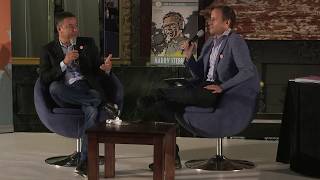
Recorded conversation (July 2018) between Mark and a Zuora executive about scaling Zuora through rapid hiring, preparing for IPO, moving upmarket, balancing product customization, and people operations. Key points: Zuora planned ~400 hires in 12 months; Zuora had ~200 employees (130–150 in Bay Area, ~60 in Beijing) when the executive joined ~5 years prior; subscription revenue then was roughly $25M ARR; high-growth periods and plateaus required hiring profiles, strict hiring processes, and occasional management replacements; a rough year (2015) caused ~30–35% attrition and compensation plan changes (three times in one year) including paying 100% of bonuses to retain staff; executive time investment in recruiting was ~40–50% of their time.
Questions this video answers
About 400 employees.
Roughly 200 total: ~130–150 in the Bay Area and ~60 in Beijing.
About $25M (estimates given: 25–26M).
Nearly doubled; ~85–90% growth that year.
About 43% (companies going out of business or churning).
Chapters
So what does ZORA mean? I should know this. Where does work? What is it? Where's the name from?
Actually, Zora is the. We have three co founders.
Yes.
Team two.
Yes.
And you can see the Z, O, U. We have. We have Chang and we have K.V. rao. Ah, okay. So they put all the letters of their name there it is.
And they mixed them up. Then it was Wara.
It's exactly this.
That. That is a good. And what is interesting about it is actually people, most people will not mispronounce is phonetically understandable even with that. Right. No one says Zuwari or they pretty much get it right.
Some people here in Europe, they will see Zorro. Zorro.
How about on the road show with Wall Street? Did they get it right?
They got it right.
They got it right.
Yeah. The only problem is Z, the last layer of the Alphabet.
That is A. That is a downside, isn't it? That's true. It's. Yeah. You probably have to do just a little bit more PR than if you're.
I agree.
Who starts with A? Who's gone public? That starts with A. I should know this.
Yeah. Adobe's other word. The big ones.
Adobe. But they've been around for. Who. Which of the new ipos starts with an A. What's that? Oh, Atlassian.
Atlassian, of course.
Of course. They come every. Every sort of public equities market. They're going to start with Atlassian.
When you go to. You remember it? Yeah.
Yeah. Good. Are we ready? From a AV and everything perspective. Maybe thumbs up. Yes. Well, we'll start. We'll keep it informal. So this will be a great session. Mark and I talked about chatting a long time ago and then when we got together, this idea. I want to talk about a couple things first, but your first thousand employees, which is. It's crazy. And you were telling me when we met last, you've got to hire like 400 employees at Zora in the next 12 or something months.
In the next 12 months, yes.
Which is crazy. And I think for a lot of us as founders, this is one of the most challenging things to learn about. It seems like the hardest thing is to recruit your first management team and then you learn you actually have to recruit your second management team as part of your first management team. And then people ops just gets crazy. And I do want to spend most of our time talking about that. But before we get there, a couple of things. Zuor ipo when everything seems. It's going so fast today, two months ago, three months ago, it seems like four years ago.
Two months ago.
Two months ago. Is it a blur for you or is it just a blur for me?
You know, it's a, it's. It's a memorable moment somehow in the company history. But I don't remember. It's already.
You already don't remember it.
It's really already behind us.
Yeah.
We have, we have a big sense of responsibility now.
Yeah.
And forgiving markets.
And there have been. When I wrote this, there were 12 SaaS Cloud IPOs already. Now it's 15 this year. Why did, why did everyone wait till 2018?
The market is good.
The market is good. Right.
Is it that simple or in reality, I don't think they've been waiting in 2018.
They're just waiting.
You have to go whenever you are ready.
Yeah.
Regardless of the market condition. This is reality.
Yeah.
And we. 18 has been a great year. Right. Timing for us. But we could have gone last year or one year later.
You could have gone. Right. And I know this is, this is hard to quantify, but how hard is it to ipo? It seemed, you know, when we. I chatted about briefly earlier, the first Astro annual, Aaron Levy was kind enough to come one week after the roadshow and. And that was like the first SaaS IPO of this generation. And to paraphrase him, it was hard. It was hard. Wall street didn't understand recurring revenue multiples were lower. Where it's always hard. But how hard is it today to ipo?
You know, it's hard for the people here. That mean you have to be. You have to be dreaming, you know, really big and have a big vision for your company. And I believe the IPO is, should be the target, the strategy, number one, and the second one may be to be acquired and try to avoid basically to die slowly somehow. So ipo, you should be aiming for ipo for sure.
Yeah.
You should be aiming. That means since I joined the company back to five years ago, I joined the company because I wanted to have an IPO experience before Zora. I joined a company that been two years IPO. We built up a business from almost 150 million to a billion dollars in 10 years. But starting small and built in piece after piece of an organization, it's extremely difficult but extremely rewarding as well.
So you joined. Let's talk about that just for a second. You joined ZORA about five years ago. How many employees were at the time?
At the time we were roughly 200, 130, 150 in the Bay Area and 60 people in Beijing.
Okay. And so you joined as president and then how much roughly, if you can remember, roughly how much ARR revenue did you have back then?
Probably less than 30. Subscription revenue was probably around 25, 26, 25.
So just to finish the IPO thing and then let's talk a little bit. If you're at 25 million ARR, which can seem like a lot, but more of us can see it these days and you're growing at a decent clip, can you ipo, should you feel comfortable that you can go for it? How did it feel then? Did you feel like you could go forward at 25 million?
I believe certainly the revenue today has to be probably higher. You know, a couple of years ago at $100 million, even company went out, I would say less than $100 million. I believe it's a combination of revenue size, total addressable markets, but it's also organization readiness. And I will say the organization readiness is probably more important than revenue.
But let's talk about that. But just today, in 2018, when is inevitable? In other words, how big and how fast are you growing? But looking back in time, when as a senior executive or founder, you can say, look, I've got a shot at IPOing what is inevitable. Is it 20 million, 40 million, growing 60%, you have a rough sense. When does inevitability come in?
Not that you know, the market at 25 million, my first year, we almost doubled. That means we're growing almost at 85, 90%, 25 million, when you start to reach the $100 million mark, if you can sustain 30 to 40%, it's probably minimum requirement to be able to go IP. Oh, for sure. Yeah.
All right, so maybe growing 80% at 25 million we can call inevitable for purposes today, I will say say yes. Okay, good. And then I want to spend most of our time about people. But let's talk a little bit about going upmarket because you joined Zora early. But I met Teen, I think when he was still at Salesforce and then I remember he came to my office at EchoSign, probably almost pre revenue and wanted to build almost a self service low end company that would have looked a lot like, I don't know, Stripe's newest product or things like that. And now you're doing huge enterprise deals. So what are the learnings for folks for going up market both in general and even from a founder's vision? Right. What, how do you, what are the, what are the lessons for Zora? Because Zora has gone very upmarket you're.
Right, that's been, we started with mainly the SAS cloud. You have, you know the words I have tendency to, to position it. You need to go, I will say toward back into the least friction path to revenue to reach a certain scale.
Yes.
And then if you want to grow fast in the cloud enterprise business, you need to go up markets. So today and in ZORA we did a little bit different than Most of the SaaS companies we wanted to have. We wanted absolutely before going IPO to boot up all the potential growth levers that we will need post ipo. So we are multi segments, we cover small startups because you are the disruptors in the markets and it's really important to use you somehow to disrupt the big ones. We have the enterprise space, we have the strat space, we cover all the segments, we are international, we have two beachhead products, really two separated sales organization. So we have really planted somehow our seed in all the leverage that we might need this year or next year to be able to keep the 30, 40% growth year over year.
And how do you just an interesting. So the startups you talk about even today at ZORA scale the year you sign them, they're not going to have a huge impact on your revenue. Right. You're hoping that they will grow, that the boxes and others will grow into your big customers. How do you resource them? Do you, how do you, how do you comp the sales reps, how do you do marketing spend when the first year ROI might be limited but the total value could be jaw dropping. How do you do that?
It's a tough market in the sense where I believe it's only 0.1% of the companies are reaching, I will say the $100 million mark.
Yes.
And the last stop me if I'm wrong. I believe two out to 20,000 goes IPO.
Two out of two out of 20,000. Okay. Yes, yes. So, so how do you invest in those seeds? When you're an enterprise product you need.
To strike the right balance because in that market space we had a lot of attrition, a lot of, a lot of churns. So we had probably 43% churn, that's companies going out of business or being in the core. So we started like that and we've been mainly focused on that market today. We really try to self service as much as we can. So you need to have, you need to build up, I will say technology and to improve your software to make sure that it could be as much basically self service as possible and try to really focus most of your investments toward making the larger accounts.
Yeah. And one more business model question and then let's talk about people. I may have a little bit of the ZORA story off, but I think as you've gone bigger and bigger, Zora has solved bigger and bigger problems in terms of managing how folks manage subscription revenue. And as part of that, you have to do more services, more customization, more extensibility. What have you learned? I mean when founders start off, you want everyone to use the same version of your product. But Wazora, it would seem to me would be a product that if you didn't stop the customers at some point, they might give you $10 million, $20 million, but you build a custom piece of software for them. How do you know where to draw that line between a big check, but all of a sudden it's a one off product.
You have to have a vision and stick with that vision here. So we never wanted to bolt up, you know, highly customized software for one specific customer.
Yes.
But moving up markets, it's you are, I call it, you know, positive frictions in the system. If you stay around the lower end, you will never be able to challenge enough your product organization to be able to add more to the product and try to expand the footprint of the product. So you have really to carefully choose your customers. And what we did, we spent a lot of time trying to think about our sweet spots and said we can go, you know, cover many vertical markets. So we said our sweet spot is really SaaS, cloud technology companies, hardware, IoT and media. We stayed around that as long as the demand gen and the marketing, they can generate a lead from those three vertical markets. We agreed that we should service those customers and obviously here bigger they are more complex. They are. So you need to push your product organization to be able to add more to the product and avoid any customizations. So we to service those customers. We said product first, then we built up what we call these connect apps. We had an organization that didn't do customization. If a customer needs something that is different from the orders, we need just to make sure that it might be reused for other customers. And we boot up app and then at last resorts services customization.
Yeah, I'm guessing just today when a hot lead comes in and it's let's say a Fortune 2000 company, I bet the sales team really wants you to build something very custom to get that seven figure deal, don't they? We all have experienced it, but my guess is Aurora Has a lot of those stresses. The sales team comes in, I can close a $2 million deal, but I need about six months of custom software. How do you handle that? When sales comes in with that hot deal and it's tr, you need that.
You have to have the ability to say no.
Yeah.
And we are blessed in a certain way because we don't have that much competition in our markets. So the only option for those large companies is SAP and Oracle. So SAP and Oracle, they cannot cover all what they need and it will be anyway a large customizations.
Yeah.
So from the, from the scope of our solution, our solution cover already much more what Scan Oracle or asap cover to the customer. So from that perspective, we didn't have a big push or big basic pressure from the competition to be able to fall in the trap and try Becket to offer anything the customer want to do and to customize the solution.
Well, that's always, sometimes it's actually competition that pushes you to customize more than you like. If the competition is going to do it, can you risk losing the deal? It's stressful. It's stressful.
I agree with you.
Yeah, yeah, it's stressful. All right, so let's talk a little bit about this idea of hiring 400 employees a year. First question before we even get there and I'll tell you a quick interview. Does it ever get any easier hiring because hiring so hard, does it ever get easier?
It will never get easier.
Never get easier.
Despite the fact that we have a critical mass, 1,000 people. Never easier in the sense where you have probably a better brand recognition, more stable organization, you might be able to attract different type of people. The people that work for a startup are certainly different than the people that will work for large organization. But the hiring still a difficult exercise. And it's, it's, it's extensive human capital business. You have absolutely to be careful regardless of the size of your organization to have really clear processes in place to be able to hire people. What we have established, I mean we've made a lot of mistake as well. So we, you know the growing pain of any company making mistakes and learn from the mistakes. And I have the tendency to say that you grow in the form of plateaus. That means you have fast growth period. Follow with a plateau to digest back into growth and then learn from that and grow again. So what helped us a lot, we really got all the organization and we have defined what we call a hiring profile. Let's make sure that across all the company, regardless of what the person will do. We need to make sure that we have a consistent characteristic of the people that you want to bring in the company. In making sure that you can be consistent with your core values and the culture of the company. That help a lot. As soon as we put we establish that profile, it's got at least much more easier. It's almost like a common language within the organization when it's come to hire the people and onboard the people.
And how do you, how do you get managers to go along with that? How do you get managers to agree? Because everyone's under pressure to hire and many managers want to bend those rules. Right? I need to get, I need to get someone in this next week.
Let me tell you a story that's been the learning regardless of how many years of experience and hire thousands of people during my 25 years experience. But at Zora, back to calendar year 2015, 14, we did extremely well. Almost grew by 100%.
It's crazy.
And then we said, we're going, we're going to invest a lot, we raise a lot of money. We raise $115 million. And we said, this is our time, we need now to invest in growth. And we hired almost 50 account executive, a lot of managers. But we didn't have that profile. So I used to interview everyone since we hire managers, I said we're going to trust those guys so we will empower those guys to hire. And we hired almost 25 reps. I walked into room where we did the onboarding, just looking to the people in the room. I said, wow, we are really in deep trouble here. Those people aren't the people that will be successful in this company.
So looking at them, you could tell.
Just physically just walking in the room, hearing the people, looking at the people, saying it's not really consistent with what you want to see in the organization. And that year we had almost 30 to 35% attrition because we have to replace those people. Spend a lot of money obviously here. And this is year what we call the plateau of the company. We grew, you know, 25% versus the 40% that we're aiming for. But we have to learn from that.
So that was directly correlated to attrition. Completely, right? Completely, yeah. And so that's interesting. So we all, especially as founders, we want to empower our managers. We want to say go out and find the best people. I trust you, I believe in you. But there are. But if you want to build a consistent culture, there's limits to that, right? They will just they have an incentive to go out and hire whoever they can to finish the job. Right.
They cannot. I have, I have a theory, I call it the submarine theory there. Okay. Even with 1000 people you need to be capable to stay on the surface but you have to be capable to go deep whenever you need it. And going deep in the organization that means you have to stay close to the people. And I like to be close to the people. I will go talk to the sales demand gen lead gen engineers just to check if the managers they are really making it consistent with the profile that we have established in the organization.
So let's talk about a topic we talked about when we met before this about and it was this is always. I like to work with people forever. I enjoy no attrition, long term relationships. But what's, what have you learned? What's the half life of a vp? Because especially for folks here, you're going to work so hard to recruit your first and second management team and it's just exhausting to think about having to hire another VP of sales, another cmo. How, what have you learned? How long does a VP last.
In you know, depending on the maturity of the company and obviously has said before each phase of maturity phase of a company requires some time, different talents and different profile.
Different talent and profile.
So you have to be cognizant of that and to be able to understand really quick the limits of the people. And you have, I have tendency to say no compromises because at the end it's about your business. That means it's, it's not only you, it's the people working in the company. So you have to be capable to pull the trigger and you know, say no or potentially they can change the person whenever you think that the person hit basically a certain level of you know, sitting in terms of competencies there to be able to grow again. And the growth of the company is directly correlated of your ability to bring the right people in the organization at the right time.
It is. And Zora's maybe 11 years old. 10 years old.
11.
11. 11 now so how many VPs made it 5 years at Zora?
So very simple here. If you look to the E staff. Yeah the E staff we are only three that's been in the company more than five years. Three. The CEO, the CFO myself.
Got it.
That's been in the company more than five years.
But actually, but that's an interesting trio, right? It's the CEO and the president. Hopefully they stay and your CFO who but the rest of the management team had to be rebooted as you scaled completely.
This is the learning and this is what I said. I don't know any campaigns will have a smooth ride unless you are Facebook, Google of the world or snap of the word. But you don't need to have complex organization to be able to scale your business. You need absolutely to really look at the people and say I've reached 25 million for the next couple of years. To get to 100 million. I might have to think about different people and learning those plateaus as they call it when you stall, when you have troubles. Products go to market demand gen Legion. They are directly correlated to leadership.
Yeah.
So is the leadership. At certain point they are not capable to do it in different ways to be able to scale and to continue to grow as an organization. And you have to have the course sometimes to say you are not the right person for this, for this type of company at the stage where we are.
And do you. You talked about the plateau year when you had challenges. When someone's done a great job as a VP but you're not sure how long they'll last, do you wait until they have a rough quarter or two? Do you make a change before you can see it in the numbers? When they've earned it right? And you know it because you can see it out there, but the numbers haven't shown it yet. When do you make a change for someone that's done a great job? Right. That's a tough one.
It's tough. You have to be careful as well to step back and making sure that you are giving the right environment for the people to be able to make it as well. So sometimes you might hire the right person, but that person might be in the wrong making environment management team. So you need absolutely to get involved to understand if the people will make it and if the people they have the right environment. But in general we are giving to the people two cores. If you take a vp, you will give them probably six months and six months you stick close to them.
Six months to succeed.
To succeed. Exactly.
And then how many you give them two rough quarters before. What about the other side? So six months. If they don't make it, you have to make a change. But then what about a potential decay?
And then ideally, ideally you don't have to wait until they will have some rough course to really understand. A VP is a leader usually is managing people and you know, talking to the people. If the person is really deeply involved, if the person has the juice to be Able to overcome the challenges there and how the people is involved in the business. You know that. So you have absolutely to stay a very tight control of the organization. You have to be paranoid. Okay. So you know that if today is working well, it's gonna break somewhere. So you have to stay paranoid and stay closer to people to understand if your managers, they are doing what they're supposed to do and course corrects according to the feedback you are getting from the people.
Let me ask you this one question then I want to go into something else, but this is one I still struggle with which is how do you top someone? How do you bring in if you have a good VP and you need an svp, how do you do that and when do you do it and how transparent are you with somebody? Especially someone's very passionate about what they've done? I don't know how to do this.
Well, we, we, we, we really work with external people to be able to do that. We have some external coach sometime.
Yes.
When the people, they really reach a certain limits and the people, they like the company, they like what they do and they want to do more obviously. It's a tough conversation to tell to the person that you will not get promoted or you will not keep the your current responsibility. So usually we work, we partner, we have a. We have really HR structure in kind of business partners and we work really closely with the HR organization to be able to coach some people. But you have to be transparent as well. So I had to do it many times. We have people that be in the company for seven, eight years. We want to keep those people but it's really important to give them the right job. So they used to manage one entire organization when the organization was half of the size of today. But you need absolutely be capable to bring people from outside or promote the people from inside and reduce the scope of responsibility of those guys. And you have to explain them. And I believe transparency is the key at the end of the day, if the person is motivated to stay in the company and he likes who she likes, what they do in the company, I believe that they will accept it as long as you can invest in them.
Yeah. And how do you, if you're gonna do a search for that boss, how do you talk to the person, you tell them we're gonna look for your boss and then you go out and do the search and they may have to hold that job for another three to six months even though they know they're not going to have it. How do you handle the Search part of it.
You know, usually in our situation, hiring 400 people, you need to hire roughly what, 10 to 15% of the 400 in managers? Yeah, we open the rack we see outside. You know, in the Bay Area, it's very difficult to hire. Sometimes the lead time could be six months or nine months. And you don't want Bek, you know, to create somehow drama in the organization. So how do you handle that? I like in general to really, if it's really sensitive, search I will go outside, interview the people. If I have someone that I like, I will have the person to also interview his boss in making sure that person is in loop, talk to the person and having him in the loop to be able to interview the person and the people, they have to be self aware. If he's self aware and he's basically, you know, really a mature person and leader in definition of the company, that person should be capable to see that potential candidates and say, I can learn from these guys. So there for me to work with someone I like than having been forced to work for someone that I will not be in the loop to interview.
So let's go back to an interesting point you talked about earlier, which is the rough year. Right. And I wrote years ago about my own one. I call it the year of hell. I think everyone has a rough year. Everyone has this challenging one and you join Zora and all of a sudden you go from like 25 to 45 in a year. It's hard, but it seems so eas. Then you re accelerate later in IPO, but there's a rough year. And we talked in particular about recruiting. And most of us will go through a period where we're hot and then we're less hot and we're more hot. How do you recruit, especially in a hot market like the barrier, when you're not hot anymore, how do you go out and say, well, we're not growing that much this year, but last year was great and we hope to grow again a lot next year. How do you have those conversations in a competitive market?
It's tough. And back to that calendar year, 2015. Yeah, it's my year of hell, like yours. So it's. It was, it was really difficult year, difficult year because when you don't grow at the pace, that's the people that mean the employees are expecting you to grow. And in the Bay Area, that's been. If you are growing less than 20%, you are in the category of the cavity will slow, that will die slowly.
And everyone knows all the everyone knows exactly. Right.
And then it's not only about hiring, it's about retaining the people.
Yeah.
That year I've lost most of my sales operation. Even though I.
They just get picked off.
Right. It's exactly. They've been hired. I mean and those people, you know, they don't believe anymore. So you need. There is a lot of communication. A lot have the people somehow a part of the plan, get them more involved. A lot of, you know, town hall meetings, a lot of communication, making sure you retain the people. And I believe the leadership is really the key that year what really helped us to retain the maximum number of people. We had a strong first line management that's really clearly understood that it's not a company problem, a market problem. It's really kind of growing pain somehow in the organization. And that's first line management to help us to retain the people and crews through that 2015 year.
Yeah. And when you have tough patches do you tweak the sales comp plan so that people are a little bit better compensated or how do you.
We did that.
Right. You have to do something, don't you?
That's here. That's year. That year we change our compensation plan almost three times that year.
Three times exactly. It's almost whiplash. It's too much, isn't it? Close. Yeah.
And for the first line management across all the company, not only sales, we reduce actually we gave them 100% of their bonus. That's here just to retain the people.
Yeah.
So.
And how to. And. And then. And then next year you. You sort of walk it back when the growth comes back and that's okay. People understand that.
The people then stand that. This is what I said before the management, you need to have transparency, good communication. Having them has a part of the solution to solve the problem that you are facing too to make sure they can understand it and they can believe in what you are doing there. And it's last what three cores and they can see that's the business was back again. So we had almost three rough cores. And then the fourth one, all the changes we've made start to really pay it off and we start to see some growth trajectory. And then 17, 18, 19, we've seen the acceleration.
Well let's just one more on that point and then I'll move on to. But it is so important because a lot of us will make this mistake. When you had the rough couple quarters when you went like this, you had to pay the sales. The sales team has to make their commission Right. You have to make a living wage. You have to make, you have to find a way. And sometimes as founders we get upset and we're like, well, if we're not, if we're, if we're, if we miss the quarter or two quarters, you, you're not going to get your bonus either. But you'll lose the team if one or another. They can't make a competitive wage, won't they?
Completely.
You have to find a way.
Good people living will cost you much more than the commissions you can potentially concede and give them that year. So it's a good retention as long as you believe in those people and those people, they are the key to your success. It's an investment, but that investment will pay off. And that investment paid off the following year. No doubt.
So one last thing. I want to make sure we get in before we run out of time. There are two other things, at least one, because you have a lot of experience here, let's talk about. And it may be flipped around for this audience, but you've done a lot of setting up international offices and remote offices. What are the learnings? How do we do it? Whether you want to get an office from here going in the US Whether you want to get an office in Paris going here, who should do it? How much should you commit? When do you know how to do it? How do you get another office going?
It's tough when it's very difficult in your backyard.
I think in this conversation it's all hard, isn't it? It never gets easier.
It's really hard. That's me. If it's hard in your backyard where you can see the people, talk to the people. Imagine now hiring someone in Japan or hiring someone in Europe while you are in the Bay Area nine hours time.
How did you do it?
Yeah, you have. I believe the. There is something really important is the network and back channel the people. When you hire for the people from international I had the. The chance to have a really rich network that you hired people at ZORA that you trust. And our international expansion has been extremely successful most of the campaign. They will have probably multiple attempts to go international in Japan. One of our competitor tried to go there five times. They try fired, try fired. And they never been capable to go there. We did back in the first time because we know the people. But in general for the people here to go international, it's even more difficult to hire the right person. And for that hire make sure that you will put the level of investment because it's Going to take longer for that person to ramp up. It will take longer for that team to really understand how to sell, how to promote your company and your solution. And it's really, really important. Before hiring the person, you have to do a lot of unsolicited back channel on the person, making sure you have the right one. Because if it's wrong, it will cost you a lot and you might lose potentially couple years or waste couple years of potential growth.
Yeah. So one last topic and then I think we're out of time, a little bit out of order. But one of the things we chatted about before when we talk about building a team and hiring hundreds, you talked about marketing yourself, the company on Glassdoor and other applications. Tell us how you do that. It's all the world. We have to sell ourselves so much now. Right. What have you learned? How do you market ZORA on things like Glassdoor and other properties? How do you make yourself an attractive company to join?
It's something that I learned along the way as well. @ Zora, you know how to use all the social media and get the employees involved. It's communication with the employees. You have to strike the right balance. You cannot force them to go to really write some nice reviews on Glassbar. So it's about the cost.
You can't give them a Starbucks card or anything like that. If they write a good review, I think it's been done.
Yeah, exactly. So we have a recruiting team, we have really a large organization responsible to recruit enter the hr. This is their responsibility as well to check Glassdoor. And from the executive team perspective, it's about transparency and communication to the people. If you are everyone is a shareholder. At zora, we are giving shares and stock to everyone. So everyone is responsible to build up the best environment possible for our people and for our customers. And that culture, I believe instills somehow a sense of, of responsibility for the people. You know, to talk about the company, back to fiscal year calendar 2015, we had a lot of bad reviews on Glassdoor as well.
How do I fix it? I don't know how you fix it.
It takes some time. It takes some time. When we start to grow once again. It's naturally evolved and change. And we had, we moved almost from 85%, I will say the CEO approval rate to almost 100% last year, which is really good. It's a culture, it's hr, it's communication, transparency. But you have to use that because the new generation, they are going there, they are checking on you there before even coming and I learned it in the hard way because in the old world you didn't have the glasses of the world. They didn't know about the company. So now they can really check on the management. They can check on the company, check on everyone. So you have to have a strategy in making sure that you people understand how it is, how important it is and making sure that you have your HR and recruiter team that's also really deeply involved because you might have some, you know, bad comment there that's are unfair comments. So we had couple discussion with Glassdoor to remove because sometimes the competition will go there and add some some reviews I will say about you. So you have to be careful. But Glassdoor really important G2 Crowd Very important as well.
So yeah, yeah so very last question and then we'll break but just because it always almost surprises founders how much time you have to spend recruiting? So how do you how much of time do you and Teen each spend recruiting? Because Zora's lucky you have a CEO and a president. How much time do each you do recruiting and how do you split it up and what percent of your year do you think? What of your time do you each spend recruiting?
I spend obviously more time than Teen. But what we agreed is for the key roles in the company, all the executive team has to interview the people. From the time I spent probably 40 to 50% of my time sometime. So just recruiting.
40 to 50% of your time for.
This year and it's 40% of the time outside of your normal hours somehow. So it's early in the morning when you have international people, it's late in the evening in the Bay Area and you have to keep six or seven hours working. I will say hours.
Yeah.
So it's a lot of time. It's almost four to five hours every day. Every day. Every day. Sometime to really talk to your recruiting team, talk to your management, you need to have operating cadence in the organization to be able to check if your managers, they are really interviewing the people and it's really moving really smoothly, as much smoothly as possible.
And so last and just final follow up. When a lot of CEOs hear this, they get shocked, right? How am I going to find four to five hours a day to do recruiting when I have to run my company and they think that they can do sort of sequential recruiting? Hire an executive, take a break. Any quick tip on how to get your head around it, how to just commit that you have to spend the time. Any last tip for the folks here.
It'S a part of the management duty in the company as well. Yes.
What should you give up to get that time back? Are you allowed to give up anything should you drop something?
I believe you have to prioritize and it's very difficult in your world and in our world to say I will drop this these tasks here and do something else but I believe that you have absolutely scale to rely on new managers. So I have an operating can every Monday morning I will have all the managements across all the company with recruiting team and we are looking to the pipeline how many interviews and see how good are we against basic in our targets. Our ability to grow today it's almost mechanical. It's our ability to add more people.
But you have to have the inputs to hit the number right?
Exactly.
Yeah. All right Mark this was tremendous. Thank you so much for the time.
Thank you Jim. Thank you all. Thanks.










