The Non-Obvious things about the Future of Fintech with Plaid's COO
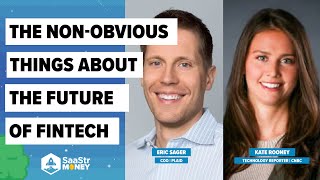
Eric Sager, CEO of Plaid, describes three waves of fintech: startups like Robinhood, incumbent banks going digital, and non-financial companies embedding finance. Plaid acts as a connective layer for bank and investment data, charging developers per API call, and is expanding internationally with new fraud and risk tools.
Chapters
Got to Plaid and to where you are now. And I'm sure a lot of people are interested to hear sort of your backstory, but I'll let you kick it off and then I'll tell you a couple of things about myself and we can dive into the conversation.
Sure. Thank you for having me. So my name is Eric Sager. I'm the CEO of Plaid. I actually originally came to the US as an exchange student from Germany. So I made my way to Mississippi, which was an interesting, interesting detour, and then started my career in fintech very early on at Capital One. Went from there to Bain, where I spent more time on financial services both here, back home in Europe and South Africa, and then joined Square relatively early on. Kind of helped grow that team kind of through the ipo, then joined a smaller startup called Bluevine and then joined Plaid two and a half years ago.
Got it. Did you overlap with the founders at all at Bain? The founders at Bain or did you overlap with Zach?
Oh, no, I did not. We actually got connected through common friends that I worked with at Square. They were in the Atlanta office, I was in London, I was in Johannesburg, and I was in San Francisco.
Got it. Got it. Well, it's a small world in fintech. Well, great. Now that's a helpful overview and you've got a lot of different slices of the fintech and finance world to bring your perspective for a lot of these topics. That's great. And I'll let you guys, I'll give you sort of an intro to myself. I'm a tech reporter at cnbc. I covered mostly fintech that includes crypto companies like Plaid, some of these sort of SaaS, fintech companies, and then a lot of sort of trading startups. So Robinhood is a big example and sort of the retail trading boom that we've seen this year. I was covering the Gamestop hearings in January, which kept me busy. And yeah, so that's sort of what I do. But let's dive into it. So the whole sort of umbrella of this will be the non obvious things about the future of fintech. I feel like fintech is now sort of a household name. People know what it is. You don't really have to explain financial technology when you're talking about it. So it is kind of interesting to look at some of the different angles and things we might not realize or people in the audience might not realize. And guys, I should also say feel free and please. I encourage you to add Q and A and ask questions in the chat. I'm Sure. A lot of you have smart questions and we'll try to get to those and spend some time doing that. But we will start with sort of the development of digital finance. And Eric, I'd love to get your take on sort of where we are now, what it's done for consumer choice and sort of the evolution of fintech. I guess it sort of feels like dog years, but we could say the last 10 years, we could say the last five years and even the last year during when we've all been home, there has been a lot of acceleration and digital finance. So let's start with that. What have you seen from your days at Capital One to where you are now at Plaid?
I've seen fintech come pretty much in waves. I think the first wave was the kind of, the original kind of fintech innovators, the robinhoods, the squares, etc. Of the world, many of which are now big household names. I mean they've built massive kind of businesses in their own right. The second wave really is institutions and other financial players who are increasingly building digital financial solutions themselves. Right. So they're now building fintech solutions in their own right. And then the third wave is a lot of the non financial kind of companies that are looking at things like embedding financial solutions and other ways of integrating kind of digital financial solutions into their kind of consumer experiences as well. And from a cloud perspective, we've seen those all three play out. We obviously have a really strong customer base in the first wave of the kind of the fintechs themselves, but we're increasingly working with large institutions on helping them bring their own fintech solutions to market and now also working very actively with a lot of the big non financial players to bring solutions to market as well.
Got it. And sort of the back to the obvious versus non obvious points of fintech, I guess. If you're working at a big bank, what do you think is, I guess, obvious about fintech? What do people know, what are sort of the, the facts and what's sort of mainstream in fintech right now? Where would you say we are in terms of what's obvious in this market?
I mean some of the obvious things, I think first and foremost fintech is here to stay. Right. It's not going to go away again. It's now embedded in how consumers think about the financial services and how they want to consume them. And that trend will only continue. It's not like people are going to go back to doing it in a different way once people have had a taste for how much better some of these digital experience are. They want to kind of pursue those and stick with that. And I think we'll see that continue to play out across all segments. I think what's come with that is also like this proliferation of choice. You asked earlier what's good for it from a consumer perspective. And that's one of the things that I think has been fantastic for consumers is consumers just fundamentally have more choice now than they've ever had before in terms of how they want to pursue some of these things. And in some ways even better. Even if you don't choose to use one of these solutions, you're still benefiting from it. I've always found that to be one of the most amazing takeaways if I'm a consumer and I actually use obviously my own kind of trading apps and so forth. But even if I'm not, if I didn't switch to some of the no cost trading apps originally, my own broker now is offering it at no cost simply because of the competitive dynamics. So I didn't even have to switch, I didn't have to adopt any of these things for me to benefit from it as well from a consumer perspective. And so those are like two really important things. One is the increasing consumer choice, and then the second is the fact that consumers, even if they're not choosing to go on any of the new solutions, are still benefiting from the change that these things are driving.
And what about demographics? You mentioned things like trading apps. I think of definitely mobile payments, things like Venmo. When I think of fintech, has that expanded in the past couple of years? Is it obvious across demographics or is it still sort of a millennial Gen Z focused market?
It's fair to say that it started with a more millennial kind of target audience in mind, but it certainly is migrating very, very quickly. And in some ways I think about it the same way when I spoke about my time at Square. But early on it was small merchants at farmers markets, et cetera. And then over time it became some of the biggest companies in the world, retailers using Square as well. And the same thing is happening across the spectrum, across these solutions. So while to begin with it might have been smaller, as the solutions become more sophisticated, they naturally move up. Market oftentimes also means moving into a slightly different demographic and particularly kind of getting older folks involved in it as well. And certainly what we've seen from a plaid perspective is once people get a taste again, once they start using it one time, their odds of using It a second or third time, a fourth time goes way up. And so that's what helps build kind of the entire ecosystem in that you have folks that have just traditionally been, I think, hesitant to handle some of their finances purely digitally, but once they do that, even just once in one context, they're not only are they more likely to repeat that context, that is I apply for a credit card completely online or a loan completely online, or I manage my PFM completely online, but by doing that they're also much more likely to use it in other use cases as well. So the fact that I got comfortable doing something digitally means I'm more likely to do something else digitally as well when it comes to fintech solutions.
Got it, got it. I'll go back to sort of that third wave that you mentioned. I guess that sort of as you described where we are now in fintech, by some of these technologies being embraced by more non financial companies, even bigger banks seem to be leaning into the fintech side of things. And then I mean other big bank CEOs you had Jamie Dimon for example, saying that they're threatened by fintech. Can you sort of describe the state of play I guess in this third wave where we are in terms of different companies paying attention to fintech and sort of set the stage there?
Yeah, I certainly think any of the kind of the traditional financial institutions, they have active efforts in this space. So they're either working on their own solutions or they're partnering with fintechs in one form or another to bring kind of more digitally forward solutions to market themselves. What's more interesting is the folks that up until now weren't really involved in financial solutions at all. So think of what Google and even Apple until recently are now suddenly doing and they're making huge announcements in terms of the kind of things that they're bringing to market. And I think we will see much, much more of that. And there's a number of studies that have been done. We talked to like Anderson Horowitz and others who are looking at, they think you can increase the LTV of your customer two to five times by simply embedding financial solutions into your flow more effectively. And you win on both sides because you are creating more value for the customer. I mean a traditional example would be Uber. Uber isn't just charging you for the ride, they're also able to embed the paying component. Or Starbucks has done a fantastic job with this. There's many other examples where it enhances both the value to the customer and at the same time it actually makes more money for the company involved. And so with that lens, it's increasingly becoming a strategic imperative, I think, for even non financial companies to start thinking about their embedded financial strategy and the types of solutions that they want to bring to market. Because if they don't, their competitors will get an edge both in terms of the actual quality of the solutions that they're able to bring to market, end to end, and they're going to be able to do that much more profitably, which could potentially subsidize the original business in a unique way. That's the really attractive thing. And I think that's something that's still a little bit non obvious about the space, is just how quickly I think that will happen and the size and scope of the opportunities that it opens up. For folks that traditionally haven't really viewed themselves as being in the financial services business at all, suddenly they have some really, really unique opportunities to embed these types of solutions in their experiences and to gain an edge both from a customer satisfaction, customer experience perspective, but also from the LTV that they can create and the value of the business that they can build as a result.
Yeah, that's really interesting. I think about the Starbucks app or Pete's Coffee where you sort of add dollar amounts and the idea that that is becoming a bigger part of their business, the idea of them earning interest on customer money. What's some of the ways that folks are monetizing this? Is it things like Traditional Interchange or how would a company like Uber make money on the fintech side? Is it more about, just like you said, keeping customers on the platform or are there ways and expansions for them, whether it's Uber, Starbucks, any of these guys, how would they actually make money in fintech versus having it as just sort of a reason for people not to leave the app and make it easier?
It depends on the use case, right? For Uber, obviously the main reason to do it is to kind of keep them on the app and keep them using Uber as opposed to using kind of Lyft or somebody else. But for many of the other solutions, if you're talking about loans or mortgages, kind of as distinct from personal loans, those things are things that would make you money in and of itself by embedding them in your flow. And so they help there if you think about taking out costs of the system. So a lot of insurance companies, traditionally they've done it through micro deposits or through cutting you a check, which is kind of a long process. If there's Issues the customer calls in, it creates customer customer service costs, et cetera, versus just seamlessly authenticating their bank account and making the payout right away. You win on both sides there, right? You win because you're creating a much better customer experience. Us Kate, suddenly get your payment for your car insurance because you had a ding on your windshield. You get the money right away, which you like. And so you're more likely to stay with that insurer as a result. And then two, it's far less likely that you would call in later with a question and create costs kind of associated with that. And so there's just a whole variety of different use cases that this applies to. But at the end of the day, it attacks all three, actually three sides. The first is it makes the experience better for the consumer. The second, it can enhance your revenue from that consumer. And then the third is it can reduce costs associated with like making sure that consumer has a great experience. And so the last few are what I think of as the kind of improving the LTV of the customer. And that's obviously really, really attractive. If you can successfully do that and bring those types of use cases to market, you have a really unique opportunity to differentiate yourself. And the reality is that so many customers are still with some of the more traditional players. That's who they do business with. And so there's a real opportunity to kind of leverage that into building this next generation of experiences.
And you mentioned embedded finance and some of the bigger tech companies getting involved. It seems like, I mean, we had news of Apple potentially launching installment payments yesterday, and it seems like a lot of the big tech companies are moving into financial services. Do you think there's sort of a ceiling on how far into financial services some of these companies can get from a regulatory perspective, will there come a time where they need to sort of rein in how much of a consumer's wallet they actually get?
It comes down to how they do it. In some cases, folks are looking to kind of build first party solutions themselves. In other cases, they're partnering with Goldman Sachs and others who are already regulated entities. And so we're a long way away from where a program like that is so big relative to the size of Goldman Sachs, that I think it would spur any type of different regulatory action. And at the end of the day, that's who's holding the money, that's who's holding the accounts. And so it really depends on how these folks execute it. The opportunity clearly is though, if you're Apple or Amazon or Google or Again, anybody else that has this massive install base and an existing kind of customer flow, even if it's traditionally non financial services oriented, there are unique opportunities to embed these types of solutions into that experience and benefit everybody involved. It benefits again the consumer, but it also benefits the company, in this case Apple, to be able to bring those solutions to market.
And so you've worked on both sides. You mentioned Capital One companies like Square and now Plaid, who's sort of the middleman in conversations with banks and some of these fintech companies. It seems like the banks in some instances are becoming more of a service provider. They might not have the brand. When I think of the Google and Citi relationship, Google is really the one on the banner or on the card, that's the one you're interacting with. You're interacting with the tech company and the bank is sort of the service provider. I wonder, I'd love to get your take on sort of the future of that for banks and sort of that dynamic of that relationship. Who gets the customer and is there any fear on either side that they would lose part of the existing economics or even sort of brand name?
I would view it a bit differently. I mean, I think Citi obviously has a fantastic brand. Wells Fargo has a fantastic brand, JP Morgan has a fantastic brand and they have millions, tens of millions of customers. Right. So I don't think the notion that somehow they're on their way out is accurate. I think what's happening is they have every opportunity to succeed in this arena as well as they're building better and better solutions. They have a lot of the things that they already need. They have the install base, they have a lot of the back end infrastructure necessary. They just need to continue to innovate on the actual delivery. So if you don't do that, then obviously you can find yourself in a more difficult situation. But from a brand perspective, et cetera, those are all institutions that I think are very much set up for success in this future as well. In addition, you have folks like Google and others who are entering the space. But the opportunity, think about how big the opportunity is in aggregate. Right. It's not a zero sum game. It's not as if we're playing a game where it's like for Google to succeed, they have to take from Citi or they have to take from Wells. I don't think that's true. I think both can succeed at the same time by just building better and better solutions that customers really, really want and love.
Got it? Yeah. No, it's Been interesting to cover all of these different announcements. It feels like big tech is moving into banking, banking is moving into tech. We're definitely seeing more overlap. We can move into what isn't obvious. I feel like we've talked about both and blended those topics. But the idea of what's under the surface, what should we pay attention to and folks in the audience in terms of what we might not know about fintech right now or some of the less obvious factors here? I mean, what comes to mind when you think of what isn't obvious to the average viewer or listener here?
I mean, a few of those things we already touched on. I think the first is just the benefits that accrue to kind of consumers at large, even if they're not actually using these solutions themselves. Right. And so whether it's, I mentioned the cost of kind of trading, but there's a number of other examples as well where it clearly has credit card costs, all these types of things that have gone down, even if I never changed providers at all. And so that's one of the things that at times I think is less obvious and it's actually really, really important because sometimes there's this perception that in order for somebody to benefit, they have to also switch. That's not true. Like, even the older folks that are not yet fully comfortable maybe with, like some of these digital solutions are still benefiting from the increase in competition that exists elsewhere and the changes in policy that others are making, including their own providers, without them having to do anything. I didn't have to change my brokerage account at all to benefit from lower trading fees. I got that simply because folks across the ecosystem were innovating. It was attracting initially thousands, then tens of thousands, hundreds of thousands, millions, tens of millions of customers. And then the ecosystem had to react in a way that ultimately was good to consumers. Right. It provides value back to consumers at large, irregardless. So I think that's the first one. The second area is that this is just getting started and it's still very much the beginning. And you said at the beginning, it's hard to judge, is it five years, six years, seven years? We're counting in dog years. But it's sometimes incredible to think about how far we've come in a relatively short period of time in terms of what some of the folks that are really kind of driving the innovation here are able to deliver. And again, that that mix of innovators now includes fintechs, it includes banks, and includes a lot of the tech companies. So it's a very diverse set of players that are, whether they're partnering with Plaid or doing it in other ways, but many of them are partnering with Plaid to be able to innovate in this way. And I think that's only the beginning. There will be more and more players that embed these types of financial solutions because of the value proposition that I laid out earlier. And increasingly, a lot of these things ultimately I think can be fully automated as well. And that's kind of the last piece where for you or I or our families or anybody else to really live their best financial lives. The challenge oftentimes is it's not one big decision. The difference between me being able to send my kids to college and everything else isn't just I made one smart financial decision over the course of my life. It's actually probably I had to make hundreds or thousands of smaller decisions in order to get to an optimal outcome. And every single one of those decisions in many cases still is filled with friction. I still have to apply for something. I don't know whether I'm going to get approved. I have to do a bunch of work, and at the same time I'm busy with my family. I want to spend time playing with my kids. I think there is a world increasingly where if the infrastructure is good enough and you have enough trust into the institution that you're working with, again, whether that's a bank, a fintech or a tech company, you can start, automate some of these things away, Right? And so imagine a world where like, instead of me having to move the money around or apply, I have somebody that's just kind of doing it on my behalf and it's giving me the option to accept or not accept that transaction. So instead of me having to go apply for a lower rate credit card, the money actually just moves automatically to the lower rate. And I have 24 hours or 48 hours or whatever the period might be to say, no, I don't want to do that, or yes, I want to confirm I can set those parameters based on what I, as an individual are comfortable with. But suddenly those decisions are made in an automated way with no friction, with no input necessary for me as the customer. And every single step along the way, I'm getting to a better outcome. That's the magic. And that's hard to see because people, I think, always have a tendency to want to bring it back to, like, what's the one big decision? But there is not one big decision. It was hundreds, thousands of small things that ultimately put you in the position to really have the kind of the financial health that you want for yourself, your family, or your business.
Got it. Yeah. I want to shift the conversation again, sort of to the regulatory landscape. Open banking has gotten a lot more attention, at least in the US with the recent executive order, President Biden talking about making banking data more transferable and the idea that banks would have to make it similar to how it is in the UK for example, that they would have to mandate that there is sort of an easier way to export your banking data in particular, and that Plaid really has been the reason that that's been doable in the US until now. How would that affect Plaid's business if open banking does come to the US and how does Plaid sort of plan on adapting or working within a potentially new regulatory structure?
I think the most important thing is we've always viewed the financial data as the consumer's data, right? So our fundamental belief is that it's your data. Wherever you hold your accounts, whatever data is in those accounts, that's your data. We see our job is building the infrastructure to make it easy for you to use that data for whatever use cases you want to pursue in a way that is safe, secure, and transparent. Changing that to an open banking environment actually fundamentally just reinforces that basic principle. That's what open banking, at the end of the day, is all about, that it really is the consumer's Data. And that's 100% aligned with how William and Zach thought about the business when they first started it all the way through, kind of how we're. How we're operating it today. We add value in so many ways to our customers as well, that a world of open banking, I think, is actually really, really good for us because it assures that consumers will have a right to access their data when and how they choose. And then it's our job as Plaid, right, to make Plaid the way to do that in the most secure, transparent, effective way possible. And then consumers and customers, developers, et cetera, will choose us as being that intermediary layer that helps make that happen.
Got it. And I mean, there has been some criticism from some of the banks as far as fintechs. I know Jamie Dimon called out Plaid in particular, but the idea that data is the customers, they've sort of criticized, I mean, just fintech in general, for using customer data. How do you guys approach customer data from a security standpoint, making sure the customer knows where their data is being used? Can you sort of walk us through maybe the risk for other fintechs who may be also using customer data in certain ways and how Plaid thinks about that.
I mean, we're very focused on if you go through kind of the Plaid link flow today, you see not only who all is involved. So as a consumer, you would see our logos on it, you would see that we're kind of involved in the process. You see in our disclosures exactly what, what information we're looking to access and why. And again, keep in mind, this is always something a consumer wants to do. A consumer is going to a site, whether it's to take a loan or to, to do a PFM or to fund an account, because that's the action that they want to take. And so we try to be as transparent as possible to share all the information that's going to be being, being accessed. And then on the back end, we give consumers tools like through the Plaid portal, that allow them to see the connections that they've made via Plaid, that allows them to see what data is being shared, and that allows them to disconnect or reconnect those connections as they see fit. And so you really want to live in a world, and we really want to live in a world where consumers fundamentally are in control in the same way that you're in control of who you share your bank statement with. The difference being once you give it to somebody, it's unlikely they'll ever give it back to you. Right? On the digital side, there is a path to just, you can have it deleted, you can sever the connection because you no longer want to use it. And I think that's where there's actually a lot of value that Plaid has brought to the ecosystem because you need to have a trusted intermediary. It's probably less likely, right, that you would want to share your financial information with a small developer that you don't know. But if you know Plaid's involved and you know you've used Plaid and you know you can access your portal and you can see in one place all the connections that you've made and you can disconnect those things. Suddenly as a consumer, you feel much more comfortable and it allows you to pursue again the use cases that you really want to pursue. It allows you to do the things that you want to do and get the benefits from being able to do that. And so that's the key for us at the end of the day. The digital solutions, I think increasingly clearly are better than the old solutions. They create more value for consumers. The means of accessing that value for Consumers is through a digital flow. We just need to make sure it's, again, secure and transparent and ensures that the consumer remains in control every step of the way.
Right, Yeah. I mean, I think about the consumer side of this banking data and any sort of data protection seems to resonate with consumers, but so does the idea of being able to use apps like Venmo or Robinhood. You can probably hear my dog whining in the background, but no, that's a super interesting dynamic and I think banking data is that topic we'll probably hear more and more about. We can sort of move on here to Plaid itself and how the company sees itself in the future of Fintech. I mean, like you mentioned sort of the branding. It seems like Plaid has been very much behind the scenes, sort of the plumbing behind fintech and really the connector of banks and fintech apps that we think about. Are there plans to sort of elevate the brand? I guess, like, I noticed Plaid more than I probably used to when I am logging into certain apps. I mean, what about Plaid as a company and a brand becoming maybe more of a consumer brand versus sort of behind the scenes? Is that something you guys have done intentionally or. I'd love to get your thoughts on kind of the evolution of Plaid and it becoming more, I guess, of a household name?
That's a very good question. So not in and of itself. I mean, for us, the reason you see the Plaid brand more is, is everything we do, we try to do in service of the consumer and the customers that we serve and frankly, even the institutions that are part of the broader ecosystem as well. Right. And so when doing that, we found that, like I said, the example on the brand side, putting the brand in there to be entirely transparent with a consumer about, like, who all is involved in kind of the exchange of their data, is something that we felt like was very good for the ecosystem. Right. So it's not. We're doing it not because it benefits Plaid per se. We're doing it because it starts with what do we want to do for consumers and what do we want to do for developers? And I think you will continue to see us innovate on that side. So it's less about us trying to subvert what any of our customers are doing or anything like that. It's more about, from an ecosystem perspective, how do we build an ecosystem that allows consumers, institutions and developers to effectively build the types of solutions that are good for everybody? That's the challenge. Right. And so that's really where our focus is. On building the underlying infrastructure. That kind of helps make that happen. In some cases, that requires us to take a more visible role to ensure that consumers have that transparency, to ensure that they know where to go back to later on. It's obviously easier for a consumer to remember just plaid and have 27 connections there and be able to manage them, than to have to remember all the individual connections. I know I've gone through that with my own passwords, for example, and I wish I would have probably used a password manager much earlier in my life, but there's just websites I've set up passwords with I literally no longer remember. Right. There's no way for me to go back to it. If I had one central source of all that information, and certainly something like financial information is even more sensitive than my password information in many cases. I want to be able to know that I have one ultimate kind of source of truth. And including the Pod brand is part of that, which in turn again, makes the entire ecosystem more transparent and safer for everyone. And that benefits everybody involved, it benefits institutions, it benefits developers, and it most crucially benefits the consumers as well.
Got it. And what about the future of Plaid from the product side? I'm sure you can't tell us specifically what you guys are working on, but how should we think of the evolution of what Plaid offers as a platform, as sort of a connector? Any hints of sort of what we will see from Plaid in terms of different areas, whether it's in banking or more on the tech side, what's sort of the roadmap for Plaid?
You're going to continue to see us invest in things that make that experience for consumers more seamless across the entire ecosystem of financial solutions. So we started out initially with only bank data. We've since expanded to investment data, liability data. There's certainly other types of data that consumers would want to access and share for certain use cases. And so that's a natural extension. We see a lot of consumers and developers wanting to operate cross border. I mean, personally, I'm an example of that. Right. But many others want to be able to do that as well. So expanding our offerings internationally. We started in the U.S. we now have a presence in Canada and a presence in Europe as well, and then layering on solutions that benefit the ecosystem as a whole, whether that's ways to attack fraud or reduce risk. There's a lot of things like that. Like you said, I won't go too far into specifics, but those are the kinds of things that again, they're all Things that benefit consumers, developers and institutions. Right. Us being able to build better fraud solutions that integrate through the entire flow, from onboarding all the way through how somebody interacts with a consumer throughout their life cycle. It's clearly good for everybody. Right. Minus the fraudsters themselves, who will have a much harder time committing fraud in the first place. But everybody else actually wins in that world, and we're uniquely positioned to bring some of those amazing solutions to market.
Got it. And I want to talk about one of the seminal moments for Plaid in the last year and a half. The Visa deal, of course, was a big deal. When it was announced, $5 billion deal for visa to buy Plaid eventually was called off. Can you talk about how that changed the course of for Plaid, what that sort of meant as an operator and what the strategy is now that Plaid is a free agent?
I think the good news there was. And Visa has publicly. Alan and Jack and others have publicly spoken to this as well. The intent was always to let Plaid run independently within Visa. So unlike many other acquisitions or planned acquisitions, the way I operate and our teams operated kind of internally was because we always assumed we were going to be independent anyway. It didn't really change how we went about our business. And so ultimately, when the deal didn't go through, again, very unlike other deals like this that I've been involved in in my past lives, it really actually didn't change. Because if you don't plan on integrating everything, you're still working on the exact same things you would otherwise invest in. We just felt like Visa at the time could help us accelerate some of the investments. Now, given what we've gone through and the fundraising and everything else, we obviously feel like we're in a fantastic position to be able to do that on our own. And so from that perspective, I feel incredibly positive about both the path that we took, but also in particular, kind of the future for Plaid and what it can mean for the ecosystem as a whole.
Got it. What about some of the interest in whether it's M and A fundraising around fintech? I mean, the word bubble has been tossed around, but what do you think about the private funding landscape and sort of the interest in fintech? Are there certain companies that you don't think are worth the valuations that they've been not chained, sort of in Silicon Valley at least. Where do you think we are in terms of the value of other fintech companies? I guess Plaid included, But just sort of the excitement from investors.
The excitement from investors is fantastic. I mean, that's one of the things that, again, I love about the US in general is kind of the risk taking and the willingness to kind of make these, make these bets because it drives so much positive innovation. So that in and of itself is a big positive and things like valuation and so forth. It's very difficult for me to judge. I mean, honestly, if I knew with certainty who's overvalued, who's undervalued, I would probably go to Zach and I would resign and I would go take some money and go invest in those players and go that route. So I think it's very hard to say definitively this is undervalued, this is overvalued. People at certain times said Square was overvalued, and here we are. They've done an amazing job. People said that about many other companies that turned out to do fantastic. Like anything else, it ultimately comes down to can those teams execute. And there's certainly such a big opportunity across the ecosystem as a whole that there will be many, many, many winners, even if things turn down for a period of time because they're fundamentally building amazing businesses. That's the key. Will that be everybody? No. But honestly, again, if I knew up front who's going to be in which camp without personally going to work for them, I think that's just very, very difficult to judge.
Yeah, I think that I saw a stat recently that 1 in 5 VC dollars was going to Fintech, which seems accurate based on how busy we've been covering some of this stuff. Really interesting. Well, I'm going to move to some of the audience questions here because we've gotten some good ones. We've gotten a few about crypto. One anonymous attendee. But somebody asks here how crypto can be made safer for ordinary investors. What can tech do here for crypto? And I'd love to get your thoughts on the industry in general and sort of where we are, but if you want to take that one.
Yeah, and that's a very broad question from a platform perspective. We certainly spend a lot of effort making sure that kind of the funding mechanisms, if you want to put some. If you want to put money into, from your bank account into a crypto wallet, that that happens kind of securely. So that's where our effort is. If the question is more towards how can you make crypto broadly more stable, that's just outside of my area of.
Expertise and sort of for the audience too. I mean, the way that you guys interact with crypto would be just funding bank accounts for Robinhood, for example, or Coinbase.
It's either funding the accounts or, again, allowing those players to build other embedded financial solutions that their customers are looking for.
Are there things about crypto and crypto companies that you guys cannot do for either regulatory reasons or just complexity of the market?
I mean, there's things that we don't do, but it's because we haven't built those capabilities. I don't know that they're specific to kind of any kind of regulatory limitations. It's more. We're focused on building the tools and capabilities that we see as being able to benefit, if not the entire, then at least the vast majority of the ecosystem. So we're not really at a stage yet where we're building custom solutions for any one subsegment. And I think that's a good strategy. It's allowed us to have the impact that we've been able to have, and in many ways, it's allowed our customers to continue to grow across so many different use cases, because we've taken that approach. And so we're less focused on. We're not focused on deeply understanding only crypto. We're focused on how do we make this better for everybody? Because the fundamental belief, again, is that as a consumer, I might have a crypto account, but I'm also going to have a pfm. I'm also going to want to do credit cards. I'm also going to want to do a personal loan. Maybe I want to take a mortgage on auto loan. There's just so many other things I want to do. And our job is to make that really, again, easy, transparent, and secure for the consumer to do across all the different parts of the ecosystem, not just help them only with the crypto space.
Got it, Got it. Yeah. No, it's definitely an interesting ecosystem to watch. Another question here about disruption. They sort of frame this as what part of the $350 billion plus PayPal empire is most ripe for disruption? I know you were a Square guy, so PayPal competitor, but.
Now PayPal is a customer.
So, right, there you go.
It's hard for me when I go meet the PayPal folks. It's always hard for me to live the square. The square pass down. You know, they look at your website, they look at your LinkedIn, they're like, wait a second.
Well, it is really an empire. I mean, and I guess it goes beyond just PayPal. But what part of. I guess fintech in general is sort of the most ripe in your mind for disruption here?
I mean, I always look at that from the other perspective, which PayPal, I think, is a great example of a company that's done a fantastic job being at the forefront of innovating and building better and better consumer experiences. They could have taken a very different stance. They were successful a decade ago, and they could have said, look, let's just stick with this. This is a great business for us. But instead, they're constantly looking at ways to make it better. Even if that opens them up to actually more competition, they're just confident in that. They can basically out innovate their competition as opposed to trying to close the walls down around them. And in many ways, that's what I attribute a lot of their success to. The reason they are where they are now is because they always constantly are thinking about what's the next thing I can do. Either improving on the existing experience that I'm already delivering or the new types of experiences that I can put into market. And that's where we've had the most exciting partnership with them, is working on a number of those initiatives to kind of help them bring that to customers.
Got it. Yeah. It seems like they're launching something new every week. So we've got another question here about pricing strategies. They say, what have you learned on pricing strategies? Providing the back end for so many leaders in financial services? How do you slice up the dollar, so to speak, between parties? So I guess, I mean, a question on Plaid sort of revenue model, too. How do you guys make money and how do you decide on a pricing strategy?
So for us, the key has always been to align our incentives, you know, 100% with consumers and customers in particular. Right. And so we only charge for successful API calls. So if you come through the flow and you don't get the experience that you want, escape because it doesn't connect, we don't charge anybody. We also never charge the consumer. We only charge the developer. So whether it's the PayPal or whoever uses kind of Plaid in their flow, but we only charge them when they're actually kind of creating value for both themselves and the end customer. And I think that model has worked incredibly well. It gives us a lot of incentives to help successfully implement and scale use cases. So we have entire teams internally that are literally just dedicated to helping developers bring to market new solutions and then subsequently kind of help scale them, because otherwise, from our perspective, we literally can't make any money.
Got it. Yeah, that's helpful context. We have a question here about expanding to new geographies. I know Plaid has moved into a couple different markets in recent years, what is that process like? And are there other geographies you guys have your eye on?
So from a. From a process perspective, you know, we've always kind of, I think, anchored on two things. One is where do we have strong existing consumer and developer demand? So in the case of Europe, we had some developers that we knew really wanted us there. We had a lot of consumers that we knew wanted us there. And so that always gives you a leg up, as opposed to going into a market where maybe on paper you think that's a better market long term, but in the near term, you don't really have any customers there and you don't really have consumers who really want you there. So we've really focused on those markets where there's already kind of an existing kind of demand for plaid and the services that we can provide. That's kind of penned up. And then the second thing is you have to make sure that when you do this, and I've done this many times in my career, that you are at a place where you can fully fund and invest in those markets for the long term. And there's a lot of tech companies, particularly like US tech companies actually, that have jumped into Germany is an example, just because I grew up there, but that jump into Germany, they sign up a bunch of people and then they find out it's harder than they thought, and then two years later, they're no longer in Germany. Right.
And what makes it harder just to sort of back up there? Is it the regulatory structure? What is sort of the biggest headwind?
I think. Well, I don't want to stereotype everybody in Germany, but I think people are just much more, I think at times focused on, like, they have a way of doing things. Like, if I take literally my own family to not offend anybody else, right. But like my parents, they have a certain way of doing it. My dad's the kind of guy that I remember, he came on a trip to the U.S. he was here for, I think, three weeks. And then he reconciles with pen and paper, all his expenses. And at the end of the day, he was 5 cents off and he couldn't let it go. He literally spent the entire night, literally till three, four o' clock in the morning. He's going through every single receipt trying to figure out what happened to the 5 cents. And he's just used to doing it a certain way. And I think if you have cultures like that, it's sometimes more difficult to bring in new innovations. And I think in Germany, that's been true in many areas. It's just been less fast to adopt some of the things relative to what you see in the US or relative to what you see in the UK and certain other markets. The upside is once you do convince people that the new way is better, they're very likely to stick with that new way for a very long period of time as opposed to switching again in a few years. But that's why when you go make those bets, you have to make them for the long term. You can't just make them for two years and then decide, well this isn't for me, I want to back out. Because then when you come back later, people also remember the last time they remember you tried to come, they remember you sold them on an idea, on an outcome that you didn't deliver on and they hold that against you. And so that's why, back to the purse point. It's just really important when you expand internationally to make sure that you're really committed to delivering a best in class solution and that you realize that that may not happen on day one, but that you have the wherewithal to really kind of stick with it over time. And I think I'm proud of at Plaid, specifically of how we've done that in Canada and Europe. Right. It hasn't always been easy, but we've stuck with it. We've continued to invest. We have a fantastic team on the ground there now and we're seeing the payoff in terms of the growth and the customer feedback and the consumer feedback coming.
Question for you. While we're talking about geographies, I guess operating in China right now, we've seen crackdowns on companies like Didi, other tech companies there. I mean, do you have thoughts on that market in general as far as the complexity and difficulty of moving into the Chinese market, especially as a fintech when it's dominated by companies like Ant Financial. And what's your take on China from a fintech perspective?
I mean right now China is not on our radar. There's many other markets that we feel like we can bring more value to based on the principles that I just outlined.
Got it. Any advice or thoughts on the market in general and sort of the difficulty of operating there?
I mean, I've never operated in China so I think there's other folks that frankly I think would be better to weigh in on that. I don't really have like first hand insight. I obviously have had a lot of conversation with folks that have operated in China, but not firsthand. So I Think that's one of those questions where I don't think I would have anything of particular value to add.
Got it. No worries. Well, we'll move on to a question about the early days of Plaid. I know you weren't necessarily there for the very beginning, but somebody's asking here about customer acquisition in the early days, days here, and how Plaid gained trust to enter bank account information. It's still relevant today. I think the trust question, but maybe you can sort of take us back. Even though you weren't at the company, you know the story better than anyone, I'm sure, but sort of the early customers, how Plaid made inroads and gained customer trust, and how that's still relevant today.
The interesting thing is, like so many founding stories, what is Plaid today is not actually what Zach and Williams set out to build Initially. They set out to build something completely different. And what they quickly found is that was the biggest challenge of making that product work, was actually helping consumers connect their bank account information so they could use the product. And then they invested in building out that capability, literally just for their own use case that was it. And then they did such a good job with that that they quickly found other major players, including Venmo, Coinbase and others who had the same challenge, who were looking to find ways to allow consumers to do what they wanted to do. Consumers wanted to use these services. They found it incredibly difficult to be able to kind of connect their accounts. And then the cloud solution is what ultimately kind of helped make that much more seamless. And it grew from there. And so it's really one of those serendipitous where like you're working on something totally different, you come onto a new problem and a new challeng that you didn't really anticipate in overcoming that, you actually end up building the product and the solutions in and of themselves that are ultimately the foundation of the business today.
Got it. We have a follow up on the geographic question, but I think this is relevant in the US too. A question about how do you solve the chicken and egg, as they put it, to convince banks to open up their APIs. And I mean, is that something you guys are approaching banks with, to say, hey, we've got this product, we can connect you to these fintechs, here's why you should do it. Are you doing any convincing or are you just hearing from the banks who want to do that? Is there any push and pull on Plaids side?
I think increasingly banks very much want to be a part of it for Many reasons. One is again, they too see it as consumer data at the end of the day. So they fundamentally believe in the principle of it's the consumer's data. And so as such, the consumer should have access to it. And Plaid being that connective tissue is the safest, most secure, best way of kind of help facilitating that. The second is, for many institutions, it's actually a competitive advantage in and of itself. Right? The fact that I can go to a bank, I can have my bank account there, I want to keep my bank account. This is particularly true for a lot of regional banks, et cetera, that maybe don't have the R and D dollars that some of the really large multinational banks or big national banks have. But I grew up in Jackson, Mississippi. I want to use the local bank. I've used it for the last 15 years of my life. I really don't want to switch, but I still want to be able to have a great personal financial management solution. I still want to have access to the best mortgages, I still want to have access to all these other things. For that bank to seamlessly integrate with Plaid suddenly facilitates for all of their customers the ability to be able to connect that data seamlessly to the whole ecosystem of providers that exist for those other solutions. And what ends up happening is consumers actually now are staying with the bank because that's who they trust, that's who they've always done business with, that's where they want to keep their money. But because of Plaid and that connective tissue, they're able to use all these other best in class solutions at the table at the same time. And so from a bank's perspective, that's a really good outcome because they weren't going to go build all those things themselves anyway. And if they made it more difficult for their customers to connect, eventually their customers would have to go elsewhere because they're not going to say, look, I don't want to venmo my friends, or I don't want to cash my friends, or I don't want to use a better PFM or I don't want to get a better term on my mortgage. That's not what consumers are going to say. They're going to want to get the best in class solution. And so that's where we're getting a lot of inbound interest is from those institutions in particular. And then as those institutions are adopting it, the big ones are seeing the same thing. Hey, for us to be able to kind of continue to deliver like a really great customer experience, we need to be able to make it easy for customers to connect to other solutions. Even if they end up being solutions outside of the bank, you still end up being the hub. You still end up owning the main account and the main relationship.
Got it. Yeah, that definitely makes sense. And I think people are hesitant to switch their core bank account.
Absolutely. They're only going to do it if you really almost force them to or if you make the experience so bad that the frustration just builds up and eventually they end up switching. But that's one of the things.
Yeah, that seems to be a business model for a lot of these banking startups. I think of Chime, for example, a lot of these neo banks that really do things that you think would be obvious for a bigger bank to keep their customers. I mean, getting rid of overdraft fees and early paychecks and things that the banks don't seem incentivized to do. So that's been an interesting dynamic and probably final question. I think this is another good audience theme to maybe wrap up on. We asked about disruption in fintech. This is sort of a question on traditional banks. What's at risk in terms of their business from a lot of these upstarts? And then what will banking look like in 10 years? So maybe you could give us some predictions. I know things move quickly, 10 to five years even, but what's your outlook for sort of the future of banking and what it might look like for the everyday consumer?
The first one, I really believe it depends on their approach. I think the institutions and the banks that take a customer first approach that end up building their own digital solutions, whether it's they build them first party themselves or they build them in partnership with a lot of the fintechs, I think those banks will continue to be incredibly successful. Again, they have the brand, they have the install base. It's the example we just spoke about. If you end up creating value for your customers by making it easy for them to really get to the best possible outcome for themselves, their family or their business, you're going to continue to thrive. If you don't do that, I think you will have a harder go at it. If your view of the world is this is not the customer's data, it's my data as the banks. If the idea is it's a complete walled garden out of which the consumer should never, or the customer should never be able to wander, I think you'll have a harder time. I think customers will see through that and I think the limitations will become more and more apparent and you will struggle in terms of more broadly, where will it go? I think the whole point on automation and removing more and more of the friction for consumers, I think is very real and I think it's incredibly exciting because that is ultimately what's gating it. And we've seen that progression. Ten years ago it was a lack of information, a lack of advice. People ended up paying more for credit and making less than ideal financial choices, mainly because they just didn't have the right information in front of them. Today, more and more of these solutions have actually brought the right information to your fingertips. You can log in now and you'll have plenty of fantastic solutions and apps, whether they come again from fintechs, from banks or from other tech players to tell you, hey Kate, you're paying too much on this, or really, we think you're going to run out of money if you don't do X, Y and Z. Over here you have the advice, but there's still friction. Every single one of those things still come with you. Having to take time out of your day to do a bunch of things to ultimately get to a better outcome. The next phase will be to remove as much of that friction as possible, including full on automating certain aspects of it. And once you do that, then it's more about who do you as K trust to be a good steward in the same way that you trust your financial advisor, you trust your accountant, or you trust whoever you work with in your life otherwise to make those decisions for you. A lot of those decisions will end up being more algorithmically powered because the data is there and the infrastructure is there. And then thousands, tens of thousands, millions, hundreds of millions of small decisions at a time. You end up optimizing the outcome for customers and people around the world. That's the path and I think that's incredibly exciting. It's not every single step of the way is going to immediately get us there, but it's adding all those small things up together, removing all that friction for everybody involved is how you ultimately get to a better outcome. And we will play a small part in that. But there's so many other folks like you mentioned that are getting the investments and they're focused on this space that I think that's the area that I'm generally personally, but also from a pad perspective, by far the most excited about.
Yeah, I'm personally excited for that future. I'd like somebody to cancel the subscriptions that somehow pile up.
Exactly. Those are like, it's small things, right? Initially. Initially, all they told you is you have subscriptions. But then you know what? When they did the studies of they told you you have all these subscriptions you're not using, but all you had to do was cancel. What percentage of people don't cancel it? It's still shockingly high, right? All you literally.
Or you have to find the part on the website and be like, they make it hard to cancel so somebody can.
Then it was, yeah, but then it was click here to cancel, right? And then the next step is, look, I'll just cancel it for you, right? You tell me the parameters, I'll cancel it for you. If you want to un. Cancel it for 24 hours, I'll un. Cancel it. But suddenly I'm actually making your life better, right? As opposed to just giving you more better advice. I'm actually making your life better. And that's the whole point.
I think that's a great place to disrupt and maybe wrap up the conversation. I think we're out of time. But, Eric, this was great. We covered a lot. Thanks so much for sitting down. And thanks everybody for tuning in and sending in some great questions.
Fantastic. Thank you for.










