The Playbook to Investor Relations with Zelkova Ventures Partner Jay Levy (LIVE Workshop Wednesday)
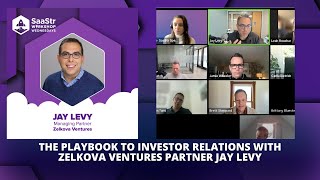
Live workshop (May 11, 2023) hosted by Jason M. Lemkin with Jay Levy (managing partner, Zelkova Ventures) on investor relations for early-stage startups. Jay covers firm background (founded 2007, based in Miami, 100+ investments, ~300 wires), market context (funding and valuations down since 2021; US flatter than international), and a data-driven playbook for investor relations: many startups have 6+ investors, investors prefer monthly email updates, 66% of investors want monthly cadence while only ~47% of founders provide monthly updates, and up-to-date investors are ~200% more likely to reinvest. Practical advice: meet investors in person before taking money, use a concise update template (highlights/good & bad, KPIs, investor requests, department updates, press/social assets), use tools like Notion/Carta/FounderSuite/AngelList, and manage reserve strategy for follow-ons.
Chapters
Everyone has joined the zoom. But thank you for coming back to workshop Wednesday. We have another exciting session this week and look forward to diving in. But first, thanks to our sponsors for this week's workshop, Greenhouse and Vanta. They will both be at Saster Europa next month. So if you want to learn more or meet the teams, please come. All right, welcome everyone. Okay, well welcome, welcome back to workshop Wednesday. Every week at 10am Pacific, we share detailed, interactive and hands on workshops. While you are logging on, please tell me where you're logging on from. I see we already have Detroit in the house. Welcome, welcome. All right, this week we have another exciting and interactive session from Jay Levy or Levy, I just asked you managing partner at Zakova Ventures and we will be discussing the Playbook to investor relations. Welcome Jay.
Thanks for having me. Looking forward to having a conversation with you.
Yeah, we already have some New Jersey in the house too. We were just talking about that. Just so everybody knows. I know we have a lot of week after week attendees which thank you and welcome back. But if you have a question, please put it in the chat. Once you have that question, I'll be messaging you individually to see if you want to unmute yourself and ask at the end of the session. Get those questions in fast. I know we get a lot of questions during these sessions and want to make sure your questions are answered and that we don't run out of time. All right, Jay, welcome and let's dive into a few starter questions. Sound good?
Sounds great.
Okay, what is one of your favorite investments you or the firm made in the past year?
So I'm not going to tell you my favorite since this is recorded, but how would I tell you my most recent? Because if I tell you my favorite, I'm going to get a bunch of angry text messages at some point from the others. But we recently invested in a company called Respondology and they are attacking the hate speech issue online specifically within comments. So we work with large brands to help eliminate hate speech within social media comments. So we're not much of double bottom line investors, but I do think this one has a double bottom line given all the concerns around social media. So think of your largest brands and sporting teams in the world who we're helping to really clean up the environment around social media for them. Great.
Okay, you heard it here first. The Playbook to being an investor. Don't list your favorite investment. Okay, what is one thing that has surprised you most about venture capital this year?
I would say how hard it is to actually get investments done, especially at the early stage, we tend to like to work in syndicates and work with other investors. And our view has always been that be contrarian, right? So write checks when others are hesitant, write checks when markets are down. So we're trying to be super active, but given that we like to do 20 to 30% of around, we need other investors at the table with us. And a lot of investors don't have this mentality. They're a little bit skittish to make investments. So that's been surprising because a lot of the data shows that the best investments are made during downturns. So I've been surprised and frustrated by that one.
Well, you queued me up perfectly for my next question. Who is one of your favorite co investors?
All this favorite stuff. So we really like working with what I call kind of the techstars network, whether that be techstars themselves, investing in companies during the programs and after the programs or. Or a bunch of the managing partners have went on to start funds that we work closely with. So people like Alex Iscold from 2048, Jenny Fielding from the fund, David Ari from Massive. So those are all funds that we like to work with and actually we're also investors in too.
Awesome. Well, thank you for listing your favorites. I know it might not have been your favorite exercise, but I will let you kick off with the playbook to investor relations.
Sounds good. So I'm going to skim through this pretty quickly. There's a bunch of data here and a bunch of results of the data so that we make sure to leave plenty of time for questions and you know, if need be, you know, the slides will be online and happy to answer any other questions and refer back to the slides if needed. So quick backstory on us. We've been around since 2007. We started in New York, we're now based in Miami. We've actually made over a hundred investments. We've wired money more than 300 times. So we invest early. We follow on heavily. Typical company initially is raising about a million to two and a half million. We'll do 20 to 30% of that and then reserve about 2x that capital for follow on. And at this point we are primarily B2B SaaS focused. You can see a sample of some of our companies on the right Quick update on kind of where we see the markets are right now. So it's no surprise that global venture funding is significantly down from its peak in 2021. Interesting enough, the US is flat, so most of the declines are coming from International, so, so that's good news. And this is CV Insights data that you can go and kind of really dive into. Valuations are coming down, fundings with valuations. You know, unicorn valuations were at a total of 13. This is the lowest in six years, down from 148. So that's significantly down that valuations are down and we're seeing that at all stages. Right. And that's very much driven by the public markets and everything flows down. So as the public markets comps sell off, the late stage investors can't invest at the valuations they were investing in previously. Then the mid stage investors can invest in the valuations they and then the early stage. So it just flows down really from the public markets. Deal sizes are falling. That's not surprising. As kind of to my earlier comment, funds are more hesitant to write checks and they're writing smaller checks. Rounds are taking longer to complete. I mean we're getting the luxury and I say luxury because it hadn't been for quite a long time of really getting to know teams for four, five, six months before having to write a check, which is incredible from our perspective and also really good for the founders from one perspective because they get to learn more about who their investors are and that'll actually come up in some of the slides. But it's not all bad news. It is a great time to launch a company. You've probably heard this time and time over. But we're obviously talent's more accessible, reduced competition and frankly you're forced to focus on economics and building a sustainable enterprise when the money is not so cheap. So that's a quick kind of from our view, high level state of the market. Probably nothing too new news there, but I think still important to understand. So I'm going to give a quick talk about managing your investors and what investor relations is. We think investor relations, we think public company. You go to their website, you click on their investor tab and you get a nice little portal that shows the annual reports and the latest presentations and who the executives are on the board. But startups don't seem to give too much credence and weight to investor relations. And I think this is unfortunately a missed opportunity at best and at worst can cause quite some issues for you in the future. So this presentation came out of several instances where we saw founders having issues with one or two of their early stage investors. And I will say this is very much targeted to early stage companies. So there's definitely a skew there. But what we saw was there were Some founders who were at odds with some of their early stage investors and we wanted to understand why, we wanted to understand the impact. So I tend to be pretty data focused. So we ran some surveys and I'm going to run through that and then run through the reasons why investor relations is important. So first off, 60% of startups have more than six investors. And remember, this is early stage, so this only grows as you grow, right? 13% of startups have more than 26 investors. And I would argue this is actually probably increasing now due to the syndicates and how you want to kind of categorize syndicates going into these companies. So really the takeaway here is one, you're going to have a lot of stakeholders, not just employees, but investors, and it's going to grow over time. So really having a process to manage this and to work with them will be in your best interest. The good news is 75% of founders feel that their investors are sufficiently updated. I give credit to the 25% of founders who answered honestly and felt that they weren't doing a good job. And hopefully just the survey alone gave them some motivation to work better with their investors. But only 58% of the investors surveyed feel like their companies keep them sufficiently updated. So there is definitely a disconnect between what founders feel and what investors feel. So surveying 47% of founders provided monthly updates, I was surprised it was less than half at the early stage. Yet 66% of investors want monthly updates. So there is a disconnect there right now. This also could be a bit skewed depending on stage, right? As we see later stage companies tend to reduce the cadence of updates to their investor base for numerous reasons, which we'll get to. But the key takeaway here is that the vast majority of investors want monthly updates. So then the question became how to do it. And this really surprised me. Surprised me. The vast majority of investors wanted updates via email, or you choose right? What they didn't want is they didn't want in person, they didn't want to talk to you on the phone, which is unfortunate because we like to do phone updates, but we're few and far between now. This may be changing as times have changed, but email seems to be the best case now with or the best mechanism. With that said, I think there are some other platforms out there. We have some companies that use notion to do their updates and I personally love it because it has an archive and a history. So these companies will create a notion instance that all their investors have access to and then I can go using the dropdown and see every update in one spot versus searching my email or searching our CRM system. So this one was interesting. Interesting to us. Only about 65% or so of founders feel that their investors understand the business. Initial response to this is probably well that's the investor's fault. Now I'm on the investor side so I'm going to push back and say that's on the founders for a few reasons. One, investors who don't understand your business really can't help, right? They can be Monday morning quarterbacks and no one wants that. But it's on you as founders to make sure you're providing the opportunity for your investors to understand the business. You can't force feed it to them, you can't guarantee they're going to take interest. But do yourself a favor and make sure you're providing the tools the so that your investors can really get what you're doing, especially as companies change and pivot and over time. So I thought it was interesting to see some of the, we had a freeform field within the survey to see kind of what investors are saying and I'll leave this up for a second and won't read through them all. But the main theme that's highlighted here and one or two of them is be open and avoid surprises. Whether those be good surprises or bad surprises. Investors, we don't want a surprise on either side. If it's going to have to be a surprise, obviously we want a positive surprise. But we're capable of bad news frankly we, we get a lot of it right. This is a very roller coaster type business. So the founders that investors tend to respect the most are those that do a good job avoiding surprises and managing the expectations. So that's a quick summary of the data. Why don't I run through the five reasons I feel investor relations is important. First and foremost to get more out of the equity you sold. Think of this as not raising money. Think of this as selling stock at a price, right? If you just got money from your sale of your equity, you could, you could argue you got ripped off. Try to get more, try to get advice, try to get support, try to get introductions right. And the best way to, to my point earlier to do this is make sure your investors are updated and know what the heck you're doing. So in a self serving way, and many of these are self serving for founders is to, to get more than just money out of the sale of equity. This is data from Visible I believe and apparently up to date investors are 200% more likely to reinvest. So another self serving situation, if you get yourself into a bind and need a bridge round or need a quick infusion of capital situation, you run into a situation like we recently did with Silicon Valley bank and you're worried about payroll on Monday. That's not the time to try to bring your investors up to speed and try to get a check out of them. And apparently the data shows that up to date investors are 200% more likely to invest. So do it self serving. So if you need more capital from them, you can quickly and easily get it. And to Jason Calcana's point is, you know, confirming this is we didn't give you all your money, we've got more or our money, we've got more to give you and we want to give it to you. If you're doing well, we like what you're doing. Another reason is to avoid trouble, right? We've seen this. Regardless if an investor has 10% of a company, 1% of a company, 1/10 of 1% of a company, they have rights and they can be a pain. Attorneys are expensive, distracting and this is typically where we've seen issues come is miscommunication. Investors that feel as if they're not being treated well, they're not getting updates and next thing you know they're on their phone with the attorney and the attorney, you're getting a letter and from the attorney and you know, typically it's, it's not an attorney at one of the big venture fund companies that could, you know, tell this investor, hey, pause, like this is not how to handle it, it's you know, attorney who's also doing, you know, car accidents and divorces on the side. But needless to say, it's going to create a headache for you and it's not something you need to have. So I think this one is most important. They continue to be self serving because it gives you an opportunity to step back and reflect and think right as you draft those updates. And be honest, all of us know that when we get an update that's a page and a half long and everything is killing it into the right. It's bs. That's not how startups work, right? This is hard stuff, it's emotional, it's challenging. So look at the process of developing updates as one is taking a look in the mirror and seeing how things are really going for you. And lastly, to quote Peter Drucker, it's the right thing to do, right? Successful Person places more attention on doing the right thing rather than doing things right. These investors entrusted you with their capital, especially a lot of times seed investors might be, or friends and family, their own capital, they're doing it based on a personal relationship. Give them kind of the respect they've given you and the trust they've given you, you know, and an update a month isn't that hard. Let me see. So some quick tools and tips and then we'll hop over to Q and A. This is a template that you know is our spin on an investor update. You know, I like to have the good, the bad right at the top. KPIs develop these in conjunction with your investors. But none of this data should be data you don't need to run your business. Right. There's nothing I as an investor should need from you that you don't need. And if there is, there's probably a conversation that has to happen. Investor requests, put these towards the top. So many times I see these buried before the updates of all the departments. So you know, we kind of have the highlights, the KPIs, the requests and then below it, the kind of all the highlights from each of the areas of the company which can be done by kind of the leaders of those divisions. And then don't forget to include the press coverage and blogs. And if you want your investors to share anything in social, you know, whether it be Twitter, Instagram, put the content there, make it easy for them to kind of copy, paste or click a button and share and get your word out. There are a bunch of tools out there, you know, things like Carta, things like Notion. I mentioned founder suite, Angellist. So there's different ways to kind of leverage technology to help manage your investors. And this was something our, one of our late stage companies has started doing that we've been involved with since the seed round that now has 75 plus investors. And they're at a point where for competitive reasons they're concerned about doing monthly updates. So what they've done is they do for their boards, they have regular communication as all boards should, and then for the early investors they do semi annual updates and then you call with the team and then for everyone else they do a investor day which is phenomenal. It's about a four hour webinar where it's almost like a board meeting slash marketing. They start with, you know, a little overview of the industry, the market. They, they refresh what the company does, they go through kind of the product roadmap, they do a Q and A financial sales and marketing and it is an incredible process and it's very much like a public company might do. An investor day that they've modeled after. Highly recommend this for later stage companies. So we're going to stop there. I'm going to stop sharing and happy to hop into any questions.
Great. Okay. I saw lots of wide eyes at some of those comments, so I'm excited to see the questions come in. First question, you said most investors do prefer email. How often should you be meeting with them in person regardless of that, like monthly update preference?
All right, I'm gonna, I'm gonna answer this a few ways. First off, try to meet with them in person before you they invest. We see that way too often, especially in the recent kind of change in the world that founders are not meeting their investors. And one of the points I didn't say, but for an Investor, you are one of 10, 20, 30, 100, 200 companies in a portfolio, right? We are diversified. For your company, you are one of one. And I hate investors. Can write things off, make your lives miserable for no reason. And usually this happens because of a personal dynamic. This is very much a relationship and dating or marriage. And there's something to be said about sitting across the table from someone and seeing the whites of their eyes and gauging their body language and going to dinner with them and seeing how they react. So I would highly recommend you try to spend some in person time with investors before you take their check. I get that you're hungry for money, you need it, it's hard. But you don't want to take the wrong money because could just hurt you long term. And this is your baby, this is what you're working on. It's one of one for you. I think it depends on the investor. Right. I always say there are three types of investors you can get on your cap table. Those that write money and are going to help you incredibly. Those that write money and are going to leave you alone relatively. And those that write money and are going to make your life a pain. You want to avoid the third, right? So assuming you can avoid the third, you're going to be left with investors that write you a check and help you. Those are the ones that you're probably going to be super active with, you're going to be texting with, you're going to see, you're going to have dinners with and then those are the ones that then they're going to be the ones that write you a check and want your updates and kind of Chime in every once in a while. Those are the ones that you got to kind of gauge based on relationship. But you know, if you're able to see them once a year, they probably would appreciate it twice a year if they're local in your city, you know, once a quarter, grab lunch with them, you know, keep them engaged. So it very much depends on kind of the role the investor is playing with you also. Great.
And then as a follow up question, how many dates, quote dates should you be going on before you make that decision to enter the partnership?
So in the current market environment, I would say as deals are taking longer to close, you should be in regular contact with these people. Right. Whether that be calls, zooms in person, you know, once a week, you know, giving them the updates of where things are on the business, on the fundraising, because that's an opportunity prior to them writing the check for you really to get to know each other. You know, if you're in New York and they're in California, it's not relevant or not realistic for you to get on a plane every week. Right. To go meet with them. But you can hop on a call and give them a quick update and send them a text if that's what they prefer and really build that relationship.
Great. We have a few questions in the chat. The first one being on your slide, I believe it's 10. The chart where it says email, you choose in person, other and phone for the you choose. The question is, is that a choice between email, in person, other. What exactly were you referring to?
Yeah, that's really. And sorry, I just let me close this out. That's really a. We don't care. However you want to do it, just do it.
Okay, great.
Is the reality of it. Yeah, it's like the, the medium doesn't matter. Didn't matter to that group. Just do it in whichever way you want. So some of that might be phone, some of that could be. Yeah, we have one company that does. I mentioned notion, but they also do like a real three or four minute voiceover to give context, which is super helpful via video.
Great. Our next question, we have a lot coming in. Okay, Joffrey, if you are on the line, do you want to ask your question out loud?
Sure. I'm just trying to unmute myself here and.
No problem.
Hi, Jay, how are you doing?
Good.
I have a real estate I. I'm calling in from downtown Miami, likewise right across the bay from where you're likely located. And it's a real estate related question, which obviously is Slightly off topic. I'm just curious to pick your brain on this. I feel like it's still relevant but curious to hear your feedback on this. What guidance would you provide founders in regard to limiting overhead like real estate and best practices for officing, working from home versus hybrid versus return to office. Is it a case by case basis or do you incorporate tax accounting, collaborative cultural benefits? Do investors have any sensitivities other than not spending unnecessarily or committing long term?
So I'm a fan of get get back to an office for startups. I think it's in an ideal world you can't replace the human interaction of being in person from Zoom. So you know, I'm a fan of like be in person. I know that's very difficult right now as we have a significant amount of this country that wants to be able to work remotely. I personally feel we're doing damage to ourselves by by not having the community in person, both to the companies and at a personal level. From an office space perspective, I've always been like the, you know, grow out of it, not grow into it. Right. So for a startup perspective, you know, don't take more space than you think because you're going to grow into it, take space and then feel like oh shoot, I have way too many people in here. We got to move somehow and find new space, larger space. Don't take on that excess overhead, but have space I think is incredibly important.
Understood. Thank you, Jay.
Recommending I put shoes on during the workday? No, I'm just kidding. Our next question comes from from we are going to have Ken unmute and ask.
Hey Jay, my name is Ken, coming in from Chicago. I'm glad you said, you know, beyond just capital, work with partners that can help you build the business. Right. That's what I'm more interested in is that side. I need the capital, but really I need the help.
Right.
I posted in the chat, have you ever seen an agreement where your the entrepreneur is requiring the investors to help with certain objective key results? Right. Maybe it's certain partnerships, maybe it's developing xyz. Have you ever seen anything in agreements where there's that type of requirement a part of the relationship and how do you enforce it?
I was going to say the enforcing that's challenging. What we've seen is and I have a friend who does this, he's an angel investor, he's in the clean energy space and companies go to him because he can help. Right. And he has an advisor agreement and he's Compensated typically in some equity for what he produces from the advisory role, which is separate than the equity that he purchases as an investor. It's difficult, I think, to put down on paper the expectations of what an investor is going to do. Where I was getting to that was, you know, find investors that other founders tell you are super helpful. Find investors that have invested in similar industries that have the context that you might have, and that can help. Right. But it's very difficult to kind of put pen to paper there and stipulate that to your point. It's how do you enforce it? But it can be done through a separate, separate agreement from an advisory perspective. Yeah.
And that goes back to what you're saying about spend as much time together before you accept the money so that you can really feel like, okay, these people are actually gonna put some sweat into the effort.
Yeah. And I think it's a kind of a level of expectation. Right. Like if I'm an investor and I'm gonna help you with what I'd say stuff investors should do. Right. Like strategy of business, some intros, fundraising. Right. And I'm gonna be spending a few hours a week on the company. Right. Like, I don't know that I deserve to be compensated more than the compensation from my investment. Right now, if you're going to look for someone to regularly be involved and we're talking two or three days a week, that's a different agreement that has to happen. So I would be wary of any investors who are writing a check that also want compensation in some form, whether it be stock or cash or whatever, for what I would call the typical support investors should provide. And there will be some investors at Free Ride. Right. Who don't provide any support and just provide the capital. Right. And trying to limit those is ideal. And obviously limiting those that provide headache with capital is ideal.
Great, thank you.
Great. Okay, our next question. What should I do if my lead investor leads around with a competitor.
Be pissed off? I mean, I think it's worth a conversation like one, you know, whenever we've run into could they be competitive? Right. And there's could they be competitive today and could they be competitive at 12, 18, 24, 36 months? Right. So where does the roadmap and the client base potentially over overlap? Not just today. You know, we've always reached out. And typically if I'm reaching out to an existing company to say, do you think this is competitive? Just doing that email or phone call probably tells me I shouldn't make this investment, that it's not That I think it's potentially competitive. So I think it's, you know, having a conversation with that board member now is one of the questions is is it the same board member? Right. Because that depending on the fund and how they're structured that could be relevant. Right. And if it is the same board member, maybe there needs to be a conversation about a change in board member stepping off the board. You know, I think it's worth a conversation about why they felt this was appropriate and not competitive.
Love the honesty in that answer. Our next question comes from. I am so sorry if I get your name wrong week after week. I'm so sorry I got J's wrong at the beginning of this session. If it makes better Shantanu, correct?
That's correct. Yeah.
Thank you.
So, yeah, Jay, thanks for, thanks for taking the time. My question was about like the change in interest rates have caused a lot of investor to assess the how investment is to be assessed. So question for you, is there anything that the founders should communicate to investors given that given just the risk off environment we are in?
So I'm going to assume you're an early stage founder. Is that a fair assumption? The analogy that I give is it's kind of like scuba diving, which I've never been. So it's not the best analogy, but it works. So the early stage companies are very kind of low to the bottom, right? So starting out bottom of the sea floor, the storms that are going on, on at the surface have less of an impact or should have less of an impact because you need more time to get to the surface. Whereas the later stage companies, those storms are much more prevalent. Right. So I think the current interest rate environment is one where everyone is kind of taking a pause if we feel everyone can have their own views of where these interest rates are going and the impacts. But the argument is you need three, four, five years to build, right? Why not build in an environment where there's less capital available for competition to start, where talent is more accessible, where companies that you're going to be procuring from are cheaper and you can negotiate, right? Like that's something that people aren't realizing right now that you want a salesforce license, a HubSpot license, you can go negotiate the heck out of that a lot better than you could have two years ago. So your cost of starting are going to be lower now, you probably raise a little bit less, but it should be all, all congruent. And I think that's really the story is now is the best time right we know that tomorrow we are one day closer to an upswing than we were yesterday. Right. When you're on a bull market, you might be one day closer to a bear market each day, but hopefully we're a day closer to things being better than we were yesterday.
All right, I know Jay has a hard stop.
I can go a few more minutes if there's some questions.
Okay. If there is one last question from the audience, please let me know. I know we normally have more time here. Speak now or forever hold your truth.
Thanks for doing this, Jay. It's great.
Good to see you. I got nervous when I saw you hopped on. I'm like, sorry.
I should have been there. I would have been there from the beginning. I should have been.
I'm glad you. I'm glad you weren't. I didn't need the B2B SAS expert.
Hey, before you go then. One to ten. One to ten. Maybe you hit this earlier. I should have been there to get 1 to 10 vibe check on precede 1 to 10.
Oh, I'm 11.
11.
Six.
Six. Really? B Nine figure valuations. How those deals floating today?
You know, it's. I think we're going to see a lot from like the snowflake IPOs and some of the other IPOs. Right. That are hopefully going to come out so not.
So raising series B rounds. What's your vibe, Jack, on how hard they are to do?
It's tough, right?
One to ten. What do you think it is? How, how, how, how, how. How vibrant is the beat? Series B.
Quickly. Right. Okay. So it is kind of in the beginning I said the biggest surprise is how hard it is to get deals done.
So hard. Right.
In a market where investors who take risk. Right. That's what we're searching for. Right. Risk at good prices, which is what we're now seeing. Won't write checks. Right. We just did a deal that went at a valuation of about 25 million, which is late for us, but they've got revenue that if this deal would have happened two years ago, would have been a 75 million pre. A third the price trading at a 6x multiple to revenue with real revenues. That would have been. And took five months to get done.
Yeah.
Would have been done in 30 days and we would never have gotten in two years ago. Yeah, it's crazy.
I think it's the worst. We're outside of Angel Seed, where I think is as vibrant as ever. There's so many rich founders and individuals that want it. They don't care what.
What nasdaq's at.
They don't care what multiples are at.
Right. Nor should they.
Right.
But beyond that, I just can't believe how frozen the markets are. Even with multiples the way they are, when we still see incredible growth from Zscaler and Cloudflare and HubSpot even it's not as good as a year ago. The people have not stopped buying software.
And we're back to a point where. So we had a big challenge in kind of the heyday of, you know, 2020, 2021, 2019, where we tend to be very valuation conscious. Valuation matters at the early stage, especially if you're not a fund searching for grand slams every time, which we're not. So it was tough, you know, doing pre seed deals with 15 and $20 million valuations we just couldn't justify. And now they're back down to kind of some reality. What we're seeing on average is a million and a half dollar round on a six and a half post. Money safe. That tends to be what's now. And that's a win win for everyone. I think it'll create a healthy ecosystem where there can be returns. Ultimately, we need to provide returns to our investors in order to stay in business, to keep funding the ecosystem.
Hey, one last question. You got to go just on that. Curious. So you're getting. So these rounds are back structurally to a place where you can do them. So you're in market, you want to do these deals, you've got plenty of capital. Right. How worried are you about the next round today though? How, how are you thinking about that? When I think it's much less predictable than it's been in my history investing around, it's harder to predict.
I'm not. Because what we're looking for is investors who are willing to work. We work with investors like us who are willing to follow on and write another check into that company. If the company needs another year or two to kind of get the traction, I got it. And for the market's turn. So I hate to say it, I love a company that we invest in and they raise a million and a half dollars that gets them a year. Plus in 12 months they've hit 75% of their goals, but not 80 or not 90 or 100. And then they need their existing investors to double down. I've got a ton more information. The valuation isn't going to move that much and that's the arbitrage opportunity. So for us it's about reserves and I think a lot of investors and we've seen this and we've taken advantage of it. Didn't do a good job of managing the reserves to follow on. And then you hit a situation where the markets dry up and good companies that have done well need capital and the assumption was someone else was always going to be there to write the next check. And when that dried up, now what, and that's part of the question to kind of ask to your investors is what are your reserves for us? Right. If we do well but don't kill it and we need another check equal to what you put in, is that part of your model? Yeah.
I've written this post like 3 or 4 times how all reserves work and I think founders should ask. I think that's interesting that you've basically got almost a one to one reserve for folks that make some progress.
Right.
It sounds like.
But for folks that are watching this live or watch it later, listen, that's relatively uncommon in seed today. It used to be more common in the older days and then when seed exploded and people did play checks and people bigger funds played early and or folks are one and done. I would say it is uncommon today that that happens and it's worth asking before you take someone's money and it's worth asking now just what's your reserve strategy? So you know, because I, I've done a few checks like Jay has done in my winners and it works. Right. But a lot of folks have no reserves today. They just have nothing. Right.
We've invested in at least three companies six times or more. It makes sense.
Right.
They've all been successful but all those companies have hit turbulent times right. Where they needed a quick capital and their existing base was there. And we've seen it through kind of the past, you know, downturn. Too many early stage funds didn't just. They always thought someone bigger was going to be there to write a check at a higher evaluation. And when that dries up, you got to somehow help a founder keep the lights on, especially if they're doing well. Now if they're not doing well, okay, that's a different story. But if a company that's doing pretty well, you got to figure out how to work with that team.
Great, great set of insights. Thanks Jay.
Yeah, thank you. Jay, thanks for joining us today. We really appreciate the session, the time, etc. And thank all you for joining next week. I think I get to reveal this information right now. We had a last minute ad. We have Jack Altman, the CEO of Lattice joining us next week. So thank you, Jay, again, and look forward to seeing you all next week.
All right, thanks for having me. Have a good one.










