The profitable growth strategy every marketer needs to understand with Box, Salesforce & Attentive
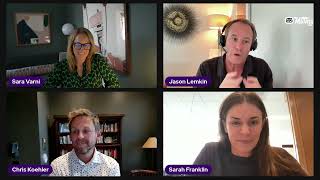
Sarah Franklin from Salesforce, Chris Kohler from Box, and Sarah Varney from Attentive discuss how companies are marketing through inflation and supply-chain chaos. They argue B2B needs to steal from B2C: personalization, conversion focus, and tying every marketing dollar to revenue. Brand spending isn't disappearing, it's moving to measurable storytelling.
Chapters
Hey everybody. So excited to have you here. Hope everybody can hear us. Well, if there's any issues, put it in the chat. But I am Jason Lemkin from Saster. We're the world's largest community for cloud founders and I think we have absolutely probably the most interesting panel or session I've ever done. I've been doing, we've been doing eight Saster annuals and I've been doing events of some form for 10 years on accident. But not only is this an all star panel, but I think we have the perfect group for the time for July 2022. And let me tell you, let me introduce them, but tell you why I think these are particularly interesting folks to talk about where we're really at in these weird times. So we've got Sarah Franklin here, president and CMO of Salesforce. And what's Super Interesting, Salesforce, $30 billion in ARR growing 24% and accelerating, growing faster than before. And for everyone listening and maybe Chris or Sarah Varney, help me do the math, but 24% of 30 billion is adding 7 billion of net new ARR per year. So like we just need a masterclass right there because that's a lot of pipeline to add. I think that's a lot of leads to add 7 billion. But, and what was interesting is at the end of last quarter and then we'll, we'll dig in with all the panelists and we'll get a snapshot of where it today, Mark Benioff said they weren't seeing any signs of a slowdown yet. And Salesforce is accelerating its scale like when this group of panelists started doing SaaS. I don't think we ever believed anyone could get to a billion ARR and we certainly didn't believe if you got to 10, you could accelerate. Right? So I think this, we're going to dig into this. It's incredible that this happened with Salesforce with Chris next, Chris Kohler, CMO from Box. Box is in its own way just as interesting. Box is crossing a billion in ARR and it is accelerating, right? It is accelerating almost growing 50% faster than it was six quarters ago. There's a bunch of reasons going multi product, going more enterprise but again accelerating at a billion in AR in these crazy times. So we're going to dig in there. Super interesting. We all know Box, we've all followed it. But Box, Box started off as a rocket ship. It hit a medium or a slow growth path and then re acceleration. Fascinating. The time when the stock market's Down a tiny bit which we'll get into. And then Sarah Varney is not only a pro in SaaS and Cloud, but at a very interesting place today at Salesforce. And then Samoa of Twilio which exploded, right. The number one cloud communication company grew, number one API company, number one BTI company and then went to Attentive. And folks may or may not know Attentive, it's one of the most successful next generation marketing companies. Four billion dollar valuation last time. B2B and B2C. If you're in the E Commerce or Shopify ecosystem, you'll know Attentive because it's one of the two great. I don't know that. And Klaviyo are ones you may not have heard of if you're not in that space but if you have, you're like, oh my God, these companies are growing like never before. And an innovator in mobile marketing and SMS before anybody else. And so Sarah not only has seen it all, but she in some ways may have the most Pulse on how B2C and B2C customers are doing differently today. Right. It's hard to tell. I don't know. So anyhow, what a great panel in any other time but I think goodness gracious when the market is down but SaaS is up. Like this is the weirdest times. Like this is who I want to learn from. So I only want to do one question where everyone goes around. But can we start with Sarah with an H? Just tell us what's the pulse today? What are you seeing in your customer base? Are we being impacted by the markets? Are there strong and weak sections? So what? I just want to get everyone's pulse of what they're seeing from their customers and pre customers, their pipeline, their prospects.
Yes. And so we're going around the horn. I'll try to keep it brief.
Take your time. There's a good. This is valuable. We want to know what Salesforce is saying. We want to know how we're going to hit the $7 billion plan.
So does so do my co CEOs. I get that question every day. So what we're seeing with our customers is definitely there's anxiety. There's all the things that everybody sees between inflation, supply chain disruption, labor shortages or you name it. And there's that anxiety. But the good thing about SaaS businesses is that technology is really the solution that our customers are seeing is the way that they're going to automate themselves to get more productivity, more efficiency and just help their businesses run better. And so it's interesting, whether you're talking to CIOs, CDOs, CMOs, CROs, CEOs, they're all saying we need to invest more in technology and we need to even. It's not just about digital transformation. It's about automation and productivity and efficiency. And that's the conversation that we're seeing in the demand environment.
And are you seeing, are you seeing pot? I mean, this, we can digital transformation, whatever you call it, I mean, this became a tidal wave right in the CEO's office. Like everyone wanted to put an amazing amount of their budget into digital transformation. Are there pieces of it that are on pause or slow down or people are just observing how things are going well?
It's why I think that this group, this time has never been more important to be a CMO or a CDO or cco, because this is the area of it's not just digital transformation. It really is, how am I doing my marketing, how am I doing my sales, how am I doing my customer service? And that whole area is just ripe for just reinventing itself and having the area of investment. So there's never been a more important time to be a cmo because every CEO is looking right and saying, hey, I need you to help me drive growth, but also to drive efficiency to make your. How can you be more effective in your demand gen? How can you be better at driving conversion? How can you be better at automating the engagement? And that's what we're seeing.
And Chris, what are you seeing? Box is so interesting because it's gone. It's nrr, it's enterprise penetration. All of it's gone up as Box has become more critical. Enterprise app. Right. But it's still got a piece that's, that's almost B2C and SMB at the bottom. Right? What do you, what are you seeing in those different segments of the market?
Yeah, I think following on, Sarah, like everyone is looking around, driving more productivity and efficiency out of every dollar that they spend in the organization. And it doesn't matter if you're an SMB, customer, three person architecture firm or a large enterprise. You're trying to figure out how do I create a better customer experience, how do I engage with my customers and then quite frankly, how do I make my employees collaborate in a world that is very hybrid. Right. So those trends aren't going away because there's economic conditions. I think you, as a, as a brand, we have to make sure that we are mission critical and valuable to them and In a downtime. So there's a lot of focus on are they getting the value out of what they purchased and are we living up to our promise around that? So we haven't, we haven't necessarily seen a slowdown. I think this notion, digital transformation has been talked about for many, many, many years, and it probably means something different to everyone else. But this notion of creating great customer experiences, driving efficiency in the business, creating a great employee experience as well, those trends don't slow. We haven't seen a slowdown. And I think they may just accelerate.
Got it. And when. And box is interesting to me because there's the simpler version of box you use. Right. The simplest version of box. It feels more competitive or more commodity than the more enterprise and fully functioned workflow version. Right. Do you see it? Are you seeing any signs that there's budget pressure or pricing pressure or at the bottom end people are being more sensitive today or you're not getting that pulse in the market right now?
We haven't necessarily seen at bottom end of the market, a lot of economic pressure around that. That still continues to be a good growth vector for us. And then at the enterprise, I think, you know, part of what we're trying to figure out is is there opportunities for us to be more critically valuable in an organization and, you know, where can we add more value? So we ne. We haven't necessarily seen it today, but again, things can change in a month from now. You know, we may see more pressure around this, but the like. Like Sarah said, there's a lot of uncertainty for sure, but we haven't necessarily seen it drop out.
Well, I want to hear from Sarah Varney on this, but both of you brought up an interesting question about positioning in 2022. Like, if you're. Whether it's CDO or enterprise. So if you have any. Let's come back to that in the next point. But if you have some thoughts about how your positioning is changing this year that are more depth, I think that's interesting. But Sarah V. Generally, what are you seeing and what's. Tell me what's going on. If you have intelligence on one side of your business, why are fate. Why is Facebook so nervous and Google, why are these guys almost. Why is Facebook doing hiring freezes? I mean, I think these are good businesses. Why is Google slowing down? Like, maybe you even have a better pulse than the rest. Like, but. But talk about both sides, but why are people freaking out in B2C today?
Yeah, well, I mean, I think it's just been a Perfect storm for the average B2C marketer over the last three years. You've got a global pandemic, you've got, you know, this inflationary environment that we're living in. And then you have all this regulation, especially around traditional ad channels that are becoming much more.
Well, that's for sure. Right.
And so, you know, we've seen all three of those things come together in our business. In particular, as you mentioned at the top of the call, we sell to B2C retailers quite often. We have a large overlap with the Shopify customer base. And I think as you know what's interesting, as we've come out of COVID there were a lot of people that at the low end of the market that started up these kind of hobbyist businesses, you know, the bracelet shop on Instagram, and decided, you know, they were going to leave their full time career to take on, you know, a passion project in retail in this case. And you know, as people have come out of COVID and realized for whatever reason that that's not maybe their lifetime calling, you know, that we've seen, we have seen some softness in that, in that low end of the market. And so but I think also even in that, you know, across the full spectrum of customers we sell from everyone from the mom and pop shops to, you know, Michael's craft stores or Forever 21 and I think everyone is really trying to do more with less. And with all the regulation around GDPR and you know, in our space in particular in idfa with all the changes that Apple's making in terms of what actually gets to your inbox, people are really trying to find new channels to engage customers at that same level of efficiency. And so we're really trying to, we have a, I'd say, you know, switching over to what our strategy, how it's changed over that time period, we're really trying to sit down with our customers and be very consultative on how they can navigate through all this new regulation and still engage their customers in a way that's compliant and you know, not going to get that, not, not lead them to see any drop off in conversion.
Let me just one thing that I'd be curious your perspective on and then open up to a larger group. But it seems on the B2C side, let's talk about E commerce in particular because this is like where everything's so confused in 2022. On the one hand we can say, oh my God, Shopify grew 100% at peak Covid and then everyone that was forced to sell online. A lot of them dropped their stores. A lot of them dropped things and it. And on the one end Shopify plummeted. On the other hand, it's still growing 20% and E commerce is still growing. So at attentive do you think like are we down or are we up? Because we're down from peak Covid but the trend. But, but the whole area of E commerce and it's, you know, it's a big part of Salesforce too. And piece of luck that's still, there's still tailwinds there that, that are ongoing. It's just we're back to the historical norm. So does that. Do you guys worry about that? Do you adjust your plans down or is it still a positive? How do you balance out the. Which slope to look at?
No, I mean I think are. It's hard to talk about silver linings in the context of a global pandemic, but I definitely think that there are for retail and you know, for us, we had a Covid was a great forcing function for a lot of our kind of brick and mortar stores to really think about what their digital experience is going to be. And now that we're coming back into stores, we're trying to think about, all right, how about all that great digital work that you built or Covid, how can you make sure that you're bridging that gap back to your physical stores and creating, you know, a very seamless customer journey where you're getting every piece of information that you can, whether they're on Instagram, in your store, at a point of sale, shopping on your website, making sure that you're really connecting those dots. And I know both Chris and Sarah, that is something that both Box and Salesforce really strive to do too, is making sure that you've got that kind of seamless, connected journey.
And Jason, I think like you described it, there's a lot of mixed signals in the market where everyone as leaders, we're trying to figure out are we going to what's going to happen. And you ask about why Meta is slowing down or Google. One of the things is the FX headwind challenge that I think many of us are dealing with. For the first time, the euro and the dollar are equal. And that is the first time in the 20 years I think it's been in the Japanese yen. And so those all become cost and revenue headwinds as we think about it. So I think there's a lot of leaders that are just being precautionary around this saying, okay, maybe we need to be smart, slow this down, see how it plays out over the next few quarters. I know Bill McDermott had mentioned that last night from ServiceNow and there was a big reaction to it around that. So I think we're all just trying to figure out what the heck is this going to look like in the next six months.
Let's push on that because that's interesting. Bill McDermott who obviously is one of the great SaaS, he had Mark Benioff or two of the great SAS veterans, he said FX and currency effects are going to hit everybody and serve has now plummeted 12%. But hold on, I've been doing this a little while. I don't remember anyone canceling their Salesforce licenses because of currency fluctuations. Okay, so what's, and would you change your marketing budget? Like these macro effects like we like if they're not going to change renewals and they're not going to change this, how do they really how they tactically impacting us? That's where it's confusing. Right.
Well and Sarah, I think you jump in as well. But I think part of it is your revenue guidance actually may be lower because you're, you're getting less revenue from those other regions. And then that's, it's like well if our revenue is going to be lower then our costs better be lower as well. Right. So I think there's trying to figure out some of those trade offs of how we recognize revenue and the FX exchange impacts as part of that.
Well, I guess. Are we lowering marketing? I think the average SaaS company gets like 40% of its revenue outside the U.S. right. I think Salesforce is probably roughly that. Are you ratcheting down your marketing budgets because of inflation and currency? Is that happening or are we people just thinking about doing that?
So what we're doing here at Salesforce is really just looking at our customer demand and for all of our product lines. So FX is definitely a headwind. And in our last earnings call you heard Mark and Brett be very transparent with, with you know, the headwinds that the FX causes. And it's something which is, it's just bananas. Crazy how between the yen to the, to the, to the euro to the pound and it's, the charts are crazy and wonky. But from a marketing standpoint we're, we're just really focused on the future. I mean whether it's cookieless future first party data strategy, you know, focus on conversions, that's, that's got to be the focus. And you may see some Fluctuations in budget. But that's the strategy that we're heads down on. And Chris, you mentioned a little bit and Sarah did too. It's not even just like a journey that goes from here to here. It's a complete omnichannel experience that you can insert yourself into multiple ways. And in some ways it's harder. Now post pandemic because during the pandemic it was all digital. You could focus Right now you have to bridge the digital and the physical and do it in a way that feels like you're talking to the same person the whole time. And so that's where at the underpinning of it, it really is your data and that's where so focusing on getting your CDP in order, getting your data house in order, understanding the journey so that you can go out into the omnichannel world and whether it's NFTs, metaverse, multiverse, who knows, like who knows what the channel is going to be. But we're just staying laser focused on building that incredible customer experience and that's what drives loyalty and engagement.
Is there something material you're doing different today that's interesting in 2022 because of that change? This post Covid change. Is there something material that's interesting you're doing differently?
One thing we did do is we launched Salesforce plus, which is our online streaming service, and transforming ourselves from being a moment in time tactical event oriented marketing team to being a trusted business media channel that has incredible storytelling with massive reach and a trusted brand. So if anything, you're shifting from tactics to more brand strategy. And that is a huge, it's a swing because brand investments are often hard to harder to quantify. People say, okay, how does that advertisement equivocate to pipeline? Sorry, I'm doing a lot with my hands. I feel like I'm doing a dance here.
No, it's a great, it's a great topic to talk about how to measure brand. Right. It's one of the most fascinating topics in marketing, especially at the CMO level. Right.
But that's where you're seeing the shift is like, is like you need to get your data house in order so that you have automated journeys and engagement. And that's not even just your marketing campaigns. It's tying into the conversation and having a, you know, an automated conversation on your site. And this is where Salesforce has incredible ecosystem of partners and in empowering, you know, all of the omnichannel experiences, whether it's, you know, vertex, whether it's in the metaverse no matter where it is. But it's, it's very important that you are Omni Channel and that your brand is, is one that people trust because people are, they're buying more of their heartstrings than they are their purse strings. In terms of. I want to invest in a brand that stands for these values.
Yeah. And so is the salesforce. Is that ratio tweaked like of your budget? Has, has. Is. Is it a material tweak more to brand in, in this, in 2022?
I would say yes. I mean we've made some big investments with brand. Like we had, we went, we did Super Bowls, we did Olympics for doing Formula one. We're going to places where the ones.
The classic one, isn't it.
I mean it's been amazing. It's. What's incredible is that we're, we're not just bringing in and this is important from brand strategy. Don't just slap a logo on it. I told them that's not what I want. I want to power the fan experience. So every Formula one fan, they are experiencing what it is to have a one to one customer journey because it's powered by Salesforce. And also I have to say I'm very proud of this. Helping Formula One to become a net zero sport by 2030. And simple things like they're changing the order of their events because it's a lower carbon footprint to travel like sequentially around the world instead of bopping all around different places. And those are very simple things that we're helping them do. And so these are the type of brand investments. It's like how can your technology show up in the brand investment that you're making?
And Sarah Varney, you're doing it again as cmo. So how. What are you thinking about?
What's that punishment?
That could be a whole different session the second time or third time. Why are they doing it again and what are they no longer willing to do?
Right, right.
What's your, what you're learning now about brand as a, as a, as an up and coming leader. Like how are you thinking about budgeting, where to do it, how to tie it together? Like Sarah Franklin, I'd love to talk about what we learned from Salesforce tv. If we had more time, we might run out. But how are you thinking about that topic today?
Yeah, I mean I kind of separate out, separated out as two questions. I think there's a question about brand and how it evol evolves over time. When you're, you know, a business in 100 millions of revenue to, you know, billions and billions like Salesforce. And then I think the second is like, how is our shift changing this year, you know, brand wise? I think, you know, we just ran our first ever brand campaign this last quarter. We were really excited about it. I love the space that we're in. I really, truly think that we're changing the game for B2C marketers. And you know, I think that. But we were a relatively unknown brand and so I, for the first kind of iteration of that, I thought it was just important to establish who we are. Like we do, we drive sales with SMS marketing and not get too fancy and try to be, you know, too advanced in, in how we're going to change the world. But I think, you know, over time as you evolve.
And a tactical tagline, very tactical, very practical.
I always say to my team, not.
Not we make the world better or not not flowing leaves and rivers. Just exactly what we do. Very prescriptive, right?
Well, yeah, I mean, I think there's a time and place for the flowing leaves too. So.
Don't know. Cisco's good at it, I get it.
But I mean, just very practical. I always say to my team, hey, if someone's driving down the 101 at 60 miles an hour and they see your billboard, are they going to remember what it says? And so I always look at billboards and say like, oh my God, I can tell, like seven people had to approve this because it's got like, you know, four different taglines and a picture and a whatever. And I think it's just like very simple, straightforward copy. But you could, you know, over time, your brand, there's an expectation that your brand stands for more than that. I think that, you know, companies like Salesforce are a perfect example of, of how a brand can really evolve to be, you know, a platform for change. There you go, Sarah. And you know, I think that, you know, that just evolves over time as you become a bigger company and touch different types of customers.
So just for us to learn. So it's your first big brand campaign. Are you tying it back to the funnel, to conversions? Are you measuring it in a way and how much of your budget and how do you figure out how much to put into it?
Yeah, I mean, I, I don't know that you're ever going to have a scientific model obviously on, on brand awareness. It's going to spit out like four years down the road how this affected your funnel. And so I try to think in like heuristics And I think that, like, I roughly say, like, all right, you know, 70% of your budget should go to programs that, you know are going to drive demand and that are like, burden the hand tactics. You know, 20% should go to awareness, like kind of trusted awareness channels. And then 10% can be total experimental. That's just kind of like the rough breakdown I, I have in my head when I approach it. But, you know, I think, I think it's very tempting in this environment to take your foot off the gas when it comes to brand. I think that's absolutely.
That is right. When there's even a hint of tumult, you're like, oh, I'll cut the soft stuff. Right. I can't stuff demand gen, but I'll cut that soft stuff. Right, right.
And I just think it's a long game and I think you have to always kind of keep that fire burning. And if you don't, you're going to wake up one morning and you're, you know, competition is going to be in your backyard.
Yeah, we have, we had an. Oh, what's that? Go ahead, Chris.
Yeah, I was just going to say, I think, I mean, that's an important lesson to have that conversation with the CFO and that partnership too, because that, it is the easiest thing there. You know, when there's, when marketing has the most discretionary budget, they're. They're going to come to you and say, hey, we need your help here. And you have to have that conversation and that relationship and, and the trust of your leadership team that says if we do this, the ramifications may not be in the next few weeks, but growth next year and beyond. And thinking the long game in marketing, not just like this quarter and next.
Yeah, yeah, let's come back to that. Because it's so, you know, when, when, when we had this stock market, I don't think we have a SaaS downturn, but we have a stock market downturn. I don't think any of us are disagreeing about that. Right. Every. And we had Sequoia earlier. Everyone on Twitter is like, cut marketing is like the first thing, right? Cut. Cut marketing, like. And your point about it being the most discretionary is interesting, but when you cut marketing, you cut the medium term, Right. You don't cut the short term unless you're truly like hyper transactional B2C. But you're cutting your medium term off. So I don't know what the answer is, but cutting marketing can't really be the right answer, can it?
No. All of Us are going to say no.
I know I'm speaking to the choir, but I guess how do you argue the other point in a better way than me saying you're cutting off your medium term? Because that is what's happening. You're cutting off your, your pipeline in a year or maybe even two years in some case. If it's a big deal, right? Maybe, maybe a nine figure deal at Salesforce may take a couple years to close on occasion, but you're cutting it off, you're cutting your medium term off.
The conversations that we're having is, and this is what I talk about with Mark and Brett is saying, not talk about how we cut, let's talk about how we be more efficient. And so if anything, I feel invested in more. And this is why getting back down to something I said earlier, which is it all comes back down to the data, not just the data that you have about your customers, but your data house has to be in order inside of like your budgeting, your effectiveness, all of that. And I love Varney, how she's talking about, you know, keep it simple. Like the same way that you would talk to your customers, talk to your internal stakeholders that way to build that narrative. Because, because cutting marketing is very short term thinking and that's what's going to cut your future growth. And all of us will be on the chopping block when you know, you're like, oh, where's the pipeline? Where's the growth? And say, well, if you're not investing in the growth, but the conversation to have is not what cuts we're going to make, it's how are we going to make ourselves more efficient? Yeah.
Is sales usually a top ally of marketing in those discussions? Do they see the value of those medium term pieces or which side are they on on the cfo, the cut versus keep side. Do they understand the trade off or do they think it's not? What's that?
Oh, I was going to say I think you need to bring them along for the journey. They're going to be a big ally for you in those convers. And I think like, you know, sometimes you're not gonna be able to piece it together in like you know, a big spreadsheet and look through like all your deals for the last three years. Sometimes what's even more powerful is going through the anatomy of like your top five customers and all the marketing touch points along the way, like map those out for like some of your, the customers that you always talk about at your events or the customers that come up at qbrs and be like, hey guys, like look, you know, it wasn't just about like a cold outreach. They went to these three events and then they went to this exact dinner and they, when they went, you know, to this, you know, other thing and whatever and like really map that out to say like look at all these touches that and, and then you, you map the deal, the, the size of that customer along that journey. And like, you know, unless you're doing something totally wrong, normally through the course of those kind of three to five deal reviews, I think you can absolutely build a great case for your salesperson that, that they see your part and their part in that. And it's not like oh, marketing did this all and or sales did this all. It's very much like, hey, we did this together and we should do more of it.
And the magic comes when, you know, it's not just multi touch attribution, but the magic comes when you can analyze it to have a formula. You can say, you know, what works best when we do two events, a follow up meeting and get this person to webinar and this is the formula. And the more that you can come to your distribution and sales teams and say this is the formula that's going to give us the best win rate or the biggest deal size or the largest account penetration or the biggest growth. That's when and that's what every CMO you should be doing. Make yourself strategic inside your business. In Salesforce, I've been super proud that the role of CMO sits on our ELT direct report to the CEO and it was very important that the team also feels like we are strategic, we are important to the business and you're really the glue between your product, between your distribution, between all of your back office gna and you embrace that role. You know, you embrace being that strategic person. And another thing is also being very transparent. I feel like I've earned a lot of trust internally by, you know, I don't hide the budget, I don't hide it. I've used tableau to create our heart of marketing which is just shared transparently. And that's been a game changer and being accountable. Hey, that didn't work so well, but this one worked pretty well. And that's how you earn the trust of your stakeholders, whether it's sales or product or finance or your CEO.
Yep. Can we just. Because I wish we had like an extra hour, genuinely speaking. But the theme of our day is about conversions, I think in part. Right. And I think there's a. There's a basic element which, I mean, it is crazy. I think when a lot of us started in B2B, we really just thought a lead was a lead, right? Just drive leads, get names, get signups, stick them in. Then we figured out marketing automation, stick them in a system and conversion was one of these B2C things that we sort of understood, but we didn't spend a lot of time with bigger budgets. But what is state of the art in 2022? Are there changes you're making to improve it? To improve, because we're everyone, we can get to learn about Salesforce at 10 of our box. We've got to do everything humanly possible to close them, right? Not let them go if they're potential buyers. So what is state of the art or what's changed in 2022 for your thinking?
Yeah, I think I'll jump in. So I think, Jason, like we've got two different segments we're trying. When we think about conversion, one is our e commerce business. So, you know, obviously that's when they get there. We got to do a good job of creating a customer experience where they do conversion and then conversion at an enterprise level. And so I think in the past, marketing often high fived when it like passed over a lead or an MQL and we said, great, good luck, go close that. And we optimize a lot of our metrics around how many of those we could actually go build. But in reality that doesn't matter unless it turns into revenue. And so this goes back to Sarah's point where you have to have your data house in order and be able to tie all of the attributes, all the events, all the activities, all the channels back to a closed deal. So you can say, here's how I'm optimizing around revenue, not just around sort of pipeline and opportunities. So I think that's, that's critically important in this day. Whether it's a CDP or basically your data house, you gotta, you gotta actually have that, that entire workflow or end to end to end flow from an analytics perspective.
And Chris, at Boxes, how many employees at box today?
At a billionaire, we're just over 2,000 employees.
How big's your data team or how many folks does it take to manage this data warehouse and all of this, like, how big a, how big a team of analysts and triple PhDs do you need figuring all this stuff out?
I mean, it's amazing they can scale again. We're big tableau customers, right? You can scale. We're segment customers and I think technology is helping us scale in a bigger way. We do have I would argue one of the best data analytics teams on the planet which is I'm very, very lucky and I've got a handful of dedicated to the marketing organization that helps us answer all of these questions but it's not hundreds.
Can 10 folks do this for you? Like yeah.
Yeah.
I mean world class job in 2022. How big a team do you need to to to to get to have a world class.
Yeah, we probably customers sub 10ish like super smart people and to help us drive a lot of that doesn't have to be an army. Technology is definitely helping us do this in a much more scalable way.
Yeah. What do you mean Sarah Saravarni well.
I'll talk about how we're coaching our customers on this and then B2C perspective and I'll talk about B2B.
You've got both sides.
Yeah.
On the B2C side I think this year we've seen a shift from first party data to actual zero party data. So not just observing what someone's doing but actually more the intent behind it and selfish, shameless plug. But we do think that SMS marketing is a great way to do that through quizzes or surveys just to get more intent about how often someone wants to be contacted, the types of products they're interested in so that you can serve backup very personalized relevant product recommendations. So you know that's. We're definitely seeing that on the B2C side. On the B2B side we're definitely, I think all of us, I think all of us on the call whether you're at, you know, Salesforce or Attentive you we're all being asked as marketers to do more with less and you know, we are really focused on conversion. I am. We are a customer at full transparency. We are a customer Mutiny and we've definitely given. We have a small development team and using Mutiny we've been able to do some rapid testing on our web pages from paid ads. We've also been able to spin up a lot of work around ABM and targeted account content that we wanted without a huge staff of developers. That's been really effective for us in terms of, you know, helping to drive conversion and get the most out of the people that are the leads that are coming to our site.
Yeah. And are you, how do you think about conversion as a metric? Is it an absolute metric per segment that you're trying to drive up during the course of the year or how do you, how do you think about it? Is it, is it, is it, is it a sort of a core KPI?
I mean, absolutely. I don't, you know, similar to what Chris said, I don't want to take a victory lap for like, you know, growth of MQL is at over 100% when our, you know, SQLs are not matching that growth. So we really take a look at the funnel holistically and then beyond it. To Chris's point, it's not just about getting the deal signed but you know, we're very much a pay as you go model or user usage based model. And so we can't just leave it at the sign deal. We work really closely with our customer success team to make sure that we're enabling our people on the core features and core best practices or use cases that we know are going to drive retention and usage long term too.
Got it. Pretty interesting. It looks like we've got about four more minutes. Anybody tell me if I'm wrong. We've got about 50 questions that we won't get to, but maybe I'll try to get in just maybe one or two more things. A version of question already asked. But anyone got a learning from this year of something new they brought into their marketing team, something new they brought into the apartment, something new they're doing that move the needle like something in 2022 that moved the needle or that you're very passionate about as a cmo, one of the two.
I'll just start. I already said Salesforce plus is something that we did. But the other thing is we've. This isn't necessarily new but we've been going huge on in person and what it means to have in person matched with digital. And we've been bringing in the expertise like instead of hiring new copywriters, I'm hiring like scriptwriters and people with broadcast experience. And it's not just about being digital in a zoom. It's about really thinking like and apologies for this analogy because I live in the Bay Area and I love the warriors and we won this year. I was very excited for the basketball team. But understanding that, you know, you can experience something like a basketball game by going to a live event or sitting on your couch and watching, getting a special event or going to like a bar or restaurant, enjoying it with friends and you have to operate in that world and I'd say so bringing in that. And then the other thing is that everyone needs to operate like B2C. You can be a B2B company. But that's something that we've brought in is like, okay, we are a B2B company, but we're going to act like we're B2C and you have to set up B2C scale, B2C infrastructure, B2C personalization, B2C data. Focus on things like conversion. Jason, like you were saying, and think like, okay, our SDR horse, you know, we want to make that, you know, have as much as much of that being technology driven more so than people driven. So those are some of the things we're bringing to the marketing. It's like bringing even more tech in and thinking B2C.
Got it. And being back in person, being together. It sounds the whole field playbook is working again. Right.
It's more cultural than it is anything. It's very interesting how cultural connection is very important with just connecting with your customers.
Yep. Anything. I know. We just got two more minutes. Anything Chris or Saravarna you're doing to connect more with your customers in 2022 in this post. Post ish Covid world. Not really post Covid, but post ish.
Yeah. I think, I mean a couple things. One, conversational AI has been pretty interesting for us as we've helped and drive that. Yeah. So that, that's been great. And, and unlike Sarah, we have not done a lot of in person. We just did our first event in London about a month ago and we're looking at how do. What's. What does that balance look like in hybrid? Right. And where do you optimize? And you have to optimize both for the digital audience and the in person. And it's almost like two different events in one that you've got to think through. And that's a new.
Both mediocre.
Yeah. So that's, it's. It's an area that I'm like excited about trying to figure out and learn from. But yeah, it sounds like there's a couple ahead of us.
Yeah, I just, I mean, first off, I just want to give kudos to Sarah Frank. We worked together for a number of years and she was doing hybrid events before they were cool. So this is like right now.
We did it together, girl. We did it together.
Like, you know, Sarah was made for this era, but, you know, I don't have much else to add beyond what was said already. I do think something that's, that's changed massively to our advantage now that remote work is I think generally here to stay in some, you know, form or fashion. Like it's just opened the talent pool tremendously of who we can, you know, hire and, and the types of talent we can recruit as marketers. I probably would not have even been in the, you know, running for the job I have now. It's that we're in New York based company and my whole family's in San Francisco. And so, you know, I think that that is something that is. Is changing the game for all of us as marketers. And, and we're not just recruiting from the same pool in San Francisco. If you worked at Salesforce for 10 years, you know, your, your apertures open right up. And I just think that that's gonna change the face of, of B2B marketing in a lot of different ways.
Well, look, I'd love to even dig into that. It's such an interesting topic, but we are out of time. We had about 100 questions from the audience. Sorry we didn't get to them. Maybe we'll try to do some later if we can. But let me thank the panel. I think this is a great pulse check and a great chance to learn from the best. So thank you. Thank you, Sarah. Sarah and Chris. This was amazing.
Thanks, Jason.
Thanks, Jason.










