The Real Story Behind Mergers, Acquisitions & Corporate VC
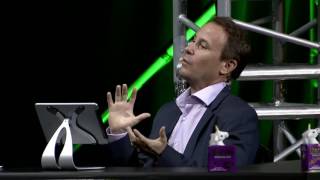
A recorded interview (panel) with John Samorgai of Salesforce and Salesforce Ventures discussing corporate venture and M&A strategy at Salesforce. John explains why Salesforce began deploying venture capital (started in 2009), how the program is strategic (ecosystem-building) yet financially disciplined, practical deal-sourcing and diligence (requires an executive/business-unit sponsor and rapid 3-person investment committee), investment scale and pace (roughly 10–15 investments per quarter across ~150 active portfolio companies), and M&A guidance for founders (importance of long-term relationships, transparency, and traction—~$3M ARR is a practical lower bound for conviction).
Questions this video answers
2009
$500 million
About 150 active companies
Roughly 10–15 investments per quarter
An executive/business-unit sponsor (internal champion) is required for every investment
Chapters
Thanks everybody for coming back, making up a little bit of time. We have a real treat here. John Samorgai, a good friend of mine from Salesforce and Salesforce Ventures. Have a seat, John. Thanks for coming. And John pretty much knows about everything there is about corporate venture, M and A and everything. Right. I think we met probably 10 years.
Ago, right, when you were at Echo Sign.
Echo Sign. Salesforce probably had about a $2 billion market cap back then, Right. I think the biggest acquisition it had done was maybe 18 million or something, right? Sounds about right. Right. So we fast forward a few years and Salesforce is doing 6 billion in revenue or something. What it is, right? You've done. You've invested $500 million in capital, which is as much as anyone else in the entire industry. Right. And you've done M and a, everything from 1 million to billions with exact target several hundred million. You've done everything in between. Right. Including kicking off an acquisition you closed, I think, just this week. Right. In Germany. Right. So a lot of change. Right. So there's like a million things I want to ask you, but at a high level. What's happened the last couple years? Like, what's all this energy and acceleration and you've been doing this stuff in enterprise software for your whole career. Right. So what's changed these last 10 years?
Well, I think, you know, in many ways the world has been moving to SaaS. And it's just so great that you're having such a, such a large conference this year because really, cloud computing in the enterprise sector has taken off over the past few years in an exponential way. And we've seen also the rise of mobility, which is a big thing where people can manage their businesses from their phones. We actually manage our entire venture portfolio through our VentureForce application that we built on Salesforce. And just the general connectivity that you have, the increase in the Internet of things that all these devices are talking to one another. It's really the perfect position to be in when you're CEO of an enterprise cloud computing company today.
Yeah. And so it is. And so what? I want to spend half our time talking about investment, but at a high level to that. What gives gave Salesforce the conviction to deploy $500 million in capital into other companies? Right?
Well, it started back in 2009 and it was right after the financial meltdown when a lot of companies were having trouble raising money. The cloud was still not fully accepted by a lot of large companies. And we felt the need to really build an ecosystem of successful partners around us that would have pre integrated apps, that would be consulting partners that would be building on our platform. And so we put a little bit of money to work in some companies at that time that have since grown up to be, you know, huge businesses in their, in their own right. Like, like DocuSign HubSpot box. That was sort of the 2009 class. And we, we found that we were actually quite good at investing because we understood what our customers wanted to buy and we couldn't deliver all of that and we needed partners to deliver that. And so as the investment program grew, we decided to become a little bit more aggressive with it because we felt that we were making good decisions, we were helping these companies grow faster, and they were then able to service our customers more effectively. Yeah.
And so if the goals. So that you obviously get a lot of visibility from Salesforce itself, from the customer base and even usage. Right, yeah. Have the goals changed from 09 to 2016 in terms of what you're trying to get out of these investments?
The goals are still the same in that we're strategic investors. I mean, that's, I think, very important to note is that we invest in companies that are partners with Salesforce. There's some strategic rationale to the investment. We won't just invest for financial returns, but the investments have to make sense financially, otherwise, you know, the board wouldn't support the program. So we, you know, we're strategic investors first focused on building the ecosystem and then, you know, we make sure that all of our investments have some reasonable financial return from them.
Yeah. And so let's chat about that because it can be hard to see, as a founder, let's talk about how closely connected versus attenuated that relationship be. So I think to get funded by Salesforce Ventures at least a little bit, you need a champion on the business unit side.
Right.
Someone that's running something important.
Yes.
To say, listen, I may not need to integrate this product today into core sfa, but this is important to our business. How does that process work?
So every investment requires an executive sponsor from a business unit, and that's actually important for the company that's taking money from us because it means they're going to have an internal champion who is raising their hand and saying, this company is important and I'm going to help them.
Yes.
And then once we get that champion, we go through our normal due diligence process. We co invest with other VCs, and as the round comes together, we're able to close those investments fairly rapidly. Our investment committee Is only three people. So we can make decisions pretty rapidly.
So help founders understand that. So I need a champion. Right. Which is probably typically at the VP level or above as a rough rule of thumb.
Right.
But is it all. Is the champion really bringing the investment in or do they sometimes validate it when. When your team brings it in or is it. Is it always sourced by the business. Business owner?
It's probably 50. 50. Half is sourced by my team. Half. Half is sourced by the business sponsor.
Business sponsor. Okay. So there could be two scenarios. One is I already have a relationship with Salesforce. Right. If I'm interested in getting money from you, should I ask my sponsor for an intro? Will they do it organically or what's. How do. Let's. Let's go through each of those channels. I already have a champion and it's VP or maybe even director and above, but it seems to be working.
Yeah. And I think all they need to do is make an introduction between the company and Salesforce Ventures.
Okay. So ask my. If I am interested in. Just ask my champion for it. It's that simple.
It's that simple.
And what if I think. What if I'm interested in Salesforce and it's strategic but I don't have a champion yet. Right. I mean we could talk about. Talk desk. Tiago was up here. Maybe he had a champion before. But the champion may have happened during the investment process. I don't know. I don't know the answer. Right.
Yeah. And I think that is actually what happened. And so the, you know, the second passage is really to just come to us directly, either through our website or through a contact that you may have with one of us through a VC like yourself. Yeah, we get a lot of intros directly from the venture capital capital community.
Got it. So just so the VC sees something that he thinks will be interesting to you and your team. Right. Makes the intro, you make an initial evaluation. Right. And then you socialize it with a business champion internally, which can happen in a week or it's not a long process. But that's how the sausage is made internally, right?
Exactly. Exactly. And it is a pretty quick process.
It's quick. It is quick. So now let's go back on the scale. So how many investments a year have you made the last couple of years and is it going to change in 2016? Right.
Well, we. So we're roughly doing between 10 and 15 investments a quarter which are a combination of follow on investments and new investments. So typically they're new investments. So it's A lot. It's actually pretty high level of investment activity considering we only have six people full time in the venture program.
So you might be doing 15 or 20 new companies a year, right?
More than that, yeah.
So that's more than any VC firm, right? Almost any. Right, yeah.
But we don't take board seats. And so I think that's one of the key differences is that we have. We have more bandwidth than a typical VC would.
Yeah. And then I want to ask a little bit more about it. So you're going to doing these 20 or 30 investments a year, but there are very different sizes. Right. You'll do some, you'll be that are relatively early where maybe you'll write a half million or a million dollar check and then you'll do some that are clearly big. Right. I mean, Aptis was what, four? I mean, I don't know if it was disclosed, but many tens of millions of dollars. Right. So do you do two or three different sizes and do you think about them differently?
Well, so we typically, if you look at all of our investments and we have about 150 active companies in our portfolio today, but roughly half of those were actually series A investments and probably another 30% were Series B investments. It's really a relatively small percentage that were the later stage. And with a later stage investment, that's something where we have a lot of conviction with how that company's been working with our customers and working with our team. And so we can, you know, we'll feel better at that point about writing a larger check, but it still has to make financial sense. And I think that's, you know, where you're starting to see some changes in the private markets, especially over the last three months or so.
Yeah. So let's go through a scenario. Let's say I'm a pretty successful company here. I'm doing millions in revenue and I have some connection to Salesforce. Right. It almost doesn't matter what it is. I have a lot of customer overlap. I have technology overlap. I have something, but I don't necessarily need money. I'm not worried about money. Why should I reach out? Why should I take money from Salesforce Ventures? Right, right. What should I be thinking about as a founder? Well, I think Salesforce is interesting to me. Right. So connect that with Salesforce Ventures.
So if the Salesforce customer base and Salesforce itself is strategically important to your business, it absolutely makes sense for you to try to get an investment from us because we will help you. The whole point of the program is that we don't just give money and go away. We really try to give advice and we try to coach people along the way and make sure that they're, you know, we've learned a lot from the mistakes that we've made over the years and make sure that we're educating our portfolio companies on the things that they should do and the things they shouldn't do and the things that they should look out for. Yeah, we put them in front of executives, we make customer introductions for them. So there's a lot of reason why you'd want to take money from us. And it doesn't preclude a competitor, for example, from buying your company down the road. So we've had 35 exits from our portfolio and five IPOs. And of the exits, we have several cases where our competitors actually bought the company.
Got it. So you focused a lot on minimizing any perceived downside. I mean, that's the number one downside to a founder. Right?
Right.
It's goodness, then I'm handcuffed if our interest should diverge down the road. Right, Yeah.
I mean, we really ask for two things which are non negotiable for us, is that we need to have regular information rights so that we know how the company is doing because we have to mark our portfolio to market every single quarter. With Ernst and Young, one of the challenges is we do not have a separate fund. We invest off the balance sheet. So everything we do is, it's, it's now publicly disclosed, actually you can see in our 10Q. And we have to make sure that we understand the value of each company every quarter.
Yeah.
The second thing is we ask for a notification. Right. So in the event you do decide to sell, you know, don't let someone else make a preemptive bid on the company. But you have to just let us know what's going on and we'll make a quick decision whether we want to participate in the process or not.
Yeah. So let's talk just a little bit. That nuance on the balance sheet that you brought up. So my guess is that, I mean, in SaaS, you have the biggest portfolio. Right. Probably in corporate venture. Overall, it's probably second to intel or I don't know the numbers, but you got to be in the top one or two. Especially if you define it right. The knock that you'll hear from VCs is it's a fair weather strategy. Right. Which is, it's great. But if the market's bumpy, then corporate VC will evaporate. Right. So unless there's a high synergy, let me buy the shares because I want to own more of the company. Right. Obviously there's always an interest in the advice. Does that matter? Should founders think about that? Does it not even matter because I'm not looking for a second check anyway or how do I think about that common question that comes up.
I think we're different because we've been so disciplined about being strategic investors. And so we truly are only investing in companies who are in our ecosystem. And so, you know, our goal is to help them and it's not. We're not fair weather investors. I think that, you know, if you, if you actually look at the markets have ups and downs. I think right now we're going through a turbulent time. That's that happens. But if you look at just the long term trajectory about where cloud computing is going, this is the future of the industry and we're going to be there.
Yeah. So let's tease that a little bit. I think there's a lot of VCs the last couple of weeks have been writing and talking about how we have to batten down the hatches. Winter is coming. I don't personally believe in any of this. We could chat about it, but it's certainly become at least a half group think. Right. What have you and your team thought through the last couple weeks as. Do you see any strategy change for 2016 at all?
Well, we're certainly encouraging everybody to conserve their cash as much as possible and get their burn rates down. And I think that's. That's what all these VCs are saying. That's. And that should always be your strategy, no matter what, is to make sure that you're focusing on a path to profitability. Because that, you know, as you've seen with some of the companies that have gone public and continue to have these enormous burn rates month after month after month, like it's just not sustainable. And so you have to balance somehow the growth with your spend and you.
Have enough portfolio companies. Do you have any like Zen metrics, learnings from that or advice? Because manager burn. It's always good advice. Right. But you do want. I think what we learned in 08 and 09 is you got to spend something, man. Right. I was on a panel like in January of 9 with the CFO of NetSuite, CEO of Eloquithen and CEO of. Exactly. And everyone said, hooray, we're cash flow positive. It's January 9th. The worst. You know what they did, they Spent nothing on sales.
Right.
So if you have net negative churn, if you're, if you're, if your existing customers grow 130% by revenue, you can go cash flow positive in a nanosecond if you do it. But that's the wrong answer, right?
It is the wrong answer. And you have to, you have to invest in growth for, for sure, sales is critical. I mean, I think one of the, one of the mistakes that we made during the financial turn ourselves is that we didn't invest as much as we have been in building out our sales capacity.
Yeah. Everyone acknowledges that.
Yeah. And so I think that making, if you have low net churn, which is important, and your customer acquisition costs are reasonable, there's no reason why you shouldn't be investing more in sales. And one of the, one of the things I think, especially if you have a product focused founder, engineering focused founder, is they tend to always want to perfect the product and get it perfect before they ramp up sales. And oftentimes you're too late. You might have missed the market by that point. And so, you know, you have to always balance the product innovation with making sure you're investing in your sales capacity.
Yeah. So let me try and let me ask. Because there may not be a metric. So to boil that down, this trade off between growth and maybe being a little bit more conservative capital, when markets have volatility, when you invest, do you look for like 24 months of Runway? Do you do a sensitivity test against the model? Do you less worry about that than just investing in great companies? Is there a metric around Runway or anything when you invest?
There's no single metric that I can give you about that. But we look a lot at all the typical metrics that a VC will look, look at, especially around customer acquisition costs and arrangements.
Yeah.
But we also focus a ton on attrition because I have to just sort of switch and put my M and a hat on. I know we're getting there. But you know, the biggest problem that we see when we look at buying small businesses is their attrition rates are out of control, that they're spending all this money to bring in customers and then they're losing them at the end of the day. And that is an unfortunate realization that most companies, they focus on product and they focus on growth, but they don't focus on making their customers successful and in adoption, driving adoption of those customers.
Why do you. Let me, let me learn from that. I have to tell you, I've gotten zen about this because all the Companies I work with, I see no attrition issues. And what I mean is they go down certain routes based on their deal size. When you sell big deals, if you know what you're doing, you have net negative churn. You sell the very small businesses, you have churn. Right. And if you do the SME thing, if you do it right, it's usually like zero. Like RingCentral is like zero. Right. HubSpot, it's 100% net. Right. So why do you see these companies that are in SaaS? This is B2B. I'm not buying users. I'm not buying eyeballs. How do they flush all this money and have these huge churn rates? I just don't. I'm not saying it doesn't happen. I just don't see it. What are they doing that's so wrong?
It's amazing to me how many companies I meet with who don't know their attrition rate. Actually, the CEO, because I get that speech all the time, oh, we have no attrition. Our customers are happy. And then you ask them what their attrition rate, they don't know. They have no idea. And that tells me that they really aren't watching it. And. And it is one of the most important metrics that you have to focus on. I know that when you go into your board meetings, you're preparing for the board, they don't focus on that. But you have to. As a CEO, I think it's just critical. And then there are a lot of companies actually that provide that as a service to help you. We invested in one gains site. I think Nick is speaking at this conference. And that is a service that they provide that helps customers manage their attrition. And know, you know, it gives people an early warning system as to what customers might be coming up for renewal and they're really not using the product.
Yeah. So one I just want to do. I want to switch a little bit to M and A because you'll have. And I want to talk at a high level, not even just about Salesforce, but one last question on Ventures. Rough and tough. How close should I be to Salesforce to want to get investment from Salesforce Ventures versus how attenuated? Like, where's the. I know you can't say, but you've done enough investment. Like, when should I not waste my time versus if I have a great VP relationship? The answer is yes. Right. But when does the edge of the bubble fade away and I shouldn't want to get sales versus money?
I Think if you come to us with less than 3 million in ARR, it's hard for us to really get conviction around that because we want to see more customer traction and it's just going to help in terms of our ability to sell the deal internally. So. So we're.
If I just Got up on AppExchange last week and I'm new too early. Simply put, it's too early no matter how cool I am. Right.
And it's way better for you to come to us with a story where you can say that you've proven it. You've proven it. I have this many customers of Salesforce who are using our product and they're really happy. And then when we do our diligence checks, we call those customers and it's easy. It's easy.
Right? Okay, good. So that's helpful. So let's talk about M and A at a high level and we can talk about Salesforce in particular. As much as you want or not. But you've been doing SaaS M&A just long at a senior level. As long as anyone on the planet, right? I think so. I know this is nuts and bolts stuff, but can I sell my company? Can I sell my company to Salesforce or does Salesforce only buy companies? Let's talk about. You can use some examples or you can talk at a high level, but I'm confused. I think it's hard to sell your company, but it has happened by the same token. So what's the Zen answer here? What's the high level answer for founders?
I mean, I guess the short point is companies typically are bought, not sold.
They're bought.
Usually. If you're selling your company affirmatively, it typically means that there are issues. There's issues and that you want to, you know, you really, you need to sell. And so if you have a pre existing relationship with Salesforce that's really tight and close and an investment certainly helps with that. It makes our decision process so much faster and easier because we know the company, we know the team, we understand their business, we like their culture. You know, they're all the. There, there's, there's just a lot more rationale that we can take to our executive team and to our board that will explain why this makes sense.
Yeah.
Typically most of the companies we buy actually have been us kind of getting in front of the process. You know, Steel Brick is a great example of that, which we, we just bought this month.
Yeah.
And we had invested in Steel Brick.
So let's walk through that A little bit. As a case study, you'd already invested twice. Right.
We knew the team very well. We really liked what they were doing. They were growing rapidly, and there was sort of a window of time where, you know, it was the right time to buy them before they would take another round of funding and where we really felt we could maximize their sales in our current fiscal year.
But I'm confident Goddard didn't drive up to Mark's house down the street or fly to Hawaii and say, will you please buy my company? Right?
That's right.
That doesn't happen. Right.
That did not happen.
And so at a even higher level, does two things. One, does it have an exit strategy even make any sense? Because the way these things happen is so unpredictable. Should founders even have an exit strategy?
You have to have an exit strategy. Because I think that most companies, their exit will be M and A or they will shut down.
But let's say I'm starting the 98th CPQ company. Okay. And I have an exit strategy slide. Sure, Salesforce could do it, but that's an aspirational exit, Right. What are the odds that it happens? I mean, it's so low, right?
Yeah. Well, it's low that one buyer would.
Buy multiple companies or even any category. So here's my. Let me ask you. What I learned at Adobe after we were acquired is the list. And maybe you don't have a list, but the list of targets and different verticals was different than I would have expected. Right. There were names on that that, having been in the industry, made total. Like, I knew the founders, and then there were some that I was just. They did make sense, but I was shocked. Right. And so what I learned from that is. You don't know. As a founder, you may think I have the most synergistic product in the world with Salesforce. The amazing thing to me about Steelbreak is it was dropped into Salesforce, the application, in like 30 days. Right. That's kind of cool.
Well, that's. And they built on our Lightning platform.
It does help, right? Yeah, but. But there are a thousand cool companies Salesforce could buy for everyone that does. And they all have synergy. Right. They all have a Salesforce integration and customers. Right. So that's what I. That's why it's hard for founders to understand when M and A would even happen, isn't it?
Well, I think the single best thing you can do is build a relationship with. With the executive team at Salesforce or whatever company that you're aspiring to be acquired by you have to have that preexisting relationship. I think the best analogy is that you have to date before you get married. And there are, and this is the challenge with the company's selling process is that an investment banker will show up and say, we're selling this company. You've got two weeks to bid. And we don't know them, we've never met them. Team, they don't know anyone at Salesforce or if they do, it's a very low level person. You really have to develop those executive relationships are just critical for you to have a successful exit.
Ideally over years.
Right. Over years.
Do it as early as you can possibly build those relationships.
Yes. There are no shotgun marriages.
Yeah. So I think my learning, and tell us a little bit about my learning is when you're a founder and you're totally busy and someone from a company like Salesforce that's senior but. Or maybe even mid level, you're not sure, it's a good use of your time or it's someone on your team, but it's not. You take the meeting. Right. Build the relationship. Absolutely. Yeah.
And I think you want. And it doesn't matter what level you're meeting with, you really do need to meet with all levels because you want that word of mouth buzz about you happening at the company. And so building all those relationships across the board is super important.
Yeah. And how many. And I don't know how it works at Salesforce. I should. But when you're a founder and you hit some traction, a lot of folks on the corp dev team will reach out to you or sit in on meetings. Right. What should I make of that? Does it mean anything? Obviously build a relationship, there's no downside. But when it's not you, how many folks are on your team, broadly defined?
Well, on the M and A team, eight people.
Eight people. Okay.
And in ventures it's about six.
Okay. So what does it mean when someone on your team meets with me as a start startup just to help people ground it. Right. Because sometimes they don't know the answer. Right. Well.
Doesn'T. It's not that it means nothing, but it probably means less than you might think it might mean.
That's my question.
Yeah. So what, what we, what we're often tasked with doing is one of our business unit leaders. We will come to us and say we need to better understand the space and all the companies in this space can. And you guys go out and do an assessment of all the companies, their pros and cons and it helps Them think about future M and A path. And it may not mean that we're ready to buy in that area today, but you certainly want to be on the list for consideration. And so the meetings are actually very important to take. And whoever you're meeting with from Corp, Dev and any company, I think the best thing you can do is actually try to be open and transparent with them. The worst thing you can do is just hide everything and not. Not give out any information.
Be totally transparent.
You just. Just get crossed off the list if you're not transparent.
Yeah, yeah, that. Because there is downside. Right. If you're not transparent, you do. You can't get crossed off the list.
Well, you're literally. Well, it also usually means you're hiding something and you're embarrassed about something and you're not. I mean, honestly, your revenue people. I cannot tell you how many times I go into meetings and the company will not tell me their revenue. And I'm like, who the hell cares? There is nothing confidential about what your revenue is.
Yeah, it is.
And so don't act like it's more important.
Don't be that person. Right.
Don't be that person.
Yeah. I feel like we just got going, but last question I want to ask you. There was some small M and A event we were at a couple years ago, and it was right after Exact Target. And I don't want to quote you out of context, but I think then you said it was the salesforce's best acquisition. It was big, it was meaty, it was accretive. Any learning since then? Best one or two acquisitions that you can think of that move the needle and what that means changes as stage changes, Right?
Yep. So Exact Target was an incredible acquisition and it really. It created a whole marketing cloud for us, which is a very, very sizable business.
Huge business.
And. And it also brought just a ton of talent and expertise in the marketing space. And we've been fortunate to keep most of the leadership team there. And it's, you know, Scott Dorsey, who you saw earlier, you know, was an amazing CEO. He built an incredible team and a company, and we've been able to keep those folks and it's really revolutionized what we're doing in marketing. I think another example is Relate IQ and Steve Laughlin and his team and what they've done for us in SMB sales. Alex Dion, who is now our chief Product officer, came from an acquisition we made in 2008, his company, Instranet. And that's the foundation of our service cloud. Yeah. So those are three great examples.
I hadn't thought of that.
Edge Spring is another one. The analytics cloud. So we've had many examples, and I think if you look at every single one, the talent has been exceptional, and they've really meshed well with our culture.
Talent and culture.
Talent and culture really are number one.
Yeah. That's super cool. Thank you, John. This was epic.
Great.
Thank, everybody. Thanks for Jon for coming.










