Interview discussing Brex's aggressive marketing that led to faster-than-expected scaling. Speakers describe buying a large number of San Francisco billboards (three-month buy for about $300,000), using offline channels like podcasts, and the role of repetition/awareness in improving outbound response rates. They note measurement/attribution challenges but report roughly double expected growth from these efforts.
Questions this video answers
About $300,000 for three months.
Approximately 2x what they expected (scaled twice as fast as planned).
Chapters
We scaled faster than we, we thought we would. I think, you know, we had a very aggressive plan.
They did have a very aggressive plan.
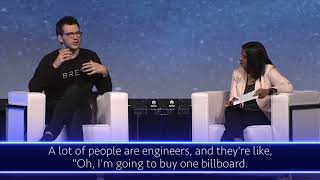
Yeah. And I think we, we did like 2x what we thought we were going to do. So it scaled really, really fast. And I think, you know, if I want to talk a little bit about the things we did for that was one, we went where a other people weren't going and we went bold. So one of the things that a lot of people know as far as the billboard campaign in San Francisco, we basically bought a shit ton of billboards in San Francisco and a lot of people recognized us from that. And when we did that, honestly, I wish I could say, hey, our team was this marketing genius and knew what was going to happen, but it was basically for awareness and recruiting and stuff like that. We thought it was a good investment, but turns out that, you know, a lot of our niche, our market is in San Francisco. And what people do when they go buy offline media is that they want to buy like one billboard. You know, a lot of people are engineers and you know, they're like, oh, I'm going to buy one billboard. I'm going to like, try to measure that and then I'm going to measure that. I'm going to go and scale it up and like, they're stuck in this mentality of like, you have to put $1 and get out $3. And I think what we did is like, we took a little bit of a bold move and said, we're just going to buy like all that we can. We actually got a really good discount. We paid like $300,000 for three months of like, a lot of billboards.
And I think I want to pause there because a lot of people don't expect that. Right?
Yeah.
When you see billboards, you immediately think outdoor advertisement is the most expensive channel advertisement a startup could use.
Yeah, no, it's not that expensive. Especially if you buy a lot of them, it becomes cheaper. Yeah. And the thing about billboards is you have to buy a lot of them to work because, you know, marketing is about repetition. It's about, you know, awareness and people hearing about you many times. So. And it's really hard to attribute, but, you know, a lot of times when we went to do outbound and we reach out to a customer and we talk to them, they're like, oh, I saw your billboard already. Right. So like, we had actually a higher response rate on outbound emails because we did this billboard campaign and you know, that was like super powerful. The, you know, and, like, that we had, like, a lot of other things that we try to, you know, think a little bit outside of the box. And outside of the box is, you know, outside of Google and Facebook, honestly. So we did podcasts. We did, like, all these things that started helping a lot. That is not the traditional thing. And the thing is, it was hard to, like, we put a lot of effort to measure their roi, you know, but. And the effort we put on that paid off because we could use these more different channels.
Yeah. And I think what helped also in Brexit's case in particular, was the niche target market. Like, you were so specific that this is for startups.