The Second Five Years
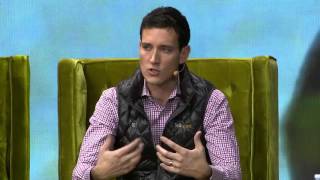
Samir Dalakia, Josh McFarland, and Raj Sadada discuss scaling past the first five years. SendGrid moved from transactional email into marketing products. Bloomreach shifted toward personalization. They cover culture, talent decisions, and whether to sell or stay independent.
Chapters
Got a great, great group here with us. The title of this next discussion is the Second five Years. And believe it or not, despite how young this crowd looks, they're all on the next five years of their company journey. It's my pleasure to introduce Samir Dalakia, CEO of SendGrid, Josh McFarland, CEO and founder of Telepart, now Twitter, and Raj Sadada, the founder and CEO of Bloomreach. And so guys, maybe a good place to get started is have each of you tell the audience a little bit about yourself and the company and what you guys do and then we can get into some questions. Raj, you wanna start?
Sure. I'm Raj Sudatta, I'm CEO and co founder of bloomreach. And bloomreach is in the personalization software space, probably an analogous space to the optimizing folks that were here a little earlier, but you know, centered on the enterprise. And we built a platform that you can take any website or app and plug into it. And it builds experiences on the fly with algorithms to drive traffic and revenue for large brands.
Great.
So Josh McFarland, I was up until recently founder and CEO of Telepart. So Telepart we founded in 2009 under the sort of vision of being able to help major companies tell apart their high value customers from the rest. So it's sort of a predictive analytics and machine learning data play that then we would plug back into their marketing stack if that was programmatic ads, if that was email, or if that was actually on site optimization. And last May Twitter ended up acquiring telepart and I now run all business products for Twitter.
Great, thanks Josh. Terrific.
Good afternoon everyone. My name's Samir, I'm the CEO at SendGrid. SendGrid was founded in 2009, really going after solving a very specific pain point and problem for at the time developers who are building applications. And invariably that application would need to allow somebody to sign up with an email address, get a confirmation. If they forgot their email or forgot their user id, they had a password reset. So they needed to be able to engage with the user but on an automated basis from an application generated basis. And that was the specific problem that SendGrid set out to solve. And we're now the largest cloud based email delivery platform on the planet. We send out 22 billion emails every month for over 60,000 companies around the world.
So all the spam in my inbox is your fault.
No, explicitly not them. Explicitly not them. We actually don't allow them on our system.
Excellent, excellent, good Stuff. Well, I thought a good place to start maybe, you know, since we just talked about it with Dan Soroka, is culture. And you know, all three companies, you know, very strong culture and values. And I think the thing that would be interesting for the audience to hear is how's the culture had to change. And you know, I know Raj, early days of Bloomreach, you know, one of the things you implemented was no titles at the company. That's obviously changed, you know, in the course of, you know, the second five years, you know, but maybe you can share with the audience things that, you know, you know, have held true with the company over the course of this journey and things that have had to change and why as the company's evolved and grown over time. So who wants to start?
Take that first.
You want to go ahead?
Oh, go ahead, go ahead.
Yeah. So no culture was, you know, my co founder and I actually wrote the culture document that has a fairly simple set of values before we figured out what the business was or what the product was. And that's how important it was to the company. It had these five core values. And I think what's been most important about them has been the fact that those things haven't changed. So the principles, the core values, the culture itself, I think has been unchanged in the first five years and in the next five years. But a lot of what we thought deeply about were the mechanisms to make the culture real in the minds of, of everybody who came to work. And of course, those mechanisms were very face to face mechanisms in the early days. Just to give one example, one of the things that we believe in a lot has been this kind of idea of we, that we're all in it together, that it isn't a culture of stars, it's a culture of all in. And one of the mechanisms we used to use were the peer awards where somebody could stand up at an all hands meeting and give $100 gift certificate to Amazon to anybody else they wanted in the company. And as long as they could stand up and explain to the rest of the company why they were doing it. And it was kind of no limits. And that worked really well when we were 20 people, because 20 people could stand up. Today we have 250 people and there are 180 peer awards given a quarter. So the idea of someone standing up in front of the all hands meeting and talking about each individual person just simply doesn't work. So we've tried to come up with all these different mechanisms where you have, you know, top 10 video peer awards. And you have still the stories in person, but you have documentation of those stories online. And so it's all about the mechanisms to kind of enforce those cultural values in a scalable fashion.
Yeah, absolutely. Makes sense.
Yeah. I would reinforce the distinction that Raj is drawing between values, which is, I do believe deeply at Sendgrid, we have a value system called the four H's. Happy, hungry, Humble, and Honest. And that value system is embedded in the company like it will never be dislodged. And I believe it's like one of my number one jobs to continue to nurture and reinforce that culture of values. Right now, to Raj's point, the mechanisms and how you highlight those and how you exhibit those in the company, those do change over time as you scale. But I believe that that value system should not change. Should not change as you scale, but you have to work hard to make sure that they don't.
That's right.
So, Teleport. I'll talk about some of the transition to Twitter, but I believe then and I believe now that we still have one of the strongest cultures in Silicon Valley. And I heard this from multiple people that knew very little about what we did, but they always heard we had an amazing culture, amazing team. And interestingly, we never actually sat down and did, like, the cultural document or the four. You know, pick your favorite alliterative letter. I made a commitment to people when they came in. I said, look, I'm going to try. And we as a company are going to try and impact you in three ways. One, we're going to impact your resume when you leave this place, if and when you choose to people, your next boss will look at your resume and say, like, oh, my gosh, you worked for Teleport. You must have learned so much. The second is we hope to impact your bank account. Right. Because that's the bet that you're making on us as a risky startup. And the third is I really want to have an impact on your memories. Years from now, all you're going to have is a set of stories that you can tell to your friends and your grandkids and things that you can write down for generations to come. And so when I impress that upon my team in the different functions, if it was team meetings, if it was these parties we had called tele parties, I said, make it memorable. Right? And that was something that really belied everything that we did, is this emphasis on making it good enough to be memorable and important enough that it should be memorable. And as we transition into Twitter, you know, you went from we were about 85 people when we were acquired to we're a little over 4,000 people as a global company now. And the thing that I told my team on the way in is I said, look, we're being brought in in part because of our culture. And this is not about a dilution. This is about us amplifying what is great about what we do and bringing that to the rest of the company. And so now a lot of our traditions, we've expanded to be much more encompassing of all of the business facing product groups. And I think about the commitment that I made to my people and that I made to Twitter is that I wrote this in an email actually, the day before we showed up for our new hire orientation. I said, look, a year from now, here's what success means as an acquisition. It means that you come out of a meeting and you think about the people that were sitting around that table and you have no idea who was native telepart and who was native Twitter, because we're going to feel like one. And a big part of doing that is a principle that I have encouraged over and over, which is assuming positive intent. Right? Like assume that the person on the other side is good and smart and well meaning and heart. And if there's some clash that you have because we come from the startup mentality and we're going into 4,000 people that need more structure, remember that clash is probably around a lack of context, not an actual deep rooted disagreement. And that's proved amazing for us on the way in.
Well, speaking of memorable, I mean, I think you have to at least share the fact that every telepart employee got to sled ride in December in 70 degree weather down your parking garage. I mean, you got to share a little bit.
It's one of the perks of being a small team that has huge revenues, huge growth and was like very EBITDA profitable. I remember. So Ajay sat on my board. He led our B round with Bain Capital Ventures. And I came to the board in one January and I said, I'm going to bring you some crazy proposals this year. We're going to triple our office space, we're going to double our headcount, we're going to acquire a couple of other companies. Companies. I just want you to remember, everything is 40% off.
Look at me.
And you're like, what are you talking about? I'm like, we're out of net operating losses, so we have to start paying taxes this year. Every dollar that we don't spend is 40 cents to the government, right?
That's awesome.
40% off. So for our big holiday party, the tele party at the end of the year, we actually brought in a company from LA to manufacture real snow on the top of our roof where the parking was and then down. So we had like a two, two story sledding hill. Pretty awesome. 40% off.
Come on. It was epic. It was great.
And those memories are real. It's along the same vein. Sendgrid has had a tradition since the first year as it went through hypergrowth. The entire company flies down to Mexico, pick a city, Cabo one year, Cancun the next, for an alignment and kickoff session for the year in January. And it's a huge part of our culture and our connective tissue and it's a ton of fun. And I'll tell you that there's no better way to get people to connect to one another in a way that is beyond as colleagues. And they become teammates and they become friends in those non work settings. And I frankly, I think I learn as much from talking to all of our teams and our employees at those informal settings, having fun, creating memories, but actually that impact the business.
And not to mention your tolerance for tequila has gone up over the years.
Dramatically, as it turns out.
But one of the hardest things I think about scaling the culture though, is that we all have the fun traditions, but people at the end of the day take startup jobs primarily for the work. And there is a temptation to synonymize culture with fun. And most of culture is actually about how the work gets done. We have a similar commitment as Josh has where we tell everybody that comes to bloomreach. Our goal for you is that this is going to be the single most impactful professional experience of your life. When you look back on your life, you're going to say, that is the one that defined my professional experience. But then translating that into every meeting and every interaction and every email and every customer call and every line of code that's written is really the hardest thing to try to figure out. How to scale as you scale the culture. That's right.
No, definitely. Well, shifting gears, I mean, all three of your companies were founded in 2009. Incredible growth in those early years, all the crazy startup stories. But now, as you reach a new phase, the next five years, teleport, being part of Twitter, how do you think about how aggressive you lead the company? I mean, it's one thing when you're 30 people and you know you're trying to climb the mountain, you have These insane stretch goals. It's another thing when you know you're $100 million business or multi hundred million dollar business. You know, folks that may be joining the company today have different goals than folks that maybe joined when you were five people. So how do you think about leadership at this phase? And are you guys as aggressive as you were five years ago? Are the companies, do you feel like the culture is as aggressive or is that not sustainable?
My perspective is we are as aggressive as ever, but aggressive for the long term. And that's the difference in the sense that in the early days you're super aggressive, but you're super aggressive. At least we were very aggressive on surviving and on tactical things that were required to survive and to make it to the next event and the next customer and the next product and so on and so forth. And you know, I think it's as important as ever in this period of time to be just as aggressive, but to set the context that the outcome of that aggressiveness has got to be something that's sustainable and long term and make sure people have an eye on that kind of a horizon. But the hard thing to do is that all the mechanisms that force you to actually try to be less aggressive force you to try to compromise over here or do something political over there that makes someone happy. And fighting that in this period of time, I think is super important.
Even more important, I would say, situationally, there's also this context that we are operating in now that is very different than the last five or six years. As you look at the public, what.
Are you referring to?
I don't know, something going on on my stock tickers these last couple months for people in this room. And so I do think that that that puts up a different set of guardrails as you make strategic decisions that four or five years ago, aggressive as defined by perhaps how many bets on the table do I want to have? I think you had more degrees of freedom. There's more latitude, there's more capital to fund all those myriad of bets that I think you have to think about very differently as a CEO today leading a company. And so that balance between growth and profitability is far more pronounced in our thinking, certainly over the last year and a half.
And Josh, how have things changed for you now inside a 4,000 person company?
Yeah, it's been interesting. I mean, it's no secret to anybody who's watched Twitter's trajectory over the last year, really, the stock's down way. I don't even know the percentage from Year over year, but it's down a ton. And Jack came back, right? So Dick Kossler, former CEO, left and Jack came back. He's now a full time CEO. A bunch of management changes, things like that. And Twitter is, it's super interesting because inside of the company, the attitude is, I cannot believe the whole world does not use Twitter. We find so much value from this product. What do we have to fix about this thing to make it to where everybody finds this much value? Because the 300 million monthly actives, whatever we just reported yesterday, whatever the new updated number is, is insufficient for the amount of impact that we have in the world. And the fact that you watch super bowl and Twitter is on every commercial, it's all over the breaks and the replays and you know, it's just like, it is a major part. It's in many cases the primary screen instead of the secondary screen depending on the event. And so we look at this and we're like, what's, you know, what do we have to rethink? And Jack came back and he said, look, there are no sacred cows, right? You want to change the way the timeline is ranked, which we announced yesterday.
Right.
So for since the beginning of time, this thing has just been in chronological, reverse chronological order. And now it's not. Right now you can opt into the fact that it can be filtered, it can be algorithmically done, and it is a way better experience once you do that. And that was, I think, 18 months ago. It would be heresy to even sort of suggest that. And so like, the number of changes that are being introduced on the product side are just mind blowing for a company that is 10 years old, that's doing what we do. 2.2 billion in revenue last year. So to your point about how aggressive can you be? I think it is imperative to be aggressive at every point because otherwise you'll end up in a state like we did, which is the product didn't change much for two years and user growth kind of flatlined. And now we're at a point where we're saying, like, okay, throw everything out. Let's like start with a blank. Don't throw it out, but let's start with a blank sheet of paper. When we think about what we want Twitter to be, and then be very aggressive on the timelines at which we roll out these major changes.
That makes sense. No, great, great story, Josh. How do you guys think about your team, your senior team, the team below, that team? I mean, clearly, you know, I think as a startup, you know, you have you know, those key folks who got you to where. Where you, you know, where you are today. And then as you think about that next five years, you know, how do you sort of go through that exercise of, you know, who are the right folks for that next phase? You know, is it. Should it be self selecting? Do you proactively try and drive that? I mean, some tough, tough decisions, because clearly some of the most valuable people in the company and how do you manage through that? You know, some of those transitions and even during those first five years, you know, all of your companies went through, you know, a number of those phases. So curious to hear how you guys think about the people side of it.
In the case at Sendgrid, we certainly had a lot of. We've had a lot of changes. We've brought in a new cfo, coo, a new cmo, a new Chief Product Officer, a new VP of Engineering. So in terms of feeling like I can speak to this one intelligently, we've certainly done a lot of that. In some cases it was us deciding. In some cases it was us mutually deciding. A lot of the conversation has to be around, okay, we're chapter two, next five years. What are the skills and work that needs to get done? To Raj's point, in some of our cases, it was literally the executive sort of self selecting and opting and saying, you know what? Actually, what I am distinctive at, what I enjoy doing, what I'm passionate about doing, is early stage stuff. It is that first. That's right, the first chapter, not the second chapter. And scaling, it is actually less exciting to me. And by the way, we were then able to. And he was a tremendous guy and a great leader in the company, and I love him to death, and we still stay in touch. But then we brought in a CFO who was super excited about chapter two, and it worked beautifully because he's like, this is my passion. I actually am skilled at and passionate about taking something that is there and helping scale it. And so I think that's the clarity that we all have to continue to drive for our organizations out in the group is what are the things you need to do distinctively at that executive position in the stage that you are now at, and have that conversation openly with the executive and say, do you get fired up about this anymore or not? And you have to assess, do I believe that they can scale to that.
On the executive team side? What we've tried to. As I look back on Bloomreach, I sort of feel like it's gone through three Phases. The first phase was very much, we're founders and a small team, and we're here to take the hill, take the world, however you describe it. And it was very much groups of people sitting together. Didn't matter if you were an engineer or a product manager or a salesperson or a founder or not a founder. You're just in it together to try to make it happen. And we made a very deliberate decision at some point in that company journey where we said, no, we really have to have an executive team.
It's time, I think, when we couldn't fit the whole company in the board meetings, that was about the time.
That was about the time. That's a hard thing because it is a cultural change for the company when you make that transition. But we made that transition. And for us, I would say that that all came together around 2012, about three years in, and we filled out all the major functions and we found great people. And I spent months recruiting to find, you know, what I thought were the great, great people for that phase. And now, fast forward three years later, we sort of hit the milestones we wanted to achieve over the last couple of years. And so now it's kind of who's recommitting, who's got the energy for the next phase, who's got the aptitude for the next phase, what new blood do we need to bring in and what new functions? And it's yet another explicit conversation. And so we sort of thought about it in those phases, and one of the beneficial things about that has been that that team has been able to execute together in a very stable way for multiple years. And one of the challenges that I see in a number of other cases is where there's constant churn on the executive team. Sometimes it's good people coming in, good people going out, but you don't develop a rhythm for how you execute together. And you need that for some period of time so that you bring stability to the rest of the team and the rest of the organization to make it happen.
That makes sense.
And these conversations should be explicit, right? You. You should be able to, with your senior management, or in my case, the next layer of my directs, have a conversation openly and honestly about whether or not they're up for this next challenge. Because in all cases, whether you're startups or whether you're a big company that's looking to its next big wave of growth, it is really freaking hard. And so for me to be able to. And this also has to be introspective by the way. Right. You have to first ask yourself the question before you ask that of your next person. For me to say, look, here's what your burndown looks like in terms of your equity. So let's just get that on the table, right? This is basically what we're looking at. And this is putting aside compensation, performance, all the future grants that you can get. But this is what we're dealing with right now. And here's the trajectory that you've been on for the years that you've been with us, and here's where I think you can go. And does that excite you? Are you up for that? Or can I help you find something that is a better fit either inside the company or out? Because to Raj's point, like, you have to know that the people that are around you that you're surrounding yourself with, your team is going to be there through thick and thin. It can't be like, oh, gosh, I wonder if this person's going to, like, stick around for three months, six months, might they last at the end of the year? Those things just completely erode the ability to be productive. And everybody senses it. Like, everybody gets it. We have this sixth sense for sort of who's on the fence and might be interviewing right now. It's like, oh, gosh, half a day out for the doctor. The doctor. And that stuff is so counterproductive. So I think being really explicit with these conversations amongst your core team, it's imperative for us as leaders.
So one of the topics I thought would be interesting to touch on is by definition, the fact that companies have a second five years means they haven't been acquired in the first five years. And so, Josh, I'd hear from you first. You sold telepart Twitter last year for $560 million. The company. I know this since I was on your board, but growing 100% a year, profitable, generating cash, didn't need to fundraise ever. Big market, great team. How did you think about that decision? And then love to hear from Raj and Samir. Conversely, how do you think about the decision not to sell? Because certainly now looking at the environment we're in today, you know, and you know, all these are conscious decisions, and neither one is right or wrong. But, you know, I'm sure founders are constantly trying to think through those forks in the road, and so love to hear your collective insights on that topic.
Yeah, I'll give you our framework. So first is that old adage, great companies are bought, not sold. Turns out to be true. Right? So there's inbound interest for telepart. And when I brought it to Ajay and James from Greylock and the entirety of my board, the three of us, we basically said, look, here's where we are today and here's where we can get as an independent company. And the time in between is going to be really hard, right? Like, welcome to the last six years. Like, at every stage, it's a lot of work. It's fun, it's rewarding, but it's a lot of work. And, and so there's basically a value that we expect. And then there is not just the work, but also the risk that you will assume during that timeframe. And you look at the cash you have in the bank and the fundamentals of your business and you come up with sort of like a gut feeling about how you feel about that outcome. And then you weigh different options that are presented throughout a process, like what we went through and they honestly come out to about parity. Because as a founder who believes in your business, it's doing well, you're like, we're going to freaking go to the moon, right? And if it's inbound, typically it's interesting enough that it says like, okay, like that company also believes we're going to go to the moon. But there's sort of a net present value of the asset versus what there might be. So my point is it's insufficient information. At which point you basically sit down with your trusted advisors and you say, like, what do we think we could accomplish if we were to tie up with this other company? And for us, that was the big thing. That was the motivator is saying we're going from this local maxima in being a great, well run, profitable company, albeit small, 85 people, to thrusting ourselves onto this global stage with 97% global profile, brand recognition with Twitter and saying if we could bring the things that we brought to our customers, to all of Twitter's customers across the world, what would that look like? Could that be game changing? And would we teleport be known as an important part of that playbook? And all of that is coming true for us today. And so I feel very confident that we did the right thing. But it wasn't easy and it basically relied on a lot of gut instinct and a lot of discussion with trusted advisors.
It sounds like, Josh, in your case, I mean, clearly the financial component was a component, but really the motivator was the fact that you saw an opportunity to continue the mission of telepart inside of Twitter and Actually expand the impact of teleport.
That is by far and away the biggest thing.
That's great. Yeah.
I would say that that dimension of it is what I kept coming back to in my head, which is, well, it's all about the mission and the vision and what's the best way for us to operate to achieve that. If every one of your employees lives and breathes that mission and they're fired up about that, then there are lots of different ways of financing that, of operating that inside independent part of something else. But it is all about that mission and vision. And I think as a scaling startup, there are certainly lots of things about your culture and your way of doing the work that you love so that there's an allure to being able to continue to do it your way in our sendgrid way. And so I would love to be able to continue to do that. You're also a fiduciary and a steward of the value of the shares. And if there's inbound stuff then you're like, okay, well we should look at that. It's our job to do that. But I think to Josh's point, you have to assume we're in this to build in the Jim Collins. We're here to build a great, a built to last company. One for the agents.
Yeah, I mean the toughest decision in the world, right. To continue forward versus sell and continue forward, but in a different context as Josh is doing. And ultimately I think there's sort of a rational calculation and then there's an irrational calculation or maybe non calculation, the rational calculation, what's the opportunity, what are our challenges, what are our products, what are our assets, well, how much funding do we have, et cetera, et cetera. And if you've been a successful company in the first five years, even if you've been a successful company in the first five years, provided that you have a legitimate option to sell the business at a good price, the rational option seems to always suggest that you actually should sell the business because it's freaking hard. And a discounted version of freaking hard is still freaking hard. And so you probably should sell the business. But the irrational part is really just where are you and where are you in your journey? And I found, at least for myself, you know, I had the irrational goal of accomplishing the goals that we had set from a, from a product vision perspective and building a multi billion dollar company. I just hadn't done it yet. And that was a good enough reason to continue forward.
Makes sense. That's great. And Raj, you just, you know, as part of this next phase, just completed, you know, a large round $56 million of funding that closed last year. And, you know, probably sort of the environment was probably starting to shift at the time and maybe not to the extent it has in the last couple weeks, but, you know, curious how, you know, your observations going through that process, any feedback you'd give this audience having just, you know, completed a large, you.
Know, large fundraiser just in time. No, you know, I think as I was going through this process, I was thinking to myself, you know, so this has been my ninth fundraising process as an entrepreneur. Three startups, multiple fundraising processes. And so I have a pretty good sense within the first week about whether it's going to be brutally difficult, unbelievably easy, somewhere in the middle. And I could pretty much tell within the first week or two that this was just going to be really hard. And if we were not a great company, it might even be impossible. And so, you know, maybe perhaps the biggest lesson I would give to anybody trying to fundraise in this market, looking at fundraising is just don't take it personally. It's not about you most of the time when the fundraising process is hard or the fundraising process is easy, it's just factors outside of your control. Look at the facts as they are in the environment that you're in. Look at the company that you have under the circumstances that you have it and just make a practical decision and don't take it personally. You know, don't, don't think it's because of you that it was really easy and don't think it was because of you when it's really hard.
No, that makes sense. Good advice. Let's shift gears here in kind of the final 10 minutes. Talk about how you guys are evolving your businesses. So, you know, Samir, one of the hallmarks of Sendgrid, you know, is this incredible developer community. You get all kinds of inbound, you know, leads to your website, you know, some of the optimizing, in fact, where, you know, folks start using it and some of those startups become very large companies and therefore large revenue generating customers of yours. One of the big initiatives for you and Sendgrid is, you know, augmenting the product and the solution to go after the marketer as well. And so how have you sort of thought about that evolution and that bet that Sendgrid is making? Clearly marketers need email too. And so how are you going about that and not losing this great developer community you have? But at the Same time getting Sendgrid, you know, to win the hearts and minds of the cmo.
Yeah, you know, it's. We talk a lot about the extension of the platform and extending to another Persona as opposed to moving to one. But you know, the biggest, I guess, tagline that I recently read was around, you know, the distinction between is your company, is it really a company or is it just a product that became a company? And for Sendgrid, I genuinely believe that we are, we have a mission to help people with their customer communications, driving engagement and growth, broadly speaking. And that has lots of room for us to continue to expand what we do and how we serve them. You know, it was interesting. I expected when you add, you can't be a one hit wonder and so you, as you extend that platform, you expect a different Persona and a different buyer to be an extremely challenging extension for us. It has been, I would say, remarkable, remarkably easier. So I expected it to be nearly impossible. So on a rel, it's still hard, but on a relative basis to my expectations, it's been much easier. So we launched this product at the first week of December as an email marketing tool as an extension to the transactional email. Now you can do promotional emails through our platform just as easily. And we've signed up over 1,800 paying customers in the first six weeks. And you would say, well, we have 60,000 customers, maybe that's easier for you. Actually half of those new 1800 customers are net new. They're people that never interacted with Sendgrid at all. And so I think we have just figured out a machine for this low touch, high velocity model to get them in the door and start using our stuff and building high quality, high value products that people love and get value from like this on day one. And we're just, we're driving that extension from the platform.
And particularly some of the early employees, they feel like you're banding the developers. All this energy around the marketer and the roots of the company are serving the developer. And how have you managed that dynamic?
And that is hard. And I would say that we have to very consciously and explicitly continue to drive what built us this company is these T shirts. We give out 10,000 of these SendGrid T shirts every single year at hackathons, development oriented events, computer science departments around the country. We are all about continuing to invest in that community. We have a community development developer evangelism team that does this on a global basis. We have them all over the world. And it's a Huge investment for us. We spend millions of dollars every year on that team.
I need one. Absolutely.
And so I've got 18, so you can have one. It has to remain a core focus of the company and it is hard, but you have explicit trade offs and people will say, well, gosh, we're spending a lot of energy on the new marketing product from a development and are we investing as much as we need to in these four features for the developers are on the API and so on. And you have to make the hard decision to say, okay, well this is our core business and 95% of the revenue today, so we got to make sure we continue to take care of that. And it's growing and growing really well. So you gotta keep investing in that.
Totally. And Josh, I'm curious. You know, clearly one of the reasons why Twitter paid so much for telepart was the synergy of bringing the power of the direct response capability and also the cross device capability. But in some ways, now that you're part of a larger platform, I assume the day to day product focus and initiatives have changed. And how have you managed that evolution with, you know, and clearly your employees are now everyone's, as you said, a Twitter employee, you know, no difference. But you know, how have you managed that shift of driving the organization, this new direction as part of Twitter?
Yeah. So one of the key principles behind deciding to do the acquisition at all is I basically said to the parties that were on the table, I said, look, I'm not interested in being a tuck in acquisition where you get slotted in and put on a shelf and you collect dust for two years while you refactor on somebody else's stack.
Right.
Like that's not interesting because we'd spent six years building this incredibly highly performant, successful, profitable business with like, you know, basically almost zero churn from within our revenue base and incredible year over year growth and a pretty diverse portfolio of offerings. And so I said, look, we're interested in taking this engine and plugging it in as part of this larger platform. And so it had to be compelling. It had to be like a, here's how Teleport will disproportionately help with the success of this bigger organization. And that's what we found with Twitter. And so I remember one of the very first meetings that I did with the management team there was, is we sort of went back and forth and I educated them about our business and how we think about things and they told me about sort of their view in the world and it was all coming to a close. And I said, let me give you a mental model that I've just sort of developed in this room and tell me if it maps to what you think. And I said, most businesses in the media landscape can be drawn on a two by two matrix. And you're either selling to brand advertisers or you're selling to directory response advertisers. And then you're either selling ads against inventory and publisher placements that you own or that others own in a network. And so I said, there's this two by two and you can say Google search was all about owned and operated inventory sold to direct response advertisers. And Twitter is mostly about owned and operated inventory sold to brand advertisers. And I said, the interesting thing for me, having sat through this meeting with you guys now is, is there's a Z axis on this. So think of it as a cube and each quadrant has three faces that face out. And that last axis differentiates between people who are logged in, users of the product, and people who are logged out users of the product. And for Twitter, that's the difference between somebody that has the app and is logged in and pulls up their timeline to consume it, and somebody who consumes tweets because they're embedded on other people's websites. And I said, here's the magic, I believe, of the Twitter/ teleport tie up is that we bring to the table direct response, which we're good at. And Twitter is very nascent in its offerings. Two is we do no work with Twitter. So this is definitively that next category of off Twitter network business. And then finally is we are sort of agnostic between whether somebody's logged in and logged out because we have this cross device network that we've built up that's deterministic and very robust. And so I said, I think together we fill out the monetization opportunity across the cube. And for me that was the big aha of saying, like, wow, if we come in here and we can fulfill our promise and we can really be this significant technology asset that's brought into the fold, then it will be less than a year that that starts to show the fruits of labor. And so just yesterday on the earnings call, two things were announced about teleport. One is that we're powering the dynamic ads for Twitter, which is one of the highest growth opportunities. And then the second is that our business has just been killing it. So I think on both fronts, this idea of like continuing to do well at what got you to where you are, plus investing in the future. And the combined product is what has driven us forward.
That's really cool. Excellent. And Raj, how about you? What sort of the biggest business goals for this next phase and how's the business transforming during this next five years?
Yeah, I think for us it's all about kind of the movement from first one product, then collection of products, then true platform. And we're very much in the movement from the second to the third.
And what does that mean? Because a lot of people talk about platform and I am a platform, I want to be a platform.
But.
But what kinds of concrete things have you had to invest in to truly become a platform company?
First observation that we had was most startups don't have any right to be a platform. And so we sort of said we're not going to be a platform because we don't deserve to be a platform. First we have to win somebody and serve them really effectively. But in the phase that we're in right now, what we observe about our customers is that enterprises have a massive marketing stack with of a lot, all kinds of different vendors and consumers. Their customers expect a much more integrated experience and that's actually a mandatory to deliver the ROI that they need for their businesses. And so what the platform should enable any SaaS company to do is to take the individual applications, should disproportionately add value to each other.
That's right.
And ultimately it should be possible that any input into that platform benefits all of those applicants collectively, such that those network effects grow. And the ultimate incarnation of that, of course, is that third parties are able to build on that platform. But I think what does get confused a little bit is the people jumping to the third party piece right away, which is an end state and one way of adding value to the platform. But ultimately it's about whether or not the sum of the parts is much greater than any individual piece being put together.
And where are you on that journey?
I think we're early in that journey. I mean, I think what we have is an amazing business that's got a bunch of different products adding tremendous value to our customers. But we increasingly see people say, hey, give us three of those applications together. Can we write to your APIs ourself? Can we put data into one of your applications that flows through into multiple applications? Can you ingest data that I'm using in another application? So the signs are there for a much more robust kind of personalization platform that serves multiple constituencies in one technology investment and what we believe is that that's the basis for a very, very big opportunity.
That makes sense. So I'm curious as we wrap up here and all of you think about the first five years and also some of your employees that have been there through that whole journey look back, do you guys miss it? Do you miss, you know, the early days? Do those employees who are with you today look back and said, man, those, those days were so much better. You know, is there sort of a lot of nostalgia for that or how do you guys think about, you know, because I know the startup I was with, we always used to talk about, man, those early days were great. You know, I think it's human nature. But how, how do you guys feel about.
Yeah, I think maybe the analogy is like having kids where you have a kid early on and then four or five years later you remember that it was absolutely amazing why you should have another kid during that phase. Maybe not quite the same perspective, but there is some nostalgia. For sure. There is a magical element to the creation of an early stage startup that deserves its mythical place in the entrepreneurial ecosystem and is worth being celebrated. But there's a lot of such moments that are possible and there's a. And you know what I feel and what I think a lot of us feel is that those are fleeting memories. They're worth hanging on to. But there's so much ahead that it's a small part of the day.
Yeah, yeah. I would say certainly at Sendgrid, the stories from the early years are just awesome and they're super fun and that's how you build the place. But it is, I think every employee, when you lay out and part of our jobs is to make sure you got a mission and a vision statement that they look forward and go, but man, the best is still ahead. That's just rear view mirror stuff. And it was really fun and pull at the tug at the heart, but the place we're going to is every bit as exciting and we want to go on that journey with us.
Awesome. Josh?
Yeah, for me, I'll tell you, I don't miss it at all. I look back with fondness on those early days and we just had some amazing times, some amazing stories and I think I don't miss it for two reasons. One is it still feels like a startup. I know that's a trite thing to say coming from the dude who works for a 4,000 person company, but you know, if it's like working hard with a team or quick replies to emails at midnight, I mean those things are still very much part of our ethos. Not just teleport, but truly Twitter operates like this, so it still feels like a very, very engaged environment. And I have to say like moving massive amounts of the world on the consumer side or revenue for our customers on the business side is so gratifying that like it was really fun as a startup when you sign your first million dollar ARR deal, which is just like a mind blowing amount of money and then you graduate to the big leagues and you're doing these massive deals with the CMOs and the CEOs of these massive corporations and yet it feels like the early deal cycles of a startup. For me that's just, it's been really fun. I've never been in this position position before despite having worked for large companies in the past. Like this is just a really high leverage time for everybody and to be there when the company is reinventing itself just feels, still feels like a startup.
So I know for a fact you're still working hard because I still get emails from you at three in the morning. I know Sonia's not happy about it, but clearly the pace has not changed. Well guys, thank you so much. This has been really great. If we can give our panelists a round of applause. Applause please. Hey guys, come on.










