The Secrets to Fundraising (and investing) From Your Living Room with Cake Ventures
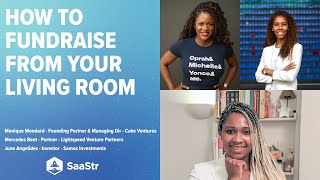
Panel discussion (recorded/uploaded Sept 4, 2020) hosted by Jason M. Lemkin with Monique Woodard (CAKE Ventures), Mercedes Benz (Lightspeed), and June Angelides (Samos Investments) about how COVID-19 changed fundraising and investing. The speakers review market data (VC dollars, valuation trends), confirm that deals continue to close virtually (though process can be slower or require more diligence), and give practical guidance for founders raising remotely: be transparent about COVID impact, share more business data (transaction/cohort metrics), use short initial video calls (30–45 min), provide demos and FAQs in a data room, request clarity on investors' decision timelines and typical check sizes, and send permission-based investor updates. They also discuss cold outreach preferences (email over LinkedIn for some), customer reference expectations (strong, “can't-live-without” signals), and when pre-revenue / pre-product founders can get funded (strong founder track record, market knowledge, network).
Questions this video answers
September 4, 2020
$129 billion (first half of 2020)
Down 7% from the same period in 2019
60% of VCs reported early-stage valuations have dropped between 20–30%
Chapters
Monique Woodard, founding partner and managing director at CAKE Ventures, Mercedes Benz, partner at Lightspeed Venture Partners, and June Angelides, investor at Samis Investments. I'm going to hand it over to you, Monique. Thank you so much for joining us. Awesome. Thank you. Thanks for joining us today. So I'm an early stage investor. I focus primarily on seed investments, especially around areas of demographic changes. And today we're going to talk a little bit about the secrets of fundraising and investing from your living room. COVID 19 has completely changed the way that we do business in so many ways. But before we jump into that, I want to turn the mic over to my friends Mercedes Benz and June Angelides to introduce themselves really quickly.
Hello, I'm Mercedes and so great to have all of you with us today. I'm a partner at Lightspeed Venture Partners, a venture capital firm based in Silicon Valley and there I invest in early stage companies and their check sizes ranging 2 or 3 million to 30, 35 million. So some not so early and invest in areas of consumer fintech and ed tech or future of work. My background prior to Lightspeed I was spent the beginning part of my career in corporate finance. Spent some time at the central bank and at Goldman Sachs and then switched over to working at startups in 2012 and had such a great time. I worked at General assembly and also ran revenue at a VR startup and then got back into investing. So excited to share some thoughts with you guys today.
Hi everyone. Thank you so much for joining us this evening or this morning. My name is Junanjalides and I'm an investor at Samos Investments and we invest in pre seed to Series A. So my accent might give it away. I've got a bit of a mixed bag. I grew up in Nigeria and I moved to London in 2001. I started off my career at Silicon Valley bank on the venture debt team. I then ran a startup called Moms in Tech which is coding school for moms. And I joined the investment world about two years ago and we invest in everything, so literally, consumer, healthcare, fintech and excited to share my thoughts on investing from your living room.
Yes, Amazing powerhouse panel. Thanks for joining me. So I think at first I want to dive into a little bit of the data. So according to Crunchbase, the total venture dollars for 2020 are at 129 billion for the first half of the year, which sounds like a lot and it is a lot. But that number is down 7% from the same period in 2019 and rounds under 100 million are at the lowest recorded amount since 2000 2017. And then a final data point. According to a survey by venture capital firm NFX, 60% of VCs report that early stage valuations have dropped between 20 to 30%. So, you know, I don't want to make it, you know, doom and gloom or, you know, the party's over, but those are, you know, the very real data points and the environment where within which a lot of people are fundraising right now. So obviously there are deals still getting done. I want to ask our panel, are investors really doing these deals with companies that they meet only via Zoom? Are you seeing that actually happening?
Yeah, absolutely. And I remember at the beginning of the pandemic there was this question around, are investors really open for business? And there was this infamous Google Doc that was going around with a list of companies sort of saying, we are indeed open for business. But I think the reality is that it took everyone a while to figure out how things were going to get done. The process is probably a lot slower than usual because there's just a lot more to factor in. You're trying to get to know people online. There's this lacking this in person format which we've all been used to, but absolutely. I've heard so many companies get funded, but I think you just have to work a little bit harder to get in front of the right investors.
I personally haven't invested in a company without meeting the founder since the pandemic. I have invested in companies since the pandemic, but luckily enough was either able to meet them in person. I live in San Francisco and a founder happened to live in San Francisco. So kind of went through the whole process of okay, we want to invest. And then it was one of those kind of like, what's the point of meeting? I guess we should just see each other and, you know, met up in a park. And I was like, okay, you're a real person. Great, I'm a real person. Great. Check the box. And I actually had a founder. I met another founder a couple of weeks ago who had actually flown to, to San Francisco from Columbia, the country. And I'm not recommending that. People need to travel to get deals done. I think it could have happened without it. But there are, there is travel happening now as well to an extent.
I am in diligence with, you know, a investment who I haven't met before, although they are in the Bay Area and you know, I could take them out to a park or do some social distance meeting or something like that. So I think initially When Covid initially started, there was this mad rush to understand where your current portfolio was and understand sort of do the triage around your current investments. And then we sort of, I feel like a lot of people sort of hit pause and said, I don't really understand where valuations are going to go. So let's just pause for a moment and understand, are they going to stay the same? Are they going to drop dramatically? Like, how should we be valuing companies? And now I think that a lot of VCs have just sort of gotten back on the horse and are now starting to take meetings at the same, at very much the same rate that they were before. So I think that's a huge positive for a lot of, a lot of founders. So to that point, do you feel that founders have fewer choices or more choices now than when they had to meet investors in person? Because now there isn't this sort of impetus to maybe, to maybe, you know, come to Silicon Valley for, you know, a few weeks and then run through all of these meetings like people would have normally done. You know, you can just hop on Zoom and meet with an investor in LA and meet with an investor in San Francisco and meet with an investor in Toronto or Vancouver, and it's all the same.
Yeah, I used to meet before the pandemic, I would meet almost all meetings in person. I had maybe a couple of calls a day, or there would be one day of the week that was very calls focused and the rest of the days were all meetings. And I'd say probably 30% of the people I met were coming in from out of town. And, you know, it's back to back, it's an hour meeting. Because you're in person, you're not going to meet for 20 minutes or 30 minutes. And so you're doing, you know, a longer meeting. So I actually think that I'm meeting with a lot more founders now because no one has to travel. It's online. The hour meeting has shrunk down to 45 or 30 minutes through a phone call or Zoom meeting. And you're able to do more back to back. So I do think there's more options now.
I also think people are a lot more available and like, like you, a lot of, a lot of investors would have had to travel to meet founders in certain cities. And because we're a bit more, we're at home, we're not going anywhere, we've got more time and I think it's easier for them to reach us on Twitter, on LinkedIn. We can concentrate. There's that pause, which I think was probably necessary to help founders access us. And I think it's a good time, It's a good time to build those relationships. Whether you're investing right now, just sort of nurturing friendships with investors and being in their line of sight for when you are ready to start raising your round. It's a good opportunity. And I think a lot of founders have latched on to that.
Yeah, completely agree. People are way more accessible than saying.
Monique. No, I was going to say to that point, how should people be engaging with investors? I think there's been this sort of democratization of capital in a lot of ways because if you're a founder in Atlanta, you don't have to get on a plane. You can create this relationship in very virtual ways. But let's really break down for people how that actually works. How does, how does a person create a relationship with you, June?
Yeah, I mean, that's a good point because we actually did two deals in lockdown and we never met the founder before. We issued a term sheet which was really testament to the fact that it can happen. So for us, it was more interaction than normal. They were reaching out to me on WhatsApp. We did more reference checks. So just helping us close that loop. Getting comfortable with you as a person, just because we were missing out some of those cues, that which we would have had if we'd had that face to face meeting. But yeah, it's just been regular calls, really getting to know the teams and them providing us with maybe a little bit more information than they would have had we been in person. But yeah, it's worked out really well and I think we've actually gotten closer to them because we're investing in the people at the end of the day. And I think that's one thing people need to remember. It's not just about the deck. It's actually you. Like, we're banking on you. You're the one building that business and we want to get to know you. And you, there's this unique window into people's lives which Covid has given us. Like, you can see my living room. My kids might turn up. You just never know. And it's just that humanity, you know, it's just, it's been, it's been brilliant because you get, you get to see their lives, they get to see yours. And I think that's really helped to bridge that gap and help people get comfortable.
Yeah, Mercedes, what kind of data can people give to you? For instance, if you're trying to get to know them. June brought up the point of, like, needing to see more data points and needing more information.
What.
What is that more information? What does it really look like in practice?
Yeah, I am. A lot of the investing that I do is at the series A and a little bit later stage. From a business standpoint, there's a lot more data that people seem to be willing to share about their business. And we have more time as investors as well, because we're not like, for example, even this saster. I'm not traveling somewhere to speak. I'm going to get on a call right after this versus the travel buffer time. And so I've been encouraging founders this is less about getting to know you as a person, but more about the business of like, hey, just send me the transaction data and I'll do the cohort analysis for you. I'm happy to just throw that together and kind of send that. And I've actually seen a lot of investors doing that too. Sometimes founders will send me and say another investor went ahead and just, you know, I sent them my data and they went ahead and put the charts together for me. And so I think that's the thing, you know, not to be afraid of. The investors have more time in the evenings. I used to go to events and networking and panels, and I'm not going to any of those in the evenings. So, you know, there's a lot more time to actually do the diligence on the business itself and. And then in terms of additional data points, of just how to get to know them better as people similar to you, June. I've moved over to WhatsApp. I've moved to text message. People send me, you know, photos of their if they're, like, walking on the street or if they're in their, you know, office, but they're not supposed to be there because not everyone's working there yet. The empty office. And so it's just kind of funny, you know, people are getting more personal in a way. And I've also flown across the country. I flew to Maryland to meet an investor. Once again, not recommending people to fly, but I did do that. And I would think it was something where, you know, we met outside, out front, in the outdoors, in a park, in front of a hotel. And I think it's something where you can get to know people also based on, like, I went to their hometown, you know, which is. Which is kind of interesting. So I. Yeah, I think it's also. There's more people introducing us to their clients as well. Like, hey, maybe you can't get to know me, but here's references from people we work with. And because those people also have more time, they're more willing to hop on. I can do six or seven or eight reference calls of your customers versus one or two that I might have done before.
That's a really good point. So for founders, it's really about being willing to like give more information to help investors make better decisions and try to get from, you know. Okay, well, this is an interesting team. They're solving an interesting problem to really understanding the nuts and bolts and guts of the business.
Absolutely, absolutely. And even for like the earliest stage businesses, which, you know, we invested in one that was pre product, just really like showing us that you've, you've done your homework, have an FAQ document that maybe other investors have asked you a series of questions, compile them and have that ready for other investors so that you're not having to do it twice and just pop it in the data room. Just anything to save you time and show them that you've thought about it real hard.
Right. And so, you know, beyond getting to know the team and the founders and the business, what else do you need to see to get comfortable? Is there, has there been change in process? What does the process look like right now.
For us?
Yeah, go for it.
Sure. So we have kind of two different processes depending on how large of an investment it is. If it's a smaller seed investment, it's not as you don't have to present to the full partnership. If it's a larger check, then there is a presentation to the partnership. And for us it's a pretty big group of people, but it's over. Zoom. And so before there was actually, I think there was a lot of nerves of like standing up and presenting in person. And now it's like you can sit from, you know, your home. I've actually seen a difference in that and then from the process too of how do I communicate the product. And you know, videos might have worked well in an in person presentation, but you don't always know if because of everyone's Internet connection, if it's going to work well if you play a video. And so there's a lot more kind of testing that we're doing ahead of time and that we're also, I'm seeing founders do less live product demos and less videos in the pitch to the full partnership, but then they're doing more of that ahead of time. And so instead of, you Know, I might have before set up a separate call to go over a product demo now. And sometimes in that very first meeting, you know, I'm saying, hey, you know, I know we're all on our computers right now. Do you mind actually just showing me the product and the inside of it and how it works? And they'll be like, sure, share screen. And then I'm just seeing everything kind of real time. And so I think you can move up some of that kind of that product exploration and some of the kind of what's behind the paywall to help investors better see that.
Absolutely. I mean, to echo that, I would say that one thing that I've been conscious of and a lot of other investors have talked about is attention span on video. You need to think about how you're going to keep that investor engaged and just keep checking for little cues while you're having that conversation. Are they still paying attention? Maybe, you know, mix it up with slides and maybe, you know, as Mercedes was talking about, have a demo handy just to make them really understand what you're trying to solve. And the sooner you sort of catch their attention, let them feel that pain point in the beginning of the conversation, it'll be a lot easier to carry on the call. And we've started having shorter initial meetings. You know, previously we'd have a, an hour long meeting in the office. Now it's an initial 30 minute Zoom and which we find way more efficient because people sort of get straight to the point and then, you know, you're not wasting anyone's time. And then, you know, it's easier for both the partners to jump on the second call with me. And I can say we've moved a lot faster this time around. I think we went to term sheet in like two weeks, so it is absolutely doable.
Yeah, I'm a big fan of starting with shorter phone calls of like 30 minutes, like another 45 minute call and like we're going to spend like an hour and a half together maybe. Right. And it's just, you know, to our earlier point of like needing more data, needing more touch points with founders, now it's like, okay, let's do a quick call. Okay, let's do like another 45 minute call. Let's do an hour, let's, let's do an hour and a half. You know, it's, it's being able to like use time wisely in order to like get to know them a lot better.
Absolutely.
Yeah. So I just, I want to switch gears a little bit when you are talking to founders right now in this moment. Do you want them to bring up the elephant in the room, which is Covid? Have you seen a lot of ways that, you know, founders have done a good job of talking about COVID You know, you might see some lumpiness in the revenue. Have they done a great job of, like, addressing that and talking about COVID or addressing future opportunities that Covid has brought about? Mercedes, you work a lot in ed tech, and I feel like the EdTech category is just kind of exploding right now, and it feels really natural for those founders to have a lot of optimism around the opportunities in the category.
Yeah, EdTech's hot again, which is everyone in the space is super excited that we are liked again. And yeah, I mean, in terms of that, I think that I see a Covid slide in pretty much every single deck now, because there's really one of three scenarios. Either you're benefiting from COVID and you're exploding and your growth is growing. This is the delivery companies, the grocery, food delivery, ed tech, you know, online, telehealth, all of those. There's second category could be that your business is really hurting from COVID that you didn't. You weren't able to, you know, grow as much. And so I seen a lot of decks with a bridge round or with, you know, a slide on. This is what happened a lot of at this point in time, now that we're in August, September. We're in September, now that we're. I'm seeing a lot of recovery slides where in the beginning of the pandemic, it was, okay, this has happened, and here's, you know, we need cash right away. But the companies that had a little bit more Runway waited to see if they can make a bit of a recovery. And so their slides are all showing the V now saying, this is what happened. This is what we needed to do, and we were able to bring it back up to here by doing all of these other things. Maybe not all the way back up, but, you know, a little bit of a check mark. And so that slide's really expected. And then the third category is the companies who not too much has changed. Maybe there was a little bit of an inflection in the beginning, but they really continue to do well. And those companies also have a slide on Covid because maybe they didn't grow as much as they were expecting, but they didn't fall off. And so, yeah, I'd say it's really kind of, kind of expected now. And if I don't see one, then it's going to be my first question.
Right. So you might as well go ahead and put it in there and talk about it. At first I was seeing a lot of like, we are a Covid company and now, which I was not as excited about, to be quite frank. But now I'm seeing more of here is how Covid has impacted our business and here how. Here's how we've either recovered or it made us do extremely well, especially in companies that are e Commerce or EdTech or here are the COVID related tailwinds that are kind of pushing us to be successful. What should companies highlight as a signal that they are extremely investable in this particular moment? I'm going to throw it over to June.
Yeah, I'm just thinking about the companies that we invested in. You know, this one particular founder who she just demonstrated like really strong knowledge of her sector. So I think it's really important that this is not the time to be shy. You really need to highlight why you are the best person to be building this business. Show that you've done your homework, that you get the market talk numbers, give us a real indication about the market size, talk about your margin. Don't be shy. Really, really explain how you're going to get there. We don't expect you to have all the answers, especially given Covid. It's so unpredictable. But we want to know that you're thinking through it in the right way and that you are the type of founder that can adapt. When it really comes down to the, comes down to the crunch, like you'll know when to take a step back. And, and I think we're all, we're also being very realistic. We know that we're all sort of in this uncertain time and we just want to be sure that you're also thinking about it that way. And like the macro situation is, you know, it's fluctuating every day. But I think the key is just to just be showing, showing us that you're fully aware of the climate that we find ourselves in and not pretend that everything is sort of rosy because it's not.
Yeah, a lot of investors are to add on that. A lot of investors are. Why now? Investors, meaning there's this idea is not necessarily the first time I've ever seen the idea, but like, why is now the right time to invest in this idea? And there's Covid gives you so many opportunities to talk about why things are different now than they were six months ago or a year ago. I mean there's ideas that might have been like, you know, even at just you think about K12 parent supplemental education, that was not a category that people really saw six months ago, parents spending a lot of money in. So there was. It didn't really make sense. But now you're like, okay, everything's changed. And so I think if you can get really clear on your business why the why now has changed and it may not have to be for that. All of a sudden there's much more spend and that budget has been unlocked. The why now might be that there's actually been a pullback in your market and so incumbents have gone away, everyone's kind of gone away and there's not as much competition. And so now there's a reason why, even though the industry or sector is not doing well, that a new entrant is going to come in early, new valuation that's not going to be skyrocket high. I've had it. Founders also tell me the why now is that we actually, for the first time, our sector is not doing well, but it required us to be so efficient with our margins that we now finally got to break even on our margins and we're still down overall. But that's a new story and that is it. Now we know how to build our business this way. We almost just didn't do it before because it wasn't, you know, that everything was good and we would get there eventually, but now we got there in three months. And so the why now is you're going to get to invest at the same valuation from what I was raising at three months or four months ago. But my business is this much more efficient. And so there's a lot of ways to frame it that I think can resonate well.
And I think that's a really good. That example in particular is a really good example of something that I think about a lot, which is being able to turn what was a no six months ago into a yes today. Right. You know, six months ago, when I saw the business, there was something that might not have been compelling about it. But now there have been massive changes and the landscape has completely changed and your business has changed along with it. And so that's a really good trigger point in getting someone from, like previously no. Now it's a yes. I'm going to wrap up this part of the. This part of our talk and then I'm going to go to the Q and A. But before I do, I want to ask everyone for one best practice for companies to Have a really smooth fundraise from home. And I'll start with mine, which was on our previous slide is really be clear with the investor about the process. And the process may have changed from pre Covid when you talk to them to now when you're talking to them. Get really clear about what a decision looks like and what the timeline of a decision looks like. Is it three days, is it three weeks, is it three months? What can I expect? And then you can plan accordingly. Either that investor may fall out of your process or you just may have them in your process in a very different manner. And it's not a taboo thing to ask about how long is the average decision making process within this firm? And so I find a lot of founders not really asking those questions. And so I would say that is the number one way to have a really smooth, smoothish. No, fundraise is totally smooth, but smooth ish. Fundraise.
Completely agree. And I think also on top of that, at some firms, for example, at Lightspeed, which is a pretty large firm, when you ask that question, you also want to know, how many people do I need to meet in order to get to a yes? Because normally it's almost never one. And so you sometimes it might be two, it might be three, it might be 30. And so 30 is when you present to the full partnership. And so then, you know, just getting to understand that because it gives you a sense too of like, well, how many meetings do I need to do? If I'm meeting with you just now is the next meeting with, you know, three people? Because we also have processes sometimes where, you know, you'll have one person meet and then another person meet and then another person meet. And that's not the most efficient. And we try not to do that. But sometimes that's just how scheduling works. And so you want to try and see, okay, how many people can I get together in the same meeting sometimes. And the other thing I would say too is that the end of I see some founders do this really well at the end of, you know, your meeting with the investor, getting their quick feedback and take right Then it. Sometimes it's very clear, they're like, okay, great, let's follow up. I want to see these more materials.
Let's go.
And sometimes they're just kind of like, okay, thanks. And you know, that's not wonderful because you don't have great clarity on are they saying that? Because you and I think it's really important to just ask and say, so what's your take on the company. Is this something that's in your wheelhouse and if not, totally fine. And I would just prefer to get a quick no if it's not in something you're doing and investors love out. If you're selling me. Oh, you just want a quick no. Okay, great. Now I can just tell you it's a quick no versus the trail on. And I try and do this and just be upfront in every meeting, but some investors feel awkward about it. And so I think really just asking and getting to a quick no is better than an elongated maybe.
Absolutely. My top tip would be think about your round formation early and don't be afraid to ask the investor how much they typically deploy to a company at your stage. Because this is something that I see a lot of companies sort of start scrambling with at the end trying to understand how much they might get from this fund or that fund fund to ask the question because they probably have a number in mind. But get a sense of that early and start keeping track of how that round would look like and who are the strategics who you might just get it because they might add extra value but they might put a smaller ticket in. But have that understanding even before people commit to being the leads or not. But ask that question because they know how much they would normally deploy.
I love that. I'm going to pull up some questions from the Q and A. Sean wants to know when doing a customer reference call, what do you most want to know or hear from a founding customer? I think this just means, you know, one of your early customers.
I can take that one. So the best customer reference calls have been where the budget holder. So I'm making sure you're also talking to the right person. But the person was, you know who's spending and this is more enterprise. But if it's a consumer, it's the person who that's also their wallet is when they are talking about how they can't imagine life without this product and when how they it's completely changed their process, how they work, how they go about things. And sometimes I'll ask the customer, you know, if you didn't have this product anymore, like what would be what would you guys do? And then you're looking for well do they know does it completely break their process or different things like that. So I'm normally looking for just if there's a lot of customers, I would say everyone knows they're getting a customer reference call. So you're almost always going to get something positive what you're Trying to break out is nice, positive, good. Like the NPS scale. You're trying to get away. See, what's just an eight or seven and maybe even what's just a nine, but like, who is screaming from the rooftops? Tens, elevens, twelves. This is like amazing. And that's what I'm looking for.
Yeah. And the how did you do this before? Question is really important because it gets to, is this a nice to have or is this a major pain point where you would be sort of screwed if you didn't have this product? Absolutely. What about you, June?
Yeah, same. I mean, I'm just thinking about some of our DTC companies and it's that, love that, oh my God, this, this product has changed my life. I can't imagine using anything else. And you get that sense. And when you do hear that, you're like, okay, I'm sold. You know, this, this is like game changing.
Absolutely. Yeah. On the consumer side, you know, I look for, you know, true fans and are people tweeting about Instagramming about this product, even without, you know, any sort of incentive? And one of the other things I look for is, is this something that other people are building things on top of or customizing this product? So I was, I was looking at Telflower, which is like a handbag company that's super viral right now. And now people have started customizing the Telfar bags and that's like a whole sort of industry in and of itself. And so I look for those signals, especially in the consumer space of like, how deeply are people loving this product and how deeply are they embedded in the brand story?
Exactly.
What's your preferred way of cold outreach? How do you want people to get to know you or get in contact with you if they're reaching out cold? Or do you even like cold outreach? A lot of people, you know, a lot of VCs talk about getting the warm intro. How do you feel about the cold outreach in general?
I like it. I like, you know what, I've got people like Instagramming me and I love it. Like, we'll just have a conversation. And I actually did this thing recently where I just, I put up my email address, but also I have the calendar where people can book 20 minute slots with me and half the time, like, we just start chatting and then it turns out they have a business and it's like, oh my God, this is brilliant. But it's nice when it's sort of just make yourself accessible because you just never know. Serendipity. You Might just come across this amazing business that you end up supporting.
Yeah, I also like cold outreach. I did a call this morning with someone who had reached out cold and I do them quite a bit. I think that I prefer email. LinkedIn is a lost cause for me. Please don't message me on LinkedIn. There's too many people never dig out of it. Whereas email, I attempt inbox zero and get pretty close many days. And my emails on our website, well, this is in my work account, in my personal account, over five figures unread my work emails on the website. So I always encourage people, people will actually reach out on LinkedIn and ask for my email address. And then you're kind of like, but it's on the website. So that tells me you probably didn't do the research of even going on the website. Which, you know, I think that's the amount of research I would do before reaching out to a founder is go on their website. And so I think that's, that's good. The other thing also in this, in terms of cold outreach, like crafting the message, making sure that you're in the right stage too. I'm mostly a series A investor and I get the majority of the cold outreach is for not the right stage. It's for, you know, pre seed, pre revenue. And so a lot of the responses are quite similar that, hey, that's not the stage I'm investing at. The more, and I know it's hard to necessarily tell what stage investors are, but the more you can kind of just clarify, this is my stage. Is this the stage that you're investing in, the quicker you can get to the right person?
Absolutely. I will add that, you know, a lot of us blog, we've got medium posts, we've got articles that we've been featured in, read, read about us, get an understanding of who we are, maybe even before sending us a message, just to make sure we're actually the right person for you and then just make your message as clear as possible as to how we can add value. It just makes it more likely that we'll respond.
Exactly. I also feel that, you know, the emails that I answer relatively quickly, whether it's positive or negative, are the ones that are very clear, but not super long. So I'm a big fan of a bullet point. Yes. And, you know, I occasionally get these cold emails where it's like, I'm building something amazing in FinTech, find 15 minutes to talk to me. I'm like, I'm. There's no detail there Like I'm almost never going to exactly, you know, going to be able to reach out or answer that email in a positive manner because there's just not enough information there for me to like be like, oh, okay, this is actually something I should spend some time on. So like learn how to craft a really good and compelling email that gets people to respond and to get back to you and you know, to create some interest in what you're actually doing. Okay, let's talk about another question. June, you talked about your firm investing in very early pre seed sort of person with a deck and an idea company. Are firms investing in pre revenue companies and if so, what do you look for when investing in these companies? And that's from Jennifer Kim.
Okay. Hi Jennifer. Yeah, we do. One of our last investments was pre revenue, pre product and in her case she had good experience. So she had a lot of transferable skills that we knew for sure. She had the network to make her idea happen, sort of really hit the ground running context to build out a strong team. So she hasn't even built the team yet. But we know that with her network having done really good reference calls on her and the data that she provided us with, you could tell she's done her market research. She knows it inside out. She started the the groundwork and starting to get the idea off the ground like building early, early products. So we got a sense of what is coming. But I think it's just a case of trying to convey as much information to the investor that you are the right person, whether it be through your network or just through your knowledge of what you're about to build.
Awesome. Yeah, I think I've invested in pre revenue and pre launch companies. Not a lot of them, but there are definitely a couple in there. And I think for me what got me over the hump was their background. Have they done something similar or in a similar space before? So do they have the background knowledge network, et cetera, to really accelerate quickly? That always helps. And then they're deep again to your point, their deep understanding of the problem that they're trying to solve. The more you can illustrate that you know this problem well and that it's a problem that you are the person to solve. Like that's how you get to a yes as sort of a preference pre launch, pre revenue, pre everything startup. So we'll do another one. So for an early stage that was dormant prior to Covid, then pivot and you have the clear why now? How can you best address during a presentation that the Company has been around for a while, but is hitting. I think the question is, but they've been around for a while, but they are hitting some sort of inflection point that maybe was driven by our current Covid situation.
Yeah, I can address this. So there's a couple considerations here in terms of companies that have been around for a while and now are taking off, that can be fine as long as you have enough data to show that it really is taking off and it's not a fluke. So ideally, more than one month of data, more than two, maybe three or four to show. Okay, this is a trend. This is really happening. Because I think there's a fear sometimes when there's just like it's taken off for one or two months that it's not sustainable and maybe you just spent more on, you know, ad spend that month. So I think also showing, you know, one thing to show is here's how much we spend on ad money every month. And this was our cac, this was our return rates. This is if you're a consumer company, but even enterprise companies, you can do the same thing. Here's how did we hire more DD people or did we not? If you didn't hire more DBD people and then all of a sudden sales are taking off and it's okay. This was natural. The other thing that you can do is to frame it as there's phase. This was phase one of the business, and this is phase two of the business. Nobody, you know, everybody knows there's some kind of reverse revisionist history. When sometimes you talk about how there was like this new plan, this new thing that's working, but it was your plan all along. That's totally fine. Everyone kind of wants to hear that story anyway. People like to be convinced of the. Oh, yeah, that was really like, smart. Like, you did this thing first, it was the wedge and now you're going into this and this is why it's working. It doesn't matter if you had the idea early on. Every single successful company you can think of out there started almost doing something different and then something caught on. And that's what the story is now. And they'll tell you that they were doing that thing first because they saw it all along. So I think people, everyone, hindsight's 20 20, so definitely try and present it as if that was, you know, what you were thinking.
Awesome. So Clary has a question. Do you suggest an early launch with a minimum viable product, or do you suggest to maintain focus and use of resources to achieve the main goal. So I think it's like, do you launch a less fully featured product or do you try to wait and launch a quote unquote, better product that is full of features? My tendency is to go toward launch an MVP and get customer data around, whether it's working, what is working, what isn't working, how customers are using it. Because customer data and customer feedback always changes your product. And so to wait until you have this product with like seven features versus, okay, we're going to launch something that has two features. I think that that changes what happens in the rest of your roadmap. So go ahead and launch that mvp. I think getting things out into the world faster rather than waiting for, like having the perfect thing is more effective for most startups. Anyone else have any comments?
Absolutely. I mean, I'd echo that. Start scrappy, get data. Data is your friend. Because when you are ready to start raising, then you've got data points. You can say, people love it. This is what I've learned. I think it just puts you in a much stronger footing when you're having that conversation.
Yeah. Nathan has sort of a dual question. Do you like it when startups say, you know, you have a first meeting and then maybe they're too early, but they say, or maybe they're not raising, but then they say, well, we can add you to our investor update list. Do you all like that? And do you actually read those emails? I totally read those emails. And sometimes I'll be randomly sitting around and I'll think about a founder and I'll go back to an email that they sent me before just so I can like refresh my memory on like where they are. And then occasionally, I mean, I've had people like notice that I opened the email from like a month ago and then reach out and say, oh, you know, let's, let's hop on the phone. And I love those interactions. I think that's how you create relationships.
Yeah, I like them as well. I don't read every single update in full. They're quite long, typically. But I'm kind of scanning through and looking for it. Typically. The same feedback I gave when it was not the right fit at that time is what I'm looking for in the update. So is there an update in margins? There's an update in revenue, Is there an update in, you know, engagement? Any of these different things that I might be looking for? And if I don't see it really quickly, then I might kind of just, you know, keep going on. I think it's great though, because everybody needs to be, you know, reminded too that you're out there and that you're continuing to progress. And there's so many companies that I realized and this is, I take it as this is my fault. There's so many companies where I haven't heard from them in six, seven months and I'm like, shoot, I didn't stay in touch and like I want to reach back out to them but like, I don't know what's been going on. I look back at my meetings from the last, you know, meeting and I was like, okay, maybe I can ask them about this. But then it's kind of like, it's a little bit awkward. I haven't talked to them in seven months. I just reach out and ask a question of, hey, if your gross margins improved, like that's weird. That's a weird outreach. So I don't want to do that. So then, you know, I sometimes get caught up in, well, I don't know what to email them even besides like, hey, do you want to catch up? Which is totally different. So I actually do think that the monthly update emails can do a lot to keep you from of mind and to also make the next interaction more fluid and more natural.
Absolutely. And especially when you know, the last email, if we, if we're passing on a deal and it is because we want to see certain data points improve, it shows that they've taken note of that. But I think it's nice if the founder does check in with the investor and say, do you mind if I add you to the list? Because sometimes I'm like, whoa, I'm on a list. I didn't know I was on a list. It is nice to be easy part of that journey. You feel more invested but let us know we're going to be at it.
Totally. Yes. I do like the permission based. It's not just like I get this random email and I'm like, oh, okay.
Well we all want in bulk zero like Mercedes.
And the other thing too with those is that there's kind of like the external investors list and the internal investors list. Sometimes I get added to emails that were from their existing investors but I'm not an investor and I'm kind of like, oh, why are they sharing so much info with me? And so I think also bifurcating. Those can be good.
Yeah, exactly. I would highly recommend not sharing super confidential data that you don't want someone who isn't already an active investor to have. So make sure that you are splitting those lists and accurately, you know, accurately sending them to the right people, routing them to the right type of investor. And, you know, don't feel like you can't tell an investor who you haven't gotten an investment from yet. Certain things like don't make it so vanilla and sort of and washed that it's completely useless. But also, you know, kind of ride the line between not giving them too much information around, especially around things that may not be going well in the business that other investors definitely need to know. Cool. I think that is the end of our the end of most of our Q and A Mercedes. Do you have any last words for our audience?
Feel free to hit me up. I always love hearing from folks, especially if you're building in consumer bentech edtech future of work. My email is mbent at lsvp. Com and thank you guys for joining.










