Top Global SaaS Trends You Should Know with Google Cloud and Zenoss
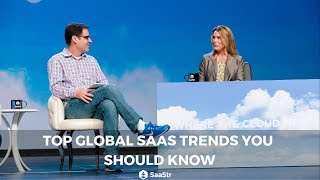
Eyal Manor from Google Cloud and Megan Lueders from Zenoss discuss why companies are moving from on-premise software to cloud services. They cover security in multi-tenant systems, how Kubernetes and machine learning are changing development, and why marketing and engineering teams need to work together to keep customers' needs in focus as products scale.
Chapters
Please welcome google cloud vp of engineering eyal manor and zenos cmo megan lueders. Hi, everyone. Hi, I'm Eyal. Thanks for joining us today. I know it's kind of the end of the day, but we're excited to talk to you and happy to introduce Megan Lueders, CMO of Zenos.
You got it. Thank you.
So I've been building SaaS services for over 10 years now in an engineering capacity. And just before we start, can we get a sense from the audience? I know it's kind of hard to see, but who here is kind of in a technical hat? Raise your hand a lot. Who's here on a CEO or more on a business hat? SaaS. A lot of that as well. One more question. Who started their business more than three, four years ago? A lot as well. All right, thank you. So we have a lot to talk about. There's many interesting things and just before we jump right in, maybe I'll have a question for you, Megan. So Gartner says 2018, the SaaS market is over $73 billion. It's growing very, very quickly. It's changing the landscape for large enterprise that you're very familiar with. What are your thoughts? How do companies go through this journey?
Well, it's certainly something that's not overnight. And I think in answering that, I'll give you a little bit of background. Quick, Zenos, we have traditionally, we've been around since 2005 and traditionally have been a software on prem business. And what we saw along the journey the last couple years was that our customer was changing, they were changing, they were moving to the cloud, they wanted real time results, they needed faster updates. And we are in the business of providing modern monitoring to hybrid infrastructures. And in order to be relevant to businesses that were moving to the cloud, we needed to be able to keep pace with what was happening to these customers. And one of the things that we realized is that continuing to build an on premise software business was not going to do that for us. And so we actually had to make some major adjustments and look for an alternative way to deliver the software, which clearly meant that we needed to move to the cloud full time. And the same customer challenge that we were being presented, which was how do you scale, how can you automate, do you have a great user experience? For my workforce, my IT ops and possibly up and coming DevOps teams, we needed to be able to answer in the solution that we needed to build going forward. And what challenge that presented to us was how do we do that quickly we needed to stay relevant along the customer's journey and we needed to find our own cloud provider that was going to allow for us to scale quickly to have the security that we knew customers were demanding when they were searching for cloud platforms. We needed to make sure that was automated and that they would work, a cloud partner would work with us. And so some of those same challenges that customers were facing, we ourselves were facing. And that ultimately is what led us to become a Google Cloud customer. But what we saw is that it was small, it was scalability, it was security reliability, but also on the development side, who was going to take us faster to market from a devop, from a development perspective, when we made our selection to ultimately pick a cloud provider.
Yeah, I think that's a great story about the journey and I think it's a journey that many in the audience probably are experiencing. And moving faster is kind of a theme that SAS is all about. So we want to develop software faster. The landscape is changing very fast, the business environment and adoption. So how would you share your perspectives and learning with kind of non technical, maybe CEOs and founders from your journey?
Yeah, I think founders and just like what we experience at Zenos experience is that founders and the executive team, they have to really build and desire to have a culture of curiosity and constant learning. And El and I were just talking just moments ago about how our team really, when we were deciding to embark upon this cloud and movement to SaaS journey, we needed to ensure that we had a culture of including people into the decision making process and looking for alternative ways to support solving these customer challenges. And ultimately what that led us to was inviting questions, inviting proposals that we possibly wouldn't have considered before. But it all stemmed from having a deep culture of curiosity and learning. What about you with Google? What would you say to some of the non technical leaders here?
Yeah, so one insight I had recently. So I've been building cloud services for a while and the conversation I've been having with partners and customers has changed a lot throughout the years. If you just think about cloud and cloud APIs and SaaS just two years ago, what type of services you had. So most of the conversation was about storage and compute and how to move fast. In the last two years there have been so many new services around security, around machine learning that literally did not exist. So the conversation is changing. The point you made earlier is exactly spot on, which is development velocity is strategic to everyone here. We have to move faster, we have to release software faster, we have to have automation, DevOps and security built in. So a lot of the technology landscape is changing. So if I'm speaking on a non technical hat, we have to explain how to get the most of the engineering team and then the second part of it is how to go to market even faster, how to get distribution to channels and partners and be part of a larger ecosystem that can integrate to your SaaS offering. So those are the two sides of the equation.
Perfect. So let's build on that a little bit more and talk a little bit more specifically about technology. You know, one of the things that we have encountered, and I know you have with many of the SaaS customers that you're working with, is that customers today are demanding a much more technical discussion when selling your product and solution and whether they want to know more about security or scalability or automation or AI. The customers are really demanding that the vendors are coming to market with answers to these questions. Can you speak to what you've seen with this and how Google is really accommodating these requests from customers as well as partners?
Yes. So one trend I've been observing in the past two years is first of all is the rise of containers and the rise of kubernetes. And that's kind of why I asked a little bit earlier who started four years ago, because actually those technologies did not really exist at the scale they are today. And the reason it's important for you is to be part of, you know, the open standards, not be dependent on specific cloud technology or environment. If you need to work on premise, if you need to work in whatever cloud you need to work in a consistent way that accelerates your development environment. So one trend is just containers, kubernetes and how that auto scales in a very seamless way wherever you are. The second thing is to be cloud agnostic and just be able to be portable. And that's the only way pretty much to do that today is based on open source technology, whether it's the open source databases, other infrastructure components, containers, TensorFlow and so on and so forth that I'm sure many of you are using on a day in, day out. And you don't want to make the decision to be locked in certain APIs too soon because the business world is changing and your customers may demand that you run on certain locations and there are more and more regulations, compliance, gdpr, data residency that everyone at a certain scale has to be compliant with. So I think having this open platform is actually a strategic decision that the sooner companies can make, the better and.
You know, I'll add one quick thing to that. Especially so many of you raised your hand that you're a business, maybe not in quite the technical role. And from a business perspective, I will say strategically picking the partners that you go to market with can really help advance the conversation with the end customer. And while what we sell in nature at Zenos is something already complex enough, the added level of complexity that comes because of what we do really lends itself well to ensuring that we have strategically worked with the best partners who can also accompany us in the sales cycle. So a great example of that is when we're selling to a large financial institution and we do sell to kind of the Global 2000, they are expecting a discussion on security and scalability. And so we have to bring partners to the table. And there are some partners we work with that are more than willing to come into that sales conversation with us. And there's other partners that aren't. And to all the CEOs or to the heads of business development, when you are strategically looking at who to align your business with, I certainly would strongly recommend looking for partners that want to go to market with you. And for us, I will say Google has actually been that tremendously as well as some of our other partners that we've worked very closely with. But they're actually accompanying us in the sales team, our sales cycle and it's certain that something that's accelerated our time to market, but also our close one success as well.
Yeah, so we work very closely with our partners and we've worked together for a while now. And that means, you know, engineering to engineering, getting access to the latest technology that we've been developing over the years, making sure that we can work together on security around what enterprise customers really want. And you're absolutely spot on. They're very demanding customers and they want to know where are you running, where is your storage, how is data being managed? What about compliance? Things like customer managed encryption keys, things like data residency, IM policies. All of those at a certain scale are something that the large enterprise customers are a must have. And you need a partner to work with you go to you go with you to the customer and kind of make sure the solution is well designed. And we do that together with our customers and partners. And the list of security and compliance just keeps growing and growing. And actually it's very challenging because it integrates into cicd. If you want Bin Auth for signed containers to know what's running on production, there is access, transparency, audit logging and then Runtime security, there is nothing that's more important than just protecting the user's data. We take that super seriously. But as a SaaS provider, when you have multi tenancy and you don't want to over provision one tenant, that's pretty large and growing very fast over a smaller tenant, everyone should get the same policies and securities they deserve. It can actually become multi tenancy, can actually become a real technical challenge. So how do you solve that? How do you do runtime layer, you know, three, four, all the way to seven with encryption, identity, network, policies. And you need really a platform that will help you focus on the business logic that makes your SaaS offering differentiated. And then we'll talk about the data and machine learning, but just the aspects of security to be able to scale. I'm pretty sure most companies here can spend 10, 20 or 30% of their engineering time just on the scale. And my kind of job in life is to really take away a lot of the toil in the cluster management and all the infrastructure and make sure you can focus just on the code that differentiates you. So it's a journey. Also we're not ready yet, but there is a lot of investment in that direction.
And when you, when you were talking to CEOs and CTOs today, what do you believe is the biggest technology challenge that they're facing? As a SaaS company, you've just mentioned several things. What is their biggest challenge and what should they be focused on? Whether they're a CEO or a cto, what would you say they should be focused on today?
So we spoke about security, but one of the biggest trend we alluded to was the emergence of new AI services. So if you look again two years back, not so long, even if you wanted to do simple anomaly detection or focus on one tenant that's growing very fast and you don't want to have the noisy neighbor problem where that tenant can take resources from another tenant and so on. And you want to do that in an efficient way. So how do you do anomaly detection in a simple way? How do you automate all the DevOps processes to take out a lot of the people and have compliance in place? And last, and maybe the most important part is as you build the SaaS service, a lot of the new trends are B2D. You build APIs for developers to consume and that actually creates, creates automatic billing and so on. So as you do that, you get access to the customer data, how do you protect the data and how do you give the customer back the insights they need? So a lot of the companies that started from SaaS are actually business intelligence companies, if you look at it. And that's where the market is heading right now.
Absolutely. And along those lines, this is a conference where we're going to hear a lot about machine learning and AI. And being the head of engineering at Google Cloud, I'd be remiss for us to not talk a little bit about that. I'm curious to know what are some of the most innovative SaaS companies doing today with ML and AI, and what could some of the SaaS companies here learn from that?
So I can give. That's a great question. I can give one real example. Let's say you're into billing and there are multiple billing companies in the cloud and on premise, whether it's subscription, pay as you go, prepay billing is an area that I'm sure everyone here, all the senior people, spend a lot of time on invoicing revrec. But really, when you think about billing, it's not about the revenue, it's about the insight you can get from consumption and what to give your customers, how to predict capacity, how to tell them how to run the business, both on the cost side and on the revenue side. So that's just one example. One use case is that with machine learning we can gain a lot of business knowledge. And generally there are three types of machine learning that I've seen in sas. One is you have a very strong team of data scientists, you can build your own model, you train on your data, you have cicd so you can optimize and every day try a new model, have a B. Testing all that requires pretty deep knowledge and there are many companies that can do that. Two is just to use an API. If it's natural language or predefined models for vision, for voice, those are fairly strong and accurate these days. And three, if you just want to get from the experience of the thousands of models that we developed in our cloud, there are things like auto ML, you actually, your engineers actually don't need to know the depth of machine learning. You upload the data, you get back patterns and labels and it's really easy to use. So AutoML and automation around machine learning is something we're investing heavily in just to make it really easy to use.
Well, it's interesting. So I'll give you a flip perspective. From a sales and marketing standpoint, ML and AI have really become dominant into our discussion in terms of how do I go to market differently and how can I use all this rich customer Data or customer insights that is being collected by perhaps a multitude of vendors that I might have in my tech stack to ensuring that the vendors that I do go invest in are really using the most advanced technology. And so I'll give a quick example at Zenos, again, our target market is global 2000 large enterprise customers. And our marketing strategy is completely an ABM approach. And just like probably many of you in this room got very targeted emails to come have lunch or dinner or come meet my executive, that was all abm. And we do the same thing without the intelligence in some of these tools today, I would not be able to consume these customer insights that are telling me where vendors are, where manufacturers are, where my prospects are going. And everything about ABM is about ensuring that I know exactly my target audience. I know where they are at all times, I know who works with them, around them, the relationships they have, even the tech stack that they already have that may be competitive to what I sell. And so without some of the machine learning that I'm able to apply to some of those deep customer insights, I can't strategically work with my partner in crime, the head of sales, to ensure that his sales team is proactively reaching those enterprise customers at the right time, at the right place, the right messaging. And how I work every day is predicated on having this rich insight through again, a couple various tech vendors and pulling it all together quickly and having some very intelligent discussions with the sales team. Not just at the early buyer's journey, but then when you think about later stage, the customers on board, I can start to see things about that customer and their user behavior, or perhaps they're starting to to even investigate competitors. And I don't like what I'm seeing. I can absolutely bring that conversation to not only our customer success team, our support team, as well as clearly our sales and expansion team. So there is just a multitude of information that's at our fingertips from a sales and marketing perspective clearly down to the engineering perspective with what's happening in the AI and ML landscape.
Yes, and I would add to that that building APIs for your customers and internally for your engineering team and having easy access to parts of the system is kind of a key component. So what I've seen with large customers is if you have well defined APIs that are really easy to integrate to, then that creates an ecosystem on the customer premise and you need to understand and gain insight how many developers are using your product, who are the new developers? And to your point, like what's the customer journey for someone that has been using your product for the first week or two, how can you help them kind of learn and get off the initial kind of learning curve versus the experts that have been using that? And all of those insights are data rich. Now again, there are new metrics every week. So you want to think holistically, how to get insight from your customer journey, from your system itself, how do you instrument the system to collect those insight so you'll have deep knowledge who is using, how they're using, who are the big, you know, growth customers and how do I reach out to them and vice versa if someone is struggling so to get the customer success and help them out. So deep integration from day one of the data pipelines in real time is super critical. We invest a lot in our Kubernetes engine platform to just add more and more of those insights and dashboards and alerts built in. So as you bring your container, everything auto scales up and down and you get those insights and usage without needing to invest even one line of code.
So we've got a couple more minutes left. Let's change gears a little bit and talk about process and especially for all the CEOs in the room. You know, what's interesting about this conversation with a VP of engineering and head of marketing is that people may not think the partnership needs to be so tight between engineering and marketing. But the real story here is that some of the strongest conversations, especially in a SaaS organization, needs to happen between marketing and engineering. El, any thoughts on how you work with or any insights on how you work with the marketing team that you've seen work particularly well, that we can lend some advice here?
Sure. So it's actually super important for the success of any organization, any of our organizations, to be super aligned on marketing, what the customer wants and engineering. And actually that's kind of one of my success criteria. And let's say you have a Sprint or you launch software for the next two weeks, and every two weeks you deliver a new version. So there's a lot of questions. First of all on the engineering side is do we release a new version every day, but you know, the story, or the Sprint ends after two weeks. And then how do we communicate back to the CMO and say, okay, this is coming. This, you know, has some risk. This is around the same schedule. And then as a cmo, how do you take that and explain to the rest of the company what we're actually building?
Right. So I'll tell you one of the things that has absolutely happened since we transitioned to become a SaaS provider is that engineering is not the only person that works in an Agile or two weeks Sprint increment. Marketing has to work that way. And in order for us to work that way, my understanding of the roadmap and my alignment with the product management team and the engineering team has to be integrated so tightly that we know what features are coming and when. But we also know, and probably Most importantly to SaaS companies, which features need to be prioritized. From an engineering perspective, you might have worked on the best feature around, but to the outside or external world, maybe it's not so important and something we want to message with and highlight as much as we do these other features. And so having that rich integration between marketing and engineering and ensuring that that prioritization of the roadmap is really understood not just from what is what features coming out, but from the use cases and how are we going to market and what are we going to say about each of these features is something certainly important. And I'll tell you tactically, we have a product management, product marketing, marketing system sync every two weeks. It follows on the heels of having our engineering PM sync. And so we are absolutely in lockstep every day of the week to make sure something that might slip we are made aware of because marketing campaigns really need to align with what new features are coming out. More importantly, what do customers need to be communicated with and when in that process?
I think you mentioned it a little bit earlier with the culture of transparency. So think about just engineering team. You know, if you have multiple teams and need to coordinator launch or a new feature together and then it's really important, as Megan said, to connect to marketing early and the earliest the better. So one thing I've been doing is literally everyone, including myself, I send kind of five things I did, you know, this week and what, how did that go? And I just write it up. It takes literally 30 seconds and five things I plan to do. It's kind of like a snippet I plan to do next week. Who knows what's going to happen next week in our business, but you know, that's my plan. And then we just send it around to everyone and it's a little bit of a lot of emails. But point is if you need critical information or you're waiting for this critical feature, you know where to get it ahead of time. And time is super important. So agility, transparency, no silos is really critical to our culture both in engineering, but together with marketing for sure. And then that Translates to better sales.
That's right. And I'd probably add to that on the customer side, one of the questions that our team is faced with often is what do we communicate to the customer, customer, when and how? And here we were a company that was pivoting, literally pivoting from an on prem company to a SaaS company overnight. And what do we do with our existing customer base and how do we tell them? And at the end of the day, we had to bring them along through the journey. We had to tell them what we were doing and we had to seek their feedback. And we also knew that not every customer might transition to cloud and that was going to be just okay. But let's make sure that they really understood our vision because it likely coincided with their back end vision of what they would do in subsequent years and would like to be attached for that journey. Now, again, tactically, when you communicate these new features that come out to customers, there's things in my mind that I call our table stakes. In this day and age, all of us, whether we're wanting to watch a movie, everything we do in marketing about serving the customer on demand. So we have to launch features on the website, in the blog, have to videos. We need to ensure that all the teams are fully up to speed and trained. And so having that deep alignment between engineering and PM and PM and ensuring that we at all times are kind of on lockstep about what is happening and when ensures that those features or those tactics in which we communicate to the customer, what I call table stakes is done in an effective manner to existing customers and to the prospects that we're trying to attract. It's just as important to decide and align on from a marketing campaign perspective as well as a sales perspective, which features are we really going to be very proactive in advocating going forward in attracting new customers?
Absolutely. It's building this strength and agility across the entire organization. So if you're a CEO and you're thinking, hey, you know, I have some strengths here, I have some areas I'm, you know, focused on, but it's really the holistic view is how can I release software faster, how can I communicate in real time across the field, how do I do sales enablement and explain what engineering built to everyone, you know, around the world and message it properly. So for customers to understand and to have a continuity of the message and the problem that the company is solving for. So, so clear communication is actually critical to the culture.
So one of the other trends that we talked about earlier was and you used the phrase was taking existing package software and sassing it up. You've helped clearly hundreds of companies do this. You know what major takeaways can you share after watching these companies transition to SaaS?
Yeah. So there are two aspects to that. One is I hear from large global CIOs is we have thousands of apps, sometimes 10,000 app in a very large enterprise organization and they need help auditing them, replacing a lot of those legacy apps and modernize right now. So one common studies I hear from everyone I need to modernize right now and that includes to saasify or replace old monolith with new SaaS services. So some of the current package software will just go away very quickly in favor of SaaS and that's taking on and then there is modernization which means I need to sometimes re architecture parts of it. And we help our customers and partners through that journey with the latest tools and insights and analyses that we know of. But it's definitely a journey and I think it's still kind of early in that journey. But it's exciting to see how much velocity is happening in the industry these days.
Perfect. So we have 30 seconds. We're going to ask one last quick question. You know, relative to probably many of the companies in this room, your engineering team is so large. How do you keep the voice of the customer relevant in engineering teams today?
That's a great question. It's literally in every meeting, email and conversation I have I want to make sure that we understand when we have a conversation with the engineers what are the business objectives first and it sounds obvious but you'd be surprised really understand what's the use case, why are we doing it, why it's important and talk everything in our conversation and language talk about it from customer perspective. Because the engineering is actually can be really easy when you're focused on align on the problem you want to solve and why it's important for the customer. So we are super customer focused and developer focused and just trying to help acceleration of SaaS, you know, for everyone.
Great. And you know I'll tell you Zenos is a wee bit smaller than Google and same thing with our, with our voice of the customer. We ensure that every two weeks we have a all hands just kind of roundtable with the whole company. We are always talking about a customer in there. Our head of sales has a once a week meeting that the entire company is invited to participate where we're always talking about a customer win. We have win wires that go out daily that talk about a customer success and we talk about the entire journey. So those small little things that you can do very tactically really can impact an entire organization to maintain that voice of the customer throughout the entire organization that really, hopefully a lot of the younger and smaller SaaS companies can employ early and carry that forward along their big journey as they scale. I think that wraps up our time. We have hit our mark. Thank you so much for our time. Anything else you want to end with?
Thank you, Megan. It's been a great partnership and I encourage everyone to think about their partners and how to scale scale, and no one can do it by themselves.
Yep. We'll be at the booth at the Google booth for any other questions and would love to visit with you. Thank you so much for your time today.
Thank you very much.










