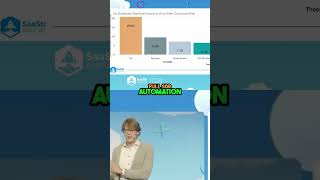
Transcript excerpt from a talk about AI's current (limited) impact on ultimate sales conversion and bookings, the importance of sales cycle length on company performance, and contemporary pricing approaches for AI in sales (seat-based, usage-based, rarely value-based). The speaker notes variability in AI deployment (sales copilot to full SDR automation) and describes a three-part tariff and mixed base-plus-usage pricing capturing part of customer ROI.
Chapters
There's actually no difference in performance. If you look at ultimate bookings of a company or their ultimate lead conversion rate, irrespective of whether or not you use AI, it doesn't matter. So today there's no change in ultimate conversion rate as a function of using AI or not. We'll look at the net dollar retention across these pricing models because there's actually a statistically significant difference in the underlying performance of these businesses as a function of their pricing model, irrespective of the layer in the stack. I was working with one company, we had a doubling in sales cycle. We tripled burn for that quarter as a result of a 50 or a 60% increase in sales cycle. So no surprise that sales cycle should ultimately be the biggest driver of optimism or negativity within the ecosystem. We talked a little bit about the world of AI and sales AI SDRs. There's a huge continuum. I can have a sales copilot, I can have a full SDR automation. We asked our respondents, how much are you using AI? What are the impacts? We ran the correlation to understand what does that ultimately do to the sales funnel. And so at that event last night or two nights ago where we were talking about, we were talking about different pricing models for AI, we asked a number of people. About a third of the people are charging for seats, about another third of the people are charging for usage. And then this, the CRO, Dave who I mentioned before, he raised his hand and asked how many people are charging for value. And not a single person raised their hand. But this is the idea. The idea with the three part tariff is that you're able to charge for value, you generate $10 million worth of marginal ROI and you're able to capture 15, maybe 20, maybe 25% of it. And the combination pricing strategy of a base platform fee plus a usage based component is what's driving that in the market today.