What Bootstrapped Companies Do Better with ProfitWell CEO and Paddle Senior Product Manager
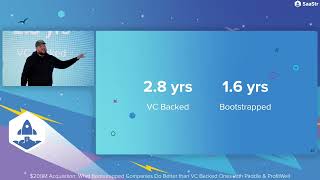
Patrick Campbell and Alyssa discuss what bootstrapped companies do better, drawing from ProfitWell's journey. Bootstrapped firms change pricing 1.5 times per year versus VC-backed companies at 2.8 years, and they push customers to annual plans after two to ten months, which yields 100 to 300 percent higher lifetime value.
Questions this video answers
April 28 (year implied in talk); for over $200 million.
VC-backed: about 1 in 5; Bootstrapped: over half.
About 100% to 300% higher LTV.
About 10% to 25% lower cancellations.
VC-backed: ~once every 2.8 years; Bootstrapped: ~once every 1.5 years.
Chapters
What's going on, everybody? Saster. Today we are going to be talking about how VC backed companies are absolutely terrible. I'm just kidding. That's not what we're going to be talking about. That's a little aggressive. But we are going to be going through what the most constrained amongst us, the most bootstrapped amongst us can actually teach this broader community. Mainly because Alyssa and I just went through an interesting experience that gave us a lot of interesting perspective. And so before we get into that though, who in the world are we? Who are you, Alyssa? I'm Patrick Campbell. I'm the cso, the Chief Strategy Officer over at paddle. Up until a few months ago, I was the Chief or the CEO and the founder of ProfitWell. My personal background is in econometrics and math, which is just code for having lots of friends, very clearly. But Alyssa, who the heck are you?
I'm Alyssa. I'm the senior product manager over at paddle. My background is actually in design and content marketing and now I help lead the for Taina and Metrics team.
No, that's awesome. And Alyssa and I, as I mentioned, went through an interesting experience. We bootstrapped a company for about nine years. We can talk about a little bit of what we do in a second. But on April 28th, officially, no, it was the exact date we signed basically our deal to get acquired by paddle for over $200 million, which was pretty cool. Alyssa and I learned a lot. The rest of the team learned a ton. And what going through an exit kind of gives you is a lot of perspective. Now some of that perspective you probably should have had years ago in basically building your business. But the rest of the perspective was really around what we did really, really well and of course what we didn't do so well. And we want to share a couple of those lessons because I think the constraints of being a bootstrap company really taught us how to use those constraints basically as strength. And that's something that I think we all can basically benefit from. So you excited? You ready to roll?
Ready to roll.
You guys excited? You fired up? All right. I think that's as fired up as they're gonna get. So. Alright, let's jump in. So the first thing we're gonna talk about is probably one of the sexiest topics in the world, which is alignment and documentation. Okay. Just for a show of hands, like who here thinks documentation, wikis, vision docs, these types of things are important inside a business, right? Yeah, yeah. We all have a notion, instance, Right? Everything like that. Well, Surprise. We looked at a couple of thousand different companies and what we discovered is that those folks who are venture backed, only one out of five of them are currently using a wiki, currently have internal documentation systems, currently have vision docs, et cetera. And as basically the topic of the talk suggests, those folks on the bootstrap side, it's basically over half of them basically look at documentation, make sure they have vision docs, make sure they have this information internally. Now you might be thinking, well VC backed companies are amazing. So like why do we actually need the documentation, right? Like why is this so crucial? Well the thing is whether you're a founder, you're an executive, whether you're earlier in career, it doesn't really matter. The vision that your company has is this like beautiful up into the right mission where we're gonna like democratize this amongst this industry, we're gonna bring this type of solution to this industry, doesn't really matter what it is. But you in the early stages have in your mind that we're going to hire people and they're all of a sudden just going to be all going right in the same direction, right? We're going to hire more, they're going to see that 9pm Slack message about the vision and obviously they're going to internalize it and I'm never going to have to say it again, right? And occasionally we're going to hire some people that don't really go forward with the vision, but we'll autocorrect them or we'll basically exit them from the company. This is exactly how a lot of us think this is going to work. And we're going to ask ourselves at all hands like why does Alyssa keep asking us where the heck are we going? Like we've explained this to her, right? Has she read the website? Well of course this isn't how reality works. This is actually how it works inside an early stage company and argue a lot of mid stage companies as well. Everything's going all over the place and you have these really expensive, really smart people moving in all these different directions and you're sitting there and like why aren't we moving faster? Why aren't we moving in the direction that we should? Right. And in reality that mission looks a little anemic, right? It's not really moving in the right direction. Well, after getting countless questions at all hands at getting countless questions and one on ones about where the heck we're going, we put into practice a very uniform this isn't going to be rocket science But a very, very uniform structure for answering this question. We started off with, what the heck is the mission? Right? And this is actually one of the hardest things to come up with because you can explain it probably in a 5 minute, 10 minute conversation, but getting it pithy enough where you can say something like, we exist to grow subscription companies automatically is actually super, super difficult because you have to give up so many different things by acknowledging those particular nouns. When you have that mission, though, you also want to align it or we found it was really useful to align it to what's called a mission metric. So for us, it was subscription revenue that sat on top of profitwell that got increased by getting more users. It also got increased at us being better at product and helping our customers get more revenue. We then defined a couple of guiding principles. And what was beautiful about this is that it then allowed us to empower our different org leaders to basically come up with great, how are you going to build out that marketing function in order to support that particular mission? And how to make sure that it's perfectly aligned or as aligned as humanly possible. For us, that was doing media, inbound media, particularly in the B2B space. And then those different folks within that group basically set what we call tempo internally at ProfitWell. And all of a sudden we have these conversations where if you're on the marketing team, I can go, hey, what are we doing? Why are we doing it? And how does it fit into the overall greater mission? Now this looks really, really pretty. And yes, there's lots of different docs and. And it didn't always perfectly align as you might look at on a page like this. But just having some of this and each particular organization building this out in their own particular format allowed us to align as much as possible and move somewhat in the same direction with a lot of hiring is basically what you can expect. What do you think?
That's pretty good.
Yeah. Yeah.
Helpful insights there.
That's the most, like, validation I've ever received from Alyssa. I think it's because you're all watching, but. All right, Alyssa, you tell us a little bit about retention.
All right, thanks, Patrick. All right, let's dive into some of the specifics around. What are the key SaaS growth levers that we as an industry can better optimize for? Right. Starting with retention. So in SaaS, retention driven by things like recurring revenue, cross sells, upsells, that's really where you're gonna be making the majority of your revenue over time. Now, what we found is that bootstrap companies actually tend to be meaningfully stronger at this particular growth lever than their VC backed counterparts. And that's true across the board.
It's a good one to take a picture of. Just interjecting there.
Yeah, yeah. So that's true across the board. From companies that are doing less than 100k in monthly recurring revenue all the way to companies that are doing multi millions in mrr. Why is that?
I don't know. Tell us.
Well, here's the thing. In our industry there seems to be this sort of misconception that retention is driven purely by value. So if my product is super valuable and if people find my tools and my services to be really useful, then retention should pretty much take care of itself, right? Sort of, but not quite. And I'm not saying that's wrong, I'm just saying that you're missing out on a pretty important part of the bigger picture. There we go. You might have seen this spectrum in some variation before in the past, but essentially all of your customers fault towards one end of it, right? So either you have your advocates who are really in love with your product, they're writing you excellent reviews, they're giving you case studies, or you have your critics and these are people that they're long gone, they're writing you bad reviews, they're tweeting about how much they hate you on Twitter. And then in the middle here we have what's called the point of cancellation. Now typically when we're thinking and talking about retention, we tend to place a lot of emphasis on the strategic retention piece. So that's figuring out how do I drive up the volume of advocates and promoters that I have and how do I decrease the volume of detractors and critics that I have. Now that makes sense, right? Because typically product is the organization and in most companies that own retention and what product's job is to do is really focus on who your ideal customer is and how do I, as efficiently as possible, bring them as much value as possible. Now the issue here with focusing so much on strategic retention is that you're really overlooking that tactical retention zone in the middle. So that's all the little nudges that you can put into place so that people that are maybe thinking about leaving you can nudge them to maybe stick around or people who maybe recently decided to cancel, nudging them to kind of come back. The great thing about tactical retention is these are things that you can implement really, really quickly without even needing the most amazing product team in the world. I'm not saying you shouldn't have an amazing product team though, because here's the thing, right? Strategic retention is incredibly important. Huge part of your growth. In fact, it makes up about 60 to 75% of your overall retention. Now the thing with that though is it's going to take a lot of time, a lot of effort and so much trial and error to figure out. Whereas with this tactical retention zone, which makes up about 25 to 40% of your overall retention, this is stuff you can implement overnight to at most maybe over a quarter to start really seeing some really meaningful gains. So let's dive into some of the specific things that you can start optimizing for in this tactical retention zone. Starting with plan optimization. Probably doesn't come to a surprise, or as a surprise to many of us, that longer term plans will drive higher lifetime value. In fact, in SaaS we found that quarterly and annual plans will bring about up to 100 to 300% higher LTV than monthly plans. So think about that for a second, right? That's a huge difference. And given that we as an industry, as businesses, as operators, we should really be putting a lot more effort into driving our customers from those shorter term monthly plans onto these longer term quarterly, semiannual, annual plans. But the key here is you really need to be doing that past the point of sign up. So a lot of us out there will offer the option to upgrade to a longer term plan right at the beginning of signup. Right? But the issue here, at that point in my customer journey, I don't know how valuable your product or service is actually going to be. I don't know if I'm actually even going to like you in two to three months. And so I will be far less likely to be willing to give you that longer term commitment and then pay that higher upfront cost. What we found works particularly well is after your user has been subscribed for about two to maybe 10 months, that's a really great time to then reach out, you know, send them an email and say, hi, I like you, you like me. What if I gave you a discount, gave you a deal to upgrade onto a longer term plan? Now all of a sudden, what you'll notice is that you'll see a pretty meaningful uptick in that conversion rate from people going from monthly, those shorter term monthly plans onto those longer term quarterly or annual plans. And the reason for that is because I've already experienced the value for a couple of months, right? I already had a chance to really evaluate if I'm even going to Be using you for 10, 12 months down the line. Now, I'm going to be far more likely to accept this offer and give you that longer term commitment because there's a discount baked into it. Really quick point on discounts too. For this offer in particular, we found that positioning things as whole whole number. So saying like $10 off or three months free, that's gonna land a lot better than using percentages like 30% off for three months, for instance. Another thing here, and you're actually looking at screenshots from our retained product. So we have a feature that we've built specifically for this plan optimization functionality. And as a product team, we really agonized on having as frictionless of an experience as possible. So you'll see it's two steps, right? They accept an offer from the email, all they have to do is then confirm and then automatically they're upgraded onto that longer term plan. It's really important here to create as frictionless of an experience as possible. And the last thing you want to do is force your users to have to navigate to a billing page and figure out how to reconfigure their plans themselves. Because even just that bit of added friction is really going to meaningfully hurt that upgrade rate. All right, let's talk about cancellations and cancellation flows. Really, the key to having a really strong and effective offboarding experience is optimizing for two things. First, of course, we really want actionable insights around why people are leaving. But maybe more importantly, we really want to find out how we can optimize those salvage offers and those salvage opportunities. As soon as someone clicks on a cancellation button, you have a really, really short window of time, like only 18 to 30 seconds before people start to get really, really aggravated. So in this sort of sweet spot, you need to figure out the balance between having absolutely no friction at all. So as soon as someone even breathes on the cancel button, you let them go and they're gone forever. To having way too much friction. Please never make your users hop on the phone and talk to someone on your support team to even begin the cancellation process. What we recommend is finding a balance somewhere in between and adding enough friction to learn, but making sure that everyone gets a curated offboarding experience as quickly as possible. So we open up our cancellation flow with a two part survey. The first thing, really simple, right? Just a question, why are you canceling? It's really important to keep this as short and sweet as possible. So don't make your users write a whole essay, stick with multiple choice, make Each response option as specific to itself as possible. And then the user gets to pick one. Now the second part to this, and this is where things get really exciting, is essentially asking people a satisfaction insight, asking them, was there anything about my product or platform that you actually found to be useful or helpful? Now this is really, really important for a number of reasons, right? First you're going to learn a lot. You're going to find out why people are leaving, but also what they care about and what they found to be really, really helpful. And this is going to be really, really rich data and insights for your product team to then take away and do better strategic retention. Now the second part to this is you're playing off this sort of psychological phenomenon called the nostalgia effect. Up until this point in the cancellation process, right until the second question, customer's been on a freight train to cancel, super, super negative. And then all of a sudden you surface this positive question. It's going to give them a reason to pause. It's going to, to give them a reason to really evaluate do I really want to cancel right now what was actually helpful, what was actually useful? And then you'll get these really interesting combination of insights that'll make it a lot easier to then position an effective salvage offer on the next screen. Let's say they come back and tell you that they thought the onboarding was a little bit confusing, but they think you have really, really valuable and useful features. That's, that's great because at this point you could offer a discount, right? A salvage offer discount. Give them a little more time on the plan for a lot less money. Buy them more time to learn the platform and then buy your support team more time to re educate and re nurture them. Let's say you have a more seasonal business perhaps. And so in the current moment I'm canceling because I just, I don't have any projects right now. I don't have any use for this for the next like two months. Perfect. Let's downgrade you to, let's say a smaller tier like maintenance plans, so that you can, you know, save all your data, save all your preferences. And then a couple months down the line when you do have projects and you come back to us, you don't have to start all the way from scratch and reconfigure everything, right? We have everything saved for you. Or maybe I'll just downgrade you to a, or pause your plan for a set period of time. Now, at the end of the day, if it just comes down to let's say you're just missing a feature that's a non negotiable for the user.
Totally.
Okay, if you have a freemium plan, then just downgrade them to that. Or you can even just let them cancel. Because the reality is at some point you're probably going to build that feature and then you can easily put them back into a reactivation or win back funnel. And win them back, you know, keep them in your ecosystem later on when you have what they need. What we found is that in SaaS you can actually lower your cancellations by 10 to 25%. Check just with proper off boarding. Think about that for a second. That's a lot of money saved. Right? And that's a lot of customers that at the end of the day didn't even really want to cancel. All they wanted was proper guidance to an option that was a bit more appropriate for what they were actually looking for.
Nice. You guys see why she can get whatever she wants? Yeah. Also, if you try to recruit her, I will cut you. That's basically what that means. Thanks, Alyssa. What do we got next? We got monetization. All right, let's bring this home here. We've been talking about pricing for a while, so I think it's one of those things that we've known a few things about over the years here. But monetization and pricing in particular, it's one of those topics within a business that it sits at the intersection of both really, really important but extremely uncomfortable. And if I gave you any other problem within your business, no matter if you had expertise or not, you would go off and you go after it. But as soon as I give all of these smart people, and there's a lot of smart people in here, there's a few not so smart ones, but I'm not going to point out who those individuals are. And I give you pricing, all of a sudden you sit there and you're like, I don't know, let's do it next quarter. Right. Just as a show of hands here or shout it out a little bit. How often do you think a SaaS company updates anything about their pricing? Packaging, discounting strategy, add ons, the number. Any guesses? Three years someone's been looking at the blog. That's really cool. Anyone else? Alright, you already got the answer there. Well, let's Split it out. VC backed companies, once every 2.8 years. So basically those VC backed folks, they're not looking at pricing once, but every three years or so. Bootstrap companies, surprisingly who are a Little more skittish, or at least that's what you think they are about one and a half years. That's how often they're updating something about their pricing. The thing you have to realize though, when it comes to monetization is that just like any other metric within your business, the more you focus on it, the more you do something with it. Typically the metric that you're trying to basically do something to will eventually go up. Got some data here you're looking at, and we're looking at ARPU or ACV growth, basically revenue per customer growth based on how often they actually change something about their pricing. Again, not necessarily the number, but packaging, add ons, discount strategy, etc. These are folks that are basically changing pricing every single quarter. These are folks that are changing prices once every three years. The colors I've just noticed are reversed. I promise you. The data is right, the labels are reversed, I promise you. But the basic idea is the more often you change something, more often you look at a lever, the better off that lever is going to win. So how do we get some quick wins here? Well, the first one, this is one I like to talk about at Saster in particular, mainly because we do have a good international crowd, especially post the fun adventure we've had over the past couple of years here. But the big thing is that price localization basically involves making sure that your pricing is different for each region. Not only just country, but actually each region that you're selling into. And the biggest reason for this is that your customers, no matter if you're a B2B product, consumer product, anything in between, basically have different willingnesses to pay because the regions that they're in have different density, not only of your brand, but competitors and everything else. Give you some data here. You, you're basically looking at if we were to price a product relative to the United States, this is about 1 1/2 million different data points. We would price it about 30% higher in the Nordics. And this controls for VAT and exchange rates. So that's an apples to apples comparison. And we basically price it about 40% less in Southeast Asia. Now it's really important to actually look at the data here because there's really, really high variance that happens depending on your particular product. Now the other thing to keep in mind, even just adjusting your currency symbol really, really helps push things forward. All right, we're a bit over time, so I'm going to have to go really quickly. Are you guys okay with that? You sure? All right, let Me go. All right, I'm going to talk to you about raising prices. Yes, you have to raise your prices. If your NPS is over 20, you should be raising your prices once per year. I have seen all of the data, trust me. If you don't trust me, email me and I will show you all of the data. And yes, even in this market, recessions have three cuts that they go through. We've seen this in the past eight downturns and right now we're at the end of the third cut. You're seeing this in the news as of October 1st. If your customer kept you, you should be kept barring a global catastrophe, which I guess is possible, but barring a global catastrophe, you should still be in and therefore you have some pricing power. I know, very controversial, but please trust me a little bit. Now how do you do that? Well, we're not going to be able to go into how to actually measure how much price increase that you should do with the get time allotted. But a couple of things to keep in mind. You should be doing this once per year. Doesn't matter how much development you have. If you're pre IPO and you're flying, you can get away and do it probably about twice per year. You have to do your research. A lot of you are going to do your research and you're going to be like, these people have never heard of us are willing to pay 10 times our price. But our customers, they're at only $50. And that's because you set your original price incorrectly. And the data is not wrong. It's just you're wrong and your customers are anchored. I promise you the proper messaging is really, really key. Please don't everyone steal this email because you're going to ruin it for everybody. But the basic idea is when I send an email where I'm increasing a price, I'm going to go, hey, over the past year I've provided you this much value. I'm going to pull in actual data from their account. I'm not going to be lazy and just send them a random email. I'm going to say, hey, you're using this feature. We've made you this much money, you've gotten this many contacts. Then I'm going to say for us to continue to invest in making profitwell better for you, or for us to continue to invest in you getting more growth or whatever my product does, I have to raise my price. It's always a shock, even for your happiest customers. So I'm going to Relieve that tension and I'm going to go, but because you've been so loyal, because you've been so loyal and all those people who haven't bought, they're not loyal, I'm going to raise my prices on them. But for you, because you've been with us for so long, you're going to get this discount where you're going to keep your existing price for the next six months and that's worth this much money. But for everyone else, they're going to pay as of tomorrow. If you have any questions, let us know. The key PS if this materially impacts your business or your life, if you're a consumer product, let us know and we'll work something out. It's for two types of people. First, it's for everyone in this room. All of us love products and love value. None of us want to spend more money. If you agree with that email and then you see this, most of the time you're gonna go, I'm not gonna cause a fuss. Yeah, they're right. This is great. They're gonna invest more in the product, right. It's also for people who are actually impacted. Most will try to negotiate with you and it's a really great brand opportunity where you can go, don't worry about it, we'll reach out in a year. You figure your stuff out. Or you can take the negotiable price that they set. The biggest thing here that hopefully you notice, it's all about them. It's not about you. The number of emails that I see that are like, our costs are up inflation so we're raising prices. Terrible. Your customer does not care about your costs. They care about their costs.
All right, hold up, I just need to pause here for a second because I'm curious, like, do VC backed folks do anything right?
Absolutely nothing. No, I'm just kidding. No, no. VC backed folks do one thing and one thing. Well, I'm just little setting up for a joke here. Y' all spend money really, really well, okay? You guys spend money at a much faster rate and you guys hire at a much faster rate. Now all joking aside, this is an amazing thing because you guys also grow at a much, much faster rate, right? And those are the trade offs when you're on the VC backed treadmill, which we are now on. So this is the last time we can probably talk about this. I guess what ends up happening is you're going big or you're going home, right? And this is why the death rate of VC backed companies is also Much, much higher. Right. And that's okay. Right. That's the path that we've all chosen. So you just got to keep those trade offs in mind. We obviously can learn from both models. Anywhere you go, the growth fundamentals are always going to be true. So no matter the model that you're going after, those constraints you're facing, just being disciplined with those growth levers, and obviously, you'll go grow, grow if you have that discipline. All right, how we feeling? Feeling good. Everyone get some value. All right, here's our email addresses. Our new email addresses that we have. You can't. No, you can. I don't know. I was going to make an email joke. It's not going to land, so I'm not.
No one's going to spell my name right. No one's going to be able to reach me.
Yeah, yeah. Alyssa. With two L's and two S's. Okay. Just letting you know. But don't email her unless you're buying something or giving feedback. Okay? That's the constraint. No recruiting emails. All right, we got a couple of booths over here. Come find us. We love talking about this stuff. We publish so much data and so much content on this stuff. So thanks for having us and have a good rest of the conference, y'. All.










