What It Takes to have your Marketing Team Deliver Pipeline and Revenue | 6sense CMO Latané Conant
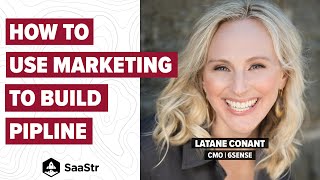
Latané Conant, CMO of 6sense, argues marketing should skip forms and cold calls in favor of AI that identifies buying teams and their stage in the purchase cycle. Her approach directly sources 70-80% of company revenue and has increased win rates by roughly 50%.
Questions this video answers
70–80% of the business's revenue.
~50% increase in win rates and ~50% increase in meeting-to-pipeline conversion.
Chapters
Before I pass it over to her, just a couple reminders for our last session. We do want this to be as interactive as possible and we have 45 minutes, so plenty of time to get your questions answered and to learn from Latin. You can turn off your video if you're comfortable, to join the conversation or just to answer questions, or you can drop questions into the chat. So she will be monitoring the chat throughout her presentation and reserving plenty of time at the end for questions beyond that. We are streaming the sessions on YouTube and recordings will be available afterwards. So make sure you subscribe to Saster's YouTube channel and also follow Saster on SlideShare Latini. Thanks so much for joining us. I'm going to pass it over to.
You to take it away. Thanks. And thanks for the outfit. So I got sent this whole outfit from Saster for this event, including a nice little tassel here, but what I've noticed is no one else is wearing it, so I assumed we were supposed to wear it. I feel a little bit like Bridget Jones showing up in the Halloween costume and no one else did. So I'm gonna, at a minimum, take the hat off if that's okay with everyone. But glad to be here, obviously. I'm all in wearing the outfit and excited to talk to you guys today about how to create pipeline and revenue. So I am the Chief Market Officer here at Sixth Sense, and what I'm going to do is actually just share my own experience as well as ask you guys six questions along the way. So we'll keep it kind of interactive and fun and believe me, we'll get to the pipeline and revenue part. But it's going to be a little bit of a roundabout way, so bear with me. So I have been at Sixth Sense about two and a half years now, but it's been quite a journey and I've learned a lot and I'm hoping I can impart some of that knowledge onto you. And when I first got here, I gotta say, I felt like a total fish out of water. Everyone's running around talking about all these different Martech tools, what's in your stack, Intent, data, cdp, this, that, the other. And I was like, why did I take this job? I have no idea what's going on. And so I had this huge inferiority complex. And I remember sobbing to my husband, like, what am I doing? I shouldn't take this job. I'm not going to do a good job. And he said, babes, you got to play to your strengths. So I'm like, I have no strengths, but I realized I actually do have a couple strengths. And one of my strengths, I think, is a strength because I spent seven some years working on customer experience. So before Sixth Sense, I was at a company called Appirio. And this was the opening slide to our pitch. It was this Forrester study. Welcome to the age of the customer. And time and time and time again, it proved out. I still love this study, even though it's a little old. It proved out that companies that really, really invest in customer experience over time exceed their peers that don't. And there's lots and lots of different stats on that. And so at my core, I believe this, and this is one of the things that we did at Appirio was help people really transform their customer experiences. And so that's in my blood. And so I guess question number one for all of you guys out there is, do you believe that? And if you want to talk custom experience, who's the guru? Steve Jobs. And Steve Jobs says you start with the customer experience and work your way backwards to the technology, not the other way around. And so I guess in the chat, you know, who believes that? Who believes that? True and true. I know I do. So there's that. The other strength that I have is I actually, while I love marketing and I love being a chief market Officer here at Sixth Sense, I actually come from sales. I was a gm, and I'm all about making money. I like to make money for companies. And so that's a strength of mine, is really understanding the whole revenue cycle and model. And so I want to ask you guys, what is the most efficient way to double revenue? And I've got two answers. Answer A is work more leads. Answer B is really, really dive in and look at your conversions, look at your cycle times, look at your ASPs, and start to just improve those. What is the right answer? And this is not A. This is not peewee soccer where everyone gets a trophy. There is one right answer. The right answer is B. Okay, so with that context, I look at martech. So I re. I went back to my experience and I said, let me. Let me. Let me put this other lens. Let me play to my strength. And look at martech. And then I had this other kind of wild realization. We kind of treat prospects who are actually future customers, right? Prospect is a future customer. We actually treat them like dirt. Why? Why do we treat them like dirt? Why? And what do I mean by that? Well, let's talk. Let's think about when you go to buy either in your personal life or in your business life? Because in business we buy, you know, technology services, all kinds of things. What do you want to do? The first thing you want to do either B2B or B2C. I see your question, Rana, what do you want to do? You want to research, right? I don't want to rock into my CFO's office and not have done my homework and not really understand why I'm buying and what I'm buying. And so what do we do? We prevent that research with a form. So let's talk about email. I don't know whether it's my personal email or my work email. I've had to declare email bankruptcy twice because it's just so much, it's so overwhelming. We actually send 300 billion emails a day. There's only 7.7 billion people on the planet. So a lot of these emails are spam. And then let's talk about a cold call. I hate it when they spoof the area code of my kids school. Does that make your heart sink? Cause you think, oh my God, something's happening with your kids. And then it's somebody trying to sell me something I'm not even interested in. That sucks. That sucks. But that's kind of our game, that's kind of what we do. And so no wonder the more we do that as marketers and sellers, the more buyers are retreating and they're saying, I want to be more anonymous. I'm not filling out that form because I know, I know what you're going to do. And there's so much conflicting information. I'm going to have to get all these people involved to make a good decision. So it's a buying team. And then there's so much noise that they, you know, they're resistant, they don't want to take the call, they don't want to respond. So this is the way buyers buy. They're anonymous, they're fragmented, and they're resistant. And some of that is just because we treat them like dirt. And so what happens is all of these calls, emails and effort start to get lost in what we at Sixth Sense call the dark funnel. Because it's all just this noise. But within that dark funnel, there's gold, right, guys? There's gold in there, there's signal, there's people that want to buy, but we can't see any of that. To us, they're anonymous, they're fragmented and they're resistant. And so as marketers and sellers, we have to work so hard. When I First started when we talked about an integrated campaign. It was eight to ten touches. Right now, just the BDR cadence, just that sales outbound motion. A typical cadence is 15 to 22 touches. So more hours, more content, more tech, more calls. We're working so hard. Why for MQLs? So we can get that form fill, we can get that email, we can deem it an mql. And. Well, as a recovering software salesperson, I love club and I love nice shoes. And I'm telling you guys, those MQLs, they're not getting us to club and they're not buying the shoes that we would all love to buy. So why are we working so hard for MQLs when we know they're fraught with issues now, what do I mean? Why do I think they're so fraught with issues? They're either too early or too late, so. Too early. I just wanted the ebook. I really. I'm not ready for your call. I just want the darn ebook. Right? Or they're too late. We're so excited about that. Hot inbound, right? If they're hot inbounding and requesting a demo with you, they're requesting a demo with everybody else. And you're probably too late. So that's a problem. The scoring tends to be arbitrary. How many of you guys have sat in the rooms with the post it notes and said, oh, pricing page, 20 points, baby. Let's give some points for that. There's this, there's that. The only people that won on those sessions was 3M because they sold a lot of post it notes. And the other problem with the lead is it's a contact. And we know that buyers, buy and teams are a buying group, and so they're fraught with issues. So I had this weird epiphany. I said, okay, I'm going to apply my lens, my sales lens, and I'm going to apply this customer experience lens. There has to be a better way. And there is, actually. Because the reality is if you uncover your dark funnel and you start to look at a qualified account, all of a sudden a lot of interesting things open up. Because a qualified account looks at engagement across the buying team. A qualified account, what we call the 6QA, looks at anonymous behavior and known behavior. A qualified account or a 6QA actually uses AI, not arbitrary scoring, to look for patterns. And say, this account is in this buying stage or this account is in that buying stage. So, students, because we're all in class, right? That was the theme with the cap and everything. Let's assume I give you the 6QA. Okay. And let me show you how this works. You have a limited engagement. That dark funnel that I talked about before, there's gold in the dark funnel. There are accounts that are under a rock. That means that they're not doing anything. You might not want to waste a ton of money on them. There's accounts that are starting to show signs of life. Gosh, if you're a marketer, wouldn't it be nice to know exactly which accounts are ideal for you and are starting to show signs of life because that's who you want to show your thought leadership to and get them to get them to know your brand in consideration? These accounts are gobbling up content they want to learn. Wouldn't you want your content to be what they learned from and make sure it got served up? Their accounts and decision. Decision means they're open to engaging. Not with every vendor, but maybe a few. And then there's accounts that are actually taking meetings. Well, in our typical mojo, which I talked about, we're either too early or too late. When the sweet spot is when they're between learning and engaging. And I want my team, and I want your team to know and be able to timestamp exactly when that happens. When accounts go from learning to wanting to engage and have you, your company, your sellers, be the first people that they engage with. That's the sweet spot. That's the pocket. And so I love this. I'm all over this. This makes me so happy. And one of the reasons it makes me so happy is because I worked for this guy, Chris Heineken, and he used to always show me the picture of these dogs, and he'd say, latney, here's the deal. If you're not that first dog, if you're not that first dog, then the view is all the same. And so that's what we want to do with the 6QA, is be able to make sure that our sellers are that lead dog. And again, it's anonymous and known. It's a buying team. It's no emotion. It's AI, just math. Okay, so I'm here. I get to wear this robe, which makes me feel, I don't know, like I should be in Harry Potter or something. But assume you're free from mql. I'm gonna give you. I'm break the chains. I'm gonna give you all the 6QA. You're gonna know exactly where buyers are. The best buyers for you are in your buying cycle. And I'm gonna do that a little bit. One up. Not only are gonna tell you where they are, I'm gonna tell you all the activity they're doing. I'm gonna tell you exactly who on the buying team is the best Persona for you and who is engaged and who's not engaged. I'm going to tell you the keywords that those Personas care about and have researched. I'm going to give you all that. And remember, our lens is experience. Right? We believe everyone said that. They raised their hand and said, we believe that a great experience wins. So if you have that, what prospect or future customer experience do you create? Do you create one with forms? Do you create one with spam, or do you create one with cold calls? Well, I think. And two years ago, I had this crazy epiphany and I said, I don't think we need to do this. I think we can freaking break the mold. And I think that it's possible for us to create an experience with no forms, no spam, and no cold calls. And I marched in. We were in person at this point, and I was having a team meeting with my little marketing team. And I said, guys, this is going to be great. We are going to break the mold. We are going to use the 6QA. We are going to use all these insights that we have from our technology, and we're going to totally reimagine our prospect experience. And luckily, everyone on my team was so hungover that I think they just said, okay, fine, crazy lady, we'll do it. And that is what we spent about two years. It took less time to put in place, but that's really what we've been working on to optimize our revenue and our pipeline. And so I'm going to walk you through what that looks like and how that plays out for us here at six Sense our process with no forms, no spam, and no cold calls. So first of all, I have to define what a form means. Because if you are going to come to one of our events, especially if it was in person, if you're going to come to the dinner, we need to know you're going to come. We need to know what if you have food allergies? So every now and then, yes, we use a form. I sent a survey out for a CDC community that I run, and they said, I thought you were. No forms. I'm trying to get some information. You know what I mean? So. So. But what it means to us, no forms is all of our educational content, all of our product related content, our demos. It's all we want you to learn from us. And, and that is our philosophy and the way that we put that in into play is to really zone in on this experience is again, because we know exactly where accounts are. Remember I uncovered the Dark Funnel and I know there's These accounts in Awareness652, there's these in consideration, there's these in decision, there's these in purchase and then I know when they 6QA I can actually use my content and serve my content up at the right time to progress an account through this journey. Right. And we've always as marketers thought this way, right. We've always thought in terms of, oh, this is top of funnel content, this is bottom of funnel. But what we did before is we just barfed it all out and sort of hoped that the prospect would know where they are in the funnel. Right. Because I know I can serve that up at the right time to our prospects without forms. I also, because I know with account identity, I know who's on my website and I know where they are in the journey. As soon as they come to the website, I'm going to welcome them, I'm going to know where they are in the journey, I'm going to know the content they're most interested in. I'm not going to need a form and I'm going to be able to dynamically really move them through and engage them and based on the keywords they care about, based on their Persona, based on where they are in their journey. So it's going from a form to really this customer led digital engagement. That's what we've been able to do. Now let's talk a little bit about spam. Does that mean, did I go around and tell everybody they couldn't send email? No, people still have email addresses, we still send email. But and we're not trying to personalize, we're trying to be relevant. And to me, spam is when it's not relevant. And so we're not going to send an email unless we know the keyword that that prospect cares about. We know the key Persona and why that keyword matters to their Persona and we know where they are in that buying journey so we can be highly relevant. We also are going to of course use a mix of engagement tactics to, to really again focus on them and their buying jobs and the things that they need to do. And so how does this kind of play out in real life is our BDRs, when they rock in Every single day. They used to come into an office. Now they don't get to, unfortunately, but when they come in to the proverbial office, they're not guessing. Who should I send a ton of emails to or who should I shoot cadences off to? They know exactly which accounts are in market and how long they've been in market. So that sweet spot, they know, okay, it's go time. There's something going on with this account. It is the ideal time for me to reach out. They also, and just knowing the timing, again, that's not enough. I said that. They also know the keywords that the account cares about. They know what the account is researching. We do these things called value cards that help actually connect. If you're a sales leader and you're researching predictive analytics, you probably care about forecasting accuracy. If you're in marketing ops, you might care about like lead scoring or account scoring. So we connect the dots for them so they can be highly relevant. And then what happens? Do they email about anything? No, they put right in the subject line predictive. If this account cared about predictive analytics, we're going to put that in the subject line. That's what we're going to talk about. And boom, that's when you're going to get the engagement. That's when you're going to land on that relevance. And of course, again, multi channel, using the keywords, refreshed, multi Persona. So it truly is looking at an account, not a lead or a contact. Awesome. So from spam to customer led engagement. Last but not least, honestly, this one was the most controversial for us to put into place because you know, the head of sales, he was like, I think that the BDRs and the salespeople, we should be doing call blitzes. It's not that we don't do call blitzes. I didn't take away anyone's phones. Like to me, no cold calls. In which six cents. The way we've really evolved this definition is to be. I don't want my account executives to have cold territories. I want to make sure that every single seller here is put in and so does Mark. Our head of sales put in the best position to win. And again, this is about. This class is about optimizing pipeline and revenue. And your sales team is one of your most expensive resources. And so what we want to make sure is that we understand accounts and market and they're warm. Those accounts are warm. And that's when our AES engage and get involved. And so what we've been able to do is accounts get alerted. AES get alerted when their account, when an account is ready, when an account is ready to engage. But we found this really wasn't enough because what we found what was happening was we were taking this experience, you know, prospect driven approach, marketing was engaging them, we were warming them up, we were getting accounts in market. But think about a sales team. A sales team has a list of accounts and, and you know, it's just the way sales gals and girls are wired. They're not going to go and work an account unless it's on their list and they know they're going to get paid. It's just how it is. So what was happening was we were getting all these great accounts in market because we knew they were, we had our ICP fit and 50%. So all of these accounts in orange weren't getting worked and they were getting left on the floor and our AES were working cold accounts. And so we said well this is crazy and we set up dynamic territories. So we set up dynamic territories to make sure that yes, our AES have some fixed territories but for the most part we want to be able to rotate in the warmest accounts for them to work so they never have to make a cold call. So from cold calls to this in market accounts and AE selling with insights was a huge part of our journey. And so bringing us back to the original kind of subject line of the class which was okay, let's talk about pipeline and revenue. And I saw this quote on LinkedIn, I don't know a couple months ago. Direct source revenue is the only metric that matters. This was directed at CMOS. Anonymous LinkedIn Broatry. I think that if you are measuring your impact as a marketer only based on direct sourced revenue, you are really selling yourself, your team and your CEO and really the company. Very short because when I think about the impact of this, what I've described, which is putting prospects in their experience first warming accounts up for sales, the impact is yes, direct source revenue. So here at 6 cents we source 70 to 80% of the revenue for the business. So yes, we've also been able to double every single year with an industry leading cac. So it's easy to double if you have plenty of money. You know we're doubling responsively managing our CAC which is our customer acquisition cost. We have industry leading channel and over this last year with this approach we've had a 50% increase in win rates and a 50% increase in our meeting to pipeline conversion. So Going back to that original question of, you know, do you just double leads or do you optimize? And so that's what I think about when I think about as, as marketers, really how we build pipeline and ultimately revenue. It's experience first, focusing on the experience, updating our experience to really mirror the way buyers buy and buyers want to buy. And then it's about measuring ourselves based on that true full funnel of impact and really, really locking in on conversion. So I am maniacal about conversions. My dashboard, which I reflect, I refresh, I don't know, 20 times a day, is always telling me, how are we doing with things like win rates every single little asp cycle time? Because I think that's ultimately what is most impactful for our business. And so my last question is, oh, here we go. And you know, more than anything, what gets me, like so wound up is probably at least once a quarter we get an email from someone who went through this cycle with us and they say, and they, you know, this one was to our CEO and I love it. And they say, hey, one of the reasons we bought, yes, you got a great product, but we were so impressed with how focused on us we were, how engaging you were, how well your BDRs. We get people thanking our BDRs. Does that ever happen, you guys? Usually you're getting restraining orders and complaints. We literally get people thanking us and saying how impressed they were with our process. The fun factor on the team, I measure every other week. We ask our team, how many days, how many work. Look at 10 working days. Out of the last 10 working days, how many are you having fun? Eight. Eight out of 10. That's important to me is that our team is, is out there making customers successful, living our brand. And when I get emails like this, it's pretty freaking cool. So pipeline revenue, yes, but culture, fun, getting to really connect in a meaningful way with our audience. I think this is like the way of the future. And so I originally called this project when I kicked it off with my team and I said, we're going to do this. No forms, no spam, no cold calls, experiment. I called it Project Bold Moves. And so, you know, let's get bold. I'd love to have you in. And if you're in, we actually wrote kind of a how to guide on this. So we published a book in July with really our playbook. A lot more detail than I shared here. And you can get a copy. We've got a certification coming out on it and we've got a book Club in a box if you want to run a book club with your. With your company. So who's in? That's the final question here, Benton.
Amazing.
We have.
We have people that are in.
Yes. All right. Awesome. Glad we've got people in. Ron is in. Jennifer Johnson. She's in. I know. Jj, good to see you out there.
Any other questions that you have now for Latny, feel free to drop them in the chat or take yourself off.
Mute and ask her live Latani question for you. So this was a phenomenal presentation, and I'm incredibly curious, and I'm going to chase after your book immediately as soon as I get off. And my question is, how do you initiate this engagement? Are you sending an initial email from, let's say, your CRM, and then you're tracking them that way? Are you tracking them based on advertising and then setting up remarketing pixels and then kind of like once they register in your system, you know where they came from? How does that work?
Well, I guess I'm a little bit of a cheater because I'm the CMO of 6 cents. So I have 6 cents, which is the core of what we use now. You wouldn't have to use six Sense. You could actually bring a bunch of other products together if you wanted to create. I think it's a Frankenstack, but you could do that. But essentially what you need to be able to do it, and the core is data and insights. So the core is really an embedded cdp. So what we do is we bring in historical data from your map, from your CRM, because we want to look at patterns to see based on cohorts, what closes, what Personas are involved in deals, which ones aren't involved in deals. Because we're looking at closed one, as well as opportunity open. And the AI is building these models based on pure patterns. We also have company identification capabilities. This is kind of the core of IP that we have, which allows us to connect anonymous activity to an account. I'm getting a little technical here, but there are some key capabilities that you have to be able to have. You have to be able to identify that company in the dark room funnel and then run that predictive analytics, which gives you four things. One, it tells you, is this even a good account for me to sell to? And I kind of. I didn't spend enough time there, actually, that. That's really critical. Your ideal customer profile. If you don't understand that, you're freaking hosed. And a lot of people don't. And it's a lot of people think a list of accounts is my ideal customer profile. No. What are the criteria that make this ideal? The other thing that can happen with ideal customer profile is you ask sales. Sales who, what accounts are good? Well, they give you the accounts that they dreamed about last night. They give you the last deal they just did. They said, we just sold to Walmart. Let's go to Target. You know, so that will get you totally sideways. So really, whether you cheat and use AI the way I do, or you really, really put a lot of thought into your ideal customer profile, the criteria that's a critical foundation to making this happen is nailing that, nailing the buying stages, which you can get through predictive analytics, intent data, which is going to give you those keywords because that's key to the relevance. Right, Right. I'm not reaching out based on what I want to sell you. I'm reaching out based on what I know you care about. And then it's just mixing engagement tactics. Right. Whether I use ads, and I find early stage ads are a great way to kind of get people to the website. And then the website is all about how do I make it as personalized and engagement engaging and getting people back to that website. And then something that I think clients can fall down on, which is not a technology thing at all. It's really just a good marketing thing, is what's your call to action? Like, how are you giving people value? And so really thinking about, for those late stage accounts that, you know, are late stage, you know, is it a product we talk about, like product snacks or, you know, a calculator or, you know, how are you really giving them something of value to want to engage with you and stay interacting on your site? So anywho, does that answer? That probably doesn't even answer the question. It's a long one. Chapter three in the book goes through the tech stack required. There's like 11 essential capabilities.
Awesome. I'll read the book and reach back to you after that.
All right, cool, thanks. All right, well, if nothing else, you know, I got this cool tassel, and I'm so. I'm dying. This. This robe is very, very warm. So I'm gonna have to get some water after this.
Thanks for being a good sport. Latani and I know your team just dropped into the chat. If you guys wanted to grab a copy of the book, they dropped it in the chat there for you. So you guys can see snag a complimentary copy of her book. Read it. I know it's great. And thanks for hosting this session. I know you were you did a podcast a while back with Harry Stemmings, our host, which was more about like skos and kickoffs. And you talked a lot about like sales and marketing relationships. So this was great to get a deep dive from you on just marketing.
Yeah. Yeah. All right, awesome. Well, JJ asked about book club in a box. Yep. We basically if you want to do it for your company and your team, a lot of people want to do it for their teams. We provide books, we provide workbooks because the book shares a lot of our journey and I'm very open about sharing and PG13 about sharing all the f ups along the way. But every company is different and your selling motion could be different if it's enterprise mid market velocity. And so the book club provides exercises to help you contextualize the ideas and concepts in the book. And then of course, we provide some swag and some fun stuff because that's what we do. We're marketers. Thank you so much.
We do have one more question from Rana that looks like it was from a little bit earlier, so might have gotten lost in the chat. If you want to scroll up, but.
I'll read it out loud. It's just kind of long.
So regarding PLG versus sales marketing, so bottoms up versus top down to grow the top of the funnel for a fast growing, very early startup B2B SaaS, would you suggest a PLG strategy or would it be good to create a.
Strategy to grow the top of the funnel through marketing and sales? Ronna, we're going to need to spend some time. So I think it really depends on the type of product, who you're selling to and how considered the purchases. Right. So like, and I also think the word like product led growth gets tossed around all the time. And it's like ABM. You ask 100 people, you have 100 answers. So, so I think, are you truly product led growth, meaning freemium? One person is gonna put it on their credit card, start to use it. You're gonna see this viral groundswell. You don't even need a salesperson to buy it. You know, Carrie Lu talks about Atlassian being, you know, they didn't even want salespeople. You know, is. Is that truly the model? And I will say in all honesty, that's not my area of expertise. But what I see and what I think about is you can still give people. Everyone is gun shy and has apprehension about a B2B purchase decision. And so even if you are a more considered Purchase. And even if there is a buying team that is going to be making a purchase, how do you bring product experiences forward through marketing? And so Kevin from the CMO of Zenefits calls it a product snack. And I think that's like the smartest thing. And it doesn't have to be a freemium. That's a key thing to think about. And so what's an example? One thing that we've done is we have something called an in market demand report. So if you are an ideal customer for us, when you come to our website, we will offer would you like a free in market demand report? You give us some information and we put a tag on your website and we can tell you these are all the companies in market for what you do. So it's like a one time thing. It takes some setup on our end. We don't want to offer it to everybody, which is why we just offer it to our ideal customers, you know, when they come to the website or whatever. But it's a great way for people to get a ton of value and be like, oh my gosh, this, this really works. This is great. So just sort of trying to think about what can I bring forward to give. Give the right, even if it takes a little bit of work. Because again if you, you want to just target those offers at the right, the right customer. So that's how I think about product led growth in a more considered buying team purchase. Hopefully that helps. Great, thank you so much, we really appreciate it.
Any other last minute questions? We do have a few minutes for questions if anyone has any they want to come off mute or drop in the chat.
Yeah. And people are asking yes. Feel free to follow up with me. I can be found. I'm in Revenue Collective so I'm on that slack. I'm on LinkedIn so just LinkedIn me, no big deal. And I always love jamming on go to market stuff. Amazing.
Well, we enjoyed learning a little bit more and more to come. So thank you so much Latny for your time and sharing your insights and rocking your cap and gown. We love it.
Bye guys.
All right, thanks so much everyone. Hop on over to Clubhouse if you'd like to continue the networking and after party.










