“What It Takes To Own Your Category” with Rocketlane’s CEO and COS
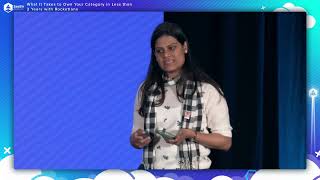
Rocketlane's CEO and Chief of Staff explain how they built category leadership through community, events, and content. They cover AI patterns for go-to-market, plus tactics for multi-threaded outreach and customer expansion.
Chapters
Krishnan Ghanason, CEO and co founder at rocketlane and Saniya Surana, Chief of Staff at rocketlane.
Thanks folks, can all hear me well. So quick introduction. I'm SRI co founder and CEO of rocketlane. This is Sania, our chief of staff. And we build software that helps you launch customers faster and get them to value on time. And this is a new category called customer onboarding or client onboarding. So we want to share some tactics that will help you learn how we sort of launched later than some other players, but still went on to own this category in just two years. Right. And one of the key things, why should you own your category? One, you get to see every deal in the category when you become seen as the leader. And two, you end up winning 66% of the deals that come in because the others are on the defense. Right. So whoever is pitching after you needs to justify why them, why not you? And that's where I think we have really made a name for ourselves as a clear category leader. And what did that do for us? Firstly, I think, you know, in our first year we won over 200 accounts and 40% of those came from direct traffic, came from brand searches and came from referrals. And in year two it really moved to having referrals happen from investors because we became a board level conversation with all the companies that we were working with in terms of how this adds value to get customers to value faster. And that's really helped us get a lot more traction because now investors tell their other portfolio companies also about, hey, you should use this to solve this problem, right? So that's the visibility that we were able to create within companies as well. And a side impact is probably competitors been around for longer, maybe has immense pressure on their marketing team looking at how we have been out marketing them year after year. So over to Sania to share some inputs from our side on what we actually did to build brand and build community early. Right. And we can't get into the depth of everything given it's so much to do. But we're gonna give you a flavor. You can meet us at our booth 219 later to learn more about every specific tactic.
Thanks Sri. Hope you're all having fun at day two. Before I share with you all the strategies and tactical ideas that we implemented at rocketlane for our success, I'm going to tell you a short story. So before I joined Rocket Lane, as I was chatting with SRI for my role, I asked him, how exactly are you going to make revenue and break it down for me, he said something remarkable. He said, revenue is a team sport. It's not a one man show. So he asked me to imagine a daily race where success hinged on every team member passing the baton to another team member flawlessly. And that's how we are going to win if everyone does their part to perfection. And that's what I've truly seen in my time here at Rocket Lane. Every member doing their part to perfection. And so for the first two years, every team member, this is what we focused on, right? Every team member wanted to create a brand, wanted to win key logos and optimize for momentum at all times, including our engineers. The first thing that we did when we wanted to create a great brand for ourselves was follow Muhammad Ali's advice. He said, I am the greatest. And I said that even before I knew I was. So every time we met our customers, prospects, leads, we always punched above our weight. We ensured that we always looked bigger than we were. So nine months before we launched our product, we actually launched Preflight, our community, which is today of more than 3,000 leaders from across the globe for onboarding and implementation professionals. We also hosted the world's first and only conference for these professionals called Propel. And in our first year we had over 1,000 attendees spend six hours across two days. We also launched our very own podcast where we deep dive and talk about implementation stories from people's experiences. We do every quarter we bring out thought leadership which people found to be very valuable. And this became a huge source of direct traffic, organic search. These were the channels where we first found our first few customers. We leave no stone unturned. So the next milestone that we had in our journey was our series A investment and we created a rap song. And no, this was not a cringe, uncool video that you usually see. This was a pretty cool rap video that we are truly famous for. And this helped us attract talent across the globe. We had people from Kenya reaching out to me to ask for jobs. So you should go check that out. The next thing that we focused on was G2. We knew G2 is a key channel where customers are always going to look at us, evaluate us, and we needed to be where our customers were. Every team we had a strategy around this and every team including sales for sales support, onboarding professionals, implementation team, customer success, all came together to Ensure we got G2 reviews and we got the best ones. If you want to know more, please come to our booth. 219. I'm really short on time and I'm not going to be able to share more on this, but please come to our booth.
Events is another area where we typically tend to punch above our weight and really get the meetings going. I would say we have an entire playbook. This is one of the things I'm most proud about what we do at events from our brand perspective, including our mascot, Felicity the cat and how we include so many elements of our brand throughout and specific tactics of how we turn interesting conversations into meetings. Right. You know we book the meetings right at the event. So last semester we had around 80 meetings booked on the calendars. Right. We are not following up on email and chasing people and also strategies around how we can really target specific logos that we want who we know. We are attending the event. So happy to share more about how we do this specifically. We don't have enough time here, but meet us at our booth and we'll be happy to share specifics of the event tactics.
Ecosystem building was everyone's responsibility. We used all of this signage, LinkedIn banners, email signatures across emails. Even when we sent our invoices, we made it our investors problem as well. So whenever we went for an investor meeting, even if they were not our investors, we had a focus list of their portfolios that we wanted to bring on and we made sure they gave us an introduction. Once we had that introduction, we never lost a lost a deal, right. This was a resume we created and we sent out to 400 VCs that we had met in our time and they and told their port companies to hire us.
So I think one of the things you would notice is when we have those, you know, these are all logos we won through investor intros. And the reason we had so many investor introductions is also because the brand building and community building and all of that gets noticed, right. Like the G2 position, it all adds up. There is a compounding effect. And so we had so many VCs reach out, we never said no. Even though we are not raising, we instead asked them for these intros.
We did not listen to our customers when it came to product building. We followed a jobs to be done framework for building our product. So we, we knew if we went to customers, our product would look like any other product on the market. Right. If you remember, if you look at history, you look at Henry Ford or you look at Steve Jobs, they were not competing with BlackBerry or horse card buggies, right. So we did the same. We wanted to create a world class product which resonated with the customers, which customers knew it was purpose built. For their problems. Next up we decided we will help customers wherever they are. So irrespective of whether they were an SMB or an enterprise, we helped them set up their onboarding plans, align their team, set up their processes and we achieved amazing results as can be seen. Next problem was how do you evaluate a new category, a new product which I have, I don't know right? This was a problem. We heard a lot from our customers. So we built an intuitive interactive platform and onboarding an evaluation plan which had step by step process. This also helped them get a glimpse of our product and understand the product easily and evaluate us in the process. Before we even sold, our post sales team acted like pre sales. They did workshops, webinars with our customers. We ensured our customers were successful even before they signed with us. This is an example of an successful onboarding of Flipkart which is like an Amazon equivalent in India and the customer definitely bought us after we helped them onboard Flip Flipkart. As Sri said, power of compounding is something that we're seeing now. We have reached out to CEOs, CFOs, all everyone in the team, right? If we sold to a VP of Professional services, that's not who we stopped with. Everybody in the company knows about us and Rocket Lane. Today is a board level conversation. We ensured that.
And today, I mean as we speak Rocket Lane has billboards running on US 101 with brands like Drift, Clari, Frontapp, et cetera where those companies are giving us testimonials. It's truly win win because they're also, their logos are also up on those billboards. But you know that's the kind of presence we are creating for ourselves during critical weeks like Saster, Dreamforce, et cetera.
I hope you found this session useful. If you want to know a little bit more about our thought leadership and how it helped us get those early customers, please visit our booth and you can also have a copy of some of our thought leadership. Thank you.
Foreign.
Please welcome to the stage Durga Pandey, CEO and Co Founder at Subscribe and Mahitha Devalapalli, Senior Director, Business Technology Enterprise Architecture at Okta.
This is a great audience. How is everyone doing on this cold but hot day? It's like hot but it's also cold. We are really excited to talk about a really hot topic AI today. I'm a CEO at Subscribe. We'll talk about more about that in a bit. But I used to work at Google on on Chrome and did a lot of AI work there to Improve autofills. So if you go and fill out a form today, it works better. There was some early work on AI and Mahita.
Hey, I'm Mahita. I'm senior director of enterprise engineering at Okta, driving multiple business transformation projects for the past 10 years.
Awesome. So. So this is sort of the landscape of AI. It's really fascinating starting from some really old work by Alan Turing and we all know of him as a hero today. But Turing came up with something called the Turing Test which basically says can computers think? And if we look back, there was a famous conference at Dartmouth in 1956 going all the way to Gary Kasparov beating or getting beaten by a computer in a chess program. We had Siri come on in 2011. I mean, honestly, I don't know how well Siri works. It sort of works. It tells you the weather. But now we have ChatGPT which is a stunning advance in AI. So it's really exciting and you know, we feel that AI is going to change go to market systems, processes, the whole go to market world in a really, really significant way way. So let's talk about that.
Yeah.
So coming to GTM space you will see that there are mainly four patterns where AI is definitely emerging on the GTM space. It's a slowly evolving area so you will see a lot more patterns coming out. But these are the four major that we are looking at. One is workflow automation. As you know, every GTM team has a lot of very critical manual processes which are error prone, expensive and but very critical. You can start using AI to transform this manual steps by a single command. For example, very recently at Okta we have a use case where the sales would like to know the business model of the prospects so that they can give very dedicated like this, very the communication that it's directed directly to the customers. We looked at multiple vendors, we couldn't find this information. So we started using AI to pull the business model whether they are B2B or B2C or both so that the sales can pitch efficiently in the sales process. Next, the detect detecting opportunities and anomalies. This involves a lot of data analysis and machine learning for us to identify the potential areas of growth improvement and also anomalies, for example sales anomalies. You can analyze a lot of sales data to understand if there is a spike or drop in the sales which will help us identify if there is issue with our sales process or pricing or the market trends. The next is Citi 4 GTM. As Durga was saying, who wouldn't want Citi for GTM. Right. It's like having your own personalized chief data scientist who can answer the questions. For example, if you want to know who are my top 10 customers whose ARR is over $10 million, this kind of information should be available to you at the fingertip rather than running multiple reports. So AI can do that for you. Last but not least is Copilot. You would have seen Copilots emerging, being definitely used on the software development, but it's being extended into the areas for sales and marketing. For example, marketing Copilot. It can help you build content for your social media posts, blogs, and also send automatic automated marketing campaigns based on the customer preferences.
Yeah, the really big thing is like Go to market is going to evolve into very much an AI first kind of world. And we think that this sequence of, you know, patterns that you're seeing here, like the top one, is probably going to be the first to come to market because it's very tolerant of mistakes. Like you're, you know, Gmail autocomplete, right. It's workflow automation. But when you're doing like bringing in ARR data, for example, and if you make a mistake, then people are much less tolerant of that. So let's break down the whole GTM process today that we think starting from a lead to actually going all the way, creating an opportunity, actually closing certain number of opportunities. We are all familiar with the funnel. Then you have billing, then you have subscriptions getting created, invoicing and billing. And then it's like, okay, you have this regular operational cadence going on. How can you create more business, you know, upsells, renewals, all of that stuff. So let's break it down a little bit. And these are not supposed to be comprehensive, but the idea is to give you some sense of all the excitement that we are, we feel that we'll see in this market. So lead to opportunity, right? Think about ICP segments, right? We all think about icp. We defined our ICP every couple of months. We are like, is that really your icp? We are an early stage company. Maybe you need to tune that a little bit more than we figure out subsections. AI is definitely going to be able to help in icp. And it's both around looking at a company and helping it define better ICP segments. Like which are the segments? But also benchmarking across companies and seeing for a company that looks like this, what is a good ICP typically that we see because then you can learn from others, territory planning, similar stuff. You can there is enough interesting, you know, what we call attributes or aspects of data that you can look at and build and we think that we'll actually see not just features but potentially companies coming out that take one of these things as a beachhead and build a company out of it. Predicting obviously opportunity scoring, lead scoring, conversion rate, the stuff that happens today. The GPT4 model is a very powerful model. So we are expecting huge impact of that just moving forward, you know, likelihood to close being much better at that. Interventions, you know, what can you do when you realize that something is off or can the system tell you that you should be doing something? And we are, you know working very much as a conceptual level here. But if you you think through this there are lots of industry things we talked about benchmarking helping you know, structure the deal like what is the right deal? What is the kind of discounting that you can do? What kind of payment terms like can you can the system help you figure it out? And then obviously forecasting.
Let's look at how we can leverage AI on building a smart AR process as well. 1. Usage pattern analysis we should be able to analyze the customer's usage and predict the future consumption as well which will help us tailor made the the pricing and the discount patterns for customers needs which will make the whole billing experience more seamless. The fraud and anomaly detection the same thing like sales anomalies. We should be able to identify by analyzing the transaction patterns, marking the suspicious behavior and prevent the fraudulent transactions from happening by making the billing experience much more secure. Credit Risk assessments and collections prioritization A lot of information is publicly available. We can we should be able to analyze the credit reports, the financial reports and other external factors to understand the credit worthiness of the existing and the new customers so we can make much more informed decisions and also flag the red account so that we can focus our resources to secure our collections and payments on time. Coming to the upsells and renewals right like the next step of usage analysis is the predictive analysis. We should be able to analyze the customer's behavior and past purchase patterns to identify which accounts are more likely to go for an upsell offer. So our contract renewals et cetera. And we can segment the customers based on their needs, preferences and purchase patterns so we can create the upsell and renewal strategies very focused to those segments. Behavioral analysis and automated communication is going to be a huge area to leverage AI for us in the future where we can analyze the customer's behavior in real time and understand if see if there are any triggers for upsell processes, for example, an increase in usage should create an automated upsell offer and send automated communications to the customer saying, okay, hey, you're going to going over your usage. Do you want to use this upsell offer? This will enable us to get the customer's attention on time and increase our business over the period. So these, again, as Durga was saying, these are very some of the use cases where we can use AI to turbocharge the GTM processes. A small investment can get you, get you a big impact in this area. Understand your objectives, define your user cases. There's a lot of vendors that you can analyze from based on the ease of use, the customization that you need, the models and the scalability, performance and security.
So a couple of quick takeaways. This is a pretty quick talk. AI is going to change go to market significantly. Go to market is going to pretty much adopt an AI first mindset because there's a lot of text, there's a lot of information that LLMs can work with. So it's a huge ripe opportunity, whether it's like CRM or, you know, anywhere down the line. And you can think about it small again, like, you know, start with a small investment. But it's really important not to be left behind. It's. It's a pretty big opportunity and I think it's taking an iterative approach, engaging a lot, checking out products that are coming out with AI features, thinking about your own stuff. It's going to pay off really well. So Okta.
Yeah.
If you'd like to talk anything more about how we use AI at Okta and also know more about Okta, our booth is right there. Please stop by and our team will be happy to help you.
And we are at booth 230 in the next building and we have this insanely good chocolate. So stop by and happy to talk more about AI. It's very, very exciting. Thanks everyone.
Thank you.
Please welcome to the stage trinity nguyen, vp of marketing at usergems and mark cazoglo, CRO at catalyst.
Thanks, everybody. Great to see you. Yeah, Trinity, you want to get us started?
Good afternoon. Thank you everyone for joining us today during lunchtime time. We have only 10 minutes, but I promise you it's worth it. Packed with a lot of information, so just quick intro. My name is Trinity Nguyen, VP of Marketing at User Gems.
I'm Mark Costigo. I'm the CRO at Catalyst.
So Mark, you talk to a lot of CROs at very successful companies. How is selling in 2023.
Yeah. So I'm very lucky in that I get to have a ton of conversations with revenue leaders on a daily basis because of my position at Catalyst and also because of my past position at Outreach. And what I'm seeing that successful CROs are doing is they're transitioning from using the SaaS business model, but playing that game with perpetual license rules. And what I mean by that is most revenue leaders either grew up or were grown up by people that used to sell perpetual license software, which is a high upfront cost and puts the buyer in control of creating their own value because they can't get out of the deal. They bought the DVD for all this money up front and now they have to get value out of it before they can buy another DVD. A few years later, the SaaS business model changes that and it puts the onus on the seller to create value because there's low upfront cost and easy cost to change. And so what I'm seeing successful CROs do, they're moving from these perpetual license, top of funnel sales centric, sell, sell, sell, sell. Believe me, I led sales, was employee one, outreach and about $200 million. I know what that world is like. But the successful CROs are starting to move to how do we work on the back half of the funnel and make sure that 92% of the revenue which comes from the customers in a lifetime value is where we put the majority of our effort. And so we're starting to see some signs around that trinity of what people are doing. And some of the things that we're starting to see in these challenges are one is ACVs are lower than they've been in a long time. And they just saw Salesforce just released a report that says this kind of thing is at an all time high for the last five years. Sales cycles are increasing again. Salesforce says a 20% increase in deal cycles in the last 12 months. And lastly G2 just said that 33% increase. The buyer committees that are mostly being filled by very cost conscious CFOs and financial people that are now making the decisions. And so what we're seeing trinity is that people are starting to change what their preference is and how they buy. And we started to see that according to a trust Radius study, that 31% of customers or buyers used to say that they cared about what they used to do. Now over half of buyers right in their top, top three criteria. What did we used to do? And so we have to adjust to that. We have to build value in order to make sure that the people that used to use us want to use us again. And I think that the, you know, one important concept trinity that you talk about a lot is what to do with these champions. Because here's the deal. FOMO is replacing is being replaced by fomu. The fear of missing out is being replaced by the fear of messing up. And if you look at what I think is the best sales book of 2023, which is the jolt effect, they very succinctly with data describe this situation and they say the negative feedback and consequences of making a decision are far greater than the negative feedback and consequences of doing what you've always done. And you know what is a cousin of doing what you've always done? It's right here. And I think championship tracking can help you with that. Right.
The interesting thing is so trust radius in this study they also surveyed vendors as well to see what are the different areas that vendors invest in to help buyers buy. And the interesting thing is they found out that vendors underestimate the three out of top four criteria that Mark just shows you. And the first one is free trial user reviews. And not a lot of vendors re engage with their previous champions. So that means as vendors we leave a lot of money on the table. But how much though? So at user jams we analyze 5000 sales opportunities across different SaaS companies and we found out that when deals have a previous champion in the opportunity you would have two times higher win rates and 50% bigger deal size. It makes sense intuitively because they already know you, they trust you, they to try your product. There's no crawl walk run, they just buy the entire suite. So that's on the new business side. On the retention side, Sturdy did an analysis I believe last year where the customer account when they have a champion change. So a champion leaving and or a new executive joining that account has 65% churn risk. So what are we going to do with all of this insights and data? So next is Mark and Eisenhower share three playbooks that you can bring back to your team tomorrow that will cover from pipe gen to deal acceleration and churn prevention. So it's going to get really tactical. So on the pipeline generation what we recommend is monitor your champions when they change their job, especially if they land into one of your target accounts because now you can use this as a warm signal to rally your sales and marketing team to go after that company. So what type of champions should us vendors re engage with? The first bucket is key champions. So these are the close One opportunity contacts. I think everyone gets this one. Second one is people that were in touch with your customer success. They might not have been involved in the pre sales but then they know your product and use your product. The third one is admin empower user. So that's the key champion bucket. The second bucket a lot of companies forget is the end users especially especially the ones with the high NPS scores. They were user before they did not evaluate or buy but doesn't mean they won't be able to buy the next company. A third one is key prospects. So closed loss opportunity contacts and even open up contacts because that will help your sales team to de risk any open opportunity going on. So some tips here. So we've been running this play due to jam for like four years internally for ourselves and the number one tip I always give to the SDR team and all our customers, please be human. These are your creme de la creme. This is the hardest of leaps. Don't treat them like any one that download ebook, white paper et cetera. Be human. Congratulate them if you can't send them a gift. That's what you would do with your friends, right? And again please do not ask for sales in your first touch. This is really hard to get the sales team buy in but if you use any tool like outreach, salesloft, groove, etc. You can set the next steps to circle back in two weeks or four weeks. Your buyers are smart enough, they know what's going on. Second piece is the timely outreach. New executives spend 70% of their budget in the first 100 days. If any of you here been buyers, you know this. You come in, you want to shake things up so it's timely. It is important to reach out during this, this buying window and the last piece. If you want to implement something like this, just map it out on a piece of paper. What are the different tasks you have to do and where you can automate so that your sales team can spend more time being human point number one and reach out timely point number two. So that's on the pipeline generation moving on to now there's an opportunity, open opportunity. What can we do? So champion can also help you accelerate deals. So as much as Mark mentioned, there are more and more buyers involved in the deal right now, especially C suite. And if there's a competitor involved in your deal, you want to have more champions on your side. So as AE monitor your accounts that have opened up and see if there's anyone that you that you were in touch with. In the past get the intel from them and try to bring them into a sales conversation. So sales, the concept of multi threading is pretty familiar, but for marketing, not a lot of marketers think about multi threading. Once an open an opportunity is created, the baton is passed to AES. But that's a missed opportunity. So last year we ran an A B test where we split up all about open opportunity, AB testing. Half of them got served, we call multi threaded ads, the other half did not get served. So when our sales team is in touch with say a sales leader, we immediately target the rest of the buying committee at that company like marketing and rev ops and would say something really soft like hey marketing, someone in your team's talking to us, do you want to join a conversation, hey Rev Ops, etc. The goal is not trying to get them to request a demo. There's already an opportunity. The goal is for them to see aware about our brand and then know that something's going on and have a conversation internally when we're not there. So in a way as a vendor in the room where it happens even though you're not there. So what we found out after running this ab testing for a quarter, we found that the opportunity to serve the multi threaded ads got bigger win rates, bigger news size. It's natural because now it's a company wide initiative, more prospect involved. And the interesting thing is even though there are more people involved, the sales cycle is shorter. So some tips here for marketers out there that want to try this. Allocate this under your experiment ad budget, there's no way you're going to be able to prove the ROI. So trying to get your boss and CEO buy in, we only spent $5,000 and that's more than enough. Optimize for impression, you want the eyeballs, not clicks and you know, common sense. Just make sure that your audience is as accurate as possible. And that's how you're going to be able to measure this this program.
Yeah, and the best way to build a champion is to provide provide value. And that can be very cliche but we need to break it down and what it means. What it means is recurring revenue always follows recurring impact. If you can provide recurring little bite sized chunks of impact for your customers, then you build a champion that is built on how humans actually work. There's something called VRRS variable ratio reward schedule which basically says humans prefer small rewards that happen unpredictably rather than predictable large rewards every that are much less frequent. And so what we've done is we've created this little plateau of value concept that helps you understand that most companies when they onboard a customer, they have this immediate upswing in value. They let a sigh of relief that they're done. The value stays the same for months. When we get to the renewal, guess what happens? The customer says what have you done for me lately? And you've now lost a chance champion that you had several months ago. Because they do not give you credit for what you did several months ago. They're always saying what did you do for me last quarter, last month, last week? And so you need to change this to more of a stair step with small bite sized chunks of value. I say all the time, most software is an elephant. How do you eat an elephant? First of all, you don't eat elephants. It's illegal. But if you did, you eat it one bite at a time, not jam it down everyone's throat. The old way is jam the elephant down the throat and hope that they get value. That is perpetual license software rules. SAS software business model says small incremental steps that take advantage of human behavior and how we like to receive rewards for effort we put in creates a gap in overall value in the beginning that gets returned to you later because people respect and they also really enjoy more frequent smaller rewards. So that's how you build a champion is you do the stair step approach of value creation versus plateauing out after initial huge amount. So three little takeaways for everyone. Here is the first one is make sure that you give bite size value to your customers. You know, make sure that you celebrate the outcome after every little step, every time that you create incremental value. Guess what you do? You ask for more money, all right? And then you ask for the renewal. It's a great built in way to get expansion and renewal. So. And then don't make sure that you overload value in the beginning of the implementation. So listen, usergems is over in the other hall, right?
The cash machine.
They have a cash machine. Go see what it's like to grab cash in a blowing machine with one hand. You can't do it. Just like it's tough to win a deal when your champions aren't there because your hands are tied behind your back. So make sure you check out user gems and we'll be over there to answer any other questions. So thank you everybody.
Thanks Mark.
Sa.










