What to Expect from a New CRO with Kathy Lord, CRO at Zensai
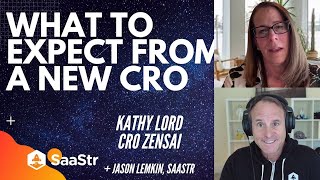
Kathy Lord, CRO at Zensai, explains what CEOs should expect in a new CRO's first 90 days: understanding the market and business, assessing pipeline and forecast, and evaluating people, processes, systems, and operating model. A CRO drives cross-functional transformation and scale, unlike a VP of Sales who focuses on current revenue execution.
Chapters
At the CRO level, who should own demand gen?
Yeah, so it's a great question. In startup organizations I think the CRO can and that's the sub 20 million but they have to have somebody who is really an expert at demand gen and that could be a highly functioning individual contributor that's driving that for you. I think as you're doing this scale up journey and you're really trying to build out that full function of demand gen and all the various channels. There's very few CROs including myself who are experts at that and I need to understand it well so I can partner with them. But I think you dilute the focus of the CRO by having them own that demand gen piece. So the short answer, I don't think it should be part of it because I think it's a different discipline and it changes the culture and focus of the revenue organization.
Yeah, that was always my view. I want closers closing, I want sellers selling. I don't know very many sales leaders that intuitively are detail or quant enough to understand demand gen marketing. That's always been my view. I also didn't want customer success to report to CRO but I lost that battle. Hey everybody, welcome to workshop Wednesday. We have a great one today. Kathy Lord who is CEO of Zensai and this is a topic that we've written about since the dawn of Saster but is under discussed in so much content which is what to really expect from your CRO in the first 90 days. I've written about it but I was thinking about this topic before Saster annual last year and I reached out to Kathy because I've known Kathy in so many capacities. In my early days as a SaaS CEO she was I think Director of Sales, VP of Sales and CRO, then COO of Intact which was acquired for a billion by Sage and then I think stayed for a couple years as a as like a GM or CEO at Sage after billion dollar acquisition. So I followed her from there. Obviously an incredible journey. I had had a few other great SaaS companies and then I was kind of surprised, I was kind of surprised maybe six or eight months ago when I saw on the LinkedIn that she jumped into a mid stage scale up. Right. I don't know the exact how many employees at Zentai.
About 225.
225. Okay, so. So we might not call that. We might, I, I don't know what the line is between scale up and startup. Certainly small compared to anyone that's worked at a big public company. She's. Kathy didn't decide to go in and be the first ae, but after everything that she's done, including being like a general manager coo, I think, is that correct? At intact, she'd done it all right. She decided, frack, I'm going to go back in and be a sales leader again. And I thought, not only is that interesting, I want to hear her thought process, her process with her CEO, why she picked this opportunity, why it's in this day and age, in this crazy world and everything that went through it on both sides, expectation setting. But hear from someone that I trust and have known for a long time in different roles, what you should really expect. Realistically. Realistically, because I find, and then I'm going to let Kathy roll with this, I find that the biggest disalignment I see in the hiring process today for VP and C level executives is just when you don't actually align on the goals when you start. I see this again and again and again. And in today's world, we've stopped reference checking. We do a lot of interviews over zoom. We don't meet up sometimes until the end of an interview process. And one of the things I see us skip is a true, real 90 day plan, not a fake one, not an aspirational one, but one where you really make sure, are we on the same page? And I see so many executives flame out weeks two through 20 or 50, and it's not that they weren't great, it's just they were never aligned with the cco. They just never. And these are great executives, they just never truly aligned. Said this is what we can really get done, I'm going to get it done. And it just leads to frustration on both sides. Not only does the CEO often get frustrated, but I see these days when there's so many veterans out there, folks that have done it before, they get frustrated because they're like, this is how I did it at Intact. I'm sort of making fun of it. But like every veteran had success at their last company. They had wherever they are, they had success. And a veteran is naturally going to want to bring that playbook into the new company. And never does that playbook work 100%. It never works 100%. And if you don't align for real, you're just going to expect that, that magic from GitHub or intact or wherever it is, whatever great company that worked at Notion, you're going to expect that that fairy dust magically works at your startup. The CRO is going to use the same playbook. The CEO isn't going to know what to expect and half the time there's tears. So that's what I want to dig to get from the inside. I'll hand it off to Kathy.
Perfect. Awesome. Thank you, Jason. Super excited to be here today. I think one of the really interesting things about this topic is it's extremely relevant for all members of the executive team. Certainly the CEO or founder is, I think, a key person that you have to have this alignment with. But really, if you're going to drive commercial success, all of those other functions have to be aligned and on board with that too. But understanding what do CEO or founders really want? What can CROs really accomplish during this 90 day window? And then how do we bridge that reality gap of what a CEO wants and what a CRO or VP of Sales can deliver? And then we'll wrap up with three actionable takeaways you can take back into your organization. So you guys can all tell me afterwards if I've got this correct or not, but in my conversations with folks, whether they're ones I interviewed with I've worked for or just networking with, the number one thing that CEOs and founders want is sales. Then revenue. And this a little bit depends on what stage you're at. But depending on your stage, what you need in order to drive the sales and revenue can be very different. If you're at a few million dollars ARR and you're trying to get to 5 or maybe to 10, you may still be working on product market fit and you may be trying to say, okay, who is our ideal customer profile? Where are we going to be targeting, what countries, what size, what verticals, what is the right feature set? And so what you're looking for that sales leader to do when you bring them on is very different than if you're at 20 million or 30 million and you have good product market fit, you have a good baseline process. What you're looking for there is how do I get to scalability and then predictability. And so really being clear, at what stage is my organization at as the CEO founder? And if you're on the flip side looking to interview with the CEO founder, really understand where are you at, what do you need and what are your ambitions? What level are you trying to get to next? Because understanding that and having the clarity around that and intellectual honesty around that is critical in order to gain that alignment. So if we think about the flip side of this and what can a CRO or VP of Sales really accomplish? I'm going to split it out. And in my mind this is where the first misalignment happens is because what a CRO is going to come in and just naturally do in the way they think about the opportunity is very different than where a VP of Sales mindset is going to be and what you can really expect them to do. And much of this is stage appropriateness. Right. And so what size are you at to really determine do I need a CRO or do I really need a VP of sales? And so let's start with a CRO. And so if we're thinking about CRO's first 90 days and and I'm going to take you through my personal experience and I'm going to share some zenai specific materials that I've created over the last 90 days. And so I started my journey with them in August, kind of mid August timeframe and I just finished then you could say my first 120 days. And most of this was done within the first 90 to 95 days that I'm going to take you through today. But from a CRO perspective they should be able to come in easily, have a strong understanding of the business and the market and then I would frankly argue like they should have a good sense of that at least you know, at a high to mid level before they even start the job. Because if they're not doing the research on that and trying to understand that as part of making a decision, are you the next journey they want to take? They may or may not be the right person that is all in and curious about and has what it takes to help you scale up your organization. And that needs to be, you know, deep discussions with directs skip level one on ones with the revenue team, cross functional leadership and not just doing an assessment in the way a consultant would, but starting to build those relationships and then externally, you know, having meetings with customers, partners, prospects because it doesn't matter how many, you know, recorded videos of customer calls you give them or how many transcripts or how many times they talk to the sales or channel teams, having the direct conversations with those customers or prospects is, is where the majority of the education comes from. They should also have a strong understanding of pipeline and forecast. So really understanding what's the engagement in those deals to provide executive sponsorship, initial assessment of the funnel metrics and the friction points. And I'll tell you, depending on the size of the company that I've gone into, they may or may not have good clean data around this. Sometimes some organizations are very good from day one. And others tend to work out of a spreadsheet instead of CRM. So their job is to go in and really figure out, you know, as much as they can what is the baseline of those metrics and then so you have something to build on from there. The, the other area is really an assessment of what I call the, the four swim lanes. And that's who are the people in the revenue organization, what are the processes that are there, what are the ones that are missing and which ones need to be reimagined. Same thing from a systems perspective. And as we know it is no longer growth at all costs. It is very much a focus around being cash flow positive, both naturally, but also from an EBITDA perspective much earlier in an organization's life cycle. So you have to be able to have efficiencies as you continue to think about scaling your organization. And then the other one is really starting to get a very consistent revenue or sales operating model that defines your ways of working depending on where you're at and your scale and early stages. When you're trying to get product market fit, you're just going through a lot of different A B testing. Does this work? Does this work? Does this work? And the likelihood of everybody doing exactly the same thing with the same milestones and the same approach and the exact same messaging is probably not very likely. And then the last one is it's one thing to get all this understanding of the business. You get an understanding of the forecast, the pipeline. You would make that assessment across those four swim lanes. But it's all for not if you don't have an action plan that's prioritized that says how are we going to now go take and attack those opportunities to reimagine ourselves to set ourselves up for more effective scaling without a multi quarter plan with alignment cross functionally for how you're going to get that done. Because in my experience, the majority of actions that you want to take to drive improvement across the sales organization is going to require support from either product marketing, product marketing, finance, et cetera. And so making sure that they're aligned and they have those changes prioritized in the same way in which we do. So if we think about contrasting what I just took you through from a CRO perspective and we think about that from a VP of sales, like what are those differences where the VP of sales role is a little bit different is they need to be able to take and work within where the organization is at today. And what I mean by that is really saying, okay, what is the revenue cadence that we're on today? What are those inspection points of those different deals? And really define a consistent way in which we're executing deals to drive the most effective revenue. They are actively in the trenches and engaged in a majority of the key deals. They should be taking a look at the assessment of the revenue team and the processes with an action plan focused around how do we create more pipeline and how do we win more deals. And so the focus here is on how do I drive more revenue and how do I scale some of that, not how do I set up my organization to scale. And so let's go into a couple of examples because I think this brings to life a little bit around some of the expectations that you should have when you hire a new CRO? And then you think about, okay, we are organized to match our go to market strategy. We have developed our operating model and the way we work together and expectations and accountability, how do we measure if we're actually successful or not? And so this is the stage I'm actively in the middle of this project but really starting to get very methodical around how do we measure the funnel and what does that look like? And doing that on a regional basis and a global basis and starting to look at that and so becoming very data driven on where do we invest resources or where should we not. And each of the regions, as you would expect. I gave you an example of one region here in the Nordock region. They have issues in different places, right? So where one may be performing below plan, another is performing above plan. And so it really allows us to get everybody executing at a very consistent baseline level. And then the last thing I just wanted to share with you was an example of a three quarter action plan. And this is what I put together when I started off after my initial 30 days, this really took us through, you know, what are we going to do for the first three quarters to implement this transformation and help us achieve our ambitions? We were looking to hit. And so, you know, it doesn't have to be exactly like this, but you need to have more than the 90 day plan developed in that first 90 days. Right. So this is where it's really critical and it really helps you make sure that you're focused on the things that are going to move the needles and that everybody has clarity in the organization, both within the sales or revenue teams, but also cross functionally what changes they should expect because those will have impacts across the rest of the organization. All right, so we Talked through what CEOs and founders tend to want what we can really expect from a CRO or VP of sales in that first 90 days. And then, you know, how do we bridge this reality gap and make sure that we have that alignment going into a new partnership? Much to what Jason was outlining when he kicked off the call. And I think it comes down to three things and the first one is really getting that clarity on what your organization needs today versus tomorrow. And you know, if you're at, you know, 3 million 4 million ARR, and you're like, I want to invest in a sales leader now you need to find somebody who can help you get to maybe it only gets you to 10 million, maybe if you're lucky you get to 15, maybe 20. But chances are they're probably going to get you to that 10 million and then you're going to realize you need a different set of skills and experience because it's really important to understand that role. Is that a leader? Is it a coach, is it a player coach? Are they scaling, are they building revenue streams or are they just trying to free you up as the CEO founder to go fundraiser, do CEO job? And they're there coaching the reps and driving that and understanding their priorities. And one of the things I've found is the highest indicator of success in bringing somebody in is do they have the pattern recognition for your next stage of growth. Because if you bring somebody in who's already been through that stage of growth that you're looking to achieve, then they're already going to know ahead of time what are some of those pitfalls that you're going to have, what to expect, maybe how to prevent them. And I can't tell you every time I go through another scale up journey, and that's why I'm here, is because I love the scale up journey between 30 and 100 million. It's to me very rewarding and fun. I learn new things. And so if you're hiring somebody to take you on that journey and they've never done that journey before, could they be successful? Sure they could. But chances are you're going to run into a lot of potholes along the way because they don't know what they don't know yet. So looking for the pattern recognition in that person you're looking to hire and making sure you have clarity on what your expectations are with them. The second thing is really then around ensuring alignment. And so this is where I think it becomes really important is that not only is the CEO or founder aligned with the new revenue leader you're bringing in, but that you have tight cross functional alignment. Because it's important that not just go to market like marketing, sales services, rev ops are aligned with what the goals and objectives are and what this person is coming in to do to drive transformation for the commercial part of the organization. They all need to be marching to the same set of priorities or OKRs, goals, objectives, whatever your organization uses, you need to have alignment there. And then really important is from a product perspective, as you're looking to bring in this person to drive the next level of scale, need to make sure that where the product is going, both from engineering and development perspective, but also from a product marketing and product management perspective, is are we aligned with where we're tasking this revenue leader to go and what we want them to go do with where they're investing and focused on their priorities too. So having every executive aligned around those top three short term wins for your new revenue leader. And then ideally, if you can get to mid and long term as well, spar out, as you can see, that will really help ensure that you have alignment beyond just the CEO, founder and with the executive team that's going to make that success happen. Lastly, the third one is empowering them. And I've experienced this painfully more times than I would like to say. But you get brought into a new organization and you know, you're told, okay, you know, we know we need to go transform, we know there's lots of opportunities for improvement. But then you run across those sacred people or processes or systems and say, yeah, it's all great, but yeah, we're not going to change that because the CTO really likes it or that person, they've been here forever, we don't want to get rid of them. So there can be sacred people, processes or systems, or else it's really difficult to drive the level of transformation that you want to scale your business. You also as the CEO founder cannot be the bottleneck for all decisions. And sometimes this is the hardest one because you're used to being involved in all things and especially on the commercial side of the organization, if you're a founder CEO, but you have to be able to step back and trust the revenue leader, but verify, but trust them and let them be empowered to make decisions. And you gotta know that there are gonna be mistakes. I mean, I'm not perfect, I make mistakes. Everyone who goes out and makes mistakes, because if you're not making at least a few mistakes, you're not moving fast enough. The goal is that when you make mistakes, you fail fast, you learn fast, and you minimize what's called that recovery gap from when you fail to when you fix it and get out there and drive it again. Right. And that's, it's a lot if you think about the sports analogy around that. Right. Like you're going to make a bad decision on whatever sport you're playing, but you fix it, you correct it and you mitigate any impact from that. So empowering your revenue leader and allowing them to go do their job and do it in a way in which they're not afraid to make mistakes, but they're also learning from those, correcting it and driving the organization forward. So three key takeaways, Clarity, alignment and empowerment. If you can get those, as you think about what you need for your organization, you will have a much, much greater chance of having that successful new revenue leader on board and be aligned with what success looks like.
Okay, one, yeah, just one quick follow up on that. Did you look when you joined Zenai? So you've done this before. Did you build your own model where the revenue should be 12 months out? Did you talk about it with the CO? Did you see that your revenue was aligned with theirs?
Yeah. So I was very fortunate. This is the only time I've run into this. But they have a four year strategy plan with the full revenue model associated with it. But.
Yep.
That they were working with. Now the challenge was due to some acquisitions and other things they weren't executing to that revenue model for this year.
Got it. They had a four year plan, they were behind on it. They brought you in to get them back on track or better. Right. You looked at the plan and you went through it piece by piece and decided if you believed that those drivers to tilt the curve, you believe that you could execute those drivers. Right. You personally, you spent that time before you started or signed the offer letter, right? Yeah. Yeah. I just find most CEOs, especially slightly earlier stage, they don't go to that next level. I find actually what I do, especially for like investments or if I'm on the board, I actually try to do that in the last, I try to be the last interview. And I'm like, okay, Kathy, I'm so excited you're joining the company. Let me just ask one question. Did you happen to Talk with the CEO about how our SMBs in East Sub Saharan Africa are shrinking? No, I didn't. Did you, did you happen to talk about how 35% of our revenue comes from partners? And I think one of them is at risk and they leave us. No, I didn't know we had an indirect strategy. I can't tell you how many times folks don't know the amount of revenue that comes from partners or the ecosystem versus direct as a sales leader. As a revenue leader, if you don't know what's indirect, it's a top. So anyhow, we could talk about it forever. I'm glad you did it. But my number one advice is to slow it down at the very end and make sure at both sides, but especially as a revenue. Don't be nervous at the end because the CEO want you. You know when you're wanted as a CRO, don't you?
Totally.
Right. It's not in the middle, is it? When a CEO wants a revenue leader, it when they may not know in the first interview, but a line is crossed when like I gotta have Kathy. Right? Right or wrong, you know, you gotta have that resource. Do you have that feeling? Right. An interview where they really want you?
Absolutely. Absolutely.
Yeah. So if you're a revenue leader on the other side or if you're a CEO, take the time to slow it down to the end. Tell them you love them. I even say give them an unsigned, give them a signed offer letter but don't ask them to countersign until they're all in. That way the pressure is off. Right, here's your comp, here's your title, here's your equity. It's signed. If you need two weeks to make sure you believe in the plan. If you need two weeks to go talk to a few more customers to talk to the team and you bail in two weeks out of it, that's okay. Like as crazy as it sounds, I'd rather you bail with the signed offer letter then bail 90 days out.
Absolutely. Absolutely.
Okay. This is a niche question, but a newish one that I'm wondering if you thought about at the CRO level who should own demand gen?
Yeah. So it's a great question. Well, I miss it. In startup organizations I think the CRO can and that's the sub 20 million. But they have to have somebody who is really an expert at demand gen and it could be a highly functioning individual contributor that's driving that for you. I think as you're doing this scale up journey and you're really trying to build out that full function of Demand gen and all the various channels. There's very few CROs, including myself who are experts at that and I need to understand it well so I can partner with them. But I think you Dilute the focus of the CRO by having them own that demand gen piece. If you then at the other end of the spectrum become really big where you have somebody who's just overseeing some very senior people, would they then roll up into somebody like a CRO? But they're probably going to be more like a president title by then. So the short answer, I don't think it should be part of it because I think it's a different discipline and it changes the culture and focus of the revenue organization.
Yeah, that was always my view. I want closers closing. I want sellers selling. I don't know very many sales leaders that intuitively are detail or quant enough to understand demand gen marketing. That's always been my view. I also didn't want customer success to report to CRO but I lost that battle. Right. That, that ship has sailed. I think it's terrible. But what I've averred with a lot of the next generation of revenue leaders is they don't want to F around. And so they want, if they say they want marketing to report to them but then when I talk to them I say, okay, let's narrow it down. You don't really want to be working on product marketing or the website or you want demand. You want, you want, you want to say, listen, I want to control my destiny with leads. I want to hire Kathy or Jason on my team because I, I don't as good as Jim is like he's not really delivering. And I'm, I'm, I'm, I'm done with that. I'm done with waiting for marketing to deliver me not enough pipe. I want to own it and I'll put my neck out there even if I'm not great at it. I'd rather own it. I'd rather hire my person that I trust and have him own it. And I'm. This is a quiet theme. People are misdiscussing whether marketing should report to sales. I think it's more whether demand gen report to an aggressive sales leader who says I've had an alt of enough and I used to be against it for the reasons but now I'm seeing it work up to a point because at least they can get more results versus a lackadaisical marketing organization.
Yeah, for sure, for sure.
Okay, one more niche, one that you touched on, but this one's so good because you touched on it. Zero and existing VP of sales when it's topping a VP of sales. I know some people don't like this term top but I Think it's a simple, a simple way to summarize. How do you, how should a CEO think about it? How should a new CRO think about it? Especially when the VP of Sales that got you from 3 to 10 or 3 to 15 or 20, when they're great.
Yeah. And I think this is one of the thing, and I will say my CEO, Rasmus Holtz, did an amazing job of this and it's really helping that amazing VP of sales understand where their pattern recognition and experience is and that the things that are going to take and get us from where we are today to that next milestone, whatever that is, requires a different set of activities, a different set of experiences, and we're as an organization, one going to mitigate our risk by hiring somebody who has that pattern recognition experience. And then the second part of that is this is a opportunity for you as the VP of Sales to basically ride shotgun and learn from that Croatia. And so that you're now ready to take that next stage and that next step of growth when you move your next opportunity. And there needs to be that commitment that who you bring in will help coach and bring that person up so that they can become a CRO in their next role.
And do you, how much of a stakeholder do you think the vp, the first VP of Sale, should be in that search? Do you give them, do you allow them a front row seat in the interview? Do you allow them a soft veto? Do you exclude them? Where do you, what do you do when you totally trust them? Right. When they're great?
Yeah. And I think if you, if you totally trust them and you have a good relationship with them, I think they are a soft veto because the challenge is they can look for cultural and ability to maybe understand the product or market, but that's likely where their experience and expertise is going to end. Because if they haven't been on the journey, they don't know exactly what to look for and how to ask and articulate that.
Yeah. I wrote this classic Saster post I updated, which is never, never hire a CRO that everybody loves because there's so much bias across the team. There has to be some, like someone has to be threatened by the CRO or you're not making the right hire.
Yeah, yeah, right.
And it's tough for the VP sale, but. And yet you owe them too, don't you? At some sort of level? You owe them as. Even though they can't be unbiased at first, they, I always worried they would pick the nice person, the one, the One that wouldn't threaten them. The one that wouldn't threaten them. Right.
Yeah, yeah. You can't totally ignore them. They need to be a part of it and, and at least in some way participatory. Now you also don't want to distract them from whatever you've got them doing as well too.
Right.
It's, it's a balance that I think you, you have to work through. But they should not be, in my opinion, Frontline leading the interview.
Yeah. Two of the, I won't name names, but two of the top zeros that I know now at decacorns were VPs of sales. Kept getting topped and topped and topped and then the CRO would move on or not work out and they stuck it out, they suck it out and it took a while and their time finally came. Right.
Yeah. No, I've seen it too. I've seen it too.
All right, maybe just one follow up on this and then I think we have to end. But I find one issue is when a lot, especially a lot of product focused CTOs y hire their sales leader, they actually want to exit sales entirely. I don't want to do any. I got to get back to pro. I hear this again and again, Kathy. I'm, I'm one of the re. I'm hiring you to increase sales, but also I'm hiring you so I can get, I got to get back to the product.
Yeah.
Have you used any heuristics mechanisms, meeting quotas to ensure that the CEO stays enough in sales that they don't leave sales too much? Have you seen that? And there any tips and tricks you have to make the CEO to stay in sales?
Absolutely. And I think it's a little bit of stage and journey specific, but there is always the role for that CEO, founder, and especially a product oriented one. And as you're setting up the sales process and what that looks like, you should define a. It could be based on size, it could be based on, you know, maybe they fit a strategic new initiative, et cetera. But there's very clear situations when you bring in the CEO to be participatory in that meeting and you define ahead of time, what is that role? Do they give the vision talk, do they give here's our future or in some cases, if you're earlier stage, they may do the demo. Right. So it kind of depends which stage you're at. But you should always, regardless of size, the CEO should be actively involved. You know, at least 10% of their time to 20% engaged with customers. And partners.
That's a good one. I love to just tell founders that when you hire a great sales leader, assign it, you don't get any time back in sales. It's just used differently. You'll just be more efficient. You might become more of a middler or a demo or a supporter or focused on big, but you don't get a minute back. If you, if you hire a mediocre leader, you get all your time back. But the great revenue leaders know they need the 10 to 20%. Right. They're not going to let you go. They know they need to bring you into the key deals. Right. So don't, don't expect your time. It's a bad sign if you get 100% of your time.
Yeah, it really is. It really is. And it's, it's. How do you stay in touch with the customers in the market if you're not engaged either? Right.
All right, Kathy. A plus. Thank you for all your learnings.
Thank you.
We'll check back in at 100 million and then a billion in ARR and see how this all played out. And thanks everybody for joining Workshop Wednesday. See you soon.
Thanks, everyone. Thanks, Kathy. See everyone next week.










