What’s New at Navan: Real Unicorns, Brand Equity and More with CEO Ariel Cohen
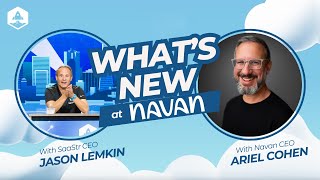
Interview (Oct 31, 2023) between Jason M. Lemkin and Ariel Cohen (CEO, Navan) covering Navan’s rebrand from TripActions, product strategy (integrated travel/expense/payments and people-centered UX), go-to-market and unit-economics choices (free tiers, enterprise pricing, Navan Connect bank integrations vs. underwriting), partnership with Citi, AI features (Eva chatbot with measured CSAT ~7.2), pandemic-era growth decisions, and humanitarian efforts (company-funded and board donations to support displaced Israelis).
Chapters
Everybody at Sasser, I am super excited to have an amazing founder and CEO Ariel Cohen here from Navon, which some of you may remember as trip Actions. I haven't had a chance to do a deep dive with Ariel, but it's great that he's participated in different parts of Saster over the years. And it's super interesting to see one of maybe in some way slightly under the radar, most successful pre ipo. True. True acorns. Not fake acorns. True Acorns doing the nine figures of revenue and really talk about how you disrupt an old space, expense management, travel management, and how you remake some of these things. And I really wanted to dig it in. So first, Ariel, thank you so much for coming on and joining to talk about what's new.
Thank you so much, Jason. And I have to say something about Saster because now I'm running a pretty big company. But when we just started back then trip actions in 015, Elan, my co founder and I actually came to Saster in San Francisco back then. Oh, great. Yeah, on the hill there, I think Knob Hill. And there is something, you know, as the founder early stages. Right. That you don't know anything. Right. And you are kind of trying to build a startup and to go and see other founders in other stages. I think it gives you hope and also some direction. So I'm happy to be here. Not just because, you know, we're gonna do this thing and I'm gonna talk a lot about the Navan and why we are great. Right. But also because it meant a lot to me on our early days. Right. Really on kind of seeing other entrepreneurs, other founders and their struggles.
Yeah, it's great. Thanks. A great story. It is the, the. The most. The thing that's obvious today that it was so surprising back then is that people would share.
Right.
You know, that folks would come if you were there. Nob Hills, you're there in 2016 and we have like Jeff Lawson and Aaron Levy who. And the fact that they would come up and share their mistakes and errors, it seems obvious today, but that was the disruptive part that you could really. That you could get people to share their mistakes. And you learn so much from. From successful mistakes.
I think you learned that it's okay. Right? You learn going through it's okay. And I think it's really important. So.
Wow, that's great. I did not know you were at the one at Knob Hill.
They're all.
All very visceral, so it's good. So. So let's go Back in time just a little bit. I mostly want to talk about today, but I want to talk about something niche that I know you've talked about, which is branding changed. But why? And I don't for me. And I'm in a weird corner of tech, but I feel like Trip Actions had a super strong brand. So when I was taught, when I was briefly a VP at Adobe, they sent me to this marketing camp. I thought I knew marketing, but I only learned two things and one was be very careful about a rebrand because if you have brand equity, don't even, even tarnished brand equity.
Right.
Even brand equity with a little bit of don't give it away. And yet brands can also limit your surface area. Right. Because obviously you want it to be more than trip actions. But what are the real learnings around that when you have a strong brand. Right.
Yeah, I think it was a big, big, big project and program for us. And exactly because of what you've said, people. Yeah, Trip actions. But the question. And you think you need to think about it more from a founder's perspective. Yeah. And actually I think that stuff like this can mainly be a founder is leading them. So I was actually the one that was leading it. Because the why not is so obvious. And everybody will explain to you why not, right? It's obvious the why. Yes. Is about who do you want to be? And that's something that a founder knows. And when we started back then three pactions, our vision was limited. Right. I didn't think about it in the way that I'm thinking about it today. Today I'm really thinking about it in the way that probably Amazon are thinking about stuff. Travel is big. There are endless amount of needs. The needs are a trip related, support related expense management related payments related activities. It's endless. It's just endless. And when you're thinking about it in these terms, I'm really thinking about the next 20 years. How can we get to every frequent traveler that is out there and providing to them everything? And when you think like that, the Trip Actions brand actually not just name the brand was extremely limiting. So it needed a hard reset. And the hard reset was about what we want to do, but also who do we want to be and something that we knew before COVID but Covid really, really made it clear to me. It is about people. It is about people meeting, it is about people spending time together. It is about cultures, by the way, it is about bridges, it's about understanding you. And for me it's not just the change of name. But it's like the emphasis. You'll go to our app today, you only see people there. You go to our ads today and you see a slogan and you see some unique person. So that was something that I really believe that we need to do a strong reset and that's why we did it. And I actually think that people now know what Navan is saying. So, you know.
Well, that's interesting. You don't think, you don't think there was much customer, existing customer confusion at the end of the day? It was pretty limited.
There was at the beginning, you know, so of course customers would ask, why did you change it? And so on. But I think that once they sew the app. Right. It comes down to experience. Right? Yes. And for me, what I realized it was actually on a trip to Japan and I'm usually. I'm always doing this. These trips that I'm by myself and thinking about stuff. And I realized something. I realized that a lot of B2B software was designed to serve the buyer and the administration.
Yeah, I want to talk about that next.
And travel and payments, it's so much about that. But it doesn't really work if the user, the traveler, the road warrior, the EA that are booking for others are not super happy because what they do, they find ways to book outside. Right. So then you lose all of the administration. So creating software that really connects the two was an aha moment for me. And again, it brings back to, yeah, we changed the name, we changed the brand. Customers would ask questions by the minute that they saw the app, by the minute that they saw that the app is extremely consumer. It was a huge change in the way that the app looked like they also connected expense payment, travel in one app. They got it and I actually, I think they're really happy about it.
I see. So key was tying it to. To. To the much greater function out of the app. It happened at the same time rather than a pure product marketing exercise. Right?
Yeah, because we became kind of a Frankenstein. Right. Like we had transient travel at the beginning so you could book your trip. Then we said really important. So it was a different tab. Then we said, you know, meeting and events. Right. So meeting and events is something else. Then payments. This is a credit card. That's something completely different. Then expense management, it was a different app. So it was, you know, I think that what you us is our roadmap. Right. Basically, if you take all of our roadmap throughout the years and you look at us, that's what you saw. And I was saying that's not what our customers needs to see. They need to see the one thing, Navan, and I think it's how to describe it. When they saw it, I think they completely understood it.
So at a higher level. So that makes sense. Expense management is a category. Here's something I don't understand. Obviously one of the oldest categories of software which we can talk about. But what happened? I don't understand what the Catalyst is. Over the last four to five years that reinvented this category, right? I don't. Why was this? Some things were reinvented by the web very early, right? Back in the day. Some were kind of in the middle like a Zoom or Slack. But why did this category re. Innovate? What. What changed in technology or collaboration? I'm missing what this catalyst is.
I actually think it's really what I've told you earlier. I think that there is this need in the organization today for what I'm calling, you know, software that is designed for people, business software, right? So you solve a business issue. But it was designed for people. And I think that the gap right between, you know, how a software like Salesforce behave, right, to what you do with Netflix or with Doordash or with Instacart, the gap keep. Keeps widening. And if this is a software that a lot of people in the organization needs to use, expense management, everybody needs to use it. Travel, everybody needs to use it. If a lot of people need to use it, they will eventually come and say, I'm not going to use it, right? And if you look at, you know, you've mentioned Adobe, right? If you looked at Figma, right? Figma is not just some design kind of app. It's something that people, that human beings, that I can use it, you can use it, everybody can use it. And it's different compared to Photoshop, right? So I think that this thing, you'll see it again and again and again. Maybe Slack started with that and maybe Zoom kind of continued with that. But I think you see a shift to companies like us and others that are creating software for Enterprise, for B2B use case, for seeing a report or policy of safety, but that the users really like to use for sure.
And let's transition to that. But on the way. But is Navon. And I just don't know this, right? I don't know the answer. Is this an. Are you, are you an app really that the end users will drive demand? Because the thing about a Slack, right, Or a Zoom that yes, they became Enterprise, but the End users brought the demand into the enterprise. And I think there are corners of that in, but I just don't know, is that really happening in Navon that folks at big companies bang their fist on the table and say, yeah, I'm through using concur. Does it really happen in the real world?
It is happening in a different way. So first of all, you know, we do have a PLG motion, but I don't think it's a question about plg. I think it's a different question when we go to a customer. You know, if you'll take the aggregation of every spend, all of the travel business travel spend in the world, it's more than $1 trillion annually. But if you go on all of the travel agencies that are out there, which we are one of them, and you'll check how much money is being spent through them, and it will be an aggregation of $200 billion. So where are the rest of the 800 billion? And what we've discovered over the years that employees get to choose, the CFO will tell them, hey, you have to use Concur to book your trip or you have to use American Express to book your trip. What the ones that are really traveling your sea level, the your sales team, they will find ways to book outside. In more than 50% of the cases. When we take a customer, an enterprise customer, highly enforced environment, we'll see that 50% of the employees, when you compare expense to the travel, 50% booked outside. So I would actually. That's our discovery. $800 billion market is actually not really being managed. That's our discovery. So we can go and try to capture one B2B buyer after the other, or we can come and say when we capture that B2B buyer, right, we sign an agreement with a customer. When we do that, let's get all of the employees using us. So that's one thing. The other thing to your point about pounding on the table, we just had a company all hands and in the company all hands, we had a customer that apparently that customer, she's the third time in different companies, our customer. And she described that when she came to her current company three months ago, they were about to go on more of a traditional solution, right, For a travel and expense. And she was familiar with us and she was like, what are you doing? Let's do that, right? So that's one example. But we see it also with churn. It is very rare that the company will churn from using the van because the employees actually have a saying so do you have a really plg motion of. It's not viral by nature. Nature. It's not like, you know, I'm sending you a message and you need to reply here. But it has the same aspects. The employees have a big, big saying in it.
When you have an app where the churn is so low. Even in today's world, 2020, where we're so about efficiency now, today, are you still pushing hard for aggressive cac spend when the churn is low, do you still want to push the pedal to the metal as much as your investors and Wall street will let you? How do you think about that in today's world?
So it's such an interesting question. So. So, you know, we went through Covid and in Covid, we lost all of our revenue already to around $100 million run rate. And we lost it overnight.
Yeah.
And our decision was to actually use the time to spend money to expand market share. So think about Kaka and LT to LTV or payback. Payback goes to infinity because you know, you're not making money and you, you're basically paying commission. Right. So you need to have a lot of belief, belief by yourself and also your investors that that makes any, any sense. And we gained so much share during COVID without making money at the time, but so much share. So now recession. Right. So do I spend less on go to market or spend more on go to market? Yeah. So I have a product that knows in a proven way to save you money. We are basically paying your employees to choose cheaper things on our platform. Right. Instead of choosing this hotel, you're going to choose that hotel. And we are taking from our money and paying with rewards to your employees to do that. Right. So it's proven to save money. We are also in most segments, we are free. You don't pay us anything. Anything, nothing. Okay. So I don't need anything from you. It's also really, really easy to install. It takes kind of half a day to do the entire thing with integrations, with everything, connecting to Okta and to your HR system and all of these things. So I would argue that any type of crisis. Yes. Such as recession, if you listen to your customers, customers in recession wants to save money, but they don't want to piss off their employees. And we are the perfect solution for them because of what I've just described. So it gives you the answer, do I want to push more and go to market or no? The answer is yes. The answer is yes. And it's my role as a Founder to convince you, ask about investors, to convince the investors in any point of time that this vision makes sense. And yeah, we need to have money for that and spend money for that.
So let me a bunch of things I, I, I love to talk about, but that story how in the enterprise the executives will go rogue, right? So I was one of them. Let me give you. I usually don't want to talk about competition, but for me I want to talk a little bit about Concur, which is one of your old competitors for fun. So when I was briefly a VP at Adobe, I went to do a customer visit to Dell and I went on to, I think to concur. And I think the W in wherever it was was eleven hundred dollars a night. I couldn't do it as an ex founder, right. I couldn't spend 11. And I go on the Internet and it's $199 and I put it on my own credit card. And I was told as a vp I would, I could be fired. And I had to go to Shot News office, the CEOs to defend it, right? And I said, well, just fire me. I just saved you a couple thousand. I literally said, fire me. And they didn't eventually make me go to Shot News Office, but the story, because it was to resonate, what it took me a heartbeat to realize is the enterprise didn't care. Right? Because I don't know how big they were at the time. 10,000 employees. You've got to manage 10,000 employees. Right. So all the friction I went through figuring out how to use this 27, how old one was concur, founded in the 18th century or something like that. Whenever it was, it probably was a DOS product, right? But it does solve a problem for the cfo, CFO and the cio, which is you can fix things and lock them down. And so in a big enterprise, why do, how do you win that? Right? Because why does the CIO care or the cfo? They care a little bit.
They actually cares a lot. And it's funny, you've mentioned Adobe several times. They're actually a customer of ours. Right.
Goodness. Thank goodness you made the switch. Thank you.
Exactly. So I would argue that they care a lot about this example that you've talked about. The W cost like this and the W can be cheaper. There is a reason for that and it's that the traditional travel management company Concur is an extremely bad software. And I'm not saying it because they are a competitor. I'm like, as a product guy, when I Look at software that is bad, it pisses me off. So Concur is an extremely bad software that is connected to a travel agency, to American Express, Carson Wagon, like bcd, the travel agencies have a business model that is completely different than ours that makes them connect to one content source. Okay. So instead of connecting to everything that is out there, you know, Expedia, booking directly to the hotel, everything that is out there, instead of connecting to that, they're connecting to one thing. Right? Because of the business model. It's actually not because of technology. So that's why you see as an, as an employee. Right? And you're saying that doesn't make any sense. So before Navan, you know, the company, you know, Adobe to your point needed to choose. I need to manage travel. I need to put. Policy compliance is important. I need to know where my employees are. All of these things are important.
Super important. A big company, right?
Exactly. And if I'm ending up losing a lot of money in the process because I'm forcing my employee to. My employees to book really expensive hotel for no reason, it's the same room, right? That's part of doing business that was before us. I'll give you another example. When you want to change a flight or when you cannot book through Concare, by the way, it's not just that Concare is a bad software, it's such a bad software that people ending up calling or emailing an agent to book their trip and it's in more than 60% of the time, right. So you are actually wasting a lot of your employees time. So you do all of these things. And, and there was no other alternative. When we came, we said first of all, content connecting to everything is so important because people can Google it.
They can Google it, right? Yeah, of course, yeah.
So that's the trust, right? I need to gain your trust as a user. The second thing, I need to support you all the time. You want to cancel this hotel, you want to change this trip, you need to do all of these things. And I need to have such a simple business model that when you contact me, I'm not charging you again. A traditional travel agency will charge you every time that you contact them. So it's not just that it's more expensive, they're going to also nickel and dime you in charging you. So we simplified it. We said two things. If you have fairly complex installation, we're going to charge you on every trip, one time booking fee, so that's more enterprise and so on. But actually recently we went and if you have a fairly simple implementation, it's free, you're not paying us anything and you can contact our agents as many times as you want to. Yes, because we are enjoying from a technology. Right. We have a lot, a lot of. Actually we have a bot, right. That is, that kind of supports you in most of the cases that creates a gross margins or economics that are similar to tech, which is usually not something that you see in, in a services industry. So that allows us to do these things. But it really starts from this focus on the end user and to understand that, that that person is the most important thing in this equation.
Yeah, it's interesting when the underlying, when you have a competitor that seems direct, but the underlying business model is so different. Does it, how does it, how does it affect pricing and how do you think about pricing when you come up from these different vectors? Like how do you think about that? Especially with bigger customers?
I think that you have different segments that are creating different, I would say outcomes from economy perspective. So the obvious ones in our industry is that we'll make less money from enterprises, we'll make more money from SMBs and what we are calling commercials and so on. So this is kind of the thing. But you get way more volume there and more brand recognition and you get less on the other side. So eventually we look at the business and one thing that we were doing from day one is to constantly, constantly look at the unit economics. Gross margins is not. It's something that you'll go to every employee in a van and they will know what gross margins are. Right. And it's important because it kind of affects the way that you are thinking about the business, how you go to different segments and so on. So I think that that's kind of this balancing act. A lot of complexity and less money enterprise, but a lot of volume, much less complexity and better economics on the other side and you need to price it accordingly. Enterprise are paying more. SMB's, commercials are not paying us anything. Right. So you really need to find the balance as you think about your unit economics and your business model on that.
Question of gross margins. Now in today's era, there's much more focus on gross margins as part of the efficiency. Right. At public companies on Wall street. What have you learned on the payments, credit card embedded, fintech side? I don't know. The margins are almost always lower unless you literally build your own payment network yourself. Right?
Yeah, I can tell you better. I think that gross margins was a focus maybe of three, four years ago in late Stage, the focus right now is on EBITDA margins, right? Which is a completely different ball game and obviously let you get into what we've talked about earlier. Like so now marketing and go to market is part of this, your investment in engineering, you know, your intelligent. So that's definitely a focus and it's interesting from a fintech perspective because also what is your interest rate that you are paying to give these loans? Right? So if you think about most of fintech companies, including us. Right, including us, have, if you have a credit card and you are going to your customers and telling them, hey, get credit for me and you do the underwriting and you take some risk there and all of these things. So you're basically a bank, right? You do that. First of all, you do take an underwriting risk, but you're also paying interest rate. If interest rate goes to 6%, probably now 5.5. And we are paying more than this, right. Your cost of capital went up. This thing affects your entire economics, right? Yeah. And so I think that there is, you know, it's, there is a big question in my mind on the validity of the business models of a lot of fintechs companies. And we realized it, I think two and a half years ago. And that's why we've developed Navan Connect. And Navan Connect was this idea, let's connect directly to the banks. Let's actually support you with our expense management and that magic. You swipe your card and we captured everything. Let's support you on your Citibank card, on your JP Morgan card, on the card that you're, you know, on your bank of America card, the card that you already have. I'm not asking you to change your card, but also I'm not underwriting and also I'm not giving you loans, which is almost challenging the fintech model, Right? Because what I'm not getting is interchange, right? So I'm removing part of the income, but I'm also removing part of the risk and part of the need to keep raising money. So I'm basically coming and saying, hey, Navan, while we are in the fintech space for sure, we are a technology company, we are not a bank, we are not trying to be a bank. We are not trying to change something that the bank figured out for the last 150 years, which is how to underwrite and how to raise money to give loans.
But it is interesting that you, that's a very thoughtful decision you guys went through, but you did give up top line revenue to make that decision. You certainly could have encouraged or forced people to use your own card and taken that piece of the interchange and managed it. Right. And I think you decided to give up that top line boost, right. To avoid some of the downsides to being in that banking business.
And that's why revenue is only one metric, right? So yeah, you can look at top line or revenue, but the question is how much money you make out of it, which is in gross margins and eventually EBITDA margins. And if you only look here, everything looks great. If you start to go through contribution margin, you are giving up something. But you'd be surprised, not a lot. Now you need to have the ability, you need to have a sales team that knows to sales license, right. That can actually charge for the software. And there was kind of this free meal I think of everything is free because somebody else is paying for it, which you can enjoy it as long as the economics works across the board, not just revenue, then if it stops, if suddenly it is questionable, then you need to do something with it. But if you don't have a sales team that knows how to sell license, it's actually very, very hard to make this business change. So again, I think we are selling software. We are selling software that makes booking your trip really, really easy. It takes five minutes to book an entire business trip for us. It's super easy to support yourself when you want to make a change. You want to do expense management, you swipe your card and that's it. You know, you've, you've talked about hotels, people that are using the van and go to the hotel, they know they don't need to check out, we don't ask them to check out. We are collecting the receipt automatically with a certain bot that we had. We are itemizing it. You know this thing that you sit and you're saying there are three level of taxes and for this day the tax was dead. And for that you start to. And I took this thing from the minibar and I went and have breakfast and now you're finding yourself itemizing a receipt. People that are using Navana are not doing it right. So I think this is kind of where across the board if you have really good software that saves people time, saves money, adhere to, handle some enterprise needs and the users are happy you can charge for it. And that's kind of why we could have changed the business model with Navan Connect.
Interesting. Okay, Two more things I want to hit before we run out of time, especially since I have the founder CEO here. You just had a Big press release on a partnership with Citi on a travel and expense portal. Sounds great. I'm sure it is great because you did a press cities, one of the largest banks in the world. But what, what I'd love to learn from you is a lot of times these things there are big deals, but they're so hard to implement. It's so hard to get the single sign on to work the data to flow like okay, you integrate with someone else's points or system. It never works in my experience. It just never. You have to log in to some clunky thing and what's the goal of this partnership overall? Let's talk about it. But how as a, as a founder, how, how can you make these kind of things great between a big company and a pre, sort of pre IPO company? How do you make the software great?
You know, before in Avon, Elon and I had a startup that we sold very small, right. We sold it really, really early, but it was integration platform in the cloud and we went and connected like really tough enterprise systems like SharePoint, Ms. Exchange to stuff like Drawbox. And back then, you know, I'm all to yammer and chatter and these kind of, you know, things, right. And we've managed to do it with 3, 4 clicks like you know, the end user user will integrate. So I think that kind of mentality that if you are not figuring out the integration to the IT environment, to the enterprise environment, it will not work. So that's, that's to your point. So Navan is built, Navan Connect was built in Navan generally but Connect was built without dependency on any partnership. It just work. You bring your credit card, you do something in our app and it works. So that mentality, when we went to Citibank and showed it to them and it was competitive, we competed with other players in this market, other unicorns and other. Right. But we show them that we know to operate it like this. So technology wise, I'm actually not worried a lot at all about it, you know. But I understand your question. I think that what makes partnership successful or not is something else. It's the go to market. Are the sales team capable to cooperate? Completely different companies, you know, can they cooperate? Can they articulate the value proposition to the joint customers here? And I think and they can they work together and then can we implement this is really hard. They have actually a lot of experience with this from, you know, other companies that they used to work for. I think it's really, really, really hard and you need to put all of the mechanisms up front, including compensation. Right, all of the mechanisms up front to make it work. And you need to make sure that there is a real value proposition and for the cardholders of Citibank to have a smarter card, a card that you can expense, that you can book your trip just because you have the card that's really, really valuable. And it's interesting, we announced the partnership today, we signed it only a few weeks ago but yesterday we actually signed our first deal on an enterprise account using pretty cool joint offering. So it tells me while partnerships are really hard, it tells me that there is a real need in the marketplace. So I'm very optimistic on that.
And it runs. And this integration, it runs in my city account. Is it sort of pseudo white labeled or how does, what's the, what's the user experience? So that it's.
Yeah, first of all, both sides are selling it and both sides are cooperating on selling it. So Altium can sell it and then they break, they bring Citibank in and the other way around. And yeah, if you are a Citibank corporate customer, you will be able to actually go to Citibank and say hey, I want this thing and it will start to work. And if you are obviously a big customer of Citibank, the sales team of Citibank will come there and offering you this, this offering and it's co branded but it's, you know, it's actually working exactly as the way that Navan is working today. You book your trip, you use the Citibank card there, you swipe the Citi bank card and it just worked. I was actually in London last week and instead of using our card, I was using the Citibank card all the time. And it works exactly the same. It's in our app. The expense management managers captured correctly the.
Trip everything and on the, on the alignment of this go to market teams and I think usually this is a good thing and something you have to do in the end, at least in the short term. Are you paying more in terms of sales, compensation, others because there are in effect two teams usually that's what folks like. If you try to, if you try and slice one commission too fine. Nobody, nobody's incentive it, are they?
Yeah, I think first of all the answer is yes, you are paying more. You need to incentivize, you know, to incentivize. There are different mechanisms as you probably know, like Spiffs and other things.
Yeah.
But there is another thing. There is a really good pipeline edition and when we were about to sign. I did something very simple. I went to my CRO and I didn't ask him, hey, do you like this partnership? Because you know, CROs likes everything you can throw at them, so. Because they can create more. Right. But I asked him, would you commit to more revenue this year, next year, the year after because of the partnership? And when his answer, Grant's answer was yes. Yeah, I would say, okay, we should do this partnership. Right. So I think go to market, by the way. Generally go to market is really important, but go to market when it comes to partnership is actually probably the most important thing.
Yeah. Let's. One last point I want to ask about the future of no one is like. But that's a great insight. Like if, if you have a good VP of sales or CRO, you can almost measure a partnership like this based on whether they'll make a commit.
Right? Right.
And there's a lot of reasons to not make a commit. It's risky, right, to the CEO to not make a commit. But if you do make the commit, you'll get the resources as the CRO, right? So you're, you're. It's, it's not that they're perfect, but it's a very interesting litmus test of whether to, to deploy more resources. Get. And I see so many not want to make the commit for logical reasons. Right.
I think, I think there are. And that's more of an advice to founders. And I went through it, right. So I was not necessarily really smart about it. Right. I've learned it the hard way. There are a lot of type of CROs out there. And the CROs that are running a process, right? Take Medpic as an example. They're running a process and they can run it. In this company, that company, the other company, there are CROs, and I think that we have one Grant McGrill. I think there are CROs that knows to build the process for this company, for this business, for these customers. And Grant is like that. So when you go to a guy like Grant and basically telling him, hey, we want to sign a partnership with Citibank, or it could be something else, right? And, and you can have a real discussion with that guy that is not just based on like, here is how sales was done 500 years ago, you know, and, and, you know, and here is the process. So again, I've learned it the hard way, but if you are a kind of a product kind of company, a product driven company, and we are, because that's kind of who I am, right? So if you're a product driven company, you need to be very, very, very aligned with your go to market and with the people that are leading it.
Yeah, good insight. Okay, one more on this and then we'll wrap up with one final deep dive. But Navon in 20. This is the series is what's new at so what's coming next year? What are the, what's the coolest one or two things down the pike that you and the team are working on? What are the great innovations? What are the one or two things we're going to see in the next 12 months?
Yeah, I will not live in Silicon Valley if I will not say I. So I have to say I. Right. But I will say I. You know, I've mentioned this. Eva is our chatbot and she's becoming really, really smart by the minute. On really.
Okay, before you get there though, because you've been doing this for a while. 1 to 10, how good is she today? The chatbot? 1 to 10, how good?
I actually know exactly the answer. I would say 7.2 and 7.2 is because we measure CSAT on customer satisfaction with her and that's what she gets. So that's the answer.
Seven, two.
Exactly. And the goal is to bring it above 90. And this is related to the type of models that we are using. We are actually using both OpenAI and Anthropic. And how do you really combine the two? Also with our capabilities. But I didn't want to actually. So I was mentioning Ava. Ava connected to our ui. You're basically coming to Ava and tell Ava, hey, I want to book this hotel in London. And we have this capability to know who you are because you are constantly booking through us. So we are kind of profiling you and then creating a match. Hey, Jason wants to stay at the W in London. So now Ave is telling you, hey, we think that the W and maybe two other hotels are relevant for you. And she opens the ui. So the thing is here, she's here and we play between the two.
I see. I don't think I've seen too much of that.
Extremely excited about it. I think that it's not likely that people will jump directly at scale. Not early adapters, but all of the people right at scale to just speaking with some chatbots. I think that combining the current buying experience with what a chatbot could do with, you know, obviously with generative AI is the future. You can see an alpha that we've released around it, around hotels functionality with our videos around it. I think that that's what you're going to see from us and probably others in the years to come. And I'm, and Elon, my co founder, we are extremely excited about that, about the possibilities of like having basically a travel. A personalized travel agent for you. A travel agent that really knows you.
Yeah.
And, and completely changing your buying experience.
It's interesting if the AI doesn't really not just say something, but then configure the, the, the app for you like the way you want to do it.
Right.
You're, you're not, you're not necessarily making my life better. Right. But if that's the next step you are gonna make. Because I hate bots most of the time, because I agree, I go into it and I'm worried it's going to make my life worse. Right. But if it's going to configure the app for me, not just answer a question, then, boy, I don't want to do that. I don't want to do that part like that. That, that's, that's, that's amazing. Right.
That's a problem with prompt. Right. So, you know when I finally to go to ChatGPT every time and say, I'm Ariel, this is me, this is what I want to do, blah, blah, blah, blah, five minutes to actually explain who I am. And then you do the back and forth. It's cool because we didn't see it a year and a half ago. Right. So it's super cool. But is it efficient? And it's efficient to. If I already know who you are, if I already know what are your travel habits, if I know everything about, by the way, your peers. Right. So if I know all of these things and I can match it with understanding you. Right. And I can match it with everything that is out there, then it's becoming really, really effective. And that's kind of what we've been working on for quite some time. We have an initial release there. It's, by the way, our team in Tel Aviv doing it. So obviously it's a little bit slowed down right now, but that's really something that I think that we'll invest more and more at.
Okay, let's use that to transition to the last part. I wanted to ask. You said you were in Tel Aviv with, with Israel, and we're. Most of the folks that are going to watch or listen to this are cloud executives. Right. And one thing that some folks don't get is that pound for pound, human for human. Israel produces more software leaders than any Other nation. Right. You think it's the Bay Area may be number one, but not the United States. Pound for pound, more folks have contributed to our community from Israel on a pro rata basis than anywhere else. But people that want to help, that are in SaaS Cloud, what do they do? Right. I just don't think, I mean, for some folks that have a following, I can do some stuff on social media, but it's not enough. Right. And what do we do to help with this horrific situation? What can we do as SaaS folks?
Yeah. So I can tell you what we are doing which can help you to understand what you can do when there are crisis as humanitarian crisis. And obviously I'm also Israeli, so I'm not treating it just as a humanitarian crisis. It's very personal for me. And we have a big team in Israel, right. We have 150 people in Tel Aviv, most of them in the engineering team. But on every case like this, I'm looking at our platform and I'm asking how can our platform help these people? So actually the first time that we did it was actually with Ukraine. We used our platform to help refugees to actually get into hotels in Europe. And we used our team for that. We collected donations. People, our customers could go to our platform and actually give the rewards that we are giving them, convert them to donations. In Ukraine we did something slightly different with Afghanistan. I will not get into this right now. We are doing something with refugees in London. Again, stuff like that, completely not related to Israel. So when Israel started, I was asking what can our platform do and what we've discovered that people left their house, all of the people in the kibbutzim left their house overnight with nothing. Now the credit, the credit cards didn't work because these credit cards were stolen by the terrorists there and they were using them. So all of the credit cards were blocked. So you are somewhere now not interviewing the center of Israel. You have no dignity, right? You have nothing. You know, the people will give you food and stuff, but you want to buy stuff. So we sent our team there to issue cards on the, on their phone, right. Navan cards, gave them credit cards with money inside. Right. So basically, and the way that we did it, so how do you have money inside? We've done stuff. So for example, we've canceled our holidays parties because across the world, because we said it, in any case, it doesn't feel right to celebrate right now. And we've diverted that money for to in order to load these cards. But then also we went to Our friends, we went to our board. Our board of directors. Directors donated more than $1 million to this effort just from our boards. Right. So the. And this is not from their funds. I'm talking about personal donations. Right. Of our board members. So all of these things together. To date, we've put $2.2 million, you know, into these cards. We also have a website that you can actually donate there. You know, we can follow up with the. With the name later, because I don't remember it, but we have a website that you can go to this website and actually donate, and it will go straight to the Scouts. So we have a team there, and they meet these people that really, really went through horrible things and they hear their stories, but it's the point of bringing back their kind of their. Their dignity. Right. And that. That's kind of what we've been doing. Cool.
That's a great idea. I will. We'll put the. The URL on the post and I will. I will make a donation as soon as I get it from you. That's. It sounds like. I mean, there are a lot of human. Maybe not a lot. There are a number of humanitarian groups, broadly speaking. Right. But it sounds like the one you guys have set up definitely turbocharges. This. This access to folks that have been, you know, immediately displaced. That's pretty.
That's.
That's pretty fast call to action. So that's terrific. Let me. I will support that as well. Any other. For. For folks just in general. Any other last tips before we break and other things they can do in general as SaaS or cloud folks. Any other ideas of things people can do?
I think my approach in these things. And first, I would say wars are ugly, and it's, by the way, ugly in both sides. And I mean it. And I think that people need to use their humanity and hearts and think what's right for them and how they can help. And this is my advice to anybody that is out there. There are people that are suffering. There are kids, a lot of people that you don't want to see suffering. You know, growing up in the Middle east, you know, war is kind of part of the thing, but. But they're always ugly. It's not some TV show, You know, I know that everybody are kind of, you know, on Twitter and on X. Right. And on Instagram and all of these things. It's not a TV show. It's ugly. And, And. And use your. Your heart or humanity and do whatever you feel that you need to do.
Good. Okay. Well, Listen, this was a fabulous deep dive. I think we hit just about anything before we break. Any last thing you want to hit that we somehow missed. I think we touched a lot of good stuff, but anything we missed, great.
I always like to, you know, to do these things because I think I know how hard it is to be a founder and I actually think that right now it's probably harder. It's. It's really hard. I think these days to raise money. There are more questions around it probably if you're not running an AI startup. Like, it's really, really hard. What I would tell to every founder that is out there, if you believe in the vision and mission, you personally, as a founder, it will be okay. You'll find a solution. I'm talking from a lot of experience here. It will be okay. Just, you know, make sure that you believe in the vision and the mission and then things will turn out to be okay.
I would say my only. I. You've gone far further than I would completely agree. As long as you have a great co founder or team, right? You do. A great team that never quits, will work, push through harder times than this. But a stubborn founder that doesn't have a great team but believes in the market.
Super important. Like Elon, by the way. Elon and I, that's our second startup together is. Elon, by the way, is in Tel Aviv, but that's our second startup together. And also, you know, a lot of our founding team, right. The teams that started Navan are still here, right. Eight and a half years into this and the company is completely different. This is not an early stage, you know, company, but. But they're still here because they believe in the mission. Cool.
All right, Ariel, this was so great. Thanks for making all the time and we'll, we'll catch up. We'll catch up again soon. So many great, amazing.
Thank you so much.










