CRO Confidential: Sales Comp, Quotas & Recruiting with Jason Lemkin and Sam Blond of Founders Fund
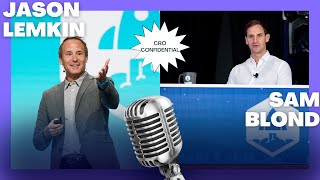
A recorded conversation (YouTube interview) between Jason Lemkin and Sam Blond (partner at Founders Fund, ex-Brex) focused on how the SaaS sales playbook must change in tighter markets. Core takeaways: investors now place more weight on gross margins (Sam and Jason cite ~70% as an inflection point), so companies should report and incent around gross profit rather than just ARR; sales compensation and quotas should be aligned to margin (Brex moved to gross-margin-dollar quotas tied to merchant rebate behavior); lower-margin businesses must drive higher revenue per rep or adjust comp/quotas accordingly; net dollar retention may slow due to headcount/usage reductions in customers; messaging and buyer alignment should shift to reflect cost-cutting/business priorities; hiring CRO/VP Sales should prioritize rapid progression at top companies and recruiting ability over narrow domain expertise. The piece includes practical interview prompts (e.g., how to get from $10M to $25M) and emphasizes founder signals for recruiting and fundraising.
Chapters
Foreign.
We have a treat on several levels today. One of our good friends, Sam Blonde, most recently Sierra of Brex, has joined Founders Fund as their latest partner. Sam, thanks for joining us.
Thank you for having me. Once again, I'm so happy to be here.
So, Sam, if you've been part of Saster for a long time. Sam has been part of our DNA since the beginning. He was at our first Sasser annual when he was head of sales at Zenefits. We've gone on personally to work together in many ways, and he just finished up the better part of four years, I think, at Brex quite recently. We'll chat a little bit about now he's on the other side investing, and it's picked a very interesting time, a very interesting time to begin as the latest partner at Founders Fund. So we're going to talk about that. But more so we're going to use this discussion as a kickoff. Um, Sam is going to kick off a partnership, a new series of podcasts and videos for us called. Well, at least today we're calling it CRO Confidential. Sam can change it to whatever he wants, but he's got five or six top CROs and sales leaders already lined up to do deep dives on in general, and so I'm excited he'll run with that. So listen to the a hundred thousand folks who listen to this. We've got a great new voice that has been one of the top sales leaders I've ever worked with for, you know, a decade and a half, and they'll be talking to some of the best of the best. And I think last year this would have already been interesting, but I think this series, in Today's world, where SaaS is still growing like a weed, but there's a lot less capital, which we're going to talk about next. And the playbook is different. This, this series is going to be especially interesting than when last year was all about how can I deploy $100 million in six months.
To grow sales. So why don't we transition to that? I want to. I want to. I want to talk a lot about what you're seeing as an investor. Before we get there, let's talk about one of the most interesting topics, which is sales for the rest of this year and next year. It's so different, isn't it? What the. In terms of it seemed like last year, if you were at a hot company like Brex, did efficiency even matter?
Yeah. First, thanks for having me. Awesome to be here and great to see you, Jason, and to Your question? I think unit economics broadly matter much more today. I think 2021 there was a lot emphasis on sort of like top line revenue growth. What percentage year over year was the business growing? And less emphasis on things like gross margins and sort of quality of revenue. And so one really tactical change and potentially recommendation depending on the business that Brexit and I'm talking to other founders about doing is rather than making top line revenue. Historically just your ARR number. Yes, the primary focus of the company, it's actually something like gross profit. And if you have less than 70% gross margins and you're in a lower gross margin business, it really adds emphasis on improving those gross margins, which today is highly valued as an investor and I think a major input to what the business is valued at where historically it hadn't been so much.
Some other thoughts, but hold on, let's break. Let's dig into that for a second because that's. You just distilled something into one metric or criterion that I think is so important. I've been talking about it for years and I think it got lost in the boom times of last year. First of all, there's a general playbook for software companies that we've all been doing for years. And I think that 70% is the right line. If your gross margins are above 70%, the traditional playbook, it has to change, but it mostly works, right? Because basically the software playbook, since Don Eternal is basically kind of assumed 100% gross margins. What I mean is, in theory, back in the old days of a CD rom, you ship the CD ROM and you keep all the money. There were no direct costs, but like literally the old Adobes and Microsoft said 90% margins. Little worse in SaaS, right, with server costs and support. But we learned these metrics, the CLTV and CACs and that. And then the world changed. And in fintech and payments and, and communications like Twilio, these all have lower margins, right? But we ran the same Playbook until recently, didn't we? Did we ever think about different Playbooks? Just margins were 30 or 20 or 50. They were kind of the same, right?
That's right. And interestingly, valuations it seemed, didn't vary greatly historically. So you know, you're a 30% margin business, but your top line's at 100 million in ARR. And you sort of compare that to a 60% gross margin business at 100 million in ARR in 2021. I don't know that you got the benefit in terms of evaluation. You didn't higher gross margins today, it matters more.
Yeah. And so it's, it's, I almost think we, we, we all learned, unless we go back to that world of growth is I don't think we'll ever go back completely to seeing a 30% business the same as an 80%. But we've learned almost some bad lessons the last two years, haven't we from this like especially folks that are newer to SaaS or cloud, they've learned to maybe some very bad best practices for, for sales and marketing. Right?
Yeah. Over optimizing for the top line number. Yeah. And the interesting thing for businesses like Brex and many others, there actually is an ability to control that gross margin number.
The expense side. And so let's like how does this sort of manifest? At Brex we changed the quotas from sort of like a revenue based quota to a like gross margin dollars based quota. And it was the card spend less the rebate or the merchant interchange less the rebate. And it really changed behavior in sales reps and I think broadly within the company. If you are hyper focused on again like some form of gross profit or gross margin dollars versus top line, it can manifest and drive behavior within the company such that you improve gross margins and ultimately improve the value of the business.
Yep. And let's come back to this. And then because this alone is so helpful. Right. When I've tried these experiments in the past, getting sales folks to focus anything than other the gross bookings. Right. I found it's too complicated for sales. No criticism but like trying to get them to understand what's profitable, what's less profitable, which products matter. I found it's not worth it at the end of the day. And how did you do that? Did the, did the, did the sales folks, were they told what the net margin was on products? Was it estimated? Right. Or how would they know when they're, when that, when it changed? Right. When they were judged on the profitability of their product rather than revenue.
Well, the easiest lever, and this is unique to Brex, but I think potentially applicable to many businesses out there, several that I talk to regularly where there's some equivalent to this. But for Brex, the rebate that we were providing customers on their card spend directly influenced the gross margin of that customer.
Yes.
And so historically if you were only incentivized on top line, you didn't care what the rebate you were providing to the customer.
Yeah.
And like of course there were, you know, thresholds and constraints and those sorts of things historically. But when we directly tied it. The sales rep just knows like, you know, lower rebate means more better, better margins for the business, more.
And what would they do in practice when they're signing up a new customer, when they're signing up Saster to be a Brex custom, how would that change the rep's behavior?
Yeah.
Not like too much inside baseball here, but the rep would maybe historically do something like if you can push forward with migrating all of your card spend by the end of this week, we can do something like 150 basis point rebate for you as a customer. And I think in sort of the new world they knew the impact to their commissions for doing something like that. The conversation changes.
I see.
And ultimately the rebate changes.
Okay. And so like just one last. So this is so. So now let's talk about real broadly the lessons because you've been in the high margin and the low margin worlds and you've both, you've been very successful in both. Right. The advice to founders you're giving. Let's say you're building something related to Twilio. Right. You're in communications, you have 50% margins, you're in the middle. Would you increase, just increase the quotas for the reps, that stresses them out. What would you do in something in between? Do you have any recommendation if you're somewhere in the midd.
Well, I don't know Twilio's business well enough to know if the sales reps can actually influence this number. But in many businesses they can.
I see. That's the key invite. Can you input, can you influence how they buy to align them on a higher margin variant of your product. Right.
That is true. And I think like for sales commissions.
That'S an easy way of driving focus. That said, what Brex did and what I'm recommending to founders, again depending on the business, let's just say businesses that are less than 70% gross margins.
Yeah.
Instead of at the all hands and having the headline number be, we are at 10 million, 100 million, whatever it is in ARR you actually use the number that is whatever your gross margin percentage.
I see.
So we are at 30.
30.
Let's say $100 million air business and you have 30% gross margins. We are at $30 million of gross margin.
I say gross profit. Use your gross profit rather than the pure revenue. Right. To simplify things. So you're honest. Right.
It drives more, more focus across the company to that number. And there are two levers you can pull. One is top line and One is some form of servicing costs, whatever, whatever you are spending money on that is driving your gross margins down.
Okay then one last related question on this. Do you, when you're thinking through this now, in today's environment where capital is harder to get right.
The what does the effect mean? Let's say you're in. Let's compare an 80% gross margin to a 40% gross margin business to keep it simple. Right. Do the reps, do the reps need to close twice as much business to take as much revenue home? Right. Do quotas have to go up.
Explicitly or implicitly in these lower margin businesses? Have you thought about that? Because if you have traditional quotas that are revenue based, they're not going to produce enough margin to fund these big otes and the marketing costs. So do quotas have to go up or if they do, we disguise them in gross profits. Someone has to pay for this, don't they?
Well, in theory and hopefully in practice.
The answer is yes. Yes.
If you are driving lower gross margin revenue, you need to drive more of it to support being paid the same thing to drive high the same amount of higher gross margin revenue.
Yes.
And so you know, fortunately for Brex, in Rex's case, the sales reps were driving several million dollars of top line revenue. Per rep. Yeah, per rep.
So the map did kind of work itself out. They weren't closing 300k of revenue per AE. They were making up for the margins by having higher effective quotas. Right.
Nailed it. And I think if you have a business where that is not true.
Today.
That is a problem. And historically 2021, maybe that wasn't such a problem. Today people are going to look for that and you are going to need to figure out how to drive more revenue per sales rep if you are a lower gross margin business.
So okay, so that's one last question this and then we'll move on. But I think that couple great takeaways. One, if your margins are below 70, you need a different sales comp plan. And if you didn't do that last year, when times are good, better do it now. Right. Or keep thinking about it. Right. The second one is yes, yes. Even in good times if your margins are lower, your quota's got to be higher to make up for it. Right. And you, and there were, I know some startups I've observed didn't do that. Right. But, but it's got to work. Right. Last question on the environment today. It's funny, last month I, for my own investments, I haven't Made that Many? I made 25 or 30. I kind of bucket them into three groups. I would say about a third. I got an email. This was our best month ever. Okay. About a third said things are getting a little harder, but it's good. And I got the thirds wrong. Not a third. 20% said things are terrible. It's the global recession. We grew zero percent. Okay. So what's really going on here and in general and if, if sales is coming under more scrutiny, which I think is the answer.
What?
The more people I've asked, the more what I hear from the best companies out there is sales isn't that much harder today. Right. But there's more scrutiny. There's more questions about whether we really need to make this change. So my question is, what do you think is happening in general? And do A's need to be smarter next year than they need to be last year? In a higher scrutiny environment, does the type of AE change a little bit?
Yeah. So I'll tell you what I'm seeing through just a number of conversations with founders and then maybe it's helpful signaling for the founders in the 20% category. I am not seeing much influence on company's ability to sell their product to acquire new customers.
And I am not hearing, you know, one of the biggest problems today in our business is that potential customers are cutting budget and they're not able to buy a product. I'm not hearing it. Yeah, I am hearing and seeing, let's say 2021. There was so much organic growth within a customer base. If you are dependent on things like, you know, hiring, if your customers are hiring a bunch, that means more new licenses of your product. Companies are hiring less today. And so the net dollar retention for within a customer base for a company that licenses software and their revenue is sort of directly influenced by the headcount growth or something like that of their customers that is slowing. And so you shouldn't use the 2021 growth expectation that you experienced within your base into 2022 of that. I think Top Line can slow this year and that's a reasonable thing to point to. Our customers are growing less fast than they were in 2021.
That's a good insight. Be thoughtful about your NRR assumptions and understand where they're coming from. Right. If they're headcount driven and you're in some segments, you may, or it may almost have to at least slow its growth rate.
Headcount or even usage driven.
Right.
Like Brexit. Some of Brexit's customers stopped Spending so much on ads. Like you see that in the public markets too, right?
You do see it on ads, right? Yeah, you oddly don't yet see it at the confluence and the snowflakes and others, but you definitely see it on the, on the, on the side that's tied to Facebook and ads and others. You see that spend cut. Right. Or, or pot or slowed. Right, Just slowed.
That's right. And so I think that's a reasonable excuse is the wrong word. I think it's a reality, yes, that companies may see their base growing less than it did last year because of the macro conditions. I think back to the original point, what I am not see.
New, new.
Customer acquisition slowing because, you know, budget cuts or, or people not having spend cutting costs, these sorts of things. And so if, if you are hearing that regularly from your sales reps, I think it could mean one of two things. The first thing is you may be in this category of a product that is nice to have or at least perceived as nice to have. And you know, let's use an extreme example. If you are luxury lunch catering for tech companies, I don't want to be selling that product right now. Like it's hard I think to justify to your investors a line item on your balance sheet that's you know, $50,000 a month or whatever it is to, to cater in steaks and seafood and so like that that could be a reasonable.
Impact for, for sort of like a nice to have product. That's not a business you want to.
If you are hearing that from salespeople.
It is somewhat unique to your business. And so what I would start doing is understand like dig a layer deeper.
Maybe join some calls and I think today.
More than ever understanding what business priorities of the companies that you are selling into are. And so not just your buyer. Historically, if you were selling in to a controller, you would find out what is important to you, Mr. Controller, and how can we solve your problems? I think an extra question today is what are the business objectives for 2022 and 2023? And if you hear we are hyper focused on cutting costs, given the fundraising environment, you may then want to position your product in line with that business objective and not just what is important to the controller, who you're selling to. Yes, that controller tries to go receive permission or budget or whatever it is to buy the product they can position it in line with. This is actually going to save us and here's why.
Yeah, that's a great. Maybe we can finish on this section and transition to investing That's I asked you AES need to be smarter than last year. Maybe I put smarter in quotes but I think you're saying yes, I think you're saying you've got to go beyond and say what, what would help the controller find out what her or his priorities are and be agile enough to position your product's benefits to help them meet that goal so they can go get budget. Right. The budget's there but it's, it's, it's a little bit harder to access. So you sure better understand what their, what their, what their true goals are for next year and align with it. Right.
You nailed it and said differently. The messaging that resonated in 2021 may not be the same messaging that resonates in 2022. Have the exact same product but you know like it's no longer, you know, this product helps you in an environment where you're hiring a ton of employees because they might not be hiring a ton of employees and so your needs to adapt to the conditions.
Yeah. And so let's wrap up on recruiting. Right. Because I do think it's such an interesting topic in venture. First of all most VCs think they can help you with recruiting and they provide zero value. I literally think of all of the companies I've invested, I may be the only investor that ever introduced an actual vp, including you to Parker. No one does. Everyone talks big or they have like a recruiting arm of their fund that does nothing.
So talk about recruiting in general and where you think you could add value.
Well, first.
I'll reference, I think the biggest mistake that I continue to see.
In my conversations with founders and it comes with sales leadership hiring. The, the first thing that.
I hear from a lot of founders is I want someone with this specific domain experience. I want someone who has. Understands the health insurance space.
Yep.
I want somebody who understands industrial manufacturing. I don't know. And it's like gosh, there are so few incredible sales leaders, incredible tech sales leaders to begin with and then to try and limit that population down to anyone that has very specific health insurance or whatever type of experience it is, you're left with like basically no one. And the reality is I think that with few exceptions the domain experience largely becomes irrelevant over time and smart people learn businesses and so actually solving for.
A track record of performance and equality higher over someone with this specific type of experience will pay long term dividends in a big way. So generally the, the advice that I provide is threefold. The first is like the profile of the person that you are hiring. I generally gravitate towards someone who has seen what great looks like and someone who has progressed their career very quickly within a great organization.
Yeah.
And so, you know, we'll, we'll take Brex as an example. We'll take Zenefits as an example. Actually, Zenevitz produced countless like maybe 10 plus at this point, just incredible VPs of sales SVPs of sales CROs. And they were in this environment where the business was doing great, we were growing quickly and they were at the top of their game. And so they were promoted over all of their peers. And so that is like a generic profile that I gravitate towards versus sort of like, you know, a perennial VP who's done this a bunch of times. It's sort of average companies. That is a profile that I see periodically. So the first is the profile. The second thing that comes to mind is the priorities, like what will this person focus on and what should you be hiring for? And number one. And you talk about this a lot, Jason. It's recruiting, it's recruiting the team. And I hear so frequently, literally earlier today, I want to hire somebody who can close some of these upmarket customers for us as our sales leader. And it's like, why not hire a sales rep that can close these upmarket customers for you? And so the priorities and the things that you should be hiring for, you want somebody who, you have confidence that they're going to build and recruit an incredible team. And you want to know who are the people that are coming with you from your prior roles when you hire a VP of Sales + + you're also hiring their team or you should be hiring their team if they're good. And then the last thing is around the interview process where I sort of like get questions and provide some feedback. One, one exercise that I think people find fairly helpful is we're coming up on the end of the year. It's, it's relatively, you can be relatively correct and predict where you're going to finish this year. Let's say you're going to come in at $10 million of arrangement and you kind of know where you want to go next year. So we're going to finish this year at 10. Next year we want to go to 25. Part of the interview process should be just as sort of like leaving it broad. How do we get there?
Like what is the mediocre ones fail that question, don't they?
Well, well, what it'll tell you is if the first thing that they say and you Want to like leave you want to leave it open ended. You don't want to give much direction beyond what is your plan to get us from 10 to 25. And if the first thing that they highlight, whether it's on a whiteboard or PowerPoint or whatever the format is, if they say I'm bringing in this outside consulting firm who is incredible at, you know, figuring out how to add value in a sales cycle or something like that, you know, like what their priorities are, you know what's going to happen and just make sure that that aligns with how you, you think you're going to get from 10 to 25 million next year. So I like that at least as part of the process, a bit of like a problem solving experiment but also understanding if you're going to partner well with this person.
Good insights.
Well, good.
Well, listen, I, I want, there's like 15 other things I want to talk about. We'll have to do it on a different one because we've run long.
Founders out there. If you're looking to raise a seed, A, B, maybe even up to C.
And you want a great X0 turned partner on your board, pick Sam. Reach out to him at Founders Fund. Send them the perf. You like cold. Do you like cold emails or do you like warm referrals? Which one do you prefer? You don't care?
Well, I mean, look, I. Similar to recruiting, I am slightly biased to a warm referral. I think, you know, the, the source of the introduction does matter. That said, I totally opened anything.
Cool. All right, so find Sam. I would take money from him. That's my endorsement. And then look forward with. He's got four or five great zeros queued up for this CRO Confidential series. He may rename it, but it's all good. And I think we'll really dig into where revenue is next year because whatever it is, it's going to be different than it was last year. It's a different, It's a different world. So Sam, thanks for catching up and thanks for doing this series and thanks for everyone for being with us.
Thank you for having me. Jason, awesome to see you and thank you for everyone.
That's listening.
Talk to you all soon.
Sam.
More from Sam

CRO Confidential: 3 Secrets For Early-Stage Startups To Acquire Customers | CoSell.io Co-Founder

SaaStr CRO Confidential: Sam Blond + Omni Founder Colin Zima on the Power of Leveraging Your Network

Founders Fund's Partner, Brex's ex - CRO, Sam Blond | Investing in SaaS companies; Career in Sales
SaaStr CRO Confidential:Hiring a Great VP of Sales Today Sam Blond + Former Lattice CRO Dini Mehta
SaaStr CRO Confidential: Founders Fund Partner Sam Blond + Rippling VP Sales Matt Plank

SaaStr CRO Confidential: Founders Fund Partner Sam Blond + Divvy CRO Sterling Snow
How to Set and Hit Revenue Targets with Sam Blond, CRO at Brex | SaaStr Software Community