From Stuck to Unstoppable: Escaping the Comfort Zone Trap
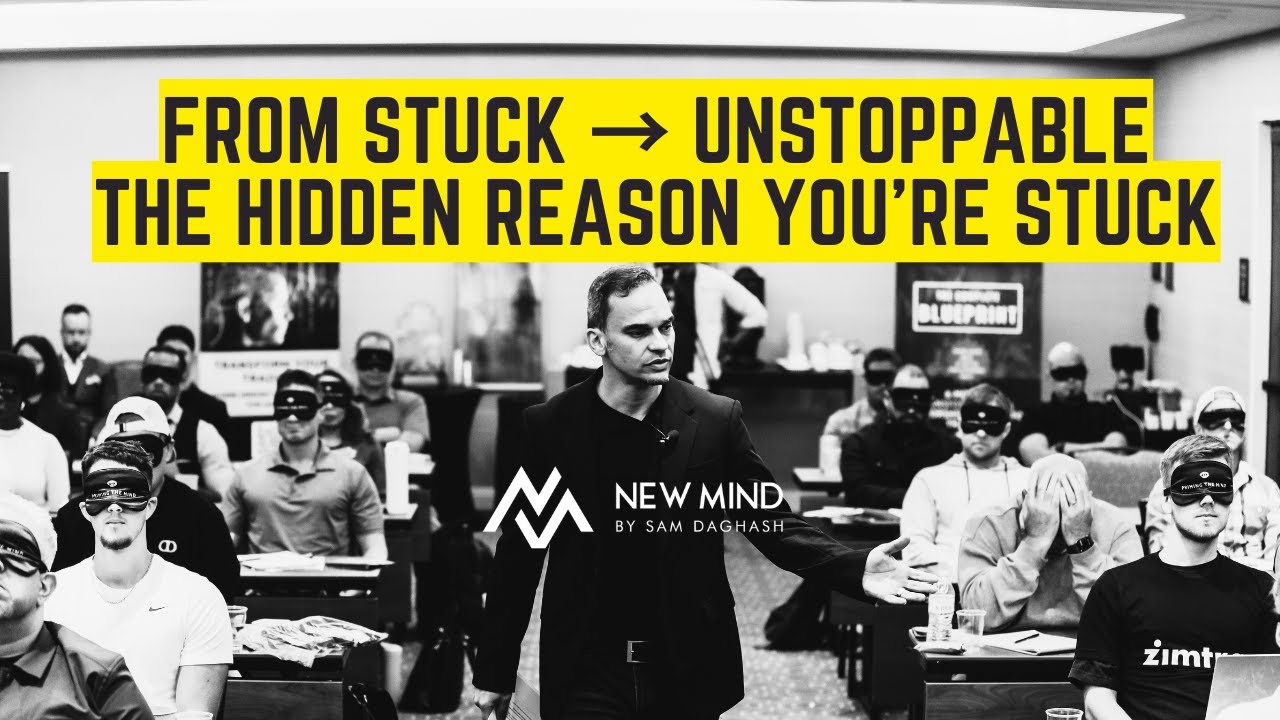
Sam Daghash explains how an internal "identity thermostat" keeps you locked in familiar patterns, even when you want to change. He proposes micro-risks, visualizing your future self, and tracking daily choices to reprogram your self-image and break free from the comfort zone trap.
Chapters
Grand rising and welcome to New Mind, where our intention is clear and is to share Information for transformation. Thank you for being here. Thank you for tuning in, for showing up for yourself, and for dedicating some time for personal development, growth, and more importantly, to have a conversation. This is a two-way conversation. Remember, you being here means a lot, but it's also about you contributing, DMing me, messaging me, and letting me know what you guys want. So I got a message. The other day, and this was about actually someone reaching out to me and asking me to dive into the conversation of the comfort zone and why they feel a lot of the times stuck and they can't break the patterns, even though they're aware that there are certain things holding them back and they want to experience new things. Because I'm always talking about creating new experiences with a new mind, but the idea is that they get stuck. And there is a trap, right? And this is what I would love to dive into today, to break this down, to give you guys some insight and some actionable plan or actionable insights as well, to really take this forward in terms of how you break free from this trap. And if you're guessing what this trap is, I'm sure you are by now, but the trap is, and in my opinion, is one of the mind's greatest trap. And it's the illusion of the comfort zone. Now, the comfort zone isn't a place. It's a state of mind. And really, guys, if you think about that, it's the mind's way of maintaining safety, predictability, and familiarity. So it always tends to feel good. And most of the time it feels safe, this comfort zone of ours. Yeah. But guys, here's the truth. It's always and often also where dreams quietly die. I even remember going back to my own personal journey and experience when I was working in the corporate world. I used to sit in my office like I'm sitting here today, but this is way better than the office that I had at the time in terms of the space. And I used to think about running my own business. I used to have these daydreaming of what life would be like on my own terms. And all of a sudden, and very quickly, something would snap me out of that daydreaming, that reality, and start to give me some rational thinking of why it wouldn't work, why it's hard to start your own business, to change your career, to go back and study and, and reinvent yourself. Almost 110 reasons why I shouldn't and I couldn't and it's not possible. And that mechanism, ladies and gentlemen, is part of the comfort zone. It's part of this mechanic, this coping mechanism. That's why for a long time, every time that dream used to come alive, what I can and can't— and what I, what I had this like inner being telling me I want to jump in That automatically was signaling danger, and that danger was the comfort zone that is giving me feedback that it's dangerous, and it always wants me to feel comfortable. Always used to want me to stay in the familiar right now. I know I have my job. It's my career. I've been doing this for years. I know what I'm doing. I'm a director. I'm running a team. Money's good. Da da da da da. So all of these. Impulses, all of these words and these thought patterns, was designed to keep me in the familiar. It tries to create this rational thinking of don't step into the unknown, it's a scary place. And that's exactly why I always say that it's deadly to our growth, it's deadly to your growth. And the psychology behind it, guys, is inside your mind lives a powerful mechanism, and I— it's actually known as the psychocybernetic mechanism or system. And it's— and I want you to think about it this way: it's like, it's like this thermostat of your identity, and the moment you try and reinvent or think outside of the norm, its job is to keep you consistent and familiar in balance of who you are. And when you try to rise above what's familiar, this system, this mechanic that I'm referring to, pulls you back down to what feels safe. And even if that's safe between 2 brackets— hence, if you're watching me, I'm going between that safe place— is it's, it's, it's like It's keeping you small. It's keeping you. It's limiting you, and it ultimately brings that sense of outdated. Stay there, right? This it's this is this is this is what you need to be. But in reality, it's not. In reality, as I mentioned, it's limiting you. It's keeping you outdated. It's keeping you small. So when you reflect on that, if you're listening to this or watching this right now, I want you to start reflecting about your life, where you are today. Is there anything that you sometimes think about that you want to experience that is outside of the norm, outside of the current identity. And when you think about that, there's fear that creeps up, or doubt. When that is showing up, that's the body's language, but also the mind utilizing that to keep you holding back. And it's your— and it's your mind trying to protect The identity it knows. The comfort zone gives you that temporary relief, but it guarantees long-term stagnation. And this is really important. So temporary relief because familiar, but when in the on the long term, if you zoom out, it's stagnation because the brain's I the brain's survival instinct is always in favor of what's. is known over what's possible. It will always choose what's known. Remember, the brain is trying to reserve energy, guys. And this is what I always tell my clients, there's a hidden cost here. Every time you stay in that comfort zone, you're teaching your subconscious one thing, playing safe or playing small keeps you safe. Playing small keeps you safe. Think about that. You're conditioning yourself. But over time, safety becomes your cage, and you start like second-guessing and starting to think about any new opportunity as a threat, because that's what you've conditioned yourself. Anything that is unknown is unsafe, and growth becomes an uncomfortable feeling. But so does staying stuck once you've seen your potential. And this goes back to identifying and, and, and going inwards of identifying what it is you want. If the world was— all opportunities and possibilities exist in the unknown, and you could pick that potential, what would you do? What would your ideal day be like? And this is really important because you've got to give the mind a vision of that future. And even though it feels uncomfortable, but start to condition it because it becomes a potential. And the mind can start to construct what that feels like, what that looks like. Because you can't expand your life while defending your limits. You have to break those limits. So limits keeps you in the box. So let's start by at least thinking and breaking free from that. And to break free, and this is the key, guys, you must constantly stretch your boundaries step by step, moment by moment. Start with small moves into the unknown, what I call those micro risks. Focus on what Could go right. Most of us tend to focus on what could go wrong, but how about focusing on what could go right in the unknown? Because what you're doing is you're creating a new familiar for the brain. You're creating a new familiar for the body. You're creating what I call the growth zone. You're expanding that growth zone that is sometimes limited by the familiar all the time. And this goes to relationships, guys. This goes to careers. I was using my my career, my previous career, my previous life as an example. I call it an old my old life or a different life. lifetime, literally. But understanding that, that's— you have to take those actions, those steps. That's where learning, creativity, potential, they truly live. And the key to reprogram your self-image, that is key, because the moment you reprogram your self-image, you see yourself as someone who thrives in the unknown. And that's the key. What would that look like in the unknown, outside of your familiar, you thriving? What would you be doing? What actions would you take? Just start to develop that faculty in the brain. Start to visualize it. Think about it. You know, this is super, super important because you don't have to be fearless. It's not about that. It's just about the ability to be willing to step out. And even if it starts with the mind's eye, Start to create new familiar, new ways of being. I once created a video. I don't know if it was a video or a talk, but it was about focusing on remembering your future self. And people go, "What do you mean remember your future self?" Well, the way you need to remember is that we are thinking 60 to 70 thousand thoughts a day, and we're constantly living in the past experience. We're doing the same things over and over again. Certain things in our environment trigger the way we think and feel, so we're living that pattern over and over again. So in order for us to create a new future, we have to remember what that looks like. Just how, like, you have a memory of the past, how would it be for you to remember a future experience if it had to happen? So you're just reversing that. Like I said, it has to be small steps. Try something new every day that makes you slightly uncomfortable. Have you ever done that? When last did you do something that makes you feel slightly uncomfortable? And each small win starts to build the evidence for your identity, for the new identity, that one that chooses growth over comfort. And then what you can do as an actionable insight is you reflect daily or weekly: where did I choose comfort over courage? Where did I choose comfort over courage? And this is really important. You can do it on a daily basis or weekly basis, but when you have the ability to pay attention, now you're creating the evidence in the mind, the evidence for you to see that you are taking steps outside of the familiar. And that starts to reframe your fear that you would feel when stepping out as feedback. Because fear, I've always said this, is an invite. It's an invite where you are not free, but it's also an invite to lean in and experience something new. Especially when it's something new, there's always going to be the sense of fear that sticks. But go through it. Just take action, because that's the sign that I'm growing. It's the signal that you're removing or you're moving towards expansion. So when that happens, when there's that fear or discomfort, that's a moment where you need to acknowledge and celebrate it. It means you're evolving. And this is really important because if we're not evolving, we're dying. If we're not growing, we're dying. So the ability to understand that by definition, uh, who we are as we come into this world, we are creators. We want to experience always something new. And when we sit in stagnation, when we feel stuck, it eats us inside. How many people have you met— well, at least in my line of work, I do a lot— but think about your own personal journey, people that are unhappy. What is that unhappiness? It's the gap between who they're meant to be and who they're not. And that unhappiness is because they're stuck. They feel that they're not growing. They feel they're not moving. 'Cause that's innate in us all to grow. It's innate in us all to expand. You know, it's innate in us. It's something that is within our identity, within our core identity, within our core makeup as humans, as who we are. Manifestations. To create manifestations as the man that manifests or the woman, right? This is always in creation. And when you start to acknowledge that steps you're taking, when you start to show that, oh, I have a little bit of discomfort here, a little bit of fear, cool, I'm leaning into it. It's so powerful on you on the other side. It's such a freeing feeling for you to experience that you're stepping out of this trap. And every time you repeat that, every repetition tells your brain, this is who I am now. And this is who I am now starts to give the brain a little bit more familiarity with you being able to be more uncomfortable and experience those impulses of fear, but stepping through them and defining it and reframing it in your mind, as I said earlier, as growth, as expansion. So don't look at discomfort and fear as a negative thing. Look at it as a sign and a signal that growth is in process. As I mentioned this, as I, you know, give you guys these Pinpoints these this idea that the illusion of the comfort zone, which is again designed to keep us in familiar, it's not something bad or good. It's just something we need to understand why it's within us, why it's operating this way because it's a coping mechanism to keep us safe, to reserve our energy. But more often than not, it's a silent. Sabotager of our potential, and the moment you normalize discomfort, you truly guys truly truly truly become unstoppable. And that's what I want for my tribe. That's what I want for all of you guys because confidence doesn't just show up. Doesn't come first. It's first understand that you have to build it with. stepping out into these discomfort situations and experiences. It's built through the every small act that you recognize of the courage that you are going beyond your comfort, and you're, you're showing up beyond that comfort zone of yours. And that for me is, is again the best signal of growth, and that becomes the evidence in your life for you to become more confident, which is again Part of who you are. It's already there. It's just that the brain needs to see the evidence. So then you start to, you know, become naturally, organically, authentically more confident in showing up and taking action. So remember, guys, safety will always keep you the same, and discomfort transforms you. So true freedom for me begins where your comfort ends. And if you remember that and you sit with that, that is the key message I have for you guys today. So again, guys, thank you so much for tuning in, for learning more about your mind and understanding this trap that I want you to truly reflect on and see: Do I have this in me? Am I in this illusion of comfort? Am I fooling myself, or am I growing? Am I expanding with my day, in my week, in my month, in my year? Am I growing as a person, as an individual? Am I having these discomfort moments? Because that's the only truth of growth. That's the only time. It's like everything else. When you want to go build muscles in the gym, there has to be some pain, some discomfort in order to build that. That's the body. Same thing with the mind. Same thing with experiences in life. Some form of discomfort is needed for growth. So again, guys, thank you so much for those of you who are tuning in, watching this. If you are watching this on YouTube, please check it out, subscribe, follow, share if it resonates with you. And remember, those of you who have reached out and sent me some DMs, I really appreciate it. I love engaging with this movement, this tribe of the new mind that wants to create a life of freedom. For all of you guys, so thank you again for tuning in. Much love to you all, and positive energy.