
How I became a product designer | My Journey so far!
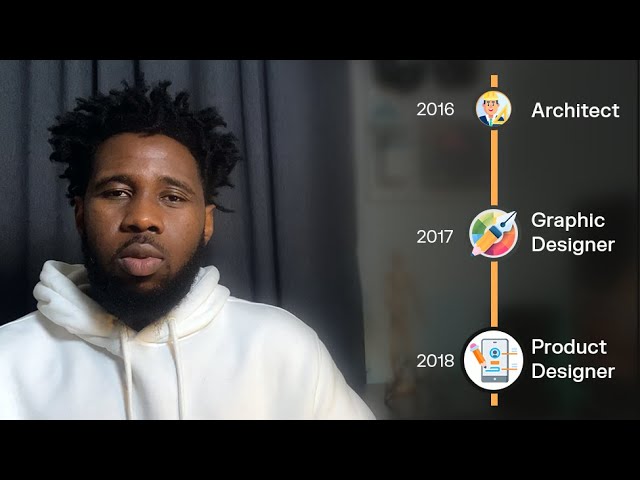
In this video, senior product designer Samuel Fabayo narrates his unconventional path to product design, beginning with a childhood love of drawing, a university degree in architecture, and a pivot to graphic design while working at a luxury real‑estate firm. He recounts his first UI project at a Nigerian fintech company, the self‑taught transition to UI/UX without formal process knowledge, and the subsequent realization that structured UX education (via Interaction Design Foundation) was essential. Samuel describes building and advocating for a design team, taking a break to earn a master’s in Human‑Computer Interaction at Kingston University while collaborating with a Norwegian tech firm, and ultimately securing a senior product designer role at Deliveroo. Throughout, he emphasizes that product design can stem from any background, provided one has problem‑solving curiosity, continuous learning, and that a formal degree is optional.
Chapters
If I could get a pound for each time someone has asked me how I became a product designer, I'll probably be able to afford these shoes that I've been stalking for a while now. But this video is not about shoes. Rather, in this video, I'll be talking about how I became a product designer and what I would have done differently if I could go back in time. If you're new here, my name is Samuel and I'm a senior product designer based in London. On this channel, I'm providing UX design tips, techniques, and tutorials that can help designers improve their craft and stay ahead of the competition. To see more videos like this from me, subscribe to my channel and share this video with your friends and also like it. I'm always excited whenever I see new subscribers. With that being said, let's get into how I became a product designer. As a kid, I've always had artistic interests. I've always been one of those kids that you find at the back of the class scribbling comic characters on their notepads. Whenever the teacher is giving his lectures, I'm usually not attentive. I have a very, very short attention span, so whenever I see that I'm no longer paying attention, I'm most likely doodling something or sketching something or drawing something. On my notepad. So I've always had a lot of artistic interests. The idea around being an artist is that you really can't make money, you know, if you're an artist. And that kind of idea stuck in my head at a very young age because a lot of the older people around me would always reinforce that in my head, that you can't be drawing, you need to pursue something in the sciences, you need to be a medical doctor, you need to be an engineer. And they just had all these fancy professions that they were just Dangling in my face. So slowly, I noticed that I was actually losing my artistic interest. I noticed that I wasn't doodling as much again. I wasn't sketching as much, and I was just trying to focus on my grades and get my grades up. One of the things that really really helped me to bring that back was when I realized that I could actually. Combined science and arts, and I found that in architecture. I went ahead to study architecture in the university, and it was really, really interesting because architecture is such a dynamic course. You get to bring your creativity to play, you get to bring your presentation skills to play, your thinking, your critical thinking skills, and you also need to be empathetic, right? You also need to have a lot of empathy. So at every point in time, with each project that I did as a student architect, I was always in the mindset of the people that would use that particular project, and I didn't know that I was already building my critical thinking skills. And that is a huge part of what product design or UX is today. While I was in school of architecture, it was really, really stressful to be an architect, right? Um, if you know anyone that's studying architecture in school, you would actually know that it is it is a very tedious course of study because you are constantly in the studio, constantly getting prepared for presentations, constantly designing different buildings and doing all of this. So I needed a kind of escape. I needed to do something that was not as difficult, something that could actually allow me express my creativity in some other ways. And that was how I stumbled on graphic design. A lot of things that I did as a graphic designer were just stuff that I wanted to just express myself with. I was creating cartoon characters out of people's images, and that was the very first way I started getting paid as a designer. So it started to slowly gravitate from something that I just enjoyed doing or something that I just wanted to use as a creative escape to something that was making me some, some money. It wasn't a lot of money, but it was just enough to get me by and do some things in school while I was still trying to get my degree as an architect. I had this job where I could actually be an architect and I could be a graphic designer. It's a luxury real estate company, so I was doing some architecture for them as well, but I was also working with the marketing communications team to put their visual communication together, help them design their marketing materials like brochures that they would use to sell properties to clients, or create posts for their social media, or brainstorm with the larger communication team, and then I was also working with some of the senior architects as well. So this is a point where I started to work on both roles, and I started to see which one I gravitated more towards. And I realized that I was pulling away from architecture and pulling more towards graphic design. So eventually I stopped everything that I was doing around architecture for that firm, and then I was focused on graphic design. So I was the main graphic designer then, and I worked with the communications team and I started getting more interested in marketing communications, designing flyers, creating brochures, designing visual identities as well. While I was doing this, I had a freelance practice as a graphic designer as well. I was really, really focused on designing visual identities for brands. I was really focused on small and medium enterprises that are looking at how having a logo and having a visual identity. So I started to get a lot more gigs as a graphic designer, and at this point in time now, I was no longer an architect. I wasn't practicing architecture at all anymore. I transitioned fully into graphic design. So after spending about a year and some months at the luxury real estate firm that I was, I started to get more curious about technology because at this point in time, the mobile apps were starting to become really popular. Instagram was popping off, um, and then I think Snapchat had just, um, Snapchat had just started becoming popular as well at the time. I was already using Twitter a lot, and I was really, really curious about how these things are put together because I could actually see that there's a lot of design effort in it. I didn't even understand the design process that went on in the background, but I could see that there's a lot of visual design efforts. I could see like how the logos turn on on the splash screen and then how those logos became like the home page. And I was seeing a lot of these in websites, so I started getting interested in technology as well. Then I now set a goal for myself that I was going to join a technology company. A few months later, I joined a financial technology company in Lagos, Nigeria as the graphic designer. I was working within a communications team, a very small communications team, and I was majorly involved in helping the company communicate visually, right? Helping them with a lot of their marketing communications as well, internal communications. I was doing so much graphic design and I was actually loving it. I was enjoying it. But because it's a tech company, they wanted to design the company's website. They wanted this to be done internally. They didn't want to consult any kind of agency. So at this point, somebody walked up to me, um, within the organization and said, hey, you're a graphic designer, could you help us put some UI designs together for the company website? I had no idea what that was, and I was just like, okay, no problem, of course I can do that, that shouldn't be— that shouldn't be a problem. But in my mind, I was like, what the hell have I gotten myself into? So I went home and I started trying to see what UI design was about. What is user interface design and how do you design a website? Apparently, the same tool that I've been using, which is Photoshop and Adobe Illustrator, for a lot of the visual communications I've been doing, for a lot of the editorial designs that I've been doing, and all the flyers— people have been using that to create mockups for websites as well. I'm like, wow, this Like, I thought that this thing was done with something completely different. At this point in time, I didn't even know about the tools that we have today, like Adobe XD, Figma, InVision, Marvel. I didn't know about any of these tools. So I opened my Adobe Illustrator and I started to create something that I would call like a mockup. Yeah, it was a mockup because I literally had no content for this website at all. I just had some sketches around what navigation on the website should look like. And I took that sketch and then I was creating mockups and using dummy text. And that was how I created my first UI. We looked at it further and then we iterated. We made some changes. The developers converted it to some code and then it became a full website and it was live. After the website project went live, everything I knew about being a designer changed completely. I had always thought that being a designer meant graphic design, posters, editorial design, or designing social media banners. That was what I thought being a designer meant. But creating that website mockup on Adobe Illustrator and sharing it with developers and then converting it into a live website really made me understand that design is way beyond Photoshop. And I started to get more curious about how I could prototype an app, for example. How can I create a web app and how can I create Instagram, for example. And because of this, I started to look for ways that I could transition into a UI designer, similar to the way I transitioned from an architect to a graphic designer. Now I want to transition from a graphic designer to a UI/UX designer. One of the ways for me to do that was to start to look for openings within the tech company that I was working for at the time. But the tech company did not have that kind of role in existence. There was no such role as a UX designer or a UI designer. So I transitioned into the first UI designer at the company at the time, and what that meant was that I was going to be responsible for redesigning all the software products that they had internally at the time. So I transitioned as a UI/UX designer and I started doing that. I started redesigning their software products, and what I was doing at that point in time was basically just UI design. What I was just doing was updating the visual design of the software that they had. So I was using Adobe XD at the time. I was so obsessed on visual design, I didn't even understand what the design process looks like. There was nothing, nothing like user research that I was doing. I wasn't doing any of that. What I was basically just doing was revamping the user interface by changing the colors, making it look more visually appealing. What I would have done differently was that when I transitioned into that role, have actually tried to get more design education immediately, right? Um, I would have tried to get on courses that would teach me about UX design, that would actually teach me about the design process. And I didn't get to do this until maybe about 3 or 4 months later when I started taking courses, um, about UX design on Interaction Design Foundation. So a lot of the design education, the first UX design education that I got was from Interaction Design Foundation. Courses on user research, design thinking, mobile design, emotional design. All of this was from Interaction Design Foundation. And if I knew now what I knew then, I would have done it way earlier. Another thing that I would have done differently was to actually start tackling problems that existed around me. So redesigning products that I already use or products that my friends use by basically just creating case studies and redesigning them. That was something I didn't do at the time as well. I was majorly focused on redesigning the softwares that they had within the technology company at the time, and I was doing a terrible job at it because I was making so many mistakes. Fast forward to 2 years later, I had become much more confident as a designer. I now understood a lot of things around the design process. I was still learning, of course, but I had already Redesigned a lot of the products. I had conducted workshops. The company now had like product managers, and they were pushing to a more design-centered organization, but they were still so far away from it. I was also doing a lot of design advocacy within the company as well, trying to make them understand the importance of being a design-led organization. I started the first design team, and we grew a lot together in in a very very short time. In about 6 months, these guys grew from interns to really, really skillful UX designers, and I couldn't be more proud of them. And that was one of the things that actually helped me as well to grow so fast as a designer too. The fact that I had to upskill myself and also help upskill other designers that were coming up as well. I'd been about 3 years into my product design career, so I decided that I was going to take a break. Because I felt like I was moving from a core UX designer to design management, right? I felt like there were still so many things that I had to learn as a UX designer, but I'm not even learning that or doing that. But now I'm doing more of management, more of people management, more of design management, and I didn't think like I was ready for that yet. So When I took a break, I thought about it, that what would I like to do? What would I like to do with this break that I have? And I decided that I was going to pursue a master's degree in UX design. I had always been a self-taught designer for all my 6 to 7 years design experience. I've always learned everything on my own. So thinking about this and saying, okay, I want to pursue this degree was more of me actually getting some proper design education and also using the opportunity to explore a different environment, a different continent. So I moved out of Nigeria and I moved to the UK, and I started my master's degree at Kingston University London in Human-Computer Interaction, or UX design. During my master's degree, I was also working with a technology company in Norway called Explora Technologies, and at Explora, I was working with a product design team of about 6 other designers where we were designing solutions that helps kids and their families to stay active and connected. So now I had moved from a financial technology company where I started my product design career to a family and lifestyle and kids-focused technology company. Shortly after completing my master's degree, I got an offer from Deliveroo as a senior product designer, and this has been my role as at the time of making this video. So this has been my journey so far as a product designer. One thing that I want you to take away from this is that there's no same route to becoming a product designer. You could literally come from any background. I come from an architectural background, for example. I have met people that come from a medical background. I've met people from finance, accounting, psychology, education, different kinds of backgrounds. One thing that brings everybody together is a knack for solving problems and a curious mindset. As long as you have those 2 things and then you keep learning and growing, you could definitely become a product designer if you want to. I also want to state that you don't necessarily need a degree to become a product designer. I have been a product designer for about 4 years before I went ahead to pursue a master's degree. That was just something I wanted to do. I just felt like it was something that was going to help me to settle into a new environment faster, and that was why I did it. So you do not need a degree to become a product designer. Thanks for sticking with me so far in this video, and I hope that this has been able to help you to understand how you could also chat your way into becoming a product designer as well. If you want to see more videos like this from me, share this video, like it, and subscribe to my channel, and I'll see you in the next video. Bye.










