
I answered 5 most asked UX Design questions in 10 minutes
A UX designer answers five community questions about breaking into the field and improving your work. A strong portfolio matters more than a degree, competition for entry-level roles is fierce, and he walks through his design process: understand needs, research on Mobbin and Google, sketch multiple solutions. For portfolios, avoid generic fintech redesigns and focus on specific flows; with experience, show depth across industries in 3-4 case studies.
Chapters
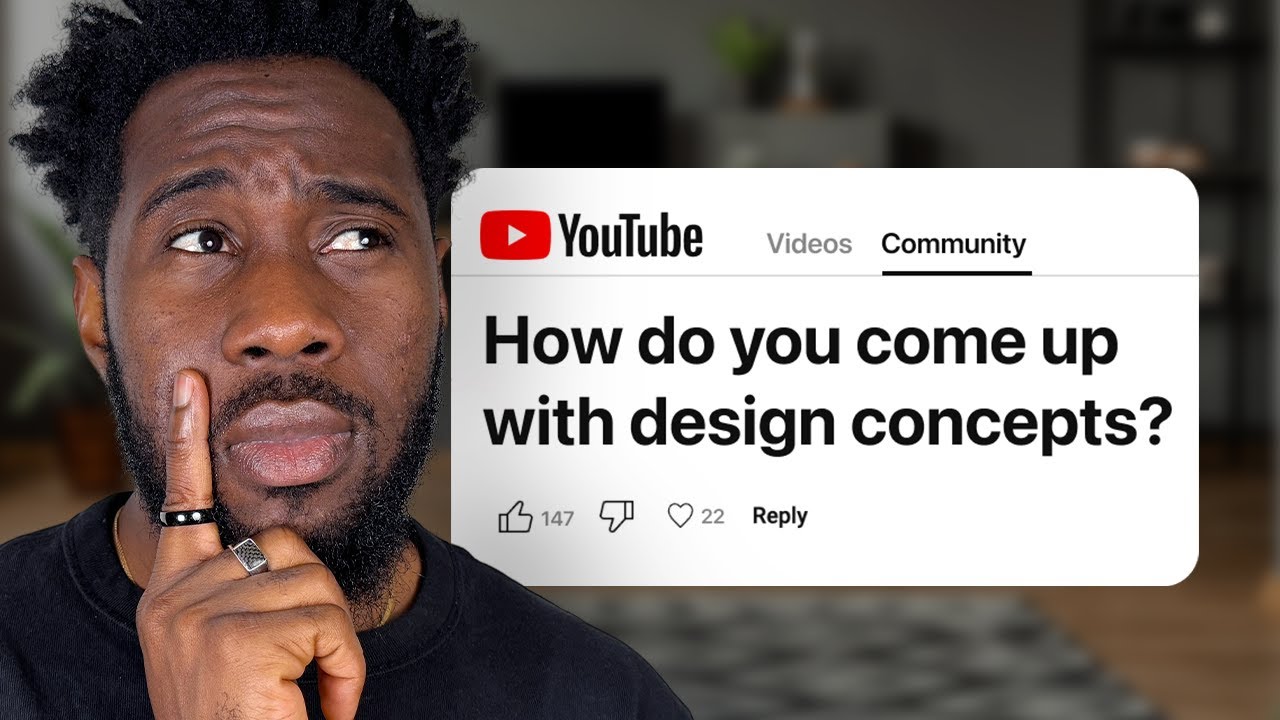
I really love jumping to the comment section to answer some of the questions that I get on this channel, but it can be quite difficult to provide clear answers to some questions in the comments or even answer every question that I get. So recently I asked in the community post that people should ask me anything that they want to know about UX design or even personal questions, and I promised to answer those questions in my next video. Well, this is the video where I get to answer those questions. Gladly, there were no personal questions, so That makes this even way easier for me to do. Let's get into it. Question 1, Anoush is switching careers to product design and he wants to know if he should do a master's or self-learning. First of all, I have to make it very clear that in UX design or even any tech field that you're trying to get into, self-learning is not a choice. It is something that you have to do. You have to find ways to constantly learn things by yourself and and improve. That being said, if you can afford a master's degree in UX design, then you can go for it. But one thing that is important is to note that a certificate will not get you a job as a UX designer. What is going to get you a job is your proof of work. What have you been able to do? How have you been able to solve problems? Your portfolio is what will get you a job. So if you do eventually go for a master's or get a degree in design, make sure that during that period you are actually working on real-life case studies, or you're putting some real work together so that you can be job ready when you're done. Question 2, from your perspective, were there more opportunities for entry-level positions 3 to 5 years ago as opposed to now? The short answer to that question is I wouldn't know because I didn't apply for an entry-level role to become a UX designer. I transitioned from a graphic designer to a UX designer. At a tech company, so I don't know the number of entry-level roles that were available at the time. However, I know for a fact that there are way more people interested in UX design right now than we had 3 to 5 years ago. So there's a lot of competition. So even if there were the same number of roles 3 to 5 years ago and now, there's a lot more competition in the space. Rather than focusing on the number of entry-level roles that are available, your goal should be to focus on how you can stay ahead of that competition, which is why this channel exists. My goal with this channel is to make sure that anybody that is subscribed to this channel or that watches a video from this channel is able to get one piece of information that can help them to stand out of the competition. Question 3 is from Gloria. Gloria wants to know how I come up with design concepts. This is an interesting question, and the answer to this question actually depends on the kind of problem that I'm trying to solve. But regardless of what the kind of problem is, first of all, I try to understand the problem from the user's perspective. That is, why is the user facing this problem and why do they want this problem solved? And then I try to understand the problem from the business's perspective. What is the opportunity that the business stands to gain by solving this problem? That would really help to position the kind of design concepts that I explore. Once I've been able to understand all of those things, I would now try to find design inspiration, find how other people have solved a similar problem. Those people could be competitors or any other product that has been able to solve that same problem. I do this by trying to Google the problems using Google searches. I use mobbin.design a lot. It's one of the few products that I actually subscribe for yearly because I know that they have a lot of real-life examples of mobile apps and web apps. So Mobbin really helps me to find examples of how Similar problems might have been solved on other products. I have a page on my Figma file called Inspo. That's where I dump every inspiration that I've collected. In the process of doing that, it helps me to understand how these people were able to solve this problem and why they solved it in that manner. Then that would help me to come up with my own ideas. If it is a problem that has been solved again and again and again and again, I can easily just go straight into prototyping different ideas for that problem. If it is a problem that is novel, that is, it hasn't been solved before, or there are very few examples of how it's been solved, I go back to a little bit of sketching to understand how best to design a concept that solves that problem visually. One thing that I also do that is very, very important is to explore as many options as possible. So most times the first 2 options that you explore to solve a problem is not the best option. It's usually the surface-level idea that you get to explore first. So always try to find different ways of solving the same problem. For question 4, Sanusi wants to know the type of project to add to his portfolio. Well, it depends on the level that you are as a designer, and I'm going to answer this question based on 2 levels of designer. The first level of designer is an entry-level designer that hasn't had any prior UX design job. And then the second level of designer is someone that is about 2 years into their career and they want to update their portfolio. For the entry-level designer, you want to focus on range. So you want to show that you can design a mobile app and you can design a web app. So you want to have these 2 projects in your portfolio. When you're putting a mobile app design in your portfolio and you're probably putting some work that is not actual real work, try to avoid the popular fintech, food delivery, Uber, and all of those apps, right? Try to focus on more unique solutions, which could be how you would imagine a particular flow or a particular interaction of an existing app. So rather than saying that you want to redesign the whole of Airbnb or you want to redesign the whole of Netflix, just pick a particular user flow and develop a detailed case study on how you would reimagine that flow. Now, if you have like a mobile app design, the next thing you want to focus on is to have like a web app project in your portfolio. This could be like some kind of dashboard design or some kind of enterprise tool that a business would most likely use. So that way you are able to show range. Now for someone who has been like 2 years plus into their career and they want to update their portfolio, here you want to show a bit of range and depth, right? So in showing range and depth, you want to show that you've worked in maybe a fintech industry and maybe you've worked in another kind of industry. So you could pick like 2 or 3 industries that you've worked in, or you could pick one industry but different kind of problems that you solve in that industry or different kind of problems that you solved in the current place that you work. But here you want to go deeper into how you solve the problem, and you want to really leverage on how you tell the story of how you've been able to solve a problem as well. Those are the kind of projects that you want to have in your portfolio. You can refer to this video where I talk about what makes a great UX design portfolio. The most important thing to focus on when putting projects together in portfolio is quality over quantity. So if you've worked on 10 projects, for example, you want to pick the highest quality projects and put them in your portfolio. If you have only 2 projects that are high quality, then that's what you should put. If you have 3 projects, it's fine. I normally don't like to go beyond 4 projects in a portfolio. Once you have like 6 projects, there's a chance that 2 of those 6 projects might be fillers, and you want to remove fillers from your portfolio. And then question 5, which is the last question from Brenda. I would love your take on how to best collaborate with different stakeholders on the team, PM and engineers for example. I actually left the best for the last because I think this question is very, very important. I believe there are 3 ways that you can improve collaboration with your stakeholders and your other team members. The first one is to establish a relationship with your team members outside work. So try to know them beyond the work that you do. You do together. Try to understand some things about them personally. What do they enjoy doing? What do they spend their weekends doing? So this means that whenever you have like social events that requires you to have social interaction with your colleagues, you shouldn't turn down those kind of events because that is where you actually get to build trust with your colleagues. Once you're able to build trust, it's going to be easier to collaborate with them. Secondly, you want to show your work often. Don't wait till you have formal with your colleagues before you show your work. So share snippets of your work. It could be screenshots, it could be screen recordings of your work so that you can invite them to give you feedback. When you invite them to give you feedback, it shows that you want to hear what their thoughts are. One of the things that I do to share my work more often is to do quick screen recordings, especially like using Loom, or I think Slack has a screen recording feature as well where you can just record your screen and talk through your flow and ask for feedback. 2-3 minutes of screen recording and you can share that. And I've realized that my team actually loves that, right? Because it helps them to quickly contribute ideas that I can start thinking about immediately. Now, the third one is to have a high-level understanding of what appeals to your stakeholders and members of your team so that you can identify the best ways to collaborate with them. For example, something that might appeal to your product manager is proactively sharing your work. So that they understand what the next line of action will be, because that's, that's the way they think, and also contributing to the product strategy. That way they are sure that the designer that they are working with is somebody that is business savvy, so they are not the only business-thinking person in the team. Something that could appeal to an engineer would be how you can help them make their work easier by making sure that your work is properly documented. And making sure that you're not introducing design patterns that are difficult to code for them. So if there's a simpler way of doing something that results in the same outcome and would reduce the time that your engineer actually needs to implement that thing, then you want to find what that simpler way is, and you want to be able to communicate that effectively using documentation. You should try not to be a pain to the people that you're working with, and this doesn't mean that you should just agree with everything that they say, but you should understand what appeals to them most and try to see how you can hear them. People really love to be heard, right? So as long as they feel heard by you, it's going to be way easier to collaborate with them. I'd like to answer a lot more questions, so you can drop your questions in the comment section of this video and I'll see you in the comments. And if we get a lot of questions, then maybe there's going to be a part 2. 2 and a part 3 of this video where I just answer your questions. I'll see you in the comment section.










