
I got laid off at my dream UX Design Job | How I bounced back and lessons learnt.
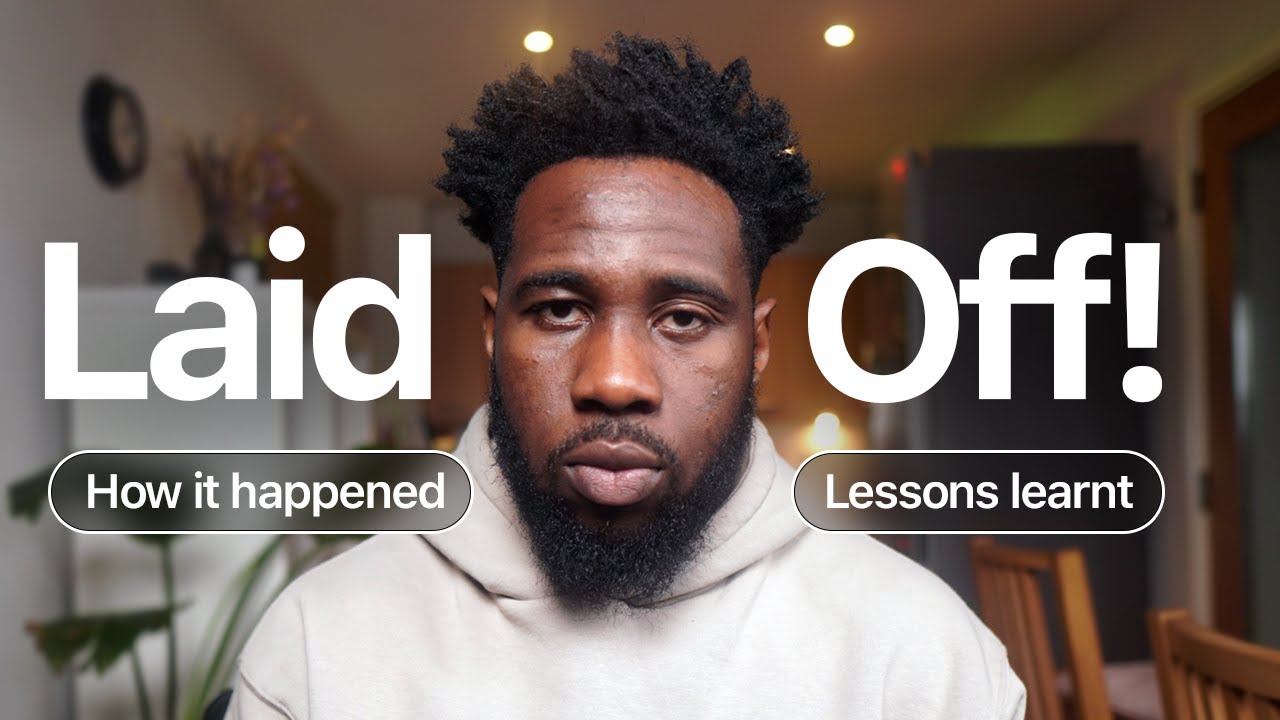
Samuel Fabayo was laid off one year into his dream UX job, landed at Monzo within three weeks, and shares six lessons: layoffs aren't personal, prove your value in the first 90 days, build side projects for security, negotiate severance, keep a 3-6 month emergency fund, and document your work constantly.
Chapters
Today makes it exactly 1 year that I got news that I was going to be laid off from my dream company. I'd always wanted to work for this company 5 years before I even started working for them, so at the point when I got an offer to join them, I was really excited. It was one of the best days of my life, honestly. 1 year later, I got news that I was going to be laid off. So why am I making this video? You know, it's a quite difficult video to make, but I've wanted to make it for a while just because there's so much that I learned from like this experience that I want to share with everyone. I would also like to point out that this video might hear some bleeps because I might have said some things that I shouldn't say, and it's going to be like a raw and unfiltered video unlike my other videos, just because I just want to share what's on my mind. So please, I hope you can follow my train of thoughts as I go along. So what am I going to be talking about? Basically, I'm going to be talking about how the entire thing happened, how I felt when it happened, how I was able to also bounce back from it, and some of the lessons that I learned along the way. So how did it happen? We all got a Slack message of an all-hands event, and from the tone of voice in the email or the Slack message for the event, I could already tell that something was going on. But I was a bit rest assured because weeks to that period, we'd gotten information that, hey, we won't be having any kind of layoffs, we have enough money in the bank, even though all the tech giants across Europe and the world were having mass layoffs. So that sort of eased my mind. But as soon as the all-hands started, like Like 5 minutes into it, I could already tell where this was going, and immediately I started to like scramble around to look for like my work and started to put things together because I haven't been documenting it. Luckily for everyone that was involved or everyone that was affected by this, it wasn't an immediate layoff. We were told that roles were going to be redundant and there's a chance that people within that role were going to be laid off. So one of the roles that was going to be redundant was the product design unit. So it was more about, okay, in the next couple of weeks, there's a chance that you might not have your job anymore. Half of my team will most likely be downsized. So my chances were really slim, mainly because I just joined the company. I had spent about 11 months or about a year. So I sort of felt like I haven't, you know, had the time to prove myself enough for me not to be affected. I didn't lay off, so I was already close-minded. I was already preparing for like the next thing. And what I did when I got the news was just to open the fridge, get the bowl of ice cream from the fridge, and I just started licking it. I didn't like ice cream, but I just started to lick it because I just wanted to indulge. Next thing I did was to order some Indian food from my favorite Indian restaurant, and I was just eating throughout that day because the reality hasn't set in quite yet. So the next day, it started to like sort of become reality, and I started to say, oh man. I need to start, you know, trying to apply for other jobs. So I got back on the job market. It took me about 3 weeks before I was able to like get another interview and I started interviewing again. And then I went through an interview process and I got an offer from where I work currently, which is Monzo. And during like the offer period as well, I was very desperate, but I was still trying to make sure that I negotiated properly so that my desperacy does not show. But I was really desperate. Luckily for me, I still got an offer from a company that I've always admired as well. And, you know, that was a really good one for me. So yeah, let me just go quickly into some of the lessons that I picked from this and how you could prepare for events like this, or if you're in an event like this, how you could sort of pull yourself out of it. The first thing that I wanted to talk about is for you to understand that it is not you, it is them. When I got this news, I was so devastated. I felt like my work just wasn't good enough. So I shut myself down a lot. And this is going to happen to almost anybody. Everybody. You're going to feel like you should have done better, maybe your work just wasn't good enough, maybe you just didn't try hard enough, but that's not the truth. The truth is that most times when companies lay off, it is because they've made wrong hiring decisions prior to that time, or sometimes it comes from pressure from the board or from the shareholders of the company, or sometimes it's even a way to posture to the shareholders of the company that they are trying to make sure that they save cost. So it's really not about you. So there's a chance that this must have been like what happened within that period. So instead of putting yourself down and feeling like you are not as good as you think you are, think about it more as the company has made a bad decision and then you're the one that is suffering the consequences of that bad decision. However, some of the things that you could do to sort of get off this list, especially when you join a company new, because most times when you join a new company, and then there's a layoff after about a year or 6 months after you joined that company, the chances are that people that came in last might be the first people to go. So it's very important for you to establish yourself when you join a new company. Always make sure that you find a way to start adding value as soon as you join. That's why it's important to focus on your first 90 days and see how you can immediately start adding value to the company. That is something that I think that I, I could have done differently. The outcomes might have been The same. I might still have gotten laid off, but I feel like I should have been able to establish myself a lot more, and I worked on that immediately I joined the next company. That said, don't put yourself down. Don't feel like you were not good enough, that was why you were laid off. It's very important for you to be confident in that period because you need that confidence to be able to approach the next job that you're going to apply for. The next big lesson I learned from this is that job security is a myth. When I was growing up, I always heard it from my parents, you know, or even like older people around you. You would always hear that, hey, this is the kind of job that you should do. You should be a medical doctor, you should be an accountant, you should be an architect. I studied architecture, and the major reasons for some of these things or being steered in this direction is because you feel like those jobs are secure, right? You feel like they are really good jobs that could give you security. But the truth about it is that There's no job security anywhere. The only job that is secure is the job that you create for yourself, because nobody can fire you from a job that you create for yourself. This is why you have to make sure that you're building something outside your 9 to 5. You're not just going to work, finishing your work, and then getting like to the other order of the day without building something for yourself. You need to make sure that you're building something for yourself and you're intentional about it. In my own case, During this period, because I'd already started this YouTube channel where I'm sharing design education and I was also freelancing with some clients, the period of transition between getting laid off and getting another job, which was about 2 and a half months, was able to help me re-strategize, to think about how I want to like deliver value for my audience on YouTube and how I want to also help my clients as a freelancer that I was doing on the side as well. And it was in that period that I filmed and published my most popular video. Right now. So you can see how, because I'd already had some things I was doing on the side, I was able to have a period to not dwell on what was happening to me and focus on like other things that I was building on the side. So you need to identify the unique value that you bring to the world and find how you can build something out of that outside your 9 to 5 so that you can create a secure job for yourself. The next thing is to make sure that you're fairly compensated. A lot of employers might try to rush you into signing some kind of redundancy agreement or some kind of things. I was lucky because the company I was working for had a really good compensation structure for this kind of scenario, right? So I didn't have a problem with that as well. I think I was fairly compensated with my severance package that I got after I was laid off. However, a lot of employers do not actually do this. A lot of employers just want you to like sign a redundancy agreement so that they can get on with it. So what you need to do is to understand the employment laws in the country that you are working in. Right, and make sure that you're checking the severance package or redundancy package that is being given on to you. You're checking that it aligns with the labor laws of the country that you're working for. There are lots of employment lawyers out there that can help you with this to help you look through your contract. Don't just sign the contract. Look through the fine print and see everything that is that contract to make sure that you're being fairly compensated. While this was happening to me, I had another friend that was going through the same scenario where he was getting laid off as well. As soon as they told him that he was going to be laid off. He was in a room and then they interviewed him and they wanted him to sign some documents and all of that. And they were sort of trying to like pressure him to sign the redundancy agreement so that they can get on ahead with it. When he told me about what they were offering him, I was like, nah, this is wrong. You shouldn't be getting offered this if you've worked in this place for this particular period of time. Until he then got a lawyer, they looked through it and was able to negotiate a better package with his employer at the time. So it's very, very important for you to understand your labor laws. Of the, of the country that you are working in, in case of this scenario. So when it happens, you can lawyer up and make sure that you're fairly compensated. The next lesson is to build your emergency fund. This is also very, very important. Whilst you're working in your 9 to 5, make sure that you're putting something aside in your emergency fund so that whenever any kind of scenario happens, or at every point in time, you should have about 3 to 6 months worth of savings that can cover your most important needs. In the period when you might not be earning. And the way you can do this is to make sure that you're putting something on the side to build up your emergency fund because you never can tell. It is not even about getting laid off. Any kind of life experience or life events could happen to you. You don't want to fall into a situation where you're getting into debt because you've gotten into this unfortunate event. This is where your emergency fund comes in. The emergency fund also helps you to not jump on the next offer that you get because there's a chance that You might be desperate. If you have an emergency fund, you're not going to be as desperate. In my own case, I was more desperate because my visa was going to expire and I needed another company to sponsor my visa so I can stay in the UK. Luckily for me, I was able to get a company that I actually wanted to work for. I didn't get the next job or the next offer that I got out of desperacy. But a lot of time you're going to be in this scenario because you don't have an emergency fund. You're going to fall into a situation where you're then desperate. If I could stay in the UK and I didn't have to join another company to get a visa, I would probably have not worked for about another six months so that I can figure out the next thing I want to do. Having an emergency fund helps you to actually figure out what you want to do, and then you're not desperate to like take up the next offer that comes your way. The last thing that you need to know is that you're as good as your last work. A lot of times when people get laid off or when they get unfortunate news like this, they start to scramble about and start to find. Their work and start to put it together so that they can package it for their portfolio so that they can get really good chances of applying for the next job. I did the same thing as well, but because the company provided a really good time period between me knowing that I might be laid off and then me actually getting laid off, I was able to actually put my house in order and start to put my portfolio together during this period. But a lot of people might not have the same chance. A lot of people, especially I think the labor laws in the US allows employers to tell you that, hey, we are laying you off, and then you lose access to everything the next minute. If this happens to you, then you're not going to be able to have access to like your recent work. It means that you're probably going to be showing works that is like 2 years old, which doesn't define how good you are or how much you have improved as a designer. And then you don't want to reach out to your colleagues to start scrapping out all your works together. So the best way to get around this is that you should always document your work in your own private space. And one of the ways that I've been doing this since this happened to me, because I've learned a lot from that, is I would normally just carve out like 3 hours in a month. It's already there on my calendar, and what I'm basically just doing is I have a private space where I'm just bringing in stuff that I've done in that month, and I'm just documenting it there, write some things about it. If you also have like a document where you talk about what you do weekly, that might help. But I'm talking about being able to like put case studies together. So you don't have to do it the way I do it where I am actually documenting things every month. You can even do it in a quarter, right? For a quarter, you set out about 3-4 hours and you start to put the things that you've done in your own page. Maybe it could be a Notion document. And once you do that, you know that if anything happens at any point in time when you even have to like put your work together or create a new portfolio, you have something to work with and you don't have to like start scrambling around. This is very, very important. Always keep it in mind that you're as good as your last work and you should always be prepared for unfortunate events like this. I'll see you in the next video.










