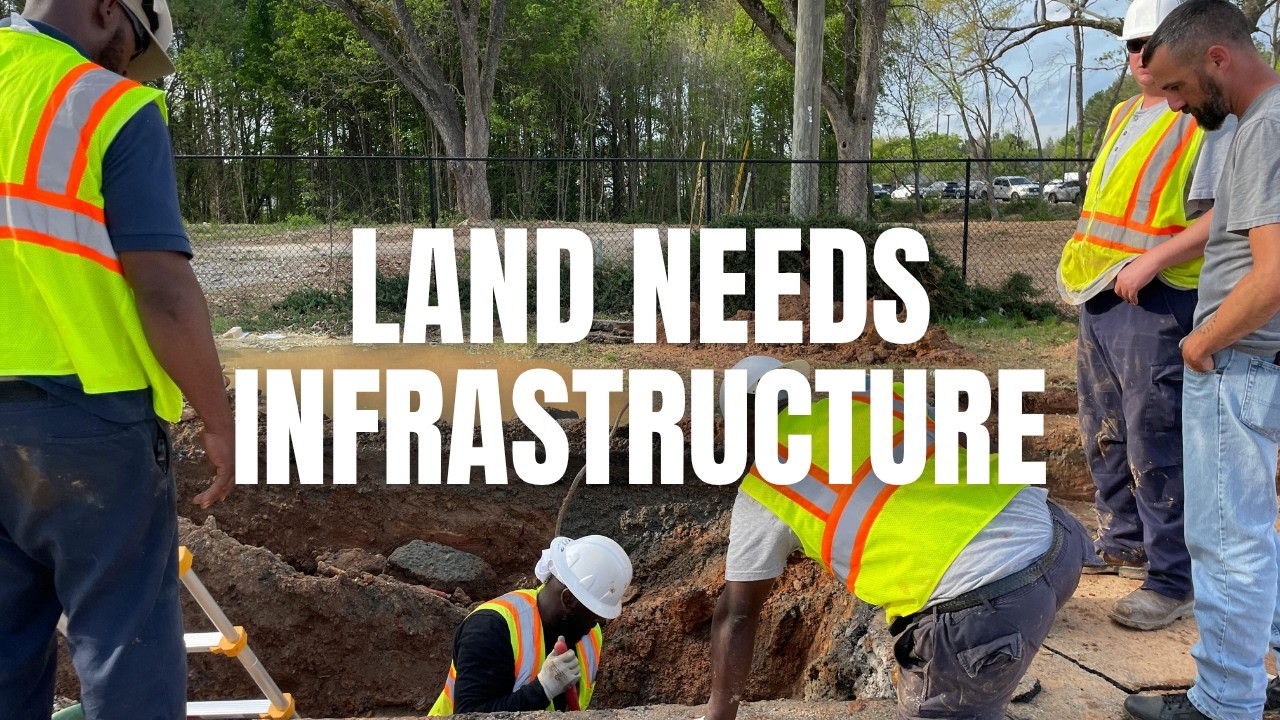
Sander Scott explains why infrastructure—water, septic, electric, and internet—matters more than zoning when buying land. A well might cost $5,000 or $50,000 depending on depth. Poor septic soil or distance to power lines can kill a deal's value and shrink your buyer pool.
Chapters
Infrastructure, the hidden layer that determines if land works. You can have land that checks every single box. It can be split, it's zoned correctly, it looks perfect, and you still can't build on it because the infrastructure isn't there. In the last video, we talked about zoning and why zoning alone doesn't determine whether land is buildable. Now we're going one layer deeper because even if zoning works, even if land division works, infrastructure can still stop the entire project. Most buyers think, if I can get a building permit, I'm good. But building permits don't solve infrastructure problems. Infrastructure determines whether the property can actually function. There are 4 infrastructure systems that matter. Number 1, water. Is a well required? Depth? Cost? Reliability? If water isn't accessible or gaining access to it is cost prohibitive, the land doesn't work. Number 2, septic. Soil suitability. Drain field size, county approval. If the septic fails, the property fails. Number 3, electric utilities. What is the distance to power? Cost to bring it in? Transformer requirements? Running power can cost $10,000, $50,000, sometimes more. Number 4 is internet. The importance of internet is, I think, up until just recently been hugely underrated. I think we're catching up and rating it as high as it needs to be. Is there fiber optic available? Like there is throughout Leon County. That is a big plus in Leon County, even rural locations like where I live. I live kind of out in the boondocks, and I have higher speed internet than they have in downtown Traverse City. If you don't have access, if you're looking in the outskirts of Grand Traverse County or Benzie County or beyond, and you are wanting to be out in a rural setting, you may have to look at Starlink. And that is, is pretty good internet, but you have to make sure that you're looking out, that you have a clear line of sight to the north. Access to high-speed internet, it matters more now than ever. No internet, no high-speed internet equals a much smaller buyer pool. You can have two identical parcels, same acreage, same zoning, same location, but one has utilities at the road, one has access to high-speed internet, the other needs everything brought in. That difference can swing value massively. Before buying land, you need to ask, where is the power coming from? What does septic approval look like? What's the real cost to make this usable? Is there access to high-speed internet? Because if infrastructure costs are too high, the deal simply does not work. Infrastructure reality check, not what's possible, but instead what does it take to make this usable. In the next video we're going to look at something even more limiting— physical land constraints. Because sometimes even if everything else works, the land itself doesn't.