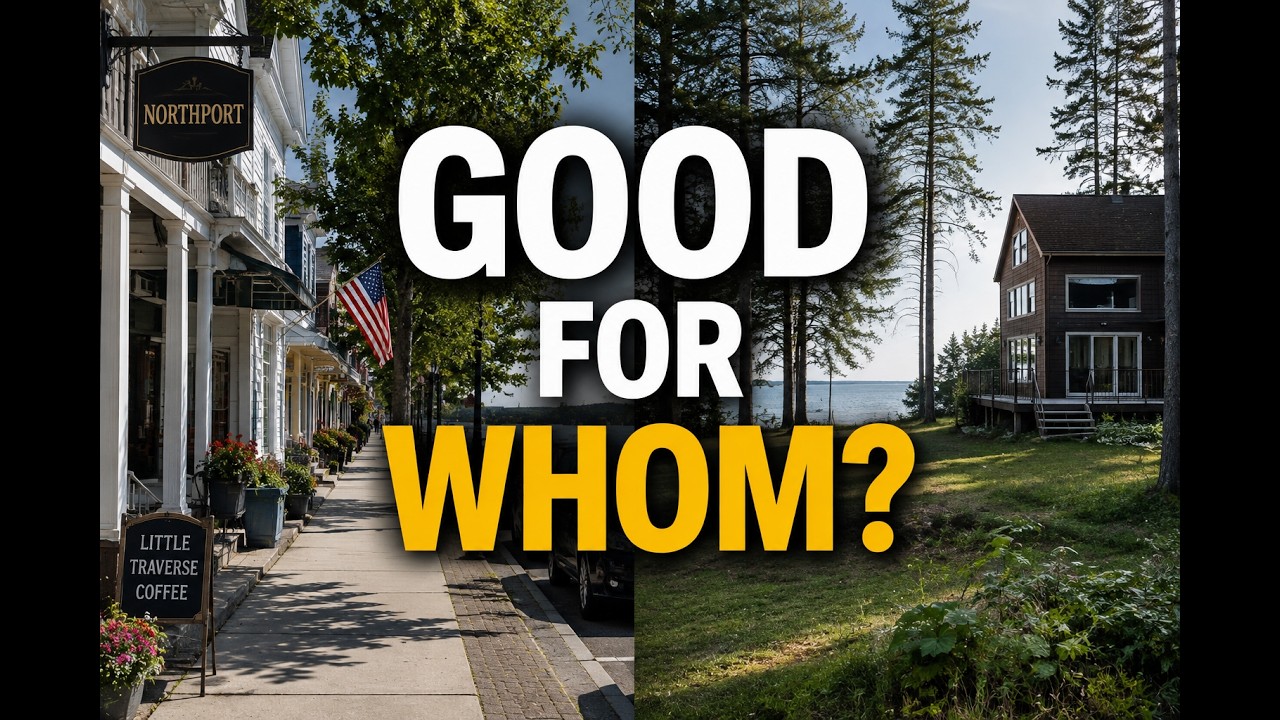
Sander Scott argues that a property's suitability depends entirely on your actual life and goals, not the listing. He walks through scenarios where the same house works for one buyer and fails for another, then offers a four-question test to match a property to your real needs, not the staged version.
Chapters
The right property depends on the life that you're trying to build. Buyers often ask me, is this a good property? And after years of helping people buy and sell real estate, I do not think a property can really be judged in that way, not by itself. The more useful question is, good for whom? For what purpose? And for how long? Because a property can be very good at supporting one kind of life, And poorly suited for another. The same property can produce a different judgment when the person, purpose, or time horizon changes. And that is why I have gradually learned to understand the person and the life that they want to build for themselves before deciding what the property means or before advising them on what the property means. The same Northport home, 2 different judgments. Imagine a small home in the village of Northport. It's within walking distance of the marina. You can walk to dinner, walk to the grocery store, walk to the coffee shop. The yard is manageable. There is not much exterior maintenance. For one buyer, this may be exactly what they have been hoping for. It supports everyday walkability. It reduces driving. It creates more opportunities for social connection. It may become easier to manage as the owner gets older. Now imagine another buyer looking at exactly the same property. That buyer wants room for a workshop, space for equipment, a large garden, more separation from neighboring homes, possibly enough land to expand or add another building later. Now for that buyer, the same Northport home may feel too restrictive. So which buyer is right? Well, both of them may be. The property is not being scored as universally good or bad. Instead, it is being evaluated against 2 different purposes and against 2 different futures that each buyer is looking to build for themselves. And that is the distinction. Purpose gives each feature its meaning. A feature may be valuable, but whether it is valuable to you depends on what you need the property to make possible. Walkability may be one of the most important features in the entire decision, or it may matter very little. A small yard may feel freeing, or to another buyer it may feel limiting. To one buyer, a pole barn may be essential. To another, it may simply be another building to maintain. A large family room may make regular gatherings possible, or it may become unused space that still needs to be heated, cleaned, and maintained. The feature itself does not finish the judgment. Purpose gives the feature its meaning. Until you understand what the owner needs the property to support, or you as a buyer, until you really dig deep and realize that for yourself, what the property needs to support, it is difficult to know which characteristics deserve the most weight. And so that's why we begin with the life and not the listing. Most property searches begin with a listing. How many bedrooms? How much acreage? What school district? How much waterfront? What price range? Those Questions are necessary, but I have gradually learned to begin somewhere else. Begin with the life. What do ordinary Tuesdays look like? Not vacation days, not the first weekend after closing, not the version of life imagined while standing in a beautifully staged living room. What actually happens during an ordinary week? Who will live here? Who visits regularly? What has to be stored? How much driving is acceptable? What kind of maintenance feels rewarding? Whereas what kind of maintenance would eventually become tiring and burdensome? Those questions are not separate from the property decision. They help define it. The point is not simply to own the property. It is to create a setting where real life can function. A multi-generational example. Imagine a large home with several bedrooms, a finished lower level, and plenty of gathering space. One buyer may see unnecessary square footage, more cleaning, more heating, more property to maintain, whereas another buyer may have adult children returning home, grandchildren who visit regularly, or an aging parent who may eventually need To that buyer, the same square footage may create resilience. It may allow the household to change without forcing another move at some point down the road. The number of bedrooms is the same, the house is the same, but the capability has a different meaning because the household purpose is different. The question is not simply, is this house too large? The question is, what is the buyer's purpose? What does this space allow the household to do? What kind of future does it support? A vacant land example. The same principle applies to vacant land. One buyer may want enough land for privacy, trails, and peace and quiet. Another may need suitable soils, legal access, room for a barn, a practical driveway, and a workable building envelope. For that buyer, the larger parcel is not automatically the better parcel. The better parcel is the one capable of supporting the intended use. Purpose tells you which facts matter most. Without purpose, acreage is only a number. A brief waterfront callback. In the last video, I used a Lake Michigan bluff to explain trade-offs. The bluff gives the owner views and privacy. It may also ask the owner to accept more difficult beach access. This video asks the next question: who is that exchange or that trade-off right for? If the owner values quiet evenings overlooking the water, it may fit remarkably well. If easy shoreline access is central to daily life, the judgment may be totally different. The trade-off did not change. The owner's purpose changed the judgment. Add time to the decision. There is another part of this that buyers often underestimate— time. A property may fit very well today, but that does not automatically mean it will continue fitting throughout the entire period of ownership. I think about that through 3 questions. Does the property fit the household now? Can it absorb the next foreseeable change? And what could eventually cause it to stop fitting? The next change might be a child leaving home, an adult child returning, a parent needing care, a change in mobility, a change in income, desiring more travel, less tolerance for maintenance, No one can predict everything, and that is not your goal. The goal is to look beyond the closing day and identify the changes that are reasonably foreseeable. A property does not have to meet every possible future need, but buyers should understand how much flexibility it offers and what kinds of change would challenge that fit. Actual life versus showing day life. Property showings can create a very specific kind of imagination. You picture holidays in the dining room, summer evenings on the deck, guests filling the bedrooms, a boat at the dock, a garden behind the house. That imagination is not wrong. It is part of evaluating a property, but it should not replace ordinary life. A property has to work on a rainy Tuesday. During the wintertime, when the driveway needs attention, when someone is sick, when the schedules are busy, when the novelty has worn off from the purchase, and when ownership becomes routine. So one of the most useful questions a buyer can ask is, does this property support my actual life or only the life I imagined during the showing? That question can reveal a lot. The property fit test. Before deciding that a property is the right fit, try asking 4 questions. Number 1, what does my actual life require from this property? Number 2, what responsibilities come with the property's advantages? 3, what foreseeable change could cause it to stop being the right fit for me? And number 4, Does it support my real life, or did it mainly support the life that I imagined during the showing? These questions do not create a perfect answer. They create a better judgment. They lead you toward a better judgment. They help separate what is impressive from what is useful, what is attractive to what is durable, what works today From what is likely to keep working over time. Final thought: there is no universally right property. There are properties whose capabilities fit a particular person, purpose, and season of life remarkably well. The right question is not simply, is this a good property? Instead, it is, does this property support the life I am actually preparing to live And can it continue doing so as my life changes? Purpose gives the property meaning. Time tests the fit. And ownership reveals whether the judgment was sound in the first place.









