Navigating Manitou Island: Ride The Fishtown Adventure Ferry Manitou Island Transit
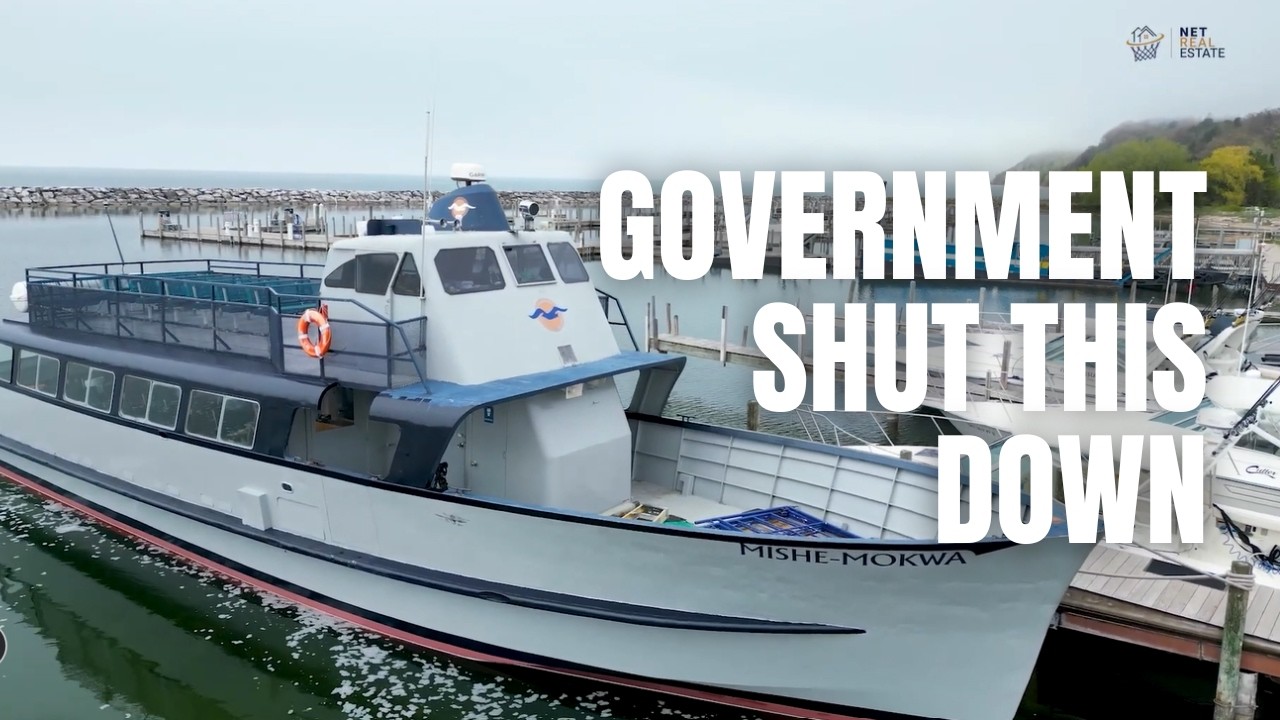
In this YouTube interview, Megan Munoz, owner/operator of Manitou Island Transit, discusses the multigenerational family ferry business that has served North and South Manitou Islands since 1917. She outlines the company’s history, the lineage of owners, and the role of her son Jack as a future captain. The conversation covers operational details such as day‑trip schedules, overnight camping logistics, shoreline cruises, crew responsibilities, and ticketing. A major focus is the chronic lack of dock maintenance by the National Park Service, which has caused service disruptions, legal battles, and a 2023 lawsuit that awarded the company compensation for lost seasons. Megan explains the federal concession contract (4% of gross revenue to the National Park Service), the bureaucratic challenges of securing permits, and the impact of sand‑filled docks on service availability. Safety protocols are described, including NOAA buoy monitoring, ranger video checks, and go/no‑go decision criteria. Environmental stewardship practices—clean‑engine retrofits, recycling, and a “leave it cleaner than you found it” policy—are highlighted. The interview also touches on community culture in Fishtown, relationships with neighboring charter operators, and the business’s modest social‑media presence (Facebook, Instagram, no TikTok). Finally, Megan walks through a typical season’s daily operations, gift‑shop hours, and the upcoming online booking system.
Chapters
They are not maintaining docks for us on our end, even though we're giving 4%.
And that led to a lawsuit. I mean, the name of your business is Manitou Island Transit.
Exactly.
And people expect that you would have the answers about when I can go to the island.
And we don't.
And then you don't because of the federal government.
Exactly.
So I'm with Megan Munoz and we are going to talk a little bit about your family business. It's been in your family for quite a long time since 1917.
Correct.
Yes. And, and it wasn't Grovner then. It was— It was Grovner. Oh, it was. Okay.
Yep. No, it started George Tracy.
Okay.
George Firestone. Then my dad, George Michael.
Okay.
George Michael II now is our generation. And whether or not our kids jump in or not remains to be seen.
Yeah. Yeah. And your son Jack, though, does have his captain's license.
He has his captain's license.
Okay. And he, he does some charter boat fishing. He's out of Fishtown.
Yep. He does some charter boat fishing as well as he's going to do 2 days on the boat this year learning to drive the boat as well, and maybe some cruises by the end of the summer if he gets comfortable.
Boy, I'm getting old if he's already—
I know.
I know. Would you—
how would you feel about that, getting on a boat?
Oh, well, given, given your family's longstanding— yeah, that doesn't worry me at all. Yeah.
No worries. I'm not going to say I'm out there green.
Yeah, right, right. You guys know what you're doing out there, that's for sure. And yeah, that was the thing about, you know, having been a passenger going out to the Manitou and then a lot of the shoreline cruises, it really is evident right away. And then, of course, my son Sam working for you folks for gosh, what is it, 3 or 4 summers?
He did even maybe— did he? 4 or 5. Yeah, he's a favorite.
Yeah, yeah. He loved it. And anyway, you know, knowing all of that, I know that people are in good hands when they step on the boat. You guys know what you're doing. The captains know their stuff, and the crew is— you have to be kind. There's a level of discipline that is required on the crew, and of course the captain. And what I've witnessed is the captains aren't shy about imposing that discipline on the crew or the passengers.
Absolutely not. Well, we often, like, we'll get teachers. We have teachers a lot of the time too, so that's kind of nice. Yeah, they know about classroom management. They can just bring it onto the boat.
Yeah, yeah, yeah. Because There are occasions when you run into some weather and things— I mean, taking safety seriously is, is a big issue, right?
Yep. Everyone has to take a seat or hold on. There's not a seat for everyone.
So what are, what are some— do you have any stories about some drastic weather that you've run into?
I don't. Do you remember the, the storm of— gosh, was it the late '80s that like a tornado ripped through?
Oh yeah.
And I remember, I just remember my boats were like, like all over the place, all over the beaches, and the Mishiko was coming back with my grandfather driving it. And Bill Carlson was on the top of, at the time, the Manitou Isle. And he was directing, like telling all the charter boats and Mishimakwot, like what waves to take in because it was so hard to see the break wall. So there was—
What waves to take in?
Yeah, because it was—
Like what waves to follow?
Yeah, exactly. Because all the charter boat captains got caught out. We got caught out. So then, yeah, so he was just up sort of directing when to come in, cuz—
so that is something that I think there's a culture in Fishtown that your family has certainly been a huge part of. And you mentioned Bill Carlson, Carlson's Fishery, right next door to you. Um, but then I think, isn't there sort of a camaraderie and a culture that develops among all the people that are doing business in Fishtown? And for some of them, over a lot of generations, Absolutely.
Particularly the, you know, the charter boat captains for sure all look after each other. And we have a great running relationship with Nels and Michael. Nels Carlson and Michael Berta own the business there now. So yeah.
Oh, I didn't know Michael.
Yeah, he bought in. Michael Berta. So we've got another Leyland name here.
So yeah, okay.
They run it together and yeah, we have a great working relationship. It's, you know, it's hard down here lots of time with weather, so you got to help each other out.
Yeah.
Someone's waiting there with a line or—
Yeah. The boat joy.
Ross Lang.
Ross Lang. Yeah. Yeah. So I mean, it really hit me hard because at that time I was able to witness those deep relationships when Ross drowned and listened to just the stories and saw the pain that everyone that worked with and around Ross experienced. At that time. And of course, he was such an awesome donor to— I coached the girls basketball team and we had the Whitefish Dinner and he always donated everything, all of his catch to that. And his boat was named after his wife.
Right, right. Joy. So that's interesting. There's a lot of different, you know, over the period of time, there's a lot of different tragedies like that amongst. So and I think that's probably why everyone down here is tight is like they— everyone sort of looks out for each other.
I remember Bill Carlson telling me, you know, saying something like, you know, it's our business out there. Anybody doing business out on the water, it's— it is— it can be a life or death matter. And so absolutely back to why safety is important when you're going out there. And this ship is sturdy enough and you've got plenty of the life jackets and everything, and you've never really had much of an issue. Right.
And well, we have the benefit of like the— we know days out, like if it's going to be rough and we start tracking it. So, you know, the old, old guys didn't have that. They didn't have radar. They didn't have, you know, all the depth finders. And yeah, so they were— you really were looking out for each other.
Yeah.
So yeah, modern, modern technology like that keeps a lot of surprises from happening. Yeah. I mean, the captains have like apps that show like the wind color coming across Lake Michigan, so they know when to go out and when not to go out now. Whereas back in the day, even, you know, 20 years ago, you could get caught out in a bad storm.
Yeah. But have you ever had anyone— so, so let's, by the way, let's talk about the ferry to North and South Manitou Islands. So, yeah, let's talk about the status of both of those. And then I also want to talk about— don't let me forget to ask about whether anyone's been stranded on one of them. You know, they had planned on only being there till Thursday night. And they had to go longer because of weather. I want to talk about that too. But before we talk about that, you've had some challenges with being able to fulfill the customer's expectation of being able to go to both North and South Manitou Islands. And why is that?
Really just lack of upkeep of the docks. South Manitou is usually— that's pretty— it's pretty stable. We had the one year, but North Manitou, really, they built a big, beautiful dock but haven't maintained it.
And who is they?
I'm sorry.
No, no, no. Who is responsible? You know, because people might assume that Manitou Island Transit's responsible to maintain those docks, but that's not the case.
Well, unfortunately, yeah. If— that's just it. If we could maintain those docks, we would have. We would have done our due diligence every year. You know, the general population, you see a problem coming and you fix the problem before it happens. That is not the way the federal government works. They the problem hits, and then they're— it's hurry up, let's fix the problem. But by that time, we've lost our season.
Yeah.
And then they, for whatever reason, I don't know why, they can't seem to get their permits in place in time for us to have a regular season. You know, we're right back where we were last year because for whatever reason they couldn't figure out what the plan was to be to fix the dock this year. So now we're up in piping plover. So there's a nest out there now, so they can't begin construction. So now we're going to be maybe middle June. So that's a month of our season.
So if we rewind, there was, there was talk about redoing a dock on North Manitou. And as I recall, your family advised a certain location for that. And the feds chose a different location.
Even more.
This is how many, how many years ago?
Yeah. So in the '70s and '80s. So not only that, that's where we had our dock. We had our dock where it should have been. So they took our location and took our property.
Oh, I didn't— Okay. Yeah, that's a piece of the story I didn't understand. So you used to have Manitowoc Island Tribe had a dock out there.
And they took that.
They seized it.
And they took that location and they moved it on south back to the ranger station. So now they're going to take that dock where we had it, or the current dock, and take it back to where we originally had it.
Because that's in the best location.
That's the best location.
And why is that the best location?
So South Manitou's Crescent, got the crescent-shaped harbor and it's very, very naturally deep. But they— where they put the dock is next to Sandy Point, where the lighthouse is there. And so there's just this ever-ending sand flow there constantly changing. I don't know if you remember, like the Three Brothers, The Three Brothers a couple years back, the shipwreck out there.
The, some of it, at least a certain part of the years.
Yeah, so it's completely uncovered.
Okay. Oh, it is completely uncovered.
It was completely uncovered. So we had like 3 or 4 years where that boat was completely uncovered, but now it is completely covered again. None of it you can see.
So just— Completely covered with—
Sand and sand. Sand. So that's just like the constant current and sand flow.
Wow. That's a lot because I did a scuba diving trip out there.
Yeah. So you can—
I don't know, 10, gosh, I guess that'd be now 20 feet. 20 years ago. And it was— most of it was underwater. Now you're saying it's under sand.
It's— well, it's completely back covered again. There is no shipwreck there. It's back under the sand. So that's just the, the, the how much the sand flows and how much the current and wind.
And so what— back to that, though, where the feds moved the dock where you had it, they moved it to a new location where it is, just keeps filling up with sand and requires dredging and requires dredging, which they haven't been doing.
No.
And so then that caused— it caused you to not be able to go to—
Correct.
And so when did that happen?
In 2020, we were not able to get to South Manitou because the dock was ripped out. That's redone. In North Manitou, it was filled in with sand. We couldn't get— we didn't have the— Mishomakwa draws 6 feet of water empty. And so we— that's with it full. We need, you know, really 7 or 8 feet of water.
Otherwise you're going to bottom out.
You're going to bottom out. And props are expensive.
Yeah. Yeah.
And safety is primary. So, and then the next year this happened was last year was in 2023. We did not get out to North Manitou until August 24th. So essentially our whole season was lost.
So, and how does it— you, Manitou Island Transit has a contract with the federal government to provide the ferry service. Is that correct?
Correct. We were given the concession contract. So every 10 years you fill out mounds of paperwork.
Of course, it's the federal government.
You can't even imagine the mounds of paperwork.
I used to be in the public school business. Yeah, exactly. Maybe I have a little bit of an idea.
No, you definitely do. Bureaucracy.
Yeah, yeah, yeah.
At its finest.
Yeah.
So, and then they award the contract. So everyone, you would have the opportunity to bid on against Manitowoc Island Transit.
So somebody with no experience. With no boat.
Yep. You could.
So theoretically anyone could.
But in truth, no one can.
Right. Of course.
Because it requires the property.
Right.
And actually, like, it's closest from Sleeping Bear Point. It's only 6 miles from Sleeping Bear Point to South Manitou, but there's no harbor to keep a ferry boat. So basically no one bids against us. But when we are awarded that contract, that says we will give 4% of whatever we make and that goes to the National Park Service. So, okay, concessions, boat tickets, 4% of everything, 4% of everything to do.
Gross or net?
Gross.
Oh really? Gross? Okay. Yeah, yeah. So like 4% of sales?
Yep, go right straight up.
That's even in the gift shop?
Nope, not there. So just our bar, our tour.
Okay. And everything that you have to take a boat to get. Yeah.
Okay, they take 4%.
But with margins the way they are, 4% is a nice chunk. I mean, that's a big chunk to give up.
It would, it would, you would assume that there would be a dock maintained for you. That's because that's all we need.
Right, right.
We need, and one of the, one of the rare things is that we're like one of only two people that run off their own land. So we've got the land on this side, but they're not providing us access on their end. So, so So even, I mean, I think you, you could look at any concessioner of the national park, like Fort Sumter. They're running off parkland. The Statue of Liberty is, that's nationally park owned. This is not, this is family owned.
Yeah.
So we have to pay for this property, pay property taxes, property, property taxes. We bought them, which aren't cheap, but so everything's maintained in here on our end, which they demand that we do have all this special insurance, but they are not maintaining docks for us on our end, even though we're giving 4%. Yeah.
Yeah. And that led to a lawsuit.
It led to a lawsuit, which we won in November. It went to federal court in D.C., and Judge Dietz awarded us. So every time now that we cannot run because they haven't kept the docks maintained, they have to pay us.
Yeah, okay, but that's what that lawsuit was able to establish, right?
But, but what we don't have right now— what, but what's the problem is, is it's hurting our business. Like, we don't, we don't have— and they won't give us answers of when it's going to be done. So people are calling and we were like, we don't know when it's going to be done, and they make other plans, right?
So yeah, I mean, the name of your business is Manitou Island Transit, and people expect, you know, that you would have the answers about when I can go to the island and we don't, and then you don't because of the federal government.
Exactly.
Yeah. So, so it's a little frustrating, I bet.
Yep. All we need is a dock.
Yeah.
One dock.
Yeah.
And that's deep enough for a boat to land. That's all we need.
Yeah.
Nothing more.
Yeah.
Because we take care of everything else.
A dock, a dock, a kingdom for a dock.
Exactly.
So what does a day-to-day— when, when you're in season, and we're— you're not in season now, we're about 3 weeks out, right? Your first trip is starts Memorial Day weekend, right? So once you hit Memorial Day weekend and you start taking— what, what is the day-to-day operation? Take us through a day of running Manitou Island Transit.
If we're running, if we're in full season, which really starts for us mostly July 1st, we start running every day to South Manitou mid-June. Day visits run every day. We leave at 10 and get back at 5:30, and Day visitors get about 4.5 hours on the island. So you get to the island, eat your lunch. Some people hike on their own. There's a lot of—
What is the crew doing during the time that the day people are on the island?
Our crew, now we triangle. So one is going to ride the boat back and go to North Manitou. But the majority of our crew stays on South Manitou and gives the tours. So we have the Kubota tractors that pull wagons out to the old-growth cedars and shipwreck.
I remember Sam studying for doing the tour. Yeah, he wanted to do a good job. So yeah, okay, so then you come back after doing all that, you come back to dock.
Full season swing, we will go to South, drop off our day visitors, and then drop off a load of North Manitou campers. And then we're also picking people up, bringing them back here, and then heading back out to South Manitou to pick up those day trippers. So we do a triangle and then one.
And then one, okay.
And on Fridays we do two triangles because of, or around holiday weekends.
Okay.
So we'll be running doubles to both islands.
Okay. And so for overnight campers, has anyone ever gotten stranded because of weather coming? They expected it to be—
Absolutely.
And I'm sure you're warning, you know, parties that that's a possibility.
We try.
Rare, but—
We try and We try and let people know also that are going out like this date you're coming back, it looks, it's potential that we won't be able to run or our schedule will be different. So if you have something that you have to be back for, you should know.
Yeah.
So we try and let everyone know that.
But yeah. Yeah.
Yes. There's been, as far as we've, as long as I've owned it, it's only been like one, it's been one day the longest.
So since 2004.
Yeah.
Only one day.
I do recall. When my parents ran it, I think we left hunters out there like 3 or 4 extra days in the fall.
The fall. Other hunters. Exactly. If anybody could do all of it, they were probably happy about it.
Got a few more days off work. Well, their wives weren't. They were calling. That was back when the home phone was also the business.
Yeah. Okay. Yeah. When am I going to get my husband back?
Exactly.
Yeah.
Exactly.
Yeah. So, so we, I don't think we talked yet about at least in this, about the evening cruises, the shoreline cruises. So take us through that.
Okay. Yeah. So our shoreline cruises run starting in July. We run them July and August. We go Monday, Wednesday, Friday, and Saturday. We depart at 6:30 and return at 8:00. There's a cash bar on board with local craft beer and wine, mixed drinks. We go through Good Harbor Bay up to Pyramid Point. Catch the northern part of the national park and come back by the Manitou Passage.
And there's quite a lot of history that your brother, when I've been on, he seems to have been the captain most of the time. Yeah, he does a really nice job of talking through the different historical aspects that even though I've lived in Leon County all my life, I've learned something new every time I go on a shoreline cruise. Correct. It seems like.
Yeah, the captain points out little narrative of things to see and also the history of the area. We'll talk about the North Manitou Shoal Light Station and just give a brief history of how all these towns ended up here.
Yeah, do you have— so I did another interview with Stephanie Staley and a lighthouse keeper out at Grand Traverse Lighthouse Museum, and there's some lore there about King James from Beaver Island having raided houses along Gilspier and raided the lighthouse Did he make his way, as far as you know, over here at all? It's a little rougher over here.
I have not heard that, which is funny. I love going to Beaver Island and reading about King James. But no, I don't think he has any ties to the Manitous that we know of.
Yeah, yeah.
Other than maybe, you know, they were fuel stops, so that he might have, his boat might have stopped there to fill up the steamship on his way to taking over Beaver Island.
Yeah, yeah, yeah. Your family's been doing this for a lot of years. There, I'm sure, are tons and tons of memories. But what are some that really stick out in terms of whether they were challenges or some, some real, some event? What, what are some of the more memorable experiences of running the transit business?
You know, it's a mixed bag. There's been some really great things. Some of the really fun stuff is people have been coming since they remember my grandpa and my parents. So, you know, catching up with those people every year. The people that have ties to the island.
Yeah.
I would say obviously the harder stuff is there's, you know, weather and dealing with the federal government.
Yeah.
So yeah, this last 4 or 5 years has been, yeah, challenging.
Yeah.
So, but mostly, you know, we really love the people that go. The people that go love the islands. A lot of them have ties to the island and so it's just fun to catch up every year and they're just, people just want to be able to get there.
Well, I mean, having grown up in a family business myself, the gas station in Northport, my folks owned that for 40 years. People, you develop a following and that's a gas station, which is more of like, you know, a commodity versus this and this business and also this business having been in your family for, you know, 4, 3 to 4 times as long. I bet you, you have quite a following of folks the like to stay somewhat connected with the—
Yeah, well, I mean, don't you think that's why people like it so much up here? It's like they, you know, we go to the Merc and we see the birdas, and you go to the Bluebird and see the birds. And so it's just, it's part of what makes us who we are up here is people come back.
Those connections. Yeah, for sure. What environmental stewardship goes along with running the transit? I mean, in terms of you, the business, and the visitors of the islands and what you have to do to ensure, you know, good stewardship of the spaces, of the land.
Yeah. So I think the general— our general rule is leave it cleaner than you— than when you found it. Found it.
Yeah.
Yeah. That's— there's that cliché.
Yeah.
There's that. I mean, our— this boat itself, we rebuilt the engines like 15 years ago that made it, you know, clean.
Run cleaner.
Run cleaner. We do a ton of recycling and encourage recycling.
Yeah. And so, yeah, yeah, police. When— so my Boy Scout leader growing up, Buster Dame, used to always yell at us to police the area, which is his military way of saying leave it cleaner than you found it. Yeah, yeah. So, you know, when I was in the public school business, there was always quite a bit I successfully avoided until my very last job having to call snow days. And you know, that, that just calling a snow day was complicated and really dependent on a lot of different factors, like what, what was happening right now with the weather, what the forecast was, how cold it was. So a lot of goes into the go/no-go call. What really goes into that? What factors are you looking at in terms of, is it really just the forecast or What are the different factors that you guys have to monitor to decide whether to cancel a ferry or not?
So it starts usually around 72 hours out where we're tracking wind and really feel like it's only pretty accurate 24 hours out. So we start with that. People often are calling in and asking and we just say 24 hours out, we, we generally know. So we wake up that morning, check the buoy, which is out in the North Manitou Passage there, as well as Grand Traverse Light wind speed. But not only that—
How do you check the buoy?
So we go to NOAA.
Okay.
So, and then there's— it has a running checks and updates their buoy and wave height.
Is that publicly available? Mm-hmm. Okay.
Yep. I can, if you ever want, I can send it to you.
Yeah, send that link to me. Yeah, sure. Okay. So you check those buoys and—
Yep. So, and at that point from there, we then call the island. And get weather or the input on the island of the docks. So if it is, is it safe to land? Where the— what are the waves doing at the dock? And then the other thing we have to take into account is what they're calling for later in the afternoon. So we don't want to take our day visit out visitors out there and strand them. So if we're looking, we always err on the side of caution on that. So if we think it's going to be rough to pick them up, we don't ever want to strand day visitors. So we We'll often not take them if it's going to be rough in the afternoon.
So you mentioned calling out there. Who is out there?
So National Park Rangers with a mixed bag of knowledge about weather and docks. Sometimes we just have them send us a video of the dock.
Yeah.
Because we know what the wind's blowing, but they don't know how to describe what it is.
Is the same park employees out there the entire time or are they switching out?
Well, so they switch out. Switch them. It's— there will be new rangers almost every year, but typically those rangers are the rangers that are there for the summer. So they'll come in pretty green, really not knowing what we're looking for.
Just when you get them trained, the season's over.
Yeah. And by the time the season's over, so yeah, in the beginning it's just like, okay, why don't you send us a video?
Yeah.
By the end they have a good idea of what we're looking for. And then there's some older maintenance guys that have been there a long time on both islands that have their knowing specifically what we're looking for.
So yeah, okay, all right. Yeah, well, any— uh, before I ask you about how to— how does somebody seeing this for the first time that has never been out to the islands, it's never taken the ferry out there, I guess let's just get to that. What— how do they do it? How do you go about signing up to be a part of Manitou Island Transit and to either take a trip out to the Manitous, or one of the awesome shoreline cruises, which is just— the shoreline cruises, you know, I've been out to the islands on the Transit, of course, and camped, and that, that's a great trip. If you're just looking for like a, a really relaxing hour and a half, the shoreline is awesome.
Exactly. Yeah, exactly.
Beer in your hand, just chill out.
Exactly. Well, and it's not— we won't shoreline cruise when it's rough, so it's only going to be calm. Typically good weather. Yeah, so you get to go on a cruise and then grab some dinner at the COVID afterwards. Or some people like to bring their cheese shanny box lunch on board the cruise, which is always—
Yeah, and so they go to your website and—
Yes, so you can now book online for both the Shoreline Cruise and South Manitou. Right now North Manitou is on hold until we have access to that dock.
Because of that whole thing we talked about before.
Yes.
Them putting the dock in the wrong spot.
In a perfect world, they should be able to go to ManitouTransit.com and book their passage, whether it be for a day trip, camping, or our shoreline cruise. It all should be online for Memorial Day weekend through Labor Day weekend. We take phone calls then for off-season just because weather is a little iffier.
Yeah. And then what are typically, when you're in season, what are the hours of the gift shop?
We are open 8:30 to 6:30. 6:30 every day.
Okay, for 7 days a week?
7 days a week.
Yep. Okay.
And right now, 7 days a week, 10 to 5. Okay, starting in April.
So, yep, awesome. And then this, you mentioned earlier that this just came back from a special inspection, uh, every 5 years.
Every 5 years we pull the boat out and the Coast Guard gives a hull inspection just to make sure the hull is sound. Yeah, so passed that with flying And you had to go to St. Ignace.
St. Ignace, 7-hour trip back. Yeah.
Are you— do you follow our Facebook or anything?
Yeah.
Okay, you should get on. There's some pretty cool pictures of it out of the water and the before and after.
All right, awesome. Well, I'll make sure in the, in the description of this video to not only the website but Facebook and Instagram. And Instagram. Anything, any other channels that you guys are using?
We're not, we're not in the TikTok. We don't really understand that and None of us need another brain suck.
Right, right, right, right. Yeah.
So, I don't know, are you TikToking?
I— yeah, well, Shanna just went viral on TikTok.
Did she really?
Yeah, she got— I mean, what we consider viral, which is 400,000 views.
On which?
Uh, so she did a little thing of her artwork that she's done over time of Isabelle, which she calls her muse. So it's Isabelle. I mean, the artwork was was old that she had saved, but she's sort of like flipping through them and it took off. 400,000 views on TikTok.
So now you're like, as a realtor, you're like, maybe there's some traction.
Oh, well, there's— yeah, there's that. But the biggest thing is that, you know, she's talked about writing a children's book. Yes. And now that— now the pressure is on because so many of the comments on TikTok were, you should write a children's book because of the art. Her artwork is is so captivating. And it was nice for her to be able to, you know, you can kind of get when you're married to her or, you know, people that, you know, she's taught a lot of kids through Leland and had a lot of, and parents always really appreciated how she integrated art in. But you can kind of take it for granted. But to have 400,000 views and so many comments from people all over the world, that feels pretty good. It does feel pretty good. And it also, you know, really says, well, gosh, maybe I need to get my rear end in gear and actually do it.
She feels you to do it. Like, yes, she does. She's been wanting to do it forever.
She's been wanting to do it forever.
Now people are saying, yeah, you should.
Yeah, yeah, yeah. I'll be for her. People that— yeah, people that— I think it's made an impact on her too, because she's had a lot of local people tell her that she ought to do it, but she'll say, well, I don't know if they're just being nice, or—
it's hard to know.
Yeah, but now these people that she doesn't even know, she's like, okay, well, you know, They weren't just being nice. They really saw something in me. So she's, she's pretty pumped about that.
Facebook seems to be our age that use. Instagram is sort of like our age plus the next generation. And TikTok seems to be—
seems to be the younger.
Younger. I just, I haven't figured it out. I gotta, I need to go back to the '80s.
Yeah, right.
When it was simple.
'80s and '90s. What we talked about off camera was our childhood as Gen Xers. Yeah, just being turned loose. Yeah, feral children. I was turned loose in Northport, you know, and the thing was is that the community was so much tighter back then. You really couldn't get away with anything.
No, when you knew everyone, you knew everyone. That's—
yeah, yeah, if you stepped out of line, your mom knew within 5, 10 minutes anyway. So yeah, well, awesome. Again, I know you've taken a lot of time to visit. Really appreciate it. And you've probably got a lot of work stacked up here while you spent time with me. So I really appreciate it.
Thank you.
Thank you. Thanks for taking the time.
Yeah, no problem. Thank you.
More from Sander
Understanding the Responsibility Is Not the Same as Being Prepared to Carry It