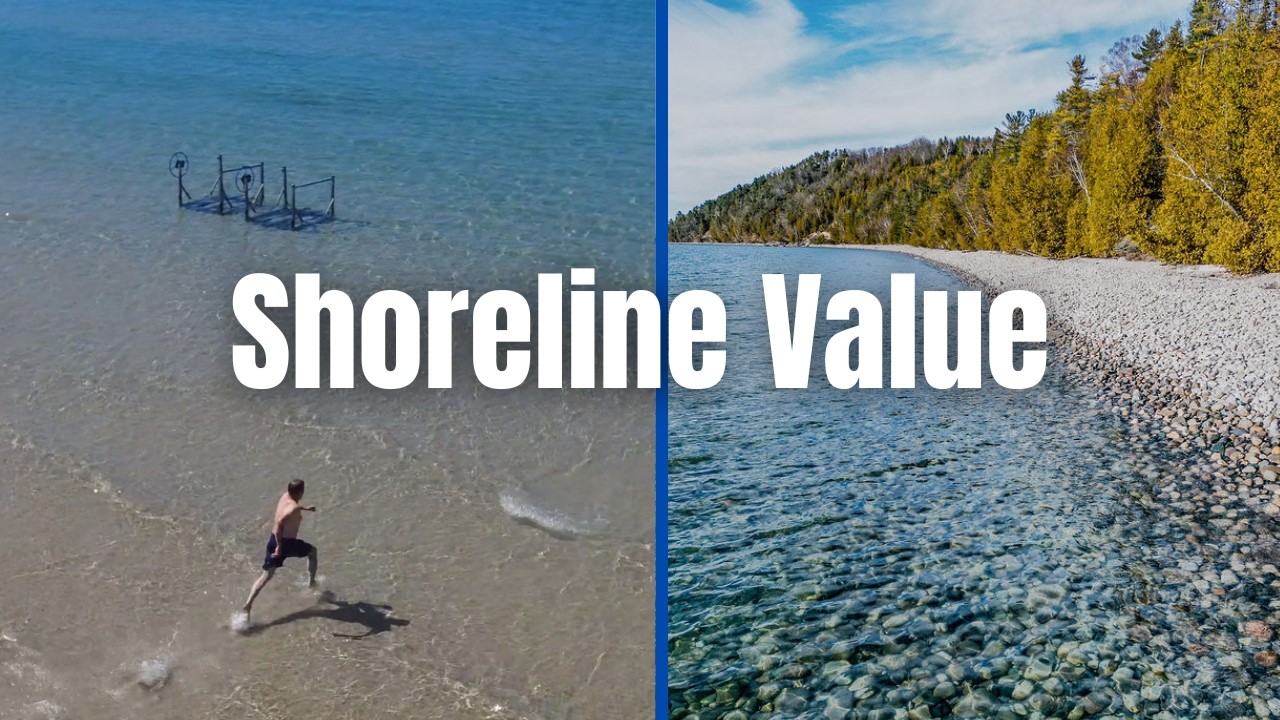
In this instructional video, broker Sander Scott— a sixth‑generation Northern Michigan resident— walks prospective buyers through every factor that truly determines the value and suitability of waterfront property in Leelanau, Grand Traverse, and Benzie counties. He argues that the shoreline, not the house, is the long‑term driver of investment value and breaks down the critical attributes buyers must evaluate: orientation (sunrise vs. sunset), bottom type (sand vs. rock), elevation (bluff vs. walkout), water depth, erosion and permitting constraints, water quality, and township zoning plus short‑term‑rental regulations. Scott highlights how these variables differ across specific lakes and bays, influencing resale potential, rental income, and day‑to‑day enjoyment. He also explains pricing dynamics— why two homes with identical square footage can differ by $200,000+ based on shoreline characteristics— and offers his brokerage services, including personalized consultations, virtual tours, early listing access, and detailed regulatory research, urging viewers to schedule a consult to avoid costly mistakes.
Chapters
Before you buy any waterfront property in Northern Michigan, you need to hear this. Every year I watch buyers lose tens of thousands of dollars, maybe even more, because they do not understand shoreline types, township rules, water depth, erosion, or short-term rental restrictions. My goal today is simple. I want to walk you through everything that actually matters so you can buy with confidence and avoid the mistakes that cost people money, big money, when it comes to waterfront in Leelanau, Grand Traverse, and Benzie Counties. Hey there, I'm Sander Scott, 6th generation Northern Michigan resident and the broker here at NET Real Estate. I own my own brokerage and I specialize in waterfront properties across our region. I grew up on these shorelines and I help clients understand the lake-by-lake differences that rarely show up in listings. Let's get right into the most important things that you need to know. The biggest mistake buyers make is focusing on the house instead of the shoreline. The shoreline is the real driver of long-term value. The home can be updated a lot more easily than the shoreline can. The shoreline is permanent. Well, not exactly permanent because water levels change, especially on the Great Lakes, but the shoreline is definitely the long-term driver of your valuable waterfront investment. Water depth, bottom type, elevation, orientation, and zoning all play a much bigger role in your long-term satisfaction than the kitchen or the finishes. This is where a lot of buyers go wrong. Let's start with orientation. Sunrise and sunset frontage behave very, very differently. Sunset frontage tends to command higher demand, stronger resale, and higher prices because people want to enjoy evenings by the water sipping their wine and watching the sunset. Sunrise frontage, on the other hand, gives you quiet mornings and softer light, which many full-time residents love. If two homes appear identical online yet have a noticeable price difference, the orientation is probably the reason. Now, I'm totally biased on this for my personal preference because I grew up on the sunrise side. On Northport Bay, and my grandparents had a place on Sutton's Bay, and I prefer the bay side myself. And I don't stay up very late, so the sunset aspect isn't really attractive to me. I am an early riser. I love the sunrise side, but I'm not most buyers, and most buyers do prefer the sunset side. And that's why you'll likely notice higher prices on the Lake Michigan side of the Leelanau Peninsula. So keep that in mind. All right, next is the bottom type. Northern Michigan has everything from soft sand to large boulders. Sandy bottom frontage is the most desirable for families and for short-term rentals. It is rare and it commands premium pricing. Rocky bottom frontage often has clearer water and is great for boating and fishing.. It also tends to have lower maintenance. Spots like Northport Bay, Sutton's Bay, Lake Leona, and Crystal Lake all behave differently, and it pays to know which shoreline type matches your goals. Next is elevation. Elevation plays a big role. Bluff properties offer incredible views, more privacy, and fewer flood concerns. For example, you're likely not to have to worry about a seawall if you are buying a home on a bluff overlooking Lake Michigan, but they can limit your easy access to the water. Walkout properties, on the other hand, give you direct access, and you don't have to worry about a lot of stairs to take you down to the water. Walkout properties give you direct access, and those properties are ideal for families and deliver the highest rental demand. Inventory for properties where you can simply walk out the door and into the water is extremely limited, so that's why it's really important to be crystal clear about how you plan to use your property before you begin your property search. Next is erosion and permitting. Erosion and permitting catch many out-of-state buyers especially off guard. Michigan EGLE, E-G-L-E, Michigan EGLE, um, the Army Corps of Engineers. There are a lot of regulatory bodies that regulate shoreline improvements. You cannot assume that you can build or repair a seawall, for example. You should not assume that you can put in a set of steps down from your bluff site. If there's already an existing set of steps, you're likely to be able to update those, but there's a lot of things regulation-wise to consider when you're buying waterfront property. Natural shorelines are protected. In some cases you may be able to repair what's there, in other cases maybe not. Also, erosion patterns vary dramatically between Lake Michigan, Grand Traverse Bay, and inland lakes, for example. So before you buy, you need to know what you can and cannot do with your shoreline. This is key. Next, let's talk water depth. Two waterfront properties can look identical online and yet be completely different when you stand in the water. Deep water is best for boating, docking, and long-term value, whereas shallow water may be warmer and better for kids but can also get weedy and may limit docking. When I say limit docking, you are allowed technically to be able to dock a boat in most cases, but one consideration is how, how many dock sections is going to take to get out to navigable, usable water for the boat that you want to have docked. So just keep that in mind. Always test the water depth in multiple spots when you're considering the purchase of waterfront property. I do this for all of my waterfront buyer clients because it tells you much more about the usability than any listing will show you. Next, township zoning and short-term rental rules. Township zoning and short-term rental rules can make or break your plan, and those zoning and short-term rental rules vary township by township and village by village within Leon County, for example. So you really need to have an agent that understands all of the different nuances and the differences between Suttons Bay Township, for example, and the village of Suttons Bay. The town— Suttons Bay Township doesn't have a whole lot of restrictions on short-term rentals, whereas the village of Suttons Bay has a lot of them. And the short-term rental rules in Casson Township, which is over Maple City Way, versus Leelanau Township vary greatly. So some townships have strict short-term rental rules, whereas others have very loose or no short-term rental restrictions at all. So this is important for you to know, obviously. Leonaw Township and the village of Northport are short-term rental friendly. Suttons Bay Township is short-term rental friendly, whereas the village of Suttons Bay has some pretty significant restrictions, and HOAs can override township or village rules. Cherry Home subdivision north of Northport has restrictions on short-term rentals. Bayview Condos and the Sutton's Bay Yacht Club and Sutton's Bay do not allow short-term rentals. If you are buying partly for rental income, or you're like most buyers, you're thinking ahead— I want to retire 5, 10, 15 years from now— and waterfront prices in Northern Michigan ain't getting any cheaper, and the good Lord ain't making any more of it. So a lot of my clients are looking to buy now, use it once or twice a year in the summer, and short-term rent it the rest of the way to offset some of the carrying costs as it relates to waterfront property. But get in now while the prices are still somewhat reasonable. It's really important to know what the regulations are when it comes to short-term rentals. So if you are buying partly for rental income, this research needs to happen before before you write an offer. Next is water quality. Water quality varies lake by lake. Some inland lakes have seasonal swimmer's itch, some have milfoil or invasive species, some shorelines stay crystal clear all year. Shallow warm water attracts vegetation, whereas deep cold lakes like Crystal Lake behave differently. Knowing this ahead of time prevents surprises after your purchase. Okay, let's talk locations. Leon County offers incredible options like Northport Bay, Omina Bay, Sutton's Bay, Leland, Lake Leelanau, Lime Lake, Little Traverse Lake, lots of different inland lakes, lots of options in Leon County. Whereas Grand Traverse County includes East Bay, West Bay, Long Lake, Spider Lake, a lot of other inland lakes as well. Benzie County includes Crystal Lake and Platt Lake, and also Lake Michigan, Grand Traverse Bay along there, obviously. Each one behaves differently in terms of demand, shoreline structure, short-term rental rules, and year-round usability. This is where a 1-hour consult with me saves buyers months of frustration. Pricing is not just based on square footage or acreage, lot size, how many front feet there are. Pricing is heavily based on shoreline type. It is really dependent on the water depth, the orientation, the bluff height, privacy, zoning, rental potential, and the lake itself. Two homes can be identical in square footage and lot size and how many front feet they have, and be $200,000 or more difference simply because one has a walkout right onto a sandy beach frontage and the other is a rocky drop-off or high on a bluff. This is why buyers need lake-specific guidance. My job is not just writing offers. My job is preventing expensive mistakes. I evaluate shorelines, review township rules, check restrictions, research water depth, identify weed patterns, and help you understand how each lake behaves throughout the year. I also provide early access to listings, virtual tours for out-of-state buyers, and detailed guidance on the value of negotiations. If you are serious about buying a waterfront property in Northern Michigan and you want to avoid costly mistakes, Schedule a consultation today. I will walk you through the lake-by-lake differences, what to avoid, and where the best opportunities are right now. Use the link to my Calendly calendar below, and if you prefer, you can call or text me anytime. I am here to help you buy with confidence.