Inside the London Premier Part 1: Wildcards, Underdogs & British Hopes
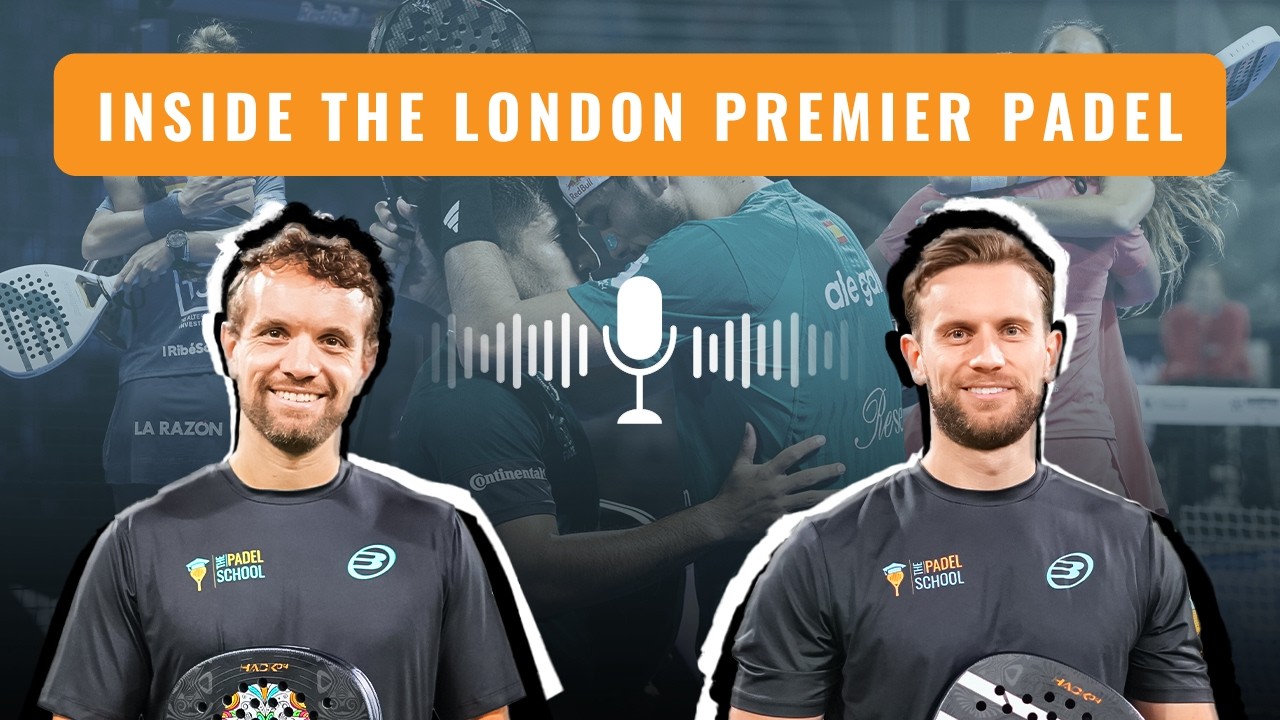
Tom and Sandy Farquharson preview London's first Premier padel tournament, breaking down the wildcard spots for British pairs like Amy and Catherine in women's main draw and Christian Medina Murphy and Alberto in men's. Home advantage, travel fatigue for overseas players, and Red Bull TV's broadcast could create upset opportunities.
Chapters
Sometimes when you go in, we talked about the start of being an underdog and you've got nothing to lose. I think sometimes that can be such an advantage to have nothing to lose. You've got the home crowd behind you.
Tom, very exciting to talk about the London Premier that's coming up in August. First time the Premier is coming to London. We have seen this level of play around the world at many tournaments, but now it's on our home turf, it's in London. I obviously go with Red Bull, we do the broadcasting and the commentary, but what can people expect when they come to this tournament here if they're a spectator?
Yeah, let's get into that today. And before we do, what a setting we have for our podcast. We can't say we get to do a podcast in these sunny conditions.
I feel like we're always talking about the British weather and yeah, we've got sunny conditions here.
You've brought your sunglasses, you're well prepared.
Yeah, yeah, these don't get much air time, but they're out today.
I was the pessimist. I was thinking, oh, today's not going to be a sunny day, British summer.
Yeah, fool's on you.
Yeah, yeah, yeah, yeah.
No, Tom, let's drag you on to Premier Padel. We've got some British wildcards. I think maybe for the viewers, let's explain what a wildcard is.
It's something that tournaments use when players that wouldn't necessarily get in with the ranking cutoff that is required typically players can then get a wildcard and this allows them to get into the qualification draw but also the main draw.
When they do it at these events, normally they have the nation hosting has wildcards for their players. So if you think about like this event in London, like Great Britain or the LTA, which is the federation, they had 3 men's main draw wildcards. So 3 pairs to go into the main draw and 2 into the qualifying. And for the women's, they had 1 main draw and 1 qualifying pair to go in and that's, it's a direct acceptance regardless of their rankings. It means that they get a place in the tournament basically. Yeah.
And wildcards are always, they're always underdogs, aren't they, by nature because you're going in as a player who isn't ranked to the same level as the other players that are in the draw. So you always look at wildcard players as, you know, they are potentially underdogs, but you see it a lot of the time that wildcards can do very well in these tournaments, and so they're always, they're always looked at, I think, in draws by players as you're not too sure what to expect.
Yeah, and it's difficult. Typically with wildcards, most countries would either take their top-ranked players and they would get them in the draw because maybe their top 1, 2, and 3 pairs don't make it into qualifying, and so they would use that to get them in. Or maybe they play a tournament. Often I see a a wildcard tournament where the local pairs all go up and whoever wins the tournament gets the wildcards for the event. And normally it's a fairer way to do it, or at least it's criteria. I'm not sure for this tournament if we had that criteria. We definitely didn't have a tournament, otherwise you would have played in the tournament. And I don't know if there was even a registration for the wildcards, but obviously the Federation have allocated them to the players in the draw. But, um, yeah, it feels a little bit more random in how those players are there. But nonetheless, they are the top players in the UK, so they are ones to watch, particularly in those early rounds.
Yeah, and I think for a lot of the players that are playing these events regularly, sometimes playing those wildcards, because you perhaps haven't seen them on the tour before, because they're used to playing the lower-level tournaments, is Sometimes that can be tricky, right? Because you're typically— they might have to look online, they might have to watch videos to try and see how the wildcard players play. So who knows, we might see some shock results with the wildcards.
And also you've got to think, like, we were in South Africa recently, like, all the players are traveling back from Pretoria over to London, whereas the GB, the wildcards, they're here, they're based here, they're going to train here, probably will get access to the courts maybe a little bit earlier, so they will have a rhythm that maybe the ones traveling might not necessarily have that, and that can really be an advantage. Now, we don't often see a wildcard making it to a quarterfinals or semifinals of the main draw, but even if they can get through 1 or 2 rounds, like, that would be, that would be a big win and some huge points for them.
Yeah, and let's jump into some of the pairs that are competing for GB and getting those wildcards. So yeah, let's, let's jump into that.
Yeah. So if we start with the ladies' side, we've got Amy and Catherine. So they're playing together. They've got the wildcard for the main draw for the ladies and they are the top 1 and 2 of the country at the moment. They've actually played a lot together. They've played a lot of FIT tournaments together and they played together for Great Britain as well. And they, they really respond well to each other. Amy, a lefty on the right-hand side, you know, very kind of solid player. Catherine playing on the left-hand side now with Amy, nice vibra, nice attacking game, good coming forward. They both fight really hard. Like I think if they get maybe a qualifier or they get a less confident main draw pair, like they could, you know, cause a bit of problems out there.
Yeah, and they could use hopefully a big home crowd advantage. That's also always an advantage, isn't it? When you're a wildcard playing at home. If you have the home crowd behind you and you draw a pair, I mean, that can be quite intimidating for the pair. So yeah, let's see how they get on.
Yeah, definitely. And they are well liked as well, and they will have people there to support them, which will be big. And, you know, for the qualifying, it was Tia Norton that got the wild card. She's playing with a Belgian partner, and she will get that wild card into qualifying, which still means that she would have to go through the qualifying rounds of the event in order to be able to compete at the main draw. And I think that starts the Sunday. Normally on the tournaments, they either start Sunday or Monday, but it's, it's the Sunday before the tournament starts. So she's got to win a few rounds, which does mean that there are slightly weaker pairs, like the ranking is lower obviously in qualifying than main draw, and actually could gain a bit of confidence if they get through a round or two there. But again, now the level in padel is so strong that all the players will be good.
Yeah, sometimes playing in qualies actually, like you say, it's an advantage because you're not going in perhaps playing a seed in the main draw. That's such a tough ask, isn't it? Particularly as a wildcard player in the main draw. So if you can go through qualifying, get some matches under your belt, get a bit of momentum going, when you do get to main draw, if you do get to main draw, you're coming in with real match confidence, also match experience on the court that is there, because that's also a big thing is getting used to the conditions. If you can go through qualies, get used to those conditions, you're coming in against a main draw pair, like you said, come from South Africa. I mean, just to go back to what you said there, we talked so much about the altitude in South Africa, it's going to be so fast, those players are going to be coming back and they're not going to be the same conditions here. So yeah, it can be an advantage going through qualies.
Definitely. And if we go on the men's side, if we start with the main draw first, so we have Christian Medina Murphy, the GB number 1, he's playing with his partner Alberto, a Spanish player as that first pair. Second pair is Louis Harris and Alex Laughlin, and third pair is, let me think, oh yeah, Chris Salisbury and Alfonso Portacho. All of those guys have represented Great Britain. They are, you know, at the higher level of the game. Some are competing more frequently than others in terms of like the international circuit. I know Christian is, you know, week in, week out, like he's living the pro life. But they are going to go straight into that main draw. And I mean, that's going to be tough matches for them straight away. Like, there's not going to be any matches in there. Even the qualifiers that come through are going to be top-ranked players. So, you know, they're going to be tough. The advantage, like you said, that probably none of the players in the main draw have ever played like Alex and Louis, for example, or Chris and Alfonso in any of the matches. And there might be a bit of awkwardness with how they play. Especially again with the home crowd. And they can unsettle players, I think, at the beginning of the match. And if you look at how they play, Louis and Alex are both tall, good smashers, very good at kind of pressing the court and making life difficult. If it's a faster court, they will be playing really well, I'm sure. Yeah.
And sometimes when you go in, we talked about the start about being an underdog and you've got nothing to lose. I think sometimes that can be such an advantage to have nothing to lose. You've got the home crowd behind you. Those are some of the conditions that you can see some, some big upsets. And yeah, it is going to be tough matches, but I think for all of them, what an experience. I think that's, that's the biggest thing from this is that, you know, potentially they could be drawing some of the best players in the world and to get on the same court as them and to have nothing to lose. Let's see what happens.
Yeah, they'd never get that opportunity, right? What an opportunity for them to go on and to play these players like on the Grandstand Court, and they'll no doubt be put on a central or on a stadium court.
And those pairs in main will feel the pressure. There's always pressure. I think that when you don't know the pairs that you're playing and you're playing a wildcard pair, you should be winning that. There's that idea in your mind, like, I should be beating this pair. And when you have that, there's a bit of pressure. So 'Let's see what happens.' Yeah, definitely.
Underdogs can go in and relax. And when we come to the qualifying wildcards, we've got Cam Dolomore and Theo Garton playing as the first one, and then the second one, Jamie Lobo and Ben Phillips, like, you know, youngsters essentially coming up through the game. Jamie's competed for Great Britain, but the others haven't yet, and that's maybe something that they aspire to do. They're playing you know, I'd say semi-regularly in terms of FIP tournaments. They're getting as good a training as they can. Like they're all taking the game seriously and it takes time to get up through that kind of transition, that pathway from junior to adult. And what a way to do this, like to be able to play the qualifying, to get in some matches against top players is going to be amazing for the experience.
Yeah. And you've commentated a lot of Red Bull TV events across the world and I know that One thing you mentioned when you were there was that for the qualification rounds there really aren't big crowds coming in, there isn't much support, and I think that for all those GB guys that are in the qualies draw, hopefully we can start bringing the crowds in, a lot of people can come and watch, and that, that can be a real advantage when you're playing in those qualification matches. If you've got home crowd behind you, you've got that support, there could be some upsets in there as well.
Yeah, and I think as a spectator, if you're watching and you're going to watch the the British guys, like those earlier rounds are when there's more unpredictability. It's almost as the tournament goes on, we tend to follow the seeds, right? And it becomes more and more predictable and it often ends up with Chingalan and Tapia Coello in the final. But these early stages, like the qualifying rounds and the first round is when you get different pairs playing each other. And I have a funny feeling that like in London, in this event, we are going to see a crowd. We are going to see spectators come on, you know, the Sunday, the Monday, the Tuesday and We've had padel now in London for a while and the enthusiasm bubble around padel means I think we'll see some good support for it.
Yeah, I mean, currently it's Wimbledon is going on at the moment and we've been lucky with the weather to have Wimbledon at this time. But I think as well, being the first time in London to have an event like this, I think some people that perhaps have come from tennis or maybe they're used to going to Wimbledon every year and now they're coming to watch padel, it's quite different, isn't it, to watching tennis? Like with padel, with tennis, you You really, it's about being quiet. It's about you have to let the players play and it's all quite, you know, shh, you know, like, but padel is very different, isn't it? Like, there's a lot of buzz. I mean, a lot of the players, I mean, we always talk about how a good buzzing atmosphere, like loud. I mean, hopefully we can see that at London. It's very different to watching tennis.
Yeah, I remember going to watch tennis relatively recently in in Queens and I was almost shushed because I had to, you know, be quiet.
You had your paddles.
I was whispering.
You've been too long in padel.
Yeah, and I'm not saying, I'm not saying like the padel crowd needs to be rowdy, but at the same time, like you can talk, you can have some fun, like, you know, high energy off the court and the players can feel it on the match court.
So Sandy, we'll be there throughout the week. You'll be commentating with the Red Bull TV team and we'll both be supporting getting the crowd whipped up for our GV pairs. If you see us there, that's what we'll be doing, but it's going to be a fun week and I can't wait.
Yeah, and for those watching, try and watch as much Padel as you can. This episode was focused mainly around the GV pairs, the wildcards, like how that system works for this event. And the next episode we're going to talk about the event itself, what you'll expect on the days, you know, the order of play and how that all fits together for the tournament.
More from Sandy





Want to finish more points? 🎾 #padel #padeltips #padeltennis #sports #coaching


Want more side spin on your Vibora? #padel #padeltips #padeltennis #sports #coaching



Your partner can’t read your mind #padel #padeltips #padeltennis #sports #coaching

Struggling with your bandeja? #padel #padeltips #padeltennis #sports #coaching