Road to Premier Padel London - with Christian Medina
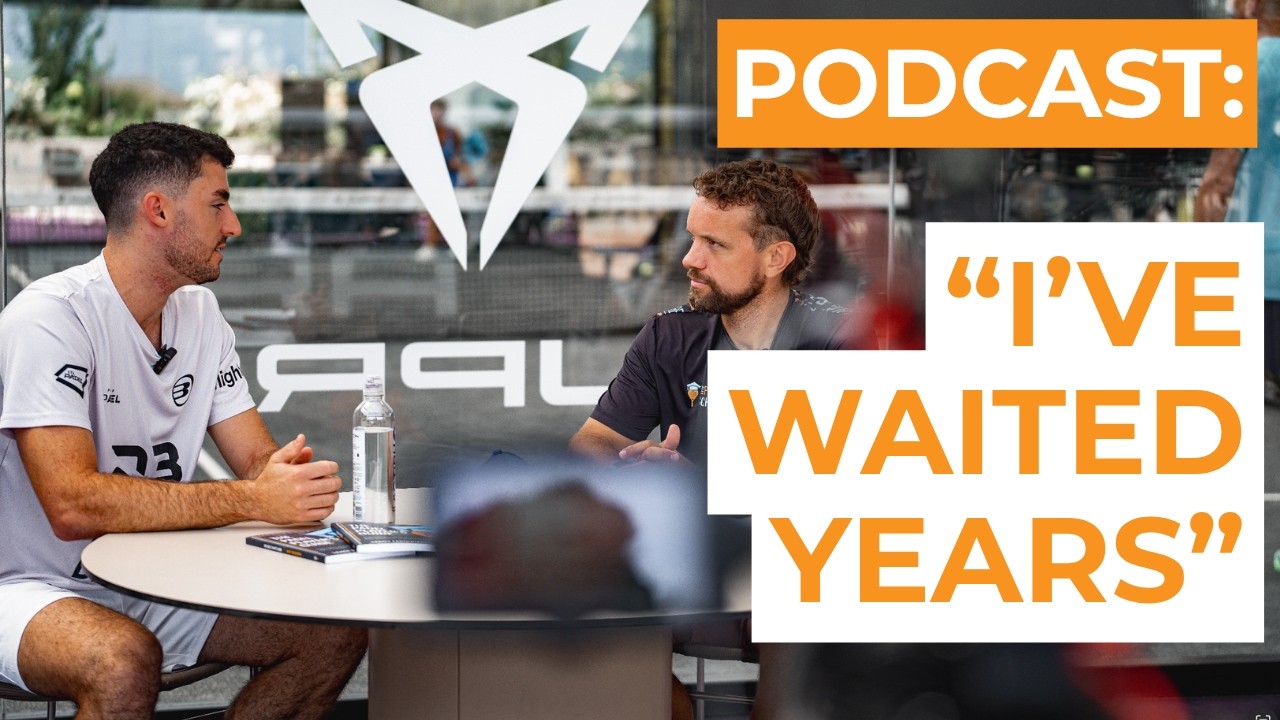
Christian Medina, born in London but raised in Cádiz, represents Great Britain in professional padel ahead of the sport's first Premier event in the UK. He estimates it will take 10 to 12 years to develop regular top-100 British players, and says young talent needs to train in Spain to compete at the highest level.
Chapters
Christian, thank you so much for being here. A pleasure to have you in, uh, in Rocket Batty. And, and I think the idea for, for this conversation is we've got the, the Premier coming up, you're going to play tomorrow, and I think it'd be great to find out a little bit more about you, about your story, and also talk to you about like the British padel scene, like what's going on with the Premier, you know, what your advice would be for the British players. So why don't you start with a little bit of your background?
Well, my story is a bit strange. I was born in Kingston here in London. All my mum's side family are from Manchester, from Preston, that area. But she decides to move to Spain when I was like 3 months old. All my father's family are from Spain, and that's why I don't speak amazing accent.
It's your accent.
Yeah, yeah. But well, I grow up, I grew, grow up in, in South Spain, in Cadiz. And, and yeah, well, it's exciting now to, to have the Premier Padel here. At the end, I was representing the GB for now maybe 10 years, and we was waiting this moment. We was with you, with Tom, with a lot of people trying to promote the sport here in the UK. And at the end, we have a main event, and yeah, really excited. I was on the venue yesterday, and really nice court, really, really nice venue, the Olympia. Like, I think it's Really good to have this main event in a main venue and excited. And I really want to try my best and perform at a high level.
So like you and I, we played for Great Britain for about 10 years. And when we started, everything was like World Padel Tour. It was very Spanish. All the tournaments were in Spain. And over the years, it's gradually got more international, right? Like, you know, now with Premier, it's in a lot of countries. But this is the first one like in the UK, in London. Like, how significant do you think that is for the sport to become more professional?
Well, I think obviously not because I'm from the UK, is because I think the UK is a main country with a big market, with a big economy, and for the sport I think it's a big step to, to try to promote the padel as a big sport, to try to become an Olympic sport, or try to to have good companies involved. I think for the sport is amazing, and for me as a player is really nice to see at the end people in the UK loving the sport and following the tour. And now with the Premier Padel, I think they're going to start to see what is, what is really the professional side of the sport, because we have a lot of amateur people now playing and enjoying the game. But when you see this type of event, you, you see the professional level and, and you, you can see what you— I don't know if you have kids, uh, to try to put your kids to improve in academies to become professionals, and they can see more the professional side of the sport. And I think that is really good.
I think it's fantastic for like for everyone, right? For coaches, because a lot of the coaches in the UK, they're, they're relatively new to padel themselves. Probably they— a lot haven't seen like professional padel.
Yeah.
And for the players, the same. And it's good to have that, that scale, right? Like this is the top, and now you know like almost what your motivation is for, for how to get there, right?
Yeah, even for the coaching, it's good to, to understand the sport because sometimes you see beginners coaches trying to do lessons and maybe they try to teach in different ways. But when you see professional padel, you, you start to understand what, what you need to improve to, to do the things in the correct way. And I think it's, it's good in, in that way too, to, to teach the coaches and teach the players what you, you have to improve, or how is the padel playing the correct way.
Yeah, and do you find that like this event here, do you feel like there's a bit of pressure, or do you feel like it's more like positive energy into playing this event for you personally?
Well, I think to play in the main event in front of the home crowd, my family, my UK family is going to be here, my mom, and, and obviously you, you feel pressure, but you have to focus in, in the positive things that, that pressure makes you court. Like, I always— I, I obviously I'm gonna feel pressure, but I think that pressure make me go to the court more focused, with more intense, and trying to give my best level. Like, I don't feel like gonna feel on court a little bit pressure and tension and nervous. I'm gonna feel more pressure in the positive way to try to say, okay, this is a big stage and I really want to show my level here, and I want to try to perform as my best and try to see if I can go through a few rounds.
It's an interesting concept, this idea of pressure, right? Because you're putting pressure on yourself. Yeah, really. Like, no one is putting it on you, but you put it on yourself. And same at the club level, people put pressure on themselves. So how would you deal with that pressure? Like, what are you doing in the lead-up to the match that's kind of like channeling your, like, your energy, your pressure in the right way?
Well, you I always try to standardise my routines. If I always do the same, I always going to feel similar on court. Um, obviously the pressure is me putting pressure on myself because I play these type of matches, uh, during the year in, in the FIP tournaments, but it's not the same to try to play against them and beat good players in a FIP tournament than in a main stage. And that's why I want to really see if I can fight against the best players on the world in, in a big event, because they, they is, is this is different, no? And yeah, I always try to, to do the same things. I try to, to focus in myself. We train a lot. We have nearly 80% of the shots completely mechanic. We don't have to think about it. But it's true that you have to be careful to don't go with too much intensity, because sometimes too much is, is bad because you, you make the wrong decision. Padel is a sport that you need to stay focused, put intensity, but with the, the mental clear. I don't know if that makes sense, but, uh, try to, to have that intensity and make the correct decision in the current moments. And sometimes a lot of intensity is bad because you do things, uh, you're too stressed. Yeah, too stressed. And, and you have to find the balance. And I think that is going to be tougher things for me tomorrow to don't go with too much intensity and make the wrong decisions.
So when it comes to tomorrow, you mentioned like routine, doing things the same, like, like what does your routine look like before you play? Like what will you do?
Well, if we're playing in the morning, we try to have a breakfast more or less 2 hours, 3 before the warm-up time. Then we relax for a bit for 1 hour, 1 hour 30. I always try to be in the venue really soon. I don't like to go really tight on time. I want to— I always try to be on the venue with a lot of time to be there, watch the match, the matches that are playing, and relax for a bit. And then we normally start the warm-up 1 hour, 1 hour 15 before. We do mobility, power exercise, and that's it. We have the chance to warm up on court. We used to warm up 15 to 20 minutes on court. We, we try to speak with our coach before, and, and that's it.
So you're playing, you know that you're, you're around, you're playing a qualifier, but you don't know yet who the qualifiers are. If like people are watching you tomorrow, like what, what will they see from your match? Like the start of your match, what, like, I know you don't know the exact tactic because you don't know the opponent, but what will you be trying to do in your game initially, do you think?
I'm trying to play my style because I was— this is a nice conversation, like it's good question because sometimes, um, I was discussing with my coach and with my partner during this year, sometimes you focus more in what you have to do to, to play against someone and more than what I want to see from my paddle, you know. Now we are trying to focus more in our things, in our level, and we try to, to to make the match come from our style. And I always try to play solid. I, I always try to play with passion, with, with good decisions, and make the point longer. I think in this venue is going to be good style because it's a little bit slow courts, it's Wilson balls. And, and yeah, we, we are gonna try to, to, to play with my style, uh, solid, with passion, and, and yeah, trying to perform my, my best.
And I think as well, like mentioning it's a slow court, and obviously like the players, the top players have just come from Pretoria where there's high altitude. The ball, even though it was a slower ball, it's still going to be moving very fast. Do you think that it's going to take some, it's going to take a little bit of time for those players to adapt?
Depends which players. Some players they haven't. And how many matches they have. Some players, they have amazing talent and that we play in, in different conditions all the weekends. Like, it's not going to take too much time for the players to, to adapt to the court because they're going to train 1-2 days before the, the first match. But yeah, always when you, you switch in drastic conditions from really quick to really slow, take maybe 1 or 2 days to start feeling the balls, uh, but the ball again, the, the touch, the, the on-court, the tactics. You don't go to try to, to search for the point really quick. Here you need to work on the patience and, and maybe take 1 or 2 days for them to try to adapt, but they're going to do quick.
Yeah, I mean, hopefully there's some advantage for the British players because, I mean, the British players are playing tomorrow as well in the first round for the wild cards. And we've seen the evolution of the, the team over the last 10 years because there hasn't been a huge amount of padel or performance in the country. The team has been almost the same, like very similar, right, for the last 8 or 10 years, unless some of us get too old and then younger ones come in. But how are we going to see more players reach that top level in the UK?
Well, it's going to take time because, as you know, padel takes years to try to improve and to be on the level to be on the team, because it's true that it's really new in the UK, but is a lot— well, I live in Spain, Louis, Sam was living in Spain, like we have a lot of players they was living and they grow up in, in Spain. And for the UK young players to try to be in our level starting playing maybe 3 years ago is tough. I think it's going to take time, maybe in 4, 5 years we're gonna see good juniors players. But yeah, it's like now is a We all train really hard and to be in that level, you need time.
And I think the difficulty now is if you have a good 15-year-old or 12-year-old, for example, the answer now is to go to Spain.
Yeah, yeah.
And probably for the next 4 or 5 years.
Yeah. I think that is the same problem it was in Sweden a few years ago. All the Swedish players, they was moving to Spain, to Madrid, to Alicante to train at the beginning. And now they are back in Sweden because now they have good players, good coaches. And yeah, at the beginning it's tough because if I was living here, I, I was nearly alone with no professional coaches except maybe 2 or 3, you and 2 more. But you don't have that much facilities like that in Spain, and it's good in padel to train sometime with different players, not to train always with 2 or 3 players, uh, and at the moment the UK stuff is tough, but it's going to come. It takes time.
I think that's the big advantage in Spain is the sparring partners. Yeah, like when we go to academies in Spain, there's, there's 20 players that are like top level that you, you play with, and then different ones in different academies and cities. And we, yeah, we just don't have that. There's 3 or 4 people that you can train with at a high level.
Yeah, even, uh, even me, I'm living in Alicante, I'm based there, and I'm not in Madrid and Barcelona. In Madrid And Barcelona, you have so many players and so many academies. I'm living in Alicante and my group of training sessions are with 8 to 10 players and they are all professional. Víctor Ruiz, Sandy, Javi García, they are top players. And I'm not living in Madrid, like imagine the level in Spain. Like you have so many options, so many sparring players. Sometimes you are the sparring. Yeah.
But that's great practice, right? Like if you're sparring for one of those top guys, like you see how they play. Yeah, and that's, that's amazing about padel. It's so accessible. Like, you can go to these academies, you can watch those guys and end up being a sparring partner. And I think that tennis doesn't have— like, you couldn't do that now, or it's very difficult to, to do that.
So yeah, and I think in padel it's really good because, uh, one of the most interesting things in padel is the tactic of the sport is completely different, depends on the level and depends on the condition. Like in tennis, obviously if you, you play in grass or in other surface, the, the tactics are different, but is not that much different between one and the other one in, in padel. If you are beginner, you have to play with, I don't know, a lot of good lobs, don't rush, play properly with the glass, and nothing more. But when you start to improve, you have to change your game, and then maybe you don't have to do lobs, or if you play in good condition, slow. And in the professional level is the same. When I play in FIP tournaments with players of my level, I have to play in one way, but if I play against Victor, Sandy, or Javi in the training session, you can feel that way is not enough. And you have to switch things. And that is really— that's why it's really important to train with good players, because you have to know what you have to do when you have that opportunities in the tournaments.
Yeah. And so just going back to the tournament, to the Premier, like, what's going to be a good week for you? Like, what are you hoping? Like, what's, you know, what's your goal this week?
Well, to be honest, I have two goals. One, in my perspective as a player, And after waiting that many years to have this tournament, I have another goal in, in looking for the padel in the UK, no, looking and looking for the padel in the UK. I want to see the Grand Slam completely full. I want to see people enjoying the game, watching the matches, and, and a lot of people watching the games and talking with the friends like, okay, next week I want to do this, so I want to start with coaching, or I, I want to put my kid in lesson. That is the, the goal for, for the UK Padel, I think, with, with this tournament. Um, for myself, I want to only perform at my best. I want to go tomorrow to, to the court and, and try to play my level. And if I lose, I lose. If I win, I win. But feeling that I, I was trying my best. Because sometimes in Padel, if you are not focused or, or if you don't feel really good on court, the match can go so fast. And sometimes you lose in 45, 1 hour, and after the match you say, what happened? Yeah, what happened? Like, I, I don't feel I even play. Like, I want to enjoy, uh, play my best, and, and, and with that I think it's enough. Because if I, if I can get that, if I can, uh, performance that level, I know I'm gonna have chance.
Yeah, yeah. And it's interesting you have the UK goal as well, because I think that's our first step to, to catching these other countries up. Yeah, right. Is the enthusiasm from players to go in, education from the coaches, learning more about the game. The players learn what they should be doing. And then over time, we, you know, we can close that gap. And I mean, a question that no one knows the answer to, but everyone suspects is how long do you think it will take until we have regular players in the top 100 for a Great Britain, for example?
Yeah, to be fighting with Spain or Argentina is going to take long time, 15, 20 years maybe. But to try to put players in the top 100 regularly, because, well, I was close last year, it was 102. I'm fighting to try to break that. But to have 2, 3, 4, 5 players on the top 100, I think with 10, 12 years is going to be enough to, to see UK players breaking top 100 regularly because you need 10 to 12 years to, to get to that level. And I think now we, we have enough volume of people, uh, playing to try to have chances to be 80, 90 in the world in 10, 12 years.
Yeah, they need the, the Christian Medina Murphys that are 10 or 11 years old to, to then come and, and go through that, that.
Yeah, yeah. I, I hope they're going to be better than me because I'm far away from the top. And obviously I want to see UK players fighting for the top of the top. But yeah, obviously I was in Spain and for me it was easier to, to go into the sport and to become a professional. But yeah, I think now UK young players, they need to, to train for 10, 12 years to, to have chances to, to be on the top 100 in, in the future.
Thank you very much, Christian, and good, good luck tomorrow.
Thanks, thanks so much. I hope it goes all the week well, so I'm gonna see you doing the commentaries from, from the Friday, I think. No, for the finals.
Yeah.
And yeah, all the people, they watch this, and, and if they're gonna go there, try to enjoy to watch the level of the people. And if you are not gonna go there, try to go.
Yeah, yeah, make sure you do. Yeah, thank you. Perfect. Thanks.
More from Sandy





Want to finish more points? 🎾 #padel #padeltips #padeltennis #sports #coaching


Want more side spin on your Vibora? #padel #padeltips #padeltennis #sports #coaching



Your partner can’t read your mind #padel #padeltips #padeltennis #sports #coaching

Struggling with your bandeja? #padel #padeltips #padeltennis #sports #coaching