Stop ‘Overthinking’ In Your Matches!
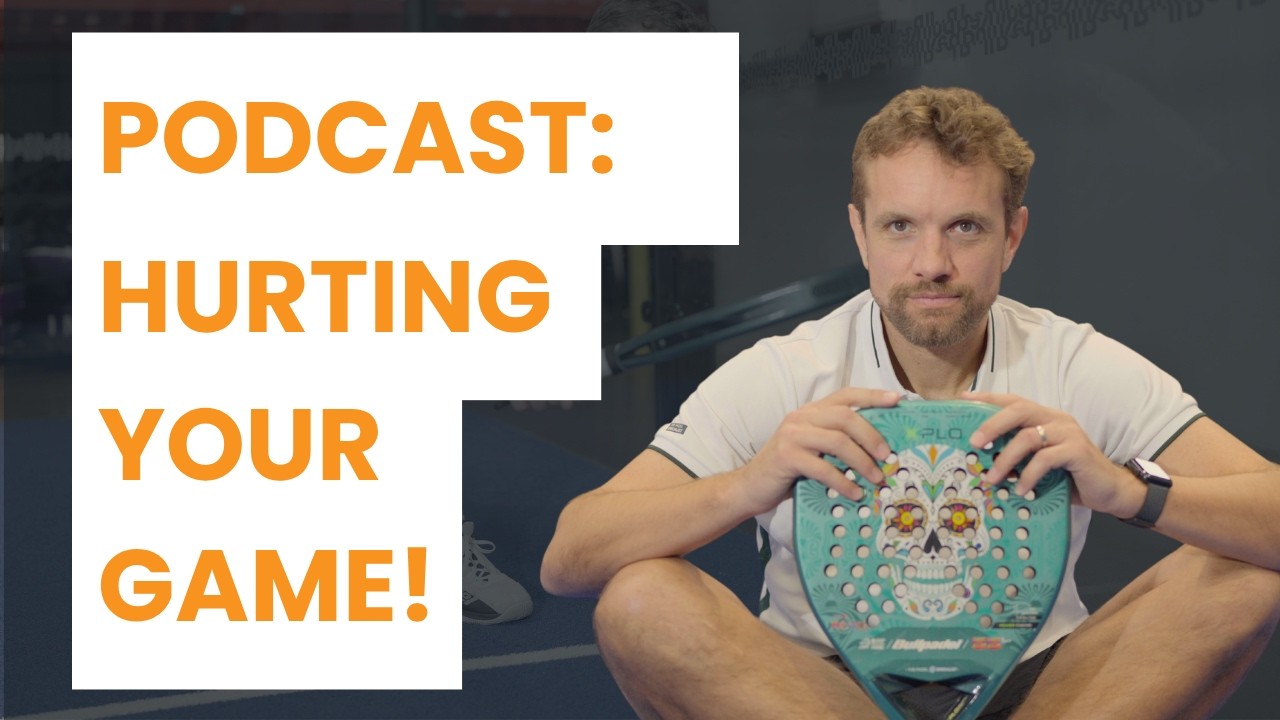
Tom and Sandy Farquharson argue that padel players overthink matches because they lack solid technical foundations. The fix isn't mental work but dedicated off-court drills: footwork sessions, shadowing exercises, and ball-contact practice that turn bad habits into automatic actions.
Chapters
Sandy, we're back in the podcast studio and today we're going to talk about a topic, a topic that frustrates so many players out there. And I'm sure it's a topic that a lot of players listening are going to think, oh great, we're going to finally solve this issue, is overthinking on court.
Yeah, and it's present at every level of the game. Like new players, when they come on, they're thinking about all the different aspects of technical, tactical, mental, all everything going on in their heads. Right the way up to the pros, and it can mean the difference between winning a final, losing a final, is sometimes overthinking in different aspects or different tactical parts of the game. So this is going to be a really valuable lesson for, for anyone that, you know, really wants to play better matches and not overthink.
And I feel like there's, there's different personalities on the padel court. There's— I, I feel like I like to put them into two buckets. There's, there's the overthinkers and there's the underthinkers. And, and I don't know if that's the word, the underthinkers, but you know those players that come on and they're just playing with feel and they're not thinking about anything and they're just using their skills and it looks like they're, they're not even thinking about what they're doing. It's all instinctive. And then you've got the other side of the spectrum where you've got the overthinkers. They've, they've watched hours of content, they're thinking about every little technical detail in their swing and they almost end up forcing the play too much because they're thinking about a million things at once. And we're gonna look at that person today and how not necessarily how they can lose that, because I think there's definitely a benefit to having that sort of personality, but it's how can you maximize that.
And quite often they're playing together.
Well, actually, I was thinking, I was actually thinking of us two. I thought, I'm more of the overthinker and I feel like you're more of the instinctive.
Let's just have a good time. Yeah, that's what I'm out there.
Yeah, and I'm just the killjoy. No, we're not out here to have a good time. We're out here to like maximize every tiny detail.
Yeah, it's a difficult one, isn't it? Because it's if we think back to our tennis days and playing like pro tennis, particularly singles, you were on your own, so you were dealing with your own mental side, but you've also got the partner here. So you can't overthink because it puts pressure on your partner. If you're the one going, oh, we should have done this, we should have done this, and they feel the pressure and they feel like you're almost critiquing them. But at the same time, you can't be too detached because you need to be there for your partner. And if I were to see you overthinking, then I'm trying to say, hey Tom, let's just go for like really simple, like play on this, something very, you know, simple tactical that we can focus on. And, and, and I think it makes it more difficult in padel almost finding that balance between the two.
I think, and I'm definitely biased here, but I think that all the overthinkers out there, the overthinkers that are listening, I'm, I'm more on your side naturally.
Yeah, that's all you want to say.
I don't know why. Um, no, I think that having that, that trait, and we're going to talk about the, the pros and cons and also how to maximize it in this episode, but I think that when, when you are an overthinker, I think that the positives of that is that you're always trying to find the little 1% in your game to take it to that next level. I just think that there's, there's a better way of doing that, and there's a way of maximizing that, that energy and that application. And that's what we're going to talk about today. But I, I definitely think that that personality, it, it is conducive to, I think, someone maximizing their potential on a padel court.
Yeah, I think it just needs to be channeled in the right way. And, and far too often it's not channeled in the right way and it leads to like an emotional response, like a frustration response, which then leads to more, it's almost like a snowball then and it's very easy for that to get out of control. And so, yeah, I think today let's focus on what should they be thinking and how can they narrow that focus and channel it in the right directions? Should we start at the recreational, the club player, the, not necessarily beginner, and it might be up to, you know, low intermediate, intermediate player, but how should they be thinking about their games?
Yeah, and I think that probably our, our answer today is not going to be what a lot of players think. And, and I think a lot of the times with the overthinking and the frustration and the emotion that comes up, a lot of players think the solution is, is a, a mental routine or deep breathing to alleviate that frustration. But we're going to go one step back and we're going to talk about building strong paddle foundations through quality repetition.
Yeah, definitely, because— and I think that this is a really important part— is that when you're on the match court, and I think a big mistake, probably the number one mistake for recreational players when they come to the match court in terms of overthinking, is thinking about technique. Like, really, that should be done off court in your training, like focusing on honing your skills, learning the technical parts of your shot practicing either, you know, off the court completely, and there's lots of stuff you can do at home, and we have lots of exercises for, for players on our platform, or you do it with a coach in your training. And when you step on the match court, for me, that's got to be like purely tactical. Like, you should really be focusing on the strategy of the points.
Yeah, let's, let's dive into what players can do off the court because I, I think in a way so many players don't have no idea what they could be doing off the court. And I know when, when we, when we coach and coach coaches, we have a technical frame that we go through with the coaches when they're, they're training a player. But so much of that goes back to footwork, contact point, positioning, all of these aspects that make up the foundations. And we'll talk about them now, of, of how a player can build those, those foundations in their game. And so much of it can be done off the court. You don't need to be on a court to do it.
Yeah, I'm still yet to have many lessons where a technical fix is not to do with movement and preparation, right? Like it's just always the, it's always the thing when someone says, oh, I'm struggling with my bandeja and it's bouncy. It's almost always footwork. You've not got into position like early enough or fast enough and your body position, like your body preparation is too close to the ball or behind you or whatever it might be. It's like, Those are the two most important things right the way up. Like even, you know, our GB players, it's still like, you know, let's move, let's work on our footwork around the ball to be faster for the jumping vibora. It's the same beginner level. It's like, right, let's get early preparation with your take back and let's get those feet moving. Like that's, you know, those are common themes throughout.
And when a player goes and has a lesson with a coach, a lot of the time the technique is focused on perhaps the racket and the contact. But like you say, a lot of the mistakes that a player will make actually happens before, before the shot. And it's like you said, around footwork, positioning, all of these things you can, as a player, you can train, you can train on the court with a coach, but you can train even more so off the court by yourself.
Well, and actually, for a coach, it's difficult. If you, if you have an hour of court time and probably the player needs 15-20 minutes of footwork, the coach isn't going to do that. Yeah, you know, they, they are trying to work on your shots, like, for the most part. Like, a lot of coaches don't think of the player as a whole, and they, they would say, oh, you need to do some footwork, go and do it off the court. Like, they aren't going to spend 15 minutes doing ladder exercises when you've paid for an hour of lesson.
Or I was going to say, it's a lot of the time that, that footwork is almost— it's a, it's funny because it's almost like the player will be making errors on their shot in a lesson and the coach will know it's footwork, but also, like you say, they're not going to do it in the lesson. But, but then the player doesn't come away necessarily with a plan to improve that. It's almost like it's, it's expected that that will just improve over time, but it— that doesn't work like that for players.
Yeah, and also footwork is technical, right? Like, I think some coaches say, oh, they're not moving their feet, right? Let's do a basket of side to sides and get you sweating and get your heart rate up. Well, that's that's not working on footwork. Like, that, that's essentially you doing a little bit of fitness, but it's not working on the technical steps like on, on the court, which is very difficult to do while you're playing the shot. Like, trying to work on the crossover step, getting a position, pivoting for the bandeja, for example, while you are actually trying to hit the bandeja is very difficult. It's almost you need to train that muscle memory off the court, do it multiple times, do it in front of the mirror, like shadow it, like get you know, get some repetitions so that when you go onto the court and the lob goes up, you don't actually have to think about it. Like, that's, that's where you want to be in terms of your techniques.
Well, let's, let's go through— let's say, let's give an example now. So imagine a player is working on their Bandeja. Let's say that they're struggling with it, they've got a lesson with a coach. What would be our approach for that player to step onto that court for that lesson with that coach so that they're in the best possible position to maximize their lesson?
Well, I think, I think before we do that, let's talk about like maximizing the shot or maximizing the training, right? Because if it's going on with the coach, it's probably like, do a warm-up and do some footwork with the warm-up and then go and see the coach and then work out specifically what area you are, you know, needing to work on and, and get the process right. Don't just get from the coach, oh, you need to, you know, hit your 'Bandeja,' like, more down, or it's going out, or whatever. Like, if you aren't sure as a player, ask the coach why. Like, okay, you're asking me to do this, why? Like, why am I doing that? Like, the player needs to understand. So, and then once you've had that lesson with the coach, then it's like, right, I need to— I've established now with the coach my contact's in the wrong place, or my, my arm is not, you know, my preparation isn't great, or whatever. And then it's like, right, now let's go home and let's focus on our footwork. Like go home and I would do the way I would do it. I say, right, let's do a footwork session. And it could be anywhere from, from 8 minutes to 12 minutes to 20 minutes depending on, on your fitness level. And, and then I would say, right, now let's shadow the Bandeja. Like, let's do some shadow exercises.
Sorry, the footwork— before we go into shadowing, the footwork session is— would you do that specifically Bandeja pattern footwork?
Yeah, I think, I think I would have— I would definitely have Bandeja pattern in there, but it doesn't have to be like— you, you don't need to do 12 minutes of bandeja pattern only. Like, I think you could do some nice split step volley routine, because when you play the bandeja in a match, it's going to be in amongst volleys. It's going to— you're going to be lunging different ways, the lob's going to come from different ways. So, so multi-directional movement, like on your toes, being light on your feet, include a split step, turning bandeja, like that, that kind of movement.
And which, by the way, is probably one of the biggest errors players are making, right, is the footwork on the back.
Yeah.
Almost always when you talk about Bouncy Bandeja, that you can almost— you can look at a player and say more times than not it starts with the footwork.
It starts, and quite often, let's be honest, it starts probably the ready position isn't, you know, the racket's not in the right place for the ready position. They probably haven't done a split step, okay, and they've not moved early enough in the ball flight over, right? It's come off the racket and the pros are moving as the person is contacting the ball. But at the club level, the ball is like, you know, kind of in its peak and it's dropping, and then they start moving, and it all happens so late, and the footwork's not fast enough, and therefore they're late on the bandeja.
So we've done the footwork, we're going into the shadowing.
Go into shadowing. I think, you know, footwork is key, and it can be part of another session, but shadow the shot. Like, whatever the practice, if you need to get your elbow higher, get your racket and shadow it. Like, practice.
Let's go into a bit of what shadowing is, because for us, we know what shadowing is, but let's dive into actually what What is shadowing?
Well, for all those squash players out there, shadowing is a big part of fitness in squash, but in tennis we didn't really do it. Like, we did it a little bit, like, I think in our training, but it wasn't, it wasn't so common, whereas squash is very common. And padel, it's at the moment I would say very uncommon. Like, I don't, I don't, can't really think of seeing anyone shadowing at a, at a club, but it's something that you could do at home in your garden. And it's like moving into a position, you know, practicing the swing path of the shot, moving quickly back, split stepping, moving again. And it's, it's the exact movements you would do with your feet, but at like at home obviously, and without a ball. Yeah, you can keep the racket in your hand, like that makes sense to have the racket in the hand so you get used to the swing path. And, and you just repeat this and repeat this, and so you build up good habits. Like most of the problem for players is breaking bad habits, right? So this is building up good habits. You you know, so that's good, graining those repetitions over time. Yeah, because that's what we want to do, right? When we have a lesson on the bandeja, we, we feed a couple of balls, we watch the player, we say, oh, they've got some bad habits, let's try to change that. If I could like inject 100 shadow repetitions of a good, like, of the good movement, like the motor skills, oh my God, that would make a huge difference. You, you could, you could change it so quickly and, and that's what we're suggesting for players is to, to do that shadowing at home and to practice that.
Yeah, it's quality repetitions, isn't it? Starting with the footwork so that the footwork becomes ingrained. So again, that becomes automatic. And then with the racket in hand, the shadowing is, is like you say, it's, it's playing the shot without the ball and it's, it's getting those quality repetitions in. So when you do get on the court, everything is automatic. And I think players, if it's one of those skills, isn't it, that you have to try it you have to do it. It's almost like you can't, you can't explain to someone the feeling of once, once you've gone through that footwork and that shadowing, it is, it's like night and day of how different it is. You're going to step on the court, the ball's going to go up, and it's all just going to be automatic, and, and you're not going to be overthinking. And, but until you do those repetitions and that training, you're, you're not going to get that feeling. So it's definitely something, if you've never done that before, do it because it's going to be an absolute game changer.
And it's so comfortable, right? Like, like once you've done it, it's so comfortable. It reminds me of like learning to drive, like parallel parking. Like when you start learning, your first ever attempt is like, this is the biggest nightmare. The space is so difficult. You don't understand it, you know, and then you go down and practise in this kind of quiet car park for hours to try and get it. And you do repetition, repetition, and gradually it gets better. Gradually it gets more ingrained. And then, you know, by the time you take your test, like you're not worried about it. You don't even, you're barely even thinking about, you know, where they are. You've done it so many times. And you're comfortable doing that, at least I am anyway.
I'm going to have to go and do some more repetitions of my parallel parking. I've lost count of the times we've been driving together and you've gone, "There's a space." I'm not getting there.
No, no, there's a space, there's 3 spaces in a row that I can go in the middle one. Yeah, yeah. But it is, it's just repetition and practice.
Yeah, it's repetition and practice. And yeah, if you've never done it before, it's something that it will— it becomes the solution to the overthinkers out there. And actually, it's— you say it's not done that much in padel. In tennis, it's a very technical sport, and I remember if I was changing aspects of my swing, for example my backhand, if I wanted to change the backhand, I would, I would do so much shadowing because my goal was to get so many repetitions in without the ball that once I stepped on the court, I didn't have to think because I knew how important that was. And it's exactly the same in padel. We're just not seeing it as much. But I think it's, it's one of those secrets that if you can unlock as a player and start doing it, you're going to be skyrocketing your game.
Yeah. And I think that almost the next step then is to, to doing it with the ball.
Yeah.
Like, like the bandeja is an example. Like, you know, we've got some exercises on our platform where you can, like, you throw the ball up and you just practice. You put a little target down and you just get the feel of the brush on the ball, the feel of the slice. And after having done the repetitions, you're now practicing, like, the ball contact and how you can get spin on it. And all of this can be done off court. Like, you don't, you don't need a training partner or a coach to feed you the balls. You could do this yourself.
Yeah, and it's not to say you don't need, you don't need coaching and you don't need to go on court, but the idea is that when you do step on the court, you've got all of those foundations in place that you can then maximize your time. Because if you go on to a court with a coach and you're training your bandeja if you haven't done the footwork, the shadowing, like you say, with the ball at home, practicing that contact point, in a way you're probably going to have to— those are the things that are going to hold you back with the coach, and you're going to spend your time focusing on that, really, if at all. Whereas actually, you want to go on that court, you want to have your footwork in a good place, you want to have the swing in a good place, so that when you go on the court, you're maximizing every ball you get with the coach.
Well, we see with, with the academies and the coaches that that we work with. Someone comes for a lesson, they say, right, let's work on the elbow, get the elbow up, let's get our contact good, do a few of them in the lesson, great, see you same time next week. The person goes away, plays 6 social matches, which they then try and work on the bandeja during those games, come back next week for the bandeja. The coach has to do the same thing, right? Because you have not gone from a bad habit to a good habit because you haven't done the good repetitions. And in a game— and this is almost back to the first point— is like, it's so difficult to work on technique in a match. Like, your matches are for tactical focus, because if you start thinking about it in a game, every time you get a lob, you're like, oh, can I do this one? I'm thinking about this, and you miss the shot, you let your partner down. It's, it's incredibly frustrating. So I, I think that it's mandatory that you need to practice this off court if you want to improve your techniques.
And if you followed our content for for a while, you know how passionate we are about building rock-solid foundations. And I think that we started this podcast talking about overthinkers, and the solution actually isn't targeting the overthinking, it's, it's targeting those foundations. And, and that's— we're so passionate about that for players learning that.
Yeah, and it's part of the reason why everyone who comes on the platform, like, the first thing they get, the first thing they see is a footwork course, Faster Feet for Padel.. They also get a ball control course, which is part of our— it's part of our— we call it Instant Advantage. It's basically what's going to make a huge impact to your game straight away. And those two courses are all off-court exercises, stuff you can do at home. Do as much as you want. Like, the more you do it, the more repetitions you get, the better you will get. And like, the, the players and the members that have gone through that have noticed a massive difference. Like, literally in like the next session, like straight away you can make a big impact in your game. So if you are someone that wants to start improving your game or you want to break out the plateau and break your bad habits, you need a kickstart like that. And we have a 7-day free trial, so you can sign up, you can access all of it immediately and get improving your game today.
More from Sandy





Want to finish more points? 🎾 #padel #padeltips #padeltennis #sports #coaching


Want more side spin on your Vibora? #padel #padeltips #padeltennis #sports #coaching



Your partner can’t read your mind #padel #padeltips #padeltennis #sports #coaching

Struggling with your bandeja? #padel #padeltips #padeltennis #sports #coaching