Stop Spiralling: How to Recover During a Padel Match
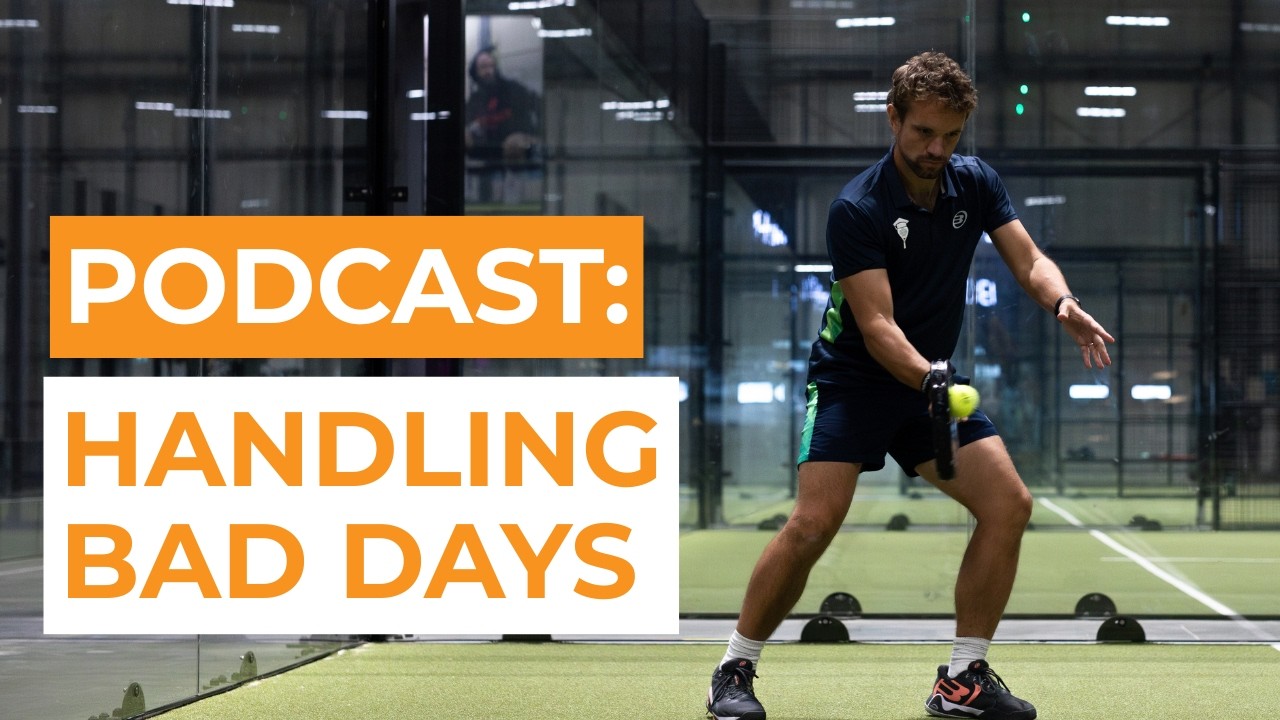
In this episode of the "Stop Spiralling" podcast, hosts Tom and Sandy Farquharson, together with co‑host Speaker B and world‑number‑one player Gemma Triay, explore why players experience "bad days" on the padel court and how to turn them around. They identify three main causes: unrealistic self‑expectations and negative self‑talk, the influence of an opponent’s strong performance, and the lack of solid technical foundations (especially footwork) among recreational players. The conversation moves from diagnosing the problem to offering concrete recovery tactics. They stress the importance of understanding the natural flow of a padel match, breaking the rhythm by taking brief pauses, and deliberately using the shots a player feels most confident with to rebuild momentum. Gemma’s pro‑level insight – play comfortable shots, avoid unnecessary risk, and gradually increase aggression as confidence returns – is highlighted as a model. The hosts also discuss the role of partner communication, routine between points, and simple time‑management tricks (e.g., drinking at change‑of‑ends) to prevent spiralling. The episode concludes with three actionable take‑aways: (1) recognise and accept the ebb‑and‑flow of match momentum, (2) break the rhythm by taking time and resetting with your partner, and (3) lean on your most trusted shots to regain confidence and control.
Chapters
The big question on today's episode is what you can do when you're having a bad day on the padel court.
And that is the key, isn't it? I mean, that is the answer that everyone seeks, is how can you get through this match even though you might not be playing your best? And I think that that's actually what the top players do so well. And I think that's a reason that Tapia Coello, like Gemma Rendelfi, like they're world number ones, is because on their not So good day, they still managed to get through.
Yeah, we've all been there. It's the worst feeling, isn't it? It's horrible. The bad days on a padel court is you go there, you might do everything, everything well beforehand. You might do a good warm-up, you might be feeling good, and you get on the court and it just isn't one of, one of your days. And it's really tough to, to turn it around sometimes. You're not quite sure how to go about it, and then you come off the court and you— well, it's one to forget, isn't it, when you, when you've had a bad day on the court?
Yeah, and I think that a lot of it is people putting expectations on themselves. Like, they maybe played well yesterday, so they come to the court thinking, today I'm going to play even better than yesterday. And then maybe the first game, they make a couple of mistakes, and they already start that internal dialogue of, well, I'm not playing as well as yesterday. This is not a good day. Like, they're already telling themselves it's not a good day. And before you know it, the game unravels. And I I think so much of it is like self-talk to, to almost get yourself in that position in the first place.
I also think with bad days, it's sometimes players focus on themselves when actually it might be that your opponents are having a great day and maybe they're forcing you to make errors, or, or maybe you're, you're not playing as well because your opponents are playing so well. And that's, in a way, that's the beauty of padel. It's the beauty of sport is that you're, you're never quite sure what's going to happen. And, and that is also something that I think a lot of players overlook when they come off and say they've had a bad day. And, and has actually— have your opponents forced you to, to have a bad day as well? Which, if that's the case, sometimes you have to say, well, that's, that's too good.
And I think as well it's an expectation. Like, if I think back to, to your tennis, like, you're, I would say, like, quite a perfectionist in terms of how you would train and how would you, you would compete. And I think it was Probably quite a hurdle for you to think, I will never have the perfect match. Like, I, like, there will always be a mistake. Like, if you look in tennis, like Nadal, Federer, like all the Djokovic, they would make mistakes. You look in padel, like the top players, they make mistakes, right? Like, and I think that accepting that as part of the sport is quite a, is, is quite important, isn't it?
Yeah, but I think it's so different with tennis and padel because there are so fewer variables in tennis. So you can— if, if it's almost like if you can get everything aligned in tennis, if you're— if you go into the match physically you're feeling good, mentally you're feeling good, you've done the right nutrition before, you're, you're playing the ball like you feel like you've had 3 matches before that you're hitting the ball well, you go on to that court and in a way you can't really have a bad day. You might do, but you actually feel like it's the odds of that happening are low, whereas I feel like I've had matches in padel where I've gone on, I've, I've felt great and I've, I've been hitting the ball well and I've come off and lost like 1-1.
Yeah.
And it's like, and I'm looking at going, that was a bad day. But then I was thinking, well, scoreline, it was a bad day. Actually, physically I felt good, I was hitting the ball well, but I've come off and had a bad day. So—
And, and on the, on the other side of it, you have matches where you win, yeah, like 6-2, 6-2, and on paper it looks comfortable.
Yeah, how on earth have I done that?
And that was like, that was just It felt ugly. Yeah. Like, I, I remember in tennis, like, you'd come off and you'd play an amazing match, you'd be 1 and 1, and you'd, you'd walk away and you'd be like, oh, I felt great out there today. I was just really hitting it. Whereas I don't think I've ever felt that in padel. Like, it, it's felt like every game, especially as you get higher, like, uh, when you're playing against a big mismatch, yes, you can have easy results. But as you get, as you get higher, like, every game is a bit of a slog. And I just don't know. know, I, I think it's the same for everyone. Like, when you talk to the, the pros and they do the interviews with, with Red Bull after the games, it's like there'll always be a, well, yeah, we got through that, we didn't play our best here or here. But like you say, the opponents have often, often caused that as well. And so I think going with the mentality that I'm going to just fight my way through this match and it's not going to be perfect padel, but I'm going to, you know, make one more ball than my opponent, I'm going to just keep fighting, is It's probably a good mentality to go into, into those matches, right?
Yeah, and I think that the, the mental side becomes more important, I think, as you go up the levels. We've, we've done a podcast recently on, on the importance for recreational players to build the right foundations with the right drilling, the right footwork. And I think that when we speak to the pros, that's— it's almost assumed that they have all of that, all of those hours that They've, they've trained and they've, they've got those techniques in place. But for a lot of recreational players, they're having bad days because perhaps they're only playing matches and they go on the court and their, their bandeja breaks down or their vibora feels horrible and they have a really bad day. But actually, for, for those players, the mental side is important, but really it's about getting the training in and it's about learning the foundations and the footwork. And you really need to do that That training. Now I think as you've got the levels and the higher the level you go, it's, it's around the mental side and like we just discussed, but I think for recreational players, a big part of this is getting the training right.
Yeah. And getting good with your technique, right? If you get good and we're always pushing footwork, footwork, footwork, footwork, like get the good foundation of footwork so you can have good preparation, good technique. And that's part of the reason why if you join the platform, the first course you get is around footwork and exercises you can do at home to be faster, to improve your technique. And. And we say like, that is like a really strong base that you can then build a more consistent performance on. If you haven't already gone to the platform, we'll put the link in the show notes. But then once you get better, and we talked to the pro players, and actually we've got a lovely conversation with Gemma Triai where we're talking about, you know, how she deals with a bad day being world number 1 in the world. For example, if you have a day and maybe you're not playing your best, Yeah. And maybe you're, Yes. Your vibora's not working, or, or some of your shots. Do you, what do you say to yourself with your game? Do you maybe say to yourself, right, I'm going to play more lobs, or I'm going to move my feet more, or how would you, how would you think?
I try to, to play with my, my shots that I have more comfortable. I try to don't invent. Maybe I try to put more the ball inside on the court and, and not to be Um, aggressive, or—
Yeah, don't take risks, you mean?
Yeah, exactly, in my case. And maybe in 2 or 3 games, then I feel more comfortable and, and I can play another time more aggressive or with more power, you know. So every match it's different, and there are ups and downs. Maybe in the first set you play good and the second one Uh, not too much. Yeah. And then in the third, you, you can play another time in a good level.
So. One thing I find fascinating when I speak to the pros about their games is that they are so aware that the game can fluctuate. Like, which there she's talking about, you know, it's going like this now. And so she relies on her more consistent shots and, and not taking too many risks. And it may change in a few games' time. And I think that's something that People need to understand as a, as a club player, usually if they feel like they're having a bad day, they think there's no getting out of this. Like that is the whole day is bad. Whereas the way that like Gemma was describing it there, it's like a few games later it could be different.
And if you're having a good day, expect that it might change because that, that's the other frustration, right? Is when you are having a great day and then suddenly it turn, it goes downhill for a, for a few games and you think, My day's ruined.
And I've lost track of how many matches I've commentated where it would be 6-1, 1-6, 6-1, right? Like, you know, a pair smashes the first set and then they get destroyed in the second set and suddenly it's like you're watching 3 different matches and it happens so often that you think it must be part of the game as opposed to, you know, a player being weak mentally. Yeah. It's, it's actually how padel is. It's like, it's almost like you build up that level of anxiety and it like intensifies. And it's such a release valve when you win the set that the— you step down and your opponents say, right, now we can actually go. And I think that so often, if I compare to tennis or other sports, is like, if you are, you know, 6-1 down, you think, well, I'm almost out of this match. Yeah. Whereas padel, I feel like, is— it's always possible to turn around. And it's the same within a set. If you go 4-love down, like, that set is still yours for the taking. If you are able to build momentum.
And I really like the, the practical steps that Gemma talks about around taking the shots that you have the most confidence in and, and building on that and, and trying to, well, like we talked about, is, is change that momentum and, and to try and find the ways that you can do it in a controlled way. And maybe you, if you feel like you've lost all confidence in, in your shot, take the shot that you feel most confident in, try and play that more often, try and build up a bit of confidence and, and The momentum can turn. And I think just knowing that, like we just talked about, is that already shifts your mind. Because how hard is it when you're in it, when you're in a negative state of mind, to snap out of it and feel like there's no, there's no light at the end of the tunnel? If you know, okay, actually this is, this is padel, this is, this is what happens. Just having that mindset, I think, allows you to, to make the switch.
And I think a little tip that can prevent you from really spiraling in your game could be To take your time. Like, that's something that's very difficult to do in padel. I remember in tennis it would be like, go and get the towel, do your shoelace, get the, you know, get the ball and you give yourself 20, 25 seconds. Whereas in padel it happens so fast. And at the club level, people aren't even like changing ends and taking a drink. Like they're playing the whole set, like back to back to back. And I think that if you want to find a way to break that spiral, and it's not bad sportsmanship before people say, oh, well, if you take a drink at this time, no, no, just follow the rules, follow like normal padel rules. Yeah. Take a drink at the odd change of ends and just like take a little breather and like compose yourself. And if you're able to compose yourself, go and speak to your partner, compose yourself with your partner, that can be a good way to, to almost prevent you like getting out of control and it being a chaotic day.
Yeah, because when you're rushing, like you just mentioned, if you don't have time to speak to your partner, you're— you can lose so many points, you can lose games. I mean, I've had matches before, you must have had the same, where Out of nowhere, you've, you've lost 3 or 4 games in the space of a few minutes. Nope, never had
that. Nope, just you.
No, it's a horrible feeling. You feel like it was all going so well, and then you almost can't explain— it's gone so quickly that sometimes you can't explain it. But I think as well, having a routine in between points, one that you stick to, and it means that you don't just start, start rushing, rushing around the court, because that's when it all falls apart.
I think as well, another consideration is your partner. And actually, we've got this little clip. I'll show you, this is a post from one of our community around a recent tournament that they played, and how they felt like they were having a bad day, and their partner was being a bit surly and also having a bad day. And I think that this is the difference really between like club and recreational versus the top level in that the pairs are working together to pick one up and, and If one drops, the other one kind of supports, and I think it's, it's a difficult shift to, to get that, that it's a team game.
Yeah, and I think what Gemma talks about here when she talks about building the confidence in her shot is when you have days like this, it feels completely out of your control, doesn't it? And I think it's, it's trying to find ways of bringing that control back in, and whether it's choosing a shot and, and building that confidence already, if you start doing that and you have You almost have a solution up your sleeve of, okay, I'm having a bad day. I know that I have confidence in this shot and that shot. I'm gonna try and build back my confidence and turn this around. I think just having that approach already gives you a sense of control because as we saw in this quote here is that it feels like it's just all out of your control and the match is just running away from you.
Yeah, so Tom, to summarize, Out by 3, which is our summary, our 3 top summaries from this episode, what is your, your number one?
I think the first thing is to understand the flows of a padel match, and I think that that alone, that alone won't necessarily stop you having bad days, but I think it will help you turn bad days around, is understanding that this is how padel works. Some, some parts of the match you're going to be playing great, other times you might make a few errors, you might start losing the score, and I think that Having that mindset going into a match and knowing this is the flow of a padel match, I think in itself will help you turn around bad days faster.
Tip number 2 for me is like breaking up the rhythm of it. So if you feel like you're, you know, things are not going your way, whether it's for you or for your partner, find a way to, to break that rhythm. Whether you go and talk to each other for 5 seconds between the points and, and Try and look objectively, like take yourself out of, oh, this is the 3rd bandeja I've missed now into the net, and take yourself out and go, right, you know, what are we trying to do as a pair? Like, what's our objective? What's our tactical aims right now? And just almost like zoom out a little bit on what's happening within the game. But you can only really do that if, if you take your time. And I think taking your time will, will break the rhythm slightly and it will help you like rebound back, I think.
Yeah, and I think for me, tip number 3, out by 3, I think the, the last tip would be have a think about what, what are the shots that you, you have the most confidence in. And I think that you can almost prepare for these bad days in advance instead of scrambling on the day and saying, I'm having a bad day, I'm having a bad day, I need to sort this. Is you can actually think about before you go on to the match court, say, okay, what, what are the shots that I have generally the most confidence in? And, and Sometimes you might lose confidence in those shots on the day, but generally we, we all have, I think, 3 or 4 shots that we feel very comfortable with. And know that when you start to have a bad day, is like Gemma says, you go dig into those shots a little bit, start to build up the confidence, choose to play those shots more, and try and change the momentum with the shots that you have the most confidence in.
And I would love to hear from the people watching, whether you're watching this on, on YouTube or you're, you're listening, or if you're one of our members, put it in the platform on How you are successfully turning around bad days, because I think, as Gemma said there, it's very personal and that's what she does, but I'd love to get your views on what you're doing to turn it around.
More from Sandy






Want to finish more points? 🎾 #padel #padeltips #padeltennis #sports #coaching
