We Fixed His Vibora with One Key Adjustment

In this instructional video, coach Sandy Farquharson (Speaker A) works with player Liban to improve his vibora (a slice/overhead shot in padel) so it becomes more aggressive, deeper, and lower off the glass. The session begins by identifying Liban’s challenges—uncertainty about take‑back, leap, height, and racket head position. The coach critiques Liban’s current stance, noting a habit of keeping the racket too close, insufficient weight transfer, and poor footwork. He demonstrates the correct ready position, racket take‑back behind the head, and a forehead‑level contact point, emphasizing a 3‑o’clock brush to generate sidespin. Throughout the drill, the coach uses a Spin Pro training aid to practice the brush motion at home, explains the importance of body rotation, a slight step back, and keeping the racket slightly behind the ball at contact. Repeated feedback focuses on footwork (sidesteps, crossover steps), weight transfer, and relaxed grip. The coach also references a 30‑day “Vibora Challenge” and a 7‑day free trial on thepaddleschool.com, encouraging viewers to train at home to improve foot speed and shot depth. The session ends with Liban feeling more comfortable, achieving better weight transfer, and the coach summarizing that footwork is the key to a powerful, low vibora.
Chapters
So Asad has told me he wants a bit more bite on his vibora. He wants to be able to attack the vibora, keep it deep in the corner and low off the glass. So that is what we're going to do today and transform that overhead. So Asad, we spoke before about being able to attack a little bit more. If the lob is a little bit shorter, maybe you can be more aggressive. Yes. We'll look at the vibora. Please. Um, what, what are you kind of struggling with, with the vibora at the moment?
Uh, knowing where to take it, knowing whether I should be on ground level or whether I should have a slight leap, uh, what height to take it at, uh, the racket head position. Okay, that's enough.
Let's have a look. I'm going to feed you some and then we'll have a look. Yeah. And then, then we can go from there. Perfect. Yeah, perfect. Uh, start in the normal, normal net position. I'm just going to put a couple of targets down for you just so you have something, something roughly to aim at. Okay? Good.
I don't think I'm in the right position to be able to control it at will at the moment.
Exactly, exactly that. That's exactly the difficulty. Right now, what you're doing is Technically, you're starting in the ready position, and can I just get you just, just here so you can see me? So, so you're in the ready position here, you're, you're, you're bringing the racket like quite close to you here, which is kind of a habit more than anything. And then, and then when you're hitting, it's almost like above you or, or it's too far back, and, and then you're hitting and then like, like opening. You, you have actually really nice timing on it, you hit it, hit it well. Yeah. But, but we can't transfer our body weight into the ball. Mainly again the footwork really. It's like from here we want to pivot to open, and then we're all about finding a position, whether it's sidestep like that or it might be crossover step to get into position. But we need to be slightly behind the contact so that we can actually go right through into the ball.
So is it transfer back and then forward?
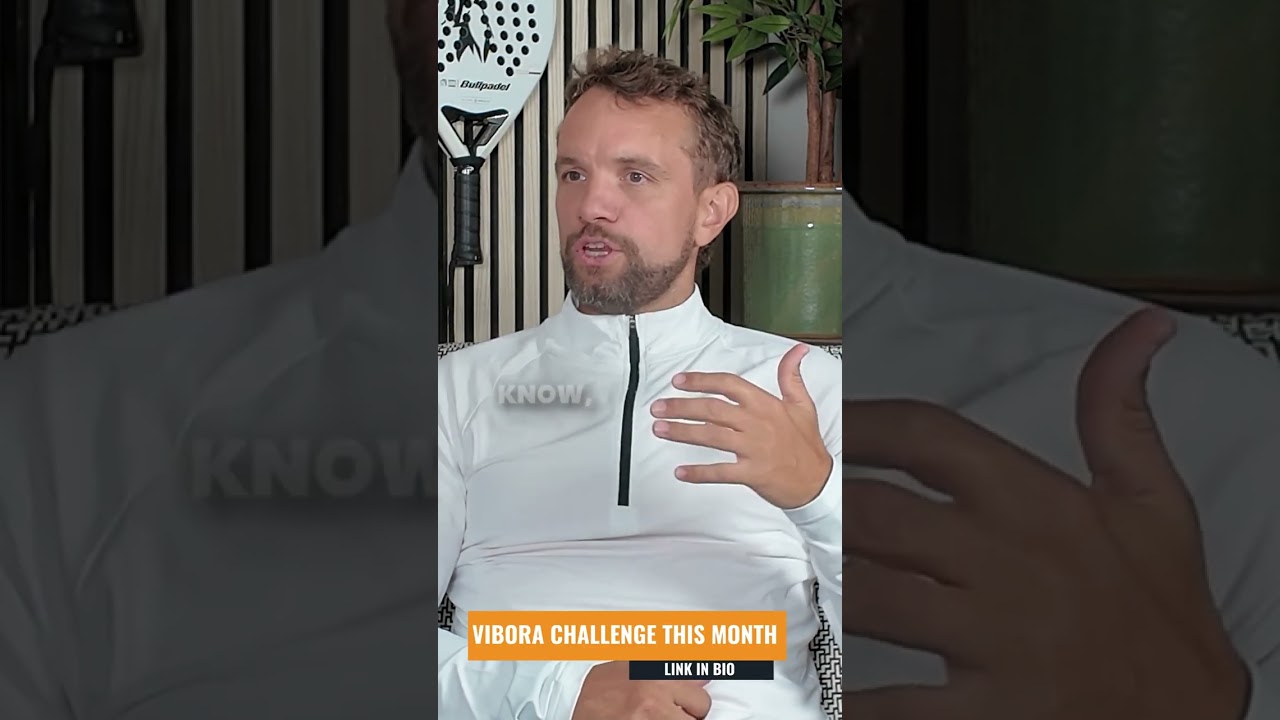
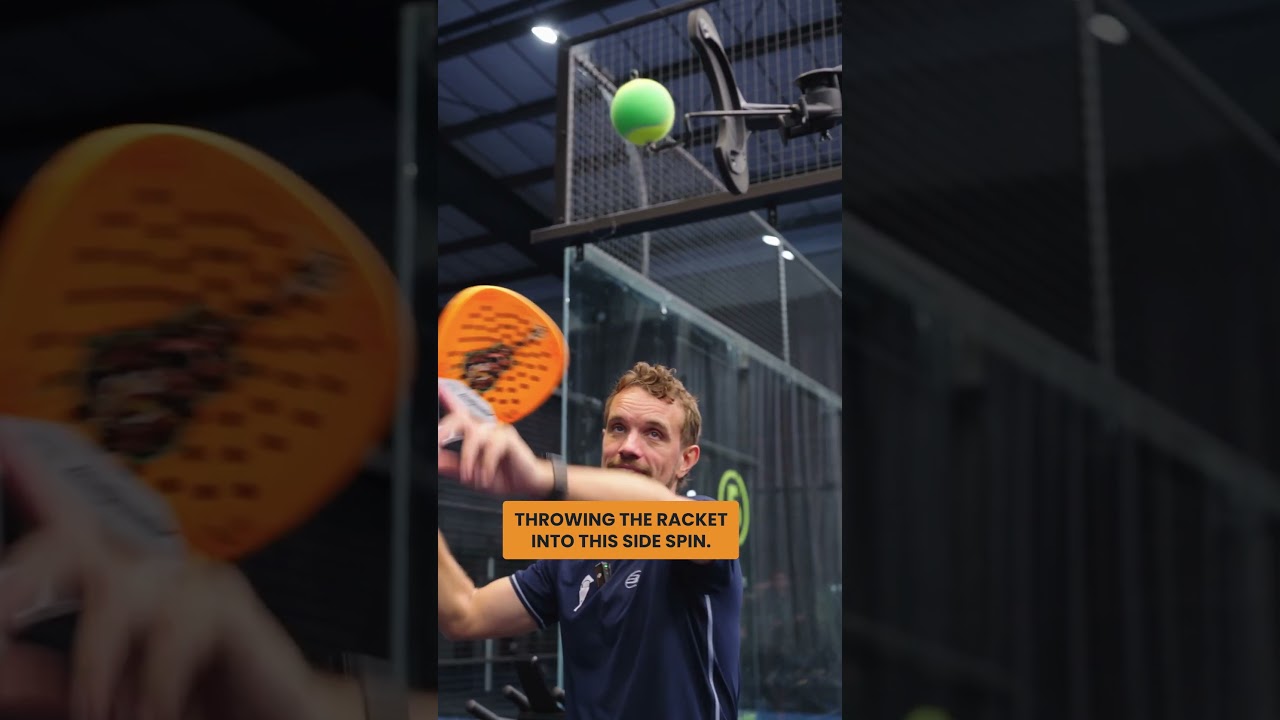
Yeah, and I think part of it as well is getting you used to the contact. Yeah. One thing I'd like to do is just have a little go on this, this Spin Pro. So, so we use this to practice a lot of slice. Yeah. But I think it's going to be good for you for, for positioning. A huge part of what we do with players on our platform is train with them at home so they can be better on the court. And a big way to do that, one of the ways we use, is with the Spin Pro. So this is a great way to get spin on the ball, and in this case, the Vibora, practicing Getting the right brush on the ball. If you can get this muscle memory from training at home, you will find it so much easier when you step back onto the court. This month we have a vibora challenge. It's a 30-day challenge for all players to work at home to improve their vibora so that they can actually be aggressive in matches and win more points. If you sign up today, you get a 7-day free trial, thepaddleschool.com, and you can immediately start working on your vibora with us at home. We're going to start with the ready, like the racket behind our head here, and then you're going to just throw At the racket. And, and do you see how I'm like throwing with my hand through and it's creating that sidespin? Is
that the height for a vibora?
Yeah, that's going to be our height, like, like forehead level. Yeah. And we're just going to throw from here around the side. Yeah. And you can see like I'm getting those rotations. I'm just to the side, so I've got lots of space, but I'm also throwing with my racket through, through that ball.
Hit at 9— no, 3 o'clock on the ball?
Yeah, about 3 o'clock to create the, create the sidespin. So, so come to the side, give yourself a little like that space, and one tiny step back, and I want you almost to feel your body weight going into that. So this is the position you go into actually. So it's almost like I want you to start behind here and then—
So I'm not coming up early enough?
Well, to here. Like you would with your— You almost want to have a little window here that people can see through, right? So from here, and then you're throwing horizontally through that. So you probably need to step a tiny bit closer, but see how you feel. Yeah, and brush, brush around the side. There we go, good, good. And I'm actually going to bring you just a tiny shuffle there. Yeah, and so you're going to go through that ball. There we go. And can, can you hear how that's like— Yeah, it's like it's quite solid. Yeah, and, and therefore it's not spinning. We want to really throw it like Like, like around the side of that, so you get that brush. There we go. Because spin comes from a combination of power and the brush on that ball. And at the moment you're just hitting the ball a bit chunky, right? So you almost want it—
So should I start with a shorter takeback and then work
up? You can just get the feel of it. Yeah, keep as much revolutions as you can. There we go. Good. Okay, now, now let's go to full swing. Good. And body— good. Pause, pause, pause. So can you feel like that, that is to the side of you, but just slightly in front?
Okay.
Okay, that's what we want to do when we go on here. Okay. So that when we're on court now, yeah, and we're going to hit this on the cross, if I just get you to this side for me for a sec. Just to watch for a sec so you can see me. No, no, yeah, so from this position and we're gonna have it so we brush round, but you can see like my— like the— you can see where my contact is, it's right by my front foot so I can hit into that corner. Yeah, so I'm getting back far enough, my racket is in a good position behind my head, and then I'm throwing through the contact, body weight going in. That's what we're going to look for. Okay. I'm going to give you some shorter feet. Shorter feet, fine. Just so you get the feeling of the brush. Don't feel like you need to smack these ones, yeah? Let's get you turned already to this side, because you're a little bit open as well. So
it's not an open shot?
No, it's turned here. It's closed. And then, because you need to have— the power comes from rotation. Turn. Good. Turn and rotate. Can I get you all— I want to get you already in this position. So turn to the side, yeah, and like light on your toes. I'm going to feed it to your, your side here, and you're going to throw the racket a bit like you just did with the Spin Pro. Elbow up, yeah. Okay, here we go. And again, in that position, turn to the side behind, brush your hair. That, that was sidespin, yeah, because I made you reach for it. One more like that. Turn to the side. Good. Okay, and again, brush behind. Good. Get that contact in front if we can, but you're coming in and then hitting up.
Okay.
Okay, I'm trying to get you to hit it on the side, forehead level. Yeah. Okay, here we go. Brush it behind. Good. At least the body weight's going forward there. That's nice, body weight going in. Yeah. Nice shot, very nice. Turn. Okay, let's get ready position for me now. So this is vertical racket, straight up to, to this. Ready? Ready. So, so from here to here, almost touching the back of your head. Yeah, turn. Good. Okay, so this time don't come forward because I'm going to give you a normal lob now. Okay, ready? So behind it, behind it, but, but you're not going back. So, so before I was giving you short ones and it's easy to step in. Sure. Now I'm going to give you a normal one, so you need to get behind it a bit like we did at the back before. Behind it, so you can go in. Okay, like the cuello bajada, right? Okay, behind it, behind it. Back, back, back. It's nice shot. Good. Back, back, back. Nice, nice accuracy. I'd like it still a little bit earlier behind, if possible. Behind it, behind. Good. What was different on that one? Why did you— only preparation. And, and, and also like that, that one, you, you Threw the racket through, and therefore the depth was there. Whereas when you kind of come up and the contact is here and the depth is there, it is what's bouncy.
Also feeling a bit more weight transfer.
Yeah, and it was a bit more flowing, wasn't it? Like you were kind of like flowing through that.
I wasn't trying to hit it actually, I was trying to
relax.
Relax, and all the power just came from the weight transfer almost.
Yeah, let's do 3 more where you just relax. Okay, if the feet are in the right position and you relax, they will be good. Okay, here we go. So behind that ball and relax. And again. Good. Nice vibora. Yeah.
Good.
And again, 2 more. That's the one we just snatch at it a little bit and it goes short. Can I get you one big step back? Good. Like, as soon as I lob, you're doing this and you're coming in, and then it's like, then it's up behind you. Like, I would rather— let's get you start at the 3rd post. Okay, I would rather you, you do something where your body weight goes in. Ready? Okay, same one. Do you see, like, body— we need the body weight to go in, but we can't have— the body weight can't go in if you're constantly behind it, if the contact is back here.
So the contact point right here in front?
Yeah, it's roughly—
where is it?
Where do you take it? Depends where the lob comes from, depends where you go. If it's come from cross-court and you're playing back cross, it might be slightly more central, right? If you're going to go down the line or change the angle, you're going to be slightly further in front.
Okay.
Okay, but, but for you, just think in front.
Okay.
Because right now it's by your back, it's by your back foot. So do normal position for me, but just let's make sure we get behind the ball. Behind it, behind it. Okay, good. That stayed low, that's nice. Okay, and relax the arm. That's a good one, that's the best one so far. Yeah. Behind it. Good, nice spin. One more. Good. Like the other areas of the game, so much of this is footwork.
Yes.
Like, like seeing the lob come off the racket, quickly going into a position where you're, you're here with enough space to the ball that you're also— your body weight is behind it so you can throw the racket.
Yes.
And go through it.
Yes.
As opposed to squash and tennis where we set our feet and then we adapt depending, you know, we use our shoulder and wrist to adapt. Whereas here it's really important we get that distance from the ball and it's all feet. Yeah, okay, feet. And for you, a little bit of preparation with the racket. How do you feel with that, Liban? Yeah, yeah, we can do a few more.
You sure?
Yeah, sometimes with squash players, you know the serve in squash? Yeah. Where you put, you put one foot in the box. Yeah. And then you throw, and you throw it up and you hit. Sometimes I compare the Vibora a little bit like, like that, because often your, your contact is—
Yes.
Forehead level, right? You throw it up and you, you play like that, and that's— Yeah, yeah. And it's a real distance from the body, like that's what we're going for.
Do you know what it was? It was in my mind actually thinking to myself, if I— if it drops too low, it's just going to hit the net every single time.
Yeah.
And that was what I was fearful of.
But we haven't seen that yet. That's, that's the thing, is often, and it's, it's completely normal, people are afraid of— it's a bit like people don't want to go back on the glass because they, they're afraid of that one time that it shoots away.
Yes.
And you say, okay, well, you're gonna scoop the ball 100 times rather than have one that shoots away.
Shoots away, yeah.
So, so let's, let's go for it. Let's, let's put it so that it is too low. Let's see. Perfect. Yeah, and again. Behind it. I'd still like that preparation a little bit earlier, like so we go more to here and then through. Good. Maybe I'll put the basket by the target and then we're— Then we're gonna hit the target. Here we go, behind that ball. But that's there. Like, go, go back. Like, get behind. Like, not now, but when— as soon as I feed the lob. Like, I'm here, lob, get behind it. Better. Do you see the difference on the 2 trajectories?
Yeah.
Like, one is down and bouncy, the other one is, is long and low. Yeah, behind it, behind it, behind it. Good. Here we go. Yes, that's a good one! Again, behind it. Contact back. Yeah, behind that ball. Very nice. One more, I said. Yeah, behind it, behind it, behind it. Good. When you get behind it, it's a great vibora. How do you feel?
Feels more comfortable.
What are you focusing on there?
Honestly?
Yep.
If I get far back enough and I know where the contact point is,
yeah,
then it's just a case of actually I'm lightening my grip now.
Yeah.
And just throwing the racket at it because I know it has to be roughly around this sort of area because generally my Ball contact and hand-eye coordination is okay, but it was a case of not knowing where to hit it to do that.
Yeah.
So now because I'm behind it and I know that I'm letting it drop to my comfortable position, and then it's down to me to what I do with it, then that's, that's where we're getting the money.
Thank you.
Thank you.
Good stuff. Fast improvement though. You can see from the result from Asad with his Vibora the importance of the footwork. Getting yourself back into a good position so you can actually transform that body weight into the contact and therefore get depth, keep it low on the slice, and importantly get the contact in the right place. You can only do all of that if the feet are in the right place, and that's why footwork is so important. And we push footwork hard on our platform. If you join our platform, that is the first thing you see— our footwork course where you can do this at home in your garage, in your garden, to get faster feet so you can bring it to the court and be faster on court and therefore hit better viboras. Sign up to thepaddleschool.com today, get 7-day free trial, and I'll see you in the community.
More from Sandy





Want to finish more points? 🎾 #padel #padeltips #padeltennis #sports #coaching

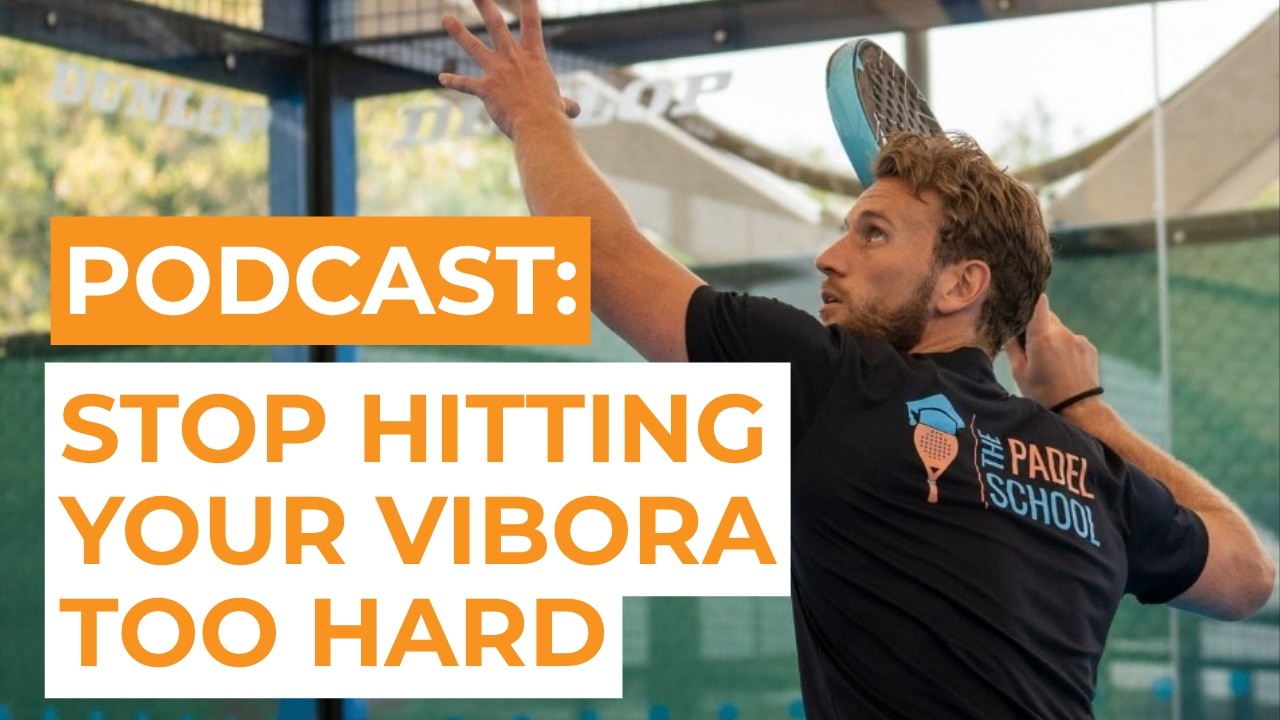
Want more side spin on your Vibora? #padel #padeltips #padeltennis #sports #coaching