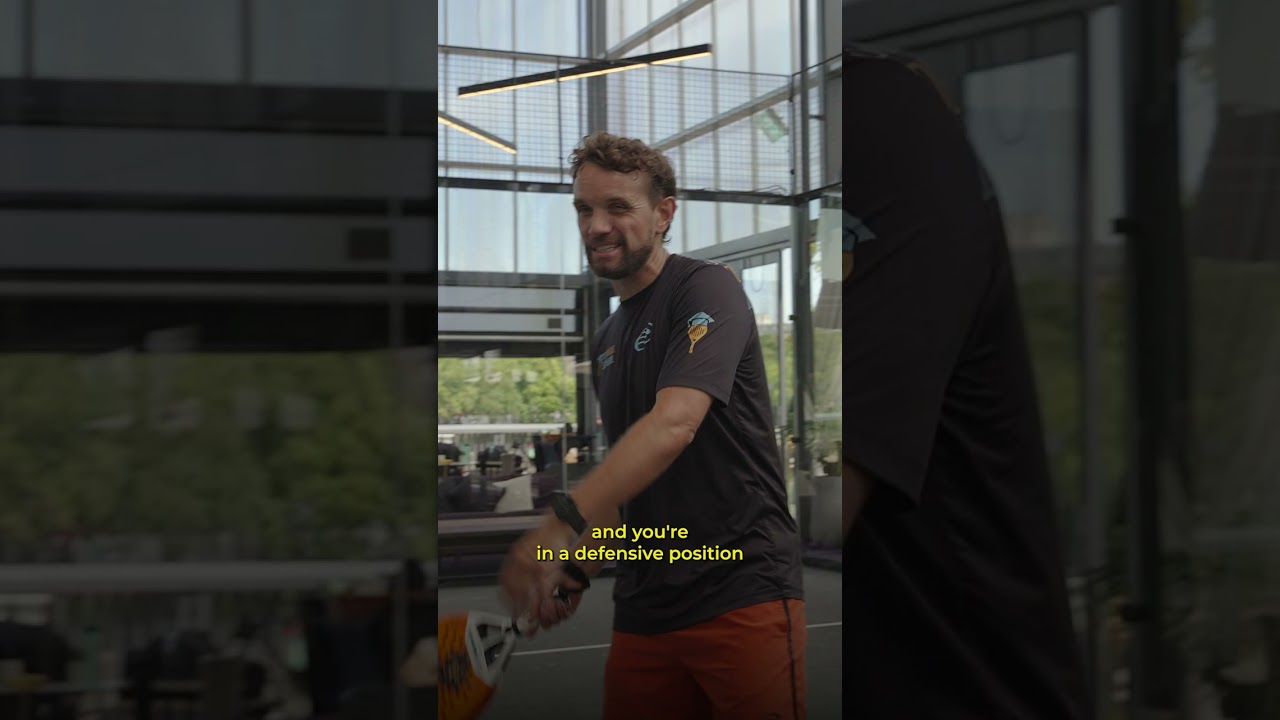
Sandy Farquharson explains when to use a slice and when to skip it. The slice keeps the ball low, but using it on fast or low balls risks popping it up, and slicing from the baseline against net-rushing opponents gives them an easy volley. Read the ball speed, height, and where your opponent stands before committing to the shot.
Chapters
Hitting a good slice can be really effective, but if you're trying to do it on every single ball, you are making a mistake. In this video, we're going to show you what you should be doing with your slice and on which balls, and which ones you shouldn't be trying to hit slice on. Most players know that slice keeps the ball low at the other end, and yes, it can be really effective and satisfying when you hit one of those slice balls and it dies off the glass. But what you need to look at is the ball that you are receiving. If the ball is fast or low into the corner on your side and you're in a defensive position, trying to play a slice on that ball will a) either pop the ball up or b) make a mistake on that shot. So you can't use it on all of these balls. So let's have a think about this. If you are playing a slice from the back of the court, where are your opponents? They are most likely at net, and one of the most effective reasons for using a slice is the low bounce off the ground. So if you hit a slice, it's because you want to keep the ball low off the rebound. So when you're at the back of the court, if you hit this slice, they're in there, you're not going to see the bounce. They're most likely going to volley this ball. So you going for slice is taking unnecessary risks. And if you try and float the ball with a slice, often your face opens, it floats to the net players, and they can kill it. Or you try and play a faster slice on a difficult ball, and you've got no margin for error because you have to hit so low over the net to be effective.