Why Great Padel Clubs Build Coaching Teams—Not Just Hire Coaches
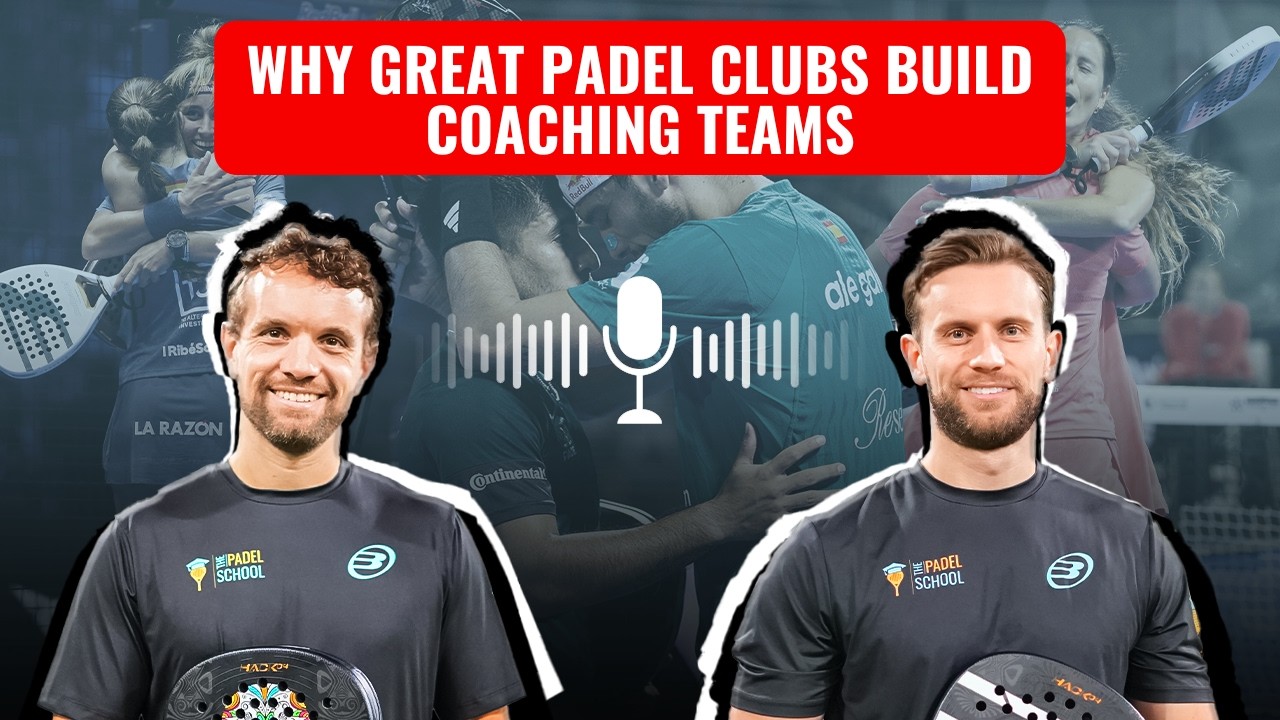
In this interview, host Sandy Farquharson talks with Aiden, the director of Coalition Paddle in Johannesburg, about how the club has moved from a fragmented, private‑lesson‑focused model to a cohesive coaching team that delivers structured group programs. They discuss the value of coach networking events that break down silos, the shift to 4‑, 8‑, and 12‑week group curricula, and the operational targets that now see the club delivering around 250 coaching hours per month across five courts. Aiden explains how they manage a largely freelance coaching staff, invest heavily in coach education, and maintain program continuity when coaches leave. The conversation also covers challenges in building a sustainable youth pipeline, the importance of setting high coaching standards, and how group lessons better translate technical skills to match play. Throughout, both participants stress the cultural shift toward collaboration, continuous learning, and the long‑term benefits of treating coaching as a team sport rather than an individual service.
Chapters
Super excited to be here today with Aiden from Coalition Paddle, our paddle school academy here in Johannesburg. Aiden, let's talk about coaches and how we can develop coaches to bring out an amazing program at your facility.
Yes, Andy, great to have you guys back here again. Always a buzz when you guys are here. And yeah, we've done some work this weekend already and looking forward to talking about it.
We did something really interesting yesterday, which I want to talk about now, but also talk about how that develops the journey of a coach. And we held an event which was for coaches. We held an Americano from coaches in the local region to basically come and play on court and network and have a chat and share ideas. And my experience around around the world really. And if I think about my tennis days, the same with my padel days, is often like coaches are not really sharing ideas. They're not, you know, kind of giving information to peers. They're seeing it as competitive. And you see that in the clubs like space as well. Like, how did you find yesterday and how important do you think that is like to developing?
Yeah, it's like what I said yesterday with the coaches, you know, I think looking this time around, it's to kind of break down those barriers. You know, we've been on this, this journey with you guys for almost 2 years now, and we've seen the real benefits within our own coaching staff, you know, as to the level and the professionalism. And I think it's the recognition that to grow coaching in this country and to continue growing the industry, it's to not just keep it in-house, it's to try and look and open our doors a little bit and also try and share the knowledge we're gaining, especially from you guys. So yeah, to have everybody here yesterday was, was really cool. And I think what we could pick up from the energy was how desperate everybody is to actually network and to actually share those, um, share insights and to share information. I think everybody kind of feels like they're operating in silos a little bit. So, um, that was the start of hopefully something we can do more of in the future. And being our first time trying to do that, I think we got a really good reception from everybody, and I can only see that growing as, as we go on.
Yeah, I think some areas of padel here are more developed than if I compare to like the UK, for example. Like, you You have good league structure, you have competitions. I feel like I've seen quite a few juniors, like yesterday, which was fantastic to see juniors playing. And it's almost like the coach education piece is the bit that kind of holds it together. It's almost like the glue, I think, that you have. If you have good coaches, then at least you can start your junior programmes off well. And when people play leagues, they get competitive, they want to improve, they need to go to good coaches. But I think in the first couple of years, Everyone sees like clubs as like land grabs. It's like, oh, I need to get this club. Yeah, these are my players, these are my coaches. And it's a really hard thing to break. Like, your background is kind of football coaching and football academies, and so to come to this, it's like, it's hard to take that first step. The step you took yesterday that a lot of the coaches were like, oh my God, I can't believe you've done this. Thank you so much for bringing us in and making you feel welcome. It's a hard step, but I think that it's one that like clubs and coaches need to make, right?
Yeah, I think so. And I think what we're seeing now in SA especially is our market is kind of maturing a little bit. And in the beginning, it was very much open a club, people come and play, and it was like, okay, we don't need to change anything, this is working, like the courts are busy and off we go. And now as we kind of steadying in the market, we're seeing clubs looking at and they're like, oh, hang on a second, we actually need a little bit more than this. Like, we need a coaching program, we need people to front the business, we need people to come out here, be professional And I think we're starting to see the benefits of that as Coalition. You know, we've, we made that decision very early on to look for a credible coaching partner. And what I also picked up yesterday and what I'm picking up in recent conversations is people are looking, they're like, okay, how did you do this? Or where did you get the benefit from that? And like, there's more questions being asked. So yeah, I mean, it's, it's great to see, you know, it's picking up momentum for us. And yeah, I think, yeah, there were so many good conversations that came out of yesterday. And I mean, you just referenced the juniors, you know, and we had, you know, the head of the youth committee here again asking questions and probing and saying, listen, can we bring this, do that, and how can we work together? And I think there's real good momentum, you know, being picked up for us in our coaching program.
It reminded me of when we first started here, and like in the area, a lot like we see around the world is there's a lot of privates. Like coaches give a lot of private, like one-to-one private,. And it's very comfortable for the coach. It's pretty easy for them to give. And also, like, players get in a mentality of, I'm getting VIP service because this is a one-to-one and we're doing that. And I remember at the beginning it being like, groups are the way forward. Like, for a club, for a coach, for earning revenues for both, for the player, like, you know, to be able to do tactics within your sessions. And I think that that was the hardest step at the beginning, was saying to the coaches, look, I know you're used to doing privates, but we now as a club and as an academy want to move forward with like doing structured groups. And I know there's lots of clubs out there that I speak to club managers and owners all the time saying, oh God, we really want academy, we really want programs. Like how would you advise a club to get that started?
Yeah, look, I do think it's, you've got to obviously trust in that, and you've got to also believe in the fact that that will work. Um, you know, there's one thing people telling you, but there's one thing also believing in it. So I think that for us it was something that we made really early on. We were like, guys, we want to go in this direction, we think this works. And I think padel is such a good sport for it as well. I mean, we always draw these comparisons between padel and tennis, but tennis is a very much— the bulk of tennis is an isolated singles journey. You know, padel is so different, and I think the big light bulb moment was to stop treating this like tennis and treat it as padel, treat it for what the sport is. And this is a social sport played in pairs, and you need those class dynamics, those group dynamics, to really bring out the best in the sport and to bring out the best teaching moments as well. So, you know, for us and our team of coaches, you know, we started as just myself, and then it was cool, we brought on another coach and then another coach, and now we're a team of 5 coaches. And You know, it's not to say we have all the answers. We're still working in that perfect direction. But with each passing day, you feel us as a team start moving more and more into that direction because we're starting to see it on court. We're starting to see it in the enjoyment of our clients and the enjoyment of the coaches. And we're all just having so much more fun coaching in the group, in the group dynamic. So I think you, like you said, it's— it takes a little bit of time, but once you kind of see the light and you actually see like this actually really does work and it's structured And you know, the 4-week, the 8-week, the 12-week, the junior programs. It's just a matter of now executing and executing in the right way. And we're going through that now. So yeah, I mean, I can't speak highly enough for the value in it. And it's working really, really well for us.
I think as well, like almost it'd be good to discuss a little bit like where you are now in terms of your 5 courts. Recently put in a 5th court, with 5 coaches and how many coaching hours are you doing a month? I think you have a target to set, right? Like, almost tell us a little bit about your targets within the club and the targets for the coaches to make them, I say to make them deliver the programme, but they're on board, right? So it's almost like to incentivise the programme.
Yeah, yeah. I mean, I remember full well in the first month, like I think, I think I did about 12 hours in that first month, and like, that was just me doing that. And I've always loved coaching, as you mentioned earlier, so I'm always going to be a part of it. But I mean, now, you know, our target is 250 hours a month, and that's between the 5 coaches, and we comfortably reach that. I think our best month's been 282 hours, which was in April. So, and that's all off-peak time, you know, that's all clients coming in here in search of information and education in outside of your normal booking times. So I do believe we can go even higher. We've got the capacity to do it. We have built the fifth court. A huge bugbear was all this rain and all those cancellations and stuff, and we are working on ways where we want to try and eliminate that so that we get zero cancellations. And then I think it's also a big help in the program. So yeah, so we're very proud of the direction we're going in.
I think as well, like, a couple of the coaches are quite new as well, so it's almost worth saying you're building that programme up. And I mean, as a Brit, I'm not sure you can complain to me about the rain, but I mean, the fact that you're now going to cover those outdoor courts, I feel like you're constantly evolving and working with the club. And a big part of that is these programmes and delivering these programmes. And I think each time I come, there's more and more programmes and less and less privates. And a big part of this educating the players. I had this conversation yesterday with And they're now taking a couple of privates and a couple of groups. And it's like, it's that conversation with the players to just, hey look, we want you to understand that good group coaching is a great way forward. And yes, okay, an individual can be good if you want to work on a specific technique, particularly a vibra or a touch and dash or something that is more aggressive, it's more difficult to put into a group setting. But for the majority of the time, you can cover good technical work and tactical work within that group.
Yeah, I mean, I just— before I go on to that point, I just wanted to go on one more point on your question earlier around the team of coaches and coaches. I mean, our team, we've got quite a diverse team, you know. We've got coaches that are playing at the real top end of the local game, and then we've also got coaches that actually don't really have a tennis background that are coaching the game. And it doesn't mean to say any one of them is busier than the other, and I think that's where falling back on the program is really, really good. It's falling back on the material that we constantly coach with. So we've got all these tools that empower the coaches in a great way so that when somebody comes in, regardless of the background, they know that they're getting in front of a good coach, an educated coach, a qualified coach. And I think that helps a lot in terms of just filling out the hours and getting the guys busy.
But, um, can I just make a point on that? I remember that with, like, I think it was in the end of the first year, and we'd done the programmes, and you were doing the groups, and you had a moment where one of your coaches who was delivering the next week, he left, like, out of the blue.
Yeah.
And he was halfway through, like, the 8-week programme. And I remember getting on the phone with you, like, almost like that week, and you being, it was so good because another coach pretty much just took up, and took up week 5, and just carried on the rest of the term. And I think that, like, that is a huge value to the structured programmes, because I think A lot of coaching and clubs around the world, they say, right, well, our coach, yeah, he goes on and he decides what he works on that day, and it's structured because there's a group of 4. Well, it's not, that's not really a structured program, because if he were to disappear off on holiday or whatever, could someone come up and pick up where he's left off with his players? Do the players know where they are in their training? You know, does the coach know where they are? And I think that most of the time they don't, and that was a kind of light bulb moment, I think, for the programs.
Yeah, I mean, like, as a practical real example was, like, last Friday, you know, you— I'm sorry, what, Friday just gone, I came and picked up you guys and a coach just seamlessly dropped into the lesson that I normally do on a Friday and picked up off on week 5, done. You know, the customers, you know, they just, they see a different coach, which is great, there's a different flavor, but the topic is still there. The topic is what we were going to cover anyway. And, um, you know, structure. Yeah, and the structure.
Yeah.
And with our coaches that are also playing at the top end, you know, they sometimes are diving into competitions and tournaments here and there, and it's very easy for the rest of us to just pick up off where they left off and just kind of jump into that lesson. So huge value there. Um, and I mean, just going back to the topic that you mentioned around privates and groups, like, I think the, the holy grail is almost reverse engineering the way that conversation happens. It's like somebody coming into a group, being within a group setting, going through a couple weeks in that group, and then popping out of there and being like, hey coach, I'd like to please work on this, you know, outside of the setting. And that's where a private can plug in, rather than the other way around, where it's like a private and you're like, hey, by the way, we've got these groups, jump in there. I mean, that does work, but in a perfect world, it would kind of be the other way around. Um, and in that way, you know, you also, you kind of see your clients also in more of a game setting and then going into a private rather than a private and then into a game setting. I just think it's a better transaction.
Yeah, definitely. We speak to players all the time and they say, oh, I hit the ball great in my lesson, like in my one-to-one private, I'm hitting great, my bandeja is great, and then I get in a match and I can't, I don't know how to use it.
Exactly.
And I always say, well, if you were in a group lesson, you can work on the technique of the bandeja and you can also work on the tactic of it and you can put it into condition points and you can, really use it within the setting. And I think that that's an example of why group lessons are so valuable, particularly for a club.
I mean, as an example, Sandy, like, if you're in a private, like, you know the ball's coming to you, like, it's 100% coming to you. Where else is it going to go? In a match, it doesn't work like that. In a match, it could go to you or your partner. And just readying yourself for either eventuality, you just cannot replicate that in an individual lesson. And there's probably one or two methods you could try to get creative around it, but it's not the same thing.
So we've talked about like the, the setup of the academy and, and getting people into groups, and you're at a stage now where you're, you're getting a good percentage of your hours in the month in group lessons. Like, what, what's your goal now for the next year? Like, what are you looking to try and do with your team of coaches? How are you differentiating yourself? How are you setting the bar for everyone else?
Yeah, I mean, it's like I touched on earlier, you know, it's, uh, we're on the right track, but we're not perfect. I think we do need to tighten our systems further. I think we, like you guys visiting this week, and we're going to do some workshops a little bit later on, that's the continuous, you know, coach education aspect of what we're doing. It's not this thing where you visit and we do something and off we go, we highly qualified and we got the answers. It's to have those constant check-ins to make sure we're on the right track and in the right direction. So it's to continue honing our craft, it's to continue crafting those groups and probably, probably creating those groups in a bit of a better way, a little bit more organized. Like I said, the numbers are there, but it could be optimized better. So that's a continuous journey. So it's that, and then it's also trying to pick up our youth program. You know, our youth program is a stop-start program. I can openly admit that. And we feel like we've got the structure and we feel like we've got the resource, but we're just not getting the numbers in just yet. And it's a, it's a game that we're willing to be patient with, but we do need to be innovative in our ideas. So that's something that we really want to sort of turn the lens onto in the next year. And I think that's also just trying to future-proof the sport. It's currently being funded by the adult program, and, you know, you need to, you need to get the youth playing. They're happening in small dots and spaces, but we We kind of want to hopefully build that a little bit better.
Yeah, and I think the youth, it takes time. I do have a question for you which I'm interested to know the answer is. A lot of pushback we get from clubs is to say our coaches are freelancers. Now you've mentioned you've got 5 coaches. I think they're all freelancers, like they're all, as in they all work for themselves. And a big pushback from clubs is, well, if I invest in the coach, as in coach education, they could just leave. Like, that, that's a worry. Like, and so a lot of clubs think, I don't want to, I don't want to invest our, you know, revenue, our club revenue in our coaches because they're freelancers and therefore they, they may leave. Well, you actually, the majority of your coaches, I mean, some are new, but most have been with you from almost from the start. And like, what would you say to, to club owners or managers that, that are thinking like that? And, and I suppose, like, how important is it to invest that into your coaches?
Yeah, I look, I mean, that is something that we do heavily. I mean, just you guys as an example, as an investment in the coach education, the, you know, the Bull Paddle alignment is another thing. We provide all the equipment. We try and make sure that the coach is kitted out and equipped to execute a good lesson. And I mean, Whether it's right or wrong, there's a trust element to it. And being a coach myself, you know, I can hopefully get onto the level of the guys and relate to them and become a very relatable person rather than somebody trying to sit here. I want to sit there with them and we can problem solve everything together. And yeah, I mean, it's something that's going to evolve over time, the coaching industry. I don't know where it's going to land, but For us, it works, and it currently works, and I don't see any reason to change it too much because we have a good relationship. The guys are enjoying the space. They feel professional. They look professional. You know, the clients can feel that, and they can feel the investment that we're making. And I think also just over time, that's only going to put us in better stead. So yeah, it's also a direction that is very close to the values of the club, and that's to push a heavy, heavy coaching narrative here. And anybody that kind of looks up Coalition Padel does that, you won't have to look too far before you see some coaching paddle school affiliate link or something that speaks to what we're trying to do.
I think as well, sorry to interrupt you there, I think as well at the beginning I remember we were starting, we're bringing on the coaching, and it's like, right, we want to do this, and it took a little bit of time with the coaches at the time. And then like word of mouth really within coaches is like, oh, actually Coalition are are trying to do this, that they're pushing in coach education. And now you almost have a waiting list of good potential coaches that could come in, right? And I think that that investment in the coaches is seen. It's seen by other coaches, it's seen by the industry, and coaches want to work for someone that's doing that, right? So, so I think that's another advantage to doing that, even if they are freelancers.
Yeah, and, and it's something that I openly say to all the coaches here. I say, let's set a standard that actually scares people. And I say that in a nice way because I want our standard to automatically do the filtering out, you know. I want us to attract the right people, the right caliber, people that are willing to be part of an environment that supersedes themselves. There's a greater than just yourself. And, um, I think that does actually kind of happen You know, people and coaches, they look at it, they're like, oh, you know, that's really cool and I want to be part of that. But how much do you really want to be part of it? Because it is great, but it requires you to also carry a certain standard. And hopefully that standard is something that isn't too achievable everywhere, because you want it to be something that people aspire to. So that's also the continuous journey, is to push that standard. And I mean, one of the things that we always say is challenging the standard. And I've said that from the start. And, um, yeah, like, I think here locally, like, Coalition Padel has a, has a bit of a name for some people, a little bit like they look at it as the place where they can learn how to play padel. And that's great. And you see that in the way that the clients and stuff play here. Like, they— I've, I've noticed it from the start. It's like, you know, when we opened our doors and people came and played padel, and now seeing similar clients play, like they're playing the game of paddle. They've adopted the culture here. They've jumped into lessons, jumped into classes. They're playing, and they're seeing everybody else is like trying to craft the game of paddle, and they feel like, I need to upskill here, like I need to become part of this. And I'm very proud of that because, you know, we can talk all day about coaching, but if there's no real result, you know, what does it actually mean? And I think our clients also feel that environment, and they kind of try and achieve that excellence here. As well. And that's hopefully driven by the coaching staff.
Yeah, absolutely. I think probably like both of us are very open with our kind of knowledge and trying to help. And I think that probably if anyone is in Johannesburg and is visiting, like look you up, like through Coalition, or if there's any club managers out there that, you know, want to pick your brains or have a little bit of a thought, I know you're very open to that as much as we are. And I just want to say, yeah, thank you for this episode, and I'm excited to see where Coalition Paddle goes.
And yeah, thank you, Sandy, and thank you for your time. And yeah, thank you for your continuous input. Yeah, I think that's also something that must be said, is that there's a lot of coaching qualifications and things and information out there, but you guys also back it up with making sure you put effort in and the in-person travel and everything. And that goes a long way for us as well. So, you know, I think as much as we open, we don't to know everything. We never have, and we also open to sharing ideas and learning from others. And, um, yeah, I— yeah, reach out, guys. Hopefully let's continue this chat in a grander scale.
Let's do it.
Thank you.
More from Sandy





Want to finish more points? 🎾 #padel #padeltips #padeltennis #sports #coaching


Want more side spin on your Vibora? #padel #padeltips #padeltennis #sports #coaching



Your partner can’t read your mind #padel #padeltips #padeltennis #sports #coaching

Struggling with your bandeja? #padel #padeltips #padeltennis #sports #coaching