Why Most Padel Players Get Tactics Wrong
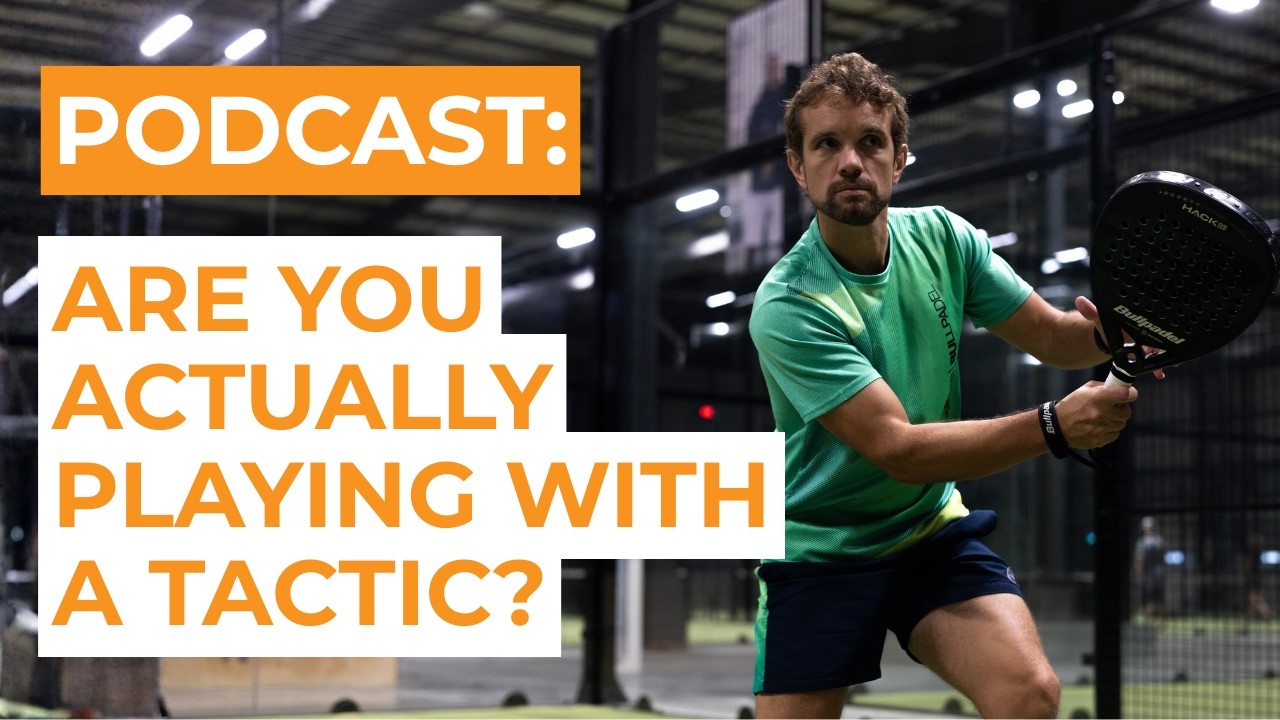
Sandy Farquharson and Tom explain why padel players fail tactically: they skip the pre-match game plan and don't align with their partner. Use a Training & Match Journal to record tactics and adapt during play, treating it like cat-and-mouse rather than static tennis strategy.
Chapters
Tom, many players really struggle with understanding tactics, deciding what tactic to use initially, and also how and when they should change tactics. In fact, a lot of players go into a match without even having a tactic. So let's start at the beginner level and move our way up to, to the pros. What should players be thinking when they step onto the match court?
Well, starting with beginner players, I think the first thing is have a tactic. And I know that sounds really, really simple, but this idea of just going onto the court and, and not having a game plan or not having a tactic, it's the classic, isn't it? If you don't have a game plan, you're not working towards anything. So I think the first thing for beginner recreational players is have a tactic.
And keep it simple, right? I think people fall into 2 buckets. Either they go on with, with no, no tactic, and it's like they talk to their partner about what they're gonna have for lunch, and then eventually they get into the match, and who knows, like the set, the Just disappears.
But lunch is sorted.
But lunch is sorted. Or they go in and they're like, right, you play that shot down to there on their backhand, and then I'll play this here, and then I'll play— and, and it's, it's just overkill in terms of like the analysis and, and tactics that they do to start. And at the beginning, even if you've played your opponents a lot of times, you should go in with a simple tactic and then analyze how the day is going, like on that specific day. Do you know what I mean? We, we could play the same people today and then we play them again tomorrow and there will be slight nuances and differences between the 2 days. So I think the first thing is, you're absolutely right, go in with something simple and maybe some examples might be, right, let's start this game. We're gonna maybe play the first ball or 2 down and then let's lob down the middle. And then when we get to net, maybe put pressure to one side, like something simple, like nothing too complicated.
Well, it's clarity, isn't it? Is, is, is What you're saying there is, and it's particularly important for both partners to have that, because if you have that mindset but you go onto a court, and let's say you're playing a tournament and you haven't spoken to your partner or you're not on the same page, you might have that clarity, but if your partner doesn't, then it's a 2-player sport. So it's really important that you create that clarity together as a pair, 'cause otherwise, like you said, it might feel overwhelming if you've got a really clear tactic in your mind and you're telling your partner, oh, we should be doing this and this, this and this, and—
Yeah.
They can become overwhelmed and before you know it, they're, they're not enjoying it and their level is gonna drop.
Yeah. And I think communication is key for that right at the beginning. And, and let's think how you and I, if you and I were going into a match, we would get there early. We would do our, probably do our warmup together. We would have a chat. If we knew our opponents, then we would say, oh, this person I know has got a big overhead. So maybe when we start, let's play the lobs to the other side. Or there'd be some, like some Information exchange like that, if we didn't know the opponents, we would say, right, this is what we want to do at the beginning is maybe play a lot of balls and get some rhythm. And then when we do our warmup, we would finish the warmup and we would go, hey, Tom, like my guy, he doesn't defend very well, like on the backhand side of the glass. And you'd say, oh, mine has really strong volleys. So, and then, and those informations would essentially dictate what our starting tactic is, right? Yeah.
Yeah, and I mean, we created this training and match journal specifically for this. So before we created this training and match journal, we, we used to have just a plain, a plain diary, didn't we, that we would jot notes down in. If we were to play a match together, we would get our journals out before, before we'd play a match. Perhaps we would have a couple of notes that we took the evening before, and we'd bring them in and chat about them together. And we really created this, this training and match journal because we, we had diaries, but actually the, the best way of doing that is to create a structured, structured journal that you and your partner can use pre-match, post-match. So if you are interested in, in that journal, check out a link in the description where you can have more information on that. But exactly, information exchange. We like to use journaling. I think it's a great way also of, of changing, um, the the sort of parts of your brain to— when you put pen to paper, it's, it's a slightly different approach. And I think for, for us that we found that you gain a lot more clarity by doing that. But yeah, definitely coming together as a pair, getting really clear, um, and, and communicating well before a match.
And I quite like it because if you and I play 2 opponents, for example, that we play the match, we come up with our tactics, whether we win or lose, we, we can make notes in the journal, and this worked well today, this didn't work so well today, you know, here's my notes on what to happen next time. If I were to play the same pair but not with you, with another partner, I have it as a reference. Or quite often you and I could play together, but they as a pair have separated, and then you can get information about one of the players. Because it's very difficult to really have a clear tactic if you don't have any notes, if you don't have a kind of thought process. And I just find that the journaling helps us, and even as a coach, actually, like with the players that I work with, they journal and they, they can then say to me, oh, look, this happened in the match. Whereas if they don't journal and they come to a lesson and I say, how was your match last week? It was like, uh, yeah, I played well. But there, there's not the, there's not the analysis. There's not the, the clear, like, okay, this is what we now focus on. And I think that it will help players so much having that, that clarity.
Yeah. Particularly after a match when, when you come off a match, you might be slightly biased if you lose a match, you might be in a negative mindset, but I feel like usually players are quite clear on what they feel like they need to improve on next time, but if you were to ask the player in a week's time, oh, what were those 3 things that you needed to improve on from your match? It goes, right? You processed it and you moved on. So yeah, definitely, I think the journaling pre-match, post-match, so important for long-term improvement for a player.
Yeah, and you're allowed it during the match, right? Like, you can look at your last match and say, oh well, I lost concentration end of first set, and if you get to end of first set You can look at your journal during the match.
You see players on the pro tour doing that, right?
Yeah. Yeah. I mean, more, more so in tennis because it is more professionalized, but you are now seeing it at the pro level in padel. And I think that it's really important, like going into this match now, we've started with a very simple game plan and we are now seeing that our opponents are doing something different. Like if you, I'm gonna skip ahead and, and look at the pros for a second. If you watch Tapia, Coelho, Chingalan, and you could take pretty much any of their finals, they'll start playing a certain way, and then they will adapt. Their opponents adapt, and therefore they then need to change their game plan, and they change their plan, and therefore the opponents then adapt. And I think that that game of almost cat and mouse changes multiple times throughout a match. And what we often see, and and this is more so at a club level, is. They say, right, this player's weaker, and then they hit all the balls to that player, and then suddenly you've played that player in.
Now they're playing well.
Yeah, now they're consistent. Now they're, they're hitting the ball, and you then need to change tactics. You don't wanna keep playing to that person because now they're hitting well, that you've given them basically the rhythm to, to improve their game. And so you then need to be able to be aware of that. And part of that is communicating with your partner and, and maybe you notice it, but I don't. Then you say to me, hey, look, actually he's really got some rhythm now with his overheads. Let's maybe play the, the lob. To the other direction and, and then you start evolving your tactic throughout the match.
I think this is where it differs quite a lot from tennis, doesn't it? Because in tennis, I feel like you have a tactic, particularly in singles, that you have a tactic and really the goal is, can you stick to that tactic and can you execute it over the course of a match? You don't, you don't change it as often as I think you do in padel. Whereas I think what you mentioned there, players need to understand that you are going into a match knowing that you're going to change the tactic. The tactic will evolve. Most, most likely, particularly at the, the high levels. I think that it's quite an important mindset shift, isn't it? Because that idea of, oh, we're just going to keep playing to the same player, that's the tactic, execute it, I think comes, comes over from, from tennis. And, and I know I've, I've certainly experienced that as well when, when I first started padel, is going in with a clear tactic and then not really being willing to, to be flexible and change it. Whereas in tennis, that would have been the right mindset, but it's different in padel.
I think tennis, you're always exerting your game on them, whereas here you've got to be Really aware, like, and it's not just how they're hitting it. It's also like mentally. Oh, look! I've played a ball into that side glass, and they're getting a bit frustrated, and you can see the frustration. And it's like if you don't adapt your tactics to take advantage of that, then it's a lost opportunity. And it's something that you see at every level. And I think part of it, and we've already said it, is like this communication between between a pair. Like what do you notice? What do I notice?
Do you notice as well? And when we watch the Or your Red Bull TV commentary box, but you see at the change of ends how much the pros are talking all the time. And there's a reason for that, isn't there? They're not just, they're not just talking. That, that is where they're starting to evolve the tactics. And we always say that with, with recreational players is it's quite silent. Like, they might play with their partner and they might go to change of ends, don't say anything, take a drink, go back out. But really, that's the time where you should be talking. Okay, how's the tactic going? Should we change this? Should we not? Yeah.
I think the difficulty is people maybe don't have confidence in, in their tactical ability and what to do. And I would almost say like, choose a tactic, even if it's wrong, you will notice it. Like if you, if say we say, right, let's lob to that left side player. We think he's got a weak smash. And in the next game, he just hits 3 bombs of smashes and wins the point. We would then say to each other, actually, he's got a pretty good smash. Like, let's maybe direct our lob the other side. Or if we play to him, let's make him hit a Chiquita before we lob, for example. Yeah. And it's, so I think probably the advice would be like, choose a tactic, keep it simple, be prepared to adapt because it doesn't actually matter if you're wrong. It's all a learning. And from there you can then, you know, adapt your tactic and, and basically kind of conform to, to what's happening in the match. But I would also say another common error that we see is, and I have this quite regularly with players where I say, right. Let's lob to the right side. When we come in, fast through the middle, hit volleys through the middle. And then the pair will go out and they'll play their 2 games and we'll come back and sit down. I'll go, but you didn't do any of the tactics that we talked about. Like, you lobbed to the wrong, to a different side and you didn't hit your volley where we said. And now it's, I'm not, not saying it's they need to listen to me, but if you make a tactical plan, then, then stick to it. Like, like actually give it a go, give it a go for 3 games. And if the tactic isn't working, Then you can adapt, but don't adapt because you didn't actually execute on the tactic, if that makes sense.
Yeah, I think, I think also you need to be quite aware and not unemotional, I think, because I think probably what happens is that, you know what it's like, you get into a match, maybe emotions start kicking in, frustration, anger, or, or even like positive emotions, and you're getting pumped up and excited. I think that It takes quite a lot of clarity of mind, doesn't it, to be in those moments and to execute a strategy and to be quite objective about it. So I know what you mean about deciding on a tactic, going out and not doing it, but I've also been in that position where you get out there and maybe something happens in the first point, you get excited, and then suddenly that chat that you had 2 minutes ago, you've completely forgotten. So that's where as well, isn't it? That's almost a skill within padel is to try to remain objective and mentally quite Quite calm.
Yeah. It's incredibly difficult. I feel like you were defending yourself there from, from every time I've told you to do a tactic. No, but it's incredibly difficult because if I think back to your tennis, you were really good at it at tennis, but you often had a really, like, used to like walk, pick up your towel. You had a routine. You'd have like 15, 20 seconds. You come back on. You're only thinking of yourself. Like, whereas padel, you literally, like, between points is maybe 5, 6 seconds. You've got your partners to think about. You're enclosed in glass, so it's not really like you can't really like wander anywhere and pick up a towel. And, and it is a serious skill to be able to finish a point, analyze it briefly, reset, and, and almost compose yourself before the next point. And, and it, like any other skill, it needs to be practiced. Like, you practice it in your social games, you practice it in tournaments. You say, right, you know, this set I'm going to really focus on composure between points. And you take your time, you bounce the ball before you serve and, and you reflect and then you get the best out of the communication and the tactical planning.
Yeah. And I think if there's almost like an action list for, for, for everyone listening to this, if, if you're going into your, your next match, have, have a strategy, have a tactic. That's probably the first thing. So be really clear on what that tactic is. And if, and if you're playing with a partner that you know, make sure that they're also clear On what that tactic is. And we talked about journaling. Do check out the Training and Match Journal, or if you have your own type of journaling, use that as well. But that's the first thing, isn't it, on that action list for, for everyone listening, is to go into your next match with a tactic.
Yeah, with clarity. And importantly, reflect after the game because it will help you succeed.
More from Sandy





Want to finish more points? 🎾 #padel #padeltips #padeltennis #sports #coaching


Want more side spin on your Vibora? #padel #padeltips #padeltennis #sports #coaching



Your partner can’t read your mind #padel #padeltips #padeltennis #sports #coaching

Struggling with your bandeja? #padel #padeltips #padeltennis #sports #coaching