Why Your Bandeja Keeps Breaking Down
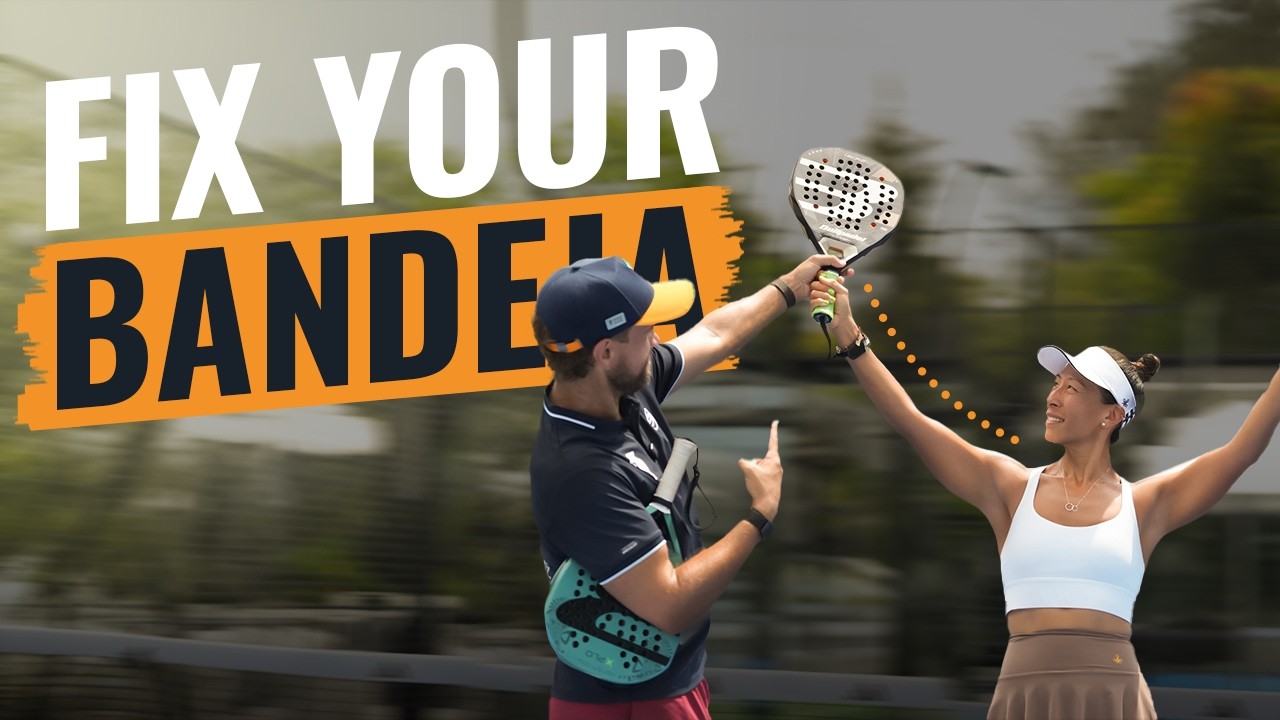
Sandy Farquharson coaches Akif on fixing a broken bandeja, the high forehand volley. The key: vertical racket with continental grip, elbow up, and a pushing motion like opening a door. Most players drop the elbow or rotate their wrist, which kills the shot.
Chapters
The bandeja is a really difficult shot for so many players. There are so many exercises you can do off court, but as well as specific ones that you can do on court. Now we're gonna work with a club player to improve that bandeja, make it more accurate and consistent. So I'm gonna give you one volley, one bandeja. Let's have a look at the technique to begin with so I see what we're working with and we go from there.
Okay.
Yeah, so volley the first. Okay, good. Bandeja. Okay, volley. Good. We're gonna work on the forehand volley with the bandeja. They're really in the same family of shots, right? So a lot of people think the bandeja is a smash, but actually really it's an exaggerated high forehand volley.
Okay.
And in order to get this right, we really need to get the forehand volley right first.
Yes.
The racket is vertical, and I want you to imagine that this is a table and you're resting your drink on the table. Okay. But you can still C over the top.
Yes.
Yeah, and so from here you're going to take the racket back, separate the arms, and then you're going to turn your shoulders and step forward into the volley. Yeah, and, and it's like a punch, like you're giving me a high five. Now keeping continental only works if you turn your shoulders.
Okay.
Do you see what I mean? Like if you, if you keep your shoulders open, right, like that— let go— continental, that's very uncomfortable.
Yes.
Right, but if you turn your shoulders, continental, you can keep it.
Correct.
Okay, so really important, okay, that when we're doing this we So we're gonna turn our shoulders, and if you think about it, when I turn my shoulders, I'm still in a ready position here. Like, if you look there, you're in a ready position. All that's happened is you turn your shoulders.
Yeah.
Okay, and now you're going to brush down that ball. So ready position here, rack it up, step forward, and brush through that ball. Good. Turn shoulders. Good. Nice. Good. Turn shoulders. Good. Keep stepping in. Good. The bandeja is almost— I want you to do a shadow of a normal forehand volley, and then one that's slightly higher. Okay, so normal forehand volley, slightly higher, slightly higher again. Okay, and that is, that, that is, is basically—
Basically what it is.
Your bandeja. So, so ready position, turn to the side. Okay, I want you to imagine that this is a door, okay, and you're going to push against the door coming from your toes. So, so push against the door, push, push, push, push, push. Yes! Yeah, and that's what we're looking for. Push, Turn shoulders and push into the ball.
Okay.
But you're releasing the hands. You're not going to do this with 2 hands, obviously.
Right, right.
Yeah, yeah, yeah. Forehand volley. Good, that was perfect. Best one yet.
Okay.
Okay, I'm gonna give you another one. Yep, forehand volley. Good. Forehand volley. Good. Forehand volley. Good. Forehand volley. Good. That's a bandeja. I'm going to add an added challenge now.
Okay.
This idea of getting the feet in position, because what's happening now is I'm throwing this in a nice place, right? And you're turning and you're, you're stepping in.
Yeah.
Okay, and so I'm actually going to take a little, a little exercise from our platform, right? From our footwork platform, which you know very well. And so I want you to just shadow.
Okay.
Like, I want you to go from a ready position here. I want you to do a forehand volley And then I want you to split, to turn, move back, back, back, back, back, and then do your bandeja. But remember, but it's not here, it's elbow up, right? Because it's a forehand volley. So I want—
So it should be here.
A medium height forehand volley, and then I want a high forehand volley. So good, moving, turn, open, footwork back. Good. Yeah, wow, I stopped! Yeah, but don't stop because otherwise you'll stop when we hit the shot, right? It's about muscle memory, like hit through that contact. Good. Turn back. Okay, first is volley. Good. Okay, and then turn, little steps. Good. But, but if we, if we bring this elbow down—
Yeah.
Like, this is our problem, this elbow coming down, and then we hit up and the ball flies.
Yeah, it should be up early.
That's what happened with the first one.
Right.
Yeah, when I threw it like this for you with a volley, you weren't doing that, right? You were doing a forehand volley.
Okay.
Okay, turn up, up, up!
Ah, I'm stopping!
I think you're thinking of them as different shots. Yeah, I say to you forehand volley and you'll, you'll do this action, and then if I say to you hit high forehand volley, you'll do the perfect bandeja. But then I say to you do a bandeja and it goes and it's like this and it's close and it's like a push. Yeah, and I want you to almost forget your, your bandeja at the moment. Forget it! Like, let's—
like, you're doing a high volley, you've got a high forehand volley.
Yeah, like, and you're turning the shoulders You're brushing down the ball, which is which is good, and you're just doing the same the same thing. Okay. Like like there. Like that's all it is. Yeah, that's a that's a bandeja now for you. Okay. Good turn. Step step step.
Good.
Good turn. Good. Better.
Better.
Better. It's coming.
Yeah.
It's, it's, it's this thing of like, like habit. Turning elbow down, and then we go up to contact. And when you go up to contact, the ball will always— it will always come up.
So I should probably have it up already?
You've got to start high to come down.
Okay.
Turn to the side. Like, that's got slice on now.
Okay.
But, but the problem is when you play a game, you can't control where the lob goes.
Right.
Right? So if the lob is going over your head, you need to give that ball space. So I want you to, to challenge yourself to give yourself as much distance between you and the ball on this as you can, but with still the body weight going forward though.
Okay.
Good. The problem, the problem to tackle is, is also like a little bit this grip.
Yeah.
It's really tough because you start— I see you start in continental and then you're going, just turning in your shot, and then you're not in continental. Okay, yeah, so there, and, and keeping continental for this. Perfect, good. And then, and then continental, like, let's get you keeping continental here.
And that's the thing, I've done these when I do it at home, it's okay. It's when I'm playing or practicing, my wrist turns.
Now I want you to keep this grip, so continental grip. Yeah, and this is something you can do at home or off the court and just throw for yourself. And keep that, keep that grip and aim it so that when you, you're going like directly in a line, contacting to the side of your body. Yeah, so keep continental, get the arm up so we all turn completely, turn shoulders. Good. And now when we contact, we're coming like down, down through, and you're going to try and hit like straight down that line. Good, that, that was, that was perfect. Okay, ready? So volley first. Ready? Here we go. Good, nice, very good! Yes, great volley! Space, sorry, short lob, perfect! Good bandeja volley, good, good, really nice!
Yes!
That was— they were all consistent then, right? Like the volley was consistent, the bandeja was consistent, Back to me in the corner, like at the beginning we were a little all over, spraying them everywhere, right? Like, like now it was, it felt consistent, right? But the, the key for you is like we, we kind of fixed that really with the shadowing and the throwing the ball for yourself, making sure you're in continental, getting that grip right, yeah, getting the comfort on the shot. And, and then as we gradually go back with repetition, we're more comfortable from the back. Correct.
Yes.
How do you feel with it?
Much better, because I remember on your footwork one, you're like, even if your feet are planted first, that's still better than your feet still moving.
Yeah.
So sometimes I think I measure my feet first to try to be stable.
Yeah.
Because that's another thing, I can always be really unstable when I'm—
Yeah.
Because I'm like, oh my God, I'm gonna be late, and then— but I hear you going, stable first is better. So sometimes I'm like, now I stopped already, and yeah.
Okay, I think as well, like, the key is, is moving early enough. So when the person lobs, it's like, I see it's a lob, and like we did there, it's like turning sideways, right? And then like little, like good footwork to get yourself the little— in a position.
Okay.
And thinking, I think Akif, you was really thinking like it's a high forehand volley.
Yes.
So turn to the side, it's a high forehand volley, and we then we forget about this elbow thing and stepping up.
I've worked on this a lot, but that was very— oh, you're like, are you sure?
You should see Antonio, he's like Okay, yeah, yeah, patience, patience for you and for the coach. That's right. Nice, perfect. Thank you. Thank you, Sandy.
Oh my God, that was amazing. Thank you so much.
You're welcome, very welcome.
More from Sandy





Want to finish more points? 🎾 #padel #padeltips #padeltennis #sports #coaching


Want more side spin on your Vibora? #padel #padeltips #padeltennis #sports #coaching



Your partner can’t read your mind #padel #padeltips #padeltennis #sports #coaching

Struggling with your bandeja? #padel #padeltips #padeltennis #sports #coaching